Leadership development has a specific problem that AI is, unexpectedly, well suited to. Good leadership development means coaching and realistic practice: the patient, expensive, one-to-one work of helping a manager get better at hard conversations and real decisions. That has always been too costly to give every manager. So most organizations gave it to a few senior leaders and gave everyone else a course.
AI changes that math. Not by replacing the human coach, but by making coaching-style support and realistic practice available at a scale that was never affordable before.
This guide is scoped tightly to that: developing leaders. It is not a list of course-authoring tools or compliance LMS platforms; those are general L&D, a different job covered in our roundup of the best AI corporate training tools. Here the question is narrower: which AI tools genuinely help a manager become a better leader.
The 30-second answer: AI leadership development tools do three jobs. AI coaching platforms (BetterUp, CoachHub) give managers on-demand coaching-style support at scale. Roleplay and simulation tools (Tenor, Exec) let leaders rehearse high-stakes conversations safely. Personalized-pathway tools (Cornerstone, Cloverleaf) map development to the individual. The honest model is hybrid: AI for scale and practice, humans for depth.
The three jobs at a glance
Before the detail, here is how the main tools sort by the job they actually do. Most organizations end up using one tool per job, not one tool for everything.
| Tool | Job | Best for | Note |
|---|---|---|---|
| BetterUp | Coaching at scale | Large orgs already running human coaching that want an AI layer beneath it | AI coaching (BetterUp Grow) sits on top of human-coaching contracts; enterprise pricing only |
| CoachHub | Coaching at scale | Global teams needing many languages | AI coach plus human coaches; broad language coverage |
| Coachello | Coaching at scale | Buyers who want to start small and add layers later | Modular licensing; embeds in Teams and Slack; AI plus ICF-certified coaches |
| Tenor | Roleplay and simulation | Practising feedback, conflict, and underperformance talks | Voice AI roleplay; 150+ leadership scenarios with competency-mapped feedback |
| Exec | Roleplay and simulation | Teams that want to build custom scenarios fast | Voice-based roleplay across sales, support, and leadership; quick scenario authoring |
| Hone | Roleplay plus live training | Orgs that want cohort classes with AI practice between sessions | Cohort-based live classes plus a 24/7 AI coach; not purely a tool |
| Cornerstone | Personalized pathways | Enterprises wanting development tied to a wider talent system | AI-built learning paths and succession planning inside a full HR suite |
| Cloverleaf | Personalized pathways | Teams that want coaching nudges in the flow of work | Assessment-based micro-coaching delivered into Slack, Teams, and calendars |
Pricing reality across all eight: none of these vendors publishes transparent pricing. Coaching-style platforms typically run on annual, per-seat enterprise contracts and require a sales conversation before you can pilot. Treat any "from $X" figure you see on a comparison site as a rough signal, not a quote.
Job one: AI coaching at scale
The historic constraint on leadership coaching is supply. A great human coach is expensive, and there are not enough of them to give every frontline manager regular sessions. AI coaching platforms address the gap not by being as good as a great human coach, but by being available, on demand, to everyone.
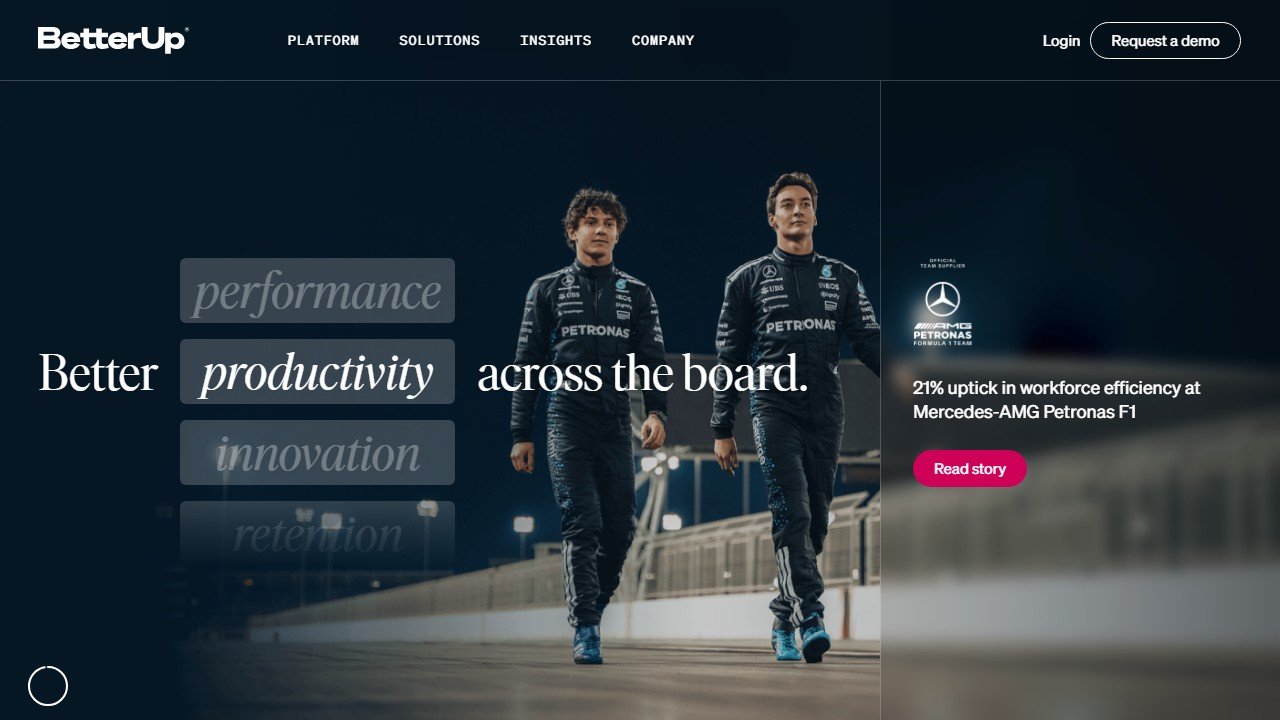
BetterUp pairs AI coaching with human coaches. Its AI layer, branded BetterUp Grow, offers on-demand support, roleplay, and help preparing for performance conversations, integrated into the tools managers already use. The important structural detail is that the AI layer is sold as an addition to human-coaching contracts rather than a standalone product, so the natural buyer is an organization that already runs BetterUp human coaching and wants to widen its reach. BetterUp is an enterprise platform: expect a sales cycle and an annual commitment.
CoachHub has built an AI coach into its platform, with workplace roleplay simulations and broad language coverage for global teams. Its strongest case is a company with managers across many countries, where giving everyone a human coach in their own language is simply not feasible and an AI coach that handles dozens of languages closes a real gap.
Coachello is worth knowing about for one practical reason: its licensing is modular. A buyer can start with the AI layer alone, or the human-coaching layer alone, and add the other later without re-contracting. It embeds directly into Microsoft Teams and Slack, pairs ICF-certified human coaches with AI roleplay, and supports more than 30 languages. For a smaller L&D team that wants to test AI coaching before committing to a full hybrid program, the lower-commitment entry point is a genuine advantage.
The honest framing: AI coaching is excellent for the frequent, lower-stakes moments, the "I have a tricky one-to-one in an hour, help me think it through" kind of question, and for giving the 80 percent of managers who never got a human coach something genuinely useful. It is not a substitute for human coaching on the deep, career-defining, emotionally complex work. The best programs use AI for frequency and reach, and reserve human coaches for depth.
One buying caution. Because these platforms charge per seat on annual contracts, the cost is the same whether a manager uses the AI coach daily or never opens it. The number that decides whether the spend was worth it is utilization, not licenses bought. Ask any vendor for real adoption data from comparable customers, and plan from the start how you will drive managers to actually use the tool, because an unused per-seat license is pure waste.
Job two: roleplay and simulation for high-stakes conversations
The conversations that define a leader, the difficult feedback, the layoff, the underperformance discussion, the conflict between team members, are exactly the ones a manager cannot practise on real people without real cost. This is where AI roleplay is genuinely valuable, because it makes a flight simulator for leadership conversations.
Tenor is the most leadership-specific of these tools. It provides voice AI roleplay simulations built around leadership communication, with a library of more than 150 scenarios covering feedback, conflict resolution, goal-setting, and other manager conversations, plus the option to tailor your own. After each run it produces a detailed report with conversation analysis and feedback mapped to leadership competencies, so a manager sees not just "that went badly" but which specific behavior to change next time. That competency mapping is what separates a useful rehearsal tool from a novelty chatbot.
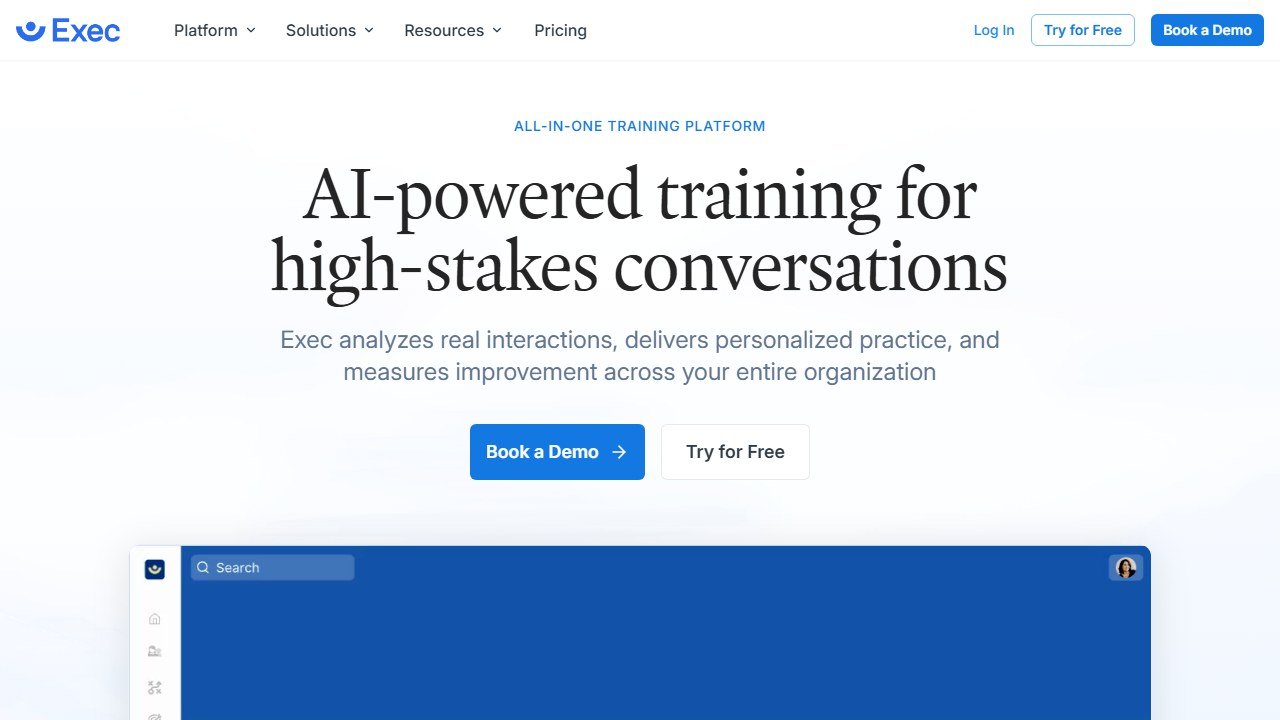
Exec offers voice-based roleplay across a wider range of business conversations, including sales and customer success as well as leadership. Its standout feature is speed of authoring: a learning team can build a customized voice simulation in roughly ten minutes, where traditional roleplay scenario development might take months. For an L&D team that wants scenarios specific to its own company, its own managers, its own recurring hard conversations, that authoring speed matters more than a large stock library.
A manager can run the hard conversation five times, get feedback on each, and walk into the real one prepared rather than rehearsing on the actual employee. That is the core value, and it holds up well.
A short note on what to verify. The AI roleplay category is moving fast, and several coaching platforms now ship roleplay as a feature rather than leaving it to specialist tools. If you already use a coaching platform from job one, check whether its built-in roleplay is good enough before buying a separate tool. Conversely, if practising hard conversations is your single biggest gap, a specialist like Tenor will usually go deeper than a roleplay feature bolted onto a broader platform.
This overlaps with the broader roleplay-training category. Our guide to AI roleplay tools for corporate training covers the wider field. For leadership specifically, the value is concentrated in the conversations that carry the most human cost when handled badly. That is the sweet spot: high stakes, no safe way to practise otherwise.
Job three: personalized leadership pathways
Generic leadership training assumes every manager needs the same development. They do not. A new manager who avoids conflict, a senior leader who struggles to delegate, and a technical lead who has never given formal feedback all need different things. The third category uses AI to personalize.
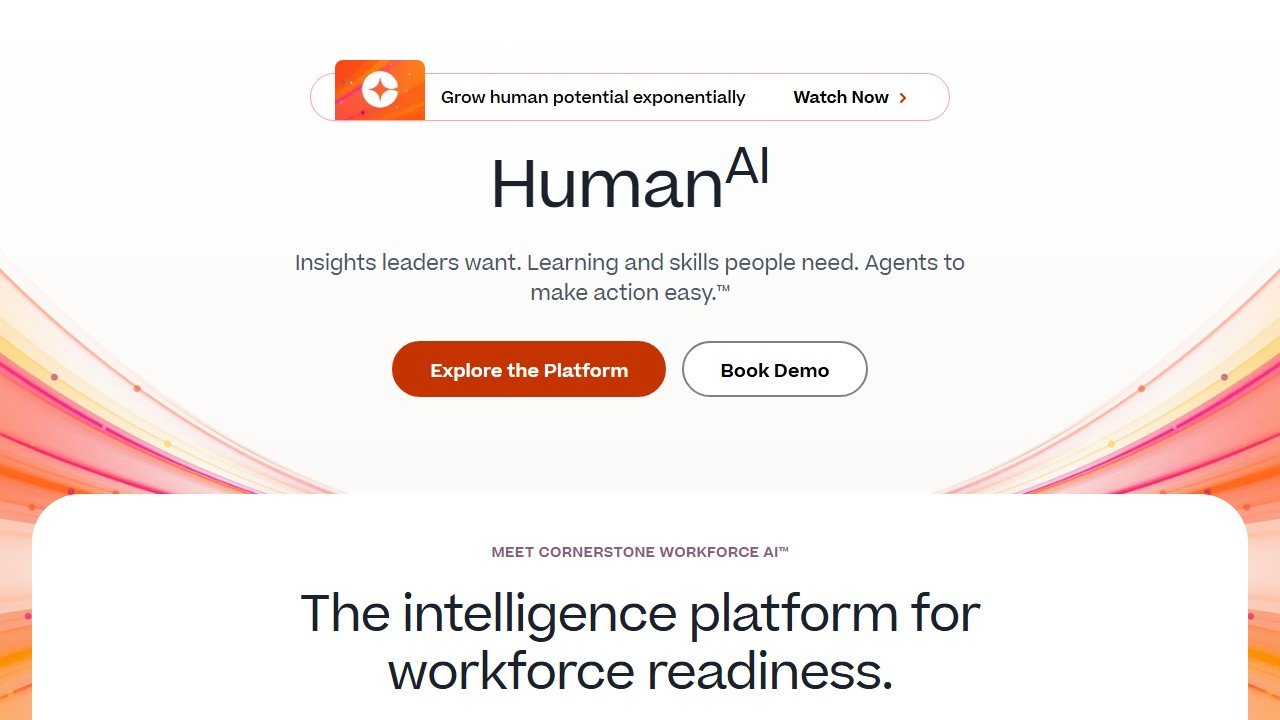
Cornerstone uses AI to build personalized learning paths and map skill development to the individual. Its leadership-relevant strength is that this sits inside a full talent system: development paths connect to succession planning, so an organization can build competency-based talent pools for critical roles and route managers toward the gaps that matter for the roles they might step into. The trade-off is that Cornerstone is a large enterprise suite. It suits an organization that wants leadership development integrated with the rest of its HR stack, less so a team that wants a focused, standalone tool.
Cloverleaf takes a different angle. It builds on validated behavioral assessments, DISC, Enneagram, and 16 Types among them, and delivers automated, AI-driven coaching nudges to managers and teams in the flow of work. Those nudges arrive inside Slack, Microsoft Teams, email, and the calendar: a pre-brief before a one-to-one based on the two people's personality dynamics, a feedback script shaped by both the giver's and the receiver's profiles, a meeting debrief flagging where collaboration tends to break down. Development becomes a steady drip rather than an annual event. Cloverleaf suits a team that believes most leadership growth happens in daily interactions, not in workshops, and wants the tool to show up at those moments.
The value across this category is relevance and consistency: development that fits the specific manager and shows up regularly, instead of a one-off workshop most of which is forgotten within a month. The risk to watch is nudge fatigue. A steady stream of automated prompts only develops leaders if managers act on them, so during a pilot, watch whether nudges change behavior or quietly get dismissed.
How to build a leadership development stack
Match the tool to the job, and to the gap you actually have:
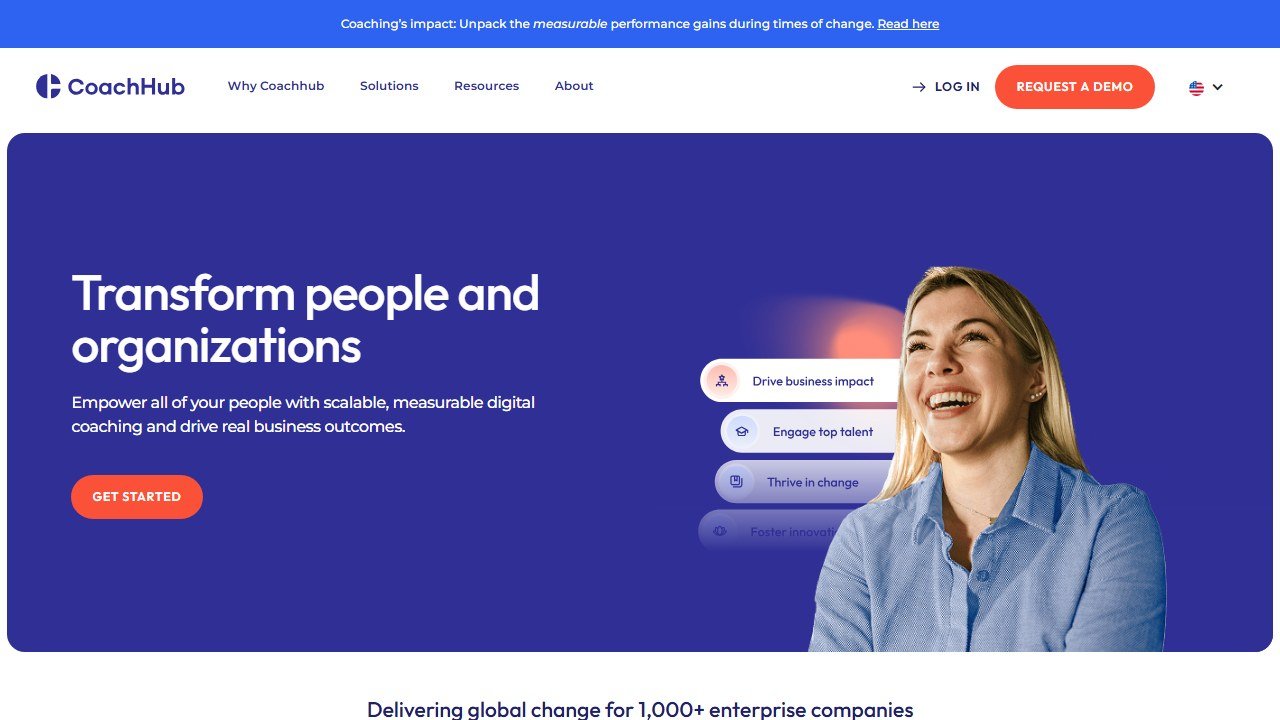
- Your coaching does not reach most managers: an AI coaching platform (BetterUp, CoachHub, Coachello) for scale and reach.
- Your leaders fumble high-stakes conversations: a roleplay/simulation tool (Tenor, Exec) for safe rehearsal.
- Your development is one-size-fits-all: a personalization tool (Cornerstone, Cloverleaf) to fit it to the individual.
A mature program often uses one from each. And it keeps human coaching for the senior and the complex cases: AI extends the reach of development, it does not retire the human side.
Sequence the build rather than buying everything at once. Start with the job that is your worst gap, pilot one tool against it with a real cohort of managers, and only add the next tool once the first has shown it changes behavior. Buying all three on day one usually produces three underused contracts and no clear read on what worked.
A note on the fast-moving market: this category is young and several vendors have shifted positioning recently. Tool names, feature sets, and the line between "coaching platform" and "roleplay tool" all keep moving. Before committing budget, verify a tool's current product names and feature set on the vendor's own site, and run a genuine pilot with real managers before a full rollout.
How to measure whether it worked
Leadership development is notoriously hard to measure, and AI tools do not solve that on their own. But a pilot with no success measure is just a spend. A few honest signals are better than none:
- Utilization. The first, bluntest check. If managers are not opening the tool, nothing else matters. Aim to see this in the vendor's own dashboards.
- Behavior, not satisfaction. A high "I liked it" score tells you little. Look instead for evidence that managers are doing the thing differently: more frequent one-to-ones, hard conversations actually happening rather than being avoided, feedback given on time.
- The people around the leader. The clearest signal of a better leader is a better-led team. Engagement scores, retention on a manager's team, and upward feedback move slowly, but they move for real reasons.
- A control group where you can. If you roll a tool out to part of the organization first, the rest of the organization is a natural comparison. It is the closest most L&D teams get to a clean read.
None of this is fast. Leadership change shows up over quarters, not weeks, so set the expectation with budget holders before the pilot starts, not after they ask for results.
What AI cannot do for leadership development
It cannot model what it has never been: a leader who has actually carried the weight of a hard decision and lived with the result. It cannot read the thing a manager is not saying in a coaching conversation. It cannot build the trust that makes a leader open up about a real fear. It cannot replace the senior leader whose example, more than any tool, teaches the managers below them what leadership looks like.
What it can do is make practice and coaching-style support available to every manager, not just the chosen few, and let leaders rehearse the hardest conversations before the stakes are real. Used as the scale-and-practice layer beneath genuine human development, AI leadership tools are a real advance. Used as a replacement for the human work, they produce managers who have practised leadership without ever being led. Keep the human in the loop, and the tools earn their place.
Measuring training, honestly
Training is the discipline most prone to measuring the wrong thing well. Four levels of rigour are available and most organisations stop at the first.
Reaction is easy and nearly worthless
Satisfaction scores at the end of a session tell you whether people enjoyed it, which correlates weakly with whether they can now do anything differently. Collect it if you like, and do not report it as evidence the training worked.
Completion is an activity metric
Completion percentage measures compliance with an instruction. It is genuinely necessary for regulated training, where the record is the point, and it is not evidence of capability anywhere else. Report it as what it is.
Behaviour change is where the real evidence starts
Pick one observable behaviour and measure it before and after: the proportion of discovery calls that reach a defined qualification step, the share of tickets resolved without escalation, the number of safety observations logged. It needs a baseline from before the training, which is why this gets skipped, and it is the first level that would survive a hostile question.
Business outcome, with the caveat stated out loud
Attributing revenue or incident rates to a training programme inside one year is genuinely hard, because everything else moved too. If you report an outcome, report what else changed in the same period. The most credible thing a training team can do is claim the behaviour change it can evidence and be openly cautious about the outcome it cannot.
Take the baseline in the week before launch
Whatever you choose, capture it before anything is switched on, from a source the project did not touch. It takes an hour and it is unrecoverable afterwards, which is the single reason most training investments can never be evaluated.

Written by
FazFaz is the founder of AIToolsBakery. Some tools here are tested hands on. Others are assessed from vendor documentation and pricing verified on the live page, and every review says which one it is. Sponsors can buy a position in a guide. They cannot buy the score, the criticism, or silence about a better option.
How we test and how we make money →