Two very different products keep showing up in the same conversation among parents and teachers: Khanmigo, the AI tutor built by Khan Academy, and ChatGPT, OpenAI’s general-purpose assistant that now ships with a feature called Study Mode. On the surface they look like rivals. In practice they were built for different jobs, and the right pick depends almost entirely on who is sitting in front of the screen.
Khanmigo is a purpose-built education tool. It is wrapped around Khan Academy’s lessons and practice, it leans hard on the Socratic method (asking questions rather than handing over answers), and it comes with parent and teacher dashboards plus moderation alerts. ChatGPT is a far more powerful and flexible model that can tutor extremely well when you ask it to, especially with Study Mode turned on, but it is not an education product at its core and it carries fewer built-in guardrails for a young learner.
This guide compares them on the axes that actually matter for a student or parent: tutoring discipline, accuracy and grounding, safety and oversight, flexibility, and price. We score a few of those on a 0 to 5 scale where it helps, and we give a segmented verdict rather than crowning one universal winner.
AIToolsBakery is independent. We are not owned by Khan Academy or OpenAI, we sell neither product, and we earn nothing if you sign up for either one. When a post is sponsored we label it clearly at the top and the sponsorship never changes a verdict or a score. This comparison is not sponsored.
The 30-second answer: For younger students, homework-anxious parents, and classrooms, Khanmigo wins on discipline, grounding, and oversight. For older students, broad subjects, and raw flexibility, ChatGPT with Study Mode is more powerful. Want guardrails and dashboards: Khanmigo. Want range and depth and you trust the student: ChatGPT.
Quick answer: Khanmigo is the better AI tutor for guided, Socratic learning under supervision, with guardrails that refuse to just hand over answers. ChatGPT, with Study Mode, is better for self-driven learners who can stay disciplined. Pick based on the student, not the marketing.
The quick context
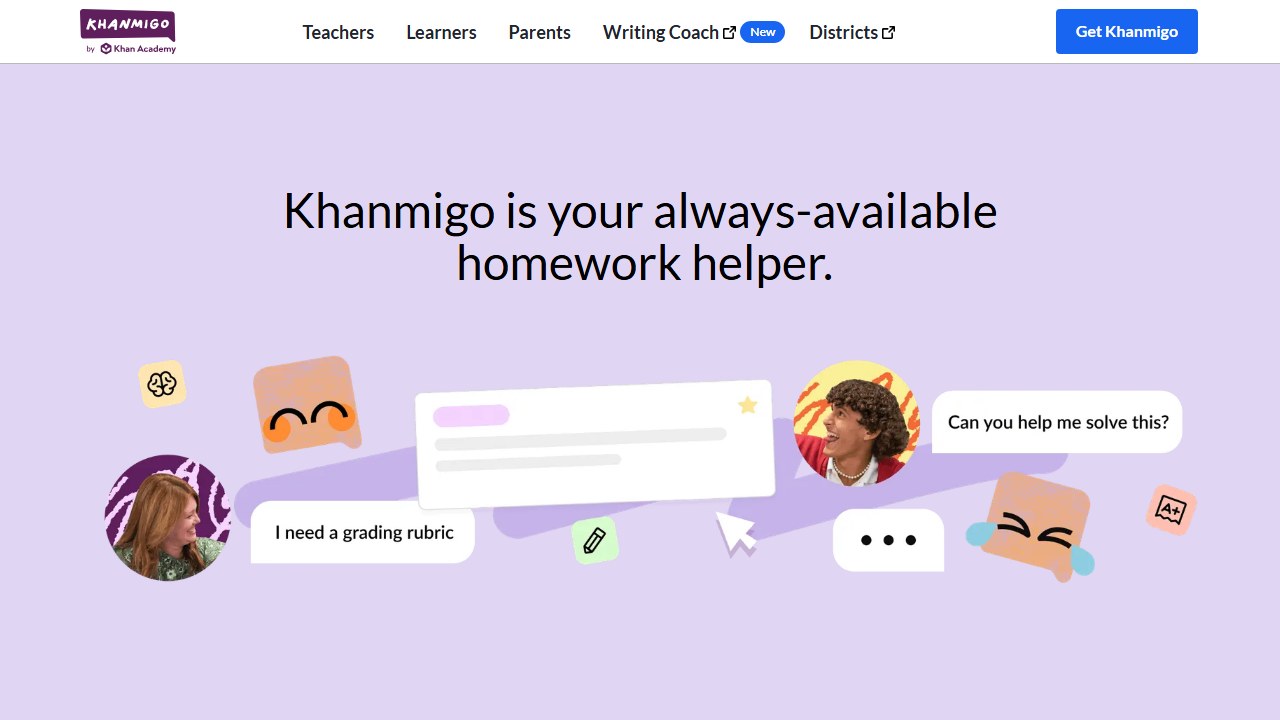
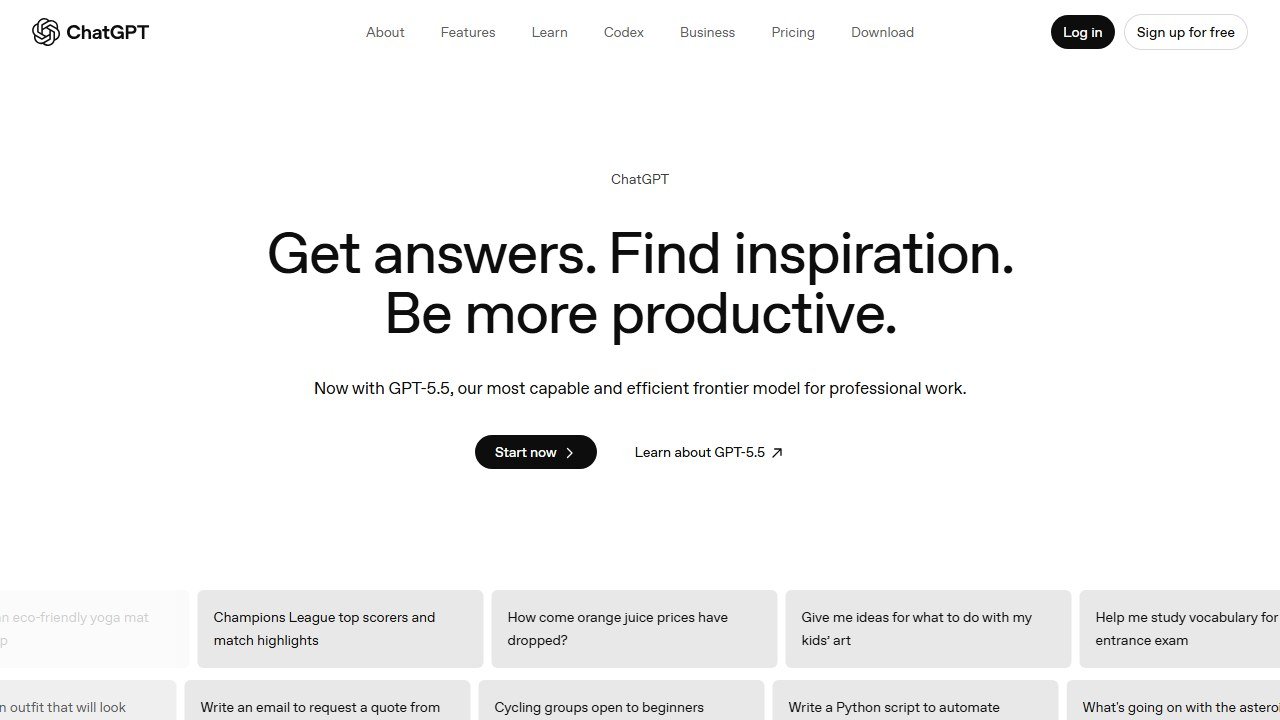
Khanmigo and ChatGPT share some DNA. Khanmigo runs on OpenAI’s underlying models, so the raw reasoning engine is related. The difference is everything built on top: the content it is grounded in, the personality it is given, the safety layer, and who can see the conversation.
Khanmigo sits inside Khan Academy’s ecosystem. It points students at Khan lessons and practice problems, follows a guide-don’t-tell tutoring style by design, and reports activity back to a parent or teacher. ChatGPT is an open canvas. It will discuss almost anything, write almost anything, and tutor almost any subject, but it does what you prompt it to do unless safety rules kick in.
If you already use Khan Academy, see our Khanmigo review for a full walkthrough of the tutor on its own.
Tutoring discipline (answer-giving vs guiding)
This is the single biggest divide, and it is the reason many teachers prefer Khanmigo.
Khanmigo is built to refuse to simply hand over the answer. Ask it for the solution to a math problem and it tends to respond with a question, a hint, or a nudge toward the next step. That friction is the point. A student who is guided to the answer learns more than a student who is handed it, and Khanmigo enforces that discipline whether or not the student wants it.
ChatGPT, by default, is an answer engine. Ask it for a solution and it gives you the solution, fast and complete. That is a feature for an adult and a temptation for a struggling teenager. Study Mode changes this behavior on demand by switching ChatGPT into a step-by-step, question-led tutor, but the student has to choose to keep it on. Turn it off, paste the homework, and the answer appears.
Discipline score: Khanmigo 5 / 5, ChatGPT 3 / 5 (4 / 5 with Study Mode actively used, lower because it is opt-in and easy to bypass).
ChatGPT Study Mode vs Khanmigo
Study Mode is OpenAI’s direct answer to the criticism that ChatGPT makes cheating too easy. When enabled, it asks interactive questions to gauge the student’s goal and level, breaks concepts into stages, builds difficulty gradually, and checks understanding with open-ended prompts rather than just dumping a result. OpenAI says the system instructions were developed with pedagogy experts across dozens of institutions. It is available to logged-in users across ChatGPT’s free and paid plans.
In a head-to-head, Study Mode closes much of the gap with Khanmigo on tutoring style. A motivated older student using Study Mode gets a genuinely strong Socratic tutor across a wider range of subjects than Khanmigo covers, with more raw reasoning horsepower.
The differences that remain:
- Persistence of discipline. Khanmigo’s guardrails are always on and cannot be casually switched off. Study Mode is a mode. It can be turned off in one tap, and a new chat does not force it back on.
- Grounding. Study Mode tutors from the model’s general knowledge. Khanmigo tutors against Khan Academy’s curated curriculum, so its examples and practice line up with what a student is actually studying.
- Oversight. A parent or teacher cannot see a child’s Study Mode sessions the way Khanmigo’s dashboards expose Khanmigo activity.
So Study Mode narrows the tutoring-quality gap a lot, but it does not replicate the structural guardrails, curriculum grounding, or adult visibility that make Khanmigo a school-and-family tool.
Accuracy and grounding
Both tools can hallucinate, because both sit on top of large language models that sometimes invent confident nonsense. The question is what reins that in.
Khanmigo is grounded in Khan Academy’s content. When it tutors a topic, it tends to stay inside material that Khan has already vetted, and it can route a student to the matching lesson or practice set. That grounding reduces (it does not eliminate) the odds of a made-up fact, and it keeps the tutoring aligned with a real curriculum rather than a free-floating explanation.
ChatGPT pulls from a vastly broader knowledge base, which is a strength for range and a risk for accuracy. It can explain niche topics Khanmigo never covers, but it has no built-in obligation to anchor an answer to a vetted source unless you ask it to cite or browse. For a student who cannot yet tell a correct explanation from a plausible-sounding wrong one, that matters.
Grounding score: Khanmigo 4 / 5, ChatGPT 3 / 5 (higher for breadth, lower for unguided accuracy).
Safety, age, and oversight
For a parent, this section often decides the whole question.
Khanmigo was designed as a children’s education product. The parent dashboard lets a parent add multiple children, review the history of their interactions, and receive moderation alerts. Teachers get their own view of student activity. The whole experience is scoped to learning, so a student is not one tab away from open-ended adult conversation.
ChatGPT is a general assistant that has been adding youth protections rather than being born with them. Its terms set a minimum age of 13 and require parental consent for 13 to 18, though there is no hard technical gate at signup. OpenAI has rolled out age-prediction that routes suspected under-18 users to an age-appropriate experience, plus parental controls that let a parent link a teen’s account, restrict sensitive content, set blackout hours, and limit image generation. Those are meaningful steps, but they are layered onto an adult product, and the visibility a parent gets is narrower than Khanmigo’s per-conversation history.
Oversight score: Khanmigo 5 / 5, ChatGPT 3 / 5.
Flexibility and subject range
This is where ChatGPT pulls clearly ahead.
ChatGPT will tutor calculus, then help draft a college essay, then debug Python, then explain a historical debate, then brainstorm a science-fair project, all in one thread. It handles open-ended, messy, real-world questions that do not map to a tidy lesson. For an older or more independent student, that flexibility is the main reason to choose it.
Khanmigo is broad for an education tool, covering math, science, coding, history, humanities, writing, and more, but it is bounded by being an education tool. It is deliberately narrower so it can stay disciplined, grounded, and safe. That trade is a feature for younger students and a limitation for ambitious ones.
Flexibility score: ChatGPT 5 / 5, Khanmigo 3 / 5.
Pricing and access
We describe pricing by model rather than quoting figures that drift, and we point you to the official pages for current numbers.
Khanmigo uses a simple consumer model. It is free for teachers in supported regions thanks to philanthropic backing. Parents and learners pay a low monthly or discounted annual subscription that includes the tutor plus the parent dashboard and moderation alerts. Districts get custom pricing with rostering, single sign-on, analytics, and support. Check current rates at the official Khanmigo pricing page.
ChatGPT uses a freemium model. There is a capable free tier, and paid tiers (Plus, Pro, Team, and an education-focused Edu plan) unlock higher limits and more capability. Study Mode is available to logged-in users across tiers, including free. Current plan details live at chatgpt.com.
The honest read: a family on a budget can get serious tutoring value from ChatGPT’s free tier, while Khanmigo’s paid tier buys the dashboards, grounding, and guardrails that the free ChatGPT experience does not include.
Who each is for
Choose Khanmigo if you are:
- A parent of a younger student (roughly elementary through middle school) who wants visibility and moderation alerts.
- A teacher or school that needs free classroom tooling, rostering, and a tutor that refuses to do the work for the student.
- A family already living in Khan Academy who wants tutoring that lines up with those lessons.
- Anyone who values always-on guardrails over raw flexibility.
Choose ChatGPT (with Study Mode) if you are:
- An older, motivated high-school or college student who wants the most powerful tutor across the widest range of subjects.
- A learner who needs help with open-ended work like essays, coding projects, and research that does not fit a fixed curriculum.
- Budget-conscious and able to get strong value from the free tier.
- Someone who can be trusted to keep Study Mode on and use it honestly.
For more options beyond these two, see our roundups of the best AI tutoring apps and the best AI tools for students. If you are weighing Khanmigo against a flashcard-style study tool instead, our Khanmigo vs Quizlet comparison covers that angle.
Head-to-head comparison
| Factor | Khanmigo | ChatGPT (with Study Mode) |
|---|---|---|
| Built for | Education (K-12 and up) | General-purpose AI |
| Tutoring discipline | 5 / 5 (always on) | 3 / 5 default, 4 / 5 in Study Mode (opt-in) |
| Content grounding | 4 / 5 (Khan curriculum) | 3 / 5 (broad, unanchored) |
| Safety and oversight | 5 / 5 (parent/teacher dashboards, alerts) | 3 / 5 (age routing, parental controls, no transcripts) |
| Subject flexibility | 3 / 5 (broad but bounded) | 5 / 5 (near-unlimited) |
| Raw power | Strong | Strongest |
| Pricing model | Free for teachers, low-cost for families, custom for districts | Freemium, free Study Mode, paid tiers for more |
| Best for | Younger students, classrooms, oversight | Older students, breadth, flexibility |
Our verdict
There is no single winner here, and any review that crowns one is ignoring who is asking.
For younger students, anxious parents, and classrooms, Khanmigo is the better AI tutor. Its discipline is structural rather than optional, its tutoring is grounded in a real curriculum, and its dashboards give the adults in the room genuine visibility. Those are exactly the properties that matter when the learner is young or the stakes are a real grade.
For older, independent students and for anyone who needs breadth and power, ChatGPT with Study Mode is the better AI tutor. It is more capable, it covers far more ground, and Study Mode makes it a legitimately strong Socratic teacher when the student chooses to use it that way. The catch is that “chooses to” carries the whole weight: the safe behavior is opt-in, and the oversight a parent gets is thinner.
If we had to summarize it in one line: Khanmigo is the better tool for learning under supervision, and ChatGPT is the better tool for learning under your own steam. Pick based on which of those describes the student, not based on which model is technically smarter, because on that narrow question ChatGPT wins and it still does not settle the choice.
What “free for teachers” actually means
Almost every tool in this category leads with a free tier, and they are not equivalent. The limit is where the product design shows.
The limits that are published, and therefore checkable
Chalkie states five full lessons or activity sheets every seven days. CoGrader states 100 student submissions a month. Curipod and MagicSchool both publish free plans without a headline cap on the pricing card. Verified 4 September 2026. A published cap is much easier to plan around than an unpublished one, because you can work out in advance whether it covers a normal week for you rather than discovering it in the middle of one.
Work out your real weekly volume before choosing
Count what you actually produce in a normal week: how many worksheets, how many class sets to grade, how many lesson plans. Teachers routinely underestimate this and then hit a cap on a Sunday evening. If your week is five lesson resources, a five-per-week free tier is exactly on the line and you will exceed it in any week with a cover lesson or a new unit.
Free for you may not be free for the school
A teacher signing up personally sits outside whatever approval process the school has for student data, which matters as soon as student work goes into the tool. That is not an argument against the tool; it is an argument for telling somebody. Most districts would far rather approve a tool a teacher is already using than discover it in an incident.
The commercial logic, stated plainly
Generous teacher tiers exist because teachers are the route to a district contract, which is where the revenue is. That is a perfectly reasonable model and it has a consequence worth knowing: the free tier is likely to stay usable, because it is the marketing. What is less predictable is whether the feature you come to depend on stays on the free side of the line. Do not build a department-wide process on a free tier of khanmigo vs or anything else without a fallback.
Buying at school or district level, and why teacher pilots stall
The gap between a teacher loving a tool and a district paying for it is where most education software dies, and it is a process problem rather than a product one.
Find out who actually approves before you pilot
Curriculum, IT, data protection and procurement usually all have a say, and in most districts nobody has told teachers which of them is the blocker. Ask early. A pilot that has to be re-run after the data protection review because the first one used real student work is a term lost, and it is entirely avoidable.
Price the thing you will actually deploy
Published teacher rates and district rates are different products. MagicSchool publishes Plus at $12.99 a month and quotes Enterprise with volume discounts. SchoolAI publishes tier names only. Gradescope, now on a Turnitin domain, is institution-quoted. That means a per teacher figure multiplied by staff count is a rough upper bound rather than a quote, and it is still the number worth calculating before a call, because it anchors the conversation.
Run the pilot on the thing that fails, not the thing that demos
The demo will be a well-formed lesson plan for a well-behaved topic. Your pilot should include the awkward cases: a mixed ability class, a subject with heavy notation, a student with an access arrangement, a topic where the source material is contested. How a tool handles those decides whether teachers keep using it in November.
Name who owns it after the pilot
Every tool in this category rewards an owner and punishes shared enthusiasm. Before khanmigo vs or anything else goes past a pilot, name the person whose job includes it and confirm where the hours come from. If the answer is that the keen teacher will keep doing it, the tool leaves when they do.
How to tell whether it actually helped
Education software is unusually prone to being judged on enthusiasm, because the immediate experience of a good tool is genuinely pleasant. That is not the same as it having worked.
Teacher time is the measurable win, and the honest one
Most of the real value here is hours, not outcomes. Ask two or three colleagues to record how long planning, resource creation and marking take across one normal week, before anything is introduced. It takes minutes, it is the only way the saving is ever provable, and it is unrecoverable afterwards. A tool that returns two hours a week to a teacher has earned its place without needing to claim anything about attainment.
Be sceptical of attainment claims, including your own
Attainment moves slowly, is affected by everything, and is nearly impossible to attribute to one tool inside a single year. If a vendor claims a grade improvement, ask what the comparison group was. If you are tempted to claim one internally, ask yourself the same question. Reporting a time saving you can evidence is worth more than an outcome claim you cannot.
Watch adoption in week six, not week one
Novelty carries any classroom tool through the first fortnight. The number that matters is how many teachers are still using it after half term, and whether it survived a busy assessment period. If usage collapses in the first genuinely hard week, the tool added work rather than removing it, whatever the initial reaction was.
Decide in advance what would end it
Write down before purchase what the end of the year would have to look like for you not to renew. It converts renewal from a default into a decision, which matters in a category where the per teacher cost is small enough to stop noticing.
Student data, and the questions a school has to ask before anything is switched on
This is the part of education technology where getting it wrong has consequences beyond a wasted subscription, and it is mostly answerable in writing before adoption.
Know which law you are under before you evaluate
In the United States, student education records sit under FERPA, and services aimed at under-13s bring COPPA into scope, which requires verifiable parental consent for personal information collected from children. Schools outside the US will have their own regime. The practical effect is the same: the school, not the vendor, carries the obligation, so the vendor questions exist to let you meet it.
Ask whether student work trains the model
This is the single question to get in writing. Ask whether student inputs and outputs are used to train or improve any model, including in aggregated or anonymised form, and whether that binds subprocessors too. “We do not train on your data” and “we do not train foundation models on your data” are different sentences. Get it as a contract term, because a sales assurance does not survive a change of ownership.
Ask who else touches the data
Most tools here are built on a model provider they did not write, so student work reaches a third party. Ask for the current subprocessor list, where each processes data, and how you are notified when it changes. A vendor that cannot produce that list within a day does not have one, which tells you enough about the rest of their programme.
Ask what happens at the end of a school year
Retention and deletion, stated in days rather than described as a process. What is deleted when a student leaves, when a class is archived, when the contract ends. Ask whether deletion means removed from live systems, removed from backups, or flagged. A vendor that will commit to a number in the contract is a different proposition from one that describes an approach.
The one many schools miss: inferences about a child
If a tool generates a reading level, a predicted grade, a behaviour flag or an ability estimate, that is data about a student the student never supplied. Ask whether those inferences are covered by your export, your deletion request and your access request, because a parent asking what the school holds on their child is asking about those too.
Where the figures on this page come from
Every price here was read from the vendor’s own pricing page on 4 September 2026 and carries that date, because education pricing changes with the school year and a claim without a date is not checkable.
The pages we read
Chalkie publishes free, US$6.65 and US$12.99 a month with yearly equivalents. Khanmigo publishes $44 a year. MagicSchool publishes a free plan and Plus at $12.99 a month. Curipod publishes free and from $24 a month with a 21% yearly saving. CoGrader publishes free at 100 submissions a month and $15 a month billed annually. Brisk Teaching publishes a free teacher plan at $0.
The ones we could not read
SchoolAI publishes tier names with no figures. Gradescope now sits on a Turnitin domain and is institution-quoted. We could not read a figure for Diffit, Quizlet, Photomath or Gauth either. That is not evidence they publish nothing, and we do not present it as such. Treat any figure for those six from elsewhere as unverified.
What we do not do
We do not carry a figure we cannot source to the vendor. Where a number circulates and cannot be traced, we say so and withdraw it rather than repeating it with a hedge.

Written by
FazFaz is the founder of AIToolsBakery. Some tools here are tested hands on. Others are assessed from vendor documentation and pricing verified on the live page, and every review says which one it is. Sponsors can buy a position in a guide. They cannot buy the score, the criticism, or silence about a better option.
How we test and how we make money →Frequently Asked Questions