Real estate runs on speed and attention. The agent who replies first usually wins the lead, and the agent who remembers to follow up on the ninetieth day usually wins the listing. Artificial intelligence does not change that math. It just makes it possible to do both without a staff of five. The problem is that the market is now flooded with tools, every one of them claiming to be essential, and most agents cannot tell the difference between a genuine category leader and a thin wrapper around a public chatbot.
This guide fixes that. We have mapped the entire real estate AI landscape to the jobs an agent, a team lead, or a broker actually does, from the first inbound lead to the closed transaction, plus the listing media, property management, and commercial tools that sit around the edges. For each job we name the tools that lead, what they cost, who they are genuinely for, and just as importantly who they are not for. No tool is best at everything, so we will not pretend one is.
By the end you will have a clear picture of the eight lanes where AI earns its keep in real estate, the leading tools in each, a framework for judging any tool a vendor pitches you next month, and a plan for combining a few of them into a stack that fits your team size and budget. We will also cover the compliance rules that most roundups skip and that can turn a helpful tool into a legal liability if you switch it on carelessly.
Short answer: The best AI tools for real estate agents in 2026 are stacked by job, not bought as one platform. Lead capture: Perspective AI. Lead nurture and ISA: Structurely. Voice answering: Smith.ai or Allo. All-in-one CRM: Lofty. Listing copy: ChatGPT or Claude. Virtual staging: REimagineHome. Most top agents run two to four together.
The state of AI in real estate going into 2026
Adoption has moved from novelty to table stakes faster than most agents realize. The numbers tell a consistent story: this is no longer an edge some agents dabble in, it is a baseline the market is quietly setting.
On the investment side, capital is pouring in. Venture firms put roughly $16.7 billion into property technology in 2025, a large jump over the prior year, and early 2026 saw AI-focused proptech funding accelerate again, with one measure showing well over a hundred percent year-over-year growth. That flood of money means a new wave of tools is launching every quarter, which is good for choice and hard for buyers, because more options also means more thin products dressed up in AI language.
On the usage side, the clearest signals come from listing media and property management. A large majority of listing agents now say virtual staging matters to selling a home, and staged listings consistently pull more views and shorter days-on-market than vacant ones. Among property managers, AI adoption climbed from roughly one in five operators to about one in three in a single year, yet only a small fraction have fully automated even one workflow, which tells you the early movers still hold an advantage that has not yet been competed away.
The deeper shift is in how consumers search. Buyers and sellers increasingly begin with an AI assistant, asking a chatbot to explain the process, compare neighborhoods, or even suggest an agent, before they ever reach a portal or a Google results page. For agents, that raises a new question beyond which tools to use internally: whether you and your listings are visible in the AI answers your clients now trust. The tools in this guide help you work faster. Being present in the AI answer is a separate and growing discipline, and one worth watching closely as the buyer journey keeps moving upstream into the chatbot.
Where AI actually helps in real estate, and where it does not
Before naming a single tool, it is worth being honest about what AI is good at in this business and what it is not. The hype cycle has convinced some agents that software will find them clients, close their deals, and replace their judgment. It will not. What it does well is narrower and more valuable than that.
AI is excellent at the repetitive, time-boxed, pattern-heavy parts of the job: answering a lead in seconds at two in the morning, sending the right follow-up on the right day for eighteen months without forgetting, drafting a listing description in the time it takes to read one, staging an empty room, summarizing a forty-page lease, and scoring which homeowners in your farm are most likely to sell. These are tasks where speed and consistency beat human effort, and where a machine that never gets tired or distracted genuinely outperforms a busy person.
AI is poor at, and should not be trusted with, the parts of the job that made you hire a human in the first place: reading a nervous first-time buyer across a kitchen table, negotiating the last five thousand dollars, knowing which school district a family will actually love, and taking responsibility when something goes wrong. It also invents facts when it does not know them, which in a business built on material accuracy is a real hazard. The winning agents of 2026 are not the ones who hand the whole job to software. They are the ones who let software do the tireless work so they can spend their human hours on the human parts.
Keep that division in mind as you read. Every tool below is a good buy only if it takes a genuine bottleneck off your plate, and a bad buy if you are purchasing it because it sounds modern.
How to read this guide
We organized this by workflow lane rather than as a single ranked list, because a solo agent buying their first tool and a fifty-agent brokerage replacing an inside sales team are solving different problems with different budgets. A single ranked list would mislead at least one of them.
For each lane we cover what the job is, why it matters to your commission, the tools that lead it, and honest pricing. Prices move constantly, and most of these vendors quote by team size or usage, so treat every figure here as a starting point to confirm on a demo, not a quote. Where a tool is strong in one lane and weak in another, we say so plainly. At the end we show how to combine these into a real stack, and we cover the compliance rules that can cost you if you ignore them.
A note on method. We are a review site, not a reseller, and we do not take payment for placement in this guide. Our judgments rest on documented features, published pricing, integration fit, and the specific job each tool is built to do. Where we have not put a tool through a full hands-on test, we describe what it claims and what you should verify yourself, rather than inventing a precise score. That honesty is the whole point of a guide you can actually trust with a buying decision.
How to evaluate any real estate AI tool before you buy
New tools launch every week, and this list will be partly out of date within a year. A durable skill is knowing how to judge one yourself. Six questions separate a tool worth paying for from a demo that dazzles and then disappoints.
- What single bottleneck does it remove? If you cannot name the exact task it takes off your plate and the hours or deals that task currently costs you, do not buy it. Vague benefits like “leverage AI” are not bottlenecks.
- Does it integrate with your CRM? A tool that cannot read from and write to your system of record creates a second database you have to reconcile by hand. Ask for the specific integration, not a promise of one on the roadmap.
- How does it handle handoff to a human? The best AI tools know their limits and escalate cleanly. Ask what happens when the AI is out of its depth, and whether the transition to you feels seamless or jarring to the client.
- What is the real total cost? Per-minute and per-lead pricing looks cheap on the demo and adds up fast at volume. Model your actual monthly usage before you sign, and ask about setup fees, contract length, and overage charges.
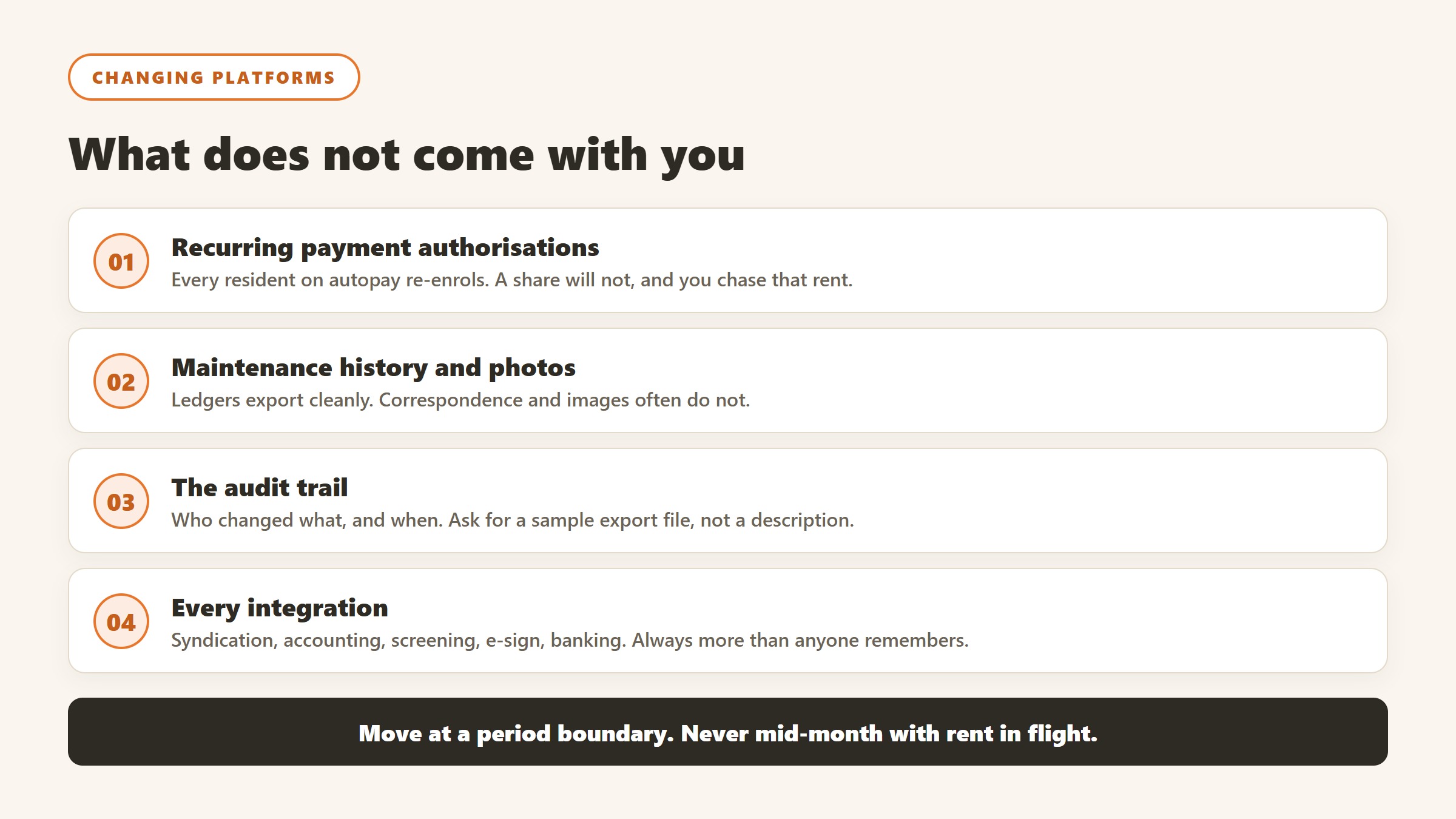
- Who owns the data and the conversations? If you leave, do you keep your lead records and conversation history, or does the vendor hold them hostage? This matters more than agents expect until the day they switch tools.
- Does it keep you compliant, or expose you? Any tool that calls, texts, or writes to consumers touches consent law and fair housing. Ask the vendor exactly how, and assume the legal responsibility stays with you.
Run every pitch through those six questions. A tool that answers all six well is worth a trial. A tool that dodges even two of them is a tool that will cost you more than its subscription.
Where to start based on the kind of agent you are
The right first tool depends less on your budget than on what your day actually looks like. Four common profiles cover most agents.
The new or part-time agent should start almost free. A general writing model for listings and emails, plus a cheap virtual staging tool used per listing, covers the highest-value tasks for pocket change. Hold off on ISA and predictive tools until you have enough lead flow to justify them, because an expensive nurture engine with nothing to nurture is wasted money.
The buyer’s agent lives and dies by speed-to-lead and responsiveness, so the first purchase is a voice answering tool so no call goes to voicemail, followed by a conversational qualifier for inbound web leads. Media and prospecting tools matter less here, because the bottleneck is being reachable and fast when a buyer is ready to tour.
The listing agent should invest first in media, since that is where listings win or lose attention: strong virtual staging, photo enhancement, and listing video. A predictive seller tool comes next, because more listings is the whole game, and a farm-area tool compounds over a year.
The team lead or broker is really buying a system, not a tool, and should start with the CRM decision, all-in-one versus best-of-breed, before layering anything else on top. Get the hub right first, because every other tool either plugs into it or fights it.
Quick comparison: the tools that lead each lane
| Tool | Best for | Lane | Starting price |
|---|---|---|---|
| Perspective AI | Conversational lead capture and qualification | Lead capture | Custom |
| Structurely | Long-cycle AI ISA nurture over SMS and voice | Nurture / ISA | ~$179/mo |
| Roof AI | Chat-first lead qualification and routing | Lead capture | ~$299/mo |
| Smith.ai | AI answering with human backup | Voice | ~$95/mo |
| Allo | Solo and small-team AI receptionist plus phone system | Voice | ~$45/user/mo |
| Retell AI | Build-your-own voice agent | Voice | ~$0.07/min |
| Ylopo (rAIya) | Paid-ad lead generation plus AI nurture | Lead gen / nurture | Quote-based (reported) |
| Lofty | All-in-one AI CRM for teams | CRM | Quote-based (reported ~$449+/mo) |
| Follow Up Boss | CRM of record with AI assists | CRM | ~$58/mo |
| SmartZip | Predictive seller identification | Prospecting | ~$1,000/mo |
| Top Producer | Farm-area predictive targeting | Prospecting | ~$499/mo |
| ChatGPT / Claude | Listing copy, emails, CMA summaries | Content | ~$20/mo |
| REimagineHome | AI virtual staging and redesign | Listing media | Low per-image |
| Reel-E | AI listing video from photos | Listing media | ~$9 to $15/listing |
| EliseAI | Multifamily leasing automation | Property mgmt | Custom |
| Propaya | Commercial lease abstraction | Commercial | Custom |
Lane 1: Conversational lead capture and qualification
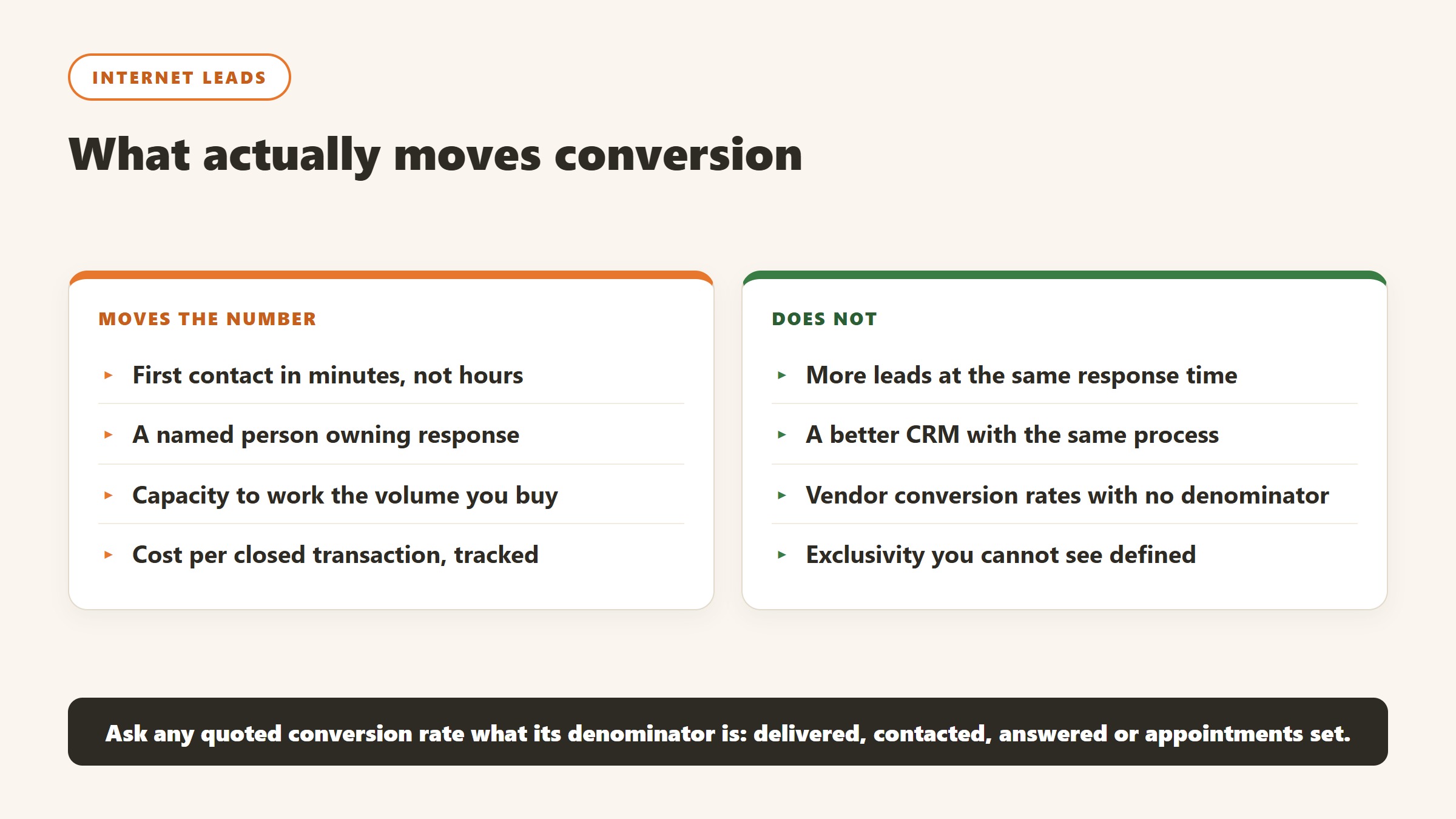
The first job is not generating leads. It is catching the ones you already paid for before they go cold. Portal and advertising leads decay in minutes, and a long line of lead-response research has shown that reaching a new lead within five minutes rather than thirty dramatically raises the odds of a real conversation. This is the highest-leverage place to add AI, because the tool that qualifies the lead first and most accurately drives the most downstream commission. Everything else in your funnel is worth less if the lead never gets a reply.
Perspective AI: best for conversational lead capture
Perspective AI focuses on the top of the funnel. It engages a new inquiry in a natural back-and-forth, qualifies intent, and hands a warm, contextualized lead to the agent instead of a raw form fill. For teams that spend real money on portal and paid leads, winning this first lane is where the return shows up soonest, because a qualified conversation is worth many times a name and an email address. Pricing is quote-based, which fits its team-oriented positioning.
Who it is for: teams buying paid leads at volume who lose too many to slow or generic first responses. Who it is not for: a brand-new solo agent with a trickle of organic leads, who would get more from a simple answering tool first. Watch for: confirm how cleanly it hands the qualified lead into your existing CRM so nothing is retyped.
Structurely: best standalone AI inside sales agent
Structurely runs an AI inside sales agent, branded Aisa Holmes, that engages new leads over SMS, email, web chat, and voice, then keeps nurturing them for a year or more until they are sales-ready. The company reports having handled well over ten million conversations, and it is the tool most often named when agents want a dedicated ISA replacement rather than a feature bolted onto a CRM. Plans start around $179 per month and rise with volume and channels. Because it spans both capture and long-cycle nurture, it appears again in lane three.
Who it is for: agents and teams who generate their own leads and want a tireless ISA to work them without hiring one. Who it is not for: someone who wants the AI to also generate the leads, which is not its job. Watch for: the setup and training period, since the AI needs your scripts and market context before it sounds like your team.
Roof AI and FusionSync: chat-first qualifiers
Roof AI is a chat and messaging assistant that qualifies and routes leads across your website and social channels, typically starting around $299 per month. FusionSync positions itself specifically as an AI lead qualifier for real estate. Both suit agents who want a lighter, messaging-first layer rather than a full inside sales agent, and both are worth trialing against Structurely to see which conversational style fits your leads. The lighter tools cost less and set up faster, at the cost of the deep, months-long nurture cadence a dedicated ISA provides.
Lane 2: AI voice agents and call answering
A large share of your leads still call, and most calls arrive when you are showing a property, driving, or sitting at a closing. An AI voice agent answers every call, qualifies the caller, books the appointment, and logs it, so you stop losing deals to voicemail. Missed calls are one of the most expensive and least discussed leaks in a real estate business, because a buyer who reaches voicemail simply calls the next agent on the list. This lane splits into two kinds of product: packaged answering services built for agents, and developer platforms you configure yourself.
Smith.ai: best AI answering with human backup
Smith.ai blends AI with real human agents, so complex or high-value calls escalate to a person instead of frustrating the caller with a bot that cannot help. For agents who worry about an AI mishandling a serious buyer or a delicate seller, the hybrid model is the safe default. Plans commonly start around $95 per month and scale by call volume. The tradeoff is cost: the human layer makes it pricier per call than a pure-AI service, which is exactly what you are paying for.
Who it is for: agents whose calls include high-stakes conversations that must never be fumbled. Who it is not for: a high-volume, low-value call flow where the human backup rarely triggers and you are overpaying for it.
Allo: best for solo agents and small teams
Allo bundles an AI receptionist with a full phone system, aimed squarely at solo agents and small teams, with unlimited AI answering at a low per-user price near $45 per month. If you want one tool that both replaces your carrier and answers with AI, this is the cleanest fit, and the flat unlimited pricing removes the per-minute anxiety that comes with usage-based voice tools.
Who it is for: solo agents and small teams who want a single, affordable phone-plus-AI solution. Who it is not for: a large brokerage needing deep enterprise routing and analytics.
Retell AI, Synthflow, and NLPearl: build-your-own voice agents
Retell AI and Synthflow are voice-agent platforms you configure for inbound and outbound real estate calls, priced by the minute or by usage tier, with Retell around $0.07 per minute and Synthflow starting near $29 per month. NLPearl offers a real-estate-focused voice solution. These reward teams with the appetite to build and tune a workflow, and they can be far cheaper at scale than packaged services. They also demand real setup time and technical comfort, so budget the hours before you assume the low per-minute rate is the whole cost.
Who it is for: tech-comfortable teams that want control and low marginal cost at volume. Who it is not for: an agent who wants to switch it on this afternoon and move on.
alfred, ContactSwing, and Pete and Gabi: packaged real-estate voice
Between the hybrid services and the developer platforms sits a growing group of packaged voice agents built specifically for real estate. alfred markets a tested set of AI tools for agents including voice, while ContactSwing and Pete and Gabi offer real-estate-tuned AI voice agents for 24/7 lead capture and appointment scheduling. These aim to give you a working real-estate voice agent without the build time of a developer platform, which makes them a reasonable middle path for agents who want more customization than a flat answering service but less setup than a raw voice API. Trial two or three, because voice quality and the naturalness of the conversation vary more between these than the marketing pages admit.
Lane 3: Lead nurture and long-cycle follow-up
Most real estate leads are not ready today. They are ready in six to eighteen months, and the agent who is still politely in the conversation when they are ready gets the deal. This is where the real money in your database lives, and it is also the work humans do worst, because remembering to send a relevant, non-annoying touch to hundreds of leads across many months is exactly the kind of task a busy person drops. AI nurture tools run that marathon for you.
Ylopo AI: best paired with paid-ad lead generation
Ylopo runs Facebook and Google lead-generation campaigns and then hands the leads to its AI layer, now branded Ylopo AI, which qualifies and nurtures by text and voice for months. Ylopo reports that its AI voice calls leads repeatedly across a roughly ninety-day window and that its AI text has handled tens of millions of conversations. It fits teams that want lead generation and nurture from one vendor rather than stitching them together, typically starting around $395 per month. The tradeoff is that you are buying the lead-gen engine too, which is only a bargain if you actually need it.
Who it is for: teams that want an integrated advertising-plus-nurture machine. Who it is not for: agents who already have a lead source and only need the nurture layer, who will overpay here.
Ylopo does not publish a rate card, and the real monthly number depends on ad spend, add-ons, and the CRM you pair it with. Our Ylopo pricing breakdown stacks all of it into honest solo, team, and brokerage totals.
Structurely again: the nurture specialist
Structurely earns a second mention because long-cycle SMS and voice cadence is its core strength, not a bolt-on. If you already generate your own leads and only need the nurture engine, a standalone inside sales agent like Structurely is often a better value than an all-in-one that charges you for lead generation you will not use. Match the tool to the gap in your funnel, not to the longest feature list.
Follow Up Boss: the CRM that holds it all
Follow Up Boss is less an AI product and more the system of record that most serious teams already run, now with AI assists layered in for call summaries and next-step suggestions. Plans start around $58 per month. Treat it as the hub your nurture and voice tools plug into rather than a nurture engine on its own. Its strength is that nearly every other tool in this guide integrates with it, which makes it the safe center of a best-of-breed stack.
Follow Up Boss is the rare tool here with every price published, but the calling add-on gates part of the AI on the entry plan. Our Follow Up Boss pricing guide covers that trap plus the new Zillow Pro layer.
Fello: reactivating your database
Fello focuses on turning your existing database into seller leads through home-value engagement and AI-scored intent. For a team sitting on a large past-client and sphere list, it is a useful complement to a predictive farm tool, because it mines the contacts you already earned rather than paying for new ones.
Lane 4: Predictive seller identification and CRM
Listings are the scarce resource in almost every market. Predictive tools read hundreds of data signals to tell you which homeowners in your farm are most likely to sell in the next six to twelve months, so you concentrate your marketing on the small fraction that matters instead of papering an entire zip code. This is a longer-horizon bet than the lead lanes, and it rewards agents who commit to a geography.
SmartZip and Top Producer: best for predictive seller data
SmartZip aggregates data from many sources and scores homeowners by likelihood to move, reporting accuracy in the low seventies percent range, and it is the most established name in predictive seller identification. It sits at the premium end, often starting around $1,000 per month. Top Producer offers Smart Targeting that flags likely sellers in your farm area and layers automated marketing on top, commonly around $499 per month. Both are farm-area plays that pay off when you commit to a geography for a year, not a month, because predictive prospecting is a compounding investment rather than an instant one.
Who it is for: established agents ready to own a farm and fund a year of consistent marketing to it. Who it is not for: a new agent who needs closings this quarter and cannot wait out a long prospecting horizon.
Lofty: best all-in-one AI CRM for teams
Lofty, formerly Chime, bundles CRM, an IDX website, lead generation, and AI calling into one platform, with pricing that commonly runs from the high tens into the hundreds per month depending on team size and modules, with fuller AI tiers often near $449. For a team that wants a single system rather than a stitched-together stack, Lofty is the leading all-in-one. The tradeoff is the familiar one: you gain breadth and a single login, and you accept that no individual module is quite as deep as a best-in-class point tool. That is a reasonable trade for many teams and a poor one for specialists.
Who it is for: growing teams that value one integrated platform over assembling and maintaining a stack. Who it is not for: agents who already love their CRM and want the single best tool in one specific lane.
Lofty now shows Request Pricing on every tier, which makes budgeting a guessing game. Our Lofty pricing breakdown collects the reported figures and runs the 20 percent ad-management fee math nobody totals up.
Follow Up Boss as the alternative hub
If the all-in-one model does not appeal, the common alternative is Follow Up Boss at the center with specialist tools around it. This best-of-breed approach costs more to assemble and manage but lets you swap any single tool without ripping out your whole system. Other established all-in-one platforms worth evaluating in this lane include kvCORE, now part of Inside Real Estate, which bundles CRM, IDX websites, and lead tools with AI layered across them and is widely used at the brokerage level. The right choice depends on whether you would rather manage one deep relationship with a vendor or several shallow ones with the best tool in each lane.
Lane 5: Listing content and copywriting
Writing is the lane where general-purpose AI already beats most purpose-built tools, because listing descriptions, email blasts, social captions, and market summaries are exactly what large language models do best. The trick is applying real estate judgment to the output and staying firmly on the right side of fair housing rules, which we return to in the compliance section.
ChatGPT and Claude: best general writing engines
ChatGPT and Claude dominate listing content: MLS descriptions, drip emails, neighborhood summaries, market updates, and social copy, all for around $20 per month each. Feed them the facts and a sample of your brand voice, and they draft in seconds what used to take half an hour. The essential caution is fair housing. Never let an AI describe the ideal buyer, characterize a neighborhood by the people who live in it, or state who a home is right for, and always edit the draft before it goes live. Used with that discipline, a general model is the single highest-return twenty dollars in your stack.
Who it is for: every agent, full stop. Who it is not for: nobody, though agents who want built-in guardrails may prefer a tuned tool.
Epique and ListingAI: real-estate-tuned drafters
Epique is purpose-built for real estate, with specialized tools that understand real estate terminology and can write in your brand voice across listings, emails, and campaigns. Purpose-built drafters like this save prompt-writing time and reduce fair-housing slips because the guardrails are baked in, at the cost of the raw flexibility a general model gives you. For agents who do not enjoy prompt-writing and want a button that produces a compliant listing description, the tradeoff is worth it.
Lane 6: Listing media, virtual staging, and video
Buyers shop with their eyes, and the data backs it up. A large majority of listing agents now say virtual staging matters to selling a property, and staged listings consistently draw more views and sell faster than vacant ones. AI has taken staging from a slow, expensive service that cost real money per room to a same-day task that costs a few dollars per image, which changes the economics for every listing, not just the luxury ones.
REimagineHome and Collov: best AI virtual staging
REimagineHome is one of the most widely used AI staging and redesign tools, turning an empty or dated room into a styled space in seconds across many design styles. Collov AI offers fast, low-cost staging with a large style library. Both price around a few dollars per image or a low monthly subscription, a small fraction of traditional physical staging. For most agents these two are the default starting point for AI staging.
MeltFlex and Edensign: consistency and shoppable staging
MeltFlex pairs staging with a design layer where the furniture in each render is real and purchasable from major retailers, which turns a listing photo into a shoppable moodboard. Edensign emphasizes multi-angle consistency, so a staged room looks the same from every photo in the set, which is the single most common failure mode of cheap AI staging and the one that gets agents accused of misleading buyers. If mismatched angles or floating furniture have burned you before, these two solve exactly that.
AI HomeDesign: the listing-photo toolbox
AI HomeDesign bundles staging with item removal, image enhancement, and day-to-dusk conversions, which covers the everyday photo fixes a listing needs beyond staging alone. It is a practical all-rounder for agents who want one tool for the whole photo workflow.
Wondering what staging actually costs across all these options? Our virtual staging AI cost guide runs the per-photo math: subscription AI vs per-image services vs human-edited vs physical staging.
Reel-E: best AI listing video
Reel-E turns listing photos into a cinematic property video with realistic camera motion in a couple of minutes, at roughly $9 to $15 per listing. For agents who know that short video wins the social feed but do not have an editor or the hours, this is the fastest path to a scroll-stopping reel. A caution that applies to all AI media: staging and enhancement must never misrepresent the actual condition of a property, or you trade a faster sale for a disclosure problem.
Listing media is one lane of a bigger marketing stack. Our roundup of the best AI marketing tools for real estate agents covers social content, ad management, listing video, and AI direct mail with real prices.
Lane 7: AI for property management
Many agents also manage rentals, and property management is where AI quietly delivers some of its clearest returns: lease abstraction, virtual leasing agents, maintenance triage, and portfolio analytics. Adoption among property managers has climbed sharply in recent years, yet only a small share of operators have fully automated even a single workflow, which means the early movers are gaining real ground on the rest.
The enterprise leaders
EliseAI automates leasing and resident communication for multifamily portfolios as an enterprise-grade platform, positioning itself as an operational layer rather than a standalone chatbot. Lula uses its LuMi AI layer to take a resident maintenance report, troubleshoot it, triage urgency, dispatch a vetted vendor, and track the job through to a verified completion. Both are aimed at operators managing serious door counts.
The lighter options for smaller operators
For smaller portfolios, Showdigs and Revela offer more affordable AI leasing and management layers, and platforms like Haven focus on specific slices of the workflow. If you manage doors as well as sell homes, this lane deserves its own budget line rather than being treated as an afterthought, because the time savings on maintenance triage and leasing communication compound across every unit.
Lane 8: AI for commercial real estate
Commercial real estate has its own fast-growing set of AI tools, aimed at the document-heavy, analysis-heavy work that defines the sector. The bottlenecks here are different: not lead response, but the hours lost to reading leases, building models, and abstracting rent rolls.
Propaya uses AI to abstract and analyze commercial leases, delivering clause-cited insights, linked schedules, and export-ready data in minutes rather than the hours a manual abstraction takes, with the citations letting you check the source clause rather than trust the summary blindly. Automax applies LiDAR and computer vision to capture property details automatically and generate appraisal-ready reports, and Goldbridge is building AI-powered banking and finance tooling for real estate owners. For brokers and analysts drowning in leases and rent rolls, these tools convert the least enjoyable part of the job into a few minutes of review, and the clause-level citation on the lease-abstraction side is what makes the output safe to rely on. Commercial buyers should weigh these newer tools carefully, since the sector is early and many products are still maturing, but the time savings on document work are already real.
All-in-one or best-of-breed: the decision under every stack
Before you assemble a stack, you face the choice that shapes every tool decision after it: buy one platform that does most things, or assemble the best tool in each lane around a central CRM. Both are legitimate, and the right answer depends on your team and your temperament.
An all-in-one like Lofty gives you a single login, one vendor relationship, one bill, and features that are designed to work together out of the box. The cost is depth: no module in an all-in-one is quite as strong as the leading specialist tool in that lane, and you are locked into one vendor’s roadmap and pricing. This suits teams that value simplicity, have limited time to manage software, and would rather have a solid version of everything than the best version of one thing.
A best-of-breed stack puts a CRM of record like Follow Up Boss at the center and surrounds it with the leading tool in each lane. You get depth and the freedom to swap any single tool without rebuilding your whole system. The cost is integration work, more bills to track, and the ongoing job of making sure the tools actually talk to each other. This suits teams with the appetite to manage a stack and the volume to justify best-in-class tools in the lanes that matter most to them.
There is no universally right answer, only a right answer for your situation. What you should not do is drift into a expensive hybrid by accident, paying for an all-in-one and then buying specialist tools that duplicate its modules, which is how agents end up paying twice for the same capability.
The all-in-one versus hub decision usually comes down to two names. Our Lofty vs Follow Up Boss comparison runs that head to head, including the Zillow ownership angle.
Make the tools talk to each other
Whichever path you choose, the value of a stack is not the tools. It is how well they share data. A voice agent that books an appointment but does not write it to your CRM, a qualifier that captures a lead but strands it in a second inbox, a nurture engine that does not know the lead already toured: each of these gaps quietly recreates the manual work the tools were meant to remove. Before you add any tool, confirm the specific integration with your system of record, and confirm which direction the data flows. The best stacks are the ones where a lead enters once and every tool can see it, so your morning starts with one prioritized list rather than five tabs you reconcile by hand. Integration is not a technical detail to sort out later. It is the difference between a stack that saves time and a pile of subscriptions that fragments it.
One consolidate-or-stack matchup deserves its own treatment: Lofty and Ylopo are integration partners, not rivals, and our Lofty vs Ylopo comparison explains when to pick one, the other, or run both.
How to build your 2026 stack
Do not buy by category. Buy by bottleneck, and add one tool at a time so you can actually tell what is working before you layer on the next. A stack you assembled thoughtfully over six months will beat a stack you bought in a weekend of enthusiasm. Here is how it typically shapes up by team size and budget.
The solo agent, lean budget
- Start: an AI answering tool so no call goes to voicemail, such as Allo or Smith.ai.
- Add: ChatGPT or Claude at around $20 per month for all your listing and email copy.
- Add: a per-image virtual staging tool such as REimagineHome or Collov, used only when you list.
- Total: often under $150 per month, with every dollar mapped to a specific lost deal you stop losing.
The small team, growth budget
- Anchor: a CRM of record such as Follow Up Boss, as the hub everything plugs into.
- Add: a dedicated AI inside sales agent such as Structurely for capture and long-cycle nurture.
- Add: AI voice answering, plus listing media tools used per listing.
- Consider: predictive prospecting such as Top Producer once you commit to a farm.
The brokerage, replacing an ISA team
- Evaluate: an all-in-one such as Lofty against a best-of-breed stack anchored on Follow Up Boss.
- Layer: paid-ad lead generation with AI nurture such as Ylopo, and predictive seller data such as SmartZip.
- Rule: one tool used daily beats five tools logged into once. Resist buying more than your team can operate and train on.
Running a team or a brokerage rather than a solo book? The jobs change: recruiting, back office, compliance. Our guide to the best AI tools for real estate brokerages and teams covers that stack specifically.
If budget is the constraint, two platforms publish prices worth knowing: our Real Geeks pricing breakdown covers the cheapest published full-platform rate card, and our Zurple pricing breakdown covers the budget nurture tier below it.
Do you need to pay? Free and low-cost starting points
Not every agent needs a four-figure stack. If you are new, working part-time, or simply want to test the water before committing budget, you can assemble a genuinely useful AI toolkit for very little. The single best low-cost move is a general writing model. ChatGPT and Claude both offer free tiers that handle listing descriptions, emails, and social copy well enough to prove the value before you upgrade to a paid plan at around twenty dollars a month for the faster, more capable versions.
Most virtual staging and photo tools offer either a free trial or cheap per-image pricing, so you can stage a single listing for a few dollars and see the effect on views before you subscribe. Many voice and lead tools offer a small block of free credit or a trial period, which is enough to judge conversation quality on your own leads. The honest guidance is to start free wherever a free tier exists, prove that the tool moves a real metric on your own business, and only then pay. Paying for a tool you have not validated on your own leads is the fastest way to a subscription you resent. Free-first also protects you from the demo effect, where a tool looks brilliant on the vendor’s staged example and ordinary on your actual inbox.
Common mistakes agents make with AI tools
The tools are rarely the problem. The way agents buy and deploy them usually is. A handful of mistakes account for most of the wasted money in this category.
- Buying the platform before the problem. Agents see a slick demo and buy, then hunt for a use case. Reverse it: name the bottleneck first, then find the tool.
- Stacking too fast. Three tools bought in one month means you cannot attribute any result to any tool. Add one, measure it, then add the next.
- Skipping the training period. Conversational and voice tools sound generic until you feed them your scripts, your market, and your voice. Agents who quit in week one never see the version that works.
- Letting the AI go unsupervised with clients. The point of AI is leverage, not abdication. Spot-check what it says to real buyers and sellers, especially early.
- Ignoring integration. A tool that does not talk to your CRM creates a second system you reconcile by hand, quietly eating the time it was supposed to save.
Five myths about AI in real estate
The category attracts as much fear as hype, and both distort buying decisions. Five beliefs come up again and again, and all five are wrong.
- Myth: AI will replace real estate agents. It replaces tasks, not the relationship, the judgment, or the fiduciary responsibility. The agents at risk are not the ones who ignore AI, they are the ones who never adopt it while their competitors serve more clients with the same hours.
- Myth: you need to be technical to use it. Most of the highest-value tools, from writing assistants to virtual staging to answering services, are point-and-click. Only the build-your-own voice platforms demand real setup, and you can skip those entirely.
- Myth: more tools means more productivity. The opposite is usually true. A crowded stack of half-used subscriptions fragments your attention and your data. One tool used daily beats five logged into once.
- Myth: AI-written listings will get you in trouble. The tool is not the risk, unsupervised use is. A model that drafts a description you read, edit, and fact-check is safe. One that publishes unreviewed is not. The discipline, not the software, is what keeps you compliant.
- Myth: it is too early, so wait. The tools that pay off same-day, like staging and writing, carry almost no risk and cost almost nothing to try. Waiting on those is simply leaving easy wins on the table while the agent down the street takes them.
Compliance: the part most guides skip
AI that texts, calls, or writes on your behalf does not remove your legal responsibility. It concentrates it. Three areas deserve real attention before you switch anything on, and a fourth is worth a glance.
Telephone and texting rules. Automated calls and texts to consumers are governed by strict consent rules, and enforcement has tightened in recent cycles. Make sure any AI voice or SMS tool you use honors opt-in and opt-out requirements, keeps auditable records of consent, and respects calling-time limits. Ask each vendor directly how they handle this, and do not assume the tool makes you compliant simply because it is marketed to agents.
Fair housing. An AI writing listing descriptions or targeting audiences can produce discriminatory language or steering without any intent to. Never let a model describe who a home is right for, characterize a neighborhood by the people in it, or target advertising in ways that could exclude protected classes. Review every AI-drafted description before it goes live, and treat the model as a fast junior copywriter whose work you always edit.
Disclosure and accuracy. Some jurisdictions and platforms increasingly expect disclosure when a consumer is interacting with an AI rather than a person. Keep your AI honest about what it is when asked, and never let it state facts about a property it cannot verify, because you own the errors, not the software. Virtual staging carries its own version of this: a staged or enhanced photo must not misrepresent the true condition of the home.
Data and MLS rules. Feeding client data or MLS content into a tool can run into privacy obligations and MLS usage rules. Check what a vendor does with the data you put in, whether it is used to train shared models, and whether your MLS permits the use you have in mind.
What to expect when you implement
Different tools pay off on very different timelines, and mismatched expectations are why agents abandon tools that would have worked. Point tools like virtual staging or a writing assistant pay off the same day you start. Conversational and voice tools take a week or two of tuning before the responses sound like you and the qualification questions fit your market, so judge them in week three, not week one. CRM migrations and all-in-one platforms are the heavy lift: budget a month, expect data cleanup, and never switch during your busiest listing season. The predictive farm tools are the slowest to prove out, because you are betting on a geography over a full year. Match your patience to the tool, and you will keep the ones that work instead of quitting on them early.
How to measure whether it is working
A tool that cannot be measured cannot be justified at renewal. For each lane, track the one metric that maps to money. For lead capture and voice, measure speed-to-first-response and the share of leads that reach a real conversation. For nurture, measure how many dormant leads reactivate into appointments. For prospecting, measure listing appointments sourced from the farm over a year. For media, compare views and days-on-market for staged versus unstaged listings. If a tool cannot move its lane’s core metric within a fair trial window, cut it, no matter how impressive the demo was. The goal is not a modern-looking business. It is more closings from the same number of hours.
What is coming next for AI in real estate
The tools in this guide are a snapshot, and the ground is moving. Three shifts are worth watching over the next year, because they will change what you buy and how buyers find you.
The first is the move from chat to action. Today most AI tools suggest, draft, or answer, and a human executes. The next generation is agentic: software that does not just draft the follow-up but sends it, does not just flag the likely seller but starts the outreach, and does not just summarize the lease but updates the model. This raises the payoff and the risk together, which makes the compliance and supervision habits in this guide more important, not less. Give an agent that can act on your behalf the same scrutiny you would give a new hire in their first week.
The second is consolidation. The current landscape has dozens of point tools, and many will merge, get acquired, or fold. Larger platforms are absorbing standalone features, and the tool you adopt today may become a checkbox inside your CRM tomorrow. That is a reason to favor tools that integrate cleanly and to avoid long contracts with early-stage products whose survival is uncertain.
The third, and the one most agents are not yet thinking about, is how buyers find you. As clients increasingly start their search by asking an AI assistant rather than typing into a search bar, being the agent or the listing that the assistant names becomes a real source of business. This is a different discipline from the internal tools above: it is about how your site, your reviews, and your content are written and structured so that AI systems understand and recommend you. Agents who get ahead of this will show up in the answer while their competitors are still optimizing for a search results page that fewer buyers look at each year. It is early, but the direction is clear, and the agents who treat their own AI visibility as seriously as they treat their tool stack will have an edge that is hard to copy.
The bottom line
There is no single best AI tool for real estate agents, and any guide that names one is selling you something. There is a best tool for each job. Start where you are losing the most money, which for most agents is unanswered leads and missed calls, then add nurture, then media, then prospecting as you grow. Keep a human in the loop on anything a client sees, respect the compliance rules that come with automating consumer contact, and remember that the objective is not a bigger software bill. It is more deals closed with the same hours in your day. Buy by bottleneck, add one tool at a time, measure honestly, and this technology will earn its place in your business rather than just its line on your credit card statement.
Where to go next
Explore the deeper guides in this cluster: the best AI lead qualification and inside sales agent tools, the best AI voice answering services for realtors, the best AI virtual staging software, the best AI tools for property management, and the best AI listing description generators, and the best AI tools for commercial real estate. For a step-by-step playbook, see how to use AI for real estate lead follow-up. Each ranks the tools in its lane in full, with pricing and the honest tradeoffs, so you can go one level deeper on whichever bottleneck is costing you the most right now.
If you buy property rather than list it, the tool set is completely different. Our guide to the best AI tools for real estate investors covers off-market lead gen, deal analysis, and portfolio software.
One adjacent vertical worth knowing even if you never write a loan: our guide to the best AI tools for mortgage brokers covers what your lending partners are adopting, from AI underwriting assistants to borrower intake.
For listing presentation specifically, the interior-design tools are worth a look even though they are not sold to agents. Our Coohom review covers a platform that produces floor plans and renders from one model, and our Spacely vs Collov comparison comes down on which of the two handles an empty room better.
Adjacent guides
- REimagineHome vs Collov (2026): AI Virtual Staging Compared
- Structurely vs Ylopo (2026): Which AI Lead Tool Wins?
- Reel-E Review (2026): AI Real Estate Video Generator, Tested
More AI tool guides worth reading: How to Use AI for Real Estate Lead Follow-Up, Best AI Listing Description Generators and Best AI Property Management Software.
Newer in this cluster: Best Dynamic Pricing Tools for Short-Term Rentals (2026): Flat Fee or a Cut of Your Revenue, RentRedi vs TurboTenant in 2026: Both Vendors Compared Themselves. We Checked Their Math., Innago vs TurboTenant (2026): We Fact-Checked Both Vendors’ Comparison Pages, Best TurboTenant Alternatives in 2026: 7 Tools Compared by Who Actually Pays, 8 Best Hemlane Alternatives for Landlords in 2026 (Grouped by What You Actually Need), TurboTenant vs Avail (2026): The Flat Fee, the Per-Unit Fee, and Who Really Pays, Best AI Leasing Assistants (2026): Ranked by Someone Who Doesn’t Sell One, EliseAI Review (2026): The $2.2B Leasing AI, and Who It Actually Prices Out, 7 Best Zurple Alternatives in 2026 (When Templated Follow-Up Stops Fooling Anyone), 7 Best Sierra Interactive Alternatives in 2026 (Every Other List Is a Competitor) and Best AI Virtual Staging Software (2026).

Written by
FazFaz is the founder of AIToolsBakery. Some tools here are tested hands on. Others are assessed from vendor documentation and pricing verified on the live page, and every review says which one it is. Sponsors can buy a position in a guide. They cannot buy the score, the criticism, or silence about a better option.
How we test and how we make money →