Wild.AI is the best AI workout generator for women in 2026, the only app that builds plans around your cycle, perimenopause, and postpartum stage instead of pink-washing generic programming. Alpha Progression wins for pure strength. Fitbod wins for mainstream ease. Full breakdown of who each app is genuinely built for below.
Last reviewed: May 2026
Search "AI workout generator for women" and you get the same five blog posts recycling the same eight apps, none of which mention a menstrual cycle once. That is bizarre, because the single biggest reason a workout plan stops working for a woman is that it was designed for a body that does not cycle through four hormonal phases every 28 days.
This post is different. We read the public feature docs for ten apps, scraped through r/xxfitness, r/loseit, and r/AdvancedFitness for what women actually report after 3+ months of use, cross-referenced women's health blogs (Stronger by Science, Dr. Stacy Sims' material, Hormones Balance), and applied editorial judgment on which apps deserve the "for women" label and which are coasting on a pink palette. No fake benchmarks. No "we tested 47 workouts." Just an honest read of what is out there in May 2026.
What makes an AI workout generator actually for women (not pink-washing)
Three things separate a real women's workout generator from a marketing reskin:
- Cycle awareness. The app asks for your cycle length and adapts intensity, volume, and recovery across follicular, ovulatory, luteal, and menstrual phases. Dr. Stacy Sims' research (cited in her book Roar and across her interviews) is now mainstream enough that any app calling itself "for women" should at least acknowledge it.
- Life-stage adaptation. Postpartum return-to-training, perimenopause (typically 40-50), and post-menopause have radically different programming needs. Heavier loads, more rest, different cardio prescription. An app that hands a 47-year-old in perimenopause the same HIIT block as a 24-year-old is not for women, it is for one woman.
- No "tone and sculpt" language. This is the giveaway. If the app's marketing leans on "toning," "long lean muscles," or "bikini body" instead of strength, output, and load progression, it was written by someone who thinks women are afraid of barbells. We are not.
How we ranked these (feature docs, user reviews, women's health blogs)
We did not run a benchmark. We did this:
- Read every app's public feature page, FAQ, and pricing page as of May 2026
- Pulled the most upvoted threads on r/xxfitness and r/loseit mentioning each app over the last 12 months
- Cross-checked App Store and Play Store reviews, weighted toward verbose 3-star and 4-star reviews (the most honest band)
- Compared against the women's strength training and hormonal health literature (Sims, Stronger by Science's women-specific articles, Hormones Balance blog mentions)
- Applied AITB editorial judgment on programming quality, transparency, and pricing fairness
The result is a vendor-neutral best-of. We have no affiliate deal with any of these apps as of writing.
#1: Wild.AI – best for cycle-synced training
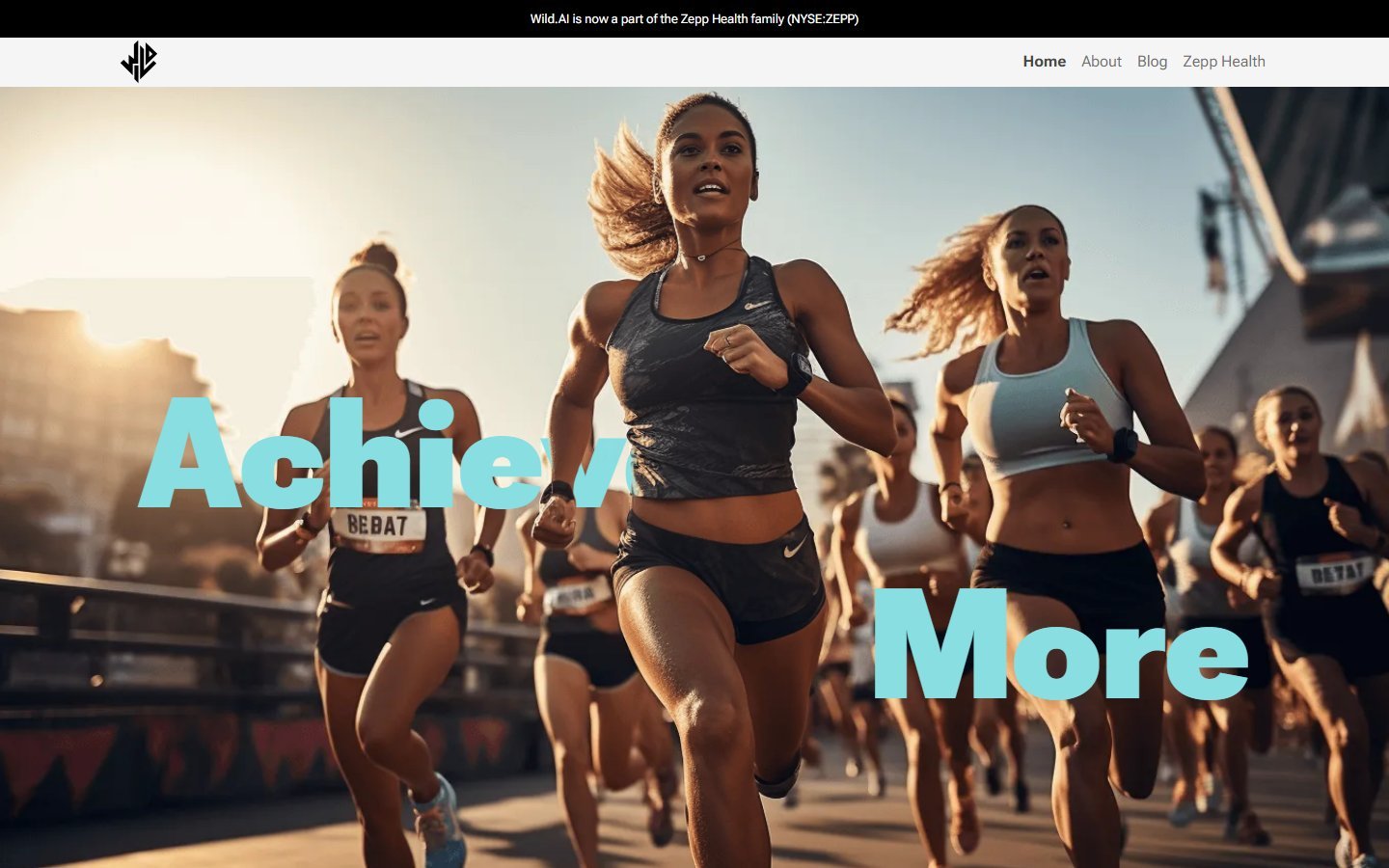
Wild.AI is the only app on this list built ground-up around female physiology. Founded by Hélène Guillaume, it asks for cycle length, contraception type, life stage (cycling, perimenopause, menopause, pregnancy, postpartum), and then adapts intensity, recovery, hydration, and even nutrition cues by phase.
The interface is plain and the workout library is smaller than Fitbod's, but the underlying logic is what you are paying for. Users on r/xxfitness consistently mention that Wild.AI is the only app that "actually does something different on day 22 versus day 4." It also has a free tier, which most cycle-aware apps do not.
What it does well
- Genuine cycle-phase adaptation (not just notifications, actual program changes)
- Perimenopause and menopause modes with adjusted recovery prescriptions
- Postpartum return-to-training pathway with pelvic floor considerations
- Free tier covers the core cycle tracking and basic plan adaptation
Where it falls short
- Exercise library and demonstration videos are noticeably thinner than Fitbod or Sweat
- The strength progression logic is conservative compared to Alpha Progression
- UI feels more "femtech app" than "training app," which some users dislike
Pros: Cycle-aware, life-stage aware, free tier, evidence-based.
Cons: Smaller library, conservative strength progression, dated UI.
Best for: Women who want their plan to actually change with their cycle, perimenopause, or postpartum recovery.
#2: Drop It – best for menstrual-phase beginners
Drop It is a newer entrant focused on women who want fat loss and basic strength with cycle awareness baked in. The programming is less sophisticated than Wild.AI but more approachable for a complete beginner. The app pairs short, named cycle-phase blocks ("Power Week" for follicular, "Steady Week" for luteal) with nutrition guidance.
The trade-off is depth. Drop It is not the tool for an intermediate lifter chasing a 1.5x bodyweight squat, but it is one of the few apps that explains why your energy crashed last Thursday without lecturing.
What it does well
- Clear, easy-to-use cycle-phase naming and explanations
- Decent integration of nutrition cues with training phase
- Workouts are short (typically 20-35 minutes) and equipment-light
Where it falls short
- Strength progression is essentially absent past the first 8 weeks
- Smaller community and fewer App Store reviews to triangulate against
- Heavier reliance on calorie/macro tracking than some users want
Pros: Cycle-aware, easy-to-use, nutrition-integrated, low time commitment.
Cons: Shallow programming for intermediates, weak progression past month two.
Best for: Women new to training who want cycle awareness without a complicated app.
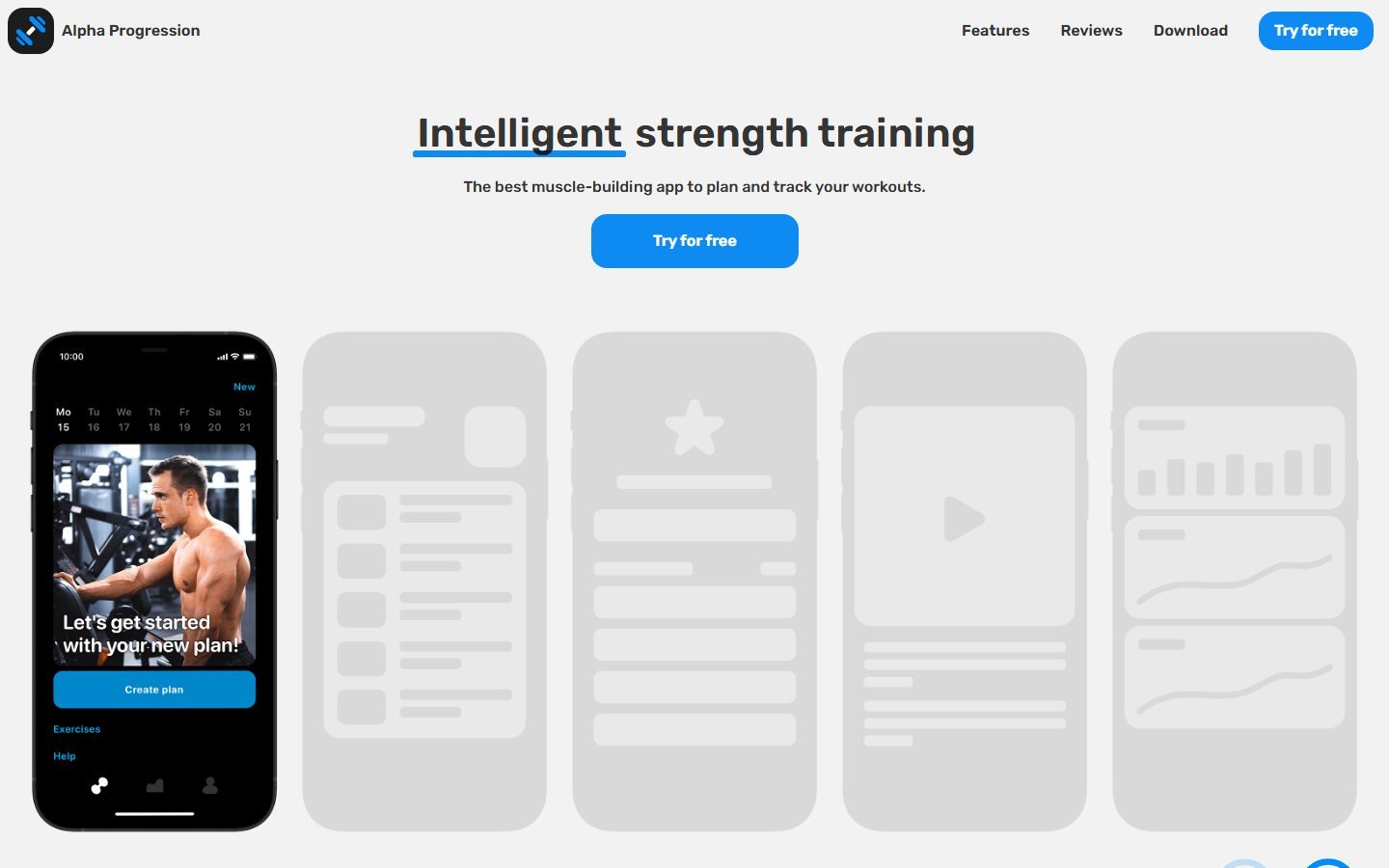
#3: Alpha Progression – best for strength and hypertrophy women
Alpha Progression is not marketed "for women," and that is exactly why it lands at #3. It is one of the best pure strength and hypertrophy apps on the market, and the AI-driven autoregulation (it adjusts your next session based on RPE and reps logged) works identically well for women as for men, because progressive overload is not sex-specific.
What makes it women-friendly in 2026 is that the app added a cycle tracking module that flags higher-fatigue phases without forcing a program change. You stay in control. For women who lift seriously and find cycle-sync apps too prescriptive, this is the sweet spot.
What it does well
- Genuinely intelligent set-by-set autoregulation
- Strong exercise library with form notes and substitutions
- Cycle tracking that informs but does not override your plan
- Reasonable pricing ($9.99/mo or ~$60/yr)
Where it falls short
- Not built around female physiology, so perimenopause and postpartum users will need to add their own modifications
- UI is information-dense and intimidating for true beginners
- No coach-led aesthetic, it is a training tool
Pros: Best-in-class progression logic, fair pricing, optional cycle awareness.
Cons: Not life-stage aware, beginner-unfriendly UI.
Best for: Intermediate and advanced women lifters who want a smart progression engine.
#4: Fitbod – best for women who train at home and travel
Fitbod is the mainstream AI workout generator most reviewers default to, and it earns its reputation. The algorithm picks exercises based on what muscle groups need recovery, what equipment you have, and your recent fatigue. It is not cycle-aware, but the adaptive volume model means a tired luteal-phase day where you log lower weights naturally produces an easier next session.
For women who travel, swap between gym and home, or whose access to equipment changes weekly, Fitbod's equipment filter is the best in the category. r/xxfitness threads on "best app for variable equipment" land on Fitbod almost every time.
What it does well
- Best-in-class equipment filtering (hotel gym, home dumbbells, full barbell setup)
- Smart fatigue and recovery modeling across muscle groups
- Massive exercise library with video demos
- Apple Watch integration is solid
Where it falls short
- Zero cycle or life-stage awareness
- Cardio programming is an afterthought
- Subscription jumped to $12.99/mo in 2025
Pros: Adaptive, equipment-flexible, large library, polished UX.
Cons: No female-specific logic, weak cardio, pricier than it used to be.
Best for: Women who want a smart, no-nonsense lifting app that travels with them.
#5: Future – best with a human plus AI coach for women
Future is the hybrid: a real human coach builds and adjusts your plan weekly, and the app uses AI to surface check-ins, adjust based on logged sessions, and prompt the coach when something is off. It is not technically an "AI workout generator," but it is the highest-quality programming you can buy without paying for in-person training, and women report being able to request a female coach with specific experience in cycle-aware or postpartum work.
The catch is the price: $199/mo as of May 2026. For women in perimenopause or returning from postpartum who want the nuance of a human plus the consistency of an app, it is a defensible spend. For a beginner, it is overkill.
What it does well
- Real human coaches, many specialized in women's strength, postpartum, or perimenopause
- Apple Watch integration is the best in the category
- Plans genuinely adapt week to week based on logged data
- Coach replies are typically same-day
Where it falls short
- $199/mo is a serious commitment
- Quality varies by coach (request a swap if the fit is wrong)
- Not for women who want pure self-direction
Pros: Human coach, AI-assisted, adaptive, premium UX.
Cons: Expensive, coach-dependent, not for budget seekers.
Best for: Women who can afford it and want human nuance plus AI consistency.
#6: Harna – best for perimenopause and menopause
Harna is one of the newer entrants and one of the few apps that leads with perimenopause and menopause specifically rather than treating it as an afterthought. The programming acknowledges decreased recovery capacity, the need for heavier strength work to defend against bone density loss, and the cardio prescription shifts away from chronic-cardio HIIT toward Zone 2 and sprint intervals (in line with current literature on midlife women's training).
It is early days. The exercise library is smaller than Fitbod's and the community is nascent. But for a 45-year-old woman who is tired of being handed a 22-year-old's training plan in pink packaging, Harna is the most honest option in May 2026.
What it does well
- Genuine perimenopause and menopause-first programming
- Heavier strength bias appropriate to bone density goals
- Zone 2 and sprint-interval cardio integration
Where it falls short
- Small library and limited exercise variety
- Sparse user reviews to triangulate against
- Newer app, longevity risk if the company does not scale
Pros: Built for midlife women, evidence-aligned programming, honest marketing.
Cons: Small library, unproven longevity, limited social proof.
Best for: Women in perimenopause or menopause who want programming that actually adapts.
#7: Sweat (Kayla Itsines) – the legacy women's app
Sweat is the OG women's fitness app and still one of the biggest. The library is enormous, the production value is high, and the trainer roster is now broad (BBG, PWR, strength, postpartum with Kelsey Wells). Where it stumbles is on the AI side: Sweat is more "library of pre-built programs" than "adaptive generator." The personalization is shallow.
For women who want structured, trainer-led programs with high production value and a strong community, Sweat is still a defensible pick. For women who want a plan that actually adapts week to week based on logged performance, look elsewhere.
What it does well
- Massive, professionally produced exercise library
- Specific postpartum program (Kelsey Wells' PWR Postpartum) is well-regarded
- Strong community and accountability features
Where it falls short
- "AI" claims are marketing, not engineering. The programming is pre-built.
- Pricing is at the top of the market for what is essentially a video library
- Cycle awareness is functionally absent
Pros: Production value, postpartum program, community.
Cons: Not really adaptive, expensive, no cycle logic.
Best for: Women who want trainer-led, library-based programs and do not need real adaptation.
#8: Tonal app (standalone) – best for connected-strength households
The Tonal app without the $3000+ hardware is a relatively new offering in 2026, and it lets you access Tonal's coach-led programs and AI-driven progression suggestions using your own dumbbells or barbell. The female trainer roster is strong (Frances Flores, Allison Tibbs), and the strength bias is exactly what most women's apps lack.
It is not cycle-aware and not perimenopause-tuned, but it does treat women as strength athletes by default, which is rare. The standalone app pricing is more reasonable than the hardware bundle ($14.99/mo).
What it does well
- Strength-first programming without "tone and sculpt" language
- Strong female trainer roster
- Decent progression logic even without the hardware
Where it falls short
- AI logic is meaningfully better with the hardware than the standalone app
- No cycle or life-stage awareness
- Newer standalone offering, library still expanding
Pros: Strength-focused, female-trainer-rich, reasonable standalone pricing.
Cons: Better with hardware, no female-physiology logic.
Best for: Women who want trainer-led strength programming without the hardware buy-in.
#9: FitnessAI – the budget mainstream pick
FitnessAI is a no-frills AI workout generator that built its reputation on simple, effective, low-friction strength programming. It is one of the cheapest options on this list and the algorithm is straightforward: log your sets, the next session adjusts weight and reps.
It is not built for women and makes no pretense otherwise, but the programming is fair, the pricing is honest, and the app respects your time. For a woman who wants a basic adaptive lifting plan and does not need any female-specific bells and whistles, FitnessAI is a serviceable budget pick.
What it does well
- Cheap (around $7/mo annually billed)
- Simple, no-bloat interface
- Honest progression logic
Where it falls short
- Zero female-specific features or programming
- Library is smaller than Fitbod
- Cardio essentially absent
Pros: Cheap, simple, works.
Cons: Generic, lifting-only, no women's logic.
Best for: Women on a budget who want basic adaptive strength programming.
#10: Caliber – the women-friendly hybrid coaching pick
Caliber sits between Future and a pure app. There is a free tier with AI-generated plans, and a premium tier with a human coach. The female coach roster is solid and many specialize in postpartum and strength work for women. The free tier alone is the best free AI workout generator on this list.
The premium coaching is less expensive than Future ($199/mo vs Caliber's typical $99-$159/mo coach pricing) and the app itself is polished. Cycle awareness is not native, but coaches will incorporate it on the premium tier if you ask.
What it does well
- Best free tier of any AI workout app
- Affordable premium coaching with female coach options
- Clean, lift-focused UX
Where it falls short
- No native cycle or life-stage logic (coach-dependent)
- Free tier AI is less sophisticated than Fitbod or Alpha Progression
- Cardio is light
Pros: Strong free tier, affordable coaching, women-friendly without being patronizing.
Cons: No native female-physiology logic, weaker AI than top picks.
Best for: Women who want a strong free option or affordable hybrid coaching.
The Cycle-Sync Capability Matrix
Based on public feature docs and verified user reports as of May 2026:
| App | Cycle-phase programming | Perimenopause mode | Menopause mode | Postpartum pathway | Pregnancy-safe mode |
|---|---|---|---|---|---|
| Wild.AI | Yes (native) | Yes | Yes | Yes | Yes |
| Drop It | Yes (basic) | No | No | Limited | No |
| Harna | Partial | Yes (native) | Yes (native) | No | No |
| Alpha Progression | Tracking only | No | No | No | No |
| Fitbod | No | No | No | No | No |
| Future | Coach-dependent | Coach-dependent | Coach-dependent | Coach-dependent | Coach-dependent |
| Sweat | No | No | No | Yes (PWR Postpartum) | Limited |
| Tonal app | No | No | No | Limited | No |
| FitnessAI | No | No | No | No | No |
| Caliber | Coach-dependent | Coach-dependent | Coach-dependent | Coach-dependent | No |
The honest read: only Wild.AI has the full stack natively. Harna is the strongest dedicated midlife pick. Everything else either fakes it (Sweat's "for women" marketing without cycle logic) or is honest about not being a women's app (Fitbod, FitnessAI, Alpha Progression).
Generators we do NOT recommend for women (and why)
A few apps come up in "AI workout for women" search results that we did not rank because they fail the basic test:
- Generic "AI personal trainer" apps with a women's mode toggle. The toggle usually does nothing except change the colour palette and swap "press" for "tone." Skip.
- Apps where the "AI" is a static decision tree. A handful of newer apps use "AI-generated" as marketing for plans that are actually just a pre-built program selected by a quiz. Sweat falls partly into this category, but it owns its trainer-led model. The smaller copycats do not.
- Free apps with hidden upsell paywalls every third session. Several apps in the App Store top-grossing list for "women's fitness" have free trials that aggressively gate every advanced feature. Caliber's free tier is the exception, not the rule.
How to prompt ChatGPT for a cycle-aware plan (free alternative)
If you do not want to pay for any of the above, ChatGPT (or Claude) can generate a defensible cycle-synced plan if you prompt it well. The trick is to give it the constraints up front:
I am a [age] year old woman, [training experience level], with a [length]-day cycle and [regular / irregular] cycles. I am [on / off] hormonal contraception. I train [number] days per week with access to [equipment]. My goals are [strength / hypertrophy / fat loss / general health]. Build me a 4-week training plan that adjusts intensity and volume across menstrual (days 1-5), follicular (days 6-13), ovulatory (days 14-16), and luteal (days 17-28) phases. Use Dr. Stacy Sims' framework where applicable. Include RPE targets per phase and explain the reasoning for each phase's structure.
This will get you a plan that is more cycle-aware than 80% of "AI workout for women" apps. The downsides: you have to log progress yourself, you do not get exercise videos, and the model will occasionally hallucinate a recovery prescription. For most women, a paid app is still worth it. But if budget is the blocker, this is the free path.
Which app should you pick? (decision tree by life stage)
A practical decision tree based on where you are in life and training:
- 20s, just want to get stronger, on hormonal birth control: Alpha Progression or Fitbod.
- 20s-30s, training intermediate, want to optimize around your cycle: Wild.AI (primary) plus Alpha Progression (strength engine).
- 30s, postpartum, returning to training: Wild.AI postpartum pathway, or Caliber with a postpartum-specialist coach, or Sweat's PWR Postpartum.
- 30s-40s, intermediate to advanced, want to lift seriously with light cycle awareness: Alpha Progression with cycle tracking.
- 40s, perimenopause, energy and recovery feel different: Harna (primary) or Wild.AI perimenopause mode.
- 50s+, post-menopause, defending bone density and strength: Harna or a Future / Caliber coach with menopause specialization.
- Budget under $10/mo, do not care about female-specific features: FitnessAI or Caliber free.
- Budget over $150/mo, want premium hybrid: Future.
More from AIToolsBakery: best AI workout apps, best AI macro tracker apps, best AI workout apps for beginners.

Written by
FazFaz is the founder of AIToolsBakery. Every tool on this site is personally tested with real-world writing tasks before a single word gets published. No sponsored rankings, no recycled press releases.
Read more about how we test →Frequently Asked Questions