Tracker: Every major AI tool update in 2026, refreshed monthly. June 2026 brought OpenAI’s GPT-5.6 (the Sol, Terra and Luna family), Claude Fable 5 alongside the chart-topping Claude Opus 4.8, Microsoft’s own MAI models, and a notable miss: Google’s Gemini 3.5 Pro slipped its promised June launch. May brought Claude Opus 4.8 and GPT-5.4’s native computer use. April brought MCP standardisation across every major provider.
Which release matters for which role
| If you are a… | The release that matters most | Action this month |
|---|---|---|
| Marketer / writer | Claude Opus 4.7 | Switch your long-form work to Claude. Keep ChatGPT for short-form. |
| Developer / engineering lead | Cursor 2.0 + MCP standardisation | Trial Cursor 2.0 parallel agents on one codebase. Audit your integrations for MCP support. |
| Operations / RevOps | GPT-5.4 native computer use (preview) + Copilot Wave 3 | Pilot one recurring workflow (expense, scheduling, weekly reports) with computer use under close supervision. |
| Sales lead | Copilot for Sales (Wave 3) | Evaluate the add-on for your sales team. The numbers favour it at scale. |
| Educator / instructional designer | Claude Opus 4.7 + Diffit update | Refresh your Claude prompts for lesson planning. Test the new Diffit features on a sample class. |
| Video creator | Veo 3.1 + Premiere 25.2 | Pilot Veo 3 for hero clips. Update Premiere to 25.2 for the new AI editing features. |
Last updated: 1 July 2026: refreshed monthly on the 1st
Jump to month
- July 2026 (in progress)
- June 2026 (latest)
- May 2026
- April 2026
- March 2026
- February 2026
- January 2026
How we curate this tracker
We log a release here when (a) the tool is one we actively cover or that materially shifts a workflow our readers run, and (b) the update is real-shipping, not a “soon” announcement. Vapourware does not count. When a vendor slips a promised release, we note that too.
For the video releases in context, with what each free tier actually gives you, see best free AI image to video tools.
July 2026: in progress
This month is still being written, and we lock the full July entry on 1 August. Confirmed so far: OpenAI is widening GPT-5.6 access beyond the limited preview and has added plugin management for ChatGPT Business inside Workspace settings, and Anthropic shipped a batch of Claude Code upgrades (organisation default models, readable session names, clickable file attachments, and Trusted Devices for remote-control admins on Team and Enterprise plans).
June 2026: the frontier floods
OpenAI GPT-5.6, the Sol / Terra / Luna family (OpenAI): Limited preview from 26 June. Three tiers instead of one model: Sol is the flagship for frontier reasoning and long-horizon agentic work, Terra matches last-generation GPT-5.5 quality at roughly half the price, and Luna is the fast, cheap workhorse. A new “ultra mode” runs subagents on complex jobs, and the model picker was rebuilt around effort tiers. What it means for users: the real story here is cost, not capability. Terra gives you flagship-class quality at about 2x lower cost, so the smart move this month is to re-map your default model down to the cheapest tier that still clears your quality bar.
Claude Fable 5 (Anthropic): Released 9 June, joining Claude Opus 4.8, which shipped 28 May and took the top of the model rankings. What it means: Anthropic now runs a fast, lower-cost model line (Fable) alongside the flagship Opus tier, mirroring the tiered strategy every major lab converged on this quarter. If you moved long-form work to Claude, Opus 4.8 is the current top pick and Fable 5 is the one to test for high-volume, latency-sensitive tasks.
Microsoft MAI models (Microsoft): Early June. Microsoft unveiled its own in-house model family to cut costs and reduce its reliance on OpenAI, including MAI-Code-1-Flash, a text-to-code model shown at Build that turns a written description into working app and website source. What it means: Microsoft is no longer just reselling OpenAI inside Copilot. Expect cheaper Copilot tiers and more Microsoft-native models running under the hood over the next year.
OpenAI GeneBench-Pro: Published 30 June. A research-grade benchmark that scores AI agents on real computational-biology judgment rather than trivia. GPT-5.6 Sol posts roughly a 31.5% pass rate on problems estimated to take human experts 20 to 40 hours each. What it means: the frontier labs are moving the goalposts from “answer questions” to “do expert research work,” and publishing the benchmarks to prove it.
May 2026: the agentic default
Claude Opus 4.7 (Anthropic): Released early May and briefly the top model on LMArena, before Anthropic superseded it on 28 May with Claude Opus 4.8 (now the top-ranked model). Improvements: deeper reasoning chains, better long-context recall (up to 1M tokens for Pro), tighter agent behaviour with MCP. What it means for users: if you write long-form content or build agents, this is the model to switch to.
GPT-5.4 (OpenAI): Released mid-May. Headline feature: native computer use. The model can autonomously navigate software, click buttons, fill forms, and execute multi-step workflows across applications. What it means: the first model that can genuinely do task automation without per-app integrations. Still in research preview for Pro users.
Microsoft Copilot Wave 3 / E7 Frontier Suite: Announced and rolling out. New voice agents, expanded Office365 integration, and the long-promised “Copilot for Sales” generally available. What it means: Microsoft is now matching Google Workspace on AI feature parity in apps.
Cursor 2.0: Released May. Eight parallel AI agents on one codebase, visual design-to-code editor, and a new “design canvas” mode that bridges Figma and code. What it means: if you ship code, the parallel-agent workflow alone justifies the upgrade.
MCP installs cross 97 million: Anthropic’s Model Context Protocol crossed 97M installs across providers. Every major model now ships MCP-compatible tooling. What it means: agent interoperability is real. Tools built on MCP work across ChatGPT, Claude, Gemini, and Copilot.
April 2026: MCP becomes the standard
MCP standardisation: Anthropic’s Model Context Protocol formally adopted by OpenAI, Google, and Microsoft. What it means: the days of building separate integrations for each AI provider are ending.
Google Veo 3.1: Released April. Best AI video generation all-rounder, strong prompt adherence, joint video + audio generation. What it means: video generation has caught up to image generation in quality.
Adobe Premiere Pro 25.2: New AI-powered features and workflow enhancements, including Generative Extend, Enhanced Speech, and Object Removal. What it means: the editing layer of video is now AI-assisted by default.
Diffit (education): New differentiated-reading feature for IEP students. We reviewed it. See our Diffit updates page for the full take.
March 2026: Google’s AI updates push
Google AI updates: Expanded Search Live, enhanced AI in Docs/Sheets/Slides/Drive, Google Maps AI upgrades, Personal Intelligence rollout. What it means: Google’s AI is fully integrated across the Workspace stack now.
Khanmigo (education): New tutor-mode features. See Khanmigo updates page.
February 2026: agentic frameworks consolidate
Agentic frameworks consolidate: After 18 months of competing approaches, the field narrowed to four winning patterns: MCP-based agents (now the industry standard), the OpenAI Assistants API, LangChain’s Agent Executor, and low-code workflow tools (Make, Zapier, n8n). What it means: fewer fragments to learn and far more interoperability for anyone building agent workflows.
January 2026: year openers
Claude 4.6, GPT-5.3 and Gemini 2.5 Pro: The year opened with three flagship updates. Claude 4.6 briefly held the top LMArena spot, GPT-5.3 was OpenAI’s counter, and Gemini 2.5 Pro reached broad availability across Google products. What it means: incremental over 2025, but each shipped real gains in tool use and long-context recall.
Sora deprecated in favour of Veo 3: Announced in January, effective March. Sora users got a 60-day window to move to Veo 3 (via Gemini) or an alternative like Kling, Pika, or Runway. What it means: the first major consolidation in the AI video category.
Slips and broken promises log
When a vendor announces a release and then misses the date, we log it here. Most “AI updates” trackers report announcements as facts. We separate “shipped” from “promised.”
Google Gemini 3.5 Pro (announced May, slipped June). Unveiled at Google I/O on 19 May 2026 with a promised June general-availability launch, headline specs a 2M-token context window and a “Deep Think” reasoning mode. June came and went without a broad release: by late June it was live only for select enterprise customers on Vertex AI, not the general Gemini user. We are logging it as a slip and will move it to “shipped” when GA actually lands. This is exactly the gap between announced and delivered that this log exists to track.
Why agentic AI became the default in May 2026
The single most important shift of 2026 is not a new model release. It is the convergence of agentic AI from experimental feature to default product behaviour across every major platform. In May 2026 alone, four announcements signalled that change:
- GPT-5.4 shipped native computer use, so the model itself can drive software end-to-end without per-app integrations.
- Claude Opus 4.7 launched with tighter agent loops and the deepest MCP support in the Anthropic stack to date.
- Cursor 2.0 added parallel multi-agent code editing as a first-class workflow.
- Microsoft Copilot Wave 3 shipped voice agents into the Office365 stack.
Six months ago, “AI agent” was a feature you could opt into. In May 2026, agents are how the major tools want you to use them by default. This matters for any reader who builds workflows: the tools you choose now should be MCP-native and agent-aware, because the next 12 months of feature work in this category will all assume it.
What MCP really is, and why 97 million installs matters
The Model Context Protocol (MCP) is the open standard Anthropic released in late 2024 for connecting AI assistants to tools, data sources, and other systems. The 97 million install milestone crossed in May 2026 marks the moment MCP went from “Anthropic standard” to “industry standard.” Every major AI provider now ships MCP-compatible tooling, which means the integrations you build today work across ChatGPT, Claude, Gemini, and Copilot interchangeably.
What this means for you:
- If you are building internal AI workflows, choose tools and platforms that speak MCP. Migration cost between providers drops to nearly zero.
- If you are evaluating an AI vendor, ask whether they ship an MCP server. If they do not in 2026, they are a year behind.
- If you are running a content workflow, the practical effect is that connecting your CMS, ATS, CRM, or analytics platform to an AI assistant is now a one-time setup, not a per-provider build.
Detailed write-ups: May 2026 releases
Claude Opus 4.7: who should switch and when
Claude Opus 4.7 took the top of LMArena early May. The headline gains are deeper reasoning chains and 1M-token long-context recall for Pro users. The practical change for most users is twofold: long-form writing has a noticeably tighter voice, and agent loops (Claude calling tools to complete a task) run with fewer failures.
Switch immediately if: you write content over 1,500 words, build internal AI agents, or work with large documents.
Wait if: you are heavy on short-form (ad copy, social), where the gain is smaller and any model in the GPT/Claude tier is comparable.
GPT-5.4: native computer use, still in preview
The “native computer use” feature is the headline that most users will not need yet. The model can navigate software UIs, click buttons, and complete multi-step workflows across apps. Research preview only, gated to Pro users.
What it changes: The first generation of “do this whole workflow for me” agents that do not require per-app integrations. Expected impact for the average user: within 6 months as the feature exits preview, simple recurring tasks (filing expense reports, scheduling, weekly reports) become genuinely automatable.
What it does not change yet: Anything you would not trust a junior employee to do unsupervised. Native computer use is impressive but error-prone enough that supervision is mandatory for the next several quarters.
Microsoft Copilot Wave 3 and the E7 Frontier Suite
Microsoft has been catching up to Google Workspace on AI feature parity, and Wave 3 closes most of the remaining gap. New voice agents, expanded Office365 integration, and the long-promised “Copilot for Sales” generally available.
Practical impact: If your organisation already uses Office365 and Teams, the question is no longer “should we add Copilot.” It is “which seats need it and which do not.” The Copilot for Sales add-on alone justifies the cost for sales-led teams.
Cursor 2.0: parallel agents change how teams ship code
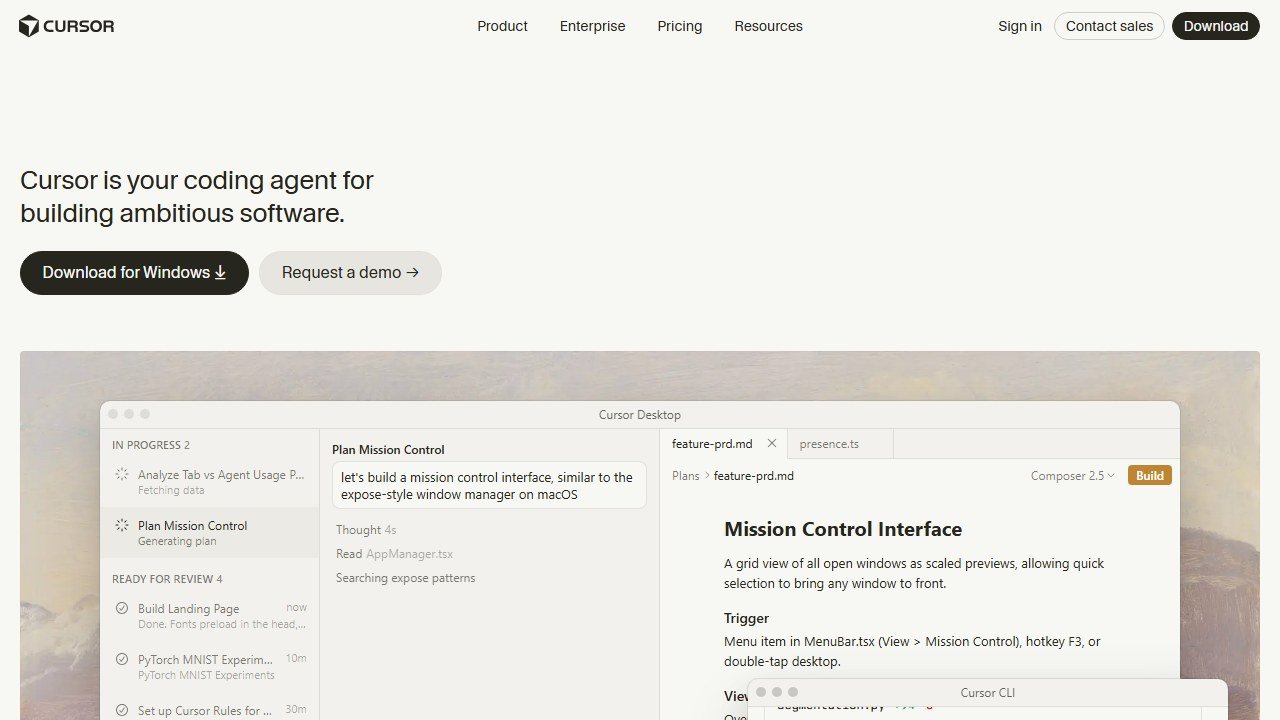
Cursor 2.0’s parallel-agent feature lets eight agents work on different parts of a codebase simultaneously, supervised through a visual canvas. It is the first IDE-level implementation of the parallel-agent pattern that has been theoretical until now.
Practical impact: For shipping teams, the upgrade is genuinely workflow-changing. Bug fixes, refactors, and feature scaffolding can now happen in parallel rather than serial. The catch: review burden scales with agent count. Teams that did not have a strong PR review culture will find the parallel agents amplify their existing problems.
April 2026: the MCP standardisation moment
April was the month MCP went from “Anthropic-only” to “industry standard.” OpenAI, Google, and Microsoft all formally adopted the protocol within the month. The implication was immediate and lasting: AI tool builders now write one integration and ship it across every major LLM platform.
Google Veo 3.1 also shipped in April, and was the headline AI video release of the year so far. The combined video + audio generation matched Sora’s quality before Sora was retired in March, and Veo’s prompt adherence is the strongest in the category.
Adobe Premiere Pro 25.2 added AI-powered Generative Extend, Enhanced Speech, and Object Removal natively. The editing layer of video is now AI-assisted by default, not opt-in. This catches Premiere up to DaVinci Resolve, which had AI features baked in earlier.
March 2026: Google’s AI updates push
March was the month Google’s AI feature work flowed across the Workspace stack: Search Live expanded, AI in Docs/Sheets/Slides/Drive got noticeably more useful, and Personal Intelligence rolled out to consumer users.
The biggest March release for builders was Anthropic’s MCP crossing the threshold from experimental to mainstream. By month’s end, every major AI provider had pledged MCP support, setting up April’s formal adoption announcements.
February 2026: agentic frameworks consolidate
February saw the consolidation of the agentic AI frameworks market. After 18 months of dozens of competing approaches (AutoGPT, BabyAGI, CrewAI, LangChain agents, OpenAI Assistants API, Anthropic’s tool use), the field narrowed to four winning patterns:
- MCP-based agents for cross-provider workflows (Anthropic-led, now industry-standard).
- OpenAI Assistants API for OpenAI-native workflows.
- LangChain Agent Executor for custom multi-step orchestration in code.
- Workflow tools (Make, Zapier, n8n) for low-code agent composition.
For end-users, this consolidation is good news: fewer fragments to learn, more shared best practices, more interoperability.
January 2026: the year openers
The year opened with Claude 4.6 (Anthropic’s January release that briefly held the top spot on LMArena), GPT-5.3 (the OpenAI counter), and Gemini 2.5 Pro reaching broad availability across Google products. All three were incremental over 2025 releases but each shipped meaningful improvements in tool use and long-context recall.
The single biggest January story was the deprecation of Sora in favour of Veo 3, announced January 2026 and effective March. Sora users had a 60-day migration window to either move to Veo 3 (via Gemini) or to one of the independent alternatives like Kling, Pika, or Runway.
How to use this tracker
Three suggestions from how we use it ourselves:
- Check it on the first of each month. We refresh on the 1st with the previous month’s locked-in releases. The “what it means for users” notes are the single most useful filter.
- Subscribe to the source vendors directly for granular changelogs. This tracker is editorial summary. For complete feature lists, follow blog.google, anthropic.com/news, openai.com/blog, and blogs.microsoft.com.
- Watch the slips log. When we start logging slipped releases (announced but undelivered), that signal is more useful for buying decisions than the shipped releases themselves. A vendor that slips its roadmap consistently is a vendor whose feature promises you should discount.
What we tracked in 2026 so far
- 9+ major model releases (Claude 4.6, 4.7, Opus 4.8, Fable 5; GPT-5.3, 5.4, 5.6; Veo 3.1)
- Tiered model families became the norm (OpenAI Sol/Terra/Luna, Claude Opus/Fable)
- MCP from experimental to 97M installs and industry standard
- Agentic AI from opt-in feature to default behaviour
- Microsoft shipped its own MAI models to cut its OpenAI dependence
- 1 tracked slip: Google Gemini 3.5 Pro missed its promised June GA
This page is refreshed on the 1st of every month. Last refresh: 1 July 2026.
Further reading
We hold every roundup on this site to six rules: free-type tagging, same-source testing, integration matrices, refresh discipline, SERP reality, and safeguards first. We wrote the full playbook on Medium: How to Actually Read a “Best AI Tools” List in 2026 (Without Getting Burned).
Tools mentioned in this guide

Written by
FazFaz is the founder of AIToolsBakery. Some tools here are tested hands on. Others are assessed from vendor documentation and pricing verified on the live page, and every review says which one it is. Sponsors can buy a position in a guide. They cannot buy the score, the criticism, or silence about a better option.
How we test and how we make money →