Two of the biggest names in education. Two different approaches to AI-powered learning. One guides. The other drills.
Faz says: Teachers ask this all the time: should I point my students to Khanmigo or Quizlet? The answer depends on what your students need. If they need to understand a concept they’re stuck on, Khanmigo. If they need to memorize 50 vocabulary words for Friday’s test, Quizlet. They’re not really competing. They’re solving different problems. Here’s the full breakdown for both tools from our best AI tools for teachers roundup.
Head-to-Head Comparison
| Feature | Khanmigo | Quizlet |
|---|---|---|
| Type | AI tutor (Socratic method) | AI study platform (flashcards + tutor) |
| AI model | GPT-4 | Proprietary |
| Rating | 4/5 | 4/5 |
| Free for teachers | Yes (44+ countries) | Basic tier (with ads) |
| Free for students | Via district partnerships | Basic tier (with ads) |
| Student AI tutor | Yes (guides without giving answers) | Yes (Q-Chat, Socratic method) |
| Flashcards | No | Yes (core feature) |
| Content library | Khan Academy videos + exercises | 800M+ user-created study sets |
| Magic Notes | No | Yes (notes to flashcards) |
| FERPA | Via district | Yes (school accounts) |
| COPPA | Via district | Yes |
| Monthly users | Part of Khan Academy | 60M+ |
| Best for | Understanding concepts | Memorization and review |
| Strongest subjects | Math, science | All subjects (user-generated) |
Feature-by-Feature Breakdown
AI Tutoring
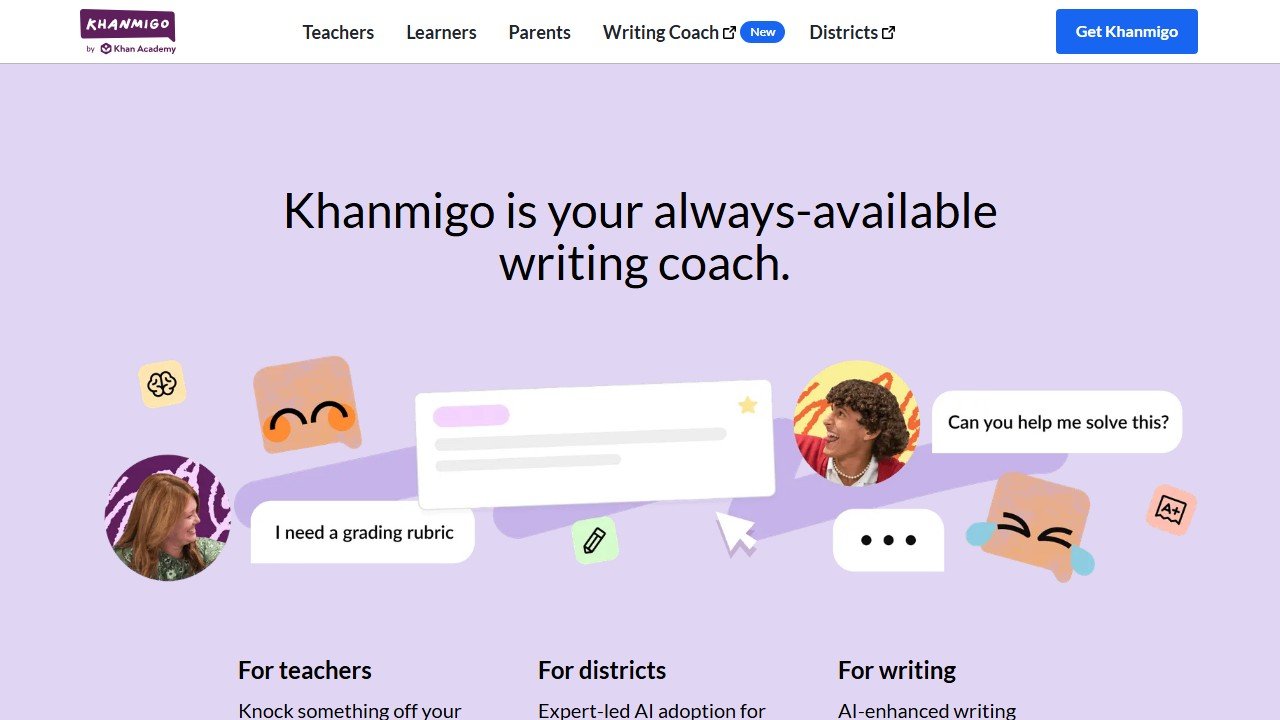
Khanmigo: The Socratic tutor that guides students through problems step by step. It asks questions, gives hints, identifies misconceptions, and never gives the answer directly. Contextual to the student’s position in Khan Academy’s learning path.
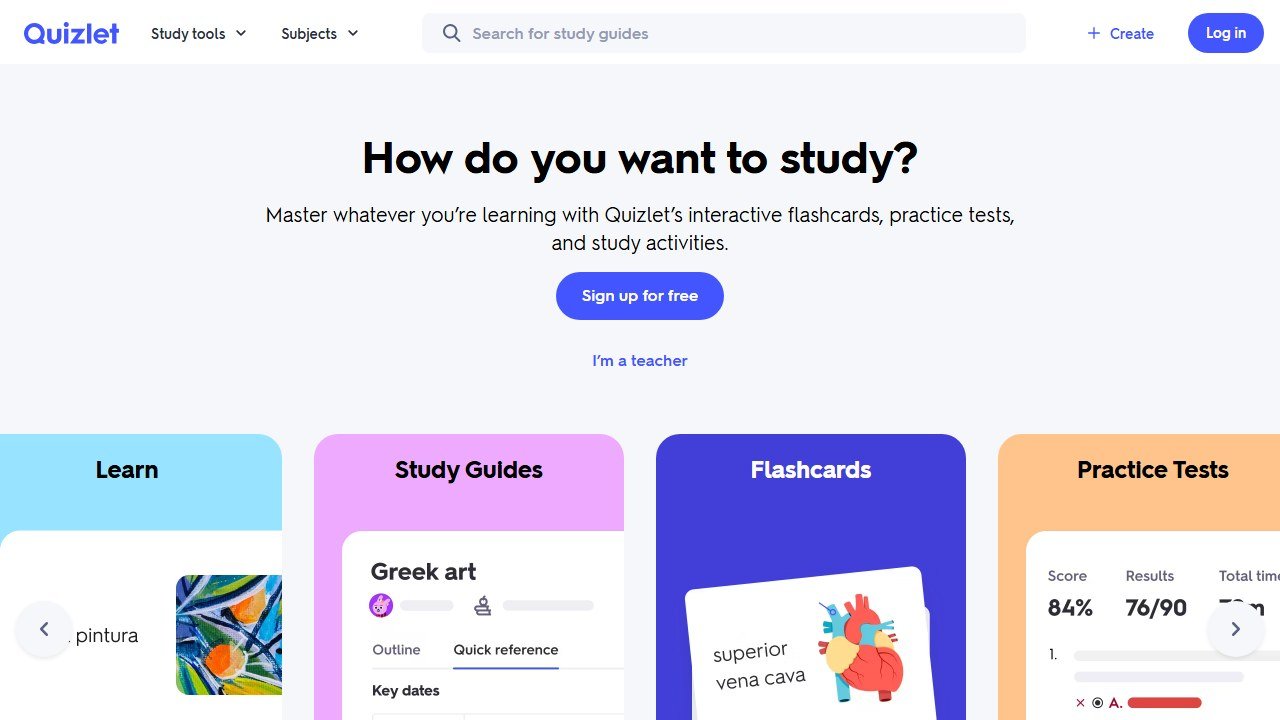
Quizlet: Q-Chat uses a similar Socratic approach for study conversations. Students can discuss topics, get explanations, and work through problems. Less deeply integrated into a curriculum than Khanmigo.
Winner: Khanmigo. The integration with Khan Academy’s content library and learning path makes the tutoring contextual and adaptive in ways Q-Chat can’t match.
Memorization and Review
Khanmigo: No flashcard or memorization features. Built for understanding, not drilling.
Quizlet: This is Quizlet’s origin. Flashcard creation, spaced repetition, Learn mode, Match games, and now Magic Notes that converts your notes into flashcards automatically. 800M+ study sets created by users.
Winner: Quizlet. Not close. Quizlet is the gold standard for memorization and review.
Content Library
Khanmigo: Khan Academy’s curated library of videos, exercises, and articles. Strongest in math (pre-K through college) and science. Growing in humanities.
Quizlet: 800M+ user-created study sets covering every subject, every grade level, every exam. The content is crowdsourced, so quality varies, but the breadth is unmatched.
Winner: Depends. Khan Academy for curated, high-quality content in math and science. Quizlet for breadth across every subject and exam type.
Free Access
Khanmigo: Free for teachers in 44+ countries (Microsoft-sponsored). Student classroom access requires district partnerships. Parents pay for home subscriptions.
Quizlet: Free basic tier for everyone. Ads on free. Q-Chat, Magic Notes, and advanced study features require Quizlet Plus (~$7.99/mo or ~$35.99/year).
Winner: Khanmigo for teachers. Quizlet for student self-access (no district partnership needed). Both have limitations on free AI features.
Subject Coverage
Khanmigo: Math, science, humanities, coding, social studies. Strongest in math and science. Limited in language arts, foreign languages, and test-specific prep.
Quizlet: Every subject. Every exam. User-created content means there’s a study set for AP Bio, SAT vocab, medical terminology, bar exam, and everything in between.
Winner: Quizlet. 800M+ study sets means Quizlet covers subjects Khanmigo hasn’t reached yet.
Compliance
Khanmigo: Compliance handled through district partnerships. Common Sense Media 4 stars.
Quizlet: FERPA compliant (school accounts), COPPA compliant, Student Privacy Pledge signatory.
Winner: Quizlet. Publicly documented compliance vs partnership-based compliance.
Real-World Scenarios: Which Tool Works Better?
Scenario 1: A Student is Stuck on a Math Problem
Khanmigo: The student opens the exercise in Khan Academy, activates Khanmigo, and the AI guides them through the problem step by step. “What do you know about this type of equation?” “What happens when you isolate x?” The student arrives at the answer through their own reasoning.
Quizlet: The student searches for a study set with similar problems. Flashcards show the formula and examples. Learn mode drills the concept. But there’s no guided problem-solving. The student sees worked examples rather than being coached through their own attempt.
Better choice: Khanmigo. Guided problem-solving builds understanding. Flashcard drilling builds recall.
Scenario 2: Students Need to Memorize 40 Spanish Vocabulary Words for Friday
Khanmigo: No flashcard features. Khan Academy’s language content is limited. Khanmigo can explain grammar concepts but can’t run vocabulary drills.
Quizlet: Search “Spanish Chapter 3” and find dozens of pre-made study sets. Or create your own in 2 minutes. Students drill with flashcards, Learn mode, and Match games. Spaced repetition focuses on words they keep getting wrong.
Better choice: Quizlet. This is literally what it was built for.
Scenario 3: A Student Needs Help Understanding Photosynthesis Before a Test
Khanmigo: Guides the student through the concept using Khan Academy’s biology content. Asks probing questions. Identifies misconceptions. Links to relevant Khan Academy videos when the student needs a visual explanation.
Quizlet: Q-Chat can discuss photosynthesis and answer questions. Flashcard sets cover the key terms and processes. Magic Notes can convert the student’s class notes into study materials. Less guided than Khanmigo, but covers the review and memorization side.
Better choice: Both. Khanmigo for initial understanding, then Quizlet for reviewing and memorizing the key terms and processes.
Scenario 4: You Want to Recommend One Tool to All Parents
Khanmigo: Free for teachers, but parents need to purchase subscriptions for home use. Student classroom access requires district partnerships. Some friction for home adoption.
Quizlet: Free basic tier for everyone. Students can search and use existing study sets immediately. AI features (Q-Chat, Magic Notes) require Quizlet Plus, but basic flashcard study is free.
Better choice: Quizlet for universal accessibility. Any student can start using Quizlet in 30 seconds without school agreements or parent purchases.
Scenario 5: You Teach AP Biology and Want AI Study Support
Khanmigo: Strong AP Biology content in Khan Academy. Khanmigo can guide students through complex concepts and practice problems. The tutoring is deep for supported subjects.
Quizlet: Thousands of AP Biology study sets created by students and teachers. Q-Chat can quiz students on any topic. Magic Notes converts review guides into practice tests. Expert Solutions provides step-by-step textbook answers.
Better choice: Both. Khanmigo for concept mastery during the learning phase. Quizlet for review and memorization during the exam prep phase.
Pricing Comparison
| Khanmigo | Quizlet | |
|---|---|---|
| Teacher access | Free (44+ countries) | Free basic (with ads) |
| Student access | Free via district partnership | Free basic (with ads) |
| AI features | Included with access | Quizlet Plus: ~$7.99/mo |
| Annual plan | N/A | ~$35.99/year |
| Family/parent | Paid subscription | Quizlet Plus per account |
| School/district | Partnership agreements | School plans available |
For teachers: Khanmigo is clearly free. Quizlet’s free tier works but shows ads and locks AI features.
For students: Khanmigo requires district partnerships for classroom access. Quizlet’s basic features work for any student immediately.
For AI features specifically: Khanmigo includes AI tutoring in its free teacher access. Quizlet charges ~$7.99/mo for Q-Chat, Magic Notes, and Expert Solutions.
The Real Decision
Faz says: This is not an either/or decision for most classrooms:
Recommend Khanmigo when students need to:
• Understand a concept they’re stuck on (especially math and science)
• Work through problems with guided help
• Get tutoring without getting answers
• Practice with Khan Academy exercises that grade themselves
Recommend Quizlet when students need to:
• Memorize vocabulary, formulas, dates, or terminology
• Review for a test with flashcards and spaced repetition
• Convert class notes into study materials automatically
• Study any subject at any level (800M+ study sets)
Recommend both when:
• Students use Khanmigo to understand new concepts during learning
• Then use Quizlet to memorize and review before assessments
• Understanding + memorization = the complete study cycle
Both tools cover only part of a study workflow. For the full picture, from note capture to spaced review, see our tested roundup of the best AI tools for studying and summarizing.
Final Verdict
Saru says: Khanmigo and Quizlet are complementary tools, not competitors. Khanmigo excels at guided conceptual learning through Socratic tutoring integrated with Khan Academy’s content library. Quizlet excels at memorization, review, and test preparation through flashcards and spaced repetition. The optimal student toolkit includes both: Khanmigo for understanding new material, Quizlet for retaining it. Teachers should recommend the tool that matches the study task, not try to pick a single winner.
| Khanmigo | Quizlet | |
|---|---|---|
| Rating | 4/5 | 4/5 |
| Best for | Understanding concepts | Memorizing and reviewing |
Read our full reviews: Khanmigo review | See Quizlet in our best AI tools for teachers pillar guide.
References & further reading
For deeper research on AI in education and evidence-backed instructional practice:
- Common Sense Education: AI in K-12 classrooms. classroom-tested guidance and tool ratings reviewed by educators
- Edutopia technology integration research. peer-reviewed edtech case studies and classroom implementation practice
- US Department of Education on AI in schools. federal guidance on AI in teaching and learning, including the 2023 Office of Educational Technology report
When to choose Khanmigo over Quizlet
Picking between Khanmigo and Quizlet comes down to four factors: team size, budget, integration needs, and how much customization you want. Use the framework below to map your situation to the right tool.
Pick Khanmigo if:
- You’re an individual operator or a small team and you want the fastest setup path.
- Your budget favors a lower entry tier or a strong free plan over premium features you may never use.
- Your existing stack is light, and you prefer a tool that works well out of the box.
- You value simplicity over feature breadth.
Pick Quizlet if:
- You’re a growing or mid-sized team and you need room to scale without switching platforms.
- You’re willing to pay more upfront for advanced features, integrations, or higher usage limits.
- You already have a mature stack and you need a tool that plugs into it cleanly.
- You’d rather have power and configurability than the simplest possible setup.
What we’d switch for
The most common reasons we see teams move between tools in this category: (1) pricing changes that push the cheaper option out of reach, (2) a missing integration that becomes a daily friction, (3) hitting a usage cap on the lower tier, (4) a feature ship from the alternative that closes a gap users had been working around.
If you can avoid those four switching triggers with your initial pick, you’ve made the right call. If any of them are likely in your first 12 months, plan for them now and pick accordingly.
Bottom line
Khanmigo is the more accessible starting point. Quizlet is built for the stage after you’ve outgrown a simpler tool. Most teams should start with the tool that matches today’s needs and move when (and if) they hit a real wall, not based on what they think they might need in two years.
Final 2026 verdict for student AI
Khanmigo and Quizlet target different student moments. Khanmigo is the AI tutor that guides understanding through the Socratic method, best for students who are stuck on concepts and need patient walkthroughs. Quizlet is the spaced repetition flashcard tool, best for students who already understand the concepts and need retrieval practice. Used together, they cover the full learning loop from comprehension to retention. Picking just one: Khanmigo for younger students still building understanding, Quizlet for older students drilling for tests.
Pricing: Khanmigo is free for teachers in 44+ countries and around $4 a month for parent-supported home use. Quizlet has a generous free tier with Quizlet Plus at $7 a month adding ad-free use, AI tutoring features, and advanced study modes.
What “free for teachers” actually means
Almost every tool in this category leads with a free tier, and they are not equivalent. The limit is where the product design shows.
The limits that are published, and therefore checkable
Chalkie states five full lessons or activity sheets every seven days. CoGrader states 100 student submissions a month. Curipod and MagicSchool both publish free plans without a headline cap on the pricing card. Verified 4 September 2026. A published cap is much easier to plan around than an unpublished one, because you can work out in advance whether it covers a normal week for you rather than discovering it in the middle of one.
Work out your real weekly volume before choosing
Count what you actually produce in a normal week: how many worksheets, how many class sets to grade, how many lesson plans. Teachers routinely underestimate this and then hit a cap on a Sunday evening. If your week is five lesson resources, a five-per-week free tier is exactly on the line and you will exceed it in any week with a cover lesson or a new unit.
Free for you may not be free for the school
A teacher signing up personally sits outside whatever approval process the school has for student data, which matters as soon as student work goes into the tool. That is not an argument against the tool; it is an argument for telling somebody. Most districts would far rather approve a tool a teacher is already using than discover it in an incident.
The commercial logic, stated plainly
Generous teacher tiers exist because teachers are the route to a district contract, which is where the revenue is. That is a perfectly reasonable model and it has a consequence worth knowing: the free tier is likely to stay usable, because it is the marketing. What is less predictable is whether the feature you come to depend on stays on the free side of the line. Do not build a department-wide process on a free tier of khanmigo vs or anything else without a fallback.
Student data, and the questions a school has to ask before anything is switched on
This is the part of education technology where getting it wrong has consequences beyond a wasted subscription, and it is mostly answerable in writing before adoption.
Know which law you are under before you evaluate
In the United States, student education records sit under FERPA, and services aimed at under-13s bring COPPA into scope, which requires verifiable parental consent for personal information collected from children. Schools outside the US will have their own regime. The practical effect is the same: the school, not the vendor, carries the obligation, so the vendor questions exist to let you meet it.
Ask whether student work trains the model
This is the single question to get in writing. Ask whether student inputs and outputs are used to train or improve any model, including in aggregated or anonymised form, and whether that binds subprocessors too. “We do not train on your data” and “we do not train foundation models on your data” are different sentences. Get it as a contract term, because a sales assurance does not survive a change of ownership.
Ask who else touches the data
Most tools here are built on a model provider they did not write, so student work reaches a third party. Ask for the current subprocessor list, where each processes data, and how you are notified when it changes. A vendor that cannot produce that list within a day does not have one, which tells you enough about the rest of their programme.
Ask what happens at the end of a school year
Retention and deletion, stated in days rather than described as a process. What is deleted when a student leaves, when a class is archived, when the contract ends. Ask whether deletion means removed from live systems, removed from backups, or flagged. A vendor that will commit to a number in the contract is a different proposition from one that describes an approach.
The one many schools miss: inferences about a child
If a tool generates a reading level, a predicted grade, a behaviour flag or an ability estimate, that is data about a student the student never supplied. Ask whether those inferences are covered by your export, your deletion request and your access request, because a parent asking what the school holds on their child is asking about those too.
Tools mentioned in this guide
For more, see Khanmigo vs ChatGPT and the best AI flashcard apps compared.

Written by
FazFaz is the founder of AIToolsBakery. Some tools here are tested hands on. Others are assessed from vendor documentation and pricing verified on the live page, and every review says which one it is. Sponsors can buy a position in a guide. They cannot buy the score, the criticism, or silence about a better option.
How we test and how we make money →