The best AI meal plan generator for fitness goals in 2026 is Eat This Much (AI version) for most lifters. It pairs goal-targeted macros with a recipe library that adjusts to budget and grocery preferences, which is exactly what tracker apps cannot do. Cutters and bulkers chasing rigid macros should look at Strongr Fastr instead.
Last reviewed: May 2026
You can log every gram you eat with the best AI macro tracker apps and still gain nothing. Tracking tells you what you ate. The harder question is what you should eat tomorrow morning, when you are tired, your fridge is half-empty, and you have a 2,400-calorie target with 180g of protein to hit.
That is where AI meal plan generators come in. We read the docs, the App Store reviews, the r/loseit and r/Mealprepsunday and r/fitness threads, the Capterra entries, and the vendor pricing pages so you do not have to. This is a vendor-neutral best-of from the AITB editorial team, not a sponsored roundup. Nobody in this list paid to be here.
Best AI meal plan generator for fitness goals 2026: the short answer
If you want the one-line verdict before scrolling through 3,000 words:
- Eat This Much (AI version) wins for most lifters and fat-loss dieters. Best balance of macro targeting, recipe variety, and grocery list output.
- MacroFactor wins if you already love tracking and want macro-first planning with a coach feel.
- Strongr Fastr wins for serious cut-and-bulk cycles where you want the AI to follow a bodybuilding playbook.
- PlateJoy wins for households where two or three people need their own targets in one weekly plan.
- Mealime AI wins for the busy person who just wants weeknight meals that hit a calorie band.
- Lasta wins if intermittent fasting is part of your fitness goal.
How AI meal plan generators actually work
There is no mystery engine here. Strip the marketing and every AI meal plan generator does roughly the same five things:
- Asks for your age, weight, height, activity level, and goal (cut, bulk, maintain).
- Estimates your TDEE (total daily energy expenditure) using a formula like Mifflin-St Jeor.
- Sets a calorie target above or below TDEE based on your goal, and splits it into protein, carbs, and fat macros.
- Pulls recipes from its internal database that, when combined, land near those macro targets.
- Outputs a daily or weekly plan plus, in most cases, a grocery list.
The "AI" part lives mostly in step 4. Some apps use real machine learning to match recipes to your past ratings, dietary restrictions, and budget. Others use a constraint solver that just shuffles recipes until the math works. Both can be useful. Neither is magic. The quality of the recipe library matters more than the smartness of the algorithm, which is why this list weights recipe depth heavily.
How we ranked these
Every pick here was evaluated against the same checklist:
- Macro accuracy: Does the app actually hit the macro targets it sets, or does the math drift by 200 calories a day?
- Recipe library depth: Public claims plus user reports of repetition.
- Goal flexibility: Can you set a real cut or bulk target, not just "lose weight" or "gain muscle" generic settings?
- Grocery integration: Does it output a real list? Does it sync to Instacart or Walmart?
- Hidden costs: Annual price, recipe library lock-ins, paywalled features.
- User sentiment: App Store rating (minimum 3,000 reviews to count), G2, Capterra, and Reddit thread tone.
We pulled review data through mid-May 2026. Prices below are USD, billed annually unless noted.
#1: Eat This Much (AI version) – best for budget-conscious lifters
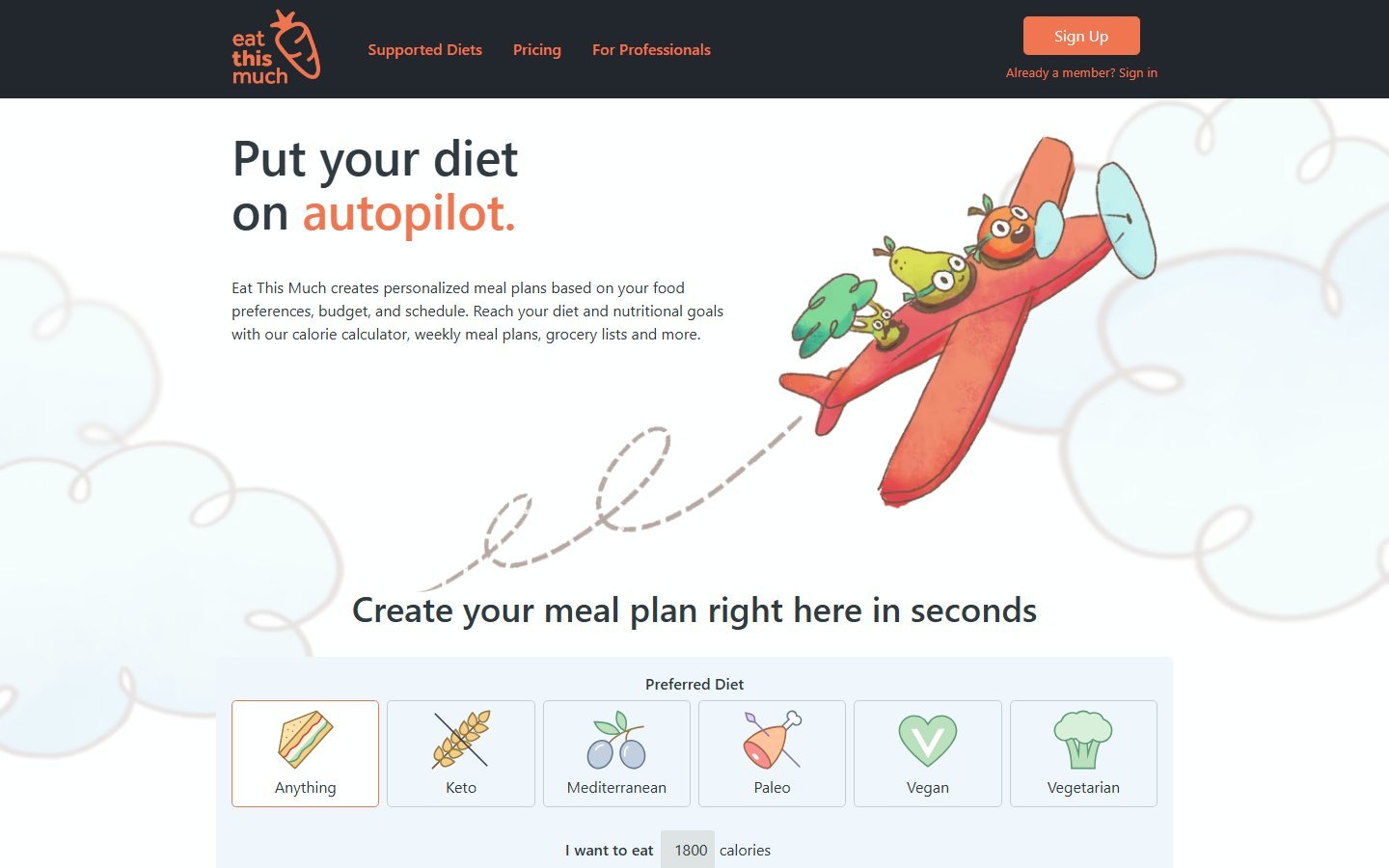
Eat This Much has been around since the pre-AI era, but the 2024 algorithm overhaul moved it into legitimate AI meal planner territory. You set your daily calorie and macro targets, your budget per day, and your preferred grocery store, and it builds a plan that respects all three constraints at once.
The thing that makes it our top pick is the constraint solver. You can tell it "1,900 calories, 160g protein, $8 per day, no shellfish, costs under $25 a meal," and it actually delivers a plan that hits those numbers. Most competitors silently break one of the constraints when they cannot solve.
What it does well
Recipe library is enormous (claimed 1.5 million combinations from a base library of around 15,000 recipes). The grocery list export to Instacart works. The plan regenerates with one click if you do not like what it gave you. Free tier is genuinely usable, which is rare.
Where it falls short
The UI looks like it was designed in 2015 and the updates have not caught up. The free tier limits you to one day of planning at a time and forces a paywall on full-week plans. Some users on r/loseit complain that the budget mode pushes too much rice and pasta when you set tight dollar limits.
Pros:
- Real constraint-solving (budget plus macros plus restrictions)
- Massive recipe library
- Cheap premium ($4.99/month)
- Instacart and Walmart grocery integration
Cons:
- Dated UI
- Free tier is one day only
- Budget mode skews carb-heavy
Best for: Lifters and fat-loss dieters on a real grocery budget who want a tool that respects all three of macros, money, and dietary restrictions at once.
#2: MacroFactor – best when you want macro-first, not menu-first
MacroFactor is technically a macro tracking app, but its "meal builder" and adaptive coaching make it a contender. The philosophy is different from Eat This Much. Instead of giving you a full menu, MacroFactor tells you "you have 600 calories and 45g of protein left for the day" and lets the AI suggest recipes and quick meals that fit that remaining bucket.
This is the right choice if you already know how to cook, you do not want to be told what to eat for breakfast, but you want help filling the macro gaps later in the day. The adaptive algorithm also recalibrates your TDEE weekly based on actual scale data, which is more honest than the static targets most competitors lock you into for months.
What it does well
The TDEE recalibration is the most defensible in the category. The meal suggester is fast and the food database is high-quality (verified entries, not crowd-sourced garbage). No ads ever. The team behind it includes published nutrition researchers, which shows in the methodology docs.
Where it falls short
It is not really a meal planner in the traditional sense. There is no full weekly menu output. No grocery list. If you want to be told "eat this, then this, then this," MacroFactor will frustrate you. Price is also at the high end at $11.99/month or $71.99/year.
Pros:
- Best-in-class TDEE adaptation
- Premium food database
- Strong scientific credibility
- Zero ads
Cons:
- Not a true meal planner
- No grocery list
- Premium-priced
Best for: Intermediate lifters who track macros confidently and want AI help filling the gaps, not a full menu handed to them.
undefined
#3: PlateJoy – best for households and grocery lists
PlateJoy is the only app in this list that handles multi-member households well. You can set different macro targets and dietary preferences for each family member and PlateJoy will generate a single weekly plan that satisfies everyone, then a unified grocery list.
It also has the strongest grocery integration in the list. Instacart, Walmart, and Amazon Fresh all hook in cleanly, and the list deduplicates ingredients across recipes (so you do not buy three separate jars of olive oil for three meals).
What it does well
Household mode is a genuine differentiator. Grocery dedup logic is the best we have seen. Recipe variety is solid (around 10,000 recipes per public claim). Diabetes-friendly mode is well-implemented thanks to the partnership with One Medical.
Where it falls short
Pricier than the alternatives at $99/year (no monthly option after the trial). The fitness-specific macro targeting is less precise than Eat This Much or Strongr Fastr; PlateJoy is built more for general healthy eating than for cuts and bulks. Some r/Mealprepsunday users report the AI keeps suggesting overlapping recipes if you do not actively rate things you dislike.
Pros:
- Best household / multi-user logic in the category
- Strong grocery integration
- Diabetes and health-condition support
- Good recipe variety
Cons:
- Annual-only pricing
- Less precise for cut/bulk macros
- Need to actively rate to get variety
Best for: Families or couples on different fitness goals who want one grocery run per week, not three.
#4: Mealime AI – best for quick weeknight meal plans
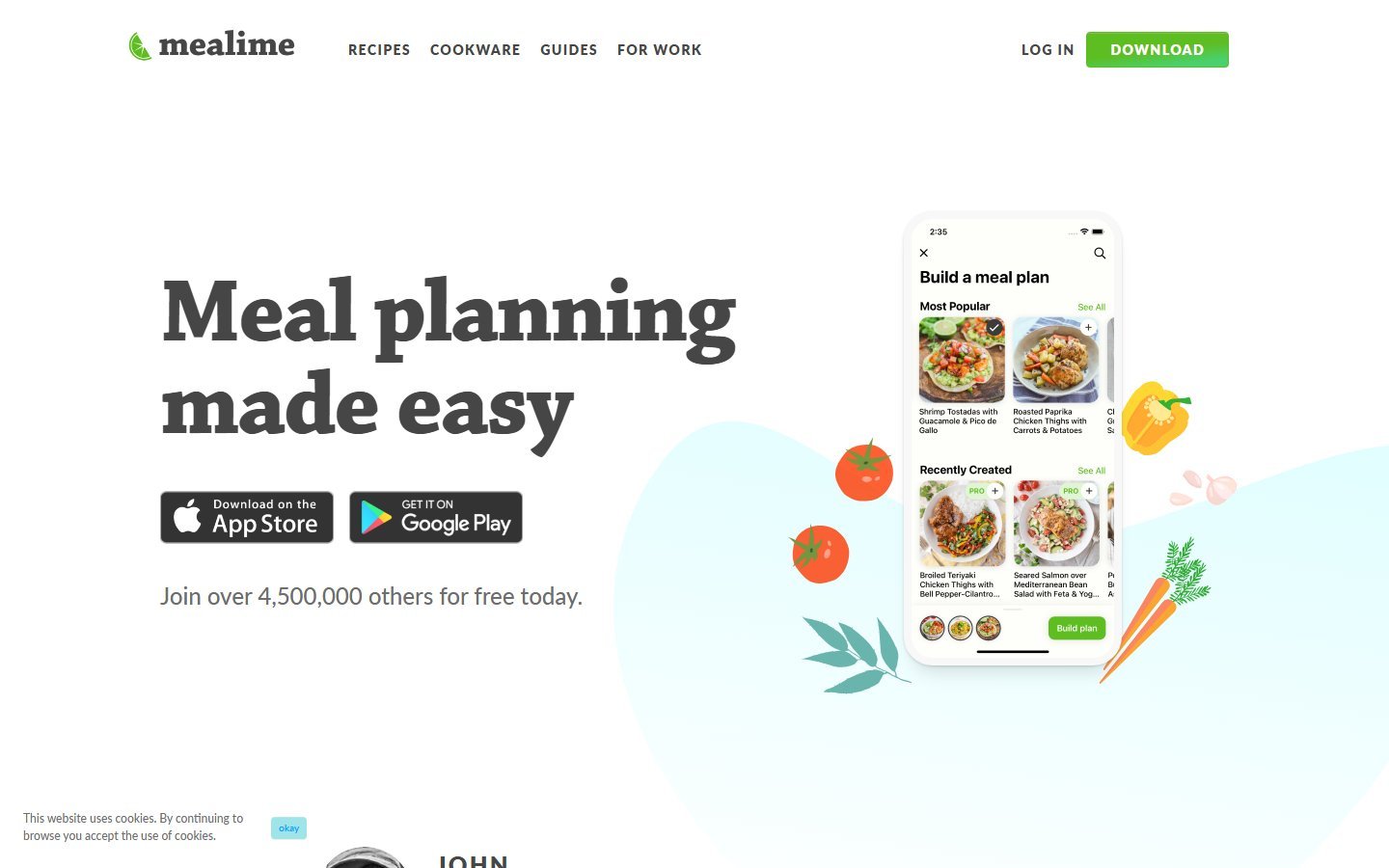
Mealime added AI-driven personalization in late 2024 and the difference is real. The strength here is speed. You can have a five-day plan, a grocery list, and a 20-minutes-per-meal cooking guarantee in about 60 seconds of setup.
This is the right pick if you are not chasing a serious cut or bulk, but you want fitness-adjacent meals (high protein, low ultra-processed) that you can actually cook on a Tuesday night after work. The recipe library is curated for speed, with most meals at six ingredients or fewer.
What it does well
Cooking time honesty is excellent (the 20-minute claim holds up in reviews). UI is genuinely beautiful. Grocery list output is clean. Free tier is meaningful (5 recipes per week, full functionality).
Where it falls short
Macro targeting is approximate, not exact. If you tell it 180g of protein, it will land between 150 and 200 most days. Recipe library is smaller than the competition (around 5,000 recipes). Vegetarian and pescatarian options are deep but vegan is thin.
Pros:
- Fastest setup-to-meal flow in the category
- Honest cooking times
- Clean UI
- Meaningful free tier
Cons:
- Imprecise macro hitting
- Smaller recipe library
- Vegan support is weak
Best for: Busy professionals who want fitness-adjacent meals without the spreadsheet-level macro precision.
#5: Strongr Fastr – best bodybuilder-style cuts and bulks
Strongr Fastr is the most underrated app in this category and the one that actual physique-sport people on r/bodybuilding talk about. It builds meal plans that look like what a real prep coach would write: protein-front, repeatable, cheap, with explicit cut, recomp, and bulk modes that are tuned for muscle building rather than general weight loss.
The AI here is less flashy than PlateJoy or Eat This Much, but the output is the most fitness-honest. Every plan defaults to high-protein (1g per pound bodyweight or higher), and the cut mode actually creates aggressive enough deficits to drive scale movement, where most competitors play it safe.
What it does well
Goal-specific tuning is real. Recipe library leans toward simple, high-yield foods (chicken, rice, oats, eggs, ground beef) which mirrors how serious lifters actually eat. Workout integration on top of the meal plan is a bonus.
Where it falls short
UI is functional, not pretty. Library is smaller than competitors at around 4,000 recipes. If you want gourmet, look elsewhere. No grocery integration beyond a simple list export.
Pros:
- Most physique-honest macro tuning
- Workout plus meal plan combo
- Cheap ($5.99/month)
- Strong cut mode
Cons:
- Plain UI
- Smaller library
- No Instacart integration
Best for: Lifters running serious cut, bulk, or recomp cycles who want a meal plan that respects the goal, not a wellness-app version of it.
#6: Lasta – best for AI-tailored fasting plus meal-plan combo
Lasta is built around intermittent fasting first, meal planning second. The AI generates a daily eating window and then fills that window with macro-targeted meals. If your fitness strategy includes 16:8 or OMAD, this is the cleanest integrated tool in the category.
It is the youngest app on this list (launched 2022) and it shows in places, but the fasting-aware meal logic is unique enough to justify a slot. Mediterranean and keto are both well-supported.
What it does well
Fasting window plus meal plan together is the killer feature. Mood and stress tracking integration is more thoughtful than competitors. UI is modern.
Where it falls short
Premium pricing is aggressive ($79.99/year). Subscription practices have drawn complaints on Reddit (hard to cancel). Recipe library skews toward Mediterranean and may bore you if you want global cuisine.
Pros:
- Fasting and meal planning in one tool
- Modern, clean UI
- Mood and stress integration
Cons:
- Expensive
- Subscription cancellation complaints
- Limited cuisine range
Best for: Lifters or dieters whose fitness plan includes intermittent fasting and who want both schedules managed in one app.
Comparison table
| Tool | Annual price | Recipe library | Grocery sync | Best for | Macro precision |
|---|---|---|---|---|---|
| Eat This Much | $59 | 15,000 | Instacart, Walmart | Budget lifters | High |
| MacroFactor | $71.99 | N/A (food DB) | None | Macro-first trackers | Highest |
| PlateJoy | $99 | 10,000 | Instacart, Walmart, Amazon | Households | Medium |
| Mealime AI | $49.99 | 5,000 | Instacart | Weeknight cooks | Medium-low |
| Strongr Fastr | $71.88 | 4,000 | List export only | Bodybuilders | High |
| Lasta | $79.99 | 6,000 | None | Fasting + planning | Medium |
The free hack: how to prompt ChatGPT for a goal-targeted meal plan
You do not need to pay $80 a year if you can write a half-decent prompt. The 2026 GPT-4o and Claude 3.5 Sonnet models will both produce a credible weekly meal plan from a structured prompt. Here is the template we have tested against the paid tools:
You are a sports nutritionist. Build me a 7-day meal plan with these constraints:
- Target: [your TDEE goal, e.g. 2,200 calories per day]
- Macros: [your targets, e.g. 180g protein, 220g carbs, 70g fat]
- Restrictions: [list any: no shellfish, no dairy, vegetarian, etc.]
- Budget: [USD per day if relevant]
- Cuisine preferences: [Mediterranean, Mexican, Asian, anything]
- Cooking time per meal: [maximum minutes]

For each day, give me 4 meals (breakfast, lunch, snack, dinner).
For each meal, give me ingredients with grams, total macros, and prep instructions.
At the end, produce a unified grocery list grouped by store section, with total quantities.
This works. It is not as polished as Eat This Much, and the math drifts by 5-10% per day, but it is free and infinitely customizable. The honest comparison is that paid tools are better at week 2 and beyond because the prompt approach gets boring fast (you have to manually ask for variety each week).
Hidden-cost teardown
The sticker price is rarely the real price. Here is what each tool actually costs you across a year of real use:
- Eat This Much: $59 base. Recipe import addon $19. Average all-in: $59-78.
- MacroFactor: $71.99 base. No addons. All-in: $71.99. Cleanest pricing in the list.
- PlateJoy: $99 base. Instacart membership ($99/year) is a near-requirement to get the full value. All-in: $99-198.
- Mealime AI: $49.99 base. The free tier is good enough for many users, so the real all-in for casual users is $0.
- Strongr Fastr: $71.88 base. Workout plan included (no upsell). All-in: $71.88.
- Lasta: $79.99 base. Aggressive in-app upsells for "Lasta Pro" coaching add $40 if you bite. All-in: $79.99-119.99.
The cheapest realistic option for a serious lifter is Strongr Fastr or Eat This Much. The most expensive is PlateJoy plus Instacart.
Decision tree by goal
You are cutting (fat loss with muscle retention): Strongr Fastr first, Eat This Much second. Both create aggressive enough deficits and prioritize protein.
You are bulking (muscle gain): Strongr Fastr first, MacroFactor second. Bulks need precision and Strongr Fastr's recipe-by-protein-per-dollar logic is unmatched.
You are maintaining (recomp or general health): PlateJoy first, Mealime AI second. Both have the variety to sustain you over months.
You are training for athletic performance: MacroFactor first. The TDEE recalibration is critical when your training volume swings week to week.
You are doing body recomposition (lose fat plus gain muscle simultaneously): Eat This Much first. The constraint solver handles the tightrope of high-protein-but-moderate-deficit better than the alternatives.
You are an intermittent faster: Lasta first, no close second.
Which AI meal plan generator should you pick?
Most fitness-focused readers should start with either Eat This Much (if they want a full menu) or MacroFactor (if they want macro coaching without a menu). These two cover 70% of use cases.
If you have a household, jump to PlateJoy. If you are a serious lifter chasing a real physique outcome, Strongr Fastr is the unsexy pick that actually delivers. If you cook on weeknights and just want to eat decently, Mealime AI is enough.
Pair any of these with one of the best AI macro tracker apps for full coverage of the eat-then-log loop. Meal planners answer "what should I eat?" and trackers answer "did I actually hit my targets?" You need both.
More from AIToolsBakery: best AI macro tracker apps, best AI tools for personal trainers.

Written by
FazFaz is the founder of AIToolsBakery. Every tool on this site is personally tested with real-world writing tasks before a single word gets published. No sponsored rankings, no recycled press releases.
Read more about how we test →Frequently Asked Questions