Quick answer: The top AI search monitoring tools in 2026 are Profound, Otterly.AI, Peec.ai, Scrunch, and Ahrefs Brand Radar. They track when ChatGPT, Perplexity, Claude, and Google AI Overviews mention your brand or products. Profound has the deepest enterprise feature set; Otterly is the most affordable for indie marketers ($49/month). The rest are venture-funded and pricing varies. Detailed breakdown by feature and price below.
Only 16% of brands systematically track their AI search performance (Erlin, 2026). That means 84% of marketers are publishing content, running campaigns, and building backlinks with zero visibility into what ChatGPT, Perplexity, or Gemini is actually saying about them.
That's not a small blind spot. That's your entire AI search presence flying blind.
This category. AI search monitoring. is different from rank tracking, different from brand mentions, and very different from traditional SEO analytics. This guide covers 8 tools built specifically for this job, with real pricing, honest limitations, and a full section on what to actually do with the data once your monitoring alerts you.
Every article ranking for this keyword was written by one of the vendors. This one isn't.
Best overall: Peec AI. depth + actionability for marketing teams and agencies
Best budget: Nightwatch. from $32/mo, combines AI monitoring with traditional rank tracking
Best free start: LLMrefs. free plan available, Pro at $79/mo covers 11 engines
AI search tracking vs AI search monitoring: what are we actually talking about?
Quick clarification: “AI search tracking” and “AI search monitoring” are two phrases for the same activity. Both refer to watching when, where and how your brand or content appears in answers from ChatGPT, Perplexity, Claude, Gemini and Google’s AI Overviews. The tools in this guide do both jobs: they track brand mentions in AI search outputs and they monitor changes in citations over time.
If you are specifically looking for AI search tracking software (continuous monitoring of how your brand is being cited by LLMs and AI search engines), the same five platforms reviewed below will solve that need. Profound, Otterly and Surfer all offer real-time tracking dashboards. SearchAtlas and SE Ranking layer tracking on top of broader SEO suites.
Why AI Search Monitoring Is Not Rank Tracking
If what you actually want is to watch a named rival rather than your own brand, that is a different job with a different method, and you can start it without buying anything. We set it out in how to monitor competitors in AI search results, which uses citation share as the competitive read.
Quick comparison at a glance: full breakdown for each option below.
Comparison Table
| Tool | Platforms Tracked | Alert Speed | Starting Price | Free Trial | Best For |
|---|---|---|---|---|---|
| Peec AI | ChatGPT, Perplexity, Gemini, Copilot, AI Mode + AIO | Daily | €90/mo | 7-day project | Marketing teams, agencies |
| Otterly AI | ChatGPT, Perplexity, Google AIO | Varies | $29/mo | Yes | SMBs, content teams |
| Erlin AI | ChatGPT, Perplexity, Gemini, Claude | Slack alerts | $97/mo | Yes | Full AEO programmes |
| Nightwatch | ChatGPT, Claude, Gemini, Perplexity, AIO | Daily | $32/mo | 14 days | SEO + AI combined |
| SE Visible | AI Overviews, AI Mode, ChatGPT, Gemini, Perplexity | Regular | SE Ranking plan | Yes | SE Ranking users |
| Scrunch AI | ChatGPT, Gemini, Perplexity | Regular | $250/mo | Check site | Agencies, multi-client |
| Knowatoa | 3 (Starter) / 7 (Growth) platforms | Daily | $59/mo | Yes | Sentiment + competitive gaps |
| LLMrefs | 11 engines on Pro | Regular | Free / $79/mo | Free plan | Beginners, budget teams |
Traditional rank tracking measures one thing: your URL's position for a keyword on a search results page. That model worked for 20 years.
AI search doesn't have a results page. LLMs synthesize answers from hundreds of sources, and your brand either shows up in that synthesis or it doesn't. The factors driving inclusion are entirely different from Google ranking signals.
Here's the stat that reframes how to think about this: 68% of AI citations come from third-party sources, not brand-owned websites. The review comparing you to a competitor, the Reddit thread where someone praised your product, the industry newsletter that mentioned you in a roundup. these drive your AI visibility more than your homepage does.
There's also a distinction most tools blur that matters for buyers: mentions, citations, and recommended vendors are three different things.
- A mention means the LLM referenced your brand name in a response
- A citation means the LLM linked to or sourced from a specific URL (often third-party)
- A recommended vendor means the LLM actively suggested your product as a solution
Each of these is tracked differently, matters differently depending on your goal, and requires different action to improve. Tools that show you one metric and call it "visibility" are giving you an incomplete picture.
6 Features That Actually Matter
Not every feature on a pricing page earns its keep. Here's what actually separates a monitoring tool worth paying for from one that creates more dashboards to ignore.
1. Multi-platform coverage
ChatGPT alone isn't enough. Buyers use Perplexity for research, Gemini for quick answers, Google AI Overviews for product comparisons. A tool covering one or two platforms gives you a partial picture. Look for at least ChatGPT, Perplexity, Gemini, and Google AI Overviews as the baseline.
2. Alert speed
Daily updates matter for fast-moving competitive situations. Weekly snapshots are fine for baseline tracking. Real-time alerts are mostly marketing. Know what cadence fits your workflow before paying a premium for speed you won't act on.
3. Competitor benchmarking
Your own visibility score in isolation means nothing. The question that drives decisions is: how do you compare to your top 3 competitors in the same AI responses? Relative share of voice is more actionable than an absolute mention count.
4. Citation source attribution
When an LLM cites your brand, which URLs is it pulling from? If ChatGPT mentions you but sources a competitor's comparison page, you can address that. If it's citing a three-year-old blog post with outdated pricing, you know what to update. Without citation source data, you're monitoring symptoms with no way to find the cause.
5. Actionable output
The worst monitoring tools show you a score and stop there. The best ones surface specific content gaps, flag citation sources to target, or tell you what to fix first. If a tool's dashboard doesn't connect to a next action, it's a vanity metric in a nicer interface.
6. Honest counting
Ask the vendor what one citation means in their data, and whether the total separates real user questions from machine-generated ones. This is the feature least likely to appear on a pricing page and the most likely to make your reporting wrong, for reasons set out immediately below.
What you are actually counting in zero-click search
Every tool in this guide exists because of zero-click search. An answer engine reads your page, tells the user what it says, and the user never arrives. There is no session to measure, so the only thing left to count is whether you were cited. That makes the definition of a citation the most important number in your reporting, and it is the number vendors explain least.
The full method is a separate page. If what you need is how to measure this rather than which tool to buy, we have written that up properly in how to measure zero-click search, including why citation totals swing more than twenty times over on unchanged content and what to report instead. This guide stays on the tools.
We run this measurement on our own site. Three things we learned the hard way, which will save you money whichever tool you pick.
Bing gives you the core data free, and almost nobody mentions it
Bing Webmaster Tools has an AI Performance report, and it costs nothing. It lists the grounding queries that pulled your site into a Copilot answer, how many citations each one produced, your citation share on that query, and which of your pages were cited. That is the same shape of data this category sells subscriptions for, and it covers Copilot properly because it is Microsoft's own pipe.
It is not a replacement for a paid tool. It only covers Microsoft surfaces, it labels its own numbers a sample, and it will not watch ChatGPT, Perplexity or Gemini for you. But if you have never looked at it, do that before you spend anything, because it tells you whether you have a visibility problem worth paying to solve.
Citation totals can be inflated many times over
Not every query that pulls your page into an answer is a person asking a question. A large share of grounding activity is machine-shaped, generated by systems rather than users, and it lands in the same total as everything else.
On our own site, in the 30 days to 30 August 2026, quiet days ran between 226 and 811 citations and busy days ran between 8,500 and 12,400. Same site, same content, a swing of more than twenty times, and the pattern arrives in blocks rather than tracking anything we published. A tool that reports a single citation total, with no way to separate those, will show you a chart that moves for reasons you cannot act on.
Ask any vendor how they handle it. If the answer is that a citation is a citation, treat their totals as a direction of travel and not a measurement.
Share beats count, and they can move in opposite directions
Citation share is the percentage of citations on a given query that point at you. It is a harder number to move and a much more honest one, because it does not rise just because an answer engine got busier.
The clearest illustration is from our own reporting. Across three months, the number of our pages being cited rose about 24%, while citations per cited page fell about 32%. Counted one way that is growth. Counted the other it is dilution: more pages getting mentioned, each one mentioned less. Only the share view showed it.
So when you are comparing tools, check whether share of voice is computed per query or averaged across your whole account. An account-level average hides exactly the movement you need to see.
Getting the data out: exports, APIs and the MCP surprise
The whole category exists because of zero-click search. An answer engine reads your page, tells the user what it says, and the user never arrives, so your analytics show nothing while your content does the work. That means the monitoring tool is often the only place the activity is visible at all, which in turn makes one unglamorous question decisive: can you get the data out of it and into the place your team already looks?
We checked all eight on their own sites on 1 September 2026.
| Tool | Export | API | Connectors and alerts |
|---|---|---|---|
| Peec AI | CSV | API and MCP | Looker Studio community connector, Slack, Notion, Segment, Zapier |
| SE Visible (SE Ranking) | CSV | API and MCP, on separate API plans | Make.com, n8n, Zapier |
| Knowatoa | Not stated | API and MCP server | Looker Studio, NinjaCat |
| Otterly AI | Not stated | API and MCP | Not stated on the page we read |
| LLMrefs | CSV | API access | Not stated on the page we read |
| Nightwatch | Not stated | Yes, its FAQ confirms developer API access | Looker Studio |
| Scrunch AI | Not stated | Yes, positioned as one API for full observability | Not stated on the page we read |
| Erlin AI | Not stated | None found | Slack alerts |
The finding worth pausing on: four of the eight now ship an MCP server. Peec, Otterly, SE Visible and Knowatoa all expose one. That is a category quietly making itself readable by the same agents it exists to monitor, so you can point Claude or Cursor at your own visibility data and ask questions of it directly rather than exporting a CSV and pivoting it by hand. Six months ago none of this existed. If you are buying for a team that already works with AI agents, that is a real dividing line and almost nobody is comparing on it yet.
Two honest caveats. “Not stated” above means the vendor does not advertise the capability on the pages we read, not that it is absent from every plan, and several of these tools gate the API behind a higher tier. And Erlin was the only one of the eight where we found no API or export route at all, which matters more than it sounds: a monitoring tool you cannot query is a dashboard you have to remember to visit.
Connecting AI monitoring to the analytics you already have
Vendors in this category sell “GA4 integration” hard, and it is worth understanding what it is joining before you pay for it, because you are dealing with two completely different streams of data and most people treat them as one.
For the GA4 side specifically, including the channel group setup, the four OpenAI crawler agents to look for in your server logs, and why our own ChatGPT referrals fell 40% in a fortnight when our citations rose 19%, see how to track ChatGPT traffic in GA4.
Citations are the times an answer engine used you and nobody clicked. There is no session, no pageview and no referrer, so your analytics will never show them. A monitoring tool, or the free AI Performance report in Bing Webmaster Tools, is the only place they exist.
Referrals are the times somebody read the answer and came anyway. Those are ordinary traffic, and they have been in your analytics all along.
The referral half is already free, and it is worth looking before you buy
AI assistants pass a referrer like any other site. In GA4 that means visits arriving from ChatGPT, Perplexity, Copilot and Gemini show up under their own domains without you installing anything. Depending on how your property is configured they either sit in the referral report or get grouped into an AI assistant channel, so check both before concluding you have no AI traffic.
Do that first. It takes five minutes, it costs nothing, and it answers the question that decides your budget: are answer engines already sending you people, or are you being cited without anyone arriving? Those two situations call for completely different spending.
What a real integration buys you
Once you accept that the two streams are separate, the value of joining them is obvious: you can ask which citations actually produced visits, and which pages get used constantly without ever earning one. That second group is the interesting one, because a page being quoted heavily with no clicks is doing brand work you cannot see in any traffic report.
That is what a GA4 connector is for, and it is the honest reason to pay for one rather than exporting a CSV.
Three things to check before you rely on a vendor connector
Which direction it runs. Some connectors push visibility data into a dashboard alongside GA4. Others genuinely join the two so a citation and a session can be looked at together. Only the second answers the question above, and both get described as integration.
Which engines it covers on the citation side. A connector is only as good as the monitoring behind it, so a tool that does not watch Copilot cannot tell you anything about Copilot however well it talks to GA4.
Whether you can get the joined data back out. An integration that only renders inside the vendor dashboard leaves you unable to put AI visibility next to anything else you measure. Check for a CSV, an API or an MCP server, all of which are listed per tool in the table above.
The 8 Best AI Search Monitoring Tools in 2026
1. Peec AI
Best for: Marketing teams and agencies that need to move from monitoring to optimization
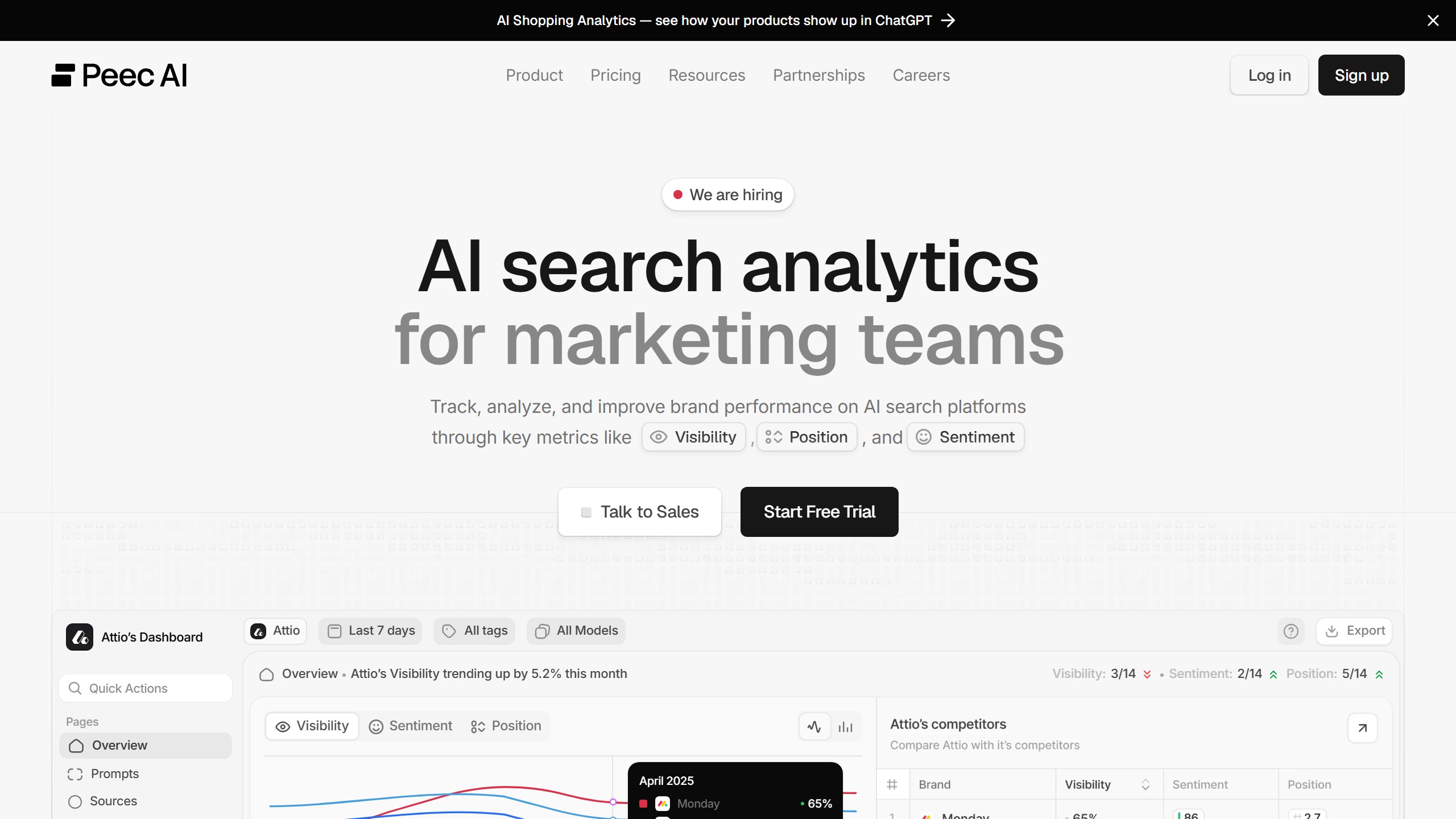
Peec AI tracks your brand across ChatGPT, Perplexity, Gemini, Microsoft Copilot, and Google AI Mode and Overviews, updating daily. Sentiment analysis runs alongside visibility scores, so you can see not just whether you're mentioned but how you're being framed.
The feature that earns its price is Actions. Rather than handing you a dashboard and leaving you to figure out next steps, Peec AI clusters source URLs into Owned Media opportunities (content on your site to update) and Earned Media gaps (third-party sources you're not appearing in), each with a Relative Opportunity Score. It's the closest thing to a built-in GEO roadmap you'll find in this category.
Peec AI raised $21M and is adding roughly 300 customers per month. That matters when you're building a workflow around a tool: this isn't going away.
Platforms monitored: ChatGPT, Perplexity, Gemini, Copilot, Google AI Mode, Google AI Overviews
Alert speed: Daily updates
What it does well:
- Actions feature turns visibility data into a prioritized GEO roadmap with opportunity scores
- Unlimited users on all plans. no per-seat friction for growing teams
- Sentiment analysis shows how your brand is framed, not just whether it appears
Honest limitations:
- Pricing in euros (€90-€499/month) adds slight friction for US-based teams budgeting in dollars
- The 7-day free project doesn't give enough time to build meaningful trend data
Pricing: €90/month (Starter) | €199/month (Pro) | €499/month (Enterprise)
Free trial: 7-day project, no payment required
Website: Visit Peec AI
2. Otterly AI
Best for: SMBs and content teams who need citation-level transparency on a lower budget
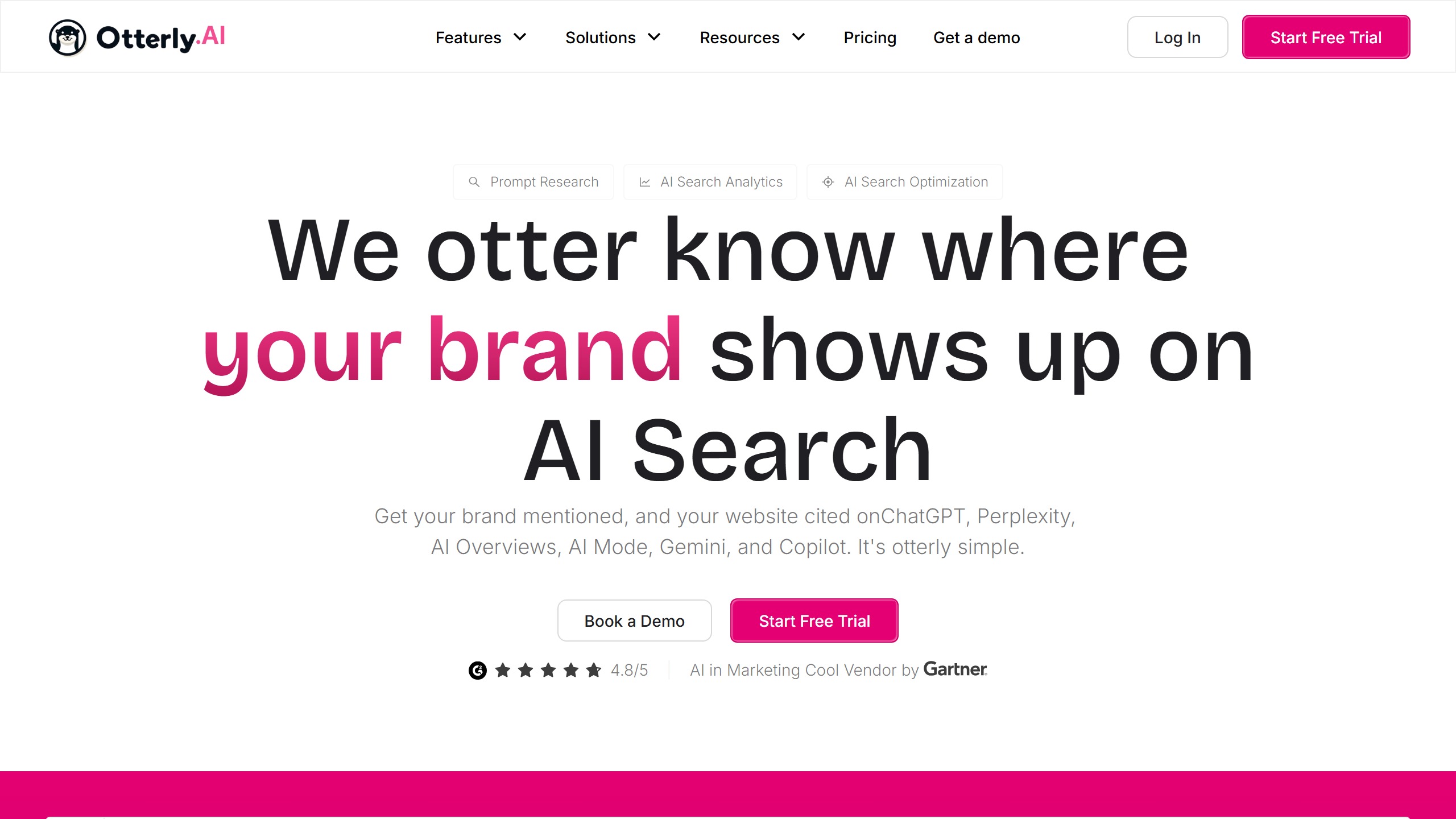
Otterly's core strength is citation URL tracking. When your brand appears in an AI-generated response, Otterly shows you the exact URLs the LLM cited as sources. If ChatGPT mentions your product but links to a competitor's comparison page as the source, that shows up in your data. That insight is what turns monitoring from passive observation into a content targeting list.
The GEO Audit analyzes 25+ on-page factors affecting how AI models interpret and cite your pages. The Brand Visibility Index tracks your mention rate over time as a rolling KPI. Combined, they give you both the diagnostic tool and the benchmark to measure progress against.
Pricing is prompt-based, meaning cost scales with how many queries you track. The Lite plan at $29/month covers roughly 10 prompts. For most SMBs doing serious monitoring, the Standard plan at $189/month is the realistic starting point.
Platforms monitored: ChatGPT, Perplexity, Google AI Overviews
Alert speed: Varies by plan
What it does well:
- Citation source URL tracking identifies exactly which pages LLMs pull from
- GEO Audit connects monitoring data to specific on-page improvements
- Transparent, no-hidden-fees pricing
Honest limitations:
- Platform coverage is narrower than competitors. no Gemini or Copilot on standard plans
- Prompt-based pricing escalates quickly if you're tracking many queries or multiple brands
Pricing: $29/month (Lite, ~10 prompts) | $189/month (Standard, 100 prompts) | $989/month (Pro, 1,000 prompts)
Free trial: Yes
Website: Visit Otterly AI
3. Erlin AI
Best for: Growth-stage brands running a full AEO programme rather than just tracking mentions
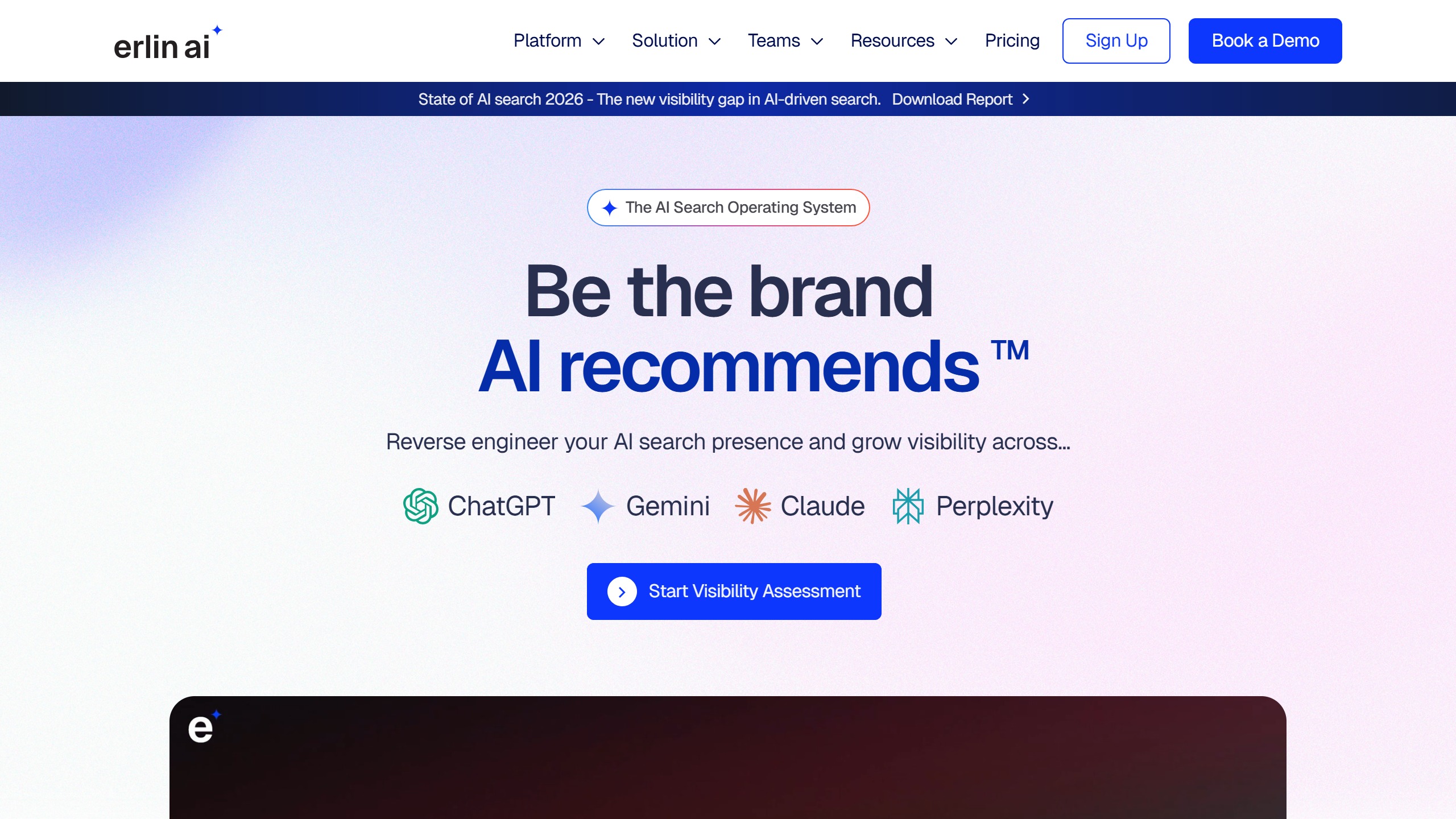
Erlin covers ChatGPT, Perplexity, Gemini, and Claude. the Claude coverage alone puts it ahead of tools that ignore Anthropic's platform entirely. But the real differentiator is the Fire Score, a prioritization system built on 180-day continuous monitoring across 500+ brands. Instead of leaving you to interpret raw data, Erlin tells you which actions will move the needle most and in what order.
The GA4, Search Console, Shopify, and Slack integrations are the strongest in this category at this price point. You can trace AI referral traffic back to actual revenue attribution. the bridge most monitoring tools haven't built yet. Slack alerts mean your team finds out the moment something shifts, not the next time someone logs into the dashboard.
At $97/month, Erlin is the best value-per-dollar for teams that want to run a proper optimization programme rather than just watch a visibility score fluctuate.
Platforms monitored: ChatGPT, Perplexity, Gemini, Claude
Alert speed: Slack alerts (near real-time)
What it does well:
- Fire Score prioritizes GEO actions based on benchmark data from 500+ brands
- GA4 + Search Console + Shopify integration connects AI visibility to revenue
- Slack alerts without needing to check a dashboard
Honest limitations:
- No Copilot or Google AI Mode coverage
- Smaller customer base than Peec AI or Otterly. less community/documentation
Pricing: $97/month (Standard) | $249/month (Pro) | Custom (Enterprise)
Free trial: Yes
Website: Visit Erlin AI
4. Nightwatch
Best for: Teams that need AI monitoring and traditional rank tracking without running two separate tools
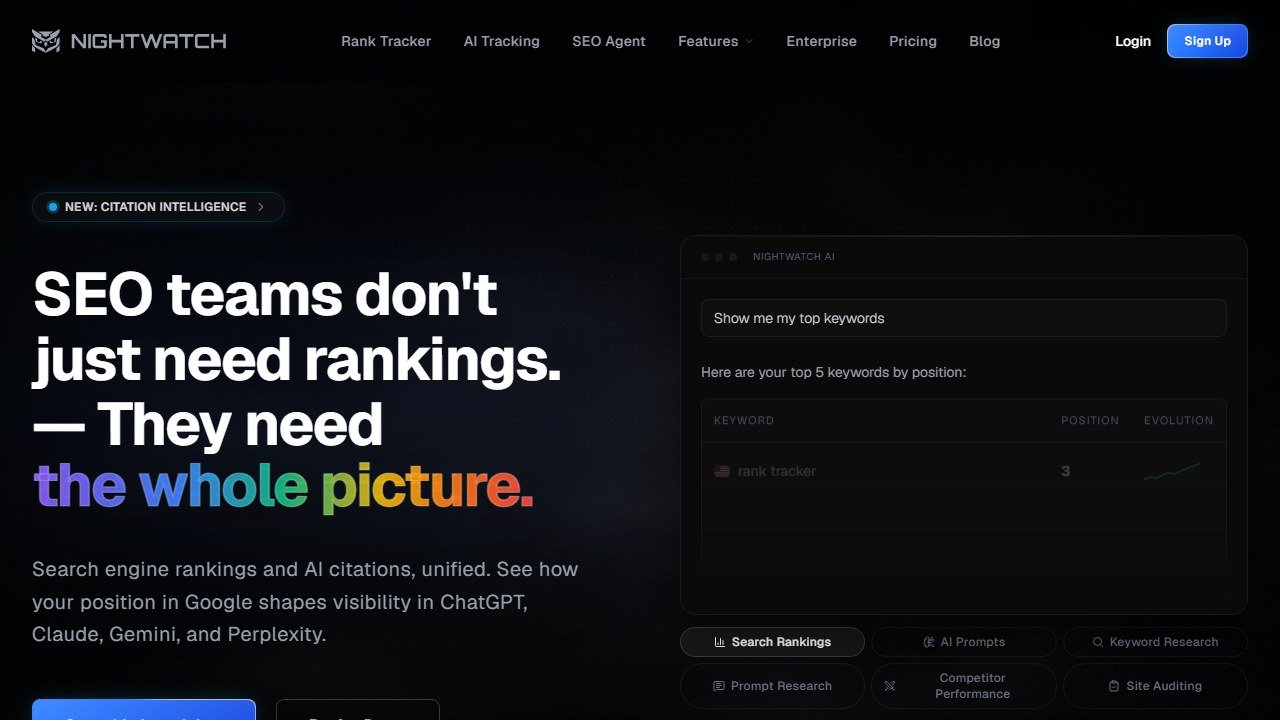
Nightwatch started as a rank tracker and added LLM monitoring. If you still care about Google rankings alongside AI visibility. which most businesses do. having both in one dashboard reduces tool sprawl. If you want a dedicated AI monitoring specialist, the tools above go deeper. Nightwatch's value is the combination.
The LLM monitoring covers ChatGPT, Claude, Gemini, and Perplexity with prompt research capabilities and citation-level sentiment analysis, running alongside rank tracking across 190,000+ locations. White-label reporting is built in, which matters for agencies managing multiple clients.
At $32/month entry with a 14-day free trial, it's the most accessible starting point on this list. The AI monitoring depth at the entry tier is limited. treat the starter plan as a proof-of-concept before committing to a higher tier.
Platforms monitored: ChatGPT, Claude, Gemini, Perplexity, Google AI Overviews
Alert speed: Daily
What it does well:
- Combined traditional SEO + AI monitoring cuts tool count for full-stack teams
- White-label reports included at all tiers (strong agency value)
- Lowest entry price on this list at $32/month
Honest limitations:
- AI monitoring is a secondary feature, not the product's core focus
- Deep LLM analysis is gated behind higher-tier plans
Pricing: From $32/month. 14-day free trial.
Free trial: Yes (14 days)
Website: Visit Nightwatch
5. SE Visible (by SE Ranking)
Best for: Teams already in the SE Ranking ecosystem who want AI visibility without adding another tool
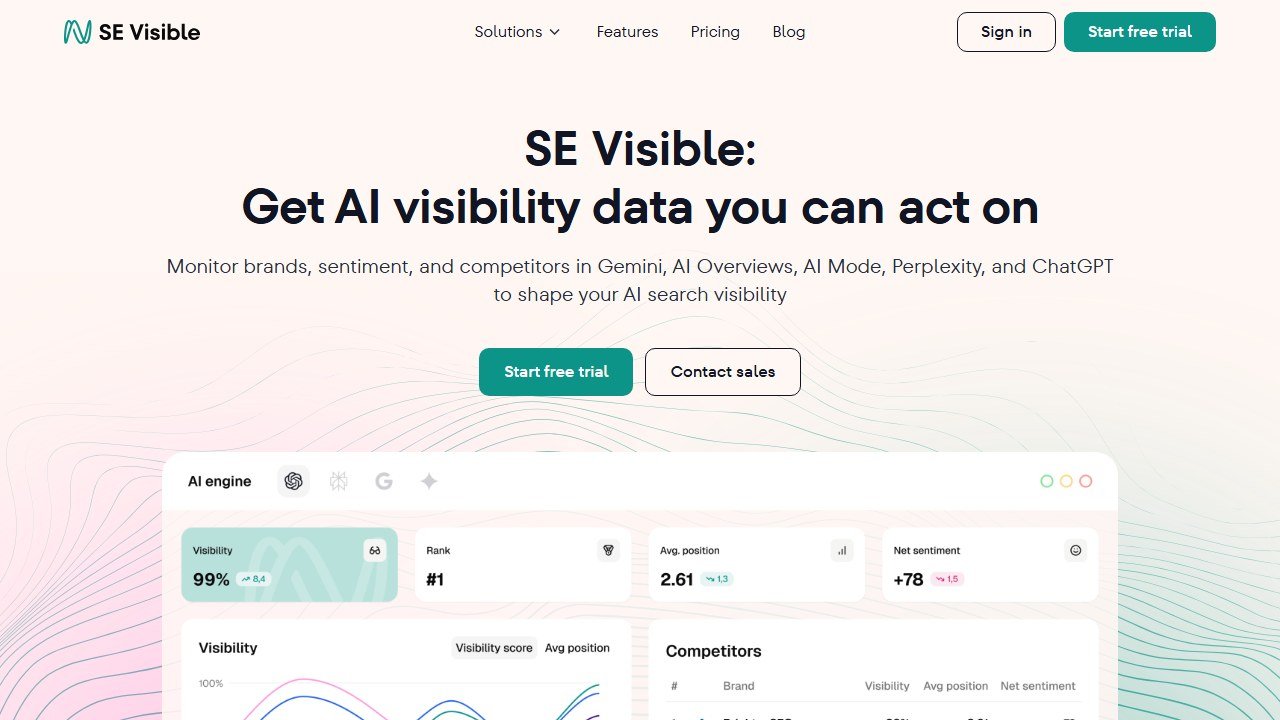
SE Visible is SE Ranking's dedicated AI visibility module, tracking brand mentions and citations across Google AI Overviews, Google AI Mode, ChatGPT, Gemini, and Perplexity. If you're already paying for SE Ranking for traditional SEO, this is the path of least friction for adding AI monitoring.
The module tracks both branded queries (is your brand mentioned?) and category queries (does your brand appear when someone searches your product type?). Category query tracking often has more commercial value than branded monitoring. it catches you at the research phase of the buyer's journey, not just when someone already knows your name.
For teams not on SE Ranking, the standalone case for SE Visible specifically is weaker. The specialists on this list offer more depth on AI monitoring alone.
Platforms monitored: Google AI Overviews, Google AI Mode, ChatGPT, Gemini, Perplexity
Alert speed: Regular updates (cadence tied to SE Ranking plan)
What it does well:
- Strong Google AI ecosystem coverage (AI Overviews and AI Mode both tracked)
- Category query tracking alongside branded query monitoring
- Seamless for existing SE Ranking customers. no new login, no new billing
Honest limitations:
- Best value only as part of SE Ranking; less compelling as a standalone purchase
- Less actionable output than Peec AI or Erlin
Pricing: Part of SE Ranking plans. check SE Ranking for current pricing.
Free trial: Yes (SE Ranking trial includes SE Visible)
Website: Visit SE Visible
6. Scrunch AI
Best for: Agencies managing multiple client brands that need strong reporting and GA4 attribution
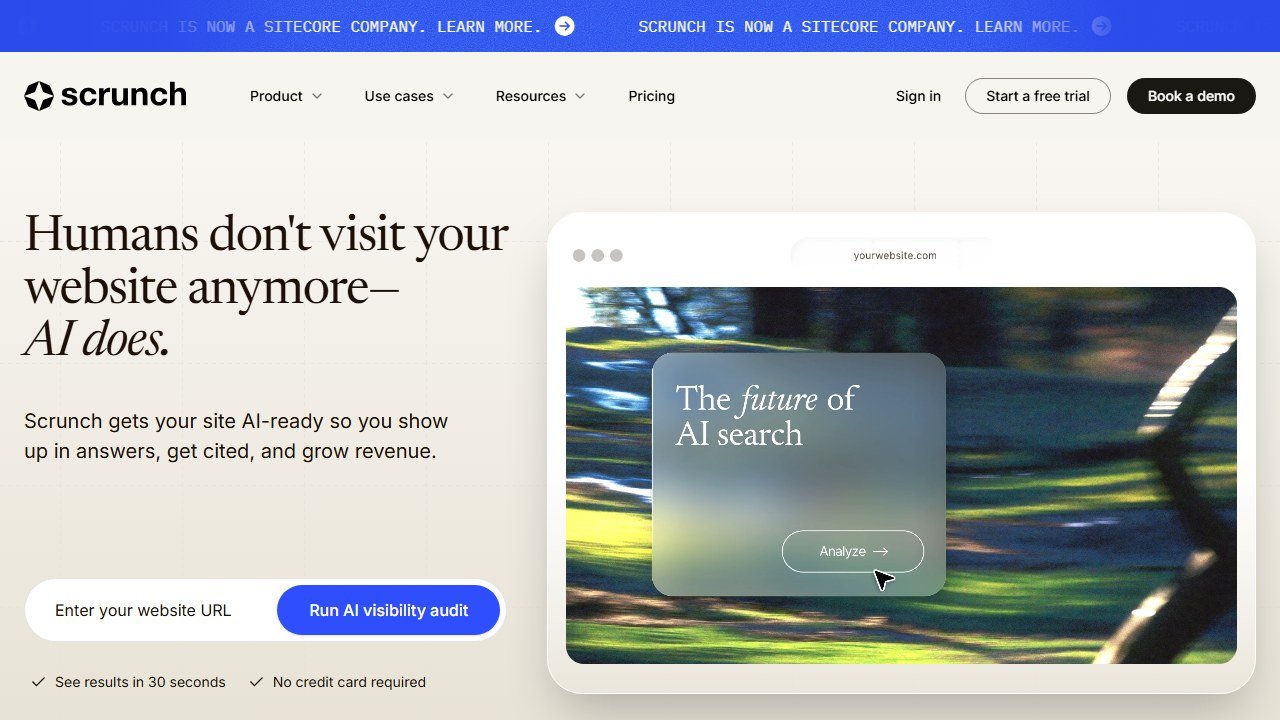
Scrunch monitors ChatGPT, Gemini, and Perplexity with a focus on competitive positioning and share of voice. The standout feature is GA4 integration that maps AI mentions directly to website referral traffic. for agencies that need to show clients a concrete ROI story, that attribution is the piece that makes monthly reports land.
The platform covers citation source analytics, prompt management, AI bot traffic reports, and sentiment analysis. The Insights and Site Audits features are still in early beta as of 2026, which is the main reason it sits below Peec AI and Erlin despite the strong reporting foundation.
Agency pricing starts at $500/month. This is not a tool for solo consultants or self-funded startups. It's priced for clients with real budgets.
Platforms monitored: ChatGPT, Gemini, Perplexity
Alert speed: Regular dashboard updates
What it does well:
- GA4 integration connects AI mentions to actual site traffic. the best attribution story in this list
- Strong multi-client management purpose-built for agencies
- Citation source analytics identify which URLs are driving LLM responses
Honest limitations:
- Actionable insights and site audits are still beta. the optimization layer isn't fully built yet
- High starting price ($500/month agency) limits who can actually use it
Pricing: $250/month (Business) | $500/month (Agency) | Custom enterprise
Free trial: Check scrunch.com for current options
Website: Visit Scrunch AI
7. Knowatoa
Best for: Teams that want deep sentiment analysis and competitive gap data at an accessible price
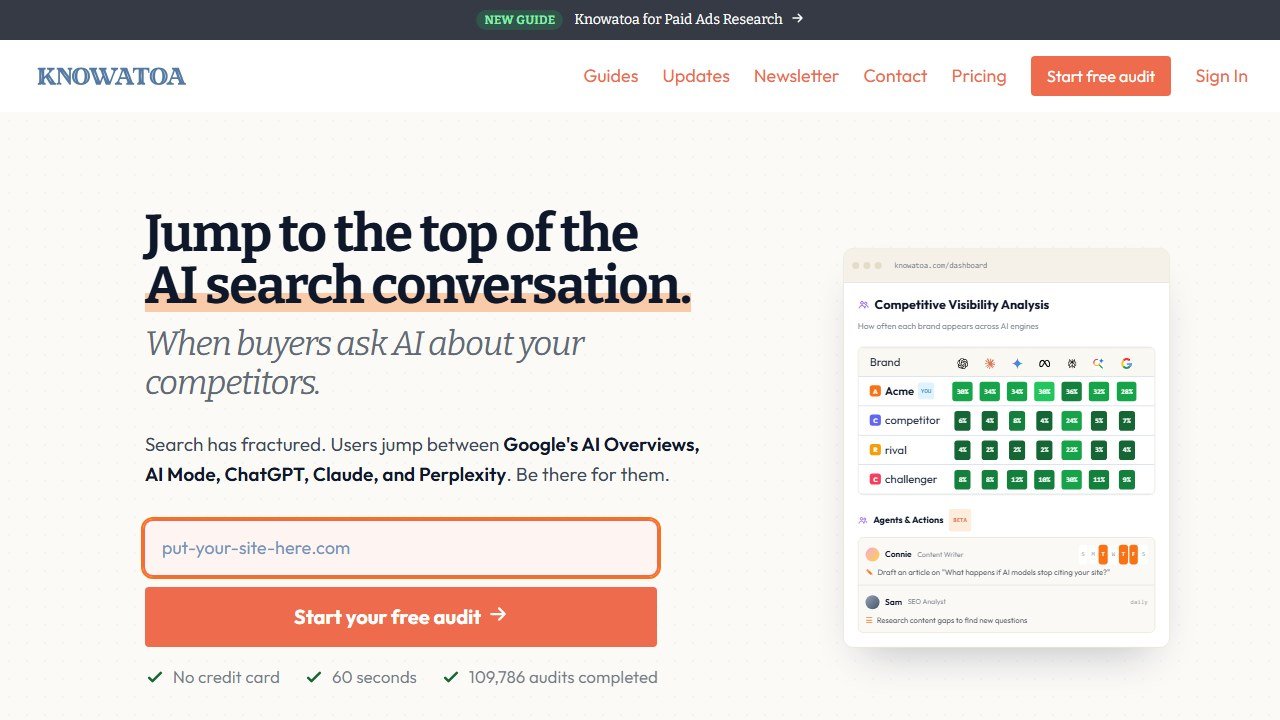
Knowatoa came out of nowhere in 2026 and built a reputation quickly, specifically for the depth of its sentiment and keyword analysis. Where most tools tell you whether your brand appeared in an AI response, Knowatoa tells you how the LLM is describing you. the specific language models use when they talk about your product, and whether the framing is positioning you as a leader, a budget option, a niche player, or something else entirely.
The Growth plan at $199/month covers 7 platforms including ChatGPT, Claude, Gemini, Meta AI, and Perplexity, with daily refresh, API access, and Looker Studio integration. The Starter at $59/month covers just 3 platforms (AI Mode, AI Overviews, ChatGPT), which is a significant limitation. most serious buyers will need the Growth tier.
Content gap analysis is a strong feature: Knowatoa shows you which topics competitors appear in that you don't, giving you a concrete content brief for improving AI visibility.
Platforms monitored: Starter: AI Mode, AI Overviews, ChatGPT | Growth: + Claude, Gemini, Meta AI, Perplexity
Alert speed: Daily
What it does well:
- Deepest sentiment analysis of any tool on this list. shows how LLMs describe your brand, not just whether they mention it
- Content gap analysis identifies competitor topics you're missing
- Looker Studio and API integration on Growth tier (rare at this price)
Honest limitations:
- Starter tier ($59/month) only covers 3 platforms. limited for real monitoring use
- Newer platform with less market validation than Peec AI or Otterly
Pricing: $59/month (Starter, 3 platforms) | $199/month (Growth, 7 platforms) | $499/month (Enterprise)
Free trial: Yes
Website: Visit Knowatoa
8. LLMrefs
Best for: Teams starting out who want to understand the category before spending
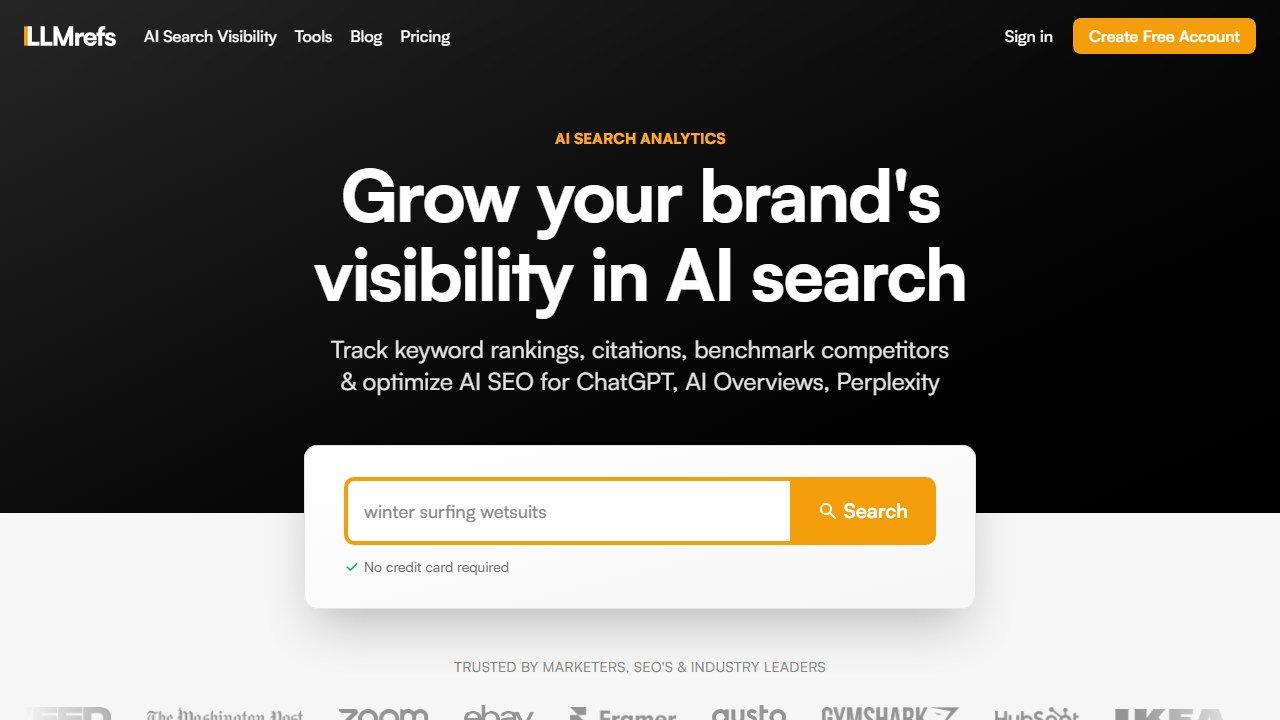
LLMrefs is the free entry point to AI search monitoring. The free plan gives you one tracked keyword. enough to understand the concept and see your first data. The $79/month Pro plan unlocks 50 keywords across 11 AI engines including ChatGPT GPT-5, Gemini, Perplexity, Claude, Grok, Copilot, Meta AI, and DeepSeek, with geo-targeting across 20+ countries.
The extra utilities make the Pro plan a real tool rather than just a dashboard: a crawlability checker (verifies LLMs can access your pages), an llms.txt generator, a Reddit threads finder for spotting existing brand mentions, and a content A/B tester. These aren't afterthoughts. they're the kind of tools you actually use when you're actively optimizing.
LLMrefs is not the most powerful or polished option on this list. But at $79/month for genuine 11-engine coverage, it's the best starting point for teams that want to learn the category before committing to a higher budget.
Platforms monitored: ChatGPT GPT-5, Gemini, Perplexity, Claude, Grok, Copilot, Meta AI, DeepSeek, Google AI Overviews (11 total on Pro)
Alert speed: Regular updates
What it does well:
- Widest engine coverage per dollar ($79/month for 11 platforms)
- Free plan available with no credit card required
- Built-in AEO utilities: llms.txt generator, crawlability checker, Reddit finder
Honest limitations:
- Less optimization guidance than Peec AI or Erlin. strong on tracking, lighter on what to do next
- Interface and reporting are less polished than premium tools
Pricing: Free (1 keyword) | $79/month (Pro, 50 keywords, 11 engines)
Free trial: Yes (free plan, no credit card)
Website: Visit LLMrefs
Monitoring Stack by Budget
Under $100/month
LLMrefs Pro ($79/month) for multi-engine coverage with useful AEO utilities included. Or Nightwatch ($32/month entry) if you still need traditional rank tracking alongside AI monitoring. At this tier you won't get deep optimization guidance, but you'll have real visibility data to work from.
$100-$300/month
This is where serious monitoring starts. Erlin Standard ($97/month) gives you Fire Score prioritization and GA4 integration. Peec AI Starter (€90/month) gives you the Actions GEO roadmap. Either is a complete monitoring and light optimization setup for a growth-stage brand. Knowatoa Growth ($199/month) if competitive sentiment analysis and content gap data is your priority.
$300+/month (agencies and scaling brands)
Peec AI Pro (€199/month) for the full Actions workflow. Scrunch AI ($500/month) for agencies that need multi-client reporting and GA4 attribution built in. At this tier, evaluate which tool's output format fits the way your team reviews and acts on data each week.
What To Do When Your Monitoring Alerts You
Most guides stop at "here's how to track your visibility." This is the part they skip.
Scenario 1: Your brand disappeared from ChatGPT answers
You were appearing consistently in responses to a category query. This week your monitoring shows you've dropped out entirely.
Step 1: Check your citation sources. Which URLs were previously driving your mentions? Use Otterly AI or Peec AI to identify the specific pages that used to appear in LLM citations.
Step 2: Check if those pages are still crawlable. Use LLMrefs' crawlability checker or verify your llms.txt file hasn't accidentally blocked LLM access. A robots.txt update, a redirect, or a deleted page can kill AI visibility overnight.
Step 3: Find out what replaced you. Which brand or source now appears where you used to? Read that content. If it's more comprehensive, better structured, or more widely cited across the web, that's your content gap to close.
Scenario 2: A competitor is now cited ahead of you
Your monitoring shows your main competitor has moved from appearing alongside you to appearing instead of you for category queries.
Step 1: Identify which specific prompts they're winning on and you're not. Focus on category queries (buyer evaluating options) rather than branded queries (buyer already knows your name).
Step 2: Find their citation sources. Where is the LLM getting its information about your competitor? Comparison articles, industry publications, and high-traffic review sites are the usual sources.
Step 3: Build your presence on those same source types. A stronger G2 profile, an updated comparison article from a respected industry publication, or a case study featured in the right newsletter can shift citation patterns within weeks.
Scenario 3: An LLM is giving wrong information about your product
Your monitoring catches ChatGPT or Perplexity citing outdated pricing, a deprecated feature, or factually incorrect information about what your product does.
Step 1: Find the source. LLMs don't fabricate information in a vacuum. they pull from somewhere. Use your monitoring tool's citation source data to identify which specific page or resource the incorrect information comes from.
Step 2: Update the source if you control it. If it's your own blog post or product page, update the content immediately and resubmit the URL to Google Search Console to accelerate re-indexing.
Step 3: If the source is third-party, contact the site directly. Product profiles on G2, Capterra, and major review sites are highly influential for LLM citations. Most platforms are responsive to correction requests from verified vendors. this is one of the fastest fixes in GEO.
Adjacent GEO/AI-search guides
Sister guides in this category:
- best AI SEO tools 2026. the broader AI-SEO stack by workflow stage
- best AI visibility tools 2026. AI-search visibility platforms compared
- best AI Mode SEO checking tools: how to verify what each monitor actually measures.
Tools mentioned in this guide
Want the deep dives? Read our full reviews of Profound, Peec AI, Otterly.ai, and Scrunch AI, or compare the top two in Profound vs Peec AI.

Written by
FazFaz is the founder of AIToolsBakery. Some tools here are tested hands on. Others are assessed from vendor documentation and pricing verified on the live page, and every review says which one it is. Sponsors can buy a position in a guide. They cannot buy the score, the criticism, or silence about a better option.
How we test and how we make money →Frequently Asked Questions