Every comparison ranking for this query is written by one of the tools being compared. This guide has no vendor affiliation. Top picks in 2026: Profound (agencies), Peec AI (solo/SMB), KIME (enterprise), and Otterly AI (brand sentiment). LLMrefs is the best free starting point. Full independent breakdown of all 11 tools below.
Faz says: I went through every article currently ranking for this keyword before writing a word. What I found: not a single top-10 result is independent. KIME, Profound, SE Visible, LLM Pulse. all vendor-written, all ranking themselves first. The Nick Lafferty piece is the most honest (he discloses working with Profound) but even that has bias baked in. We take no affiliate commissions from any tool in this list. Sponsored placements are clearly labelled as sponsored, and sponsorship never buys the verdict: every write-up states the limitations as well as the strengths. Here is what the research actually shows.
Who This Guide Is For
If you already know what AI visibility means and you are deciding which tool to buy, this guide is for you.
You are in the right place if you are:
- A marketing manager or agency owner tracking how often your brand appears in ChatGPT, Perplexity, Gemini, and Claude
- A B2B SaaS CMO choosing your first GEO monitoring stack
- An SEO professional adding AI search tracking to your existing workflow
- An agency building client reporting around AI search visibility
What AI Visibility Actually Means in 2026
Traditional SEO tracks your rank in a list of links. AI visibility tracks something different: whether AI models cite you, recommend you, or ignore you when answering the questions your buyers are asking.
When someone types “what is the best project management tool for agencies” into ChatGPT, they do not get 10 blue links. They get a recommendation. If your brand is not in that recommendation, you are invisible to that buyer at that moment.
AI visibility tools measure this. They run your target queries across AI platforms on a schedule, record whether your brand appears, track changes over time, benchmark you against competitors, and surface what needs to change.
The key distinction in 2026: a citation in ChatGPT with zero clicks to your site is still more valuable than a rank 8 Google result nobody clicks. Brand authority in LLMs compounds. Get cited enough and models start citing you because other cited sources cite you. That is the GEO flywheel.
How We Reviewed These Tools
We do not have paid accounts with every tool in this list. What we do have: thorough research across public sources before writing anything.
Our review methodology:
- Pricing pages and official documentation reviewed for each tool at time of writing
- Free tier and trial access used where available to evaluate the interface and reporting
- G2, Capterra, and Reddit reviews cross-referenced for real user feedback on setup time, accuracy, and support
- SERP analysis of what the tools themselves claim in their own content, revealing both strengths and self-promotional bias
- The existing comparison landscape read in full: KIME, Profound, SE Visible, LLMClicks, Nick Lafferty, and LLM Pulse comparisons reviewed before forming our own assessments
| Dimension | What We Looked For |
|---|---|
| LLM Coverage | Which AI platforms tracked (ChatGPT, Perplexity, Gemini, Claude, Bing Copilot, AI Overviews) |
| Alert Speed | Real-time vs. daily vs. weekly visibility change detection |
| Actionability | Does it tell you what to fix, not just show a score |
| Agency Features | Multi-client dashboards, white-label reporting, team access |
| Pricing Transparency | Can you find actual numbers without a sales call |
| Independent Reviews | What non-vendor sources say about it |
Any placement a tool has paid for is labelled as sponsored. No affiliate links were live at time of writing.
The 11 Best AI Visibility Tools in 2026
1. Profound. Best for Agencies
Profound is the most consistently cited independent choice in this category. appearing in every major comparison, including those written by competitors. That tells you something.
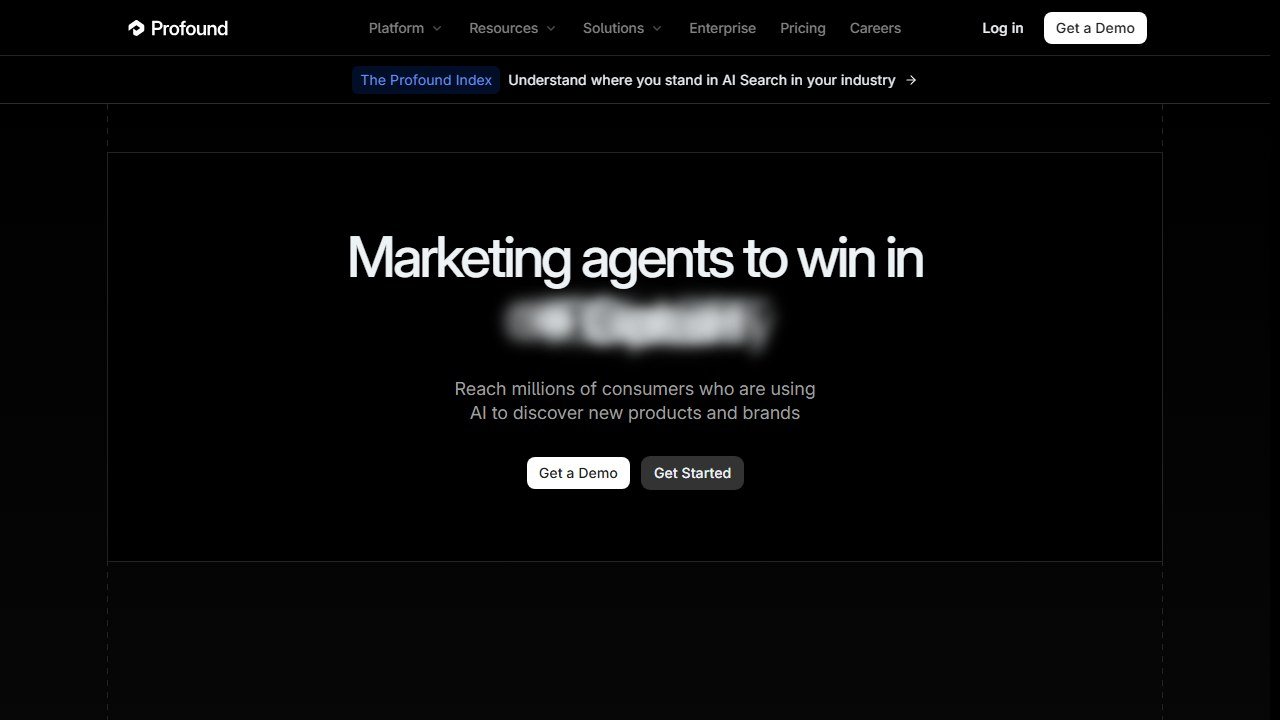
The platform tracks brand citations across ChatGPT, Perplexity, Gemini, Claude, and AI Overviews. It runs queries on a configurable schedule, measures citation frequency, identifies which pages on your site or competitor sites are driving those citations, and gives you a prioritized action list.
What separates Profound from most tools in this list is citation source attribution. Most tools show you a score. Profound shows you which specific pages are getting you cited and which competitor content is outperforming yours in AI answers. That is the difference between monitoring and actually doing something about it.
Best for: Agencies managing 5+ clients who need structured reporting and a clear path from data to action
LLMs tracked: ChatGPT, Perplexity, Gemini, Claude, AI Overviews
Pricing: $99/month starter. Agency plans scale from there. Enterprise on request.
Free trial: No (demo available)
Website: Visit Profound
What it does well:
- Citation source attribution: best in class at this price point
- Competitor benchmarking built into the core product, not an add-on
- Actionable recommendations, not just a visibility score
- Clean multi-client structure for agency reporting
Honest limitations:
- No free tier. The entry price rules it out for pre-revenue startups.
- Onboarding takes real time to configure for multi-client use
- Daily (not real-time) alerts on base plans
2. Peec AI. Best for Solo Marketers and SMBs
Peec AI is where most small teams should start. It tracks your brand and up to five competitors across ChatGPT, Perplexity, Gemini, and Claude. You set your target queries, Peec runs them on a schedule, and you get clean weekly digests.
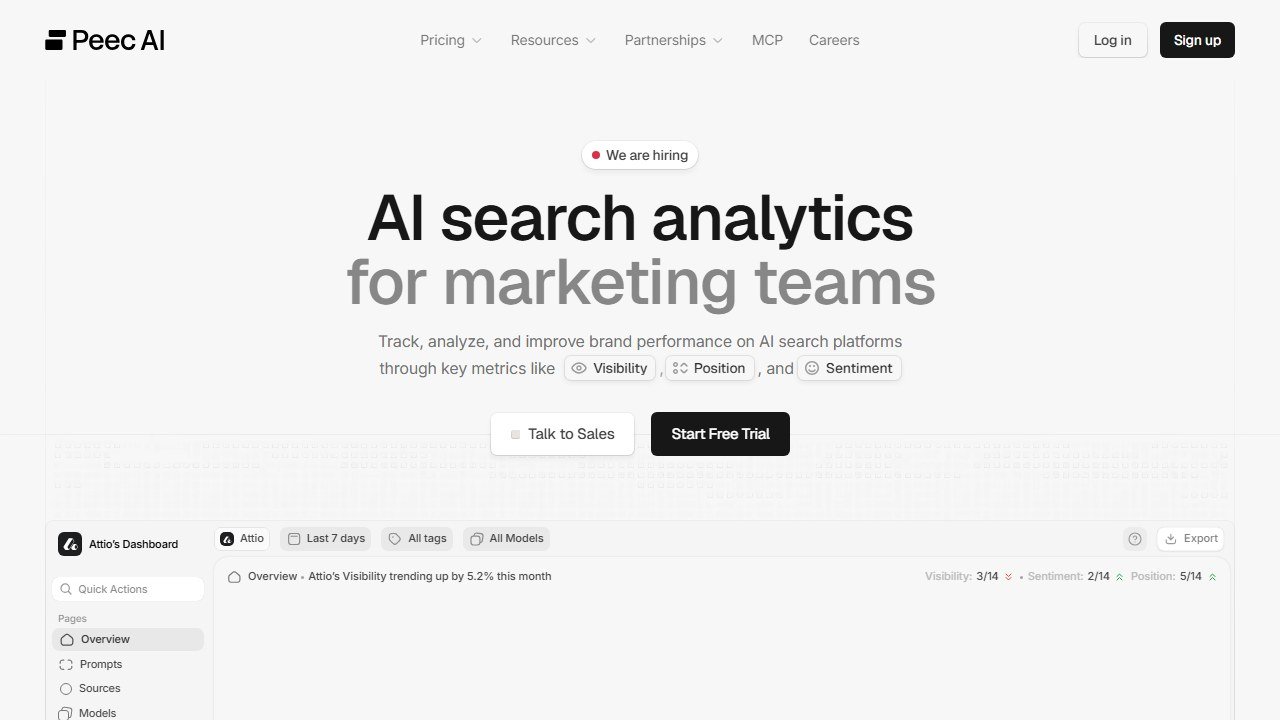
The limitation is that Peec shows citation counts without citation source attribution. You will know you were cited; you will not know which page drove it. For solo and SMB use cases, that is usually enough.
Best for: Solo marketers, small SaaS teams, and consultants who need AI visibility data without agency-tier complexity
LLMs tracked: ChatGPT, Perplexity, Gemini, Claude
Pricing: Free tier available. Paid plans from €89/month (~$95/month).
Free trial: Yes (free tier, no credit card)
Website: Visit Peec AI
What it does well:
- Fastest setup in this category: under 10 minutes to first usable data
- Clean competitor benchmarking against up to 5 rivals
- Free tier is genuinely functional, not artificially crippled
Honest limitations:
- No citation source attribution
- No real-time alerts on base plans
- Built for one brand, not a client portfolio
3. Encited. Best for Tracking and Fixing AI Visibility
Encited is the most complete option on this list, because it works both sides of AI visibility. It offers comprehensive AI visibility monitoring across all major AI providers, tracking your prompts, topics, and audiences so you can see exactly where your brand stands in AI answers. Then it goes further than the pure trackers and fixes the technical reasons you might be missing. If your site is a JavaScript app, AI crawlers may be reading a near-empty page, so Encited renders your single-page app into clean HTML and AI-ready Markdown, serves that to crawlers like ChatGPT, Perplexity, and Google, and logs every crawler visit so you can prove they arrived.
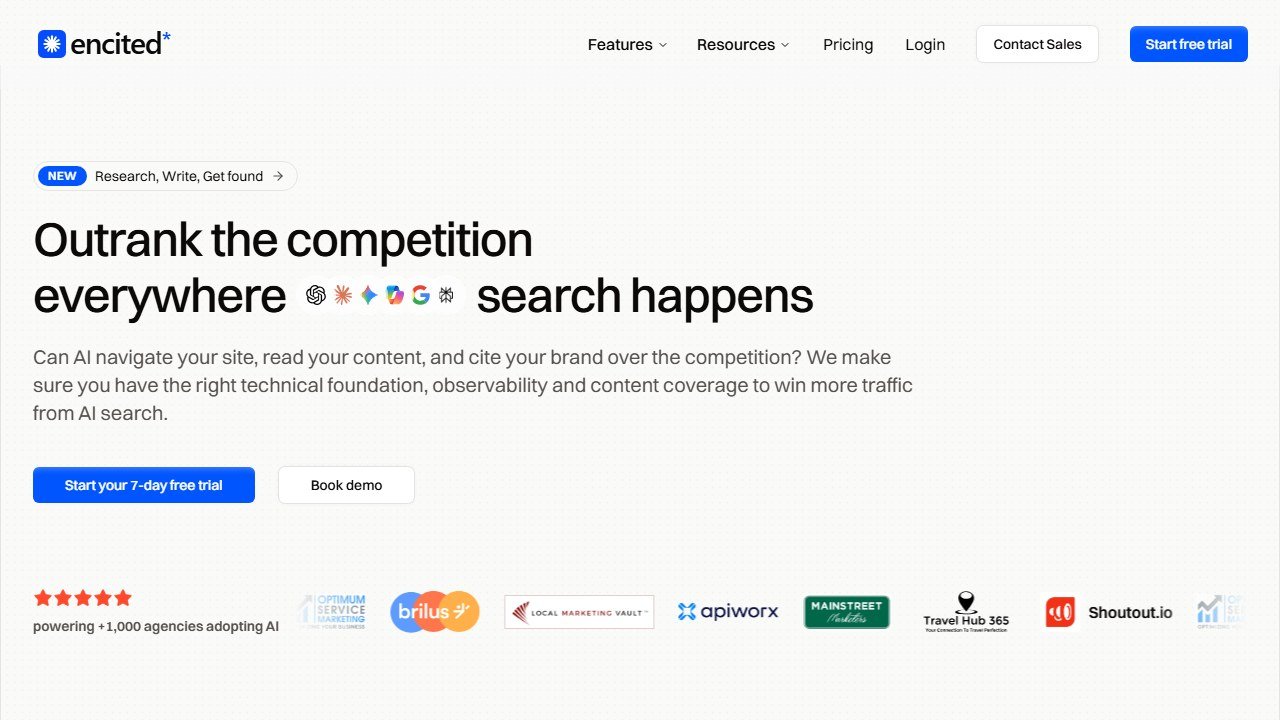
It installs with no code via DNS, or through proxy and middleware for teams that want more control, and it bundles SEO auditing, metadata fixes, and index diagnostics alongside the rendering. Pricing starts free on pay as you go and moves to around 49 per month.
We rank it third because Profound and Peec have longer track records on pure monitoring, but Encited is the strongest all-in-one here. It both tracks your AI visibility and fixes the technical reasons behind it, which is rare in this category. For any team on React, Vue, or Angular, that combination is what actually moves the numbers. Best for teams that want AI visibility monitoring plus the rendering fixes to act on it, in one tool. See our full prerendering tools comparison for how it stacks up against Prerender.io and the rest.
4. KIME AI. Best for Enterprise
KIME is the most fully-featured AI visibility platform for enterprise buyers. It tracks citation frequency, competitive share of voice, brand sentiment across AI answers, and includes workflow tools for content teams to act on findings. Coverage is the broadest in this list, including Bing Copilot and Meta AI.
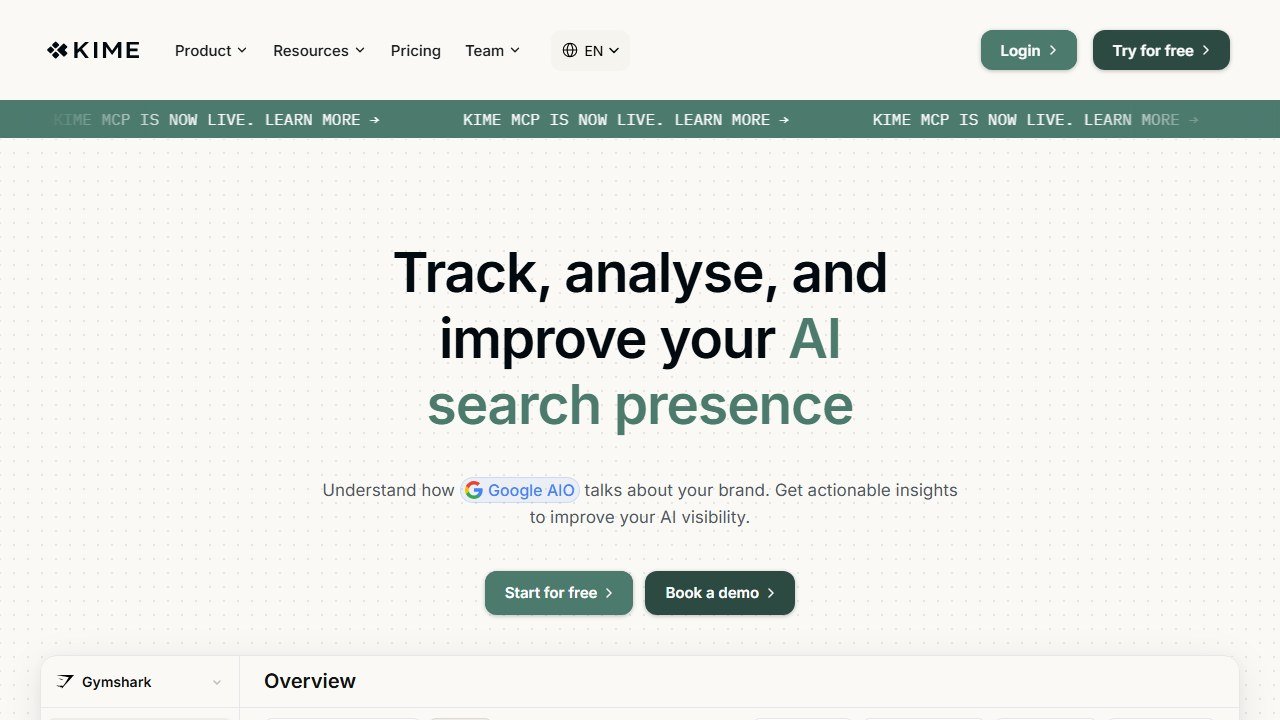
The conflict of interest caveat: KIME wrote the top-ranking comparison article and ranked themselves #1. That is a legitimate criticism of their content strategy. But it does not change the product quality.
Best for: Enterprise marketing teams and large agencies needing deep competitive intelligence and compliance-grade reporting
LLMs tracked: ChatGPT, Perplexity, Gemini, Claude, Bing Copilot, Meta AI
Pricing: Not publicly listed. Expect $500+/month. Requires a sales conversation.
Free trial: Demo only
Website: Visit KIME AI
What it does well:
- Broadest LLM coverage in this list
- More granular share of voice tracking than competitors
- Role-based access, collaborative workflows, audit logs for compliance
Honest limitations:
- Opaque pricing: you need a sales call for any numbers
- Overkill for teams managing fewer than 3 brands
- Self-promotional content strategy damages credibility with sophisticated buyers
5. Otterly AI. Best for Brand Sentiment Monitoring
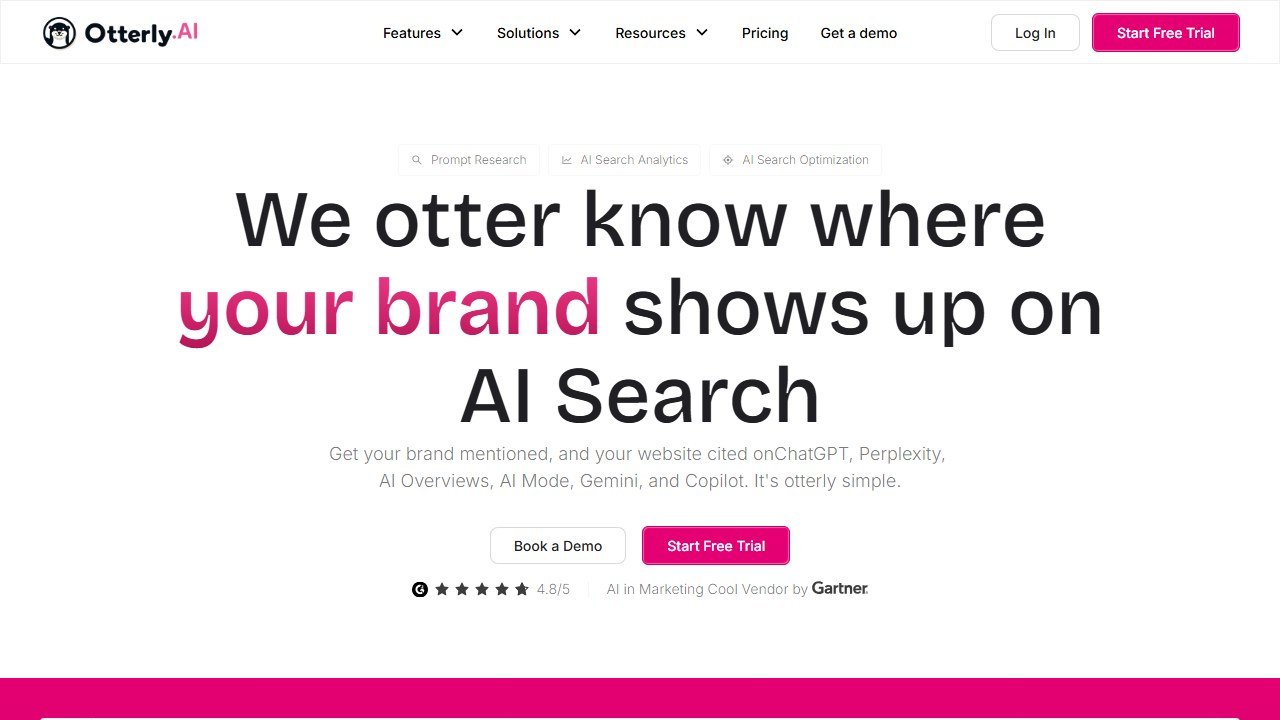
Otterly focuses on sentiment rather than frequency: not just whether AI mentions your brand, but what it says. A brand can have high citation frequency but damaging AI framing. If Perplexity describes your product as “mixed reviews,” no citation volume metric will catch that. Otterly will.
Best for: Content teams and brand managers monitoring what AI says about them, not just how often
LLMs tracked: ChatGPT, Perplexity, Gemini, Claude
Pricing: Starts at $29/month (Lite). Pro plans from $79.$489/month.
Free trial: Yes
Website: Visit Otterly AI
What it does well:
- Sentiment analysis on AI-generated answers about your brand
- Tracks framing changes over time, useful for catching AI hallucinations
- Accessible entry point at $29/month
Honest limitations:
- Less focused on citation volume and share of voice
- Not built for agencies managing multiple client brands
6. SE Visible. Best for SE Ranking Users
SE Visible is SE Ranking’s AI visibility module. As a standalone tool, it is functional but not exceptional. As an addition to an existing SE Ranking subscription, it is genuinely valuable: AI visibility data connected to rank tracking, keyword research, and content audits in one platform.
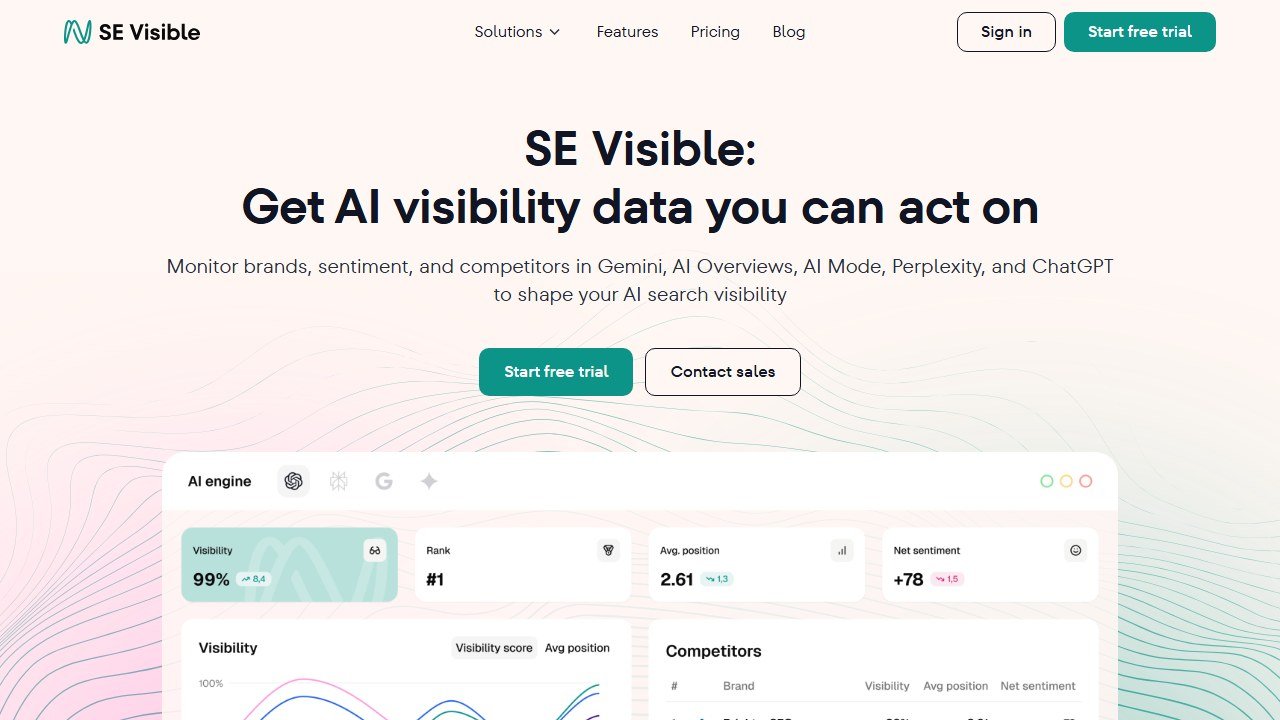
Worth noting: the SE Visible article currently ranking #3 for this keyword is published on their own domain without disclosing the vendor relationship. Readers should weigh that when evaluating their marketing claims.
Best for: SEO teams and agencies already using SE Ranking
LLMs tracked: ChatGPT, Perplexity, Gemini, AI Overviews
Pricing: Bundled with SE Ranking from $52/month.
Free trial: Via SE Ranking trial
Website: Visit SE Visible
What it does well:
- Deep integration with SE Ranking’s existing data
- Connects AI visibility gaps to content opportunities in one workflow
Honest limitations:
- Significantly less value as a standalone purchase
- Does not track Claude
7. Erlin AI. Best for Benchmark Data
Erlin built a 500+ brand benchmark across AI search platforms. When you track your brand in Erlin, you are measuring against a broad market baseline. “Our AI visibility score is 34, which is above average for B2B SaaS but below the top quartile” is something you can act on. That context is unique to Erlin.
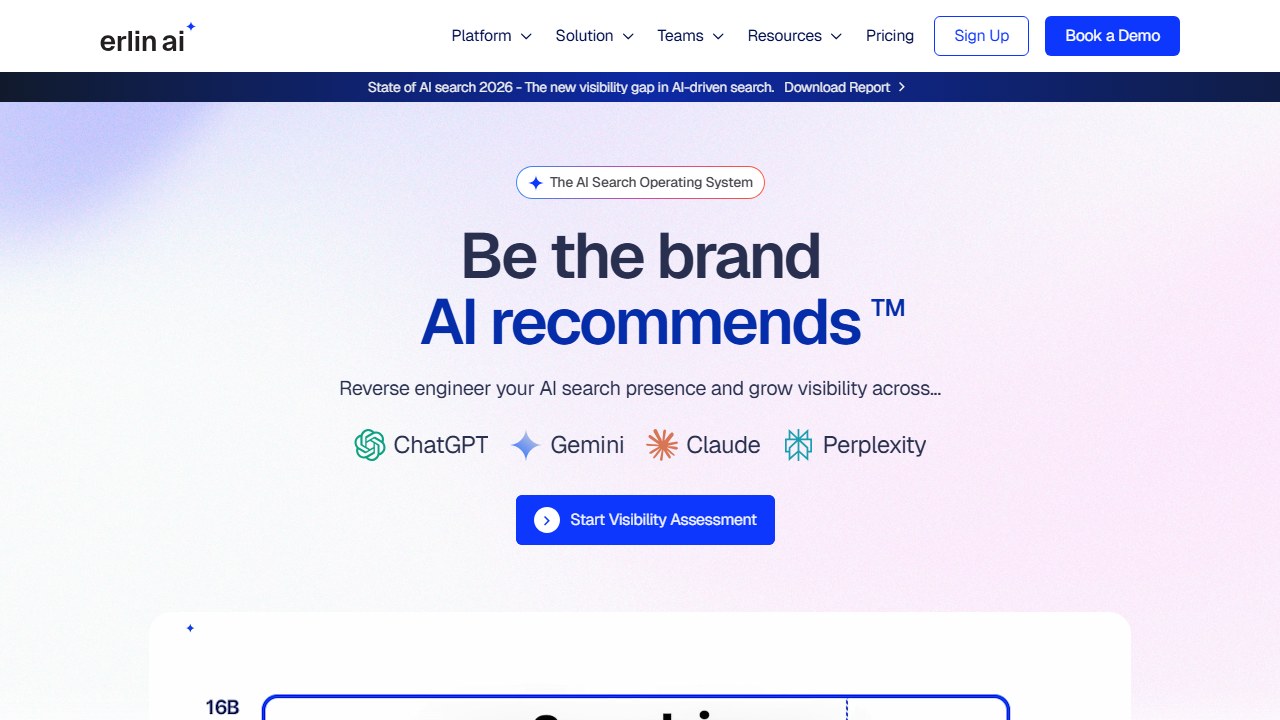
Best for: B2B SaaS marketers and agencies needing benchmark context for executive reporting
LLMs tracked: ChatGPT, Perplexity, Gemini, Claude
Pricing: ~$99/month. Free trial available.
Free trial: Yes
Website: Visit Erlin AI
What it does well:
- 500+ brand benchmark gives genuine market context
- Original research cited by third-party publications
- Clean executive-ready reporting
Honest limitations:
- Benchmark skewed toward B2B SaaS
- Lighter on actionable recommendations vs. Profound
8. Scrunch AI. Best for Always-On Monitoring
Scrunch is built around continuous monitoring rather than scheduled query batches. For brands that have experienced sudden visibility drops or AI hallucinations about their products, the faster alert cadence is meaningfully useful. It appears in 6 of the 7 major comparison articles for this category. a reliable signal of market presence.
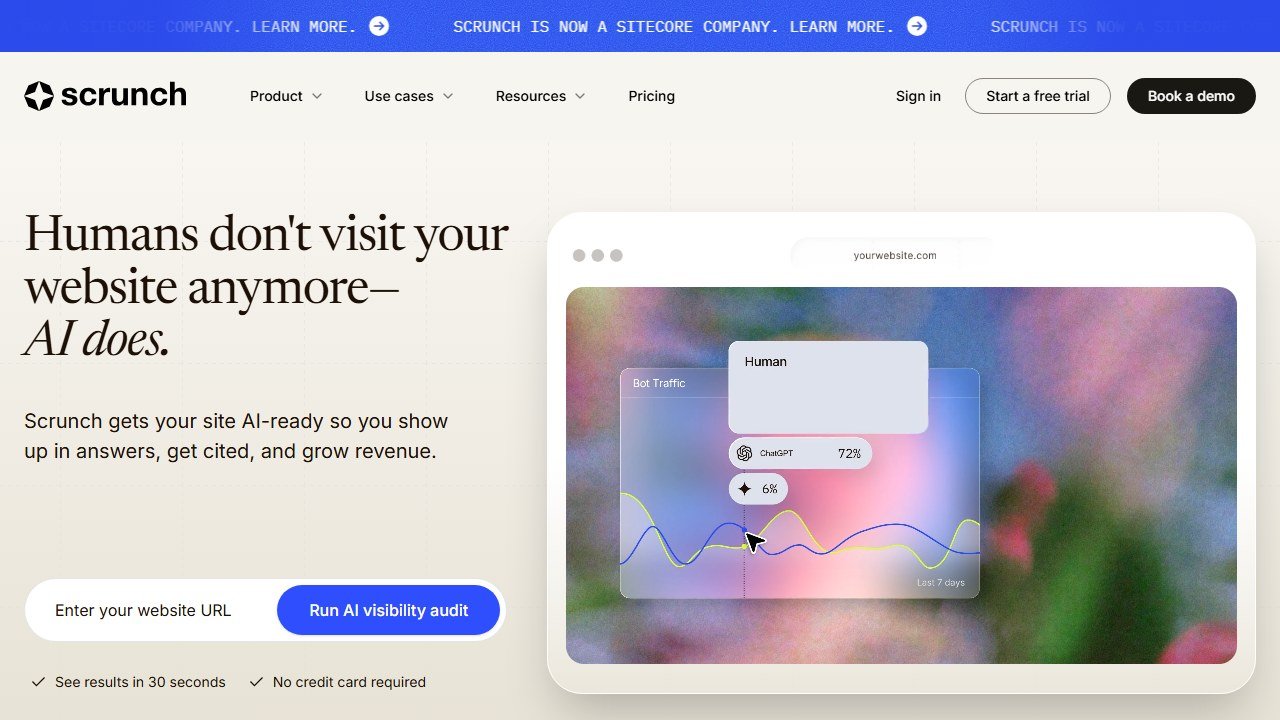
Best for: Marketing teams who need fast alerts when AI visibility changes
LLMs tracked: ChatGPT, Perplexity, Gemini, Claude
Pricing: ~$79/month. Free trial available.
Free trial: Yes
Website: Visit Scrunch AI
What it does well:
- Faster alert cadence than most tools in this list
- Good for brands in fast-moving categories where competitor content changes frequently
- Consistent independent mentions across competitor comparisons
Honest limitations:
- Lighter on citation source attribution and recommendations vs. Profound
- Smaller company: support responsiveness varies per G2 reviews
9. Ahrefs Brand Radar. Best for Existing Ahrefs Users
Ahrefs Brand Radar tracks how often your brand appears in AI-generated answers across ChatGPT and Perplexity, connected to Ahrefs’ existing keyword and backlink intelligence. For existing Ahrefs subscribers, it adds AI visibility data without another invoice.
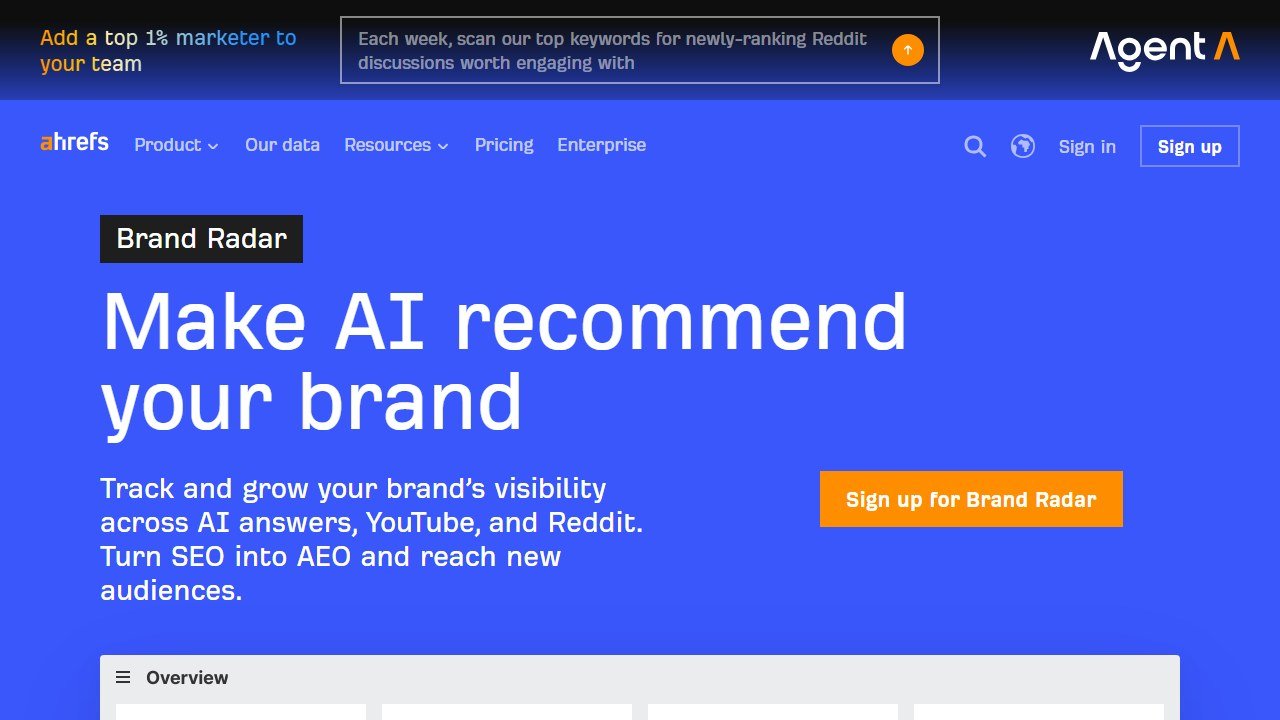
Best for: SEO teams and agencies already paying for Ahrefs
LLMs tracked: ChatGPT, Perplexity (expanding)
Pricing: Bundled with Ahrefs plans ($99.$999+/month).
Free trial: Via Ahrefs trial
Website: Visit Ahrefs Brand Radar
What it does well:
- Deep integration with Ahrefs’ keyword and backlink data
- No additional cost for existing subscribers
- Ahrefs’ strong track record of data quality and product iteration
Honest limitations:
- Currently limited to two platforms vs. four or five for dedicated tools
- Weaker on competitor benchmarking than Profound or Erlin
10. Semrush AI Visibility Toolkit. Best for Existing Semrush Users
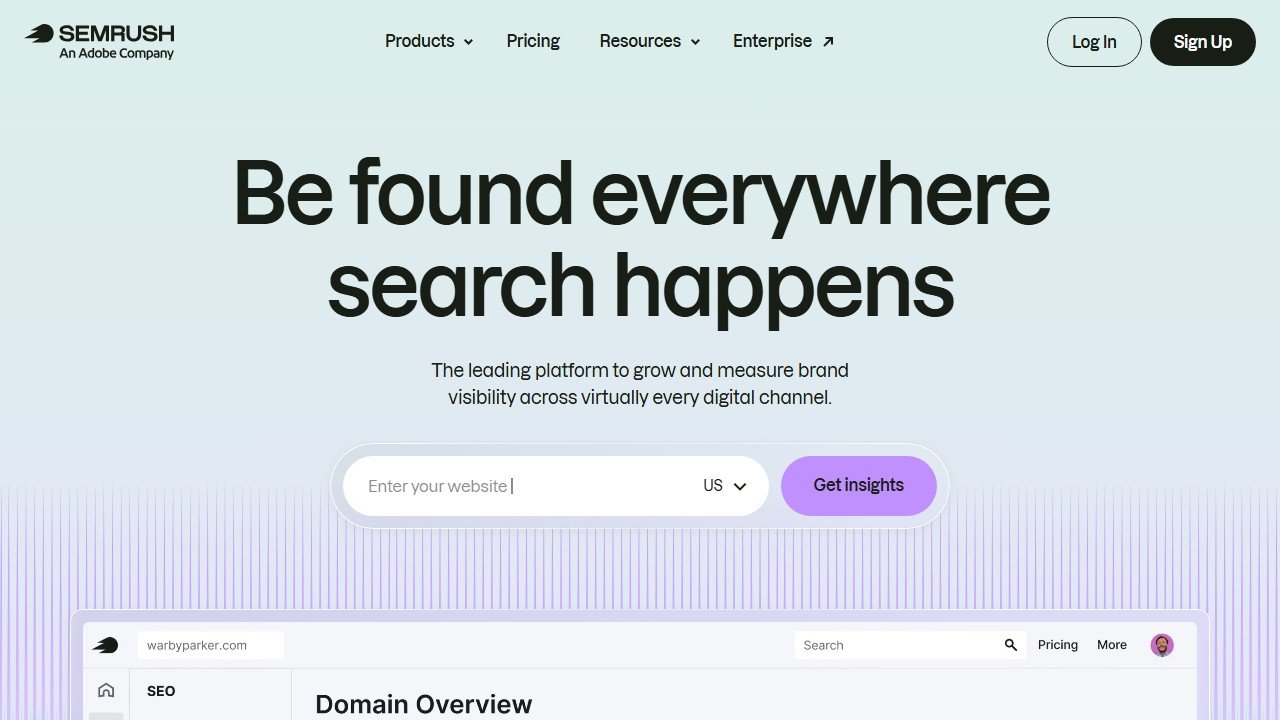
Semrush’s AI Visibility Toolkit tracks brand mentions, sentiment, and share of voice across ChatGPT, Gemini, Perplexity, Google AI Overviews, and Google AI Mode. For Semrush users, it folds AI visibility into an already-familiar platform. The catch is the entry point: AI visibility is not included in the $139 per month SEO plan, so the real starting price is the $199 per month Starter SEO + AI Search tier.
Best for: SEO teams and agencies already on Semrush
LLMs tracked: ChatGPT, Gemini, Perplexity, Google AI Overviews, Google AI Mode
Pricing: $199/month on the Starter SEO + AI Search tier, or $165.17/month billed annually. The cheaper $139/month SEO plan does not include AI visibility. Pro+ is $299/month and Advanced $549/month. Verified on semrush.com/pricing, 6 August 2026.
Free trial: Via Semrush trial
Website: Visit Semrush
What it does well:
- Covers five AI surfaces including Google AI Mode, tied to Semrush SERP data
- Useful for agencies with clients across many industries
Honest limitations:
- Does not track Claude, which Profound and Peec AI both cover
- Entry point of $199/month is high next to dedicated tools starting under $100
11. LLMrefs. Best Free Starting Point
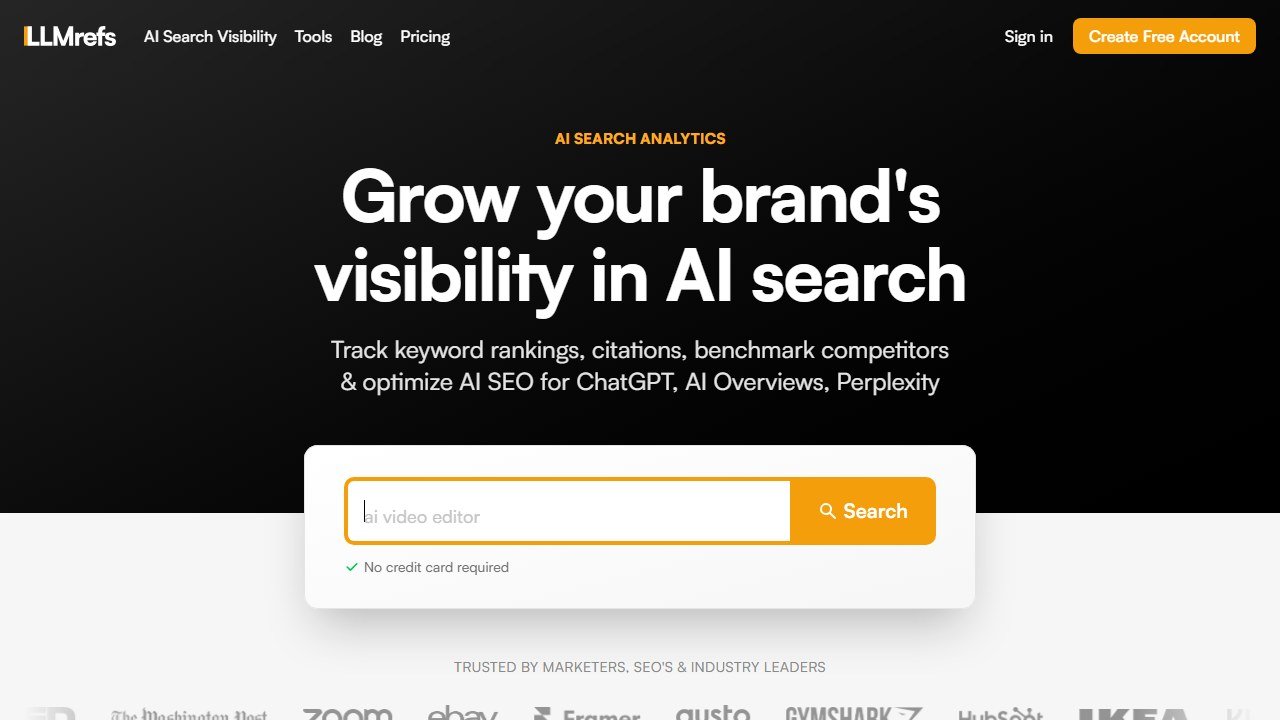
LLMrefs is free, tracks brand mentions across ChatGPT, Perplexity, and Gemini, and requires nothing beyond entering a domain. Use it to confirm a visibility problem exists, then upgrade to a paid tool to understand why and fix it.
Best for: Teams confirming whether they have an AI visibility problem before investing in monitoring
LLMs tracked: ChatGPT, Perplexity, Gemini
Pricing: Free
Website: Visit LLMrefs
What it does well:
- Zero-barrier entry: no credit card, working data in minutes
- Answers the “are we even being cited” question for free
Honest limitations:
- No competitor data, no alerts, no recommendations
- Not suitable for ongoing monitoring or reporting
Dedicated AI Mode trackers worth knowing
These are built specifically for AI search, and if AI Mode is your single priority, a focused tool tends to report it in the most detail.
Rankability
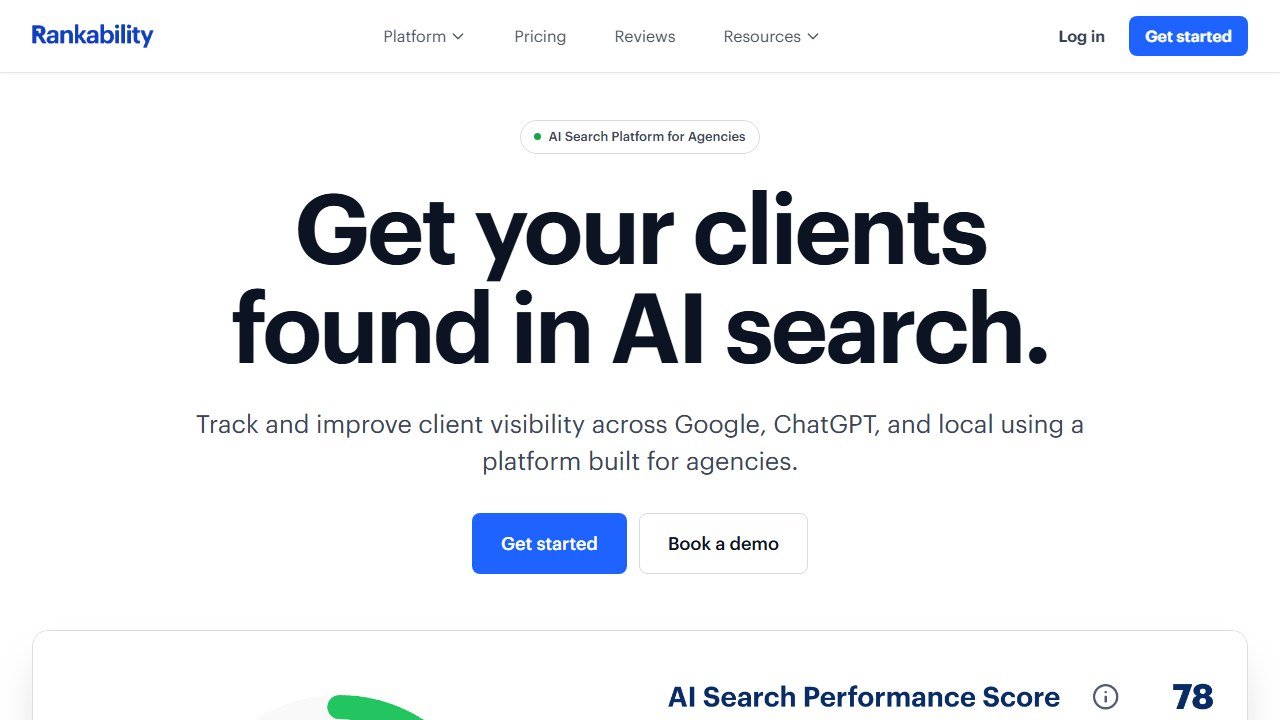
Rankability offers a dedicated Google AI Mode rank tracker as part of its content-optimization platform. It reports rankings, the sources cited inside the answer, and citation data, and it ties that back to on-page recommendations, which is useful if you want monitoring and a fix-it workflow in the same place rather than just a dashboard of bad news.
Rankscale
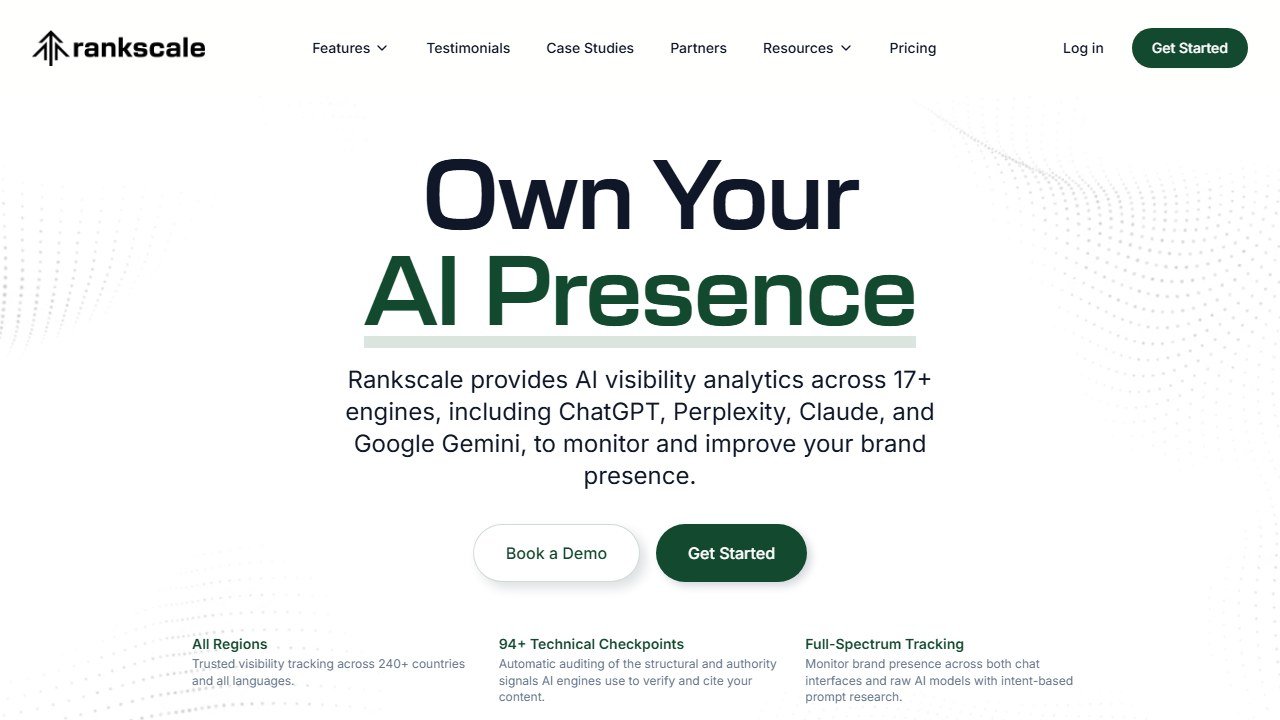
Rankscale is the credit-metered option here. It covers 17 or more AI engines with Google AI Mode included, and rather than selling a flat prompt allowance it charges a fraction of a credit per engine query, typically 0.25, so the bill follows how much you actually monitor. Its query fan-out feature surfaces the specific prompts that trigger your brand, which is exactly the prompt-discovery work this category needs. On pricing its own page says “starting at $99/mo”: Pro at $99 for 1,200 credits a month, Growth at $385 for 5,500, and Enterprise at $780 for 12,000, all on monthly billing. There is a lower Essentials tier listed in the plan comparison with no credits included, so treat $99 as the realistic floor for actual monitoring. Prices read from rankscale.ai/pricing on 17 August 2026.
Cognizo
Cognizo is the pick when you want tracking and the fix in one place. It monitors AI Mode alongside ChatGPT, Gemini and Perplexity, records citations and source URLs, refreshes daily, and pairs that with content-optimization guidance so the gap it finds comes with a brief for closing it. Pricing scales by the number of engines monitored and the volume of prompts tracked, from high-growth startups up to custom enterprise plans, so it sits a tier above the value tools but earns it if you want one platform doing both jobs.
AIclicks
AIclicks publishes the lowest entry price of the tools here that publish one at all. It tracks AI Mode, AI Overviews, ChatGPT and Perplexity from a Starter tier at $59 a month covering 30 tracked prompts, one site and three engines, rising to Pro at $189 for 150 prompts and Business at $499 for 300, with Enterprise priced on request. It also bundles AI-assisted content generation, so a small team gets monitoring and a drafting assist in one subscription. Prices read from aiclicks.io/pricing on 17 August 2026, taken from the view the page loads by default.
A wave of even newer dedicated platforms (the likes of KIME and a steady stream of launches) keeps arriving in this space. They may be capable, but they are young products with short track records, so verify their specific measurement claims against the six-point scorecard above, and check whether their AI Mode coverage is real testing or extrapolated from AI Overviews data, before you pay.
The trade-off with a dedicated tool: depth on AI search, but you may end up running it alongside whatever you use for traditional SEO, which means two subscriptions and two dashboards. For a content team that lives and dies by AI Mode visibility, that is a fair price. For a generalist marketer, it can be one tool too many.
Saru says: After reviewing the full competitive landscape, the data pattern is clear: citation source attribution separates useful tools from dashboards. Most tools show you that you were cited. Only Profound tells you which content drove that citation and what to do next. For a five-client agency, Profound plus Erlin handles monitoring and executive reporting cleanly. For a solo brand, Peec AI at €89/month does 80% of what Profound does. For anyone already on Ahrefs or Semrush, check native AI features first before buying a separate tool. And for anyone not yet sure they have a visibility problem: LLMrefs is free and takes five minutes.
Full Comparison Table
| Tool | LLMs Tracked | Starting Price | Agency Features | Free Trial | Best For |
|---|---|---|---|---|---|
| Profound | ChatGPT, Perplexity, Gemini, Claude, AI Overviews | $99/mo | Yes | No | Agencies |
| Peec AI | ChatGPT, Perplexity, Gemini, Claude | €89/mo | Limited | Yes | Solo / SMB |
| Encited | Tracks and renders across ChatGPT, Perplexity, Gemini, Claude, Google | Free PAYG, then ~$49/mo | Yes | Yes | Tracking and fixing AI visibility |
| KIME AI | ChatGPT, Perplexity, Gemini, Claude, Bing, Meta | ~$500+/mo (custom) | Yes | Demo only | Enterprise |
| Otterly AI | ChatGPT, Perplexity, Gemini, Claude | $29/mo | Limited | Yes | Brand sentiment |
| SE Visible | ChatGPT, Perplexity, Gemini, AI Overviews | Bundled w/ SE Ranking | Yes (via SE Ranking) | Via SE Ranking | SE Ranking users |
| Erlin AI | ChatGPT, Perplexity, Gemini, Claude | ~$99/mo | Limited | Yes | Benchmark data |
| Scrunch AI | ChatGPT, Perplexity, Gemini, Claude | ~$79/mo | Limited | Yes | Always-on alerts |
| Ahrefs Brand Radar | ChatGPT, Perplexity | Bundled w/ Ahrefs | Yes (via Ahrefs) | Via Ahrefs | Ahrefs users |
| Semrush AI Visibility Toolkit | ChatGPT, Gemini, Perplexity, AI Overviews, AI Mode | $199/mo | Yes (via Semrush) | Via Semrush | Semrush users |
| LLMrefs | ChatGPT, Perplexity, Gemini | Free | No | N/A | First-timers |
Decision Framework: Which Tool Is Right For You?
If you manage one brand and have not confirmed a visibility problem yet: Start with LLMrefs (free). If it shows you are being missed, move to Peec AI.
If you are a solo marketer or small team under $100/month: Peec AI at €89/month covers the four major platforms with clean competitor benchmarking.
If you run an agency with 5+ clients: Profound. Add Erlin quarterly for benchmark context in executive presentations.
If you are enterprise with compliance needs: KIME AI. Request a demo and expect custom pricing.
If you need fast alerts when visibility changes suddenly: Scrunch AI alongside your primary tool.
If you care primarily about what AI says about your brand (not just how often): Otterly AI.
If you already pay for Ahrefs: Check Brand Radar before evaluating standalone tools.
If you already pay for Semrush: The AI Visibility Toolkit is included from the $199/month Starter tier upward, so check which plan you are on before buying anything separate. The $139/month SEO plan does not include it.
If you want someone to handle monitoring and optimization for you: That is Zilwaris Digital. We build and manage AI citation strategies for B2B SaaS brands. Get a free AI visibility audit to see where your brand stands today.
The Vendor Bias Problem in This Category
Every major article currently ranking for “best AI visibility tools” is written by a vendor in the category. KIME wrote the #1 result and ranked themselves #1. Profound published an agency comparison on their own domain and ranked themselves #1. SE Visible published their comparison on visible.seranking.com without disclosing the vendor relationship and ranked themselves #1.
The same bias runs through the advice on competitor tracking, where almost every guide is published by a company selling the tracker. Our version of that method, built on a free data source and with the paid options priced, is how to monitor competitors in AI search results.
The LLMClicks article is the most transparent: they open with “I run LLMClicks.ai, so I’m obviously biased.” That honesty is worth noting. The Nick Lafferty piece is the most methodologically interesting but Lafferty works closely with Profound, which shapes the conclusions.
We take no affiliate commissions from any tool in this guide, and anything a vendor has paid for is clearly labelled as sponsored. That does not make us infallible. It does mean you can always see what is editorial and what is paid.
See also: Best AI Tools for Teachers | Best AI Tools for Corporate Training | Best AI Tools for Nonprofits
Google AI Mode specifically: what it measures and how to check it free
Google AI Mode is a different surface from ChatGPT or Perplexity, and it is the one buyers ask about most often. This section was consolidated here on 17 August 2026 from our separate AI Mode guide, so everything on the topic now lives in one place.
First: what "AI Mode SEO checking" actually measures
A traditional rank tracker reports one number: your position for a keyword. AI Mode checking is not one number, and a tool that pretends it is should be treated with suspicion. Four distinct things are worth measuring, and the better tools are explicit about which they do:
- Appearance rate: how often AI Mode generates an answer for your target queries at all, and how often your site is involved.
- Citation frequency: how often you are actually cited as a source in those answers. This is the closest equivalent to "ranking."
- Cited-URL capture: which specific page of yours gets cited, which is what you optimize against.
- Competitor share of voice: who else is being cited for your queries, and how your citation share compares.
A tool that reports only "you appeared" is thin. A tool that breaks out citation frequency, the exact cited URL, and competitor share is doing the real job. Use those four as your scorecard while reading any vendor's feature list.
There is a deeper distinction underneath those four, and it is the one most vendor lists blur: rank tracking versus citation tracking. Rank tracking tells you where you sit in the AI answer's ordered sources. Citation tracking tells you whether the synthesized answer is genuinely pulling sentences from your page and naming you as the source. They are different measurements with different strategic weight. A tool that only reports a rank position inside AI Mode is telling you less than one that shows you exactly which of your paragraphs the model lifted. Ask which one a tool does before you pay.
Two more measurements separate a serious AI Mode tracker from a basic one. The first is sentiment: AI Mode does not just cite you, it describes you, and whether the description is positive, neutral, or quietly damning is part of your visibility. A citation that frames you as the expensive option is not the same win as one that frames you as the trusted default. The second is prompt discovery: AI Mode answers fan out into follow-up questions and related sub-queries, so the best tools suggest the actual conversational prompts worth tracking rather than making you guess a keyword list. If a tool offers neither, you are looking at a rank tracker with a new label.
One thing none of these tools measures well yet is traffic attribution. Knowing you were cited in an AI Mode answer is not the same as knowing how many people clicked through, and AI Mode click data in Google Search Console remains coarse. Treat AI Mode checking tools as visibility instruments, not analytics. They tell you whether you are in the answer. Your own analytics, cross-referenced loosely, tell you whether it moved anything.
How to check your AI Mode visibility for free, before you pay for anything
You do not need a subscription to get a first read on where you stand. Three free methods get you most of the way, and running them first tells you whether a paid tool is even worth it for your queries.
- Google Search Console, read carefully. Google does not break AI Mode out as its own report. Traffic from AI Mode and AI Overviews is folded into the "Web" search type in the Performance report, mixed in with ordinary results. So you cannot isolate an "AI Mode" number, but you can watch for its fingerprints: queries where impressions hold steady or climb while clicks fall away are often queries where an AI answer is now intercepting the click. Track those queries as your AI-pressure watchlist.
- The manual incognito test. Open an incognito window so your search history does not personalize the result, type your target query into Google, and see whether an AI Mode answer fires and who it cites. It is tedious and it only samples one moment, but it is the ground truth every paid tool is trying to automate. Run your ten most important queries this way once a month and you have a free, honest baseline.
- GA4 referral traffic. Your analytics will show referral sessions from AI engines when someone actually clicks through from an answer. That captures click-through, not citation, so it undercounts your true visibility, but a rising trickle of referrals from AI sources is a real signal that your content is being surfaced.
The honest limit: free methods tell you roughly where you stand on a handful of queries at a single moment. A paid tool earns its fee when you need to track many queries, on a schedule, with competitor share and the exact cited URLs spelled out. Start free, confirm there is something worth measuring, then pay for scale.
A simple way to test a paid tool before you buy
Once a tool passes the free-method sniff test and you are trialing the paid version, run a short pilot. Pick five to ten queries you genuinely care about, ones where you know roughly how you perform in normal search. Track them for two to three weeks across whatever tool you are trialing. Then check three things: does the tool correctly catch when AI Mode actually fires for those queries, does the cited URL it reports match what you see when you run the query yourself, and does the competitor list look like reality rather than noise. A tool that passes that small test on queries you understand can be trusted on the ones you do not. A tool that fails it will not get more accurate at scale.
What a real AI Mode SEO program tracks
A tool is only half the job. The measurement stack that actually matters in 2026 spans three layers that did not exist a few years ago. Layer one is classic SERP rankings, your positions on Google for target queries. Layer two is AI Overview citations, whether Google's AI Overviews name your domain when they answer. Layer three is AI Mode coverage, whether AI Mode and the other answer engines surface you when users ask the question your content answers. Most legacy tools cover layer one well and under-cover the other two, which is the whole reason this category exists.
Within those layers, four metrics predict AI search wins better than any vanity number. Citation frequency: how often your domain is cited across AI answers for your queries. Query coverage: what share of your target queries return an AI answer that includes you at all. Answer correctness: when you are cited, does the model represent you accurately or garble it, because a confident misquote can cost you more than no citation. And AI click conversion: clicks from AI answers behave differently from ordinary organic clicks, so track how they convert separately. The leading tools cover the first two cleanly, partially cover the third, and none of them owns the fourth, which still needs your own analytics. Build a monthly review that pulls all four and you have a real program rather than a dashboard you stop opening.
Three things behave differently in AI Mode than in classic SEO, and they should shape what you track. Freshness weighs heavier: AI engines lean toward recent content, so an old page with strong authority can lose the citation to a newer, thinner one. Off-page brand mentions matter more: how often you are talked about across the web feeds AI citations more than it ever moved classic rankings. And answer-first structure is now mandatory, not merely helpful: a clear summary up top, a definition near the top, and a question-and-answer block lower down are what make a page quotable inside an answer.
Adjacent GEO/AI-search guides
Other guides in the AI search visibility category:
Two more, both published September 2026: how to measure zero-click search, which is the measurement method rather than a tool list, and how to track ChatGPT traffic in GA4, which covers the analytics side and its blind spots.
- best AI SEO tools 2026. the complete stack by workflow stage
- best AI search monitoring tools 2026. AI-mention tracking and citation monitoring
How AI Engines Decide What to Cite
Understanding why an AI cites one source over another starts with a basic split: some AI systems generate answers from frozen training data, and others retrieve live content at query time. The tools you use to track AI visibility, and the tactics you use to improve it, differ significantly depending on which mechanism is in play.
Training data-based systems like Claude and base GPT-4 learned from large text corpora with a cutoff date. If your brand, product, or content was not well-represented in that training window, you are essentially invisible to those systems unless they have retrieval augmentation turned on. Getting “into the model” means having substantial, authoritative, widely-linked content published well before the cutoff. That is a slow process and largely retrospective.
Real-time retrieval systems like Perplexity and ChatGPT Browse (which runs over the Bing index) work differently. They pull pages at query time, rank them using signals similar to traditional search ranking, and extract passages to include in answers. Citation selection in these systems is closer to a featured snippet competition: the system looks for a clear, direct answer to the query, usually in the first 100 to 150 words of a page, and prefers content with structural signals (headers, lists, tables) that make extraction easy.
Topical authority clusters matter more than individual page authority in AI citation for a specific reason: AI systems infer expertise from breadth and consistency. A site with 40 pieces of content all addressing the same topic space from different angles signals domain depth in a way that a single high-authority page does not. Perplexity shows a clear preference for sites that appear across multiple related queries, not just the single query being answered. This means cluster-based content strategy transfers directly into AI visibility strategy.
What the model providers have said publicly about citation selection is sparse but useful. Anthropic has stated that Claude is designed to be “calibrated,” meaning it tries to cite sources proportional to the strength of the claim, and prefers specific, verifiable factual statements over vague generalizations. OpenAI has noted that GPT-4o with Browse favors Bing-indexed content and applies relevance and quality filters before generating an answer. Google’s documentation on AI Overviews makes clear that its system draws heavily from the same quality signals that govern featured snippets: clear structure, demonstrated expertise, and content that directly answers the query.
The practical implication: being “retrieved in real time” is the easier problem to solve. You can optimize pages, improve structure, and update content this week. Being “in the model” requires patience and a longer content investment runway. Most marketers should focus the majority of their optimization effort on retrieval-based systems first, because those are the levers they can actually pull.
GEO vs Traditional SEO: What Actually Changes
Generative Engine Optimization shares a large portion of its foundation with traditional SEO. Content quality matters. E-E-A-T signals matter. Fast load times matter. Structured data matters. Clean site architecture matters. If you have been running a disciplined SEO program, you are not starting from zero. But there are specific places where GEO diverges sharply from what you have been doing, and optimizing the wrong variables is a real risk.
The biggest thing to stop optimizing for is exact-match keyword density. LLMs do not use keyword frequency as a relevance signal. They parse semantic meaning. A page that uses your target phrase 14 times will not rank better in an AI response than a page that uses natural language and covers the concept thoroughly. Keyword stuffing is neutral at best in GEO terms, and can actively harm readability in a way that makes a page less suitable for AI extraction.
What replaces it is entity disambiguation. If your brand name is ambiguous, shared with another company, a common word, or similar to a competitor, AI systems will frequently miscite you, conflate you with the wrong entity, or omit you entirely. Entity clarity, making it unambiguous who you are, what category you belong to, and how you are distinct from similar entities, is one of the most underused GEO tactics.
Backlinks still matter, but through a different mechanism. In traditional SEO, backlinks signal authority directly in the ranking algorithm. In AI retrieval, backlinks matter because they drive the traditional ranking that determines which pages get retrieved in the first place. They also matter as citation pattern signals: if authoritative domains mention and link to your brand, you are more likely to appear in training data and retrieval results in contexts where trust matters. But the relationship is indirect, not a direct ranking lever in the AI layer.
Freshness matters differently too. In traditional SEO, freshness can be a ranking factor for certain query types. In AI retrieval, freshness matters because outdated content is more likely to contain incorrect claims, and AI systems are increasingly penalizing sources that produce stale or contradicted information. Explicit date signals (“Updated May 2026”, “2026 edition”) also help retrieval systems decide whether your content is temporally appropriate for the query.
The new architecture to understand is what researchers are calling “answer structure”: a well-cited AI response typically follows a pattern of direct answer, then supporting detail, then source chain. Pages that lead with a direct, citable answer in the first paragraph are most likely to get picked up. Pages that provide rich supporting detail with tables and structured comparisons tend to appear in the second layer. The source chain layer is influenced by domain authority and citation history.
The AI Visibility Optimization Checklist
This checklist is organized into four areas: content structure, brand entity clarity, technical signals, and content freshness. Work through each systematically.
Section A: Content Structure
- Clear entity definitions in the opening paragraph. Every page that covers a product, brand, or concept should define it explicitly within the first 100 words. “Profound is an AI visibility monitoring platform that tracks brand mentions across ChatGPT, Perplexity, and Google AI Overviews” is citable. “Profound helps you understand your brand” is not. AI systems look for entity-definitional statements to anchor their understanding of your content.
- Structured comparison tables wherever you cover multiple options. Comparison tables are consistently among the most-cited content formats in AI responses. They provide dense, structured, extractable information in a format that AI systems can parse and reference directly. Every roundup post, category page, or competitive comparison should include one.
- FAQ schema on every informational page. FAQ structured data is read directly by AI retrieval systems. Perplexity and ChatGPT Browse both parse FAQ schema to identify question-answer pairs they can extract for responses. Mark up your FAQ sections and keep answers under 50 words each for maximum extractability.
- Direct answer in the first paragraph, every time. If your page is about “how to track AI visibility,” the first paragraph should state the direct answer. AI systems extract from the top of pages, and a page that makes you scroll to find the answer is less likely to be cited than one that leads with the answer and then expands.
- Specific numbers, dates, and attributable claims throughout the content. Vague statements do not get cited. “Most marketers are investing in AI visibility” is not citable. “68% of marketers added an AI visibility tool to their stack in 2025, according to the State of Search report” is. Specificity is what makes content worth quoting, and AI systems are essentially quote-selection engines.
Section B: Brand Entity Clarity
- Consistent brand name across all platforms. If your company name varies across LinkedIn, Twitter, your website, and press releases, you are creating entity fragmentation. AI systems resolve entities by cross-referencing name patterns across sources. Inconsistency leads to undercounting or misattribution. Pick a canonical form and enforce it everywhere.
- Wikipedia or Wikidata presence if your brand qualifies. Wikipedia is disproportionately represented in AI training data and is among the most-cited sources in AI responses. If your brand meets Wikipedia’s notability guidelines, a well-maintained entry is one of the highest-impact single things you can do for AI brand visibility. Wikidata entries still help with entity resolution even without a Wikipedia article.
- Google Knowledge Panel claimed and maintained. Knowledge Panels are Google’s entity repository, and they feed directly into Google AI Overviews and Gemini. Claim your Knowledge Panel through Google Search Console, ensure all information is accurate, and keep it updated.
- Brand mentions on authoritative third-party domains. Being mentioned by name on high-authority domains (major publications, industry analyst sites, recognized review platforms) builds the citation footprint that AI systems use to assess brand credibility. Reviews on G2, Capterra, or TrustRadius count. Mentions in major publications count more.
- Social proof consistency. AI systems pick up review counts, ratings, and customer volume claims from multiple sources. Keep your public metrics consistent and up to date. Outdated or contradictory social proof creates noise in the entity profile.
Section C: Technical Signals
- llms.txt file in your root directory. The llms.txt standard lets you provide AI crawlers with a structured summary of your site, key content, and preferred citation context. Include your brand name, category, primary use cases, and links to your most important content.
- Structured data for Organization, Product, and FAQ schema. Organization schema establishes your brand entity with key attributes. Product schema makes your products citable as distinct entities with pricing, ratings, and feature attributes. Run a structured data audit and prioritize these three schema types.
- robots.txt configured to allow AI crawlers. Check that you have not accidentally blocked major AI crawlers like GPTBot (OpenAI), ClaudeBot (Anthropic), PerplexityBot, or Google-Extended. Blocking these crawlers removes you from real-time retrieval entirely.
- IndexNow and Bing submission for fresh content. Since ChatGPT Browse and Perplexity both rely heavily on the Bing index, fast Bing indexing translates directly to faster AI visibility for new content. Set up IndexNow so new and updated pages are submitted to Bing automatically.
- Clean canonical structure with no duplicate content signals. Duplicate content issues do not just hurt Google SEO; they create confusion in AI responses where your content may be cited from an unexpected URL. Canonical tags should be consistent and correct across your entire site.
Section D: Content Freshness
- Monthly update cadence on high-priority pages. High-priority pages should be reviewed and updated monthly. Even minor updates (adding a new data point, updating a pricing detail, adding a recent quote) signal freshness to retrieval systems.
- Explicit “last updated” dates on all content. Include a visible “last updated” date on every page, not just a published date. AI retrieval systems use date signals to assess whether content is temporally appropriate for a query.
- Year or version references in titles and H1s where appropriate. For category and comparison content, including the year in the title is a simple freshness signal that retrieval systems pick up. Update these annually and make sure the content actually reflects the current year’s landscape.
What Each Major AI Platform Looks For
The five major AI platforms that SEOs need to track each have distinct citation behaviors. Knowing the differences helps you prioritize where to focus optimization effort.
ChatGPT (GPT-4o with Browse)
When ChatGPT Browse is active, the system queries Bing and retrieves pages from the top results. Citation selection is heavily correlated with Bing search ranking for the underlying query. This means Bing SEO, historically overlooked, is now strategically important for ChatGPT visibility. Pages with clear entity definitions, structured data, and content that mirrors the structure of a featured snippet are most likely to be cited. The practical implication: treat Bing ranking as a proxy metric for ChatGPT visibility, and structure your pages the same way you would optimize for a featured snippet.
Perplexity
Perplexity runs its own crawler alongside Bing integration and shows sources directly in the interface. It has a strong preference for pages that themselves cite sources explicitly: pages with embedded data, linked statistics, and named references. Comparison tables and numbered lists are disproportionately cited by Perplexity. The platform also favors pages that are comprehensive for a query rather than thin. Building content that is itself well-sourced and structured for information density is the single highest-impact Perplexity optimization.
Google AI Overviews
Google AI Overviews draws from Google’s existing index and applies E-E-A-T weighting that closely mirrors what Google uses for featured snippets. Pages that already appear in featured snippets for a query have a measurable advantage in AI Overviews for that same query. Google’s AI Overviews also show a strong preference for content with demonstrated author expertise: named authors with visible credentials, author schema markup, and bylines that link to author profile pages. If you are not currently winning featured snippets, that is where to start. AI Overviews visibility for the same queries will follow.
Claude (Anthropic)
Claude’s default mode is training-data based, making it the hardest platform to influence through tactical changes. What Anthropic has made public is that Claude is calibrated to express appropriate uncertainty, meaning it is more likely to cite specific, attributable claims than to repeat general assertions. Topical authority, having a large coherent body of content on a subject, is the primary long-term lever for Claude visibility. For Claude specifically, the most actionable thing is building content depth over time in your subject matter area, with clear factual claims and attributed statistics throughout.
Gemini
Gemini is deeply tied to Google’s Knowledge Graph and index. Structured data and Knowledge Graph entity presence have outsized importance for Gemini citations. The system shows a strong preference for content with clear authorship signals, organization schema, and content formally associated with a recognized entity in Google’s ecosystem. If your brand appears in Google’s Knowledge Graph as a distinct entity with attributes, Gemini will handle your brand mentions more accurately and cite your content more consistently.
Building Your AI Visibility Monitoring Stack
No single tool covers AI visibility comprehensively. The prompt space is too large, the platforms are too different, and the methodologies vary too much. The practical approach is a three-layer stack that covers distinct monitoring needs without excessive overlap.
Layer 1: Prompt Monitoring
The first layer tracks whether your brand appears in AI responses to specific queries you define. Tools like Profound and Otterly AI sit in this layer. You input a set of prompts that represent how your target audience searches, and the tool runs those prompts across AI platforms and records whether your brand is mentioned, how it is positioned, and what is said about it. Start with 20 to 30 core prompts that represent high-intent queries in your category, run them weekly, and build a baseline before making changes.
Layer 2: Share-of-Voice Benchmarking
The second layer measures your AI visibility relative to competitors across a broader prompt set. Tools like KIME AI and Peec AI sit here. Rather than tracking specific prompts you choose, these tools run large-scale prompt sampling across your category and calculate what percentage of AI responses in that category mention your brand versus competitors. This layer answers the strategic question: are you gaining or losing AI market share? Run share-of-voice benchmarks monthly and track the trend over time rather than reacting to individual data points.
Layer 3: Citation Tracking and Brand Mention Alerts
The third layer monitors where and how your brand is mentioned across AI platforms without predefined prompts. Tools like Scrunch AI and LLMrefs sit here. This layer catches mentions you did not anticipate, surfaces contexts where your brand is being misrepresented or confused with competitors, and provides evidence for the citation footprint you are building. It is also useful for identifying which of your content pieces are being cited most frequently.
Weekly Monitoring Workflow
A practical weekly routine: run your Layer 1 prompt set at the start of the week and flag any prompts where your visibility score dropped by more than 10 points. Pull your Layer 3 mentions report and scan for misrepresentations or unexpected citation contexts. Review Layer 2 share-of-voice monthly rather than weekly to avoid noise. When reporting to stakeholders, lead with the share-of-voice trend and then use Layer 1 data to show specific wins or gaps.
How to Read and Act on Your AI Visibility Score
Every AI visibility tool computes a “visibility score” differently. Before acting on a score, understand what it actually measures in the tool you are using. Some tools calculate it as a percentage of tracked prompts where your brand appeared. Others weight by prompt volume or estimated query frequency. Others measure sentiment-adjusted citation rate. Two tools can show different scores for the same brand because they are measuring different things.
In most competitive software and services categories, an AI visibility score below 15% indicates you are largely absent from AI-generated answers in your category. A score in the 15 to 40% range is typical for established brands in competitive categories. A score above 50% indicates genuine AI visibility leadership, usually associated with brands that have both strong topical authority and well-optimized content structure.
When your score is low, the first diagnostic split is platform versus query type. Pull your data by platform: are you missing from ChatGPT specifically, or across all platforms? If you are missing from ChatGPT but present in Perplexity, the issue is likely Bing ranking. If you are missing from Google AI Overviews but present elsewhere, the issue is likely E-E-A-T or featured snippet eligibility. If you are missing across all platforms, the issue is foundational: entity clarity, content structure, or brand footprint on authoritative domains.
If you need to show movement within a month, focus on three levers. First, content refresh: identify your five highest-potential pages and update each with a direct-answer opening paragraph, a structured comparison table if applicable, and FAQ schema. Second, schema fix: audit your Organization, Product, and FAQ schema and fix any validation errors. Third, brand entity disambiguation: if your brand name is ambiguous, update your homepage, About page, and Google Knowledge Panel to include a clear categorical description that distinguishes you from any other entity with a similar name.
What AI Visibility Tools Still Cannot Do
AI visibility measurement is a young discipline and current tools have real limitations that you should factor into how you use and present the data.
The most significant limitation is sampling. No tool runs every possible prompt. They sample a defined set and extrapolate. The prompt space for any category is effectively infinite. A tool that tracks 500 prompts is giving you a statistically meaningful but necessarily incomplete picture. Treat scores as directional indicators, not precise metrics.
Real-time measurement is another gap. Most tools run prompts on a schedule and report results with a lag. AI platform behavior changes continuously. A score from last Tuesday may not reflect current reality. This is particularly acute after major AI platform updates, where scores can shift significantly between measurement cycles without any change on your end.
Attribution is the hardest problem. You can see that your AI visibility score improved from 18% to 27% over three months, and you made changes to your content during those three months. Did your changes cause the improvement? Probably. But AI platforms change their behavior independently, competitors’ actions affect your share-of-voice, and new content from other sources can crowd you out or let you in.
When your data is noisy, the right response is to slow down, run a controlled content experiment on a small set of pages, and observe the effect on a specific subset of prompts before drawing broader conclusions. Reacting to every data fluctuation with a content overhaul is expensive and counterproductive. Build a testing discipline alongside your monitoring stack.
AI Visibility Case Examples
The following examples illustrate realistic patterns seen in AI visibility optimization programs. They reflect the types of changes that produce measurable score improvements.
B2B SaaS brand: 12% to 34% AI visibility in 90 days
A mid-market project management SaaS had strong Google rankings, top 5 for most of their core category terms, but an AI visibility score of 12% when they started tracking. Their content was well-written but structured in a narrative format that was not optimized for AI extraction. Opening paragraphs were contextual, not definitional. Most pages lacked FAQ schema. The brand name was shared with an unrelated consumer product, creating entity confusion in AI responses.
Over 90 days, they made four changes. They rewrote the opening paragraph of their 15 highest-traffic pages to lead with a direct, entity-defining statement. They added FAQ schema to all product and comparison pages, covering the 8 to 10 most common questions their sales team heard from prospects. They implemented an llms.txt file that clearly defined their brand, category, use cases, and differentiated them from the consumer product with the same name. They also launched a structured comparison table on their main category page covering their product and six competitors across 12 criteria.
At the 90-day mark, their AI visibility score had risen to 34%. The gains were strongest on Perplexity (comparison table citations) and ChatGPT Browse (FAQ extraction). Google AI Overviews improved more slowly, consistent with Google’s longer re-evaluation cycle. The entity disambiguation changes had a noticeable effect on response accuracy: the share of AI responses that correctly identified them as a project management tool rose from 61% to 89%.
E-commerce brand missing from AI despite strong SEO
A consumer electronics retailer had 200+ pages ranking in Google’s top 10, strong domain authority, and a well-funded SEO program. Their AI visibility score was 8%, nearly invisible in AI responses despite their search visibility. The diagnostic revealed three structural issues specific to their content type.
Their product pages were optimized for Google Shopping and traditional search, not for AI extraction. Pages had product descriptions but no structured comparison data showing how products differed from each other or from competitor products. There was no FAQ schema anywhere on the site. Most critically, their brand presence on third-party authoritative domains was limited to affiliate partner sites and a handful of low-authority review blogs.
The AI systems had no reason to cite them: no structured comparative data to extract, no FAQ schema to parse, and no third-party citation footprint to validate their authority. High Google rankings were getting them retrieved, but the pages were not extractable in a useful format. This is the most common pattern for e-commerce brands that have invested in traditional SEO without adapting to AI content requirements.
Content publisher as a heavy AI citation source
A B2B technology media site consistently appeared in AI responses across multiple unrelated software categories. Their AI citation rate was high relative to their domain authority and organic traffic. Analysis of their most-cited pages revealed a consistent pattern: detailed comparison tables with 10 or more criteria and 6 or more products, explicit data points with linked primary sources, named authors with credentials clearly stated in the byline, and direct definitional answers in the first paragraph of every article.
The site had also built a consistent entity vocabulary: they used the same category names, product names, and terminology consistently across all articles, which made it easy for AI systems to parse relationships between entities in their content. They updated articles quarterly with new data and changed the “last updated” date explicitly. They ran FAQ schema on all articles. Their llms.txt file included summaries of their editorial standards and the categories they covered.
None of these were accidental. Their editorial team had consciously shifted their content format over 18 months after noticing that AI traffic was growing faster than organic search traffic. The shift to structured, data-dense, clearly-attributed content was a deliberate editorial policy change, and it made them one of the most-cited sources in their coverage area across ChatGPT, Perplexity, and Google AI Overviews simultaneously.
The ROI Case for AI Visibility Investment
Marketing leaders evaluating AI visibility tools often struggle to build an ROI case because the channel is new and attribution is imperfect. Here is a framework for making the business case without overstating the certainty.
Start with what you can measure today: AI-referred traffic in Google Analytics 4. Perplexity sends referral traffic with a recognizable referrer string. ChatGPT does the same for Browse-enabled responses. Claude and Gemini are less consistent, but GA4 custom channel groupings can capture them when they fire. Baseline this number now, before any optimization work, so you have a pre-intervention data point to compare against.
The second measurable proxy is branded search volume. When AI systems cite your brand in responses to non-branded queries, some percentage of readers subsequently search for your brand directly. Google Trends and Google Search Console brand query data can show whether brand search volume is rising in correlation with AI visibility improvements. This is an indirect signal but one that CMOs understand intuitively.
The third measurement approach is pipeline attribution for B2B companies. Ask new leads in your intake form how they first heard about you, and add “AI tool recommendation (ChatGPT, Perplexity, etc.)” as an explicit option. Even a qualitative read of this data over 90 days gives you directional evidence of AI-driven pipeline contribution.
The cost side of the ROI equation is relatively straightforward. AI visibility tools at the SMB tier typically run $100 to $500 per month. Enterprise tiers run $1,000 to $5,000 per month. Content optimization work (schema fixes, content rewrites, llms.txt setup) is a one-time investment that depreciates slowly. The ongoing cost is the monthly monitoring subscription and quarterly content refresh cycles.
The conservative framing for a business case: AI-generated answers are already influencing 20 to 40% of purchase research in most B2B categories, according to surveys from Gartner and Forrester conducted in late 2025. Brands that are not monitoring their AI presence are making decisions about a channel they cannot see. The cost of monitoring is small relative to the scale of the channel. That argument holds whether or not you can fully attribute specific revenue to AI citations yet.
AI visibility measurement is still maturing as a discipline, but the core investment case is clear: brands that monitor and optimize their presence in AI-generated answers are building a meaningful advantage over those that treat it as a future problem. The window to establish early citation authority in most categories is open now. It closes as more competitors adopt structured content and schema optimization.
Adjacent GEO and AI-search guides
Want the specifics behind AI-search visibility? Start with these companion guides:
- AI search visibility gap analysis tools: diagnose your blind spots.
- why use AI search monitoring tools: the case for tracking AI search.
Teams that train their own models should also see our roundup of annotation tools for AI model evaluation, focused on measuring model quality.
Tools mentioned in this guide
New to this? Start with our guide to generative engine optimization, then read our Profound review and Otterly.ai review.

Written by
FazFaz is the founder of AIToolsBakery. Some tools here are tested hands on. Others are assessed from vendor documentation and pricing verified on the live page, and every review says which one it is. Sponsors can buy a position in a guide. They cannot buy the score, the criticism, or silence about a better option.
How we test and how we make money →Frequently Asked Questions