AI workout generators have gotten remarkably good at personalising training plans, but not all of them are built with women’s goals and physiology in mind. Some apps default to “bro-split” strength programmes or HIIT circuits that ignore the fact that many women are training around hormonal cycles, managing recovery from pregnancy, or simply want to build strength without bulking up.
This roundup focuses specifically on AI workout generators that do a good job for women: apps that understand goals like toning, functional strength, postpartum fitness, and cycle-syncing, and that produce workouts women actually want to do.
The best AI workout generators for women in 2026 are Sweat, Centr, Bfit, Shred, Fitbod, Peloton App, and Alo Moves. Each offers personalised plans, varied workout styles, and features tuned to common female fitness goals.
At a glance: the best AI workout generators for women in 2026
| App | Best for | Free tier | Starting price | Cycle-aware |
|---|---|---|---|---|
| Caliber | AI + real coach | Free Strength tier | $200/mo (premium) | No |
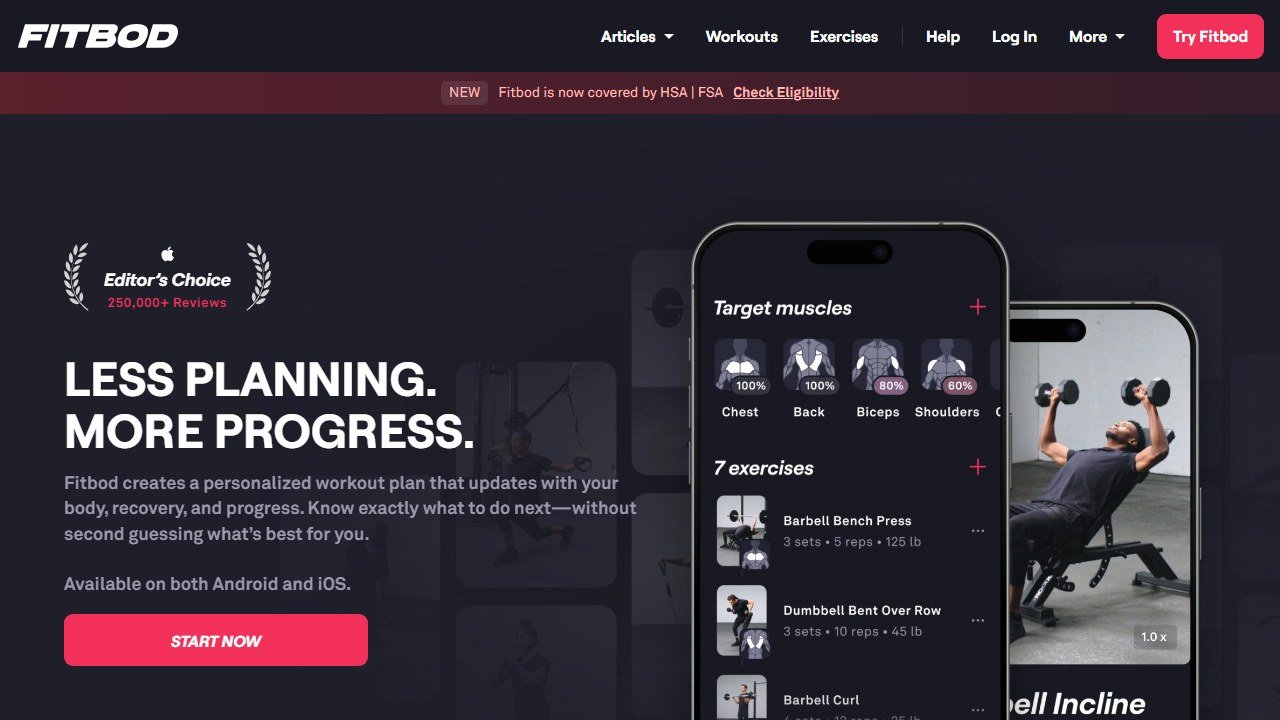
| Future | Celebrity-trainer coaching | No | $199/mo | No |
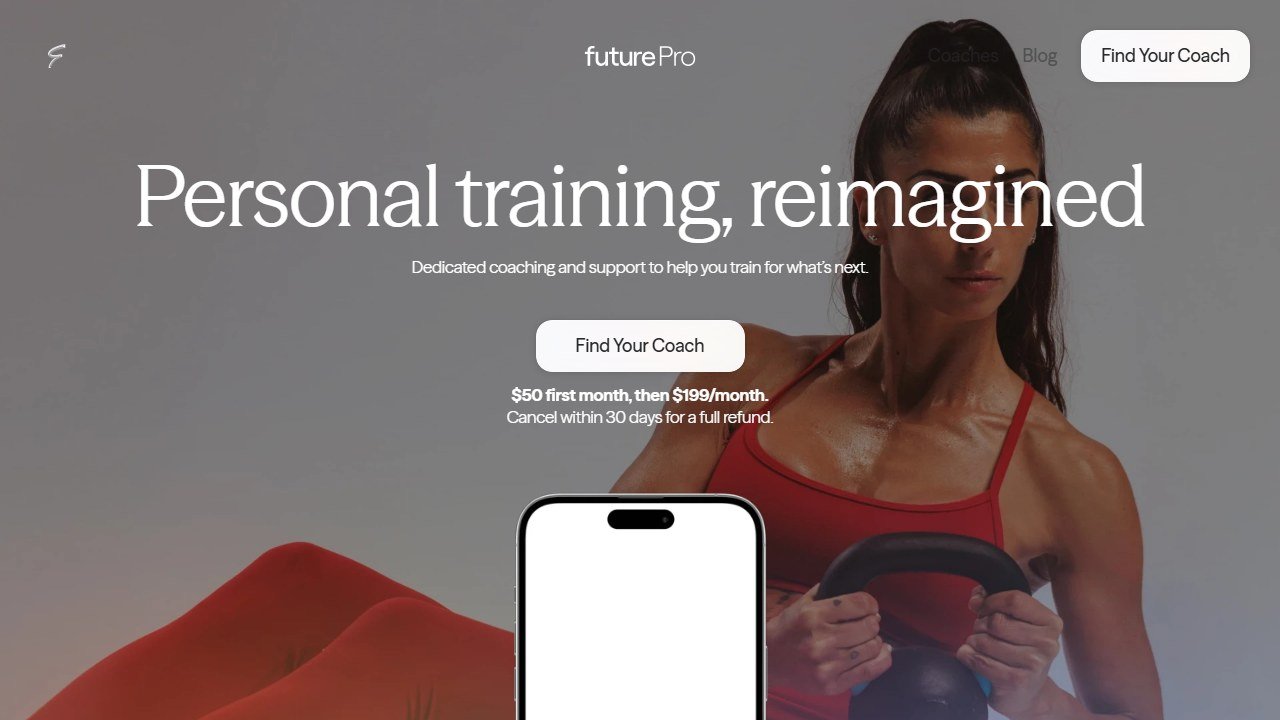
| Fitbod | Adaptive AI programming | 3 free workouts | $13/mo | No |
| Wild AI | Cycle-aware training | 14-day trial | $14.99/mo | Yes (lead focus) |
| FitrWoman | Female athletic performance | Free | Free | Yes |
| Every Mother | Postpartum rebuild | 7-day trial | $15/mo | Postpartum-specific |
What to look for in an AI workout generator for women
A few features matter more for women than for the general population:
- Cycle-aware scheduling: some apps can adjust training intensity based on where you are in your menstrual cycle.
- Postpartum and prenatal options: safe, evidence-based programmes for pregnancy and recovery.
- Goal flexibility: options beyond just “lose weight” or “build muscle”: toning, endurance, flexibility, and stress relief all matter.
- Community features: research consistently shows women benefit more from social support in fitness contexts than men do on average.
1. Sweat (by Kayla Itsines): Best overall for women
Sweat was built by and for women, and it shows. The app hosts programmes from Kayla Itsines (BBG, LISS), Kelsey Wells (PWR strength), and dozens of other trainers covering yoga, pilates, postpartum recovery, and low-impact cardio. The AI layer personalises your weekly schedule based on your goals, time availability, and programme history.

The cycle-syncing feature (available in the app’s scheduling settings) lets you input your cycle dates, and the AI adjusts training intensity recommendations accordingly, with lighter sessions in the luteal phase and higher intensity during the follicular phase. It’s one of the few fitness apps that takes this seriously.
Postpartum options are genuine and evidence-based, not just “light versions of the regular programme.” Kelsey Wells developed the postpartum PWR programme specifically for post-pregnancy recovery, with proper attention to diastasis recti and pelvic floor considerations.
The community is Sweat’s secret weapon. With millions of users, the forums and challenge features mean you’re never training in isolation. Challenges create shared accountability that many women find more effective than solo app use.
Pricing: ~$20/month or ~$100/year
Platforms: iOS, Android
Equipment needed: Varies by programme (bodyweight to full gym)
2. Centr (by Chris Hemsworth): Best for whole-lifestyle AI planning
Don’t let Chris Hemsworth’s name put you off, because Centr’s training content is diverse and its team includes specialists in female training, nutrition, and mental health. The app generates personalised weekly plans that combine workouts, meal plans, and mindfulness sessions, with the AI adjusting recommendations based on your check-ins and progress.
For women, Centr’s strength is its holistic approach. The AI considers your training load, stress levels (via daily check-ins), sleep patterns, and nutrition to recommend what type of session to do each day. If you’ve had a hard week and flagged high stress, it will schedule active recovery or yoga rather than high-intensity training.
The trainer roster includes specialists in pilates, barre, strength training for women, and HIIT. The nutrition plans are genuinely good, not calorie-counting obsessed, but focused on macros and meal variety. There’s no cycle-syncing feature, which is a gap compared to Sweat, but the overall lifestyle integration is more sophisticated.
Pricing: ~$30/month or ~$120/year
Platforms: iOS, Android, web
Equipment needed: Flexible (equipment-free options available)
3. Bfit: Best cycle-syncing AI workout generator
Bfit is built entirely around cycle-aware training. The AI generates workout plans that adapt in real time based on your menstrual cycle phase: high-intensity strength training in the follicular phase, peak performance work around ovulation, deload sessions in the luteal phase, and gentle movement during menstruation.
For women who track their cycle and want their training to reflect it, Bfit is the most sophisticated option on this list. The science behind cycle-syncing training is still evolving, but the evidence increasingly supports the idea that training intensity should vary with hormonal phases, and Bfit’s AI is built around that premise from the ground up.
The app also includes a symptom tracker, so you can log how you’re feeling each day, and the AI factors that into its recommendations alongside your cycle data. If you’re in a follicular phase but flagging low energy and cramping, it’ll adjust the session rather than blindly scheduling high intensity work.
The workout library is smaller than Sweat or Centr, but the specificity of the AI adaptation is unmatched.
Pricing: ~$15/month or ~$70/year
Platforms: iOS, Android
Equipment needed: Minimal (most sessions are equipment-free or light dumbbells)
4. Shred: Best for high-intensity AI-personalised programmes
Shred (by ICON Health and Fitness) focuses on HIIT, strength, and cardio programmes with AI personalisation built around your fitness level, goals, and workout history. It’s not female-specific, but it has a strong base of women users and its goal options include body composition, athletic performance, and general fitness rather than defaulting to weight loss.
The AI adaptation in Shred works well: it tracks which sessions you complete, adjusts difficulty week by week, and flags recovery sessions when your training load has been high. The trainer-led video content is high quality, and the programme variety is genuinely broad.
What Shred lacks is the cycle-aware features of Bfit or the postpartum focus of Sweat. But if you’re an active woman looking for a solid AI-personalised HIIT and strength programme without those specific needs, Shred delivers.
Pricing: ~$13/month or ~$50/year
Platforms: iOS, Android
Equipment needed: None to moderate (equipment-free programmes available)
5. Fitbod: Best for women who want AI-driven strength programming
Fitbod’s AI is purpose-built for strength training. It analyses your logged workouts, identifies muscle groups that haven’t been trained recently, and generates sessions that balance volume across your whole body. The result is genuinely intelligent strength programming that prevents overtraining specific muscles while ensuring everything gets worked.
For women focused on building strength, not bulking up but genuinely getting stronger, Fitbod is the most capable AI on this list. You can set target muscle groups, tell it you prefer compound movements, or dial in specific exercises you want to focus on. The AI incorporates those preferences while still maintaining programme balance.
Fitbod doesn’t have cycle-aware features, postpartum content, or female-specific trainer programmes. But for pure strength programming intelligence, it’s the best option regardless of gender.
We have a full Fitbod review if you want a deep dive before committing.
Pricing: ~$13/month or ~$80/year
Platforms: iOS, Android
Equipment needed: Gym or home gym (adapts to available equipment)
6. Peloton App: Best for AI-scheduled multi-modality training
You don’t need Peloton hardware to use the Peloton App. The app tier (around $13/month) gives you access to the full content library, thousands of classes across cycling, running, strength, yoga, pilates, stretching, and meditation, all driven by an AI system that builds and schedules a weekly training plan based on your goals.
For women who want variety across different movement types, Peloton’s content library is unmatched. The AI scheduler learns your preferences and performance over time, building plans that balance intensity and recovery while prioritising the content types you engage with most.
Peloton has a strong female user base and a community culture built around it. The “high-fives” feature during live classes, the leaderboard, and the instructor relationships many users develop create a social experience that drives consistency.
The instructors include women specialising in strength (Emma Lovewell), running (Becs Gentry), yoga (Kristin McGee), and prenatal fitness, so there’s female-specific expertise in the content even if the AI layer doesn’t formally separate by gender.
Pricing: ~$13/month (App) / ~$24/month (App+)
Platforms: iOS, Android, web, Peloton hardware
Equipment needed: None to gym (varies by class type)
7. Alo Moves: Best for yoga, pilates, and mindful movement
Alo Moves is the workout app arm of Alo Yoga, and it’s focused on yoga, pilates, barre, meditation, and breathwork. The AI generates personalised practice schedules based on your goals, experience level, and available time, with a strong emphasis on mind-body connection alongside physical fitness.
For women who want to build flexibility, core strength, and mindfulness alongside (or instead of) traditional gym training, Alo Moves is the most polished option available. The production quality is exceptional, the instructors are world-class, and the AI scheduling is thoughtful rather than just randomly assigning classes.
It’s not the right choice if your primary goal is building strength or cardio fitness, since there’s no HIIT, no strength programming, and no running content. But as a complement to other training or as a standalone practice, it’s excellent.
Pricing: ~$20/month or ~$100/year
Platforms: iOS, Android, web
Equipment needed: Yoga mat (props optional)
Choosing the right AI workout generator for your goals
- Want cycle-aware training: Bfit is the most specialised, Sweat is the most comprehensive.
- Want postpartum or prenatal programmes: Sweat (Kelsey Wells’ PWR programme) or Centr.
- Want to build strength: Fitbod for pure AI programming, or Sweat’s PWR programme for coached strength.
- Want variety across modalities: Peloton App or Centr.
- Want yoga and pilates specifically: Alo Moves.
- Want high intensity AI workouts: Shred or Freeletics.
For more options across the broader AI workout app landscape, see our best AI workout apps guide. If you’re interested in personal trainer software rather than self-directed apps, check out our best free personal trainer software roundup.
The cycle-aware training landscape in 2026
Wild AI and FitrWoman remain the only two apps in 2026 specifically built around menstrual cycle-aware training, with Apple Health’s cycle integration enabling some other generic fitness apps to adapt programming. The science behind cycle-aware training is still actively debated; controlled trials in 2024 and 2025 produced mixed evidence on whether tailoring intensity to follicular or luteal phase produces better outcomes than consistent programming. The personal user experience varies: some women report dramatic improvements; others see no difference. Try cycle-aware training for 90 days if you suspect it might help; revert to standard programming if it does not move outcomes.
The 2026 women-first verdict
For women lifters in 2026, Caliber, Future, and Wild AI lead the women-first category. Caliber pairs AI programming with a real coach; Future is similar with a celebrity-trainer angle; Wild AI is the strongest pure cycle-aware option. Generic fitness apps remain a credible budget choice but lack the women-specific programming nuance that the specialists deliver.
Where a fitness app should stop and a professional should start
This category sits close to health advice without being health care, and the distinction matters for the reader rather than for the vendor.
Nutrition tools estimate, they do not measure
Calorie and macro figures from photo recognition or database lookup carry meaningful error, both in portion estimation and in the underlying food data. That is fine for tracking a trend over weeks, which is what most people need. It is not fine as a basis for aggressive restriction, and anyone with a history of disordered eating should be pointed away from precise daily tracking rather than towards a better tracker.
Wearable recovery scores are directional, not diagnostic
Sleep staging, readiness and recovery metrics from consumer wearables are useful for spotting your own patterns over time and unreliable as absolute measurements on any given night. Use them to notice a fortnight of poor sleep. Do not use them to decide whether a symptom needs attention, and be wary of any app that encourages that reading.
Anything involving pain, pregnancy, injury or a medical condition needs a human
Postpartum training, rehabilitation, cardiac conditions, hypermobility, pregnancy and any current injury all need individual clinical assessment. An app can support a programme a professional has designed, and it cannot design one safely from a questionnaire. The good tools in these areas say so plainly on their own marketing; treat the ones that do not as a warning.
What a coach should check before recommending anything
Whether the app claims to diagnose or treat, what it does with health data, and whether it has any mechanism for escalating a red flag. If a client tells the app about chest pain during exercise, what happens? Most consumer tools have no answer to that, which is exactly why the coach relationship is the safety layer rather than the software.
Where the figures on this page come from
Every price here was read from the vendor’s own pricing page on 4 September 2026 and carries that date, because pricing in this category moves and a claim without a date is not checkable.
The pages we read
PT Distinction publishes $19.90, $59.90 and $89.90 a month with its marginal per client rates. Everfit publishes a rung for every client count from $19 to $290 monthly. TrueCoach publishes $26.34, $57.99 and $136.99 a month billed annually. My PT Hub publishes $25 and $59. FitBudd publishes $15, $79 and $149 with per client add-ons. Trainerize publishes a free tier and plans from $9. JuggernautAI publishes $34.99 a month or $349.99 a year.
The ones we could not read
Fitbod, Dr. Muscle, Hevy, Whoop and Oura did not yield a figure to the same method that read every vendor above, largely because consumer subscriptions are sold inside the app stores rather than on the web. That is not evidence they publish nothing, and we do not present it as such. Check the store listing on your own device, in your own country, before relying on any figure for those five.
One page worth reading twice
Wodify displayed $199 struck through and $99 a month per location, conditional on booking a demo by 31 August. We read it on 4 September 2026, after that deadline, and the discounted price was still shown. Ask which figure actually applies before budgeting on it.
Tools mentioned in this guide

Written by
FazFaz is the founder of AIToolsBakery. Some tools here are tested hands on. Others are assessed from vendor documentation and pricing verified on the live page, and every review says which one it is. Sponsors can buy a position in a guide. They cannot buy the score, the criticism, or silence about a better option.
How we test and how we make money →