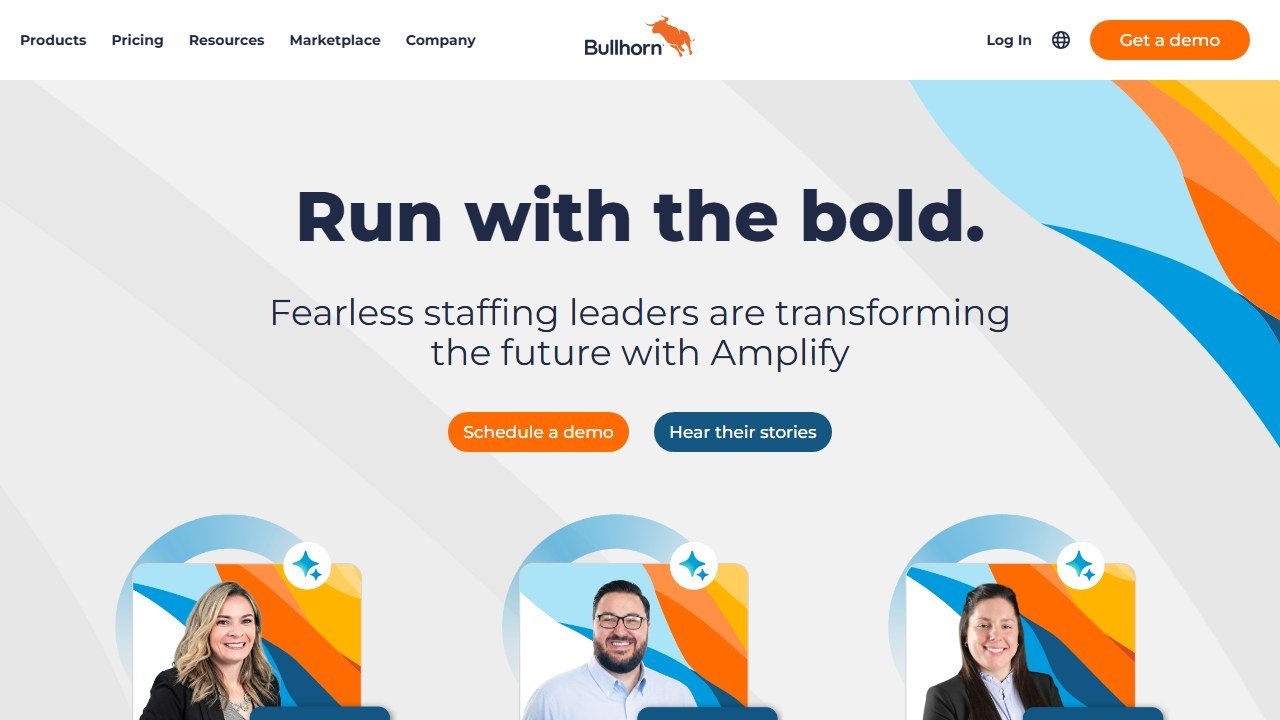
Bullhorn is not a general recruiting tool that happens to work for agencies. It is built for the staffing business specifically, where the same platform has to track candidates and sell to clients at the same time. That dual job, managing talent on one side and business development on the other, is exactly what a full-desk recruiter does all day, and it is where most corporate ATS products fall short. Bullhorn has spent two decades owning this niche, and it shows.
We assess it against the field for the agency use case: sourcing, placing, and invoicing at volume. The verdict is that Bullhorn remains the default for a reason, but it is a serious commitment with quote-based pricing and a real implementation. Here is the honest breakdown of what it does well, what it costs you, and who should actually run it.
Bullhorn is the leading applicant tracking system and CRM built for staffing and recruiting agencies. It combines candidate and client management in one platform, with native AI writing and automation plus a large marketplace of staffing integrations. Pricing is quote-based per user, as of 2026. Best for mid-to-large agencies running the full-desk source, place, and invoice workflow.
Faz says: What makes Bullhorn worth it for an agency is that it treats the client side and the candidate side as one system. A full-desk recruiter is running business development and talent delivery in the same hour, and Bullhorn’s combined ATS and CRM means a placement, the client that ordered it, and the invoice that follows all live on one record. Layer on the native AI for writing outreach and job posts, the automation engine for follow-ups, and a marketplace stuffed with staffing integrations, and you get a platform that fits the agency motion instead of fighting it. For anything at agency scale, it is the one I start with.
Saru says: This review draws on Bullhorn’s official documentation, its positioning in the staffing software market, and aggregated customer feedback, current to 2026. Bullhorn’s pricing is quote-based and negotiated per user, so it is not published. Get a written quote and confirm per-seat cost, contract length, and implementation fees before buying, since these vary a lot by agency size.
Quick Facts
| Tool | Bullhorn |
|---|---|
| Category | Staffing ATS and CRM |
| Best for | Mid-to-large staffing and recruiting agencies |
| Standout | Combined candidate and client management |
| AI | Native AI writing and automation |
| Integrations | Large staffing-focused marketplace |
| Pricing | Quote-based, per user (as of 2026) |
| Our score | 4.2 / 5 |
What Bullhorn Does Well
One system for candidates and clients. This is the headline and the reason agencies buy it. Bullhorn is an ATS and a CRM in the same platform, so a recruiter tracks the candidate pipeline while the sales side manages client relationships and job orders on the same data. For a full-desk agency, where the person filling the role is often the same person who won it, this removes the seam between selling and delivering that kills productivity in stitched-together tool stacks.
The full-desk workflow, end to end. Bullhorn is built around how staffing actually earns money: source a candidate, submit them, place them, and invoice for the placement. Because those stages live in one system, the handoffs stay clean and the numbers reconcile. That source-to-invoice arc is the agency’s whole business, and few platforms model it as natively.
Native AI writing and automation. Bullhorn has leaned into AI for the parts of the job that are repetitive text and repetitive follow-up. It can draft candidate outreach, job descriptions, and messages, and its automation handles the nudges and status updates that recruiters forget. This is a real time saver at volume, when a desk is juggling dozens of active reqs.
A deep integration marketplace. Bullhorn’s ecosystem is one of its strongest moats. The marketplace is full of staffing-specific integrations, for background checks, VMS connections, job boards, texting, pay and bill, and analytics, so you can assemble the exact stack an agency needs rather than settling for one vendor’s idea of complete. For an established agency, that breadth is hard to replace.
Pricing
Bullhorn does not publish list pricing. It is quote-based and priced per user, negotiated based on agency size, the modules you need, and contract terms, as of 2026. In practice that means you talk to sales, get a per-seat number, and factor in implementation and any add-on modules.
The honest read: Bullhorn sits at the premium end of staffing software. For a mid-to-large agency running real placement volume, the per-user cost is defensible against the revenue each recruiter drives. For a very small shop or a solo recruiter, it can be hard to justify next to lighter, published-price tools. Because the quote varies so much, get it in writing and confirm what is included before you sign.
Where It Fits
Bullhorn fits mid-to-large staffing and recruiting agencies that run the full-desk motion at volume and want their ATS and CRM unified. If you are placing enough people that the source-to-invoice pipeline is your core operation, and you value a mature integration ecosystem over a lean single-vendor tool, this is the category leader.
Where it fits less well: a solo recruiter or a small boutique that mostly needs a clean ATS will feel the pricing and the setup overhead, and may be better served by a lighter tool. Corporate in-house talent teams, who do not sell to external clients, generally want a corporate ATS like Greenhouse or Lever rather than an agency CRM. Bullhorn’s strength is specifically the agency business model, so its value tracks how much of that model you actually run.
Pros and Cons
Pros
- Combined ATS and CRM built for staffing agencies
- Models the full-desk source, place, and invoice workflow natively
- Native AI writing and automation for outreach and follow-ups
- Large marketplace of staffing-specific integrations
- Mature, proven platform with deep agency features
Cons
- Quote-based, per-user pricing that trends premium
- Interface feels dated to some users versus newer tools
- Real implementation effort to get set up and configured
- Best value only at agency-scale placement volume
- Overkill for solo recruiters and corporate in-house teams
How It Compares
Bullhorn is the reason it tops our best AI tools for staffing agencies roundup: nothing else models the full-desk agency workflow as completely, and its integration marketplace is the widest in the category. Against corporate ATS products like Greenhouse or Lever, the difference is the CRM. Those tools are excellent for in-house hiring but do not carry the client-side business development that agency work demands. If your priority is finding candidates rather than running an agency desk, our best AI sourcing tools guide covers tools like SeekOut and hireEZ that specialize there, and our best AI recruiting software roundup places Bullhorn in the wider recruiting landscape.
Verdict
Bullhorn is the leading ATS and CRM for staffing agencies in 2026 and earns a 4.2 out of 5. It does the one thing generic recruiting tools cannot: it runs candidate management and client business development in the same system, modeling the full-desk source, place, and invoice workflow that is the agency’s entire business. Add native AI writing, a strong automation engine, and the deepest integration marketplace in the category, and it remains the default for a reason.
The caveats are honest ones. Pricing is quote-based and premium per user, the interface feels dated to some, and implementation takes real effort, so the value only lands if you run agency-scale volume. For a mid-to-large agency, it is the platform to start with. See where it ranks against the field in our best AI tools for staffing agencies roundup, learn more at Bullhorn, and explore the wider stack in our best AI recruiting software guide.

Written by
FazFaz is the founder of AIToolsBakery. Some tools here are tested hands on. Others are assessed from vendor documentation and pricing verified on the live page, and every review says which one it is. Sponsors can buy a position in a guide. They cannot buy the score, the criticism, or silence about a better option.
How we test and how we make money →