If you are researching Paradox AI in 2026, the most important fact is one most reviews bury or miss entirely: Paradox is now part of Workday. The acquisition closed on October 1, 2025, and Olivia, the conversational recruiting assistant that made Paradox famous, is being folded into Workday’s talent acquisition suite. Yet a lot of the content you will find still treats Paradox as an independent startup, which changes the buying decision in ways those reviews never address.
The rest of the search results are the usual problem. Vendor pages selling you the dream, affiliate sites that get paid per demo booked, and HR-tech blogs that recycle the same case-study statistics without ever questioning them. Almost none of them mention the 2025 data breach involving McDonald’s hiring chatbot, the weak fit for professional and executive roles, or the multi-month implementation timeline. We think you deserve all of that before you sit through a sales call.
We are AIToolsBakery, an independent AI-tools review site. We are not a Paradox or Workday partner, reseller, or affiliate, and we earn nothing whether you buy or not. Sponsored posts on our site are clearly labelled and never change a score. This review is not sponsored. We score tools on the honest merits, weaknesses included.
The verdict in 30 seconds: Paradox AI (4.3/5), now a Workday company, is the strongest conversational recruiting assistant for high-volume hourly and frontline hiring. Olivia handles apply, screening, and scheduling over chat and SMS extremely well. The caveats: quote-only pricing, long implementation, a poor fit for complex roles, and a 2025 security incident worth understanding. For QSR, retail, and hospitality at scale, it is excellent.
What Paradox is
Website: Paradox
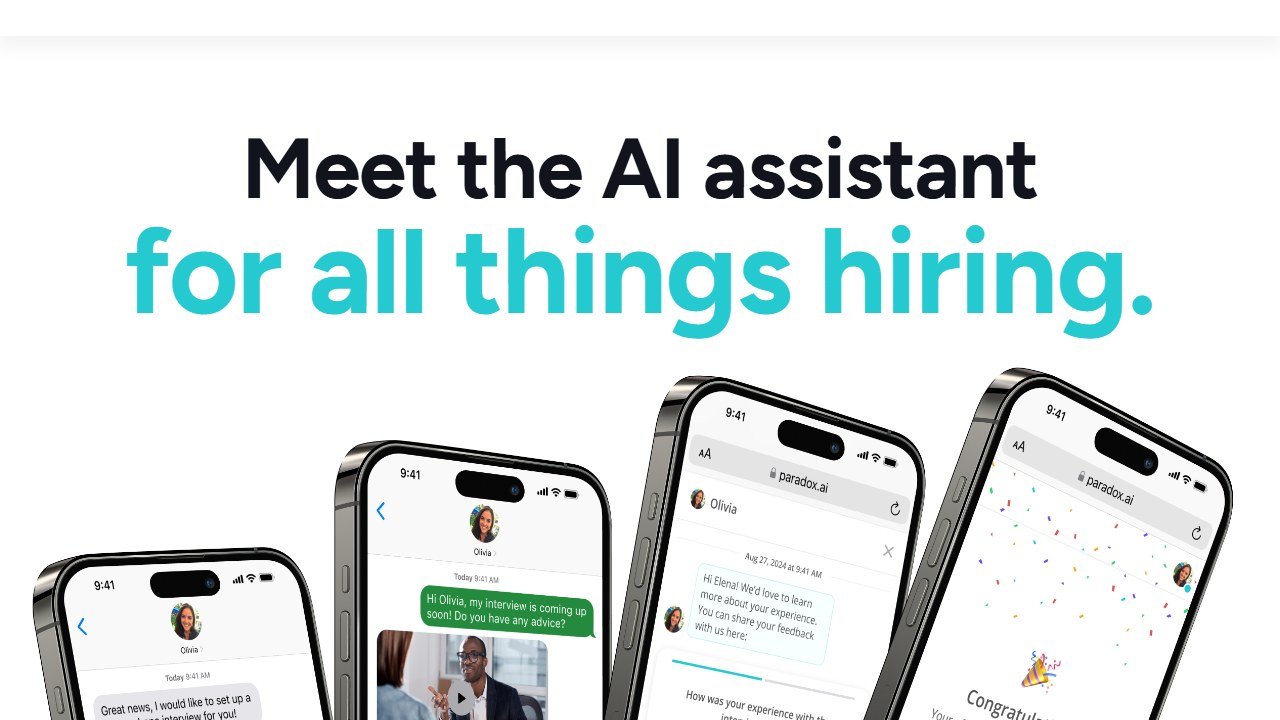
Paradox is the company behind Olivia, a conversational recruiting assistant. The business raised roughly $304 million before being acquired, hit a $1.5 billion valuation at its Series C in December 2021, and was bought by Workday under a definitive agreement announced August 21, 2025, with the deal closing October 1, 2025. Reported figures put the price around $1.0 to $1.1 billion, though Workday did not officially itemize it. Olivia is now being integrated as the “Workday Paradox Candidate Experience Agent,” and former CEO Adam Godson is leading Workday’s talent acquisition platform.
Olivia itself is a chatbot built for the front end of hiring. Candidates can apply conversationally, answer knockout screening questions, and get scheduled into interviews entirely through chat, SMS, or WhatsApp, with automated reminders to cut no-shows. Olivia answers candidate questions 24/7 and can handle onboarding and document collection. The 2026 roadmap leans into agentic “Olivia Agents” that take on more of the workflow autonomously.
The client list is a who’s who of high-volume employers: McDonald’s, Unilever, CVS, Lowe’s, GM, Chipotle, 7-Eleven, Nestle, and Marriott. That tells you exactly what Paradox is for. This is a tool built to hire huge numbers of hourly and frontline workers fast.
What Paradox does well
The conversational experience is genuinely good. For an applicant filling out a frontline job on their phone, chatting with Olivia is far less painful than a clunky application form, and that lower friction is the whole point. Knockout screening and automated scheduling remove the two biggest time sinks in high-volume hiring, and SMS-first reminders measurably reduce no-shows.
Paradox markets impressive ROI numbers around time-to-hire and recruiter hours saved. We will be straight with you: those are vendor case-study claims, not independently audited results, so treat them as directional rather than guaranteed. That said, the underlying mechanism is real, and user sentiment backs it up. Paradox sits around 4.7 on G2 and 4.5 on Capterra, which is unusually strong.
The pricing question, honestly
Paradox does not publish pricing. There is no free trial, only a demo, and you negotiate a quote. As always with this category, that opacity is a cost in itself because it makes comparison shopping hard.
Third-party estimates (rough, not quotes) suggest a minimum around $1,000 per month, mid-market deployments in the $25,000 to $60,000 per year range, and enterprise contracts running $75,000 to $150,000 or more annually. Where you land depends on hiring volume, locations, and how many of Olivia’s modules you switch on. With the Workday acquisition, expect future packaging to lean toward bundling, which may or may not work in your favor depending on your existing stack.
Paradox is a top pick for agencies too. See our best AI tools for staffing agencies guide.
How Paradox compares
| Tool | Best at | AI focus | Pricing transparency |
|---|---|---|---|
| Paradox AI | High-volume hourly and frontline hiring | Conversational apply, screening, scheduling | Quote-only, demo only |
| HireVue | Video interviewing and assessments | NLP answer scoring, validated assessments | Quote-only, no trial |
| Eightfold AI | Talent intelligence and matching | Deep-learning skills inference | Quote-only, enterprise |
| SeekOut | Talent sourcing and search | GPT-powered search and outreach | Quote-only, one self-serve tier |
Paradox owns the conversational front door for hourly hiring. HireVue is the better pick if your need is structured video interviewing and assessment, Eightfold if you want talent intelligence and internal mobility, and SeekOut if your bottleneck is sourcing rather than processing applicants. See our best AI recruiting software guide, our best AI resume screening tools roundup, and how to screen resumes with AI for context.
Pros and cons
Pros:
- Best-in-class conversational apply and screening for hourly roles
- Automated scheduling and SMS reminders cut no-shows
- Works across chat, SMS, and WhatsApp where candidates already are
- Proven at massive scale with marquee frontline employers
- Now natively integrated with Workday’s TA suite
Cons:
- No public pricing and a long, sales-heavy buying cycle
- Weak fit for complex, professional, or executive roles
- Heavy implementation, commonly two to four months
- Inconsistent support reports from some customers
- The 2025 McHire data breach raises real security questions
Who should (and should not) buy it
Buy Paradox if you hire high volumes of hourly, frontline, or franchise workers, the kind of roles found in quick-service restaurants, retail, hospitality, healthcare support, and logistics. If you are already on Workday, the case is even stronger because Olivia now lives inside that ecosystem. The conversational experience and scheduling automation pay for themselves when you are processing thousands of applicants a month.
Do not buy Paradox for low-volume hiring or for professional, technical, and executive roles. Those searches need nuanced human judgment and relationship building that a screening chatbot cannot provide, and you will not generate enough volume to justify the cost or the months-long setup. A simpler ATS or a sourcing-led tool will serve you better.
Our verdict
Paradox is the clear leader in conversational recruiting for the high-volume world it was built for. Olivia genuinely reduces friction for applicants and reclaims real time for recruiters, the scale credentials are unmatched, and being absorbed into Workday gives it a durable home and tight integration for a huge swath of buyers.
The honest deductions: pricing is opaque, implementation is long, the tool is the wrong instrument for anything but volume hiring, and the 2025 McHire breach is a reminder that an applicant-facing chatbot is also an attack surface. None of that undermines the core product for its intended buyer, but it does mean Paradox is a sharp specialist, not a universal solution. For hourly and frontline hiring at scale, it earns a high mark.
Paradox AI scores 4.3 out of 5.

Written by
FazFaz is the founder of AIToolsBakery. Some tools here are tested hands on. Others are assessed from vendor documentation and pricing verified on the live page, and every review says which one it is. Sponsors can buy a position in a guide. They cannot buy the score, the criticism, or silence about a better option.
How we test and how we make money →