AI legal research promises to compress hours of Westlaw and Lexis time into minutes. Ask a plain-English question, get a drafted answer with cited authorities, and move on. When it works, it is a genuine force multiplier for solos and big firms alike. The catch is that the defining question in this category is not speed. It is trust.
A confidently wrong citation is worse than no citation at all, because it slips past a busy reader and can end up in a filing. The best AI legal research tools ground their answers in a real legal database and show you the sources, so you can open each authority and confirm it says what the tool claims. That single design choice, grounding in Westlaw or Lexis content rather than a general chatbot’s memory, is what separates a tool you can build a practice on from one that will eventually embarrass you in front of a judge. Below we rank the leading options on exactly that basis.
Top pick: Lexis+ AI is the best AI legal research tool for firms already on LexisNexis, grounding answers in Lexis content with linked citations. Westlaw Precision with CoCounsel is the best pick for Westlaw firms, and Paxton AI is the best for value and affordability.
Faz says: My one rule with any of these tools: never trust an AI cite you have not opened and read yourself. Grounding in Westlaw or Lexis is the single most important buying criterion, full stop, because a tool that pulls from a real, curated database is far less likely to invent a case than a general chatbot riffing from memory. But “less likely” is not “never.” Treat every generated answer as a smart research assistant’s first draft, not a finished work product. The tool finds the authorities faster. Verifying them is still your job, and it always will be.
Saru says: For this ranking we weighed grounding and source transparency first, then citation accuracy, database coverage, price, and workflow fit, using each vendor’s public product documentation and independent legal-tech coverage as of 2026. One honest caveat you will see us repeat: every legal AI tool on this list can still hallucinate, even the database-grounded ones. Grounding reduces the risk, it does not remove it. Verify every citation before it leaves your desk.
How We Ranked These
Legal research is one of the few software categories where a wrong answer can cost a client, a case, or a law license. So we ranked on trust before polish.
1. Grounding and source transparency. Does the tool answer from a real legal database, and does it show you linked sources you can open and verify? This is the biggest separator in the category, and it decides the order below.
2. Citation accuracy. Related but distinct: how reliably do the cited authorities actually exist and support the point made? Database-grounded tools reduce hallucinated cites; general chatbots do not.
3. Database coverage. Breadth and depth of primary law, jurisdictions, and secondary sources. A tool grounded in a thin database is only as good as that database.
4. Price. Costs run from budget month-to-month plans to enterprise contracts. We flag starting prices as of 2026 so you can match a tool to a solo or firm budget.
5. Workflow fit. Whether it plugs into the database you already pay for, drafts as well as researches, and fits how you actually work, including inside Microsoft Word.
A Note on Hallucinated Citations
Before the rankings, the elephant in the category. Since 2023, courts have repeatedly sanctioned lawyers for filing briefs containing fake cases invented by AI. The landmark example is Mata v. Avianca, where a New York federal court fined attorneys $5,000 after they submitted a brief citing precedents that ChatGPT had simply made up. It was not a one-off. Legal-tech trackers have documented hundreds of AI-hallucination incidents since, with the count rising sharply through 2025, and sanctions have escalated beyond fines. In Johnson v. Dunn (N.D. Ala., 2025), a court disqualified attorneys from a case over hallucinated citations rather than just fining them.
Here is why grounding matters, and why it is not a cure-all. General chatbots like raw ChatGPT generate text from patterns, so they will happily produce a plausible-looking citation that does not exist. Database-grounded tools like Lexis+ AI and Westlaw’s CoCounsel instead retrieve from a real, curated legal database and link to the underlying authority, which sharply reduces fabricated cites and lets you click through to confirm each one. That is a real, meaningful safety improvement. It is also not a guarantee. Grounded tools can still mischaracterize a holding, cite an authority that does not quite support the point, or occasionally slip. The only reliable safeguard is the oldest one: open every cite and read it before it goes in a filing.
Comparison Table
| Tool | Best for | Grounded in | Starting price (as of 2026) |
|---|---|---|---|
| Lexis+ AI | LexisNexis firms | Lexis content, Shepard’s | Quote-based, add-on to Lexis+ |
| Westlaw Precision with CoCounsel | Westlaw firms | Westlaw, Practical Law | Quote-based |
| vLex Vincent AI | Independent, global research | vLex, 110 jurisdictions | Quote-based (Clio) |
| Paxton AI | Value and solos | Curated primary law | Around $499/user/mo |
| CoCounsel | Standalone AI assistant | Thomson Reuters content | Quote-based |
| Alexi | Litigation research memos | Litigation case law | Quote-based |
| Clearbrief | Citation checking in Word | Your own filed authorities | Quote-based |
| Midpage | Budget case-law search | Public case law | Free-leaning, low cost |
1. Lexis+ AI: Best for LexisNexis Firms
Lexis+ AI is the strongest pick if your firm already runs on LexisNexis, and in 2026 it is anchored by the Protege assistant. As of early 2026, LexisNexis has evolved the offering into Lexis+ with Protege, a conversational platform that grounds legal research, drafting, and summarization in LexisNexis content, with Shepard’s citation validation built in and linked, clickable sources on every answer.
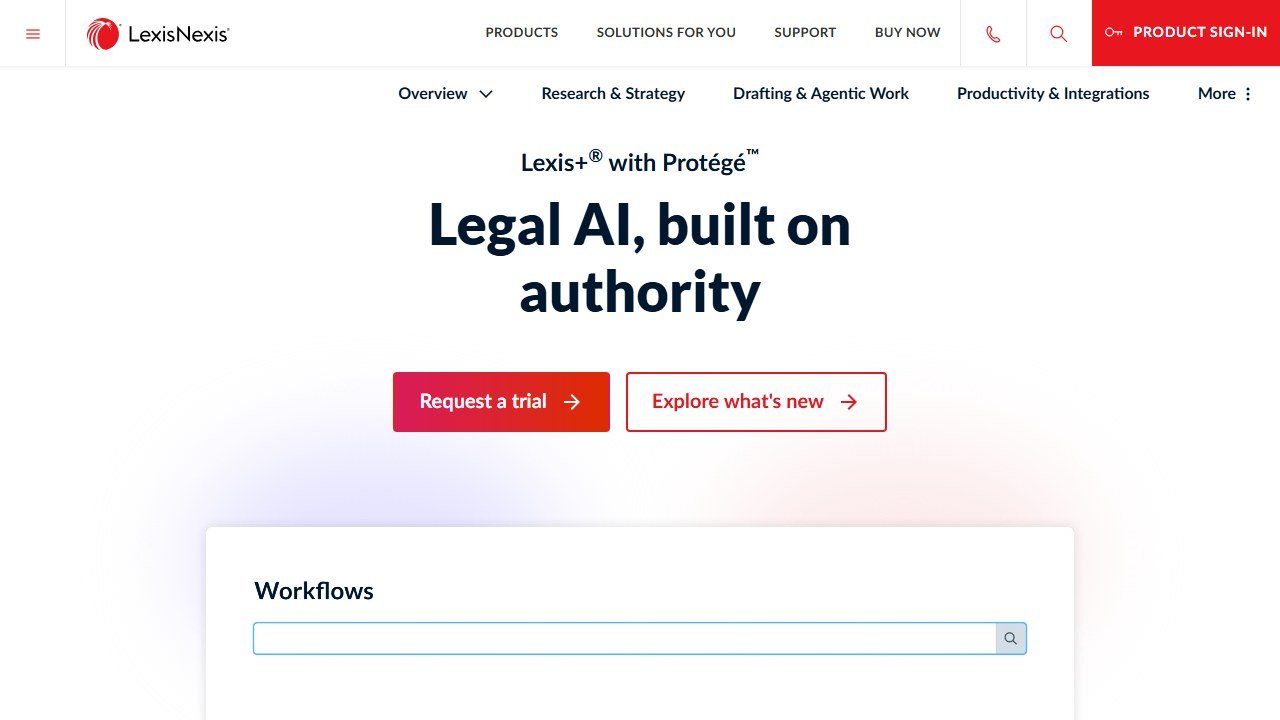
The grounding is the point. Instead of guessing, Protege retrieves from the Lexis database and shows the authorities behind its response, so you can verify each one. It handles the full loop of research, drafting, and summarization from a single prompt box, and it layers in workflow templates for common tasks. Pricing is quote-based and typically sold as an add-on to a Lexis+ subscription, so it fits firms that already carry that cost rather than solos looking for a cheap entry point.
Best for: firms and legal teams already invested in the LexisNexis ecosystem.
Watch out for: quote-based pricing tied to a Lexis+ subscription, not a budget option.
2. Westlaw Precision with CoCounsel: Best for Westlaw Firms
Westlaw Precision with CoCounsel is the natural counterpart for firms on Thomson Reuters. It pairs the CoCounsel AI assistant with Westlaw Precision and Practical Law content, so answers are grounded in Thomson Reuters’ curated database and come back with citations you can open and check.
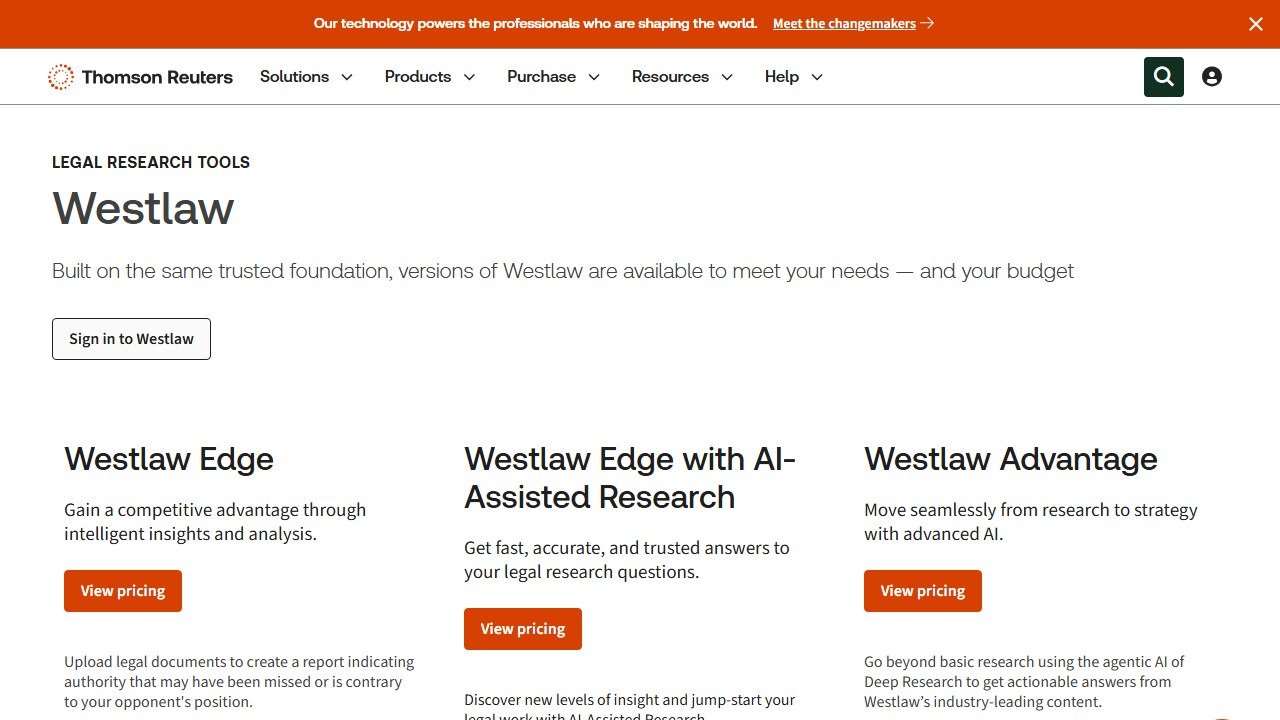
The pitch mirrors Lexis: conversational research and drafting, grounded in a real legal database rather than a general model’s memory, with the reliability that comes from retrieving verifiable primary and secondary law. For a Westlaw shop, keeping AI research inside the database you already trust and pay for is the whole appeal, and it avoids stitching a separate tool onto your workflow. Pricing is quote-based through Thomson Reuters. For the deeper look at the assistant that powers it, see our CoCounsel review.
Best for: firms standardized on Westlaw that want grounded AI in the same platform.
Watch out for: quote-based enterprise pricing; best value if you already hold a Westlaw contract.
CoCounsel’s most common rival in enterprise evaluations is Harvey, not another research tool. Our head-to-head Harvey vs CoCounsel comparison settles where each one actually wins.
3. vLex Vincent AI: Best Independent and Global Option
vLex Vincent AI is the strongest choice when you want serious grounding without committing to the Westlaw or Lexis duopoly, and especially when your work crosses borders. Vincent is built on vLex’s enormous multi-jurisdiction database, spanning more than 110 jurisdictions and a library of over a billion editorially enriched documents, which makes it a standout for international and comparative research.
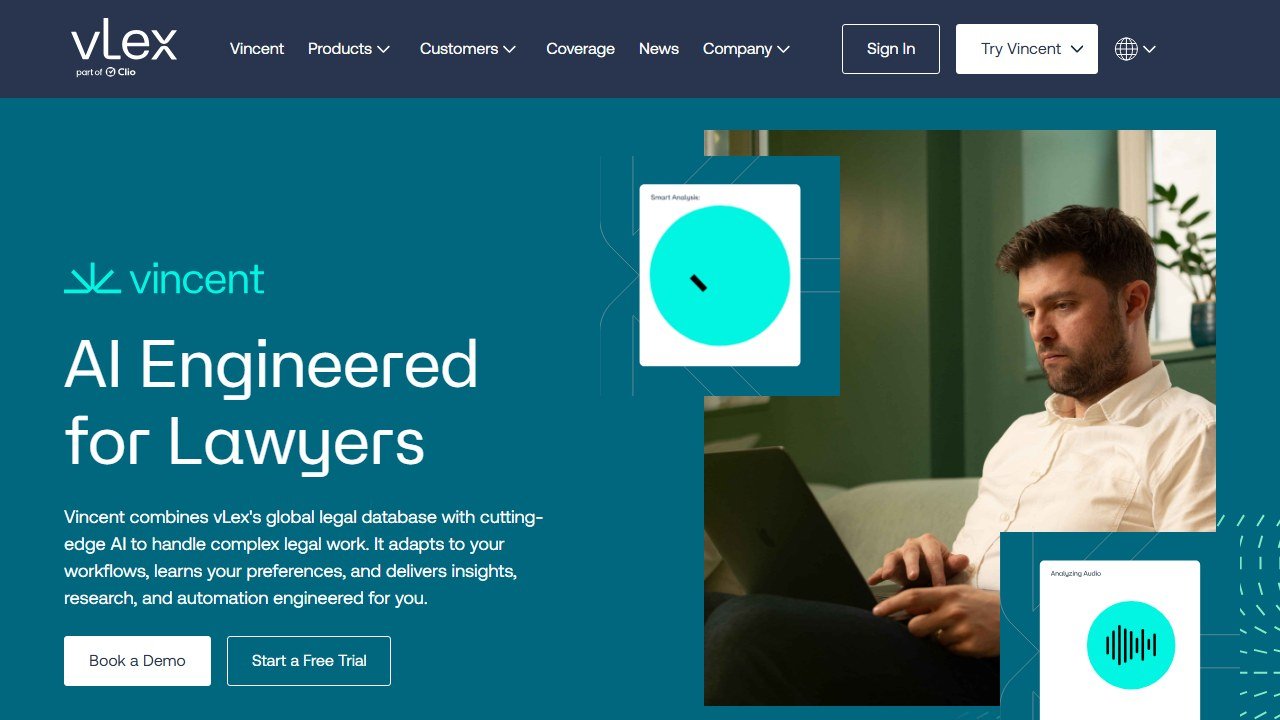
The big 2026 context: vLex is now part of Clio, following Clio’s roughly $1 billion acquisition that completed in late 2025. That folds Vincent into Clio’s wider legal operating system, which is good news for the many firms already running Clio for practice management, since research and case management increasingly live under one roof. As an independent-leaning alternative with real global depth, Vincent is a genuine third pillar alongside the two incumbents.
Best for: independent firms and anyone doing multi-jurisdiction or international research.
Watch out for: now inside the Clio ecosystem, so evaluate it as part of that stack.
4. Paxton AI: Best for Value and Solos
Paxton AI is the pick when price and accessibility matter most. It is an all-in-one AI legal assistant covering research, drafting, and document analysis, and it has earned a reputation for improving quickly and for taking citation grounding seriously, with answers linked to underlying authority you can verify.

For solos and small firms priced out of full Westlaw or Lexis AI contracts, Paxton is the realistic on-ramp. Its individual plan runs around $499 per user per month, or roughly $2,999 per year billed annually, as of 2026, with a short free trial to test it first. That is not free, but it is a fraction of a full incumbent add-on, and it buys grounded research plus drafting in one tool. It is the value champion of this list without being the budget-basement option.
Best for: solos and small firms that want grounded AI research at an accessible price.
Watch out for: pricing and plan tiers shift as the product evolves; confirm current rates before buying.
5. CoCounsel: Best Standalone AI Assistant
CoCounsel, Thomson Reuters’ AI legal assistant, deserves a standalone spot because it is more than the engine inside Westlaw Precision. As a broader assistant it handles a range of skills across research, document review, summarization, and drafting, grounded in Thomson Reuters content, and it can slot into legal workflows beyond pure case-law search.
If you want one AI assistant that spans multiple research and review tasks rather than a single-purpose search tool, CoCounsel is the most complete option here. It is the connective tissue in the Thomson Reuters AI story, which is why it shows up both bundled with Westlaw and on its own. Our full CoCounsel review breaks down the individual skills and where they help most.
Best for: teams wanting a multi-skill AI assistant, not just a research search box.
Watch out for: best value inside the Thomson Reuters ecosystem; quote-based pricing.
Before you book the CoCounsel demo, read our CoCounsel pricing guide. Quote-based pricing is easier to negotiate when you already know the ballpark.
6. Alexi: Best for Litigation Research Memos
Alexi is purpose-built for litigators, with a strong Canadian and US litigation focus. Its signature strength is generating detailed legal research memos on demand: pose a complex litigation question and Alexi produces a structured memo with answers and supporting authority, which is a different job than open-ended case-law search.
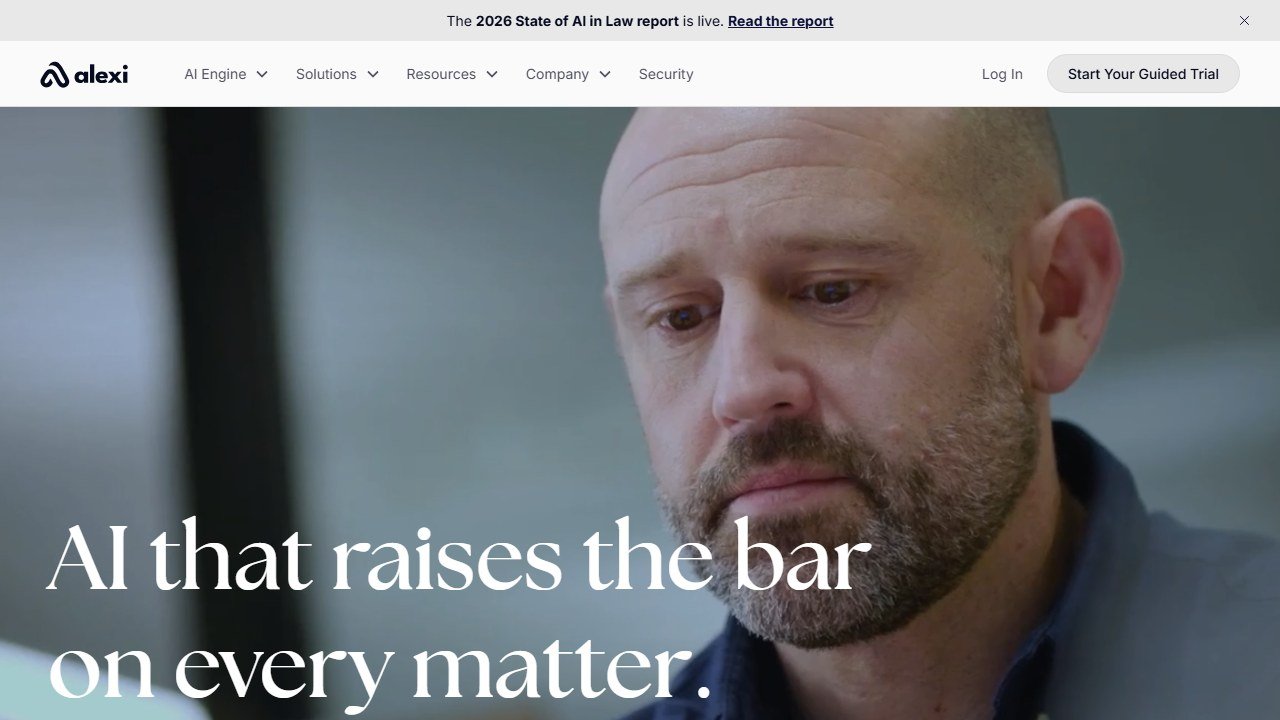
For a litigation practice that lives on research memos and argument brainstorming, that specialization is the draw. Alexi positions itself around cutting routine litigation research time substantially, and it is aimed squarely at the memo-and-motion workflow rather than at replacing a full research database. One note for the record: Alexi is involved in ongoing 2026 litigation with Fastcase and Clio over data licensing, which is worth tracking if the vendor’s roadmap matters to you, though it does not change how the memo tooling works today.
Best for: litigators who want fast, structured research memos.
Watch out for: narrower than a full research platform; verify jurisdiction coverage for your practice.
7. Clearbrief: Best for Citation Checking and Brief Verification
Clearbrief solves a different problem than the research tools above: it checks the work you have already written. It lives inside Microsoft Word and analyzes your draft to verify whether your cited authorities and record citations actually support the statements they follow, flagging mismatches before a brief goes out the door.
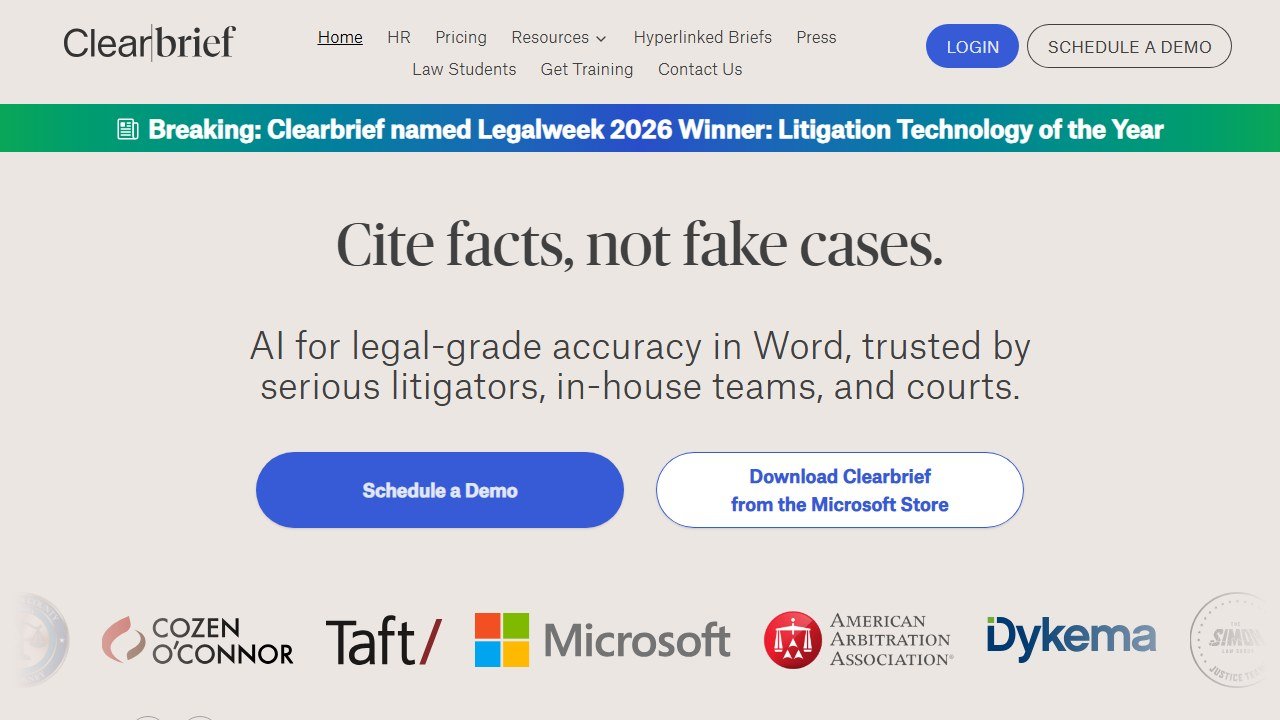
That makes it a natural complement to a research tool rather than a replacement. Where the others help you find law, Clearbrief helps you make sure the law you cited says what you claim, which is exactly the failure mode behind the hallucination sanctions. For a litigator who drafts heavily in Word and wants a verification safety net on citations and factual assertions, it is a smart addition to the stack.
Best for: brief writers who want automated citation and record verification in Word.
Watch out for: it verifies your citations, it does not run primary research; pair it with a research tool.
8. Midpage: Best Budget, Free-Leaning Option
Midpage is the entry point when budget is the hard constraint. It offers fast, low-cost, AI-assisted case-law search that lets solos, small firms, and students run research without committing to an expensive incumbent subscription. (A comparable free-leaning alternative in this space is Descrybe.ai, if you want to test more than one.)
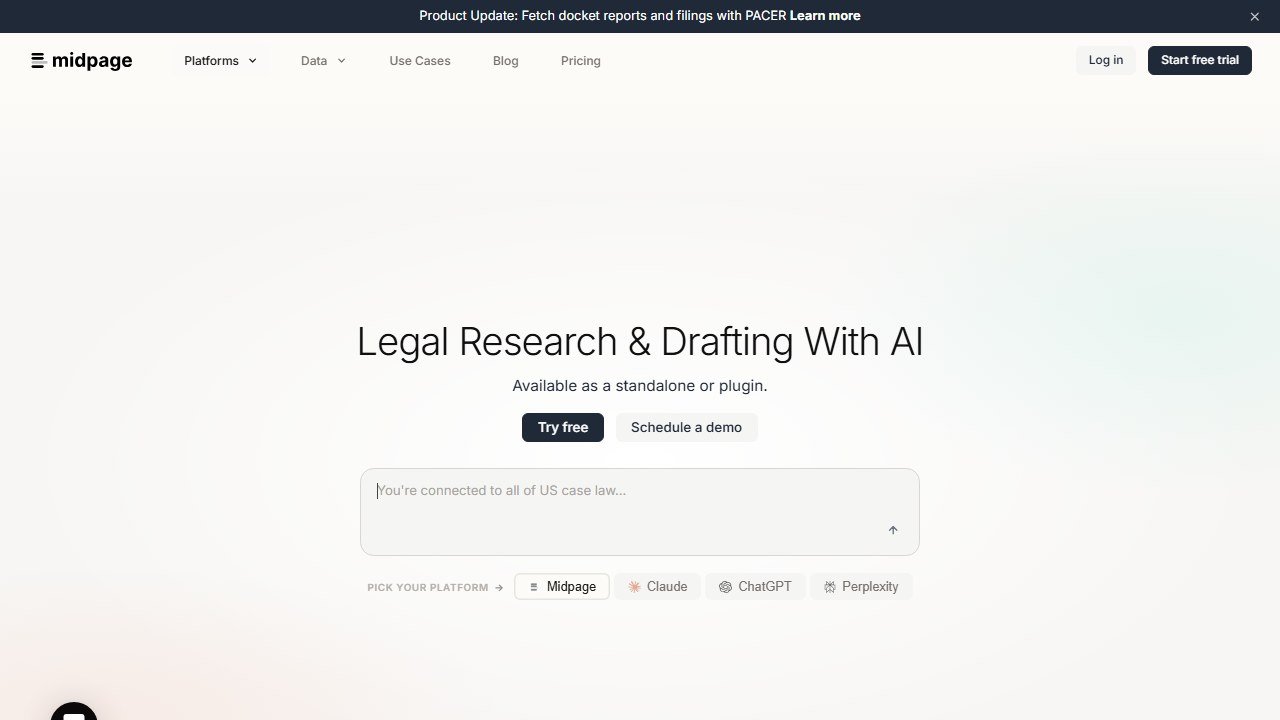
The trade-off is honest: a budget, free-leaning tool works from public case law rather than the deep curated databases and secondary sources behind Westlaw or Lexis, so coverage and depth are lighter. For quick case-law lookups, learning, or a second-opinion search, that is often enough. For high-stakes research where breadth and grounding depth matter, treat it as a starting point, then verify in a fuller database.
Best for: solos, students, and anyone needing low-cost AI case-law search.
Watch out for: thinner coverage than incumbent databases; verify important results elsewhere.
How to Choose
Start with the database you already pay for. If your firm runs on LexisNexis, Lexis+ AI keeps grounded AI research inside the content you trust; if you run on Westlaw, Westlaw Precision with CoCounsel does the same. Matching the AI tool to your existing database is usually the highest-value move, because you get grounding in law you already license and one less system to reconcile.
If you are not locked into either incumbent, weigh independence and reach. vLex Vincent AI brings the deepest global, multi-jurisdiction database and now sits inside Clio, which is a strong fit if you already use Clio for practice management. For solos and small firms watching cost, Paxton AI is the accessible grounded option, and Midpage is the budget, free-leaning choice for lighter case-law search.
Then decide whether you need more than research. If you draft heavily, a tool that also drafts, like Paxton or CoCounsel, earns its place. If your risk is citation errors in finished briefs, add Clearbrief to verify inside Word. And whatever you pick, build a verification step into your workflow. The tool that finds the law fastest still hands you authorities you are professionally obligated to read.
Legal research is only one slice of the corporate legal stack. If you work in-house, our guide to the best AI tools for in-house counsel covers the full picture, from contract volume to legal ops.
Verdict
For firms on LexisNexis, Lexis+ AI is the best AI legal research tool in 2026, because it grounds research, drafting, and summarization in Lexis content with linked, verifiable citations through the Protege assistant. If you run on Westlaw, Westlaw Precision with CoCounsel is the equal-and-opposite pick, keeping grounded AI inside the database you already trust. For value, Paxton AI is the standout affordable option, and vLex Vincent AI is the best independent and global choice.
But the ranking matters less than the discipline. Every tool here, grounded or not, can still produce a citation that is wrong, and the sanctions cases prove how costly that is. Grounding in a real legal database reduces the risk; it never removes your duty to verify. Open every cite, read it, and confirm it supports the point before it leaves your desk.
For the wider stack, see our best AI tools for lawyers pillar, and for a look at one of the most talked-about firm-focused platforms, our Harvey AI review.

Written by
FazFaz is the founder of AIToolsBakery. Some tools here are tested hands on. Others are assessed from vendor documentation and pricing verified on the live page, and every review says which one it is. Sponsors can buy a position in a guide. They cannot buy the score, the criticism, or silence about a better option.
How we test and how we make money →