Restaurants run on a workforce that is always changing. Turnover in the industry regularly runs past 70 percent a year, which means the average operator is training new servers, line cooks, and hosts almost every week. The old playbook, a binder and a few shadow shifts, cannot keep up, and it produces wildly inconsistent service from one hire to the next.
AI changes the economics of that problem. Instead of a manager writing lessons by hand, these tools turn your menus, recipes, and standard operating procedures into mobile microlearning in minutes, then adapt each lesson to what a given employee actually needs. Below are the eight AI tools worth knowing for restaurant staff training in 2026, ranked by how well they fit a real kitchen and floor.
The best AI tools for restaurant staff training in 2026 are Opus (best overall for frontline crews), Garnysh (best AI content generation from menus), Mitti (best for food safety microlearning), and Wisetail (best for brand and culture). 1Huddle, Typsy, Trainual, and Synthesia round out the list for gamification, hospitality courses, SOPs, and multilingual video.
**Faz says:** Restaurant training has one brutal constraint the corporate world does not: your learner is a 19 year old picking up a phone between the lunch and dinner rush, not an office worker with a spare afternoon. That is why mobile first, three minute lessons beat a polished 45 minute e learning module every time here. Judge these tools by whether a new host can finish a lesson standing up in the back hallway. For the wider view, see our best AI tools for corporate training pillar, and if you run the business end too, our best AI tools for restaurants roundup.
Quick comparison: AI restaurant training tools at a glance
| Tool | Best for | Pricing model |
|---|---|---|
| Opus | Frontline mobile training across locations | Per user, quote based (free trial) |
| Garnysh | AI generating training from menus and SOPs | Quote based, per location |
| Mitti | Food safety and compliance microlearning | Free tier, then per user |
| Wisetail | Brand and culture driven learning | Quote based, per user |
| 1Huddle | Game based onboarding and upskilling | Quote based |
| Typsy | Ready made hospitality video courses | Per user subscription |
| Trainual | Documenting SOPs and playbooks | Flat monthly by team size |
| Synthesia | Multilingual menu and policy video | Free tier, then per seat |
Short on time? Opus is the best all around pick for most restaurants because it was purpose built for frontline hospitality teams. If your bottleneck is creating the content itself, Garnysh turns a menu PDF into a full training path faster than anything else on this list.
Why AI matters for restaurant training in 2026
Three things make restaurant training uniquely hard: speed, consistency, and language. New hires need to be shift ready in days, not weeks. Standards have to be identical whether the guest walks into location 1 or location 40. And in many markets the back of house and front of house speak several languages between them.
AI tools attack all three. On speed, adaptive engines skip what a learner already knows and drill the gaps, so a returning seasonal worker does not sit through beginner lessons. On consistency, one central library pushes the same allergen protocol or upsell script to every store, and managers see completion per location on a dashboard. On language, auto translation now covers well past 100 languages, so a single lesson reaches a whole crew.
**Saru says:** The content creation side is where AI has moved fastest. What used to be an instructional designer’s week, taking a menu and building lessons, quizzes, and study guides, is now a few minutes of a tool reading your documents. Front Burner Society publicly credited its 1Huddle partnership with using AI mainly on the creation side to build games, study guides, and leadership content faster. That is the pattern across the category: AI is not replacing the trainer, it is removing the blank page.
How we evaluated these tools
| Criteria | What we looked for |
|---|---|
| Frontline fit | Mobile first, short lessons, works between shifts |
| Content creation | Can it build lessons from your menu and SOPs automatically? |
| Adaptivity | Does it personalize to each learner’s gaps? |
| Multi location | Per store tracking, consistent standards, language support |
| Compliance | Food safety, allergens, alcohol service coverage |
| Setup effort | Can a busy operator launch it without an L and D team? |
We weighted frontline fit heaviest. A brilliant enterprise LMS that assumes a desk and an hour of focus is the wrong tool for a kitchen, no matter how many features it lists.
1. Opus: best overall for frontline restaurant crews
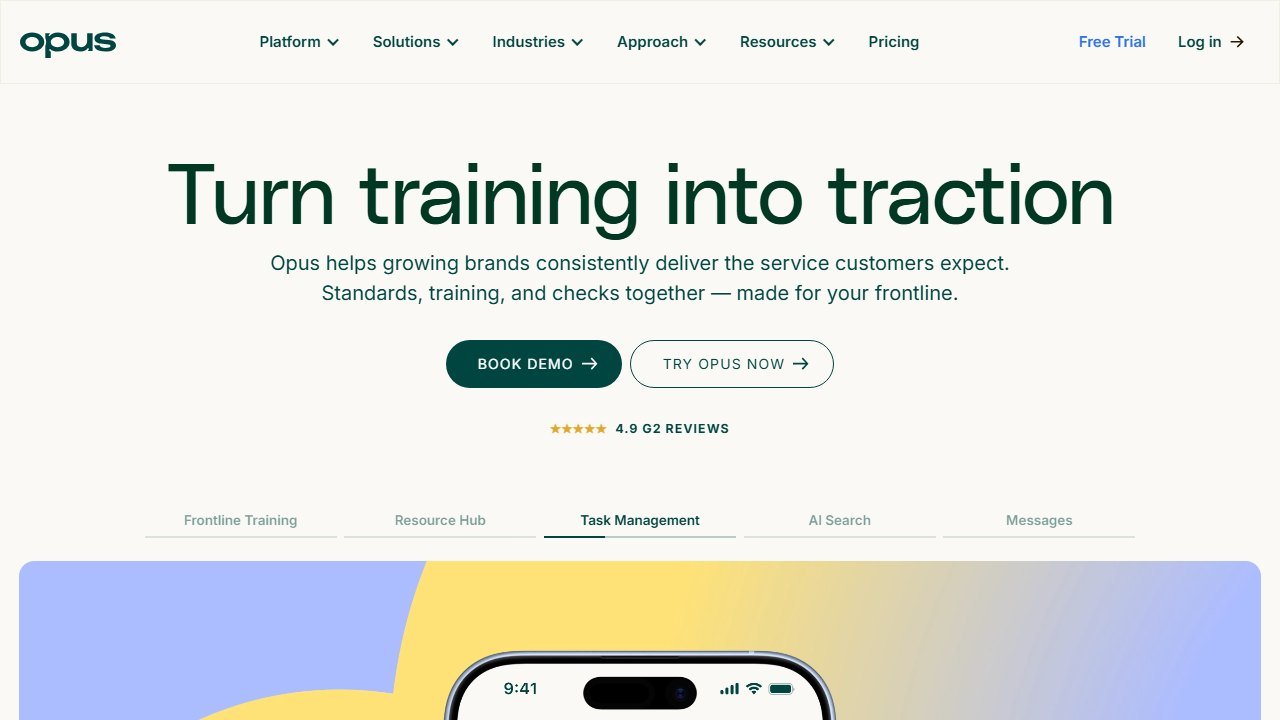
Opus is a training platform built specifically for the frontline workforce, and restaurants are one of its core verticals. The whole product is designed around the reality of a hospitality shift: employees log in by scanning a QR code instead of remembering a password, lessons are short and mobile, and content auto translates into more than 130 languages so a mixed crew all learns from one source.
What makes Opus stand out is adoption. The company reports over 90 percent completion rates, which is the number that actually matters in an industry where training tools often get ignored. You build training paths for each role, host, server, line cook, and Opus delivers them as bite sized modules with quizzes and sign offs. Managers get a dashboard showing exactly who is shift ready.
Who it is for: multi location restaurant groups and busy single units that need training people will actually finish on their phones.
Standout feature: QR code login plus 130 plus language auto translation, which removes the two biggest friction points for frontline learners.
Honest limitation: it is a delivery and management platform first, so you still supply the substance of your standards, though its AI tools help you build them.
Pricing: per user, quote based, with a free trial available.
2. Garnysh: best AI content generation from menus and SOPs
Garnysh is the most AI native tool on this list. Its core promise is that you feed it your existing material, a menu, a recipe deck, a set of SOPs, and it generates complete training paths in minutes. Rather than a manager writing lessons by hand, Garnysh reads your documents and turns them into interactive, mobile friendly modules automatically.
The reinforcement side is where the adaptivity shows up. Garnysh delivers daily micro lessons that adjust to each employee’s knowledge gaps, so a server who keeps missing wine pairing questions gets more of those and fewer of the ones they have mastered. For an operator without any training infrastructure, this is the fastest path from a stack of PDFs to a working program.
Who it is for: independents and small groups that have the knowledge documented but no time or team to build lessons from it.
Standout feature: menu to training path generation, which collapses the slowest part of the job into minutes.
Honest limitation: as a newer, AI first entrant it has a smaller track record and community than the established LMS players, so validate its output against your standards early.
Pricing: quote based, typically per location.
3. Mitti: best for food safety and compliance microlearning
Name change, and it is not only a name. SC Training is now Mitti. The vendor confirmed the rebrand on its own site in September 2026, and training is now one of five modules inside a wider workplace operations platform rather than a standalone mobile LMS. The course library and the AI builder described below are unchanged. If you are buying purely for food safety microlearning, check what you are being asked to license alongside it.
Mitti, formerly EdApp, then Mitti, and now renamed Mitti, is a mobile LMS centered on microlearning and gamification. For restaurants its biggest draw is the editable course library of more than 1,000 ready made lessons, including an HACCP aligned course on allergies and food intolerance and practical modules on opening and closing procedures.
The Create with AI feature lets you generate a course from a topic or document, then customize it to your restaurant. Lessons are deliberately short and interactive, with quizzes, leaderboards, and peer discussion to keep staff motivated. That gamified, bite sized format fits the compliance use case well, because food safety and allergen knowledge needs frequent reinforcement, not a one time certificate.
Who it is for: operators who want strong out of the box food safety and compliance content plus the option to build their own.
Standout feature: a large editable library with a genuine free tier, so you can start training without a budget approval.
Honest limitation: it is a broad frontline LMS rather than a restaurant only product, so some library content is generic and needs tailoring.
Pricing: free tier available, then per user pricing at scale.
4. Wisetail: best for brand and culture driven learning
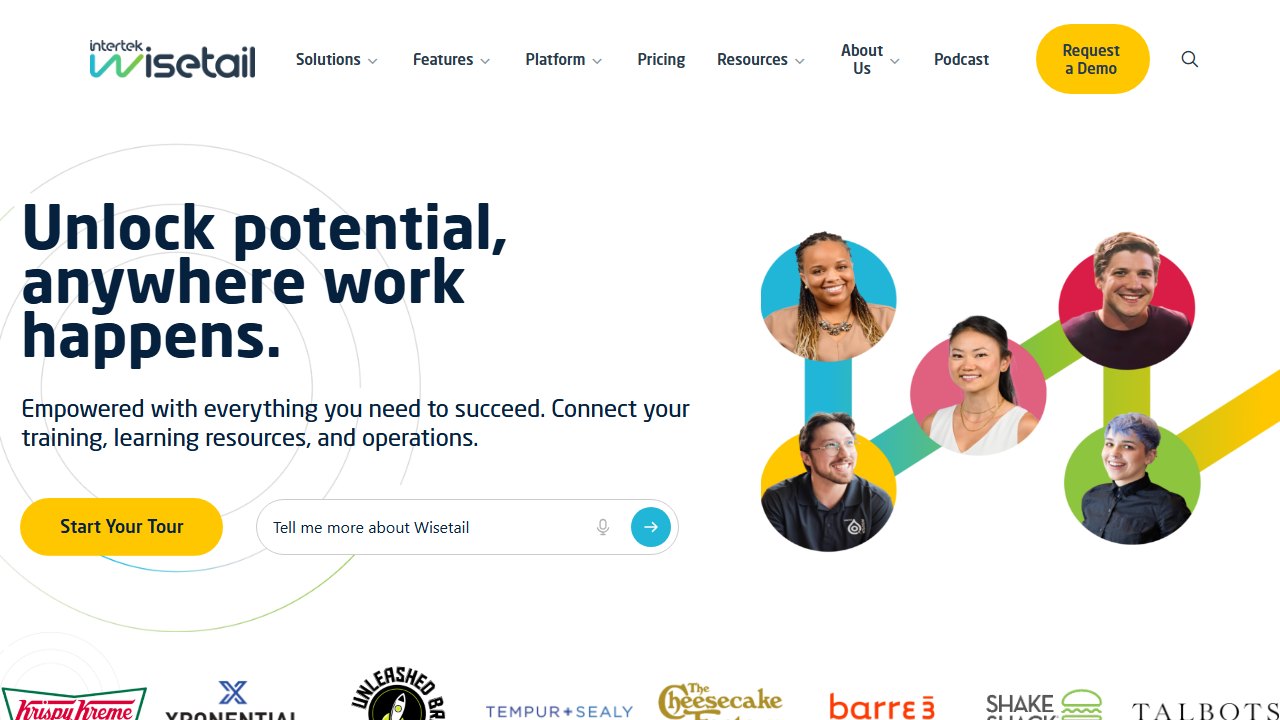
Wisetail is a learning experience platform that leans hard into brand and culture. Where other tools optimize for speed, Wisetail optimizes for making training feel like an extension of your restaurant’s identity, with branded, community style content rather than sterile modules. Its customer roster reflects that positioning, with names like Torchy’s Tacos, Smoothie King, and Krispy Kreme.
For a growing group that cares about how its culture scales across locations, that focus is the differentiator. Wisetail combines the learning management basics, course delivery, tracking, and reporting, with social and communication features that keep a distributed workforce connected to the brand. It sits closer to the enterprise end of this list in both capability and price.
Who it is for: established multi unit brands that treat training as a culture and retention tool, not just compliance.
Standout feature: deep branding and community features that make training feel on brand at every location.
Honest limitation: heavier and pricier than the frontline first tools, so it is more than a single independent usually needs.
Pricing: quote based, per user.
5. 1Huddle: best for game based onboarding and upskilling
1Huddle turns training into fast, competitive games. Instead of reading a module, employees play short quiz style rounds that build and reinforce knowledge, which suits the energy and pace of a restaurant floor. Front Burner Society, the group behind brands like Twin Peaks, partnered with 1Huddle to accelerate onboarding and build structured upskilling programs.
Notably, that partnership used AI mainly on the creation side, generating games, study guides, and leadership content faster than a team could by hand. The game mechanics drive the engagement that most training tools struggle to earn, and the competitive element works well for younger frontline staff. It is a strong fit when your problem is not the content but getting people to care about it.
Who it is for: groups that want to boost engagement and speed onboarding with a game layer on top of their material.
Standout feature: genuinely game based learning that lifts participation rather than assuming it.
Honest limitation: the game format shines for facts and recall but is less suited to nuanced, hands on skills that need in person practice.
Pricing: quote based.
6. Typsy: best for ready made hospitality video courses
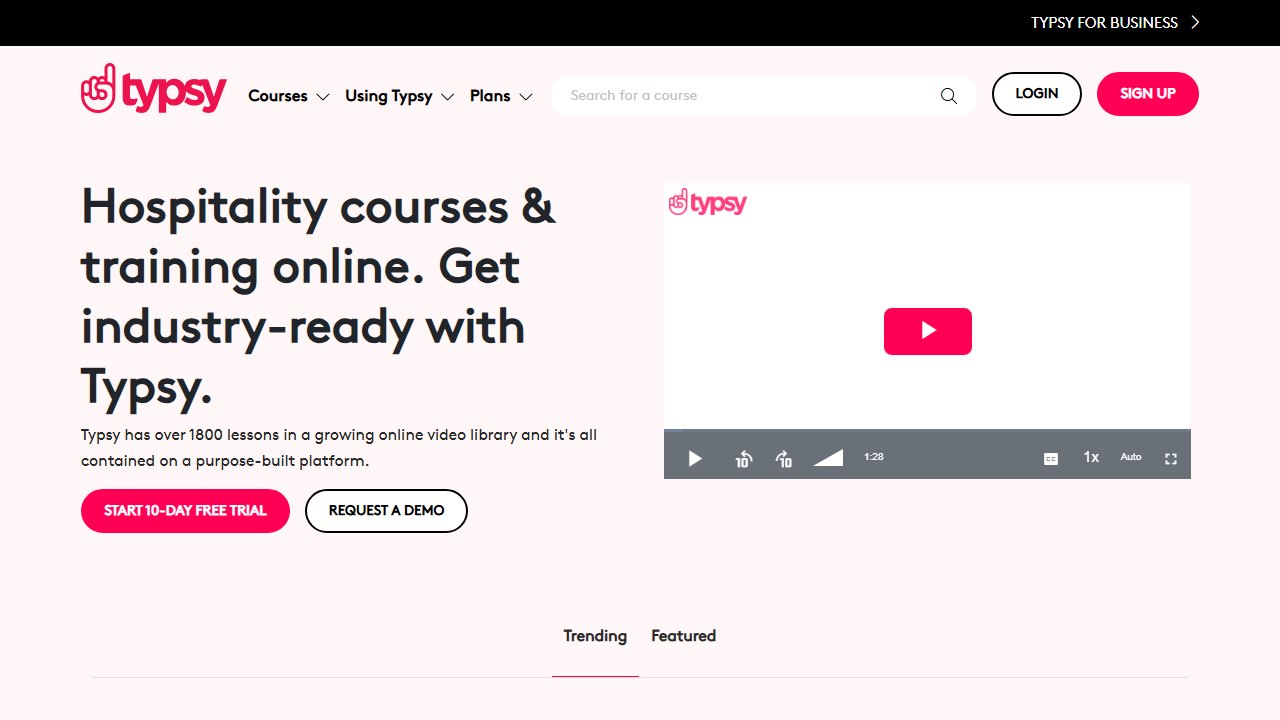
Typsy takes a different angle: a library of more than 1,800 online video courses created by hospitality industry experts. Topics span beverage service, culinary skills, customer service, compliance, and hotel and business operations. If your gap is not delivery software but actual expert content, Typsy fills it without you filming or scripting anything.
For restaurants that want to raise the baseline skill of their staff, from proper wine service to guest recovery, the video library is the value. You can assign courses, track progress, and blend Typsy’s content with your own. It works best as the expertise layer in a training stack rather than the system of record for your specific SOPs.
Who it is for: operators who want professional hospitality skills content off the shelf.
Standout feature: a large expert built video catalog covering the craft of hospitality, not just compliance.
Honest limitation: the courses are generic hospitality content, so they will not teach your specific menu or house procedures.
Pricing: per user subscription.
7. Trainual: best for documenting SOPs and playbooks
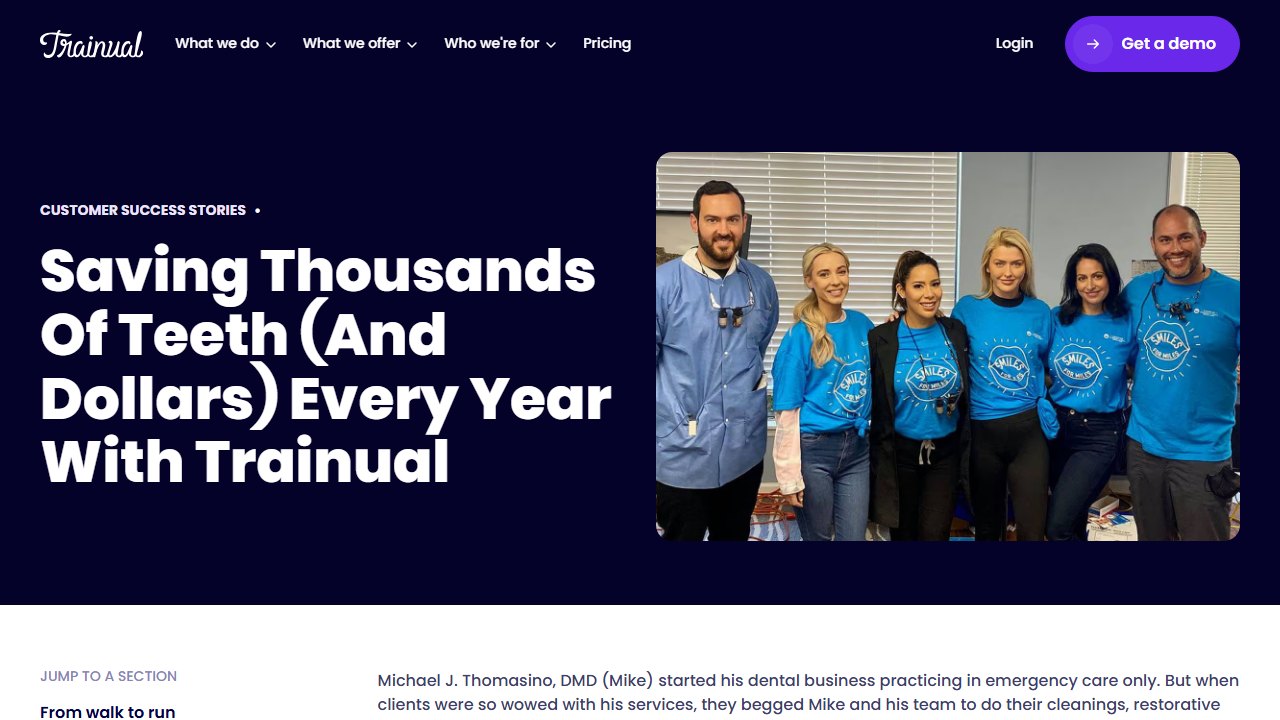
Trainual is a knowledge and process documentation platform, and for restaurants it solves the underlying problem the flashier tools assume you have already fixed: getting your standards written down at all. It acts as a central hub for SOPs, recipes, cleaning checklists, and role playbooks, so institutional knowledge does not walk out the door when a long tenured manager leaves.
Its AI assistant drafts documentation from rough notes and bullet points, which lowers the barrier to actually building your manual. New hires then get role specific content, a new line cook sees prep procedures, a cashier sees POS protocols, with completion tracking and quizzes. Trainual is less about adaptive microlearning and more about consistency and standardization across a group.
Who it is for: restaurants and groups that need to document and standardize processes before layering on frontline delivery.
Standout feature: AI assisted SOP writing that turns tribal knowledge into a searchable, assignable playbook.
Honest limitation: it is more knowledge base than mobile microlearning engine, so pair it with a frontline tool for daily delivery.
Pricing: flat monthly pricing scaled by team size, with a free trial. For the onboarding side of the same problem, see our best AI onboarding tools roundup.
8. Synthesia: best for multilingual menu and policy video
Synthesia creates AI avatar videos from a text script, which makes it a practical way to produce menu walkthroughs, policy explainers, and welcome videos without a camera crew. For a restaurant, the killer feature is language: write the script once, and Synthesia can generate lip synced versions across more than 140 languages, so a new dish rollout reaches your whole crew in their first language.
It is not a training management system, so you deliver the videos through one of the platforms above or your own channels. But as the content engine for anything visual, a new plating standard, an allergen procedure, a founder’s welcome, it removes the cost and delay of reshooting. Videos export in SCORM format for LMS use, and interactive elements can add quiz checks. Read our full Synthesia review for pricing tiers and avatar quality.
Who it is for: groups rolling out new menus or policies across multilingual, multi location teams.
Standout feature: one script, 140 plus lip synced languages, no filming.
Honest limitation: avatar delivery can feel slightly stiff in longer videos, and it needs a separate system to assign and track.
Pricing: free tier with limited minutes, then per seat.
How to choose the right tool
Match the tool to your biggest bottleneck, not to the longest feature list.
If your problem is that people never finish training, start with Opus or 1Huddle, which are built around engagement and mobile completion. If your problem is that you have no lessons to deliver, Garnysh or Trainual get you from documents to a program fastest, one with AI generated microlearning, the other with AI assisted SOPs. If compliance and food safety keep you up at night, Mitti brings the library and the certifications focus. If you are scaling a brand and culture is the point, Wisetail is the specialist. And for expert craft content or multilingual video, layer in Typsy and Synthesia.
**Saru says:** Most successful restaurant groups end up with two or three of these, not one. A common stack is a frontline delivery tool like Opus for daily lessons, a documentation layer like Trainual for the SOPs behind them, and Synthesia for the video that makes a new menu land in every language. The mistake is buying a heavy enterprise LMS and expecting frontline staff to behave like office learners. They will not, and the tool goes unused.
Compliance and safety training, where the record matters as much as the learning
This corner of the category has a different buyer and a different test. The question is not only whether people learned, it is whether you can prove what was delivered, to whom, and when.
The record is the product
For regulated training, what you need at audit is a defensible record: who was assigned, who completed, on what date, against which version of the content. Ask any vendor to show you that export before anything else. A platform with excellent content and a weak completion record is the wrong purchase, and a plain one with an audit-ready export may be exactly right.
Content versioning is the detail people miss
Regulations change and content gets updated. When it does, you need to know which version each person completed, because “everyone completed the fire safety module” is not an answer if the module changed in March. Ask how the platform versions content and whether historical completions stay tied to the version that was actually taken.
SCORM export matters more here than anywhere
If completions have to land in a corporate LMS, the authoring or video tool must export a trackable package. Colossyan publishes SCORM export on its Professional tier at $59 a month billed annually, verified 4 September 2026. Check this before shortlisting on price, because a cheaper tool that cannot produce a trackable package is not doing the job at all.
Be careful with AI generated content in a regulated context
A model does not know your jurisdiction, your policy, or the specific standard you are being audited against, and confident wrong content in compliance training is worse than no content. Use generation for structure, scenarios and delivery, and have a named person with the relevant expertise sign off anything that states a rule. Record that sign-off alongside the content version.
Verdict
**Faz says:** Restaurant training is not really a content problem anymore. AI has made building lessons almost free. It is a completion problem. The tools that win here are the ones a tired frontline worker will actually open, finish, and remember. That is why Opus and Garnysh top this list: one nails delivery to real crews, the other nails turning your menu into training without a single wasted hour.
For most restaurants, Opus is the strongest starting point. It was built for exactly this workforce, the completion numbers back it up, and the QR login plus multilingual delivery remove the friction that kills other tools. If content creation is your wall, Garnysh is the fastest way through it, and for compliance heavy operations Mitti is hard to beat on library depth and price.
Pick the one that solves your biggest bottleneck first. Then, once training is something your staff actually complete, layer in the others. To design the wider program around these tools, see our how to build an AI training program guide and, for the guest facing side, our AI customer service training tools roundup.

Written by
FazFaz is the founder of AIToolsBakery. Some tools here are tested hands on. Others are assessed from vendor documentation and pricing verified on the live page, and every review says which one it is. Sponsors can buy a position in a guide. They cannot buy the score, the criticism, or silence about a better option.
How we test and how we make money →