The best AI tools for manufacturing safety training in 2026 are Strivr and Transfr for immersive VR practice on high risk tasks, Mitti for AI built mobile microlearning, and Vector Solutions for compliance heavy EHS programs. Pair any of them with Intenseye to verify the training actually changed behavior on the floor.
Most “AI safety training” roundups quietly mix two different things. One is AI that watches your workers through cameras and flags a missing hard hat. The other is AI that actually teaches the worker why the hard hat matters and drills the safe procedure until it sticks. Only the second one is training. This guide covers the training tools, then shows where the camera layer fits.
Manufacturing is where this matters most. The tasks that hurt people, lockout tagout, forklift operation, confined space entry, working at height, are exactly the ones a slideshow cannot teach. AI changes the economics on both ends: VR lets a new hire fail a dangerous procedure safely a dozen times, and AI course builders turn a revised standard into shift ready micro lessons in an afternoon instead of a month. We ranked nine tools by how well they close the gap between a passed quiz and a genuinely safer floor.
**Faz says:** The dirty secret of factory safety training is that completion rates and injury rates often have nothing to do with each other. A worker can ace the annual LOTO quiz and still skip the lock because the line is down and the pressure is on. The tools worth paying for are the ones that build real muscle memory or actually verify behavior, not the ones that just generate a certificate. For the wider picture, start with our best AI corporate training tools pillar.
AI Manufacturing Safety Training Tools Compared
| Tool | Type | Best for | Pricing model |
|---|---|---|---|
| Strivr | Immersive VR | Enterprise VR at scale with analytics | Quote based, per headset + build |
| Transfr | Immersive VR | Largest simulation library, skilled trades + safety | Quote based, per seat |
| PIXO VR | Immersive VR | Mid market VR with a module marketplace | Quote based, per user/module |
| Mitti | AI microlearning LMS | Mobile, frontline microlessons at scale | Free tier + per seat paid |
| Vector Solutions | Safety LMS + courses | Compliance heavy EHS programs | Quote based |
| iSpring | Authoring + LMS | PowerPoint based SCORM course building | Per author/year + per user LMS |
| Intertek Alchemy | Frontline safety LMS | Supervisor led floor + food safety training | Quote based |
| Litmos | LMS + AI | Broad compliance library + AI authoring | Quote based, per user |
| Intenseye | Vision verification | Confirming behavior on the floor (adjacent) | Quote based |
The list is ordered editorially. VR platforms lead because immersive practice is the biggest AI unlock for the tasks that actually injure people. Microlearning and LMS tools follow because they scale knowledge and handle compliance recordkeeping. The verification layer sits last because it is not training, but it is what tells you whether any of the training worked.
1. Strivr
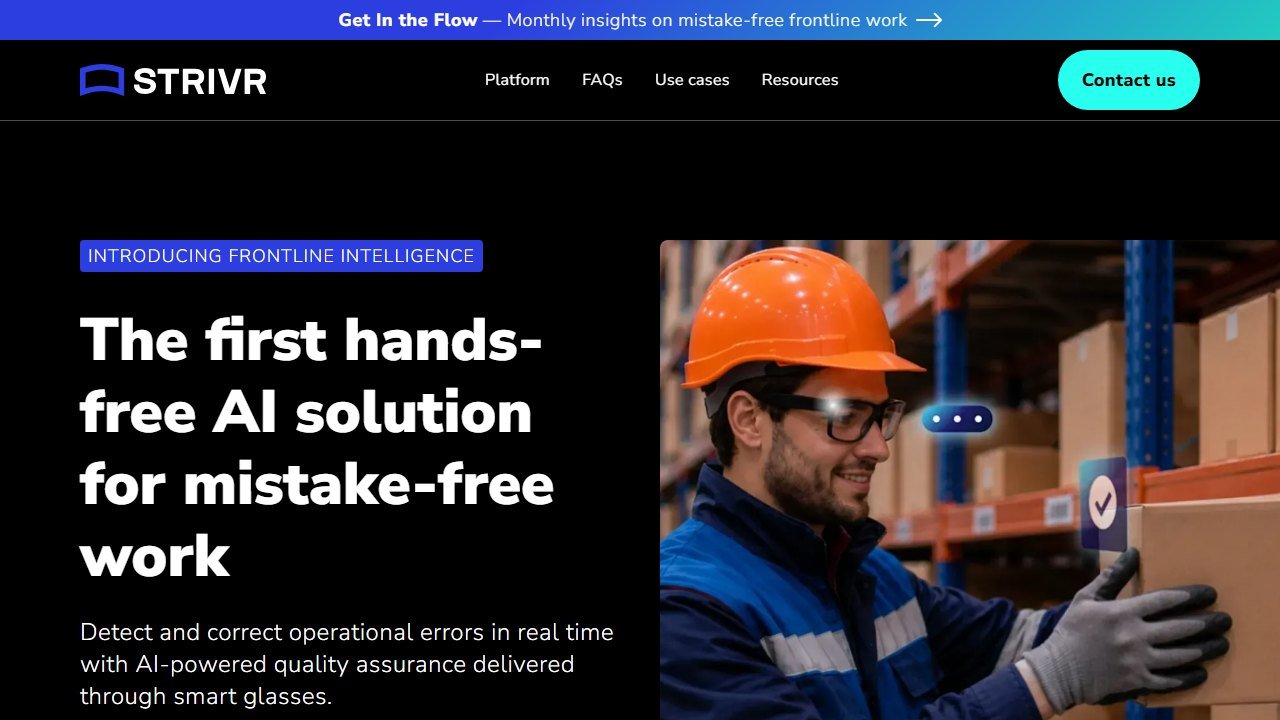
Strivr is the enterprise standard for immersive VR safety training. It builds custom, photorealistic simulations of your actual plant and processes, then layers on AI powered performance analytics that track where trainees hesitate, make mistakes, or freeze under pressure. For a high consequence task like a lockout tagout sequence or a confined space entry, that behavioral data is far more useful than a multiple choice score.
The standout is scale plus measurement. Strivr has run well over two million VR training sessions, with large deployments including Walmart, which rolled out headsets to thousands of stores. The platform captures gaze, hesitation, and decision data during each session, so EHS leaders can see which specific step in a procedure trips people up and fix the training, not just the worker.
Who it is for: large manufacturers with 10,000 plus employees and the budget for custom content. Honest limitation: it is a build and deploy program, not a self serve tool, so time to first module and cost are both significant. Pricing is quote based, typically per headset per year plus a content development investment. If you want VR muscle memory on your most dangerous tasks and you have the volume to justify it, Strivr is the benchmark.
2. Transfr
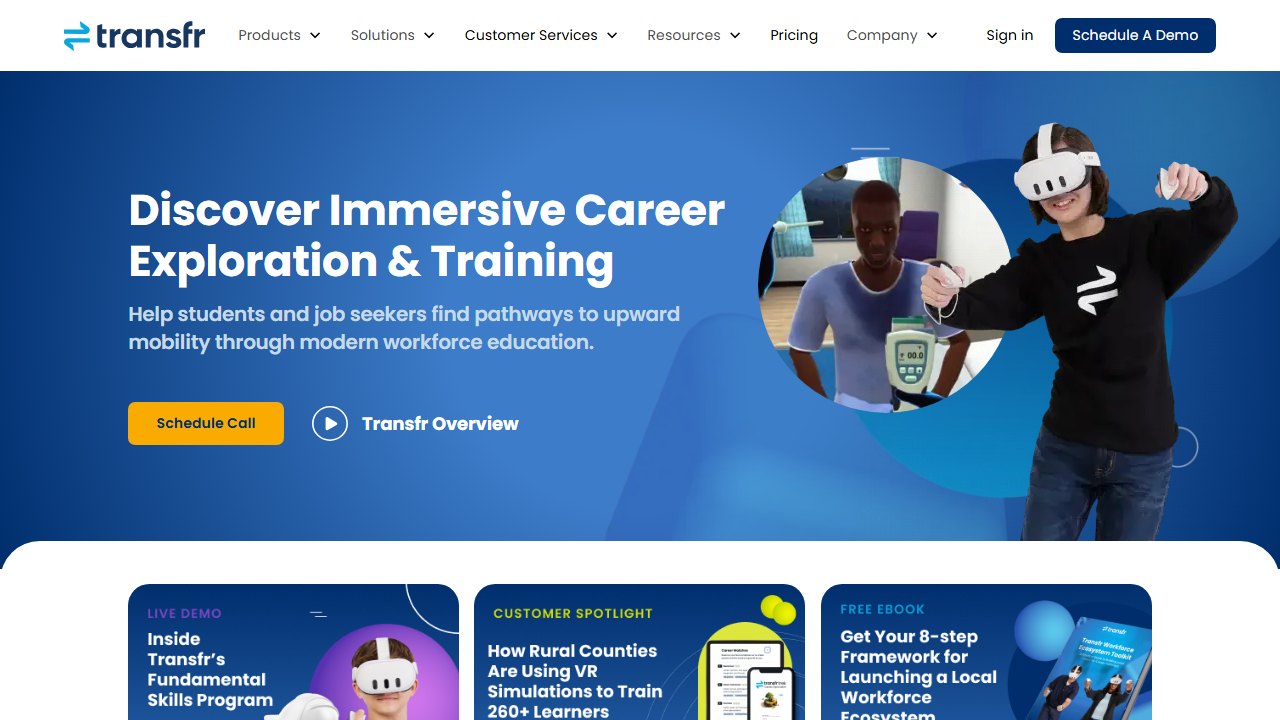
Transfr brings the largest ready made simulation library to the table, with hundreds of VR modules spanning skilled trades, equipment operation, and safety procedures. For a manufacturer that wants immersive training without commissioning everything from scratch, that catalog depth shortens the path to a live program considerably.
Transfr leans into workforce development and hands on skilling, so many of its simulations teach how to run a machine correctly, which is itself a safety outcome. An AI guided coach walks trainees through each step inside the headset, corrects errors in the moment, and adapts pacing to the learner. That in simulation coaching is the AI layer that separates it from a static VR video.
Who it is for: manufacturers and training partners who want breadth of pre built content and a strong skills to safety overlap, including apprenticeship and community college pipelines feeding the plant. Honest limitation: because the library skews toward trades and machine operation, pure compliance safety topics can be thinner than a dedicated EHS catalog, so check that your specific hazards are covered before committing. Pricing is quote based, generally per seat. Transfr is the best pick when library size and guided skilling matter as much as raw safety modules.
3. PIXO VR
PIXO VR is the pragmatic mid market VR option. Its Apex platform combines PIXO built safety modules with a marketplace of third party content, so you can assemble a program from dozens of ready made simulations covering common plant hazards like fire safety, PPE, and equipment operation without a full custom build.
The appeal is flexibility and a lower barrier to entry than fully bespoke VR. PIXO supports multiplayer sessions, which is useful for team based emergency response drills, and it distributes and tracks headset content through a management layer so EHS admins can assign modules and see completion. That makes it easier to run VR alongside an existing LMS rather than as an isolated experiment.
Who it is for: mid sized manufacturers that want the realism of VR without enterprise scale spend, and teams that value a marketplace of off the shelf modules. Honest limitation: off the shelf modules will not match your exact facility the way a Strivr custom build does, so the immersion is a step down for site specific procedures. Pricing is quote based, structured around users and module access. PIXO VR is the value choice for getting immersive safety practice live quickly.
4. Mitti
Name change, and it is not only a name. SC Training is now Mitti. The vendor confirmed the rebrand on its own site in September 2026, and training now sits as one of five modules inside a wider workplace operations platform rather than a standalone mobile LMS. The AI Course Builder described below is unchanged. For a plant buying training alone, ask what the other four modules add to the quote.
Mitti, formerly EdApp, then Mitti, and now renamed Mitti, is the strongest AI microlearning platform for frontline plant crews. Its AI Course Builder turns a document, a policy PDF, or a revised standard into a structured micro course with quizzes in minutes, which is the exact workflow safety teams need when a procedure changes and every shift has to know by Monday.
The design is mobile first and deskless friendly. Lessons run in a few minutes on a phone, use spaced repetition to reinforce critical knowledge, and gamify completion to keep participation high on a factory floor where nobody has an hour to sit at a desk. A library of a thousand plus editable courses, including safety and manufacturing specific content, gives teams a fast starting point instead of a blank page.
Who it is for: manufacturers with large frontline workforces who need policy and safety knowledge to reach every worker, in multiple languages, without pulling them off the line. Honest limitation: microlearning builds knowledge and recall, not the physical muscle memory that VR provides for dangerous procedures. Pricing includes a genuinely usable free tier plus per seat paid plans. Mitti is the best scalable knowledge layer, and it pairs naturally with a VR tool for the hands on tasks. See our best AI onboarding tools guide for how it fits new hire ramp up.
5. Vector Solutions
Vector Solutions, which includes the former Convergence Training, is the compliance heavyweight. It pairs a purpose built EHS learning management system with a deep catalog of industrial safety courses covering OSHA topics, hazardous materials, machine guarding, and more, so a plant can run its entire recurring safety and recertification program in one place.
The value here is recordkeeping and breadth rather than novelty. Vector tracks assignments, completions, certificates, and expiry dates, sends automated recertification reminders, and exports audit ready reports, which is precisely what an EHS manager needs when OSHA or a customer audit shows up. AI assisted content recommendations and course authoring help teams keep material current without building every module by hand.
Who it is for: safety and EHS leaders who prioritize regulatory coverage, documented compliance, and a large ready made industrial course library over immersive experiences. Honest limitation: it is a traditional LMS at heart, so the learning experience is closer to structured e learning than to the engaging microlessons of Mitti or the immersion of VR. Pricing is quote based and scales with users and content. Vector Solutions is the safest default when compliance documentation is the top requirement. For the authoring side of building your own courses, see our best AI instructional design tools roundup.
6. iSpring
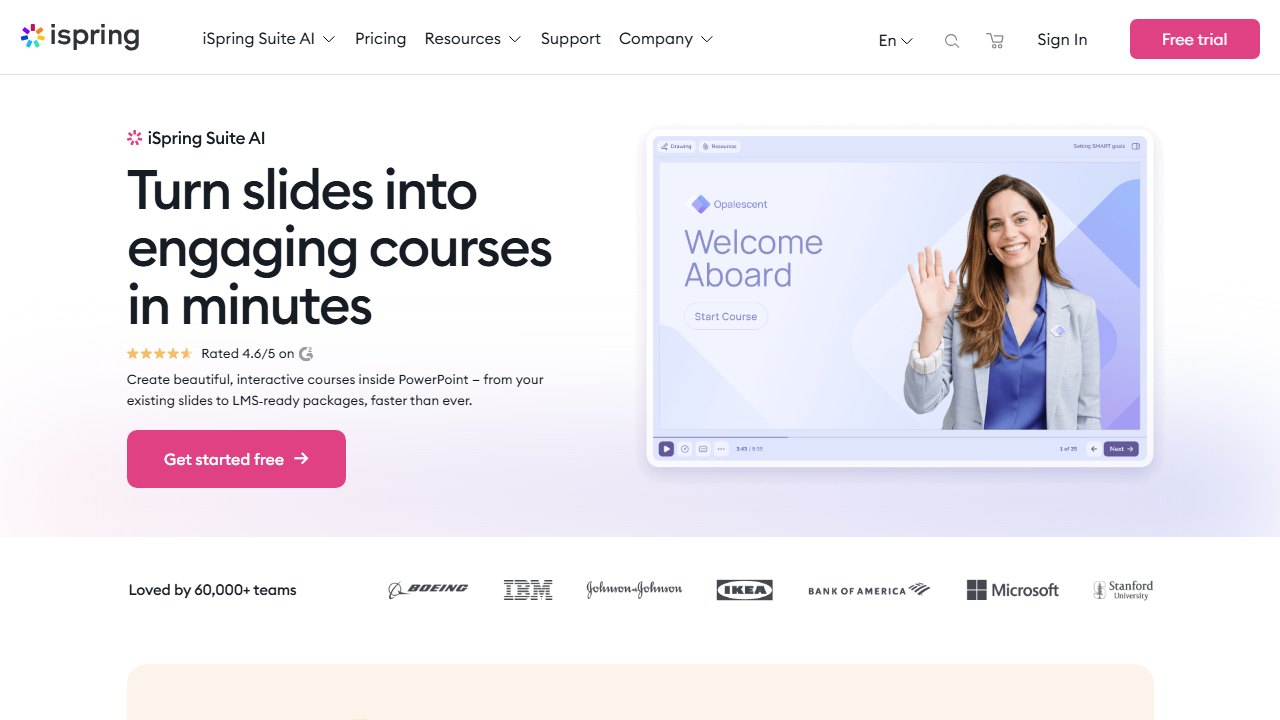
iSpring is the go to when your safety experts live in PowerPoint. iSpring Suite turns familiar slides into SCORM compliant interactive courses, quizzes, and simulated dialogue scenarios, and its AI assistant helps draft and refine content, so a plant trainer who is not an instructional designer can still ship polished modules.
Paired with iSpring Learn, the companion LMS, you get assignment, tracking, certification, and reporting for the whole workforce. The reason this matters for manufacturing safety is authoring control: regulations and internal procedures change constantly, and being able to update a course yourself in a tool your team already knows beats waiting on an external content vendor. SCORM output also means iSpring built modules drop cleanly into other LMS platforms if you already run one.
Who it is for: safety teams that want to build and maintain their own courses affordably, and organizations standardizing on SCORM. Honest limitation: iSpring is an authoring and delivery toolkit, not a safety specific content library, so you supply the subject matter. Pricing is per author per year for the Suite plus per user for Learn. Read our full iSpring Suite review for a deeper look at the authoring workflow.
7. Intertek Alchemy
Intertek Alchemy is purpose built for the reality of a plant floor, where a lot of the workforce does not have a company email, let alone a desk. It specializes in supervisor led, on the floor safety and food safety training for manufacturing and processing environments, combining courseware with group led sessions and verification that the right people actually attended.
The differentiator is frontline fit. Alchemy is designed around shift schedules, multilingual crews, and roles where training happens at the line rather than in an LMS portal. It is especially strong in food and beverage manufacturing, where food safety and workplace safety obligations overlap and audit trails are non negotiable. Coaching and on the job verification features help confirm that a worker can perform a task safely, not just that they clicked through a course.
Who it is for: food, beverage, and CPG manufacturers, and any plant with a heavily deskless, multilingual crew that needs supervisor led delivery. Honest limitation: it is a specialist rather than a general corporate LMS, so it is overkill if you mostly need office style compliance training. Pricing is quote based. Alchemy is the best fit when your training has to happen on the floor, in the workers’ languages, with verified attendance.
8. Litmos
Litmos is a broad corporate LMS with a strong off the shelf compliance library and a growing set of AI features, including AI assisted course authoring and content assembly. For a manufacturer that wants safety training to live inside the same system as the rest of its L&D, from onboarding to leadership, Litmos consolidates it all in one place.
The strength is coverage and speed to launch. The Litmos Training Content library includes ready made compliance and workplace safety courses, so a team can assign a baseline safety curriculum on day one and customize later. AI tools help generate and adapt courses, and the platform handles the assignment, tracking, and certification workflow that compliance requires.
Who it is for: mid market and enterprise manufacturers that want a single general purpose LMS covering safety plus broader employee training, rather than a safety only specialist. Honest limitation: as a generalist, its safety catalog is not as deep or industrial as Vector’s, and it does not offer immersive VR. Pricing is quote based, typically per registered user. Litmos is the pragmatic pick when you want one platform for everything and safety is one workload among many. It pairs well with our best AI soft skills training tools picks for the non safety side.
9. Intenseye (the verification layer)
Intenseye is not a training tool, and that is exactly why it belongs on this list. It is an AI computer vision platform that connects to existing plant cameras and detects unsafe conditions and behaviors in real time: missing PPE, people in restricted zones, ergonomic risks, forklift and pedestrian conflicts. It closes the loop that training alone cannot.
Here is the logic. Every tool above teaches a worker what safe looks like and reports that they passed. None of them can tell you whether the worker actually wears the gloves at 2 a.m. when the line is behind. Intenseye measures that. It processes billions of images and turns near misses and unsafe acts into data, which lets EHS teams see whether a training push actually reduced risky behavior on the floor, then retrain the specific crews and stations that still fail. Intenseye was named a World Economic Forum Global Innovator in early 2026.
Who it is for: manufacturers serious enough about safety to verify outcomes, not just completions. Honest limitation and caveat: this is workplace monitoring, which carries real privacy, works council, and change management considerations, and it requires camera infrastructure. Pricing is quote based. Voxel is a comparable alternative in this vision category. Treat Intenseye as the accountability partner to your training stack, not a replacement for it.
**Saru says:** The data supports pairing training with verification. Leading vision safety deployments report injury reductions in the range of 50 to 77 percent with payback periods of roughly 6 to 12 months. That is not because cameras teach, it is because measurement exposes the gap between what workers were trained to do and what they actually do under production pressure. Training changes knowledge. Verification changes accountability. You need both.
Authoring tools and the per author licence model
Course authoring is priced per author per year, not per learner, which makes it one of the easier budgets to calculate and one of the more expensive to get wrong. Here is where best ai sits, read 4 September 2026.
iSpring publishes the clearest per author rates
iSpring publishes iSpring Suite at $970 USD per author per year, iSpring Suite AI at $1,290 and iSpring Cloud AI at $720. Because the meter is authors rather than learners, the arithmetic is simple: two instructional designers on Suite AI is $2,580 a year regardless of whether you train fifty people or five thousand. That is the friendliest structure in this category for an organisation with a large workforce and a small L&D team.
Articulate is currently showing a limited-time offer, not a standard price
This one needs care. Articulate‘s canonical pricing URL redirected us to a special offer page on 4 September 2026, showing $1,198 USD per user per year against a struck-through $1,749, described as 31% off and a limited time offer, with an FAQ headed “Who is eligible for this special pricing offer?”. So the published figure is promotional. Ask what the price is outside the offer and what it renews at, because a 31% discount in year one against an undiscounted year two is a materially different deal from a $1,198 rate card.
The add-ons are priced separately and are not small
Articulate publishes Localization starting at $5,000 a year and Reach Pro starting at $3,600 for 1,200 active learners a year. Localization is the one that surprises people: if you train a multilingual workforce, translation management can cost more than the authoring seats. Price the combination you would actually deploy rather than the headline seat.
Per author is only cheap if authoring is centralised
The model rewards a small team of dedicated designers and punishes a federated approach where every department wants to build its own content. Decide which you are before buying. If fifteen people across the business each need to publish occasionally, a per author licence is the wrong shape and you should be looking at a tool priced differently, or accepting a bottleneck by design.
How to Choose
Match the tool to the failure mode you are trying to prevent.
If your injuries come from a handful of physically dangerous procedures, lockout tagout, forklifts, confined space, working at height, lead with VR. Strivr for enterprise scale and custom builds, Transfr for the largest ready made library, PIXO VR for mid market value. VR is the only format that builds real muscle memory for tasks where a real mistake means a real injury.
If your problem is getting current policy and procedure knowledge to a large, deskless, multilingual workforce, lead with AI microlearning. Mitti is the strongest here, with Intertek Alchemy the specialist for supervisor led floor delivery, especially in food and beverage.
If your top priority is documented regulatory compliance and recertification, lead with a safety LMS. Vector Solutions for the deepest industrial catalog, iSpring if you want to author your own courses, Litmos if you want one platform for safety plus all other training.
And whatever you pick, budget to verify. Training reports completions. A vision layer like Intenseye reports behavior. The distance between those two numbers is where people still get hurt. For a structured rollout, see our guide on how to build an AI training program, and for adjacent frontline programs, our best AI tools for restaurant staff training.
How we reached this verdict: this guide is research-based. We compare each tool against its published documentation, pricing pages and terms, and we do not claim hands-on testing we have not done.

Written by
FazFaz is the founder of AIToolsBakery. Some tools here are tested hands on. Others are assessed from vendor documentation and pricing verified on the live page, and every review says which one it is. Sponsors can buy a position in a guide. They cannot buy the score, the criticism, or silence about a better option.
How we test and how we make money →