You stand in the yard in August, watching sprinklers run through a rainstorm, and you do the math: that water is money, and it is literally going down the drain. A smart sprinkler controller promises to stop exactly that, by skipping cycles when the weather already did the watering for you. The pitch is real. The savings are real. But the gap between the best controllers and the merely connected ones is wider than the marketing suggests.
We are AIToolsBakery, and we sell none of these controllers. We make nothing if you buy a Rachio over an Orbit, or a hose timer over an in-ground system. That matters here, because if you search “best smart sprinkler controller” you mostly get two kinds of pages: the vendors ranking themselves first, and affiliate roundups that rank whatever pays the highest commission. We are neither. What follows is organized around the jobs you actually need done, with an honest limit on every pick.
The 30-second answer: For most homes with in-ground sprinklers, the Rachio 3 wins on app quality and weather smarts. On a budget, Orbit B-hyve. No in-ground system? A Rachio Smart Hose Timer. Want offline control? RainMachine. The real water savings come from weather-based scheduling, not the brand.
Quick answer: Rachio is the best overall smart sprinkler controller for in-ground systems, with the Orbit B-hyve the value champion for most homeowners. The right pick is the WaterSense-labeled model matched to your zone count and indoor or outdoor mounting that you will actually keep on auto.
What actually saves water (and what does not)
Before the picks, the mechanism, because this is where the marketing gets slippery. A smart controller saves water through one feature above all others: weather-based, or evapotranspiration (ET), scheduling. ET is the combined water lost from soil evaporation and plant transpiration. A genuinely smart controller pulls local weather data, estimates how much water your landscape actually lost since the last cycle, and replaces only that. It also skips watering when rain, wind, or freeze make a cycle pointless.
The EPA’s WaterSense program certifies controllers that demonstrably do this. According to the EPA, replacing a standard clock-timer with a WaterSense labeled controller can save an average home up to 15,000 gallons of water a year. That is the number worth chasing. Voice control, slick apps, and zone graphics are nice, but they do not save a drop. If a controller is not doing real ET scheduling, it is a fancy timer.
So the decision criteria that follow are not “which has the prettiest interface.” They are: do you have in-ground sprinklers or hoses, how many zones, indoor or outdoor mounting, do you want hub-free wifi, how good is the water-savings logic, and which smart-home ecosystem you live in.
Do you have in-ground sprinklers or just hoses?
This is the first fork, and it decides half your shortlist.
If you have an in-ground irrigation system, you have a wall-mounted controller box wired to valves, usually in a garage or on an exterior wall. You are replacing that box. This is the world of Rachio 3, Orbit B-hyve, Rain Bird, Hunter Hydrawise, Netro, and RainMachine.
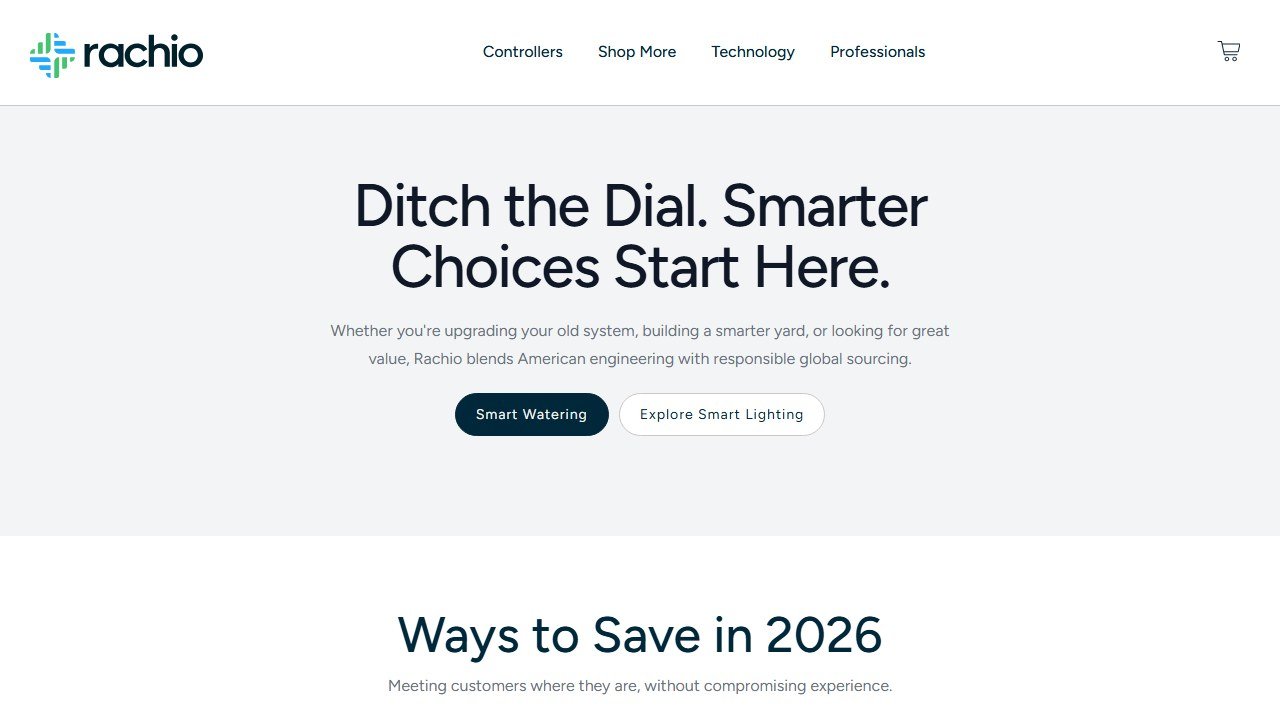
If you do not have in-ground sprinklers, and you water with hoses, oscillating sprinklers, or drip lines off a spigot, you do not need a wall controller at all. You need a smart hose timer that screws onto the faucet. The standout here is the Rachio Smart Hose Timer. It brings the same weather-skip logic to anyone with an outdoor tap, including renters and apartment balconies. Honest limit: it relies on an indoor hub that must sit within wifi range of the spigot, and a single timer controls one or two outlets, so a sprawling yard with many beds gets expensive fast.
Number of zones
Count your zones before you buy. A “zone” is one valve serving one watering area: front lawn, back lawn, the flower beds along the fence. Controllers are sold by zone capacity, typically 4, 8, 12, or 16. Buy for the zones you have plus one or two of headroom, not double.
Small yards (4 to 8 zones) are well served by Orbit B-hyve or the 8-zone Rachio. Larger or more complex properties (12 to 16-plus zones) push you toward the 16-zone Rachio 3, Hunter Hydrawise, or a modular Rain Bird that expands as you add stations. Overbuying zones is wasted money; underbuying means you cannot control part of your yard at all.
A quick way to count without guessing: if you have an existing controller, open it and look at the wired terminals. Each labeled station that has a wire running to it is a live zone. If you are starting from scratch with a new in-ground design, your installer or design plan will list the zones, and it is worth grouping by water need (lawn separate from beds, sunny separate from shaded) so the controller can schedule each group differently. That grouping is where a smart controller earns its keep, because it can water the thirsty zones more and the shaded ones less, something a single-schedule timer cannot do. If you run a crew rather than a single yard, the scheduling-at-scale question shifts toward route and property software; our roundup of the best AI tools for lawn care businesses covers that side.
Indoor vs outdoor rating
Where the box mounts matters more than people expect. Many controllers, including the standard Rachio 3, are rated for indoor or covered installation. If your only mounting spot is an exposed exterior wall, you need either a weatherproof model or an outdoor enclosure.
Orbit B-hyve scores well here because outdoor-rated versions ship with a weatherproof enclosure included, which quietly saves you the cost of buying one separately. Rain Bird and Hunter both offer outdoor-rated options as well. Check the rating before you check the price; an indoor controller on an outdoor wall is a warranty problem waiting to happen.
Hub-free wifi vs a separate hub
Some systems connect each device straight to your home wifi. Others route through a separate hub that you plug in indoors. Neither is wrong, but it changes your setup.
Wall-mounted controllers like Rachio 3, Orbit B-hyve, and Rain Bird connect directly over wifi, no hub. Hose timers are where hubs reappear: the Rachio Smart Hose Timer talks to its timer over a short-range radio and needs its indoor hub bridged to wifi within range of the spigot. If your faucet is far from the house, confirm the range before buying, because a hub that cannot reach the timer is a paperweight.
The water-savings smarts
This is the criterion that separates the field, and it is worth slowing down on.
The Rachio 3 sets the bar with Weather Intelligence that adjusts daily and skips for rain, wind, and freeze. It is WaterSense labeled and consistently the controller people cite when they report cutting outdoor water use meaningfully. Honest limit: the deepest features sit behind an optional paid subscription tier, and the base hardware is priced at the premium end. Pricing shifts often, so confirm current numbers and what the free tier includes on the vendor page.
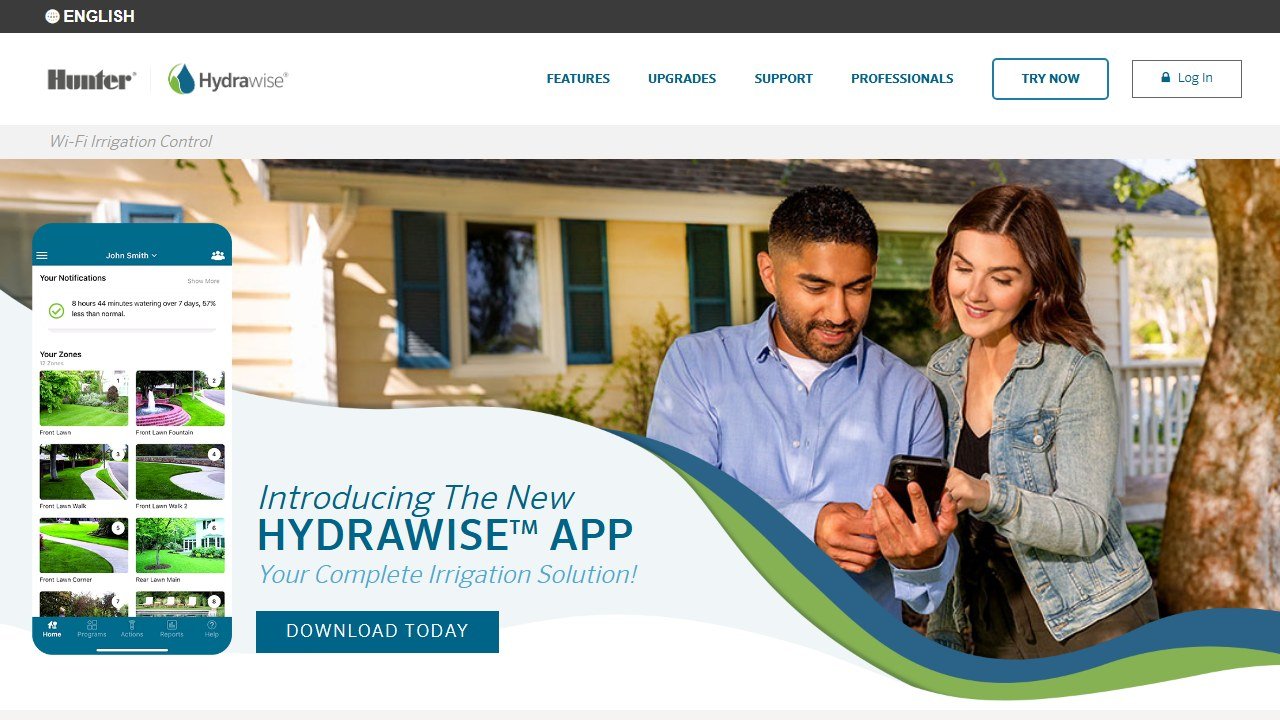
Hunter Hydrawise is the platform the pros reach for. Its Predictive Watering pulls hyper-local weather and adjusts run times automatically, and it scales to large station counts. Honest limit: it is built for installers and complex sites, so the interface and setup carry more depth than a casual homeowner needs, and the better experience often assumes professional installation.
RainMachine takes a different stance: it does its ET scheduling locally, with a touchscreen on the unit, and keeps working if your internet drops. That cloud independence is genuinely rare and a real selling point if you distrust always-online devices or have flaky wifi. Honest limit: the local-first design and touchscreen hardware put it at a higher price point, and the third-party ecosystem is smaller than Rachio’s.
Netro is the value-minded weather-aware option, bringing multi-zone ET scheduling at a noticeably lower price than the premium brands, often with solar-powered outdoor sensors in its lineup. Honest limit: the app and integrations are less polished than Rachio’s, and you are trading some refinement for the lower sticker.
One thing all of these share is that the weather-skip logic only helps if you let it. We have seen people buy a premium controller, then override it manually every time the lawn looks slightly dry, which defeats the entire point. The controller is making a bet that the soil still holds enough water from the last cycle plus recent rain. Trusting that bet for a couple of weeks, rather than second-guessing it daily, is what actually moves the water bill. If you are going to micromanage, you did not need the smarts.
Rain Bird and Orbit: the practical workhorses
Two more names earn a place for reasons that are not about being the flashiest.
Rain Bird is the commercial-grade, modular choice. If you value irrigation components built to last and want an upgrade path where you add a wifi module to a proven controller body, Rain Bird is the loyalist pick. Honest limit: the app has historically lagged Rachio’s polish, and the experience can feel more utilitarian than consumer-friendly.
Orbit B-hyve is the budget champion that does not feel like a compromise. It delivers genuine weather-based scheduling, is WaterSense labeled, and the outdoor versions include the enclosure, all at roughly half the price of the premium tier. Honest limit: it pairs only with Orbit’s own wireless rain/freeze sensor rather than a wide third-party range, and the app, while capable, is plainer than Rachio’s.
Which smart-home ecosystem are you in?
If you live inside a particular voice or smart-home platform, this can break a tie. Rachio 3 is notable for working with Alexa, Google, and being the one with native Apple HomeKit support, which matters if your home runs on Apple. Orbit B-hyve, Rain Bird, Netro, and Hunter generally cover Alexa and Google but not HomeKit. Pick the controller that speaks your house’s language, but do not let voice control outweigh the water-savings logic. Telling a sprinkler to start with your voice is a party trick; skipping a cycle before a storm is the savings.
How the smart sprinkler controllers compare
One table, the honest summary. Pricing is qualitative on purpose, because it changes often and varies by zone count and retailer. Confirm current numbers on each vendor’s page.
| Controller | Zones | Best for | Price tier | WaterSense |
|---|---|---|---|---|
| Rachio 3 | 8 or 16 | Best all-round, HomeKit homes | Premium | Yes |
| Rachio Smart Hose Timer | 1 to 2 outlets | Renters, no in-ground system | Mid | Varies, confirm |
| Orbit B-hyve | Up to ~16 | Budget, outdoor mount included | Budget | Yes |
| Rain Bird | Modular to 22 | Modular, commercial-grade parts | Mid | Yes |
| Hunter Hydrawise | 6 to 24-plus | Large or pro-installed sites | Premium | Yes |
| RainMachine | Up to ~16 | Offline, local control | Premium | Yes |
| Netro | Up to ~12 | Value weather-aware scheduling | Budget to mid | Yes |
A lean way to start
You do not need to overthink this. Here is the short path from “watering blindly” to “saving water” without buying twice.
- Count your zones and check whether your mounting spot is indoors, covered, or fully exposed. This alone narrows the field.
- Decide in-ground or hose. If you have no buried system, stop reading the wall-controller section and get a Rachio Smart Hose Timer.
- Confirm the model you want is WaterSense labeled. If it is not, it likely is not doing real ET scheduling.
- Match the ecosystem. HomeKit home, lean Rachio. Otherwise Alexa and Google cover the rest.
- Set a budget honestly. Premium gets you Rachio or Hunter; budget gets you Orbit or Netro, and the water savings come from the scheduling, which all of these do.
- Install, then actually configure zone soil and plant types in the app. The savings live in that setup step, and skipping it leaves the controller guessing.
If you are doing this as part of a wider yard upgrade, our pillar on the best AI landscaping tools covers design and planning. For a head-to-head on the two names everyone shortlists, see Rachio 3 vs Rain Bird.
What smart sprinkler controllers still cannot do
Honesty closes this out, because the marketing will not.
A smart controller does not fix a bad sprinkler system. If your heads are misaligned, your pipes leak, or a zone sprays the sidewalk instead of the lawn, no amount of weather intelligence saves that water. The controller schedules; it does not aim. Fix the physical system first.
It also cannot read your soil unless you tell it about your soil. The ET math leans on the zone details you enter: grass type, soil, sun exposure, nozzle type. Leave those at default and you get default-level savings. The homeowners who report the biggest reductions are the ones who configured each zone properly.
Weather data is only as local as the nearest station. A controller pulling from an airport ten miles away can misjudge a microclimate in your specific yard. Some models support a personal weather station or local sensors to tighten this up, which is worth it if your area’s weather is patchy.
And the savings ceiling is real but climate-dependent. The EPA’s figure is “up to” for a reason. If you live somewhere it rains predictably and you already watered conservatively, your savings will be modest, and the payback period longer. If you live somewhere hot and dry and your old timer ran on autopilot through every storm, the savings can be dramatic. Know which camp you are in before you expect a specific number.
The right smart sprinkler controller is not the one with the best app or the most voice commands. It is the WaterSense labeled model, matched to your zones and mounting, that does honest weather-based scheduling and that you actually take ten minutes to configure. Get those right and the water bill, the whole point, takes care of itself. Treat any exact price you see, here or anywhere, as a starting estimate and confirm it on the vendor’s own page before you buy.

Written by
FazFaz is the founder of AIToolsBakery. Some tools here are tested hands on. Others are assessed from vendor documentation and pricing verified on the live page, and every review says which one it is. Sponsors can buy a position in a guide. They cannot buy the score, the criticism, or silence about a better option.
How we test and how we make money →Frequently Asked Questions