Clio is still the biggest name in legal practice management, but 2026 has been a strange year to be a Clio customer. The company pulled per-plan prices off its public pricing page (only “Starting at $49/user” remains visible), renamed its Complete tier to Expand, rebranded its Clio Duo AI assistant as Manage AI, and completed a $1 billion acquisition of vLex that closed on November 10, 2025 alongside a $500 million Series G at a $5 billion valuation. Clio is turning into an enterprise platform, and plenty of small and mid-sized firms are asking whether they still fit.
This page is for the firms doing that math. It is not a fresh-buyer ranking of the whole category. Our best legal practice management software guide owns that job. This is a switch-intent guide: you are leaving Clio for a specific reason, and we map each reason to the alternative that fixes it, with prices we verified on official pricing pages in July 2026 and an honest section on what you give up by walking away.
The pricing-transparency scoreboard
Clio’s price gating is the single biggest complaint we heard while researching this post, so before any feature talk, here is who actually tells you what their software costs. Every “published” figure below was verified on the vendor’s own pricing page on July 15, 2026.
| Tool | Publishes prices? | Entry price (annual billing) | Named AI features | Best switch reason |
|---|---|---|---|---|
| MyCase | Yes, all tiers | $50/user/mo | 8am IQ (writing, document, case, discovery assistants) | AI depth without gated pricing |
| Smokeball | Partially (configurator) | Varies by firm size; “From $149/mo” shown at default selector | Smokeball AI + Archie matter assistant | Automation depth, time capture |
| PracticePanther | Yes, all tiers | $49/user/mo | None named on pricing page | Lowest cost, no AI upsell |
| CARET Legal | Yes, all tiers | $79/user/mo | AI-Generated Document Summaries (Plus and Insights) | Accounting-heavy mid-sized firms |
| Filevine | No (demo-gated) | Custom quote | LOIS suite (Ask LOIS, AI Drafting, Depo Copilot, MedChron) | Plaintiff and PI work |
| Lawmatics (sidebar) | No (quote-based) | Custom quote | Merlin Qualify, LM[AI] email builder | Intake and marketing layer, not PM |
| Clio (for reference) | Gated since 2026 | “Starting at $49/user” (EasyStart only) | Manage AI (Duo successor), Clio Work | Staying put |
Read that middle column carefully. Three of the six alternatives publish every price. Clio, the incumbent, now publishes one. That is the story of this page.
Why firms are leaving Clio, and where each reason points
In our conversations with switching firms, the complaints cluster into four buckets. Here is the short routing table before the full entries.
Leaving over price opacity or cost creep? Pick MyCase or PracticePanther. Both publish every tier, and PracticePanther’s Solo plan at $49 per user per month matches Clio’s only remaining public number while showing you the whole ladder above it. Our Clio pricing breakdown reconciles what Clio used to publish against what third parties report today, if you want the full before-and-after.
Leaving over AI gaps or AI pricing confusion? Pick MyCase or Filevine. Clio’s Manage AI add-on has no verified public price (third-party reports conflict between roughly $39 and $59 per user per month), while MyCase bakes 8am IQ into its published Pro and Advanced tiers and Filevine ships the most ambitious AI suite in the category.
Leaving over contract terms? Be careful here. Smokeball, the automation standout, only sells 12 or 36 month contracts. If flexibility is your issue, MyCase, PracticePanther, and CARET Legal all publish monthly options.
Leaving because you run a plaintiff or personal injury practice? Pick Filevine. It is the only tool here purpose-built for that workflow, with demand drafting, deposition tools, and medical chronology AI that generalist suites do not attempt.
What you give up: the post-vLex reality check
Here is the part competitor attack pages will not tell you. When Clio’s vLex deal completed in November 2025, Clio became the only practice management vendor fused with a legal research library at that scale. Vincent AI now ships inside Clio as Clio Work: legal AI plus the Clio Library, over 1 billion documents across 100 plus jurisdictions with a citator, SOC 2 Type 2 and ISO 27001 certified, usable with or without Clio Manage.
None of the six tools below has anything comparable. MyCase’s 8am IQ works on your documents. Smokeball’s Archie works on your matters. Clio Work works on the law itself. If your firm leans hard on integrated research, leaving Clio means buying research separately (Westlaw, Lexis, vLex standalone, or a tool like Paxton) and stacking that cost on top of your new PM subscription. Clio Work pricing is demo-only, so you cannot price the tradeoff precisely, but the tradeoff is real and you should walk into it with open eyes. Our Clio review covers the full platform verdict if you are still deciding whether to go at all.
The best Clio alternatives, ranked
Ranking logic: AI depth you can actually buy today, pricing transparency, and switch fit. We weighted published pricing heavily because that is why most readers are on this page.
1. MyCase: the closest like-for-like swap, with real AI
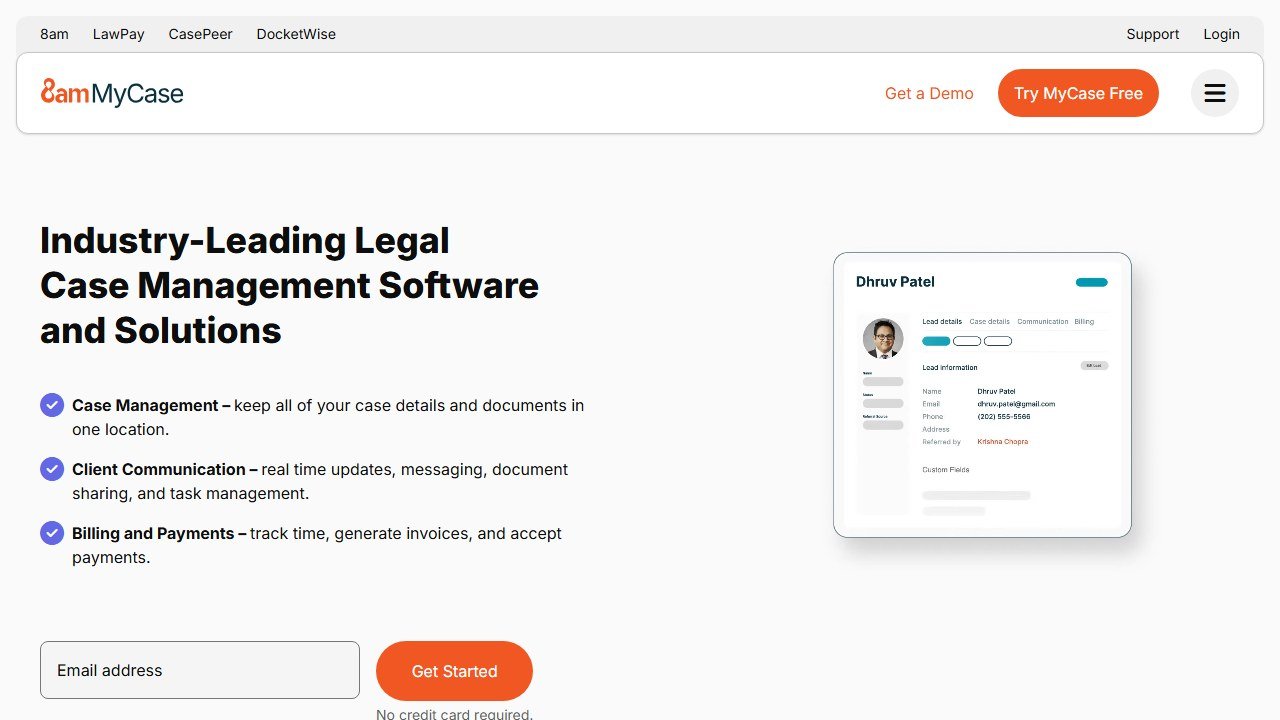
MyCase, now part of the 8am family alongside Docketwise and CASEpeer, is the alternative we recommend first to most switching firms. It covers the same core as Clio (matters, billing, trust accounting, client portal, payments) and pairs it with the most clearly packaged AI layer in this group.
What it does. Full practice management for small and mid-sized firms, with the 8am IQ AI layer on top: a Writing Assistant and Document Assistant on the Pro plan and up, plus a Case Assistant and a Discovery Assistant on Advanced. The Discovery Assistant includes OCR at 5,000 pages per user per month, with additional 5,000-page firm-wide blocks at $30.
In practice. The Document Assistant is the standout: point it at a stack of uploaded records and it produces usable summaries you can drop into a matter note. The Writing Assistant is competent for client emails and first-draft letters. Nothing here matches a dedicated research tool, and it does not pretend to.
Pricing (verified July 15, 2026). Basic $50 per user per month annual ($60 monthly), Pro $100 ($120), Advanced $130 ($150). Every tier is on the public pricing page. Note the AI gating: Writing and Document Assistants need Pro, Case and Discovery Assistants need Advanced, so the real AI-inclusive price is $100 to $130 per user per month.
Who it is for. Firms of roughly 2 to 50 that want Clio’s feature shape with published prices and included AI, without a sales call.
One honest limitation. The best AI features live on the $130 Advanced tier, which is close to Clio’s last-published Complete price of $149. The savings argument is about transparency and included AI, not a dramatically lower bill.
We keep this entry deliberately short on head-to-head detail because we already wrote that comparison. If you are weighing these two specifically, read our full Clio vs MyCase breakdown rather than a restated version here.
2. Smokeball: the automation power pick
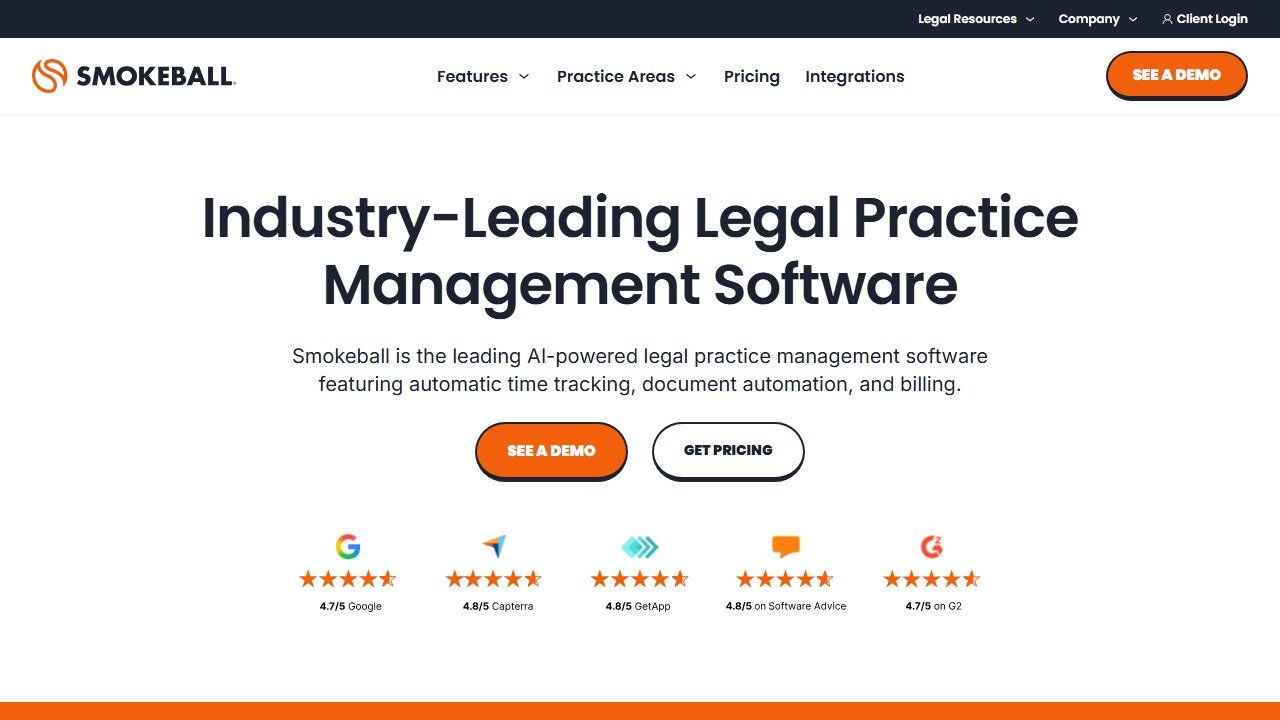
Smokeball wins on a different axis: automatic time capture and document automation depth that neither Clio nor MyCase matches, plus Archie, its AI matter assistant.
What it does. Practice management with a desktop-integrated engine that records billable activity automatically as you work in Word and Outlook, a library of thousands of automated legal forms, and Smokeball AI powering Archie (an AI assistant that answers questions from matter data) plus AI features in its Intake and Communicate products on higher tiers.
In practice. The automatic time capture is genuinely the best in the category and alone can justify the switch for billing-leaky firms. Archie is useful for matter lookups and drafting from matter context, though it is sold as an add-on rather than baked into every plan.
Pricing. This is the catch. Smokeball’s plans are Bill, Boost, Grow, and Prosper+, and the official page shows “From $149/mo” at its default firm-size selector, with pricing that varies by firm size and contract length through a configurator. Third parties report Bill at $49 and Boost at $89 per user per month with Grow and Prosper+ quote-based, but those figures are not on the official page, so treat them as reported. Contracts run 12 or 36 months only. There is no month-to-month option.
Who it is for. Firms that bill hourly, hate timekeeping, and live in Word and Outlook. The document automation library is especially strong for family law, conveyancing, and estates work.
One honest limitation. If you are leaving Clio because of gated pricing and contract lock-in, notice that Smokeball has a configurator and mandatory 12 to 36 month terms. You would be trading Clio’s opacity for a milder version of the same thing.
3. PracticePanther: the transparent budget pick
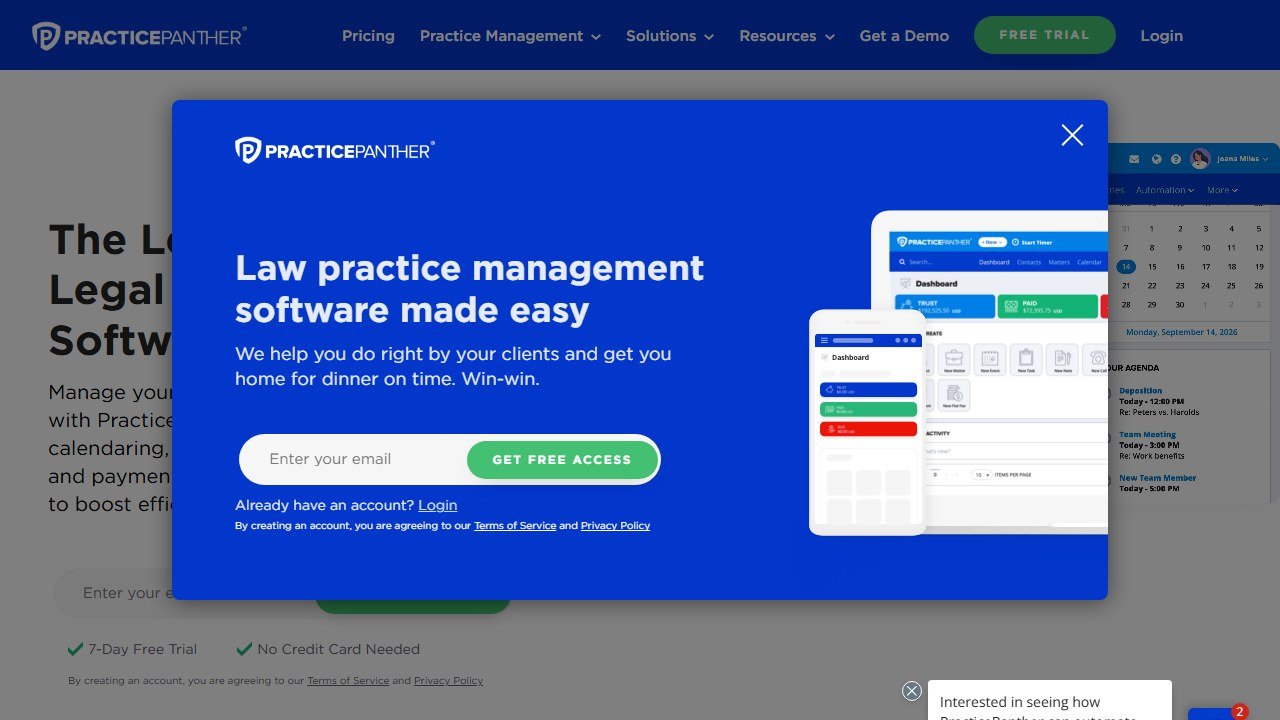
PracticePanther is the anti-Clio in one specific sense: every price, every tier, right on the page, and no AI story to upsell you on.
What it does. Straightforward practice management: matters, billing, trust accounting, payments, client portal, workflow automations, and a solid integrations list. Its pricing page names no AI features at all, which we are treating as honesty rather than a gap you discover after signing.
In practice. Setup is fast, the interface is one of the easiest in the category, and the workflow automation (tag-triggered task chains) covers a surprising amount of what small firms actually automate. You will not find an AI drafting assistant, and the product does not pretend otherwise.
Pricing (verified July 15, 2026). Solo $49 per user per month annual ($59 monthly), Essential $69 ($79), Business $89 ($99), Business Pro $114 ($124). Four tiers, all published.
Who it is for. Solos and small firms who want Clio’s job done at the lowest published entry price, and who either do not need AI yet or plan to bring their own (a ChatGPT Teams seat or a dedicated legal AI tool alongside).
One honest limitation. No named AI features means exactly that. If AI drafting or document summarization is on your requirements list, PracticePanther needs a companion tool, and that companion cost belongs in your comparison math.
4. CARET Legal: the accounting-strength mid-market option
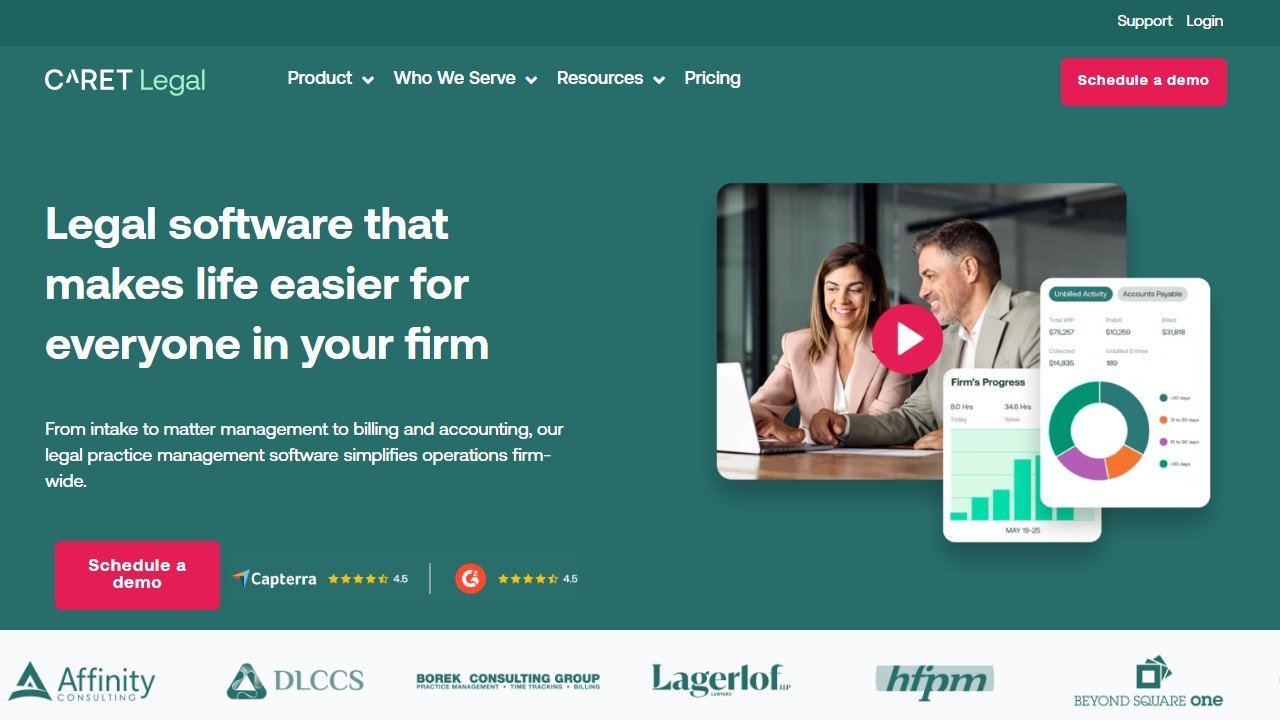
CARET Legal (formerly Zola Suite) is the pick for firms whose Clio complaint is really an accounting complaint. It bundles genuinely strong legal accounting into the platform instead of pushing you to QuickBooks.
What it does. Practice management with built-in complete legal accounting, email management, and document workflows, plus AI-Generated Document Summaries on its upper tiers.
In practice. The accounting depth is the differentiator: three-way trust reconciliation and firm financials without a bolt-on. The AI story is thinner than MyCase’s, one summarization feature rather than a suite, but it works as advertised on uploaded documents.
Pricing (verified July 15, 2026). Enterprise $79 per user per month annual, Enterprise Plus $99 (its most popular tier), Enterprise Insights $119. Monthly pricing is not published. AI-Generated Document Summaries require Plus or Insights.
Who it is for. Mid-sized firms (roughly 5 to 75 seats) where the bookkeeper’s pain outranks the associates’ AI wishlist, and firms consolidating PM plus accounting into one bill.
One honest limitation. One AI feature is not an AI strategy. If you are leaving Clio specifically to get deeper AI, CARET Legal is the weakest choice on this list for that goal.
5. Filevine: the AI-heavy plaintiff platform
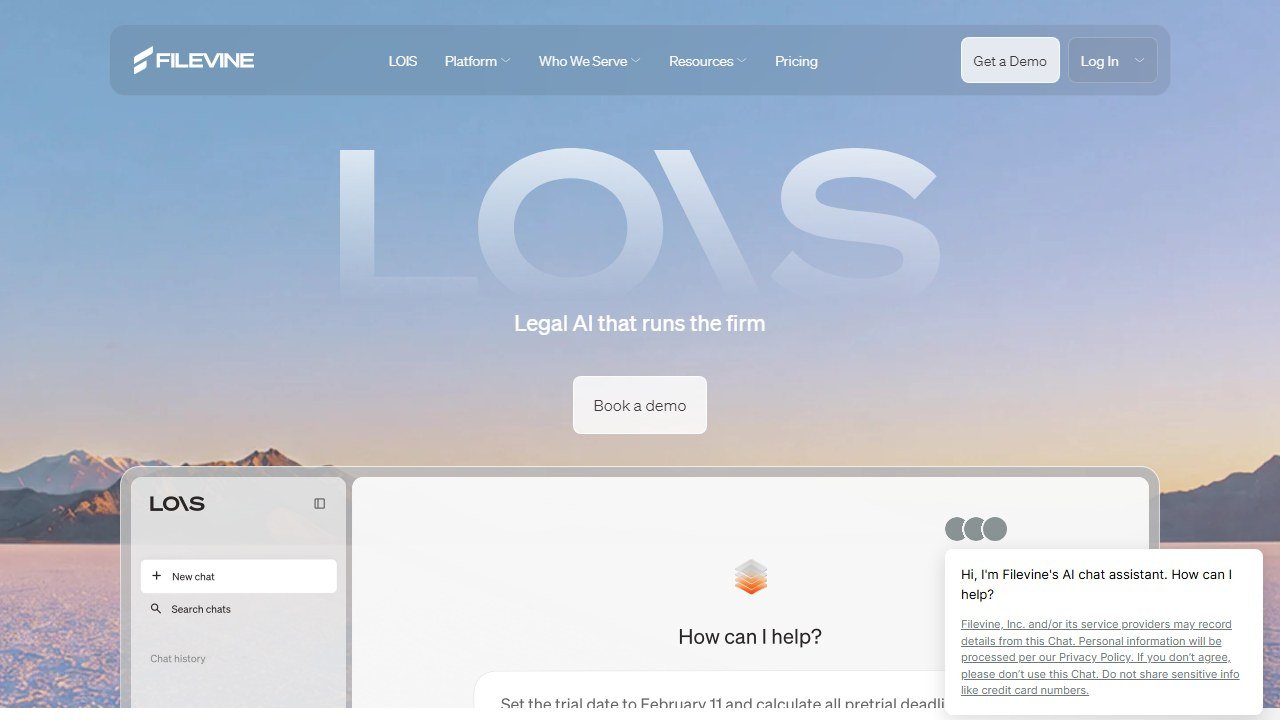
Filevine is the most ambitious AI play in this group and the obvious destination for plaintiff-side and personal injury firms outgrowing Clio.
What it does. Case management built around configurable project workflows, with LOIS (Legal Operating Intelligence System) as its named AI suite: LOIS for Word, Ask LOIS, AI Drafting, Depo Copilot, Depo Summaries, Leads AI, and MedChron for medical chronologies.
In practice. The breadth is unmatched here: deposition summarization, demand-adjacent drafting, and medical record chronology are jobs the other five tools on this page simply do not do. The platform rewards firms willing to invest in configuration, and it feels heavier than MyCase or PracticePanther by design.
Pricing. Not published. Filevine is custom-quoted and demo-gated, full stop. If pricing transparency is your primary switch reason, Filevine fails that test harder than Clio does, and we are not going to launder a third-party estimate into a fake number for you.
Who it is for. Plaintiff, PI, and mass tort firms, and any litigation-heavy practice where deposition and medical-record AI would displace real paralegal hours. For that segment we ranked the whole toolchain separately in our guide to the best AI tools for personal injury law firms.
One honest limitation. Opaque pricing plus an implementation lift means Filevine is a considered purchase, not a weekend migration. Budget for onboarding time and a sales cycle, not just a subscription.
The sidebar pick: Lawmatics (pair it, do not swap to it)
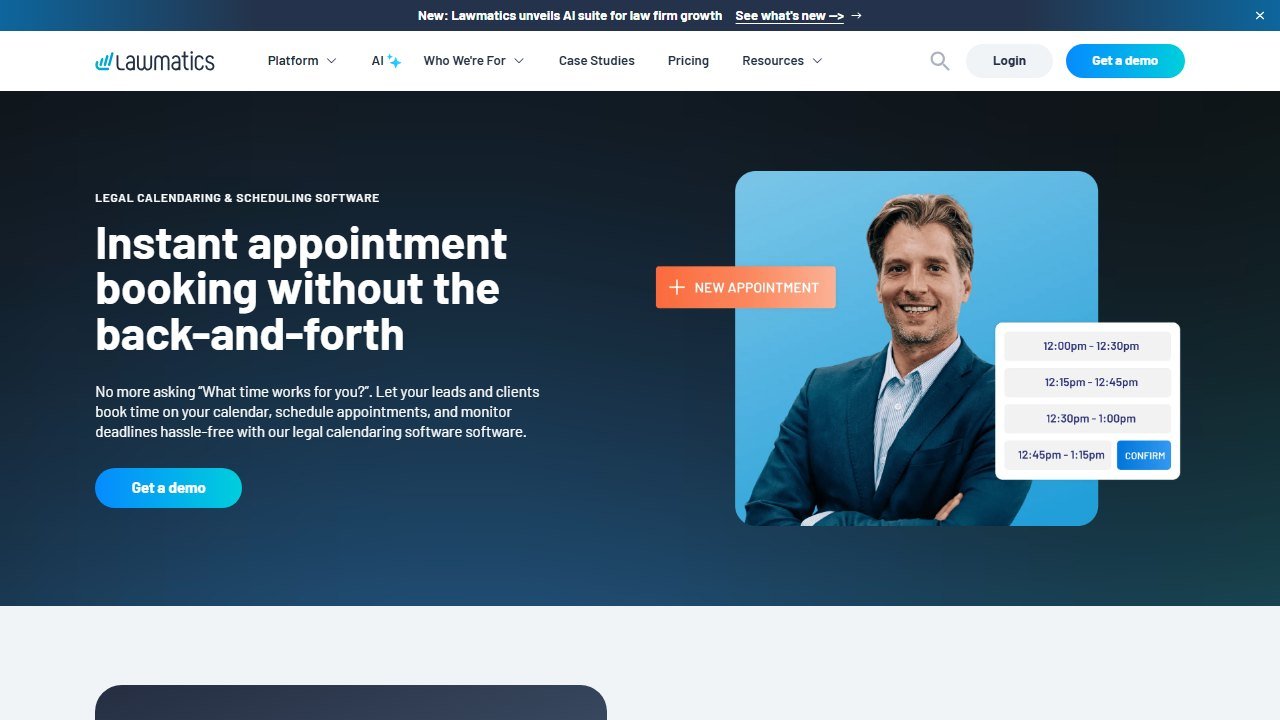
Lawmatics shows up in a lot of Clio alternatives lists, and ranking it as a like-for-like replacement would be doing you a disservice. It is a client intake, CRM, and marketing automation platform, not practice management. There is no billing engine, no trust accounting, no matter management core to run your firm on.
What it does bring: Merlin Qualify, an AI lead-scoring feature that runs on a credit-based model, and the LM[AI] email builder on Premium and up, with Merlin CoPilot and Merlin Engage announced as coming soon. Pricing for its Essential, Premium, and Enterprise plans is quote-based and not published.
The right mental model: if your Clio frustration is really an intake and follow-up frustration (leads going cold, no automated nurture), Lawmatics layered on top of MyCase or PracticePanther can fix that without a platform migration at all. It integrates with the major PM suites, including Clio itself.
The seventh option: stay on Clio, but renegotiate
An alternatives page should admit when the best alternative is a better deal on the incumbent. Clio’s move to gated pricing cuts both ways: prices that live behind a Get Pricing form are prices a motivated customer can negotiate. The last publicly listed tiers (EasyStart $49, Essentials $89, Advanced $109, Complete $149 per user per month annual, now reported figures since Clio no longer publishes them) give you an anchor for that conversation, and a competing quote from MyCase or PracticePanther in hand gives you leverage. If Clio Work’s research library matters to your practice, negotiating your Manage AI and plan pricing before renewal may beat any migration on this page. The full plan-by-plan math lives in our Clio pricing guide.
Verdict
For most firms leaving Clio in 2026, MyCase is the answer: published prices, a real shipped AI suite in 8am IQ, and the smallest workflow gap to jump. PracticePanther wins if the complaint is purely cost and you want the cheapest transparent ladder. Smokeball wins for automation depth if you can live with a 12 to 36 month contract. CARET Legal wins when accounting is the real pain, and Filevine wins for plaintiff and PI firms that want the deepest AI and can stomach quote-based pricing. Lawmatics is a layer, not a landing spot.
And weigh what you leave behind honestly: post-vLex Clio is the only option fusing practice management with a billion-document research library. If that is central to how your firm works, renegotiating may beat relocating. For the full market map beyond switch intent, start with our best legal practice management software ranking.

Written by
FazFaz is the founder of AIToolsBakery. Some tools here are tested hands on. Others are assessed from vendor documentation and pricing verified on the live page, and every review says which one it is. Sponsors can buy a position in a guide. They cannot buy the score, the criticism, or silence about a better option.
How we test and how we make money →