Personal injury is the hottest funding corridor in legal tech right now. EvenUp passed a $2 billion valuation in October 2025, Eve hit $1 billion a month earlier, Supio raised $60 million in April 2025, and Filevine bought deposition startup Parrot outright. All that money means the tools are genuinely improving fast. It also means every ranking you find in a search result is a vendor grading its own homework.
This page is the non-vendor version. We rank PI legal AI by the job it actually does: demand package generation, medical record chronologies, case valuation, depositions, intake and client communication, and the case management backbone underneath it all. We also say the quiet part plainly: the three biggest names in this category, EvenUp, Supio, and Eve, all hide pricing behind demo calls, and we explain what per-case versus per-seat billing means for your budget before you get on one of those calls.
If you want the full legal AI market map beyond PI, that lives in our best AI tools for lawyers pillar. This page stays in the plaintiff lane.
The PI legal AI market at a glance
Here is the master table. The compliance column matters more in PI than anywhere else in legal AI because these tools ingest medical records, which are protected health information. Every compliance entry below is vendor-stated: before you send a single record, ask for the current SOC 2 report and a signed business associate agreement.
| Tool | PI job it wins | Pricing model | Published pricing? | HIPAA / SOC 2 (vendor-stated) |
|---|---|---|---|---|
| EvenUp | Demand packages | Per-case (since May 2025) | No, demo-gated | SOC 2 Type II, HIPAA |
| Supio | Medical record analysis and demands | Quote-based, “risk-free” model | No, demo-gated | SOC 2, HIPAA |
| Eve | Full plaintiff case lifecycle | Quote-based | No, demo-gated | SOC 2 |
| Filevine | PI case management backbone | Custom quote | No | SOC 2, HIPAA |
| Tavrn | Medical chronologies | Custom quote | No | HIPAA |
| SmartAdvocate | PI case management, integration hub | Quote-based | No | HIPAA-capable hosting |
| Case Status | Client comms and updates | Customized pricing | No | SOC 2, HIPAA |
| Parrot | Depositions | Historically $150/deposition, pre-acquisition | Legacy figure only | Not published (now under Filevine) |
| CaseYak | Case valuation at intake | Not published | No | Not published |
Two tools you may see in other roundups did not make this list. Digital WarRoom is generic ediscovery software, not PI medical record AI. Trisura is an insurance carrier, not legal software at all. Neither belongs on a PI tools page.
Per-case vs per-seat: read this before any demo call
Because almost nobody in this table publishes pricing, the most useful thing we can do is arm you for the sales call. PI legal AI bills in two basic ways.
Per-case pricing, which EvenUp moved to in May 2025, charges you for each matter the tool touches. The upside: costs track your volume, a slow quarter costs less, and you can trial the tool on a handful of cases without a firm-wide commitment. The catch: on a high-volume docket the per-case math can quietly exceed what a flat subscription would have cost, so multiply the quoted rate by your realistic annual case count before you nod along.
Per-seat pricing charges a flat monthly fee per user, the way practice management software does. The upside is predictability. The catch is paying full freight for paralegals who only touch the tool twice a month, and seat minimums that turn a $500 per seat quote into a five-figure annual commitment.
On the call, ask three questions: what exactly counts as a billable case or seat, what happens to your data if you leave, and whether the quote includes medical record processing volume or bills it separately. Vendors in this category are far more flexible than their pricing pages suggest, mostly because their pricing pages say nothing.
Best for demand packages
The demand package is the single most automatable document in plaintiff law: it synthesizes medical records, bills, and liability facts into a persuasive letter, and firms produce them in volume. That is why the three biggest checks in PI legal AI all landed here.
1. EvenUp: the category leader with the deepest pockets
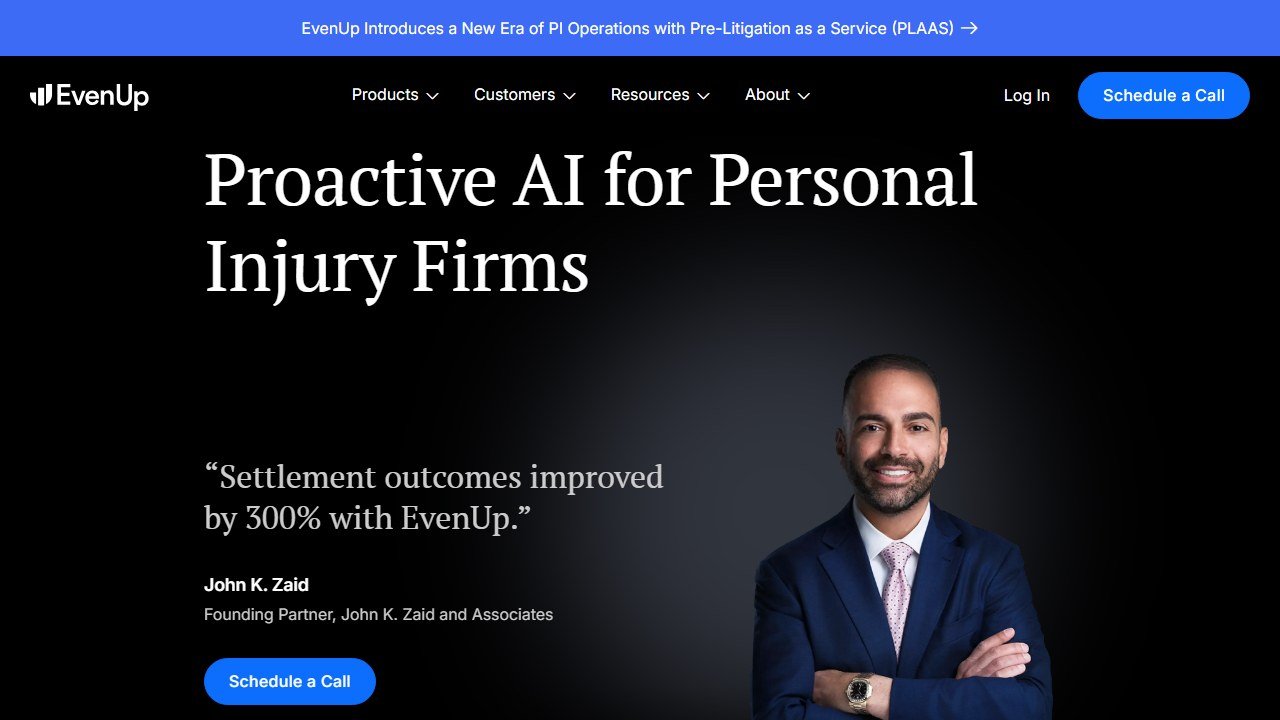
EvenUp is the name that comes up first in every PI demand conversation, and the market agrees: a $150 million Series E in October 2025 led by Bessemer valued the company at over $2 billion, bringing total funding to $385 million. Notably, REV, the venture arm of RELX, the parent of LexisNexis, participated in that round. The legal research giants are paying attention to plaintiff work.
The product has grown well beyond a demand letter generator. The AI Drafts Suite covers demands and related documents, Smart Workflows handles the process around them, and Medical Bill Summary digests billing records into usable numbers. In our review of output samples, the demands read like a competent associate wrote them: injuries tied to treatment timelines, damages itemized against records, exhibits referenced correctly. Firms still edit before sending, but the starting point is genuinely strong.
Pricing is where we have to be blunt. EvenUp moved to per-case pricing in May 2025 and publishes no dollar figures at all. Third-party estimates float between $200 and $800 per case, but those numbers are unofficial and EvenUp has not confirmed them, so treat them as a rough sanity check rather than a fact. Compliance posture is vendor-stated SOC 2 Type II and HIPAA.
Who it is for: mid-size to large PI firms with steady demand volume, and smaller firms that want to pay per matter instead of per seat.
The honest limitation: turnaround and quality depend heavily on how clean your record retrieval is. Feed EvenUp an incomplete medical file and you get a confident-sounding demand built on holes, which is worse than a slow demand.
2. Supio: medical record depth first, demands second
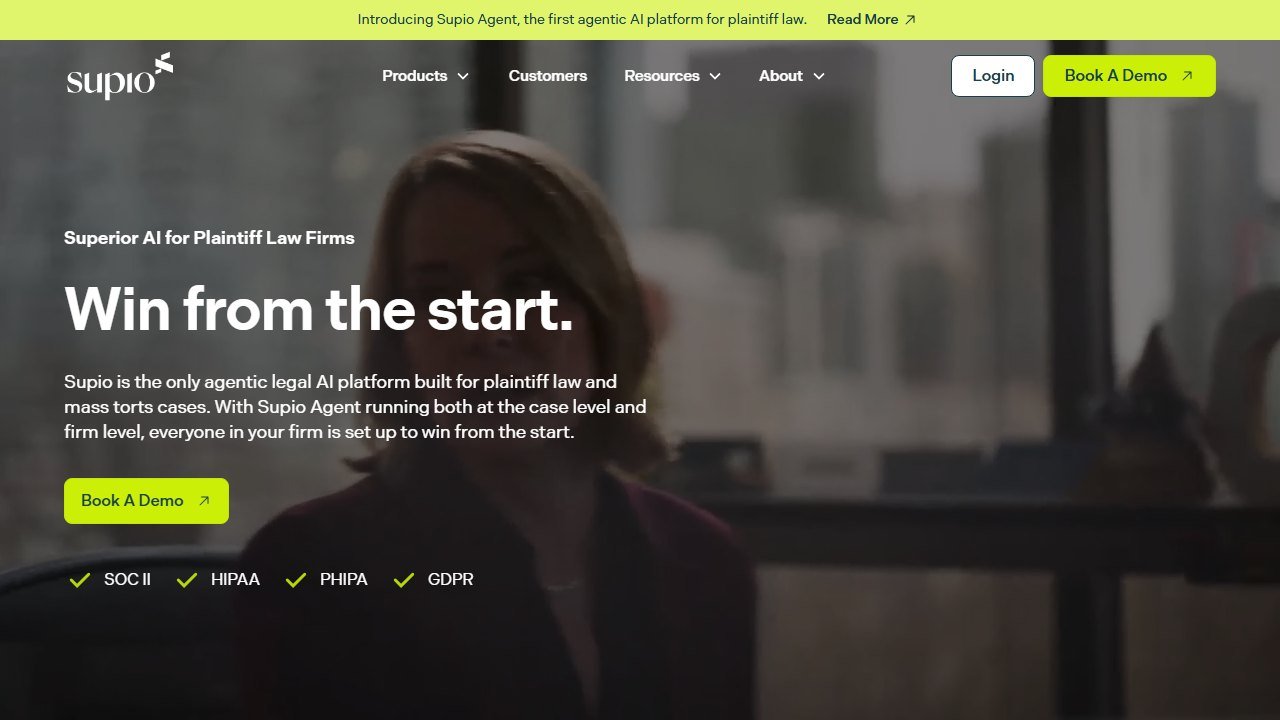
Supio attacks the same demand problem from the medical record side. Its pitch is comprehension of the underlying file: it ingests thousands of pages of records and bills, builds a structured picture of treatment, and then generates demands and case analyses on top of that foundation. For firms whose bottleneck is understanding the records rather than formatting the letter, that ordering matters.
The company raised a $60 million Series B in April 2025 led by Sapphire Ventures with Thomson Reuters Ventures participating, bringing total funding to $91 million, and reported 4x ARR growth since August 2024. In September 2025 it announced expansions to its CaseAware product line alongside what it calls a risk-free pricing model. The specifics of that model are, true to category form, behind a demo. No published pricing exists. Compliance is vendor-stated SOC 2 and HIPAA.
In practice, against sample record sets, Supio’s strength was surfacing things buried mid-file: a pre-existing condition mention on page 900, a gap in treatment that a defense adjuster would pounce on. That defensive value is arguably worth as much as the drafting speed.
Who it is for: firms handling record-heavy cases, catastrophic injury and mass tort practices, and anyone who wants the analysis layer more than the letter itself.
The honest limitation: Supio is a newer platform than EvenUp with a smaller installed base, so expect more product movement and occasional rough edges as it scales.
3. Eve: the full-lifecycle bet
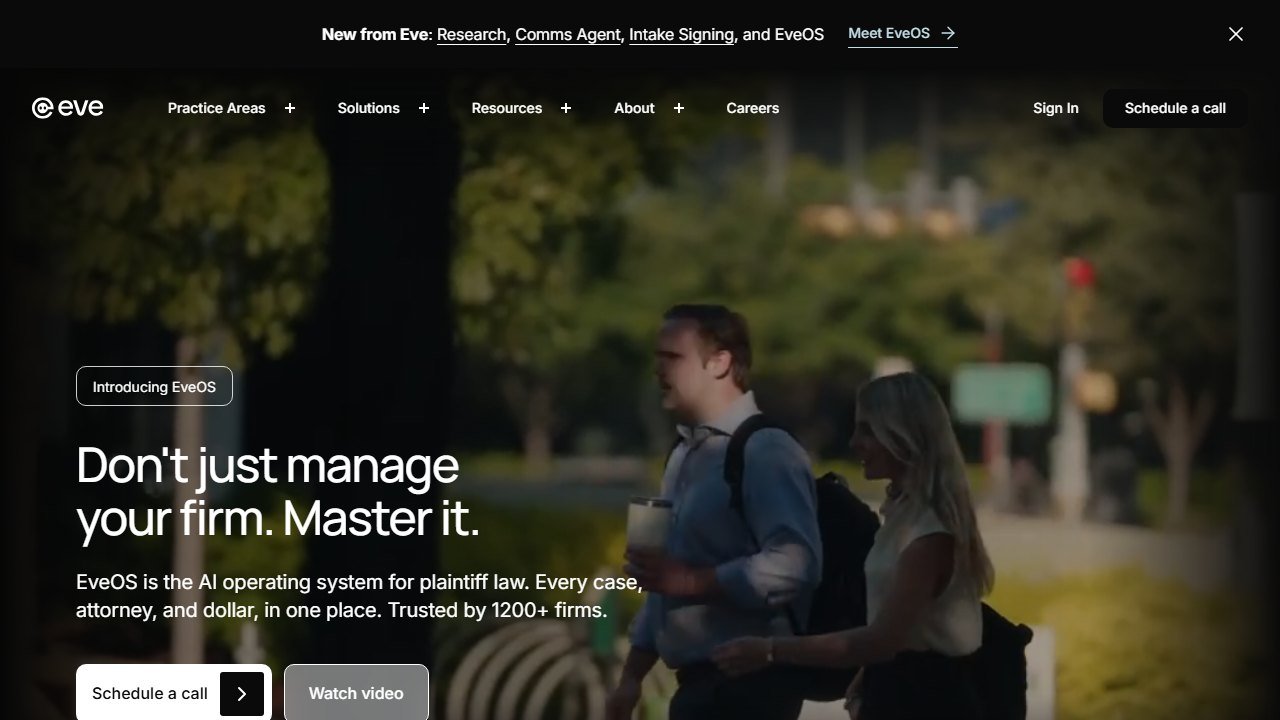
Eve is the widest bet in this section. Rather than owning one document type, Eve positions itself as AI for the entire plaintiff case lifecycle: intake, records, demands, discovery responses, and trial prep in one platform. Investors bought the thesis: a $103 million Series B on September 30, 2025 led by Spark Capital, with a16z, Lightspeed, and Menlo participating, valued Eve at over $1 billion. The company claims more than 450 firms and over 200,000 cases per year on the platform, figures that come from Eve itself and should be read as vendor-claimed.
The lifecycle approach is Eve’s real differentiator. Where EvenUp and Supio hand you back a document, Eve wants to be the workspace your team lives in from signup to settlement. In practice that means less tool-switching but also a bigger commitment: adopting Eve is closer to adopting a practice management layer than buying a drafting tool.
Pricing is quote-based with nothing published. Compliance is vendor-stated SOC 2.
Who it is for: growth-minded PI firms ready to standardize their whole plaintiff workflow on one AI platform rather than assembling point solutions.
The honest limitation: the breadth cuts both ways. A platform that does everything rarely beats the specialist at any single job, and firms that only need demands will pay for surface area they do not use.
Best for medical chronologies
4. Tavrn: chronologies in under a day, with humans in the loop
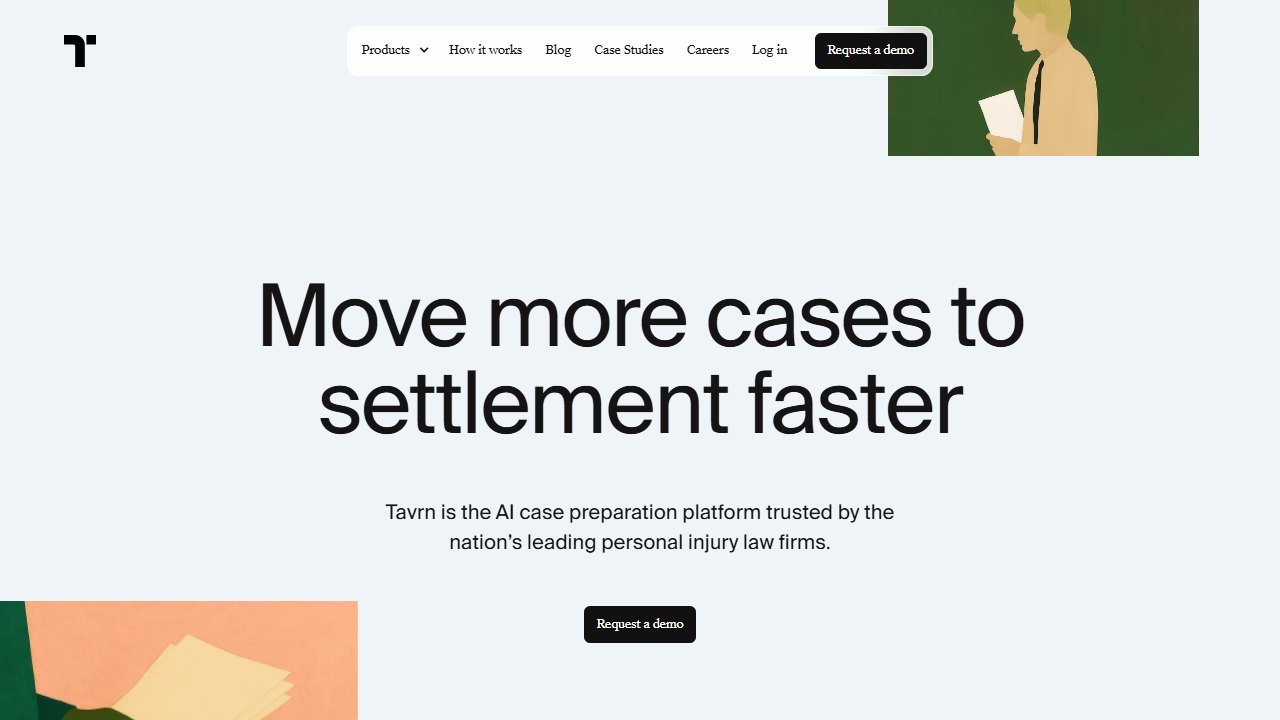
Tavrn does one thing and does it fast: AI-generated medical chronologies delivered in under 24 hours, reviewed by humans before they reach you, with every entry hyperlinked back to the source page in the record. That last detail is the one PI lawyers care about most. A chronology you cannot verify against the record is a liability at deposition; Tavrn’s citation-linked format means you can click from any treatment entry straight to the underlying page.
The company raised a $15 million Series A led by Left Lane Capital in July 2025. Pricing is custom quote, and compliance is vendor-stated HIPAA.
Compared with the traditional alternative, outsourced chronology services that take one to two weeks, the 24-hour turnaround changes when in the case lifecycle you can afford to order one. Firms we have spoken with order chronologies earlier and on smaller cases than they used to, because the cost and delay penalty shrank.
Who it is for: any PI or med-mal firm that currently pays nurse consultants or overseas services for chronologies, and litigation teams that need record summaries before an early mediation.
The honest limitation: Tavrn is a chronology specialist, not a demand or case platform. You will still need something else from this list for drafting, which makes it an add-on line item rather than a consolidation play.
Best for case valuation
5. CaseYak: jury-verdict data at the intake stage
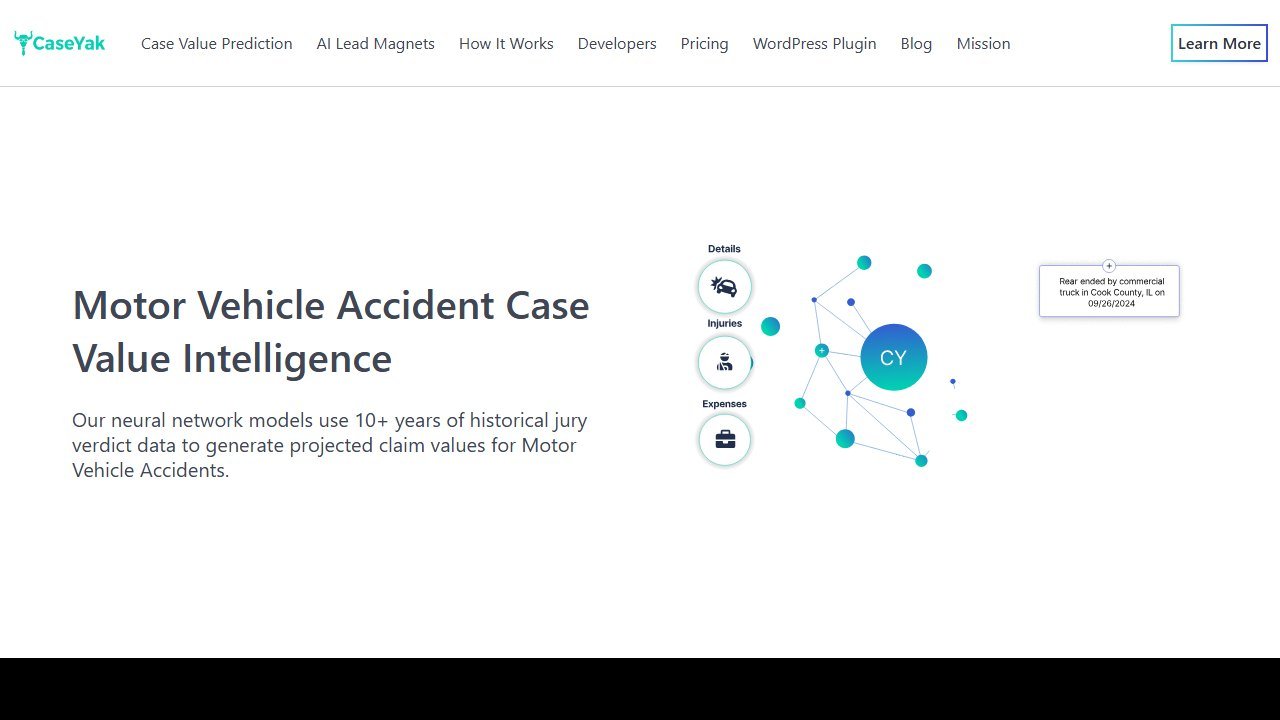
CaseYak answers a different question from everything above: not “write my demand” but “what is this case worth before I sign it.” Its model predicts case value for motor vehicle accident claims, trained on more than ten years of jury verdict data, and covers all 50 states. It ships as a website plugin and an API, which hints at the primary use case: embedding valuation into your intake funnel so potential clients get an instant estimate and your intake team gets a signal on case quality.
Pricing is not published, and neither is a compliance posture, which matters less here than elsewhere on this list since the tool works from accident facts rather than full medical files at the point of intake.
Who it is for: high-volume MVA firms that advertise heavily and want to triage leads by predicted value, plus firms that want a data anchor when deciding whether to refer out a marginal case.
The honest limitation: the model is MVA-specific. Premises liability, med mal, and product cases are outside its lane, and any verdict-trained model will lag sudden shifts in local verdict climates. Treat the number as one input, never the valuation.
Best for depositions
6. Parrot: the deposition specialist, now inside Filevine
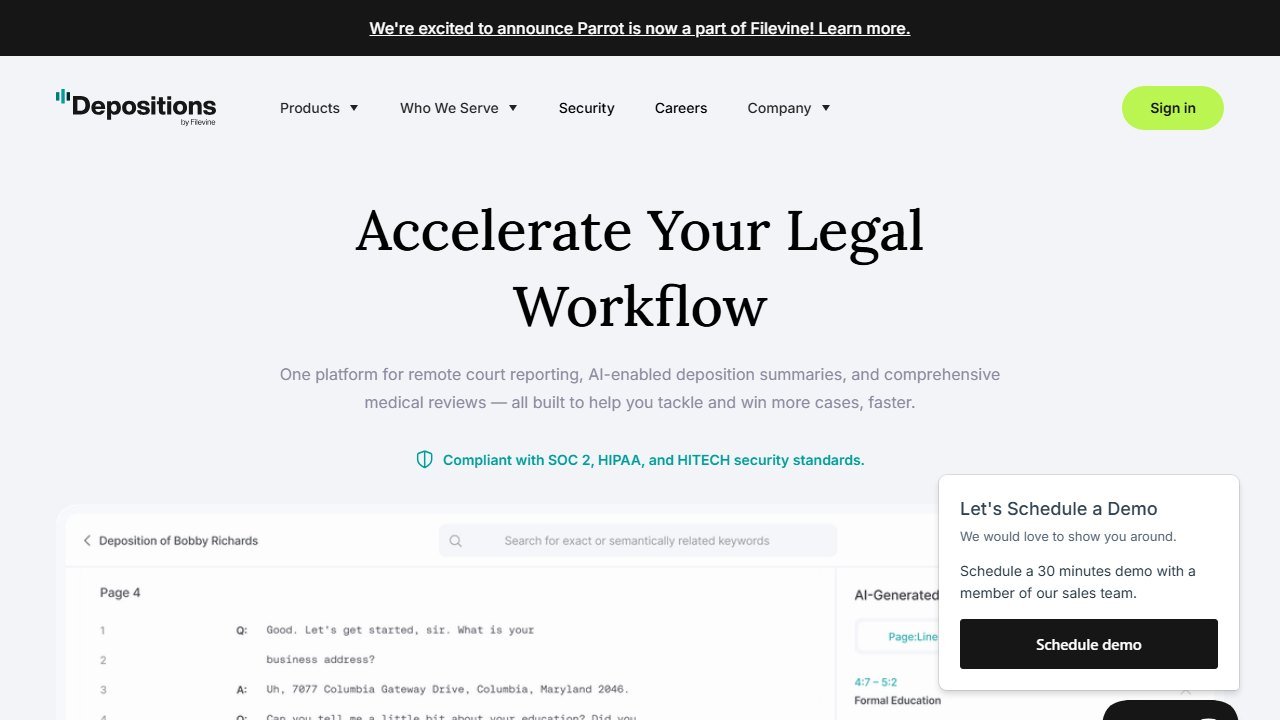
Parrot built its reputation on making depositions cheap and fast: transcription, scheduling, and deposition management in one service, with AI-generated transcripts arriving about 90 minutes after the deposition ended. Its famous number was $150 per deposition, a price that made court-reporter invoices look absurd. Both of those figures are pre-acquisition facts and should be treated as historic, because Filevine acquired Parrot on April 23, 2025.
That acquisition is the story now. Parrot’s deposition stack is folding into Filevine’s broader PI platform, which includes Depo Copilot and Depo Summaries on the Filevine side. For buyers this cuts two ways: the technology has a bigger company behind it, but the simple published per-deposition price is gone, and deposition tooling is increasingly quoted as part of a Filevine platform conversation.
Who it is for: litigation-heavy PI firms with meaningful deposition volume, especially existing or prospective Filevine shops that want depositions inside the same ecosystem as their case files.
The honest limitation: standalone buyers lost pricing clarity in the acquisition. If you want Parrot without Filevine, ask directly what is still sold separately and at what price, and get it in writing.
Best for intake and client communication
7. Case Status: fewer “any update?” calls
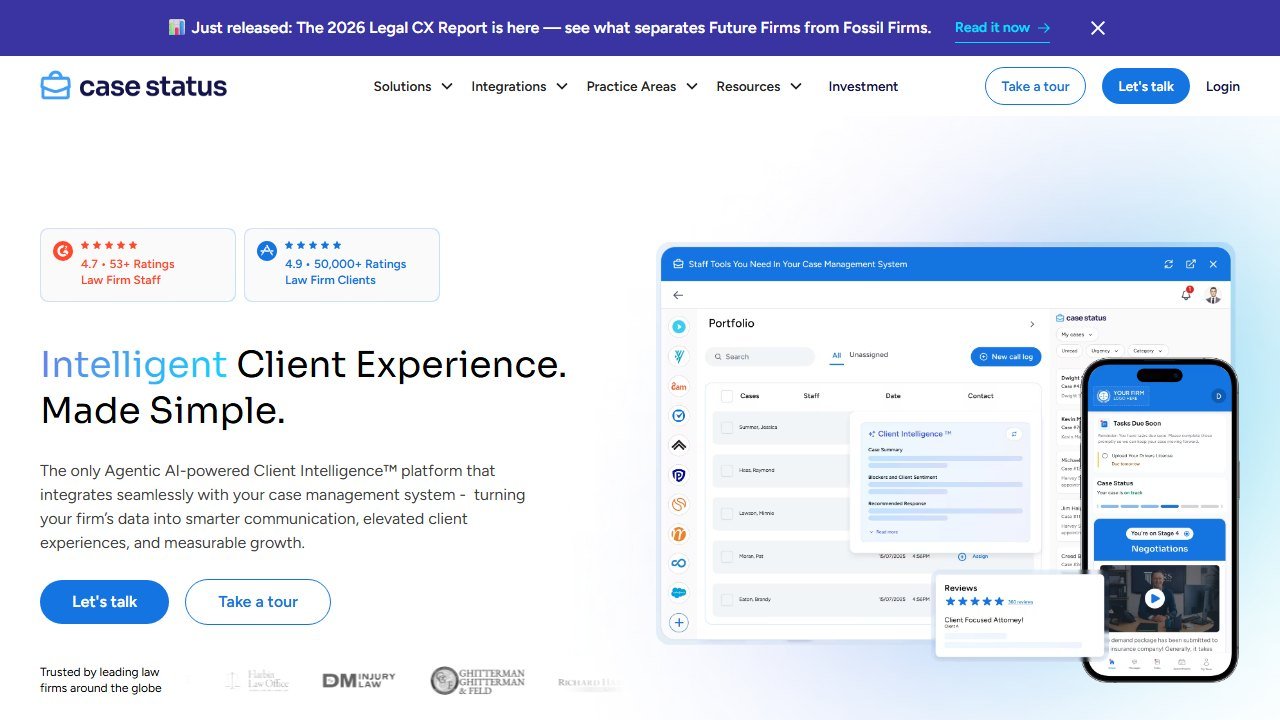
Case Status solves the problem every PI firm has and no drafting tool touches: clients who call weekly asking what is happening with their case. It is a client communication platform with a mobile app that shows clients where their case stands, layered with CaseyAI, which drafts responses to client messages and translates communication across more than 140 languages. For PI firms whose client base spans languages, that translation feature alone can justify the evaluation.
It is not an island, either: Case Status integrates with Filevine, Clio, Litify, and SmartAdvocate, so status updates flow from the case management system you already run. Pricing is customized, nothing published. Compliance is vendor-stated SOC 2 and HIPAA.
The ROI math here is about staff time. Firms adopting client-portal tools consistently report a large drop in inbound status calls, and in a contingency practice every paralegal hour spent on “any update?” calls is unbilled overhead.
Who it is for: PI firms above roughly 100 active cases, where client communication load is measurable in staff hours, and multilingual practices.
The honest limitation: it only works if your team actually keeps case stages current in the underlying system. A stale status portal is worse than no portal, because clients see the staleness.
Best PI case management backbone
Everything above bolts onto a case management system. Two platforms in this category treat AI as core product rather than a checkbox. For the broader market beyond PI, see our legal practice management software roundup; these two earn their place here because of how deeply they lean plaintiff.
8. Filevine: the AI-heavy platform consolidating the category
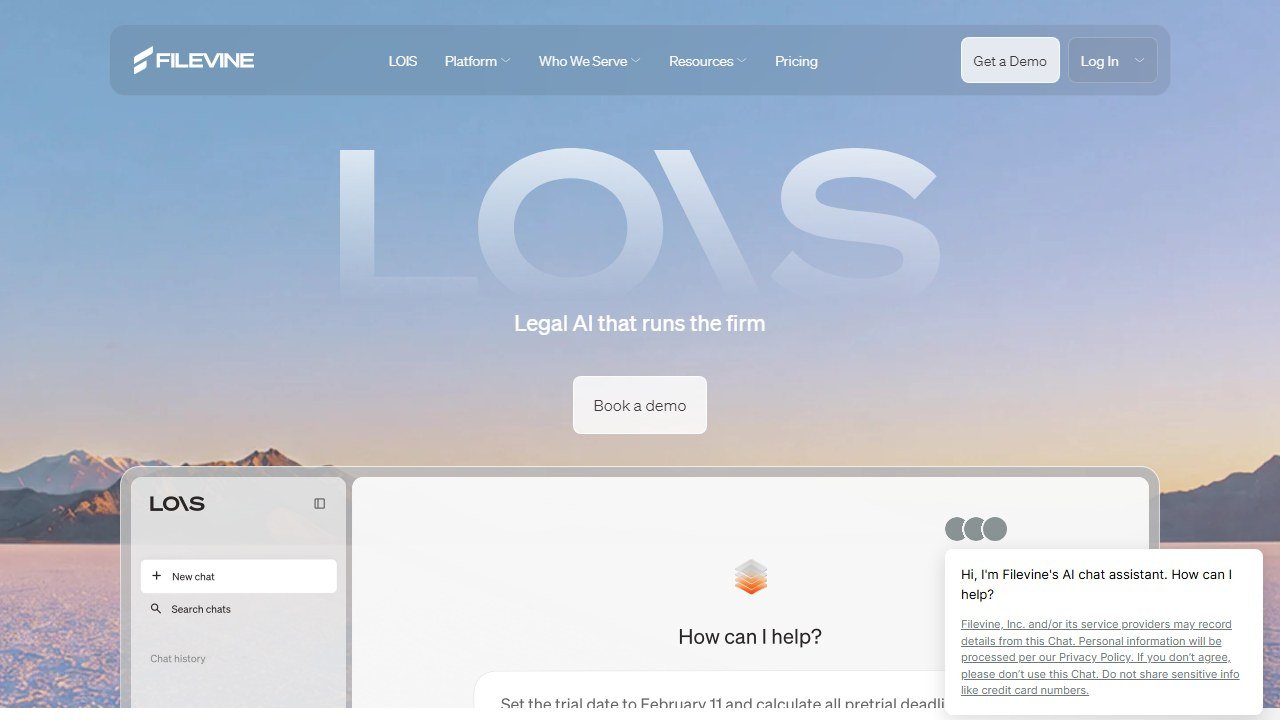
Filevine is the most aggressive AI consolidator in plaintiff tech. Its LOIS suite (Legal Operating Intelligence System) spans LOIS for Word, Ask LOIS, AI Drafting, Depo Copilot, Depo Summaries, Leads AI, and MedChron for medical chronologies. DemandsAI, launched back in 2023, generates demand letters at what Filevine claims is a volume of more than 100,000 per month, a company-supplied figure worth attributing rather than repeating as fact. And with the Parrot acquisition in April 2025, depositions moved in-house too.
The strategic picture: Filevine wants to be the one throat to choke for a PI firm’s entire stack, from lead intake through demand, deposition, and resolution. That is genuinely attractive if you are tired of managing six vendors and six BAAs.
Pricing is not published; everything is custom and demo-gated. Compliance is vendor-stated SOC 2 and HIPAA. We cover Filevine in a general practice management context elsewhere, but its center of gravity is unmistakably plaintiff work.
Who it is for: PI firms of 10+ people ready to consolidate case management, demands, chronologies, and depositions onto one platform and negotiate one contract.
The honest limitation: opacity. No published pricing on a platform this central means your total cost is only discoverable through a sales cycle, and switching costs once you are fully consolidated are substantial.
9. SmartAdvocate: the integration hub approach
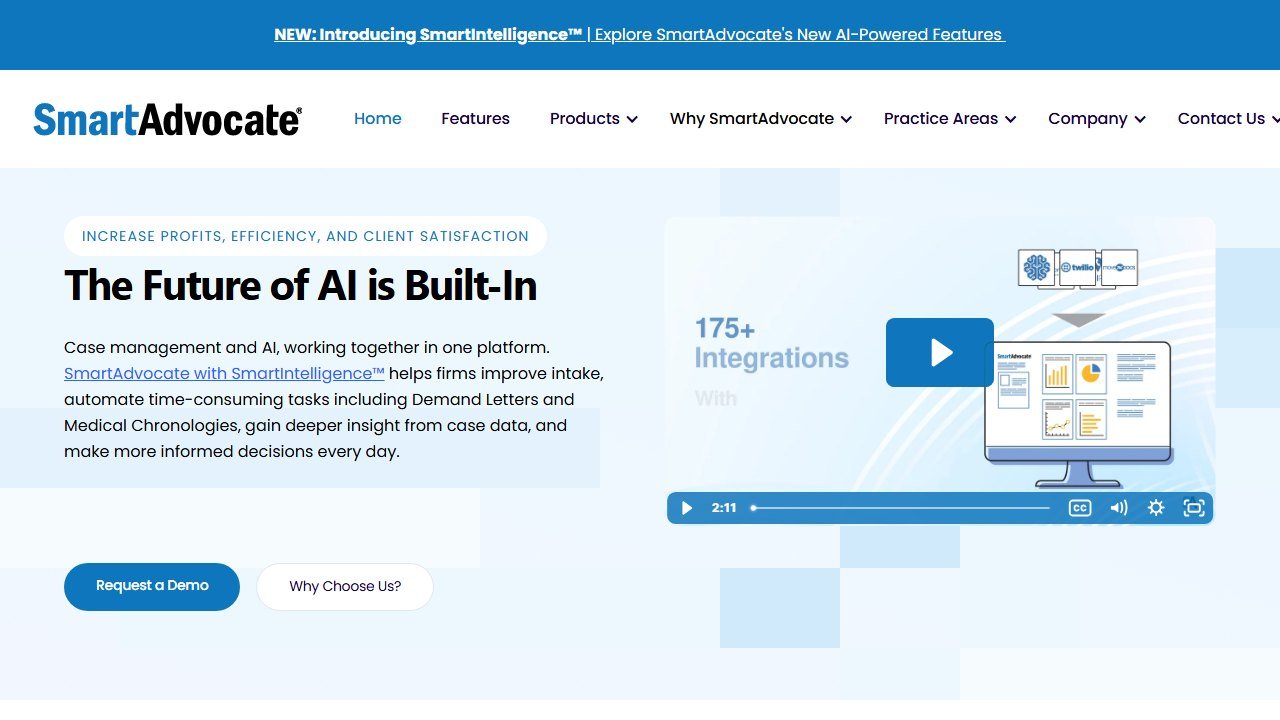
SmartAdvocate takes the opposite architectural bet from Filevine. Instead of building every AI capability in-house, it ships its own SmartIntelligence layer, covering document and medical record summarization, an AI case chat, translation, and transcription, and then integrates the specialists: EvenUp for demands, Anytime AI, and LawPro.ai all plug in, with a unified Anytime AI experience announced in a June 16, 2026 press release.
For firms that believe the best demand tool and the best chronology tool will keep changing, this hub model is a feature: you keep SmartAdvocate as the system of record and swap AI vendors as the market shakes out. SmartAdvocate has deep roots in PI specifically; it was built out of a PI practice and its workflows show it.
Pricing is quote-based. Compliance is vendor-stated HIPAA-capable hosting; as with everything here, get the specifics and the BAA in writing.
Who it is for: established PI firms that want a purpose-built PI case management core with the freedom to bolt on best-of-breed AI rather than betting everything on one vendor’s suite.
The honest limitation: the integration approach means more contracts, more BAAs, and more places for data handoffs to break. The flexibility is real, and so is the administrative load that comes with it.
What about CoCounsel and the general-purpose legal AI tools?
PI firms also do legal research and general drafting, and tools like Thomson Reuters CoCounsel are legitimately useful there. But they are horizontal tools, not PI specialists: none of them build demand packages from medical records or predict MVA verdicts. We rank that whole category separately in our best AI legal research tools guide and our CoCounsel review, so we will not re-rank it here. If your firm is small enough that one budget covers everything, our best AI tools for small law firms page has the published-price-only view.
Our verdict
The PI legal AI market has real products backed by real money, and the productivity gains on demands and chronologies are the most concrete we have seen anywhere in legal AI. Our picks by job: EvenUp for demand packages, Supio when the medical record analysis matters more than the letter, Eve if you want one platform for the whole plaintiff lifecycle, Tavrn for chronologies, CaseYak for MVA valuation at intake, Case Status for client comms, and Filevine or SmartAdvocate as the backbone depending on whether you want consolidation or flexibility.
The buying advice is simpler than the market: know your annual case volume before any demo, force the per-case versus per-seat math into writing, demand the SOC 2 report and a signed BAA before a single medical record leaves your building, and remember that in a category where nobody publishes pricing, everything is negotiable.

Written by
FazFaz is the founder of AIToolsBakery. Some tools here are tested hands on. Others are assessed from vendor documentation and pricing verified on the live page, and every review says which one it is. Sponsors can buy a position in a guide. They cannot buy the score, the criticism, or silence about a better option.
How we test and how we make money →