
You shipped an LLM feature, it worked in the demo, and now production is doing something you cannot explain. A user got a wrong answer, the agent looped through six tool calls before giving up, and your application logs show a single line that says “completion returned.” You need to see the actual prompt, the model output, the token cost, and where the chain went sideways. That is the job both Langfuse and LangSmith are built for, and choosing between them is one of the more consequential infrastructure decisions an AI team makes early.
Search for “Langfuse vs LangSmith” and most of what you find is written by one of the two vendors, or by a third tool that wants to sell you a comparison where it conveniently comes out on top. We are AIToolsBakery, and we are independent. We sell neither product, take no placement money from either, and have no LangChain or self-hosting axe to grind. What follows is the honest version of the tradeoff, written for the engineer who has to live with the decision.
The short version is that these are not two flavors of the same thing. One is an open-source platform you can run anywhere; the other is a proprietary SaaS that is exceptional if your stack is already built on a specific framework. The right answer depends almost entirely on facts about your team, not on which feature list is longer.
The 30-second answer: Pick LangSmith if you are all-in on LangChain or LangGraph and want the deepest native integration with managed infrastructure. Pick Langfuse if you want open-source (MIT), first-class self-hosting, and framework-agnostic tracing that works across multiple SDKs. For most teams in 2026, Langfuse is the safer default.
License and ownership: the difference that drives everything else
This is the first thing to understand because it cascades into pricing, deployment, lock-in, and how nervous your security team gets.
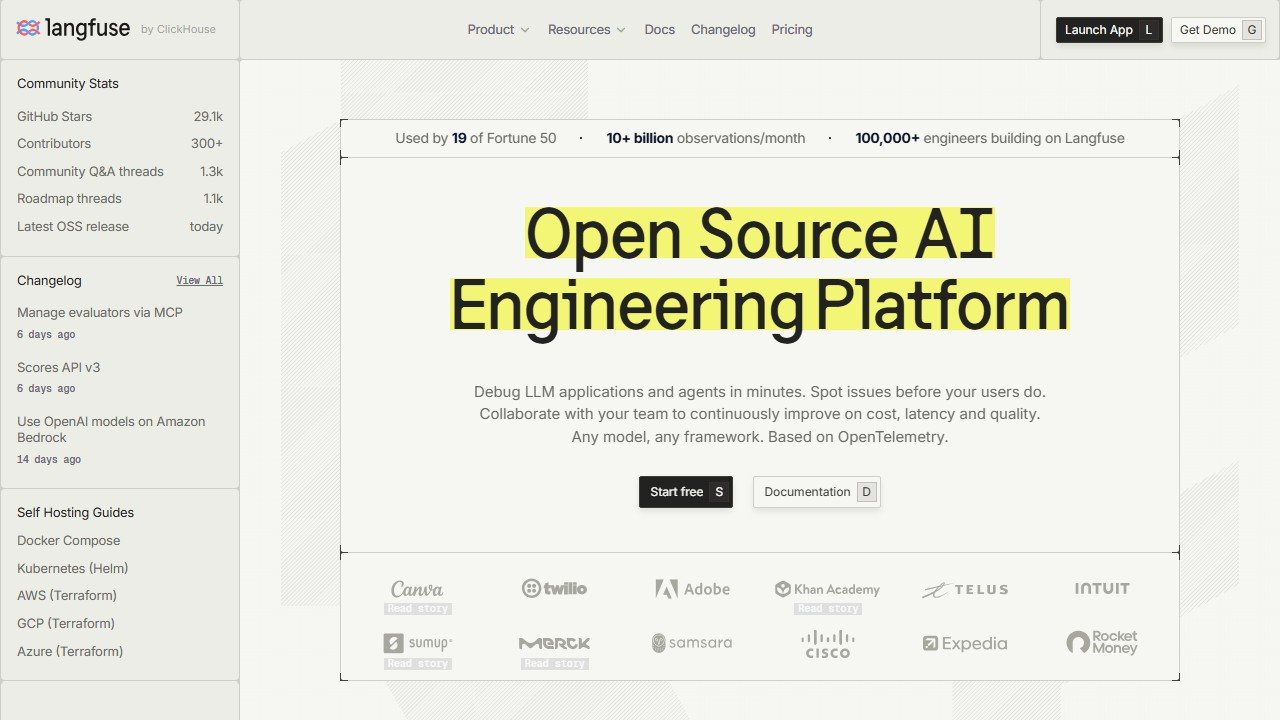
Langfuse is open source under the MIT license. The full product, which is tracing, evaluations, prompt management, datasets, the playground, and annotation, is MIT licensed with no usage caps baked into the open-source build. You can read the code on GitHub, fork it, and self-host it without asking anyone for permission. There is a commercial cloud offering and some enterprise-only features layered on top, but the core engine is genuinely open.
LangSmith is proprietary, closed-source SaaS built by LangChain. You use it as a managed service. Self-hosting exists, but it is an add-on to the Enterprise plan, aimed at large, security-conscious organizations, and it is not something a two-person team spins up on a weekend. The default and intended experience is the hosted cloud product.
If your organization has a hard data-residency requirement, runs in a regulated industry, or simply does not want trace data containing user prompts leaving its own infrastructure, this distinction is close to decisive on its own. Langfuse self-hosting is a documented, supported, common path. LangSmith self-hosting is a contract conversation.
Framework fit: native vs agnostic
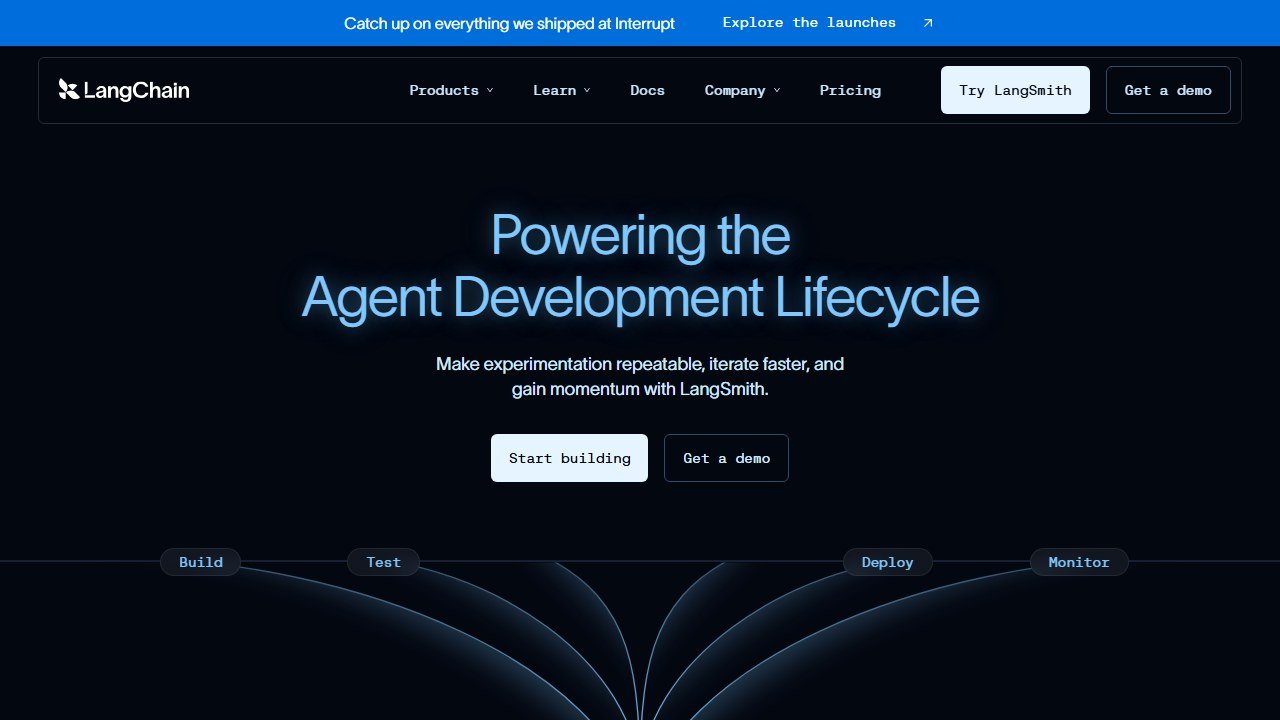
LangSmith was built by the team behind LangChain and LangGraph, and it shows. If your application is built on LangChain or LangGraph, instrumentation is close to automatic. Traces capture chain steps, agent decisions, and tool calls with almost no extra code. LangGraph Studio, a visual agent IDE, lets you render an agent’s execution graph, inspect state at every node, replay runs, and push prompt changes back into the agent. LangSmith Deployment (the offering previously known as LangGraph Platform) extends this into managed agent hosting with checkpointing and memory. This is a tightly integrated, end-to-end loop, and nothing else matches it for LangChain-native teams.
Langfuse takes the opposite stance: framework-agnostic by design. It instruments LangChain too, but it also integrates natively with the OpenAI SDK, the Vercel AI SDK, Pydantic AI, LiteLLM, and OpenTelemetry instrumentation directly. If your stack is a mix, or if you deliberately avoid LangChain to keep your dependency tree thin, Langfuse is often the only one of the two that fits cleanly. It treats observability data as yours, accessed through an API-first design rather than a single framework’s hub.
The practical test: if you wrote `from langchain` at the top of your files, LangSmith’s native depth is a real, tangible advantage. If you did not, that advantage mostly evaporates, and Langfuse’s breadth becomes the point.
There is a strategic dimension here too. Choosing LangSmith tends to deepen your commitment to the LangChain ecosystem, because the more you lean on LangGraph Studio and managed deployment, the more your operational workflow assumes those tools exist. That is fine if you have decided LangChain is your long-term foundation. It is a liability if you might swap frameworks later, because your observability and your application logic become entangled. Langfuse keeps that boundary clean: the tracing layer does not care what produced the spans, so you can change frameworks without re-platforming your observability.
Tracing and agent visibility
Both platforms do the core job well. You get nested traces, spans for each LLM call and tool invocation, captured inputs and outputs, latency and token counts per step, and the ability to drill from a top-level request down into the exact model call that misbehaved. For modern agentic apps that fire many calls per task, this trace-level view is the whole reason these tools exist. If you are evaluating this category broadly, our best AI agent observability tools roundup covers how the wider field handles multi-step traces.
The differences are at the edges. LangSmith leans on its LangGraph integration to give you state-level agent debugging that is genuinely hard to replicate elsewhere, plus newer additions like natural-language trace debugging and automatic topic clustering of production traffic. It added full OpenTelemetry support during 2026, which closes a gap that used to be a clear Langfuse advantage.
Langfuse built on OpenTelemetry earlier and treats it as a primary architecture, which matters if you already run an OTEL-based observability stack and want LLM traces to live alongside the rest of your telemetry rather than in a walled garden. Its backend is built on ClickHouse, which is part of why self-hosted Langfuse holds up under high trace volume. That backend choice is not a marketing detail. Trace data from agentic apps grows fast, and a columnar store like ClickHouse is what lets a self-hosted instance stay queryable when you are ingesting millions of spans a month rather than thousands.
One thing worth setting expectations on for both tools: tracing tells you what happened, not why it was wrong. Seeing that an agent made six tool calls is useful, but neither platform decides for you whether those six calls were reasonable. You still need to read the traces, form a hypothesis, and confirm it. The platforms make that loop faster; they do not remove the human judgment from it.
Prompt management
Both platforms version your prompts, let you edit them outside of code, and roll changes without a redeploy. Langfuse’s prompt management is part of the MIT-licensed open-source product, with server and client-side caching so fetching a versioned prompt at runtime does not add latency to your application. LangSmith offers prompt management through its hub, tied tightly into the LangChain ecosystem and its playground, with the April 2026 ability to push playground prompt changes directly back into a running agent.
For teams treating prompts as first-class, versioned artifacts, both are credible. The deciding factor is again ownership: with Langfuse you can run the whole prompt-management layer inside your own infrastructure. If you are weighing prompt tooling on its own, our guide to AI prompt management tools compares the dedicated options.
Evaluation and datasets
This is where the line between “observability” and “the full LLM engineering loop” gets blurry, and both vendors have pushed hard into it.
Langfuse supports LLM-as-a-judge evaluators, code-based evaluators, user feedback capture, manual labeling, and custom evaluation pipelines, plus dataset management so you can run experiments against curated test sets. LangSmith offers a comparable evaluation suite with strong dataset and experiment tooling and a polished annotation workflow.
Neither replaces a rigorous offline evaluation harness if that is what you need, and we would point you to our best LLM evaluation tools coverage before treating either platform’s eval feature as your only line of defense. For human-in-the-loop scoring specifically, see our notes on annotation tools for AI model evaluation. The honest read is that both platforms’ eval features are good enough to start with and rarely the reason to choose one over the other.
Pricing and value
Pricing moves fast in this category, so treat every number here as directional and confirm the current figures on each vendor’s pricing page before you commit budget.
Langfuse offers a free cloud tier suitable for small projects and individual developers, with paid plans that scale by usage, plus the option to self-host at the cost of your own infrastructure. At higher trace volumes, the published comparisons consistently show Langfuse Cloud landing well below LangSmith for equivalent volume, and self-hosted Langfuse coming in at a small fraction of either, because you are paying for servers rather than per-trace SaaS pricing. Self-hosting is not free, of course; you trade the bill for operational responsibility.
LangSmith has a free developer tier, then per-seat plans with included trace volume and overage charges beyond it. At meaningful production scale, it tends to be the more expensive of the two, which is the tradeoff for its managed convenience and native LangChain depth.
The pattern that holds across price points: if cost-at-scale or cost-control through self-hosting is a priority, Langfuse wins. If you would rather pay for a managed service and not think about infrastructure, LangSmith’s pricing buys you that. Confirm live numbers on the Langfuse and LangSmith sites, because both have changed plan structures more than once.
A word on how to actually compare cost, because the per-trace headline rarely tells the whole story. Watch for three things. First, trace retention: a low per-trace price with short retention can cost more than a higher price with long retention once you account for the data you actually want to keep. Second, the unit being billed, since “traces,” “units,” and “events” are not the same thing and a single agent run can generate many of each. Third, seat costs, which on per-seat plans can dwarf usage costs for a larger team. With self-hosting the math flips entirely: there is no per-trace meter, but you take on the cost of running and maintaining the infrastructure, including the database, storage, and the engineering time to keep it healthy. For a small team that already runs Kubernetes, that is often a clear win. For a team with no platform engineers to spare, the managed bill can be the cheaper option once you price in the hours.
Who each one is for
LangSmith is the right call when your application is built on LangChain or LangGraph, you want the deepest possible native integration including LangGraph Studio and managed agent deployment, you prefer a fully managed service, and per-trace pricing at your scale is acceptable. Enterprises with the budget for the self-hosted Enterprise tier and a strong LangChain commitment get the most coherent end-to-end story here.
Langfuse is the right call when you want open-source with no vendor lock-in, self-hosting needs to be a first-class and affordable path, your stack spans multiple frameworks or deliberately avoids LangChain, you already run an OpenTelemetry-based observability stack, or cost-at-scale is a hard constraint. It is also the safer pick when you are simply not sure yet what your stack will look like in a year.
Langfuse vs LangSmith at a glance
| Dimension | Langfuse | LangSmith |
|---|---|---|
| License | Open source, MIT | Proprietary, closed-source SaaS |
| Self-hosting | First-class, common, free of license cost | Enterprise add-on only |
| Framework fit | Agnostic (OpenAI SDK, Vercel AI SDK, Pydantic AI, LangChain, OTEL) | Deep native LangChain and LangGraph |
| Agent debugging | Strong traces, OTEL-native, ClickHouse backend | LangGraph Studio state-level debugging |
| Prompt management | Open-source, cached, self-hostable | Hub-based, LangChain-tied |
| Evaluation and datasets | LLM-as-judge, code, feedback, labeling | Comparable eval and experiment suite |
| Cost at scale | Lower; self-host is a fraction | Higher; managed convenience premium |
| Best for | Multi-framework, self-host, cost-conscious teams | LangChain or LangGraph all-in teams |
Confirm current pricing and plan details on each vendor’s site, because the figures behind that “cost at scale” row change often.
Our verdict
If you are committed to LangChain or LangGraph, LangSmith is hard to beat. The native integration, LangGraph Studio, and managed deployment form a loop that no general-purpose tool replicates, and for teams already living in that ecosystem the convenience is worth the higher bill. Choose it deliberately, knowing you are buying into a proprietary, framework-tied platform.
For most other teams in 2026, Langfuse is the better default. Open-source licensing, real self-hosting, framework-agnostic instrumentation, and lower cost at scale make it the lower-regret choice when you cannot perfectly predict where your stack is heading. You keep ownership of your trace data and your exit options.
When is the honest answer a third tool? When observability is only part of what you need. If your real bottleneck is rigorous evaluation, a dedicated eval platform may serve you better than either’s bundled eval features. If you live entirely inside an OpenTelemetry stack and want LLM spans to be just another signal, a general OTEL-native tool might fit more naturally than either. And if you want a managed proxy that requires near-zero code changes, that is a different category again. Start by naming the one problem that hurts most, then pick the tool built for that, rather than the one with the longest feature list.
For a closer look, see our LangSmith review.

Written by
FazFaz is the founder of AIToolsBakery. Some tools here are tested hands on. Others are assessed from vendor documentation and pricing verified on the live page, and every review says which one it is. Sponsors can buy a position in a guide. They cannot buy the score, the criticism, or silence about a better option.
How we test and how we make money →