You shipped a RAG chatbot last quarter. It demoed beautifully. Then a customer asked a slightly weird question, the model hallucinated a refund policy that does not exist, and now you are reading the transcript wondering how you would have caught that before it went live. That gap, between “looks good in the playground” and “behaves under real traffic,” is the whole reason LLM evaluation tools exist.
The problem is that almost every “best LLM evaluation tools” list you find is written by a company selling one of the tools. The roundups rank their own product first and bury the trade-offs. We are AIToolsBakery, an independent review site. We sell none of these platforms and take no affiliate cut from them. What follows is organized by the jobs you actually need done, with honest limits on each tool and a clear line between open source and commercial.
This space also moves fast. Two notable shifts happened recently: Humanloop’s standalone platform was sunset in late 2025 after Anthropic hired its founding team, and Promptfoo was acquired by OpenAI in early 2026 (the open-source CLI keeps shipping under its existing license). We flag those below so you do not build on something that quietly changed hands.
The 30-second answer: Use Langfuse or Arize Phoenix for open-source tracing and evals, Braintrust or LangSmith if you want a managed eval-driven workflow, DeepEval or Ragas for offline metrics and RAG scoring, and Promptfoo for regression and red-team testing. No single tool covers everything well.
Why “evaluation” means six different jobs
The biggest source of confusion is treating “evaluation” as one task. It is not. Buying the wrong category is the most common mistake we see. The real jobs break down like this:
- Offline eval and benchmarking: run a fixed dataset of inputs against expected outputs, score the results, before you deploy.
- LLM-as-judge: use a strong model to grade outputs on criteria like correctness, tone, or faithfulness when there is no exact answer key.
- Online and production evaluation: trace live requests, sample real traffic, and score what users actually receive.
- Prompt and regression testing: make sure a prompt change or model upgrade does not silently break what already worked.
- Human annotation and review: put people in the loop to label outputs and build trustworthy ground truth.
- Agent-trace, RAG, and guardrails evaluation: specialized jobs for multi-step agents, retrieval pipelines, and runtime safety filtering.
Most teams need three or four of these, not one. The good news is that several platforms now span multiple jobs. The bad news is that none of them is genuinely best at all of them, and the marketing implies otherwise.
Tracing and production observability
This is where most teams should start, because you cannot evaluate what you cannot see. Tracing captures every prompt, tool call, retrieval step, token count, latency figure, and cost for each request, so you can replay exactly what happened.
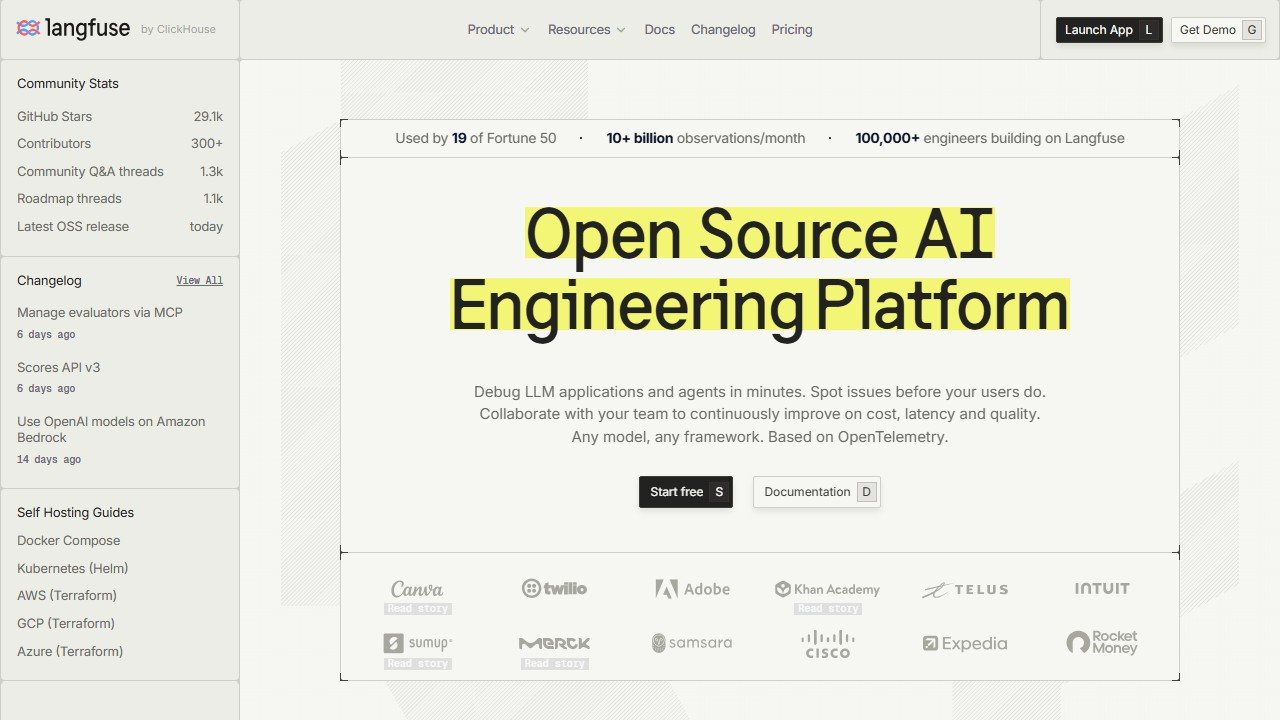
Langfuse is our default open-source pick here. It is genuinely open source (the core is MIT licensed), framework agnostic, and you can self-host it without per-seat pricing or feature gates. You get tracing, prompt management, and evaluation in one place. The trade-off: self-hosting means you own the Postgres and ClickHouse infrastructure and the upgrade treadmill that comes with it. The managed cloud tier removes that burden but reintroduces usage-based pricing.
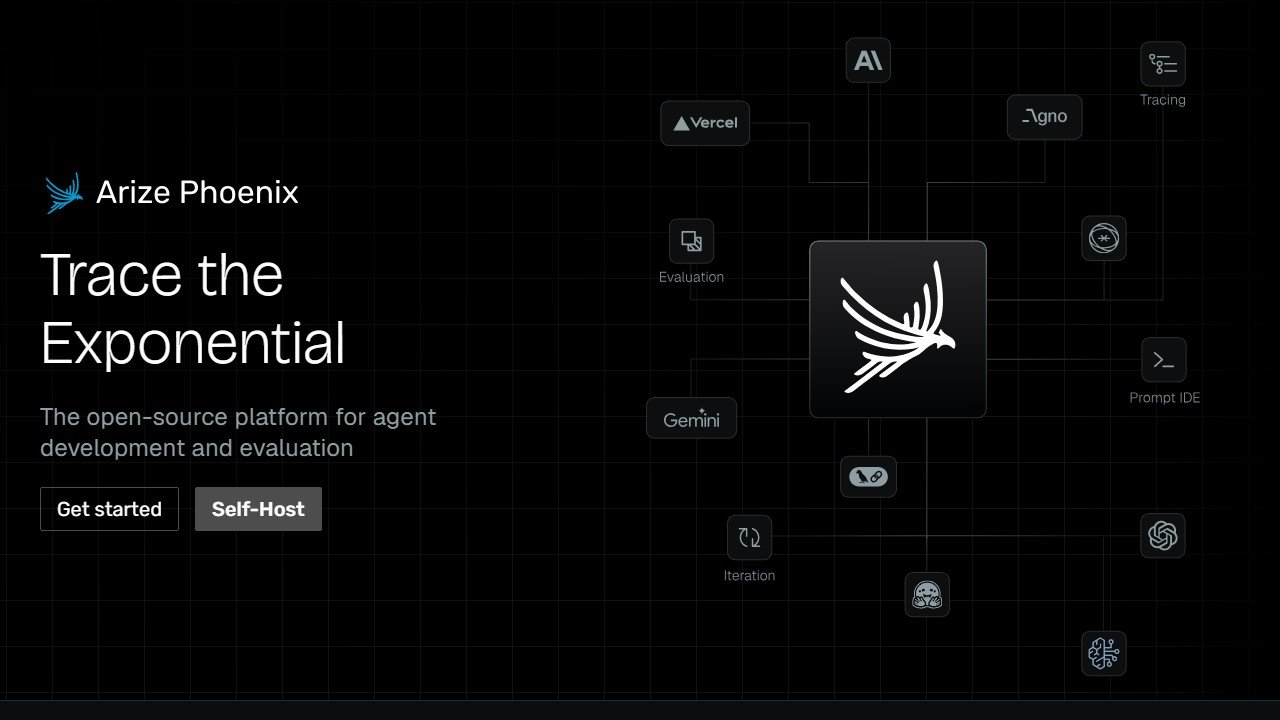
Arize Phoenix is the other strong open-source option, and it is built OpenTelemetry-native, so traces are portable rather than locked to one vendor. Phoenix ships a respected library of eval metrics and supports a wide range of agent frameworks out of the box. One honest caveat that the cheerleading lists skip: Phoenix is source-available under the Elastic License 2.0, not a pure open-source license like MIT or Apache. You can use it freely, but you cannot offer it as a competing managed service. Arize also sells a heavier commercial platform (Arize AX) on top.
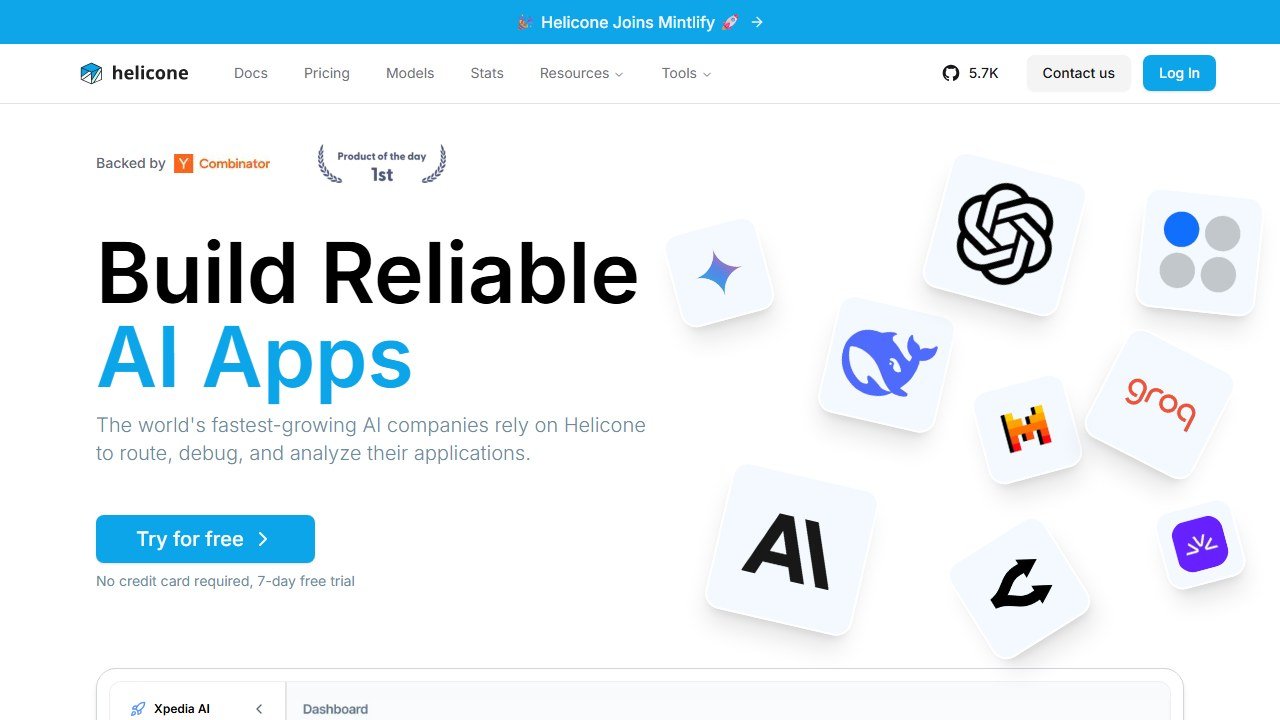
Helicone takes a different shape. It is primarily a proxy that sits in front of your LLM calls, so you get logging, caching, and cost tracking with close to zero SDK changes. That low-friction setup is the appeal. The flip side is that a proxy model gives you shallower agent-trace and component-level evaluation than the OpenTelemetry-native tools, and some compliance features sit behind higher tiers.
Offline eval, benchmarking, and LLM-as-judge
Offline evaluation is the discipline of scoring a fixed dataset before anything ships. This is where you build a test set, define metrics, and decide whether the new prompt or model is actually better.
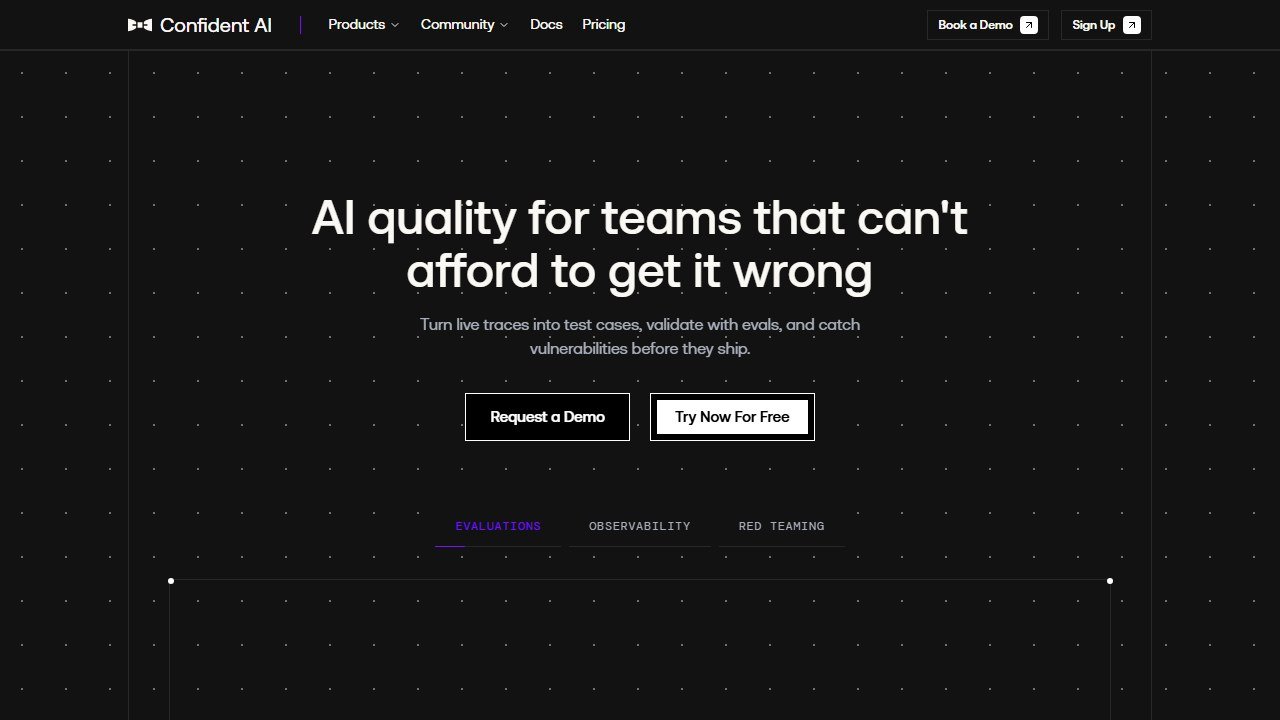
DeepEval, maintained by Confident AI, is the open-source framework we reach for most. It is Apache 2.0 licensed and ships dozens of plug-and-play metrics covering agents, RAG, chatbots, and summarization, with a Pytest-style developer experience that engineers find natural. It pairs with the commercial Confident AI platform for team dashboards and reporting, but the library itself runs fully for free. The honest limit: many of its metrics are LLM-as-judge under the hood, so your scores are only as stable as the judge model and prompt you configure.
OpenAI Evals is the open-source registry and framework for building and running model evaluations. It is a sensible, free choice if you are deep in the OpenAI ecosystem and want a standard harness. It is more of a framework than a polished product, so expect to write more glue code and bring your own dashboards.
On LLM-as-judge specifically: every tool in this section leans on it, and you should treat it with suspicion. A judge model can be biased toward longer answers, toward its own family of models, and toward confident-sounding nonsense. The practical fix is to calibrate your judge against a few hundred human-labeled examples before you trust its scores at scale. This is exactly where labeled ground truth matters, and where the work overlaps with dedicated annotation tools for AI model evaluation.
Eval-driven development and CI gates
If your goal is to make evaluation a routine part of shipping, rather than a one-off audit, you want a platform that plugs into CI and blocks regressions automatically.
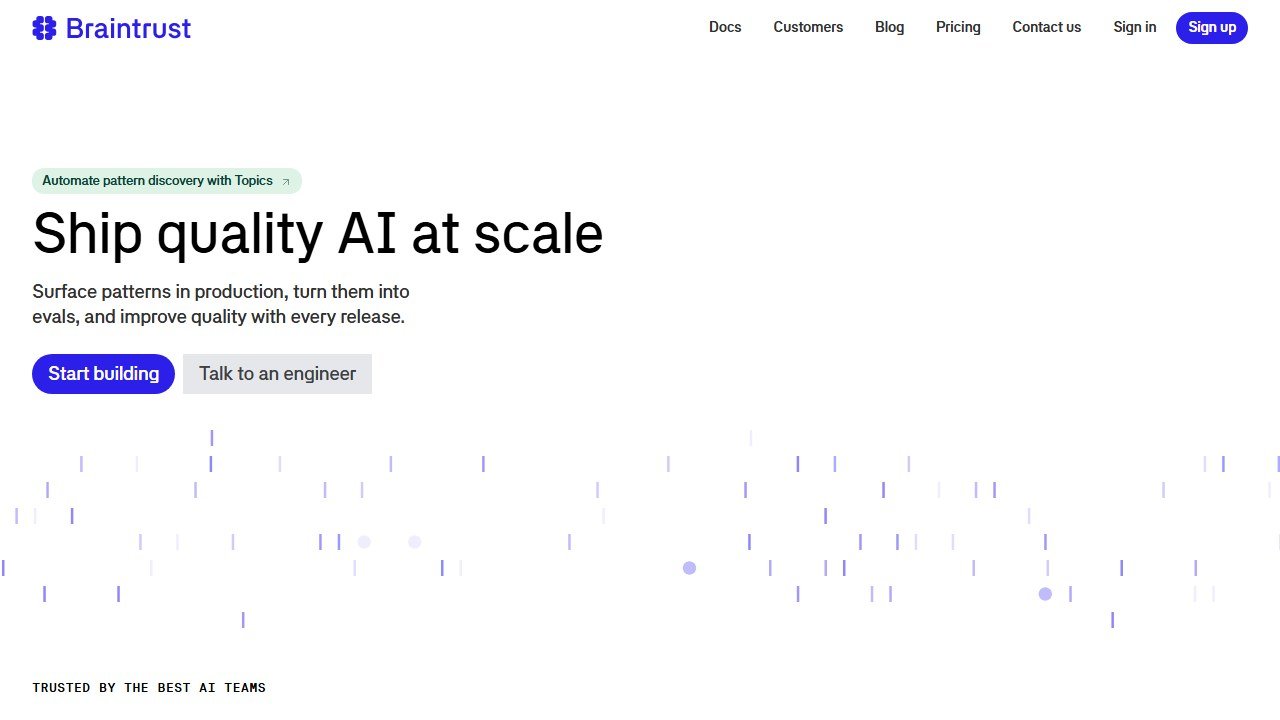
Braintrust is the commercial tool most focused on this workflow. It treats evals like tests: you define scorers, run them in CI, and the pipeline can flag or block a merge when quality drops on your dataset. The developer experience around datasets, experiments, and side-by-side comparison is strong. It is a paid product with a usage-based free tier, and as a closed platform your eval data lives in their cloud unless you negotiate otherwise.
LangSmith, built by the LangChain team, is the natural choice if your stack already runs on LangChain or LangGraph. Setup is close to a single environment variable, and it understands LangChain primitives natively, which means cleaner traces and less plumbing. The trade-off cuts both ways: that tight integration is a real advantage on a LangChain stack and a weaker fit if you are not on one. It is commercial with a free developer tier and seat-based pricing above it.
A note on Humanloop, which still appears on older lists: its standalone evaluation platform was sunset in 2025 after Anthropic hired the founding team. Some of that DNA now lives inside Anthropic’s enterprise console rather than as a product you can independently adopt. Do not start a new project on it.
Prompt management and regression testing
Prompts drift. Someone tweaks a system message, a model version updates underneath you, and behavior shifts in ways nobody intended. Two jobs address this: versioning prompts, and testing that changes do not regress.
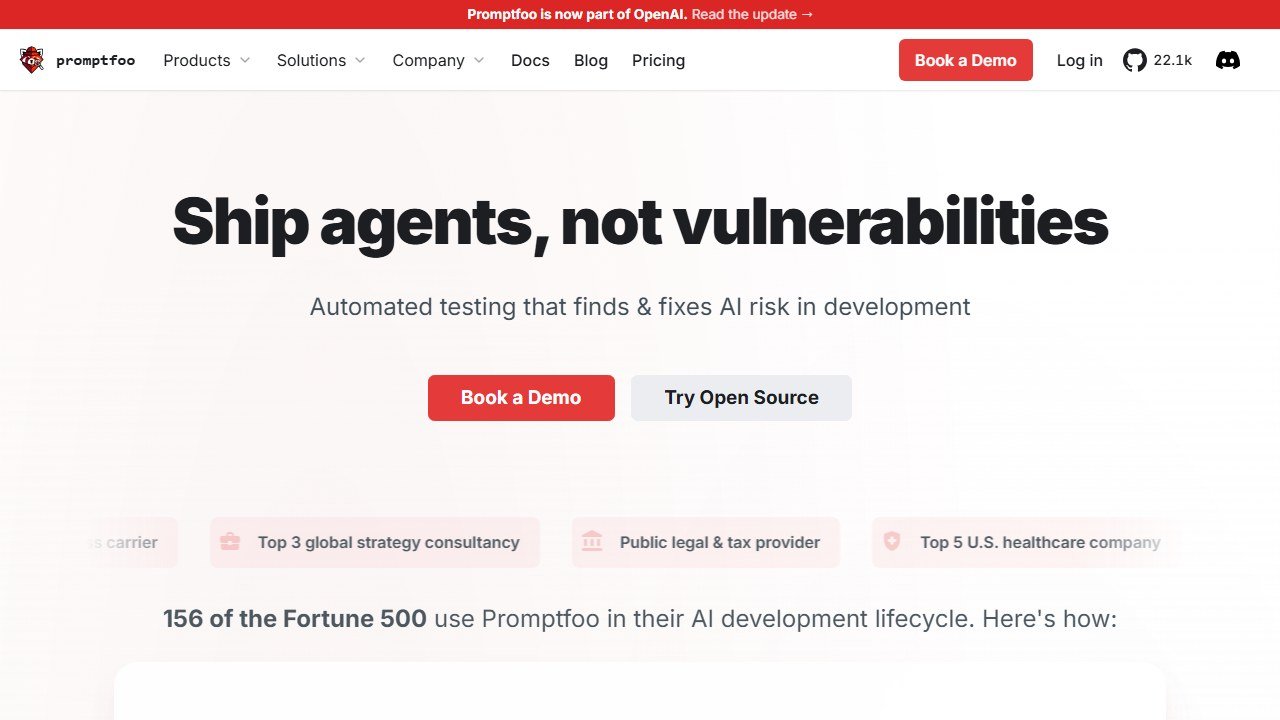
Promptfoo is the open-source workhorse for prompt and regression testing, and it doubles as the leading red-teaming tool for probing jailbreaks, prompt injection, and data leakage. You define test cases in YAML, run them across models and prompt variants, and compare side by side from the CLI or CI. OpenAI acquired Promptfoo in early 2026, and the company has said the open-source project continues under its existing license, which is reassuring but worth watching.
For the upstream job of organizing and versioning the prompts themselves, both Langfuse and the eval platforms above include prompt management, and there is a wider category of dedicated AI prompt management tools worth comparing if that is your main pain point rather than scoring.
RAG evaluation
Retrieval-augmented generation has its own failure modes: the retriever pulls the wrong documents, or the model ignores good context and answers from memory. Generic eval metrics miss these.
Ragas is the most specialized open-source library for this. It is Apache 2.0 licensed and offers the deepest set of RAG-specific metrics we have seen, including faithfulness, answer relevancy, context precision, and context recall, much of it grounded in published research. The deliberate limit is scope: Ragas is RAG-only. It does not cover agents, chatbots, or production tracing, so you pair it with one of the broader tools rather than using it alone. DeepEval also ships RAG metrics if you would rather not run a second library.
Guardrails and runtime safety
Evaluation tells you how good your system is. Guardrails act in real time to stop a bad output before a user sees it, by filtering prompt injection, blocking unsafe content, or enforcing output formats.
NeMo Guardrails from NVIDIA is the established open-source toolkit for adding programmable, rule-based guardrails to conversational LLM apps. It is a different job from scoring, and it is worth being clear that guardrails are runtime enforcement, not evaluation. You still need offline evals to know whether your guardrails are catching the right things and not blocking legitimate answers. The two work together rather than one replacing the other.
Comparison of the main LLM evaluation tools
| Tool | Primary job | Open source? | Best for | Free option |
|---|---|---|---|---|
| Langfuse | Tracing, prompt mgmt, evals | Yes (MIT core) | Self-hosted observability with no per-seat cost | Self-host free; cloud usage tier |
| Arize Phoenix | Tracing and eval metrics | Source-available (ELv2) | OpenTelemetry-native, portable traces | Free self-host |
| Helicone | Proxy logging and cost | Partly | Fastest setup, near-zero code change | Free tier |
| DeepEval | Offline eval and metrics | Yes (Apache 2.0) | Pytest-style metric testing | Library free |
| Braintrust | Eval-driven dev and CI gates | No | Blocking regressions in CI | Usage-based free tier |
| LangSmith | Tracing and evals | No | LangChain and LangGraph stacks | Developer free tier |
| Promptfoo | Regression and red-team testing | Yes | Prompt testing and security probing | Free CLI |
| Ragas | RAG evaluation | Yes (Apache 2.0) | Deep RAG-specific metrics | Library free |
A lean starter stack
You do not need all eight tools. For most teams building an LLM app or agent, this sequence covers the real jobs without overspending: If you are also routing calls across several model providers, our guide to LLM gateways compares how each one charges and what changed in 2026.
- Add tracing first. Start with Langfuse (self-host or cloud) or Arize Phoenix. Everything else gets easier once you can replay real requests.
- Write an offline eval set. Use DeepEval, or Ragas if your system is RAG-heavy. A few dozen real, hard examples beats a thousand synthetic ones.
- Calibrate your judge. Before trusting LLM-as-judge scores, label a sample by hand and check that the judge agrees. Spend the annotation effort here.
- Gate changes in CI. Add Promptfoo for regression and red-team tests, or Braintrust if you want managed eval-driven development with merge blocking.
- Add guardrails only when you have evidence you need them. NeMo Guardrails or a provider-native filter, validated by the eval set from step 2.
The open-source path (Langfuse plus DeepEval or Ragas plus Promptfoo) can take you a long way at zero license cost. You pay for it in engineering time. Commercial tools like Braintrust and LangSmith trade money for less plumbing and better collaboration features. Neither choice is wrong; it depends on whether your scarce resource is cash or engineer hours. If your evaluation work touches search and ranking quality, the same measure-before-you-trust discipline shows up in AI mode SEO checking tools.
What LLM evaluation tools still cannot do for you
The hardest part of evaluation is not the tooling. It is deciding what “good” means for your specific application, and no platform can decide that for you. A metric only measures what you chose to measure. If your test set does not contain the failure that hurts you, every dashboard will show green while real users suffer.
These tools also cannot supply judgment about acceptable risk. Whether a 2 percent hallucination rate is fine or catastrophic depends entirely on whether your app summarizes podcasts or advises on medication. That call is yours, and it should be made by people who understand the consequences, not inferred from a leaderboard.
And LLM-as-judge, for all its convenience, cannot replace human ground truth. It is an amplifier of your judgment, not a substitute for it. Someone still has to look at the outputs, decide what right looks like, and label enough examples to keep the automated scoring honest. The tools make that work faster and more visible. They do not make it optional.

Written by
FazFaz is the founder of AIToolsBakery. Some tools here are tested hands on. Others are assessed from vendor documentation and pricing verified on the live page, and every review says which one it is. Sponsors can buy a position in a guide. They cannot buy the score, the criticism, or silence about a better option.
How we test and how we make money →