It is 5:40 on a Tuesday morning, the pool opens in twenty minutes, and your training plan says swim. Except you slept four hours because a toddler had other plans, your legs are cooked from Sunday’s long ride, and the static PDF plan you bought eight weeks ago has no idea any of that happened. This is the gap that AI triathlon apps promise to close: a plan that looks at your actual week, your actual fatigue, and your actual race date, then moves the pieces around so you arrive at the start line fit instead of fried.
We reviewed the main contenders the way a working-age athlete would, juggling swim, bike, and run across a real calendar, aiming at both a 70.3 and a full Ironman build. A note before we go further, because it matters for trust. AIToolsBakery is independent. We sell none of these apps, we take no cut, and we are not anyone’s affiliate here. If you search “best AI triathlon training app” you mostly get two kinds of pages: the vendors talking about themselves, and affiliate roundups that earn a commission on every signup. We are neither. We paid attention to where each app actually breaks down.
One more thing up front. None of these tools is a doctor or a substitute for a coach who knows your history. If you are coming back from injury, managing a health condition, or feeling pain that is not normal training soreness, talk to a professional before you let any algorithm push your volume up.
The 30-second answer: For full data-driven adaptivity and IRONMAN race prep, TriDot leads but costs the most. Humango is the best balance of true AI adaptation and price. AI Endurance suits data nerds on a budget. TrainerRoad wins if the bike is your weak link. Garmin Coach is the free starting point.
Quick answer: TriDot is the most data-driven AI triathlon platform and the official IRONMAN one, Humango offers the best AI adaptation for the money, AI Endurance suits data-driven athletes on a budget, and TrainerRoad is best if the bike is your weakness. The app sees your data, but you still override when your body says rest.
How we judged each app
Four jobs separate a real triathlon coach app from a glorified spreadsheet, so we scored each tool against them.
Adaptive multi-sport plans came first. A triathlon plan has to balance three sports at once, and a good AI shifts the load when you miss a swim or smash a ride. Plenty of apps adapt one sport well and treat the other two as an afterthought.
Data integration came second. The app needs to pull from your watch, head unit, and power meter without you copying numbers by hand. Garmin, Wahoo, Coros, Polar, and Strava support is the baseline.
Race-specific peaking came third. Building to a Sprint is not building to a full Ironman. We checked whether each app actually understood the distance, the taper, and brick work.
Budget came last but counts. These are monthly subscriptions you will pay for a six-month build or longer, so value matters as much as features.
TriDot: the most data-hungry, and the official IRONMAN platform
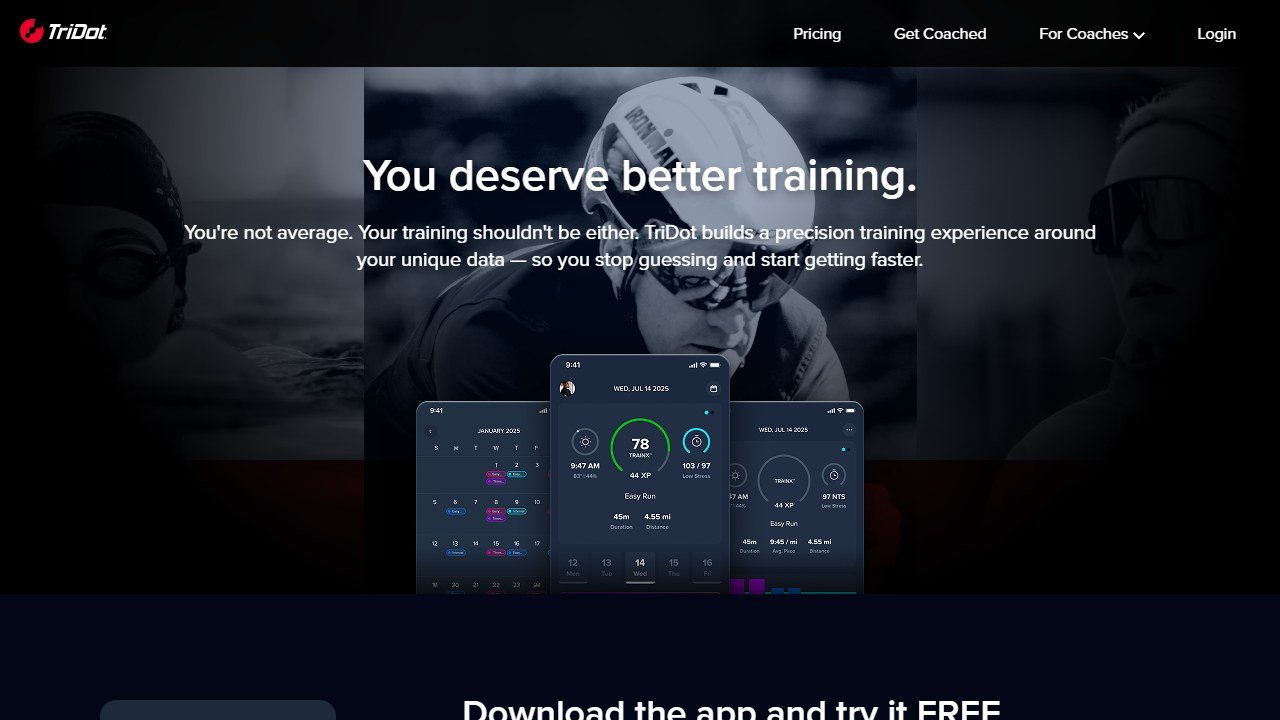
TriDot is the one most serious athletes have heard of, and it is the official training platform of IRONMAN. Its pitch is heavy data analysis: it factors in your age, environment, training history, and assessment results to set personalized intensities, then adapts as you log sessions. The “Optimized” engine and the race-prep simulations are genuinely useful when you are building toward a specific 70.3 or full.
Where it shines is depth. If you feed it good data and complete its assessments, the prescriptions feel tuned to you rather than pulled from a generic template, and the gamified progress tracking keeps you honest across a long build.
The honest limitation is cost and complexity. The cheapest tier is limited and caps how many races you can train for, and the genuinely full-featured tiers with strength work and premium race prep climb toward 99 dollars a month, which is a lot across a half-year build. Some users also find the interface busy. Pricing and tiers shift, so confirm current numbers on the vendor page before you commit.
Humango: the best AI adaptation for the money
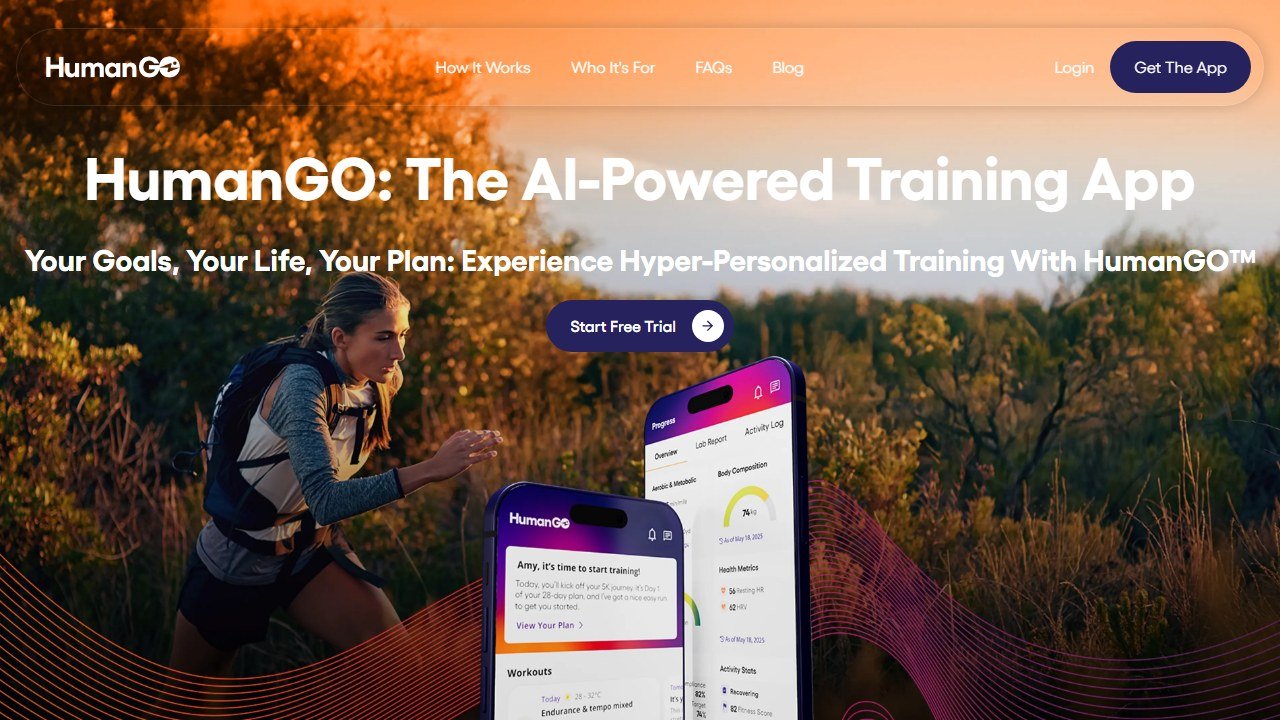
Humango is the app we kept coming back to as the sensible default. Its AI, named Hugo, builds an integrated plan across swim, bike, and run for Sprint up to full Ironman, then genuinely reshuffles your week when life interferes. Miss two sessions and it rebalances rather than just stacking the misses on tomorrow.
What we liked is how naturally it handles the multi-sport juggle. It treats the three disciplines as one system, respects your weekly time budget, and asks for feedback that actually changes the next block. The free trial period (around 30 days, no card up front when we checked) is long enough to feel the adaptation, not just the onboarding.
The limitation is that it is less of a deep-analytics playground than TriDot or AI Endurance. If you live for FTP curves and modeled fitness charts, you may want more under the hood. For most athletes who want a smart plan that bends around real life, that is a fair trade. Confirm current pricing on the vendor site.
AI Endurance: for the data-driven athlete on a budget
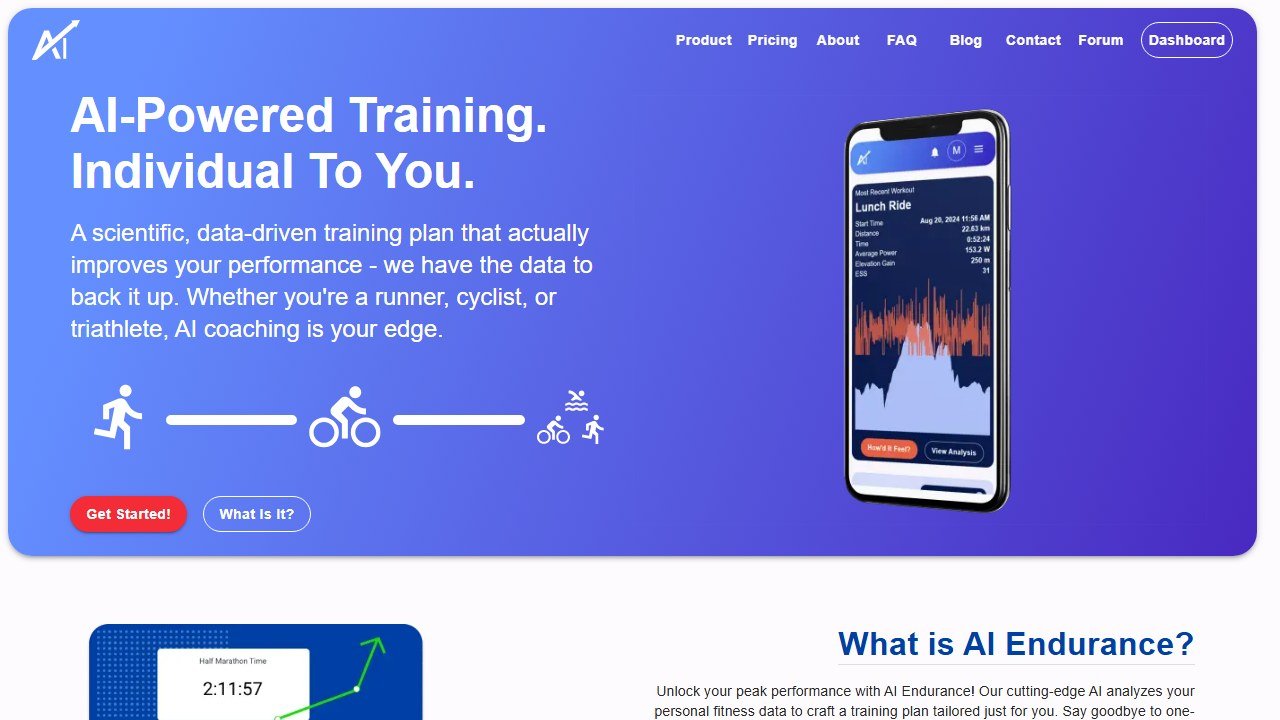
AI Endurance sits in a nice spot for analytical athletes who do not want to pay TriDot prices. It uses machine learning to interpret your fitness data, then generates and adapts plans for running, cycling, and triathlon toward your event. It integrates broadly, with Garmin, Polar, Suunto, Coros, Strava, Oura, Wahoo, and more, and adds recovery insights and a nutrition tool.
The strength is value. Billed annually it lands well under the premium platforms while still giving you genuine adaptation and respectable depth, plus a free trial to test it. For someone who wants modeled fitness and data-led prescriptions without a coaching-tier price, it punches above its cost.
The limitation is polish and hand-holding. The experience is more analytical and less guided than Humango or Garmin Coach, so beginners may feel dropped into the deep end. If you are new to structured triathlon training, expect a learning curve. Always verify the current price, since trial length and tiers change.
TrainerRoad: best if the bike is your weakness
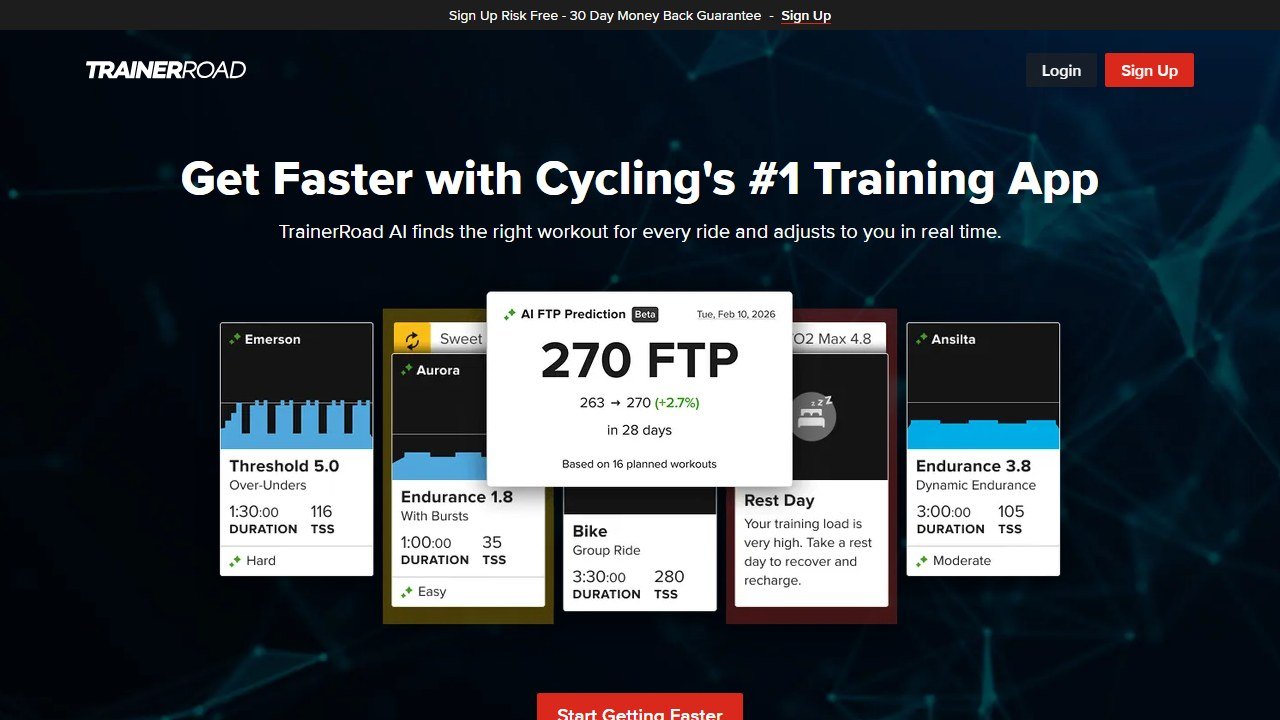
TrainerRoad earned its reputation on the bike, and its Adaptive Training is one of the smartest engines for cycling progression anywhere. Its triathlon plans cover every distance and include swim, bike, and run, with planning and analysis tools that cyclists love.
The strength is obvious: if your bike split is the thing holding you back, nothing here adapts your cycling workouts more intelligently. Complete a ride, and the system reshapes upcoming sessions based on how that ride actually went.
The honest limitation is the multi-sport balance. TrainerRoad is candid that its adaptation is bike-centric. For triathlon plans, swim and run adaptations are driven mainly by missed sessions rather than by performance in past swims and runs the way the bike is. So you get world-class cycling intelligence bolted onto solid but less reactive swim and run guidance. Great for bike-limited athletes, less ideal if your run or swim is the real problem. Confirm current pricing on the vendor page.
JOIN: adaptive coaching that leans toward cycling
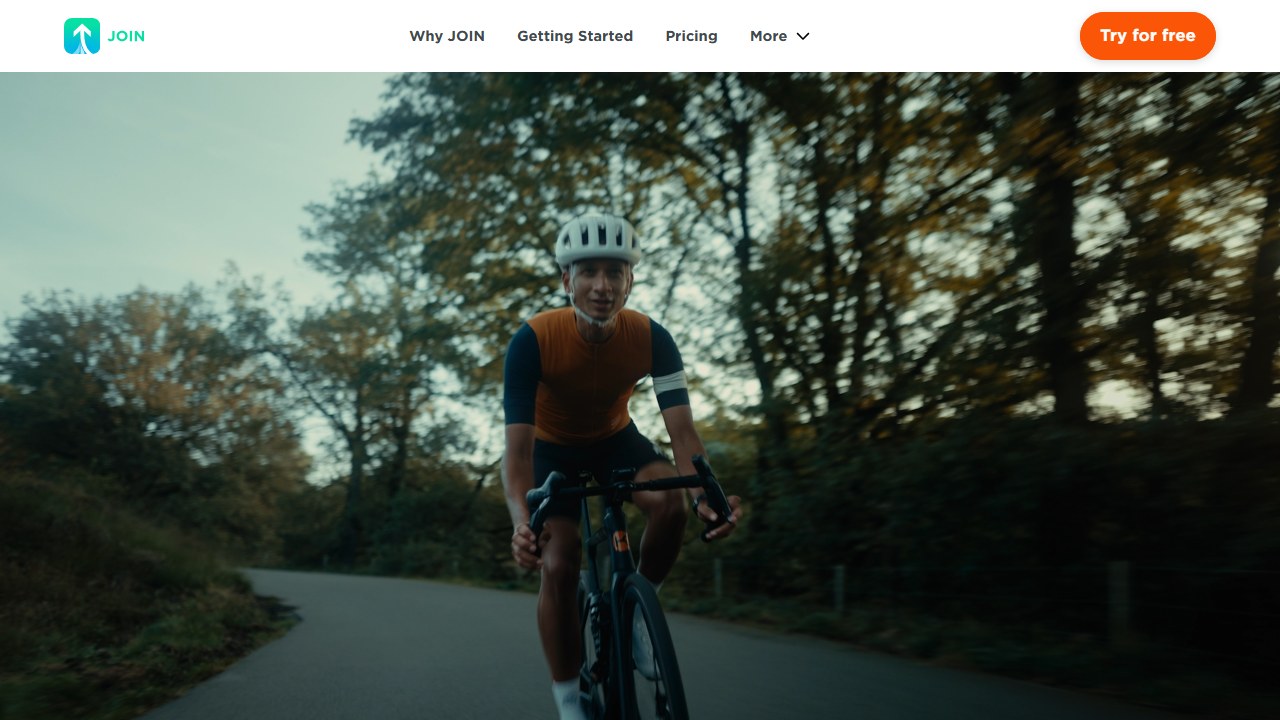
JOIN is built by World Tour-level cycling coaches and its adaptive engine is excellent, adjusting your plan based on daily input across a large workout library. For triathletes its appeal is real but partial: it now plans both cycling and running, so two of your three disciplines are covered by genuinely smart adaptation.
The strength is the quality of that bike and run adaptation plus a clean, motivating interface, and the price sits below the premium tier. The free trial is short but enough to see how it schedules.
The limitation is the obvious one for triathlon: JOIN does not yet offer full triathlon plans, and you manage swimming yourself, logging swim activities manually rather than getting prescribed swim sessions. For a duathlete or a strong swimmer who only needs structure on bike and run, that is workable. For a swim-limited triathlete chasing a first Ironman, it leaves a gap. Check current pricing and triathlon support before subscribing.
Theron: the only one that puts its price on the page
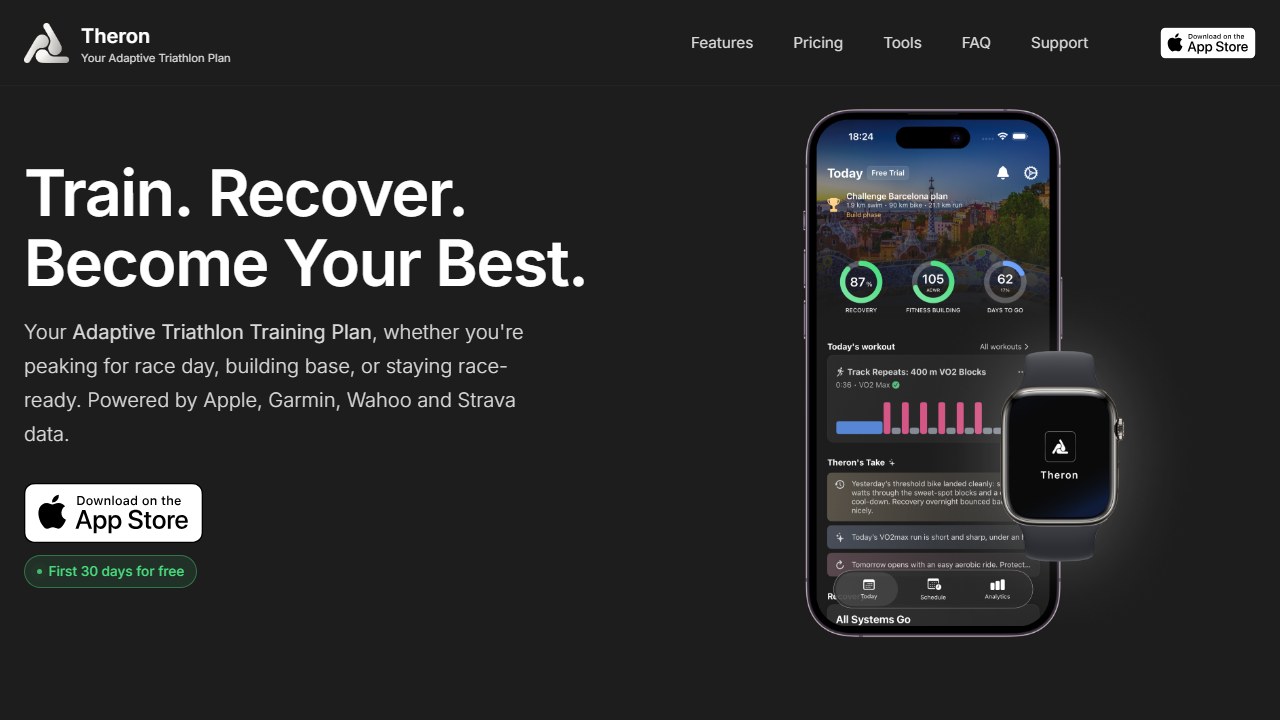
Theron is a small iOS app that builds an adaptive triathlon plan from Apple Health, Garmin, Wahoo and Strava data, then reshuffles the week as your recovery and completed sessions come in. Its coaching layer, presented in the app as Theron’s Take, writes a short brief on yesterday, today and tomorrow, and scores each finished session against what was prescribed on duration, intensity and training stress.
The reason it earns a place here is the pricing. Theron is $69.90 a year or $14.99 a month, with a 30 day free trial, and those numbers sit on the homepage where anyone can read them without an account. Look back at the table above and notice that no other app on this list does that. It also ships a set of free tools, including a race finder, that need no signup at all.
The training load screen is better than the price suggests. Theron shows an acute to chronic workload ratio against banded thresholds, detraining below 0.8, optimal from 0.8 to 1.3, elevated risk from 1.3 to 1.5 and high risk above that, plotted as a six week trend so you can see which way it is moving rather than just today’s number. It also shows the two figures the ratio is built from, a seven day fatigue load and a twenty eight day fitness average, which is the part most consumer apps hide. Theron says the same ratio feeds its scheduling engine in the background, though that is a claim about the software rather than something visible on screen.
The limitations are real and you should weigh them. It is iOS only, with no Android app at the time of writing. It is also a young product with a small user base, so you are not buying the pattern-matching advantage that a large training database gives TriDot. And its own structured data lists ACWR training load monitoring as a feature while nothing on the site explains what the app does with it, which makes that part harder to evaluate before you install than it needs to be.
Worth being straight about the basis for this entry: it comes from the vendor’s screenshots of the coaching screens, the pricing we verified on their site in August 2026, and their published feature data. We have not run a training block through it, so treat this as a description of what the app offers rather than a verdict on how well its adaptation holds up over an Ironman build.
80/20 Endurance: principled plans, lighter on live AI
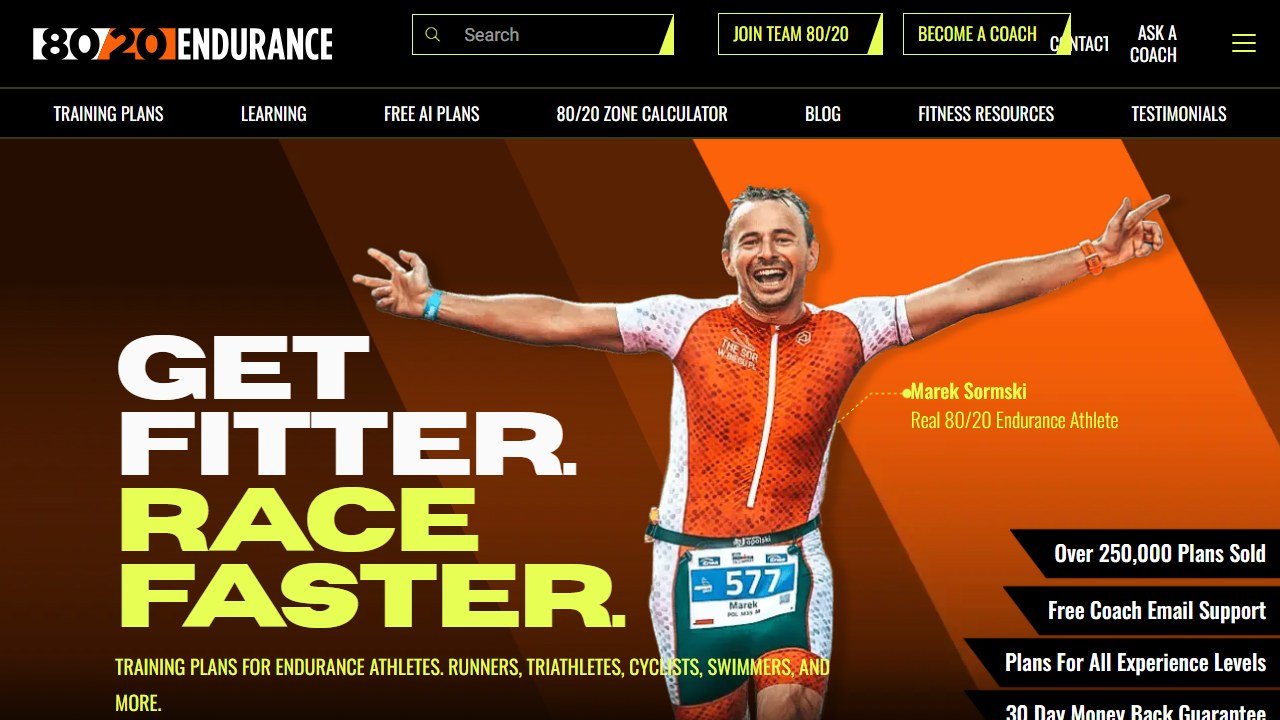
80/20 Endurance, from coaches Matt Fitzgerald and David Warden, is not an AI engine in the same sense as the others, and we include it because the science behind it is strong and the plans are widely trusted. The 80/20 idea is simple and proven: spend about 80 percent of your training at low intensity and 20 percent hard. Their structured triathlon plans for half and full distance deliver that discipline, sync to your device through TrainingPeaks, and guide you through workouts in real time.
The strength is principle and price. You get a coherent, research-backed structure, and some maintenance plans are even free with a promo code, with paid plans far cheaper than a monthly coaching app over a full build since you buy the plan once.
The limitation is adaptation. These are structured plans, not a daily-reshuffling AI. If you miss a week or your fitness jumps, you adjust manually rather than letting an algorithm rebuild the block. For self-aware athletes who want guardrails without a subscription, that is a feature, not a bug. Verify current plan pricing on the vendor page.
Garmin Coach Triathlon: the free place to start
Garmin Coach added a triathlon plan to its free adaptive lineup, and for anyone already wearing a compatible Garmin it is the obvious zero-cost entry point. It mixes swim, bike, and run, schedules two-a-days and brick workouts based on your recovery data, adapts daily using sleep and readiness, and offers optional strength sessions that taper before race day. It runs free inside Garmin Connect.
The strength is unbeatable on price: it is free, it adapts to your readiness, and it lives in the app you already use. For a first 70.3 or to test whether structured triathlon training suits you, it is a smart, no-risk start.
The limitation is depth and lock-in. It is tied to the Garmin ecosystem and is less configurable than the paid platforms, so advanced athletes will outgrow its prescriptions and want finer control over intensity and periodization. As a free on-ramp, though, it is hard to beat. Compatibility and features depend on your device, so confirm yours is supported.
The triathlon app comparison table
One table to weigh them side by side. Treat pricing as directional, since every vendor changes tiers and trials, and confirm before you pay.
| App | What it does best | Best for | Price or free tier |
|---|---|---|---|
| TriDot | Deep data analysis and IRONMAN race prep | Serious athletes wanting maximum personalization | Paid, premium tiers climb high; no real free tier |
| Humango | Balanced multi-sport AI adaptation | Most athletes wanting smart plans on a budget | Paid, long free trial |
| AI Endurance | Data-led plans at a low price | Analytical athletes who hate premium pricing | Paid, lower cost annually; free trial |
| TrainerRoad | Bike adaptation intelligence | Athletes whose bike split is the weak link | Paid subscription; no free tier |
| JOIN | Clean adaptive bike and run coaching | Strong swimmers needing bike and run structure | Paid; short free trial |
| 80/20 Endurance | Principled, research-backed structure | Self-aware athletes wanting guardrails, not AI | One-time plan purchase; some free |
| Garmin Coach | Free adaptive triathlon plan | Beginners and Garmin owners starting out | Free inside Garmin Connect |
| Theron | Adaptive triathlon plans with published pricing | iPhone athletes who want the cost up front | $69.90/year or $14.99/month; 30 day trial |
A lean way to start
You do not need to overthink the first move. Try this sequence.
- If you own a Garmin, load the free Garmin Coach Triathlon plan and run it for two weeks to feel structured multi-sport training.
- Pick your real weakness honestly: swim, bike, or run, plus your budget ceiling.
- Bike-limited and willing to pay, test TrainerRoad. Want the best all-round AI, trial Humango. On a tight budget but data-driven, trial AI Endurance.
- Targeting a specific big race with money to spend, trial TriDot during a build block where its race prep can prove itself.
- Commit to one app for at least one full training block. Plan-hopping wrecks consistency, which is the one thing that actually makes you faster.
What these apps still cannot do
Be clear-eyed about the limits before you hand over your race to an algorithm.
They cannot watch your form. None of these tells you your bike fit is wrong, your run cadence is shredding your knees, or your catch in the water is leaking power. For that you still need video, a coach, or a fitter. If you want help cleaning up technique sport by sport, our guides to the best AI swimming coach apps, the best AI cycling coach apps, and the best AI running coach apps go deeper than any all-in-one triathlon plan can.
They cannot read your body the way you can. The app sees the data you give it, but it does not feel the niggle in your Achilles or the head cold creeping in. You still have to override the plan when your gut and your symptoms say rest, and to add general conditioning beyond the sessions, our roundup of the best AI workout apps covers the strength side these plans only touch lightly.
They are not medical advice. Adaptive training is not injury rehab or clinical guidance. If you have a health condition, you are returning from injury, or pain persists, see a physician or physical therapist before pushing volume. An algorithm optimizing for your race date does not know your medical history, and it is not trying to.
What they do well is the thing most of us get wrong on our own: turning a scary distance into a sequence of sane weeks, then nudging that sequence when real life shows up. Used with a little honesty about your own body, the right one of these gets you to the start line ready instead of wrecked. That is most of the job.
How to tell whether the tool was worth it
Fitness software is easy to evaluate honestly because the numbers are countable and small. The reason most coaches cannot say whether a platform helped is that nobody wrote down where they started.
Pick the metric the tool is supposed to move
For a coaching platform it is clients per coach and hours spent on programming and admin per client per week. For a consumer app it is sessions completed per week and adherence over eight weeks. For form checking it is whether you are still filming in month three. Each of those is countable and each needs a figure from before.
Record the time cost this month, before anything changes
Ask yourself or your coaches to log how long programming, check-ins and admin take across one normal week. It takes minutes and it is the only way the time saving is ever provable. Most of the honest value in this category is hours rather than revenue, and hours are measurable in advance and unprovable afterwards.
Give it two client cycles
Retention and adherence move slowly and seasonally. A four week read tells you about novelty rather than value. Judge a coaching platform over at least two full client cycles, and say so at the outset so an unremarkable first month is understood as expected.
Name the result that would end it
Write down before you subscribe what twelve months would have to look like for you not to renew. It converts renewal from a default into a decision, which matters more in a category where the monthly figure is small enough to stop noticing.

Written by
FazFaz is the founder of AIToolsBakery. Some tools here are tested hands on. Others are assessed from vendor documentation and pricing verified on the live page, and every review says which one it is. Sponsors can buy a position in a guide. They cannot buy the score, the criticism, or silence about a better option.
How we test and how we make money →Frequently Asked Questions