Online ordering is where restaurants win or lose money they never see on the floor. The difference between a good system and a bad one is not the checkout design, it is who keeps the margin and who owns the customer. Third-party marketplaces like Uber Eats and DoorDash bring built-in traffic, but at 20 to 30 percent commission per order, a $50 order leaves you with $40 at 20 percent and $35 at 30 percent. A direct ordering system flips that: you keep the margin, and just as important, you keep the customer’s contact details so you can bring them back.
So this ranking is built around real cost and data ownership, not features for their own sake. The best systems are commission-free or flat-fee, keep guests on your own site (which also protects your SEO), and hand you the customer relationship instead of renting it back to you. Below, each platform is placed by who it fits, from independents to Toast and Square shops to restaurants trying to escape the marketplaces.
Top pick: ChowNow is the best restaurant online ordering system in 2026 for independents, thanks to commission-free flat pricing and centralized menu management that keeps you in control of the customer. Toast and Square Online are best if you already run those POS systems, Owner is best for pulling orders off marketplaces, and GloriaFood is the best truly free start.
Faz says: The single most valuable thing an ordering system gives you is not the order, it is the customer’s contact details. When someone orders through a marketplace, that customer belongs to the marketplace, and you pay every time they come back. When they order directly from you, you own the relationship and can market to them for free forever. That is the real reason to run direct ordering, and it is worth more over a year than any commission saving on a single order. Choose for data ownership first.
How We Ranked These
Online ordering is judged on what you keep, the margin and the customer, not the checkout screen. We weighted four things:
1. Commission and real cost. Flat-fee and commission-free platforms keep your margin. We penalized models that skim a percentage of every order.
2. Customer data ownership. Direct ordering that gives you contact details and lets you remarket is worth far more than a slick marketplace listing you rent.
3. On-site ordering and SEO. Systems that keep guests on your own domain protect your search visibility and brand, instead of sending them off to finish elsewhere.
4. Fit and integration. The right system depends on your POS and size. Clean sync with your kitchen and menu matters as much as price.
Comparison Table
| System | Best for | Cost model | Data ownership |
|---|---|---|---|
| ChowNow | Independents | Flat, commission-free | You keep the customer |
| Toast Online Ordering | Toast users | Commission-free, POS-synced | You keep the customer |
| Square Online | Square users, small spots | Free to start | You keep the customer |
| Owner | Escaping marketplaces | Subscription | You keep the customer |
| GloriaFood | Budget, truly free | Free, optional paid add-ons | You keep the customer |
What These Systems Actually Cost
Most roundups quote a headline subscription and stop. That number is rarely what you pay. The table below is the full published fee stack for each system, read off each vendor’s own pricing page on 5 August 2026, including the setup fees and per-transaction cuts that only appear once you scroll.
| System | Subscription | Per-order cut | Setup and extras |
|---|---|---|---|
| ChowNow | Launch from $229 to $249/mo, Grow from $319 to $349, Elevate from $409 to $449 | 2.95% + $0.29 per transaction | $119 to $499 setup, $99/yr Apple developer fee for a branded app, $250 to $420 for a printer |
| Owner (usage plan) | $249/mo | 5% restaurant fee per order | Not published |
| Owner (flat plan) | $499/mo | None | Not published |
| GloriaFood | Core ordering free | None on the free core | Add-ons: $49/mo per location on a 2-year commitment, $29/mo card payment service, $19/mo advanced promo marketing, $0.50 per accepted reservation |
| Toast Online Ordering | Starter Kit from $0/mo, Point of Sale from $69/mo, Build Your Own on quote | Not separately published | Starter Kit hardware carries no upfront cost |
| Square Online | Free $0/mo per location, Plus $49/mo, Premium $149/mo, Pro on quote | 2.6% + 15c in person and 3.3% + 30c online on Free, falling to 2.4% + 15c and 2.9% + 30c on Premium | 30-day free trial on paid plans |
Correction, 5 August 2026: an earlier version of this guide reported that Toast and Square Online pricing could not be verified. That was our error. Both publish openly; our first check was blocked by bot protection in one case and used the wrong URL in the other. The figures below are read from their own pricing pages.
All six publish something you can act on. Square is the one to read most carefully, because its plan price and its processing rate move in opposite directions: the free plan costs nothing monthly but charges the highest processing rate, while Premium costs $149 a month and charges the lowest. Which is cheaper depends entirely on your card volume, so work out your own monthly processing spend before assuming the free tier is the cheap option.
The Owner Break-Even Nobody Publishes
Owner sells two plans and the choice between them is pure arithmetic, but the arithmetic is not on the page. The usage plan is $249 a month plus 5% of each order. The flat plan is $499 a month with no per-order fee. The difference in subscription is $250.
So the flat plan wins the moment 5% of your monthly online sales exceeds $250, which happens at $5,000 a month in online orders. Below that you are paying for headroom you are not using. Above it, every additional dollar of online sales on the usage plan costs you five cents that the flat plan would not.
Worth noting: Owner’s own pricing page describes the flat plan as “best for restaurants at $5k+/mo in online sales”, which is the same threshold the arithmetic produces. That is a rare case of a vendor’s guidance and its own maths agreeing, and it means you can trust the recommendation rather than reverse-engineering it.
The practical read: if you are doing $3,000 a month online, the usage plan costs you $399 all in and the flat plan costs $499. At $10,000 a month the usage plan costs $749 and the flat plan still costs $499. Run your own number before the sales call.
When a Subscription Beats a Marketplace Commission
The question underneath this whole category is not which system has the nicest checkout. It is the point at which paying a flat monthly fee costs less than handing a marketplace a percentage of every order. That crossover is easy to calculate and almost nobody publishes it.
Take a marketplace commission of 25%, the midpoint of the 20% to 30% range these platforms typically charge. A commission-free system at $229 a month pays for itself once 25% of your monthly order value exceeds $229, which happens at roughly $916 a month in orders. That is about $30 a day. At $499 a month, the flat-rate tier, the crossover is roughly $1,996 a month.
Put plainly: if you are pushing even $1,000 a month through a marketplace, a commission-free subscription is already the cheaper channel on pure fees, before you count the customer data you stop giving away. The reason restaurants stay on marketplaces anyway is demand, not economics. Marketplaces bring you orders you would not otherwise get. A direct system does not, which is why the honest recommendation is usually to run both and shift volume toward direct over time, rather than to cut the marketplace off on day one.
The figures above are arithmetic on published subscription rates and a stated commission range, not a claim about what any specific marketplace charges you. Your own contract governs.
1. ChowNow: Best Commission-Free for Independents
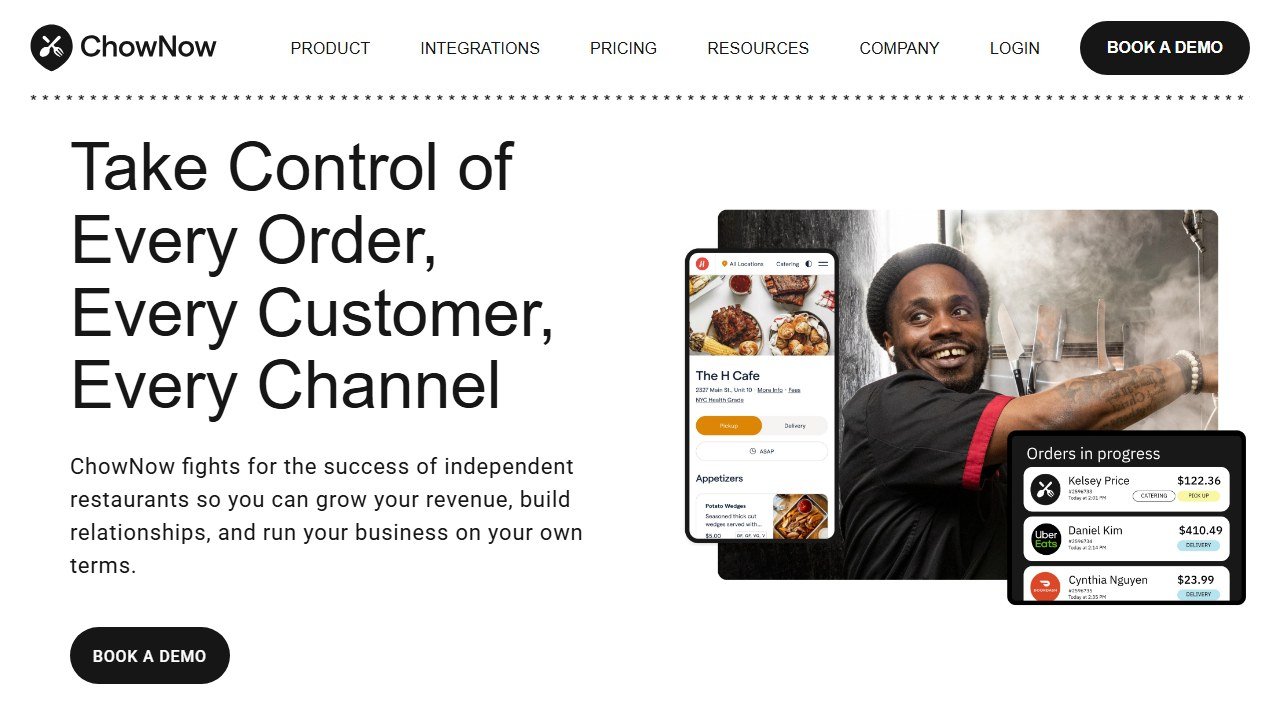
ChowNow is built around a promise independents care about: flat pricing instead of per-order commission, so growth in orders does not mean growth in fees. Its platform includes centralized menu management, so changes made in the dashboard sync automatically across your website, branded app, and connected channels. You keep the customer relationship, which is the long-term value. For an independent restaurant that wants to grow direct orders without handing a cut to a marketplace, ChowNow is the standout.
What it costs: ChowNow publishes three tiers, each with two figures its pricing page does not label: Launch at $229 and $249, Grow at $319 and $349, Elevate at $409 and $449. On top of the subscription sit a $119 to $499 setup fee and 2.95% plus $0.29 per transaction. A branded mobile app adds Apple’s $99 annual developer fee, and a printer runs $250 to $420. The commission-free promise is real in the sense that ChowNow does not take a percentage of the order the way a marketplace does, but the payment processing cut still applies, and the setup fee is a genuine first-month cost most comparisons omit.
ChowNow’s own pricing page argues the saving against “an average 22% commission rate charged by third-party apps”. That figure is ChowNow’s, not an independent measurement, and we report it as the vendor’s claim rather than as a market rate.
Best for: independent restaurants that want commission-free, direct ordering with a branded app.
Watch out for: you drive the traffic, so pair it with your own marketing.
2. Toast Online Ordering: Best If You Already Run Toast
Toast Online Ordering is the obvious choice if Toast is your POS. It is commission-free and syncs directly with the POS and kitchen, so orders flow into the same system as your dine-in tickets, with no extra integration to babysit. The tight coupling is the value: one menu, one kitchen flow, one report. If you are on Toast, adding its ordering is usually simpler and cleaner than bolting on a third party.
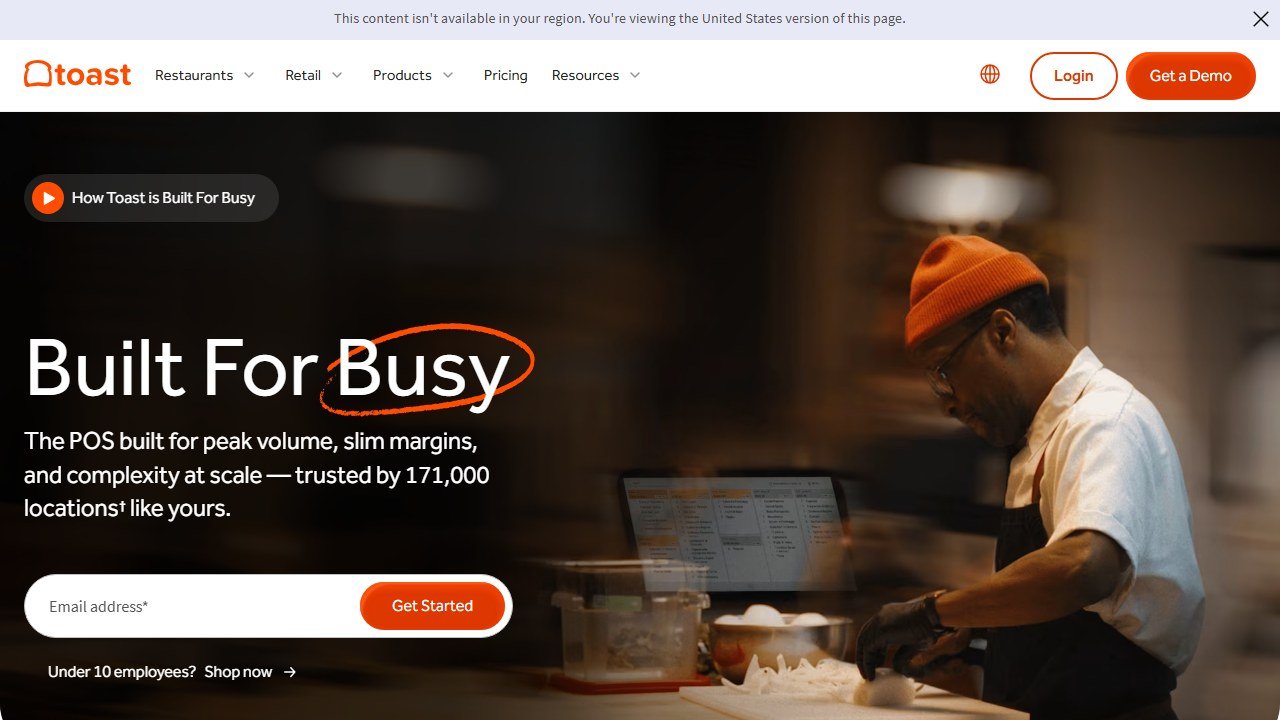
Best for: restaurants already using Toast that want native, commission-free ordering.
Watch out for: the value is highest inside the Toast ecosystem; standalone it is less compelling.
What it costs: Toast publishes three routes. The Starter Kit begins at $0 a month with a hardware kit carrying no upfront cost, aimed at single-location restaurants needing one or two terminals. Point of Sale begins at $69 a month as a software subscription where you choose your own hardware. Build Your Own is custom-quoted. Toast presents these as starting prices, so confirm in writing whether online ordering is bundled with your POS subscription or billed separately, and what the processing rate is on your volume.
3. Square Online: Best Free Starting Point
Square Online is the fastest low-risk way to start, especially if you use Square POS. It is quick to launch, integrates with Square, and has a genuinely low barrier for small restaurants, with a free tier to begin. For a small spot that wants online ordering live this week without a big commitment, Square Online is the easy on-ramp.
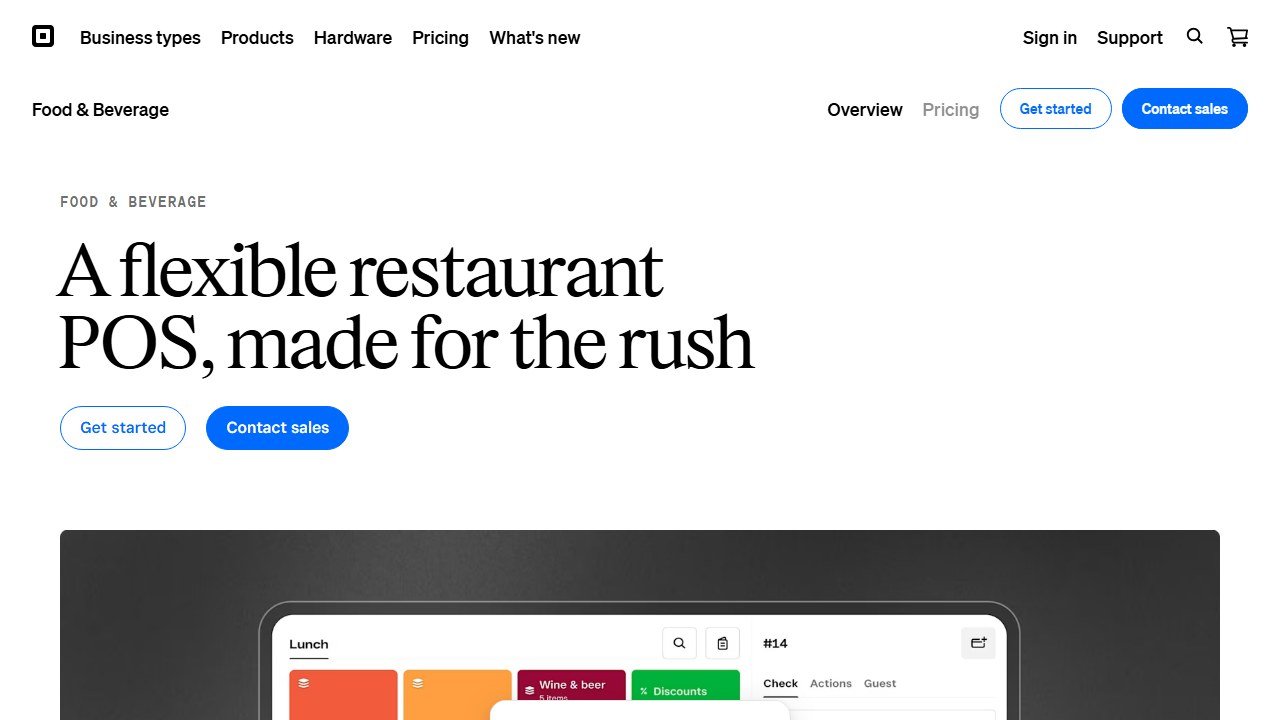
Best for: small restaurants and Square POS users who want a fast, free start.
Watch out for: advanced ordering and marketing features are lighter than dedicated platforms.
What it costs: Square publishes four tiers, priced per location: Free at $0 a month, Plus at $49, Premium at $149, and Pro on quote. The processing rate is the part that matters more than the subscription. Free charges 2.6% plus 15 cents in person and 3.3% plus 30 cents online. Plus drops that to 2.5% plus 15 cents and 2.9% plus 30 cents. Premium drops it again to 2.4% plus 15 cents. Paid plans carry a 30-day free trial. On $20,000 a month of online card volume, moving from Free to Plus saves about 0.4% of that, roughly $80, which more than covers the $49 subscription.
4. Owner: Best for Pulling Orders Off Marketplaces
Owner is built for one mission: move your orders from third-party marketplaces to your own direct channels. It provides a marketing-driven website and branded app designed to convert, plus the automation to re-engage customers with promotions and loyalty. If your problem is that DoorDash and Uber Eats own your customers and your margin, Owner is purpose-built to take them back.
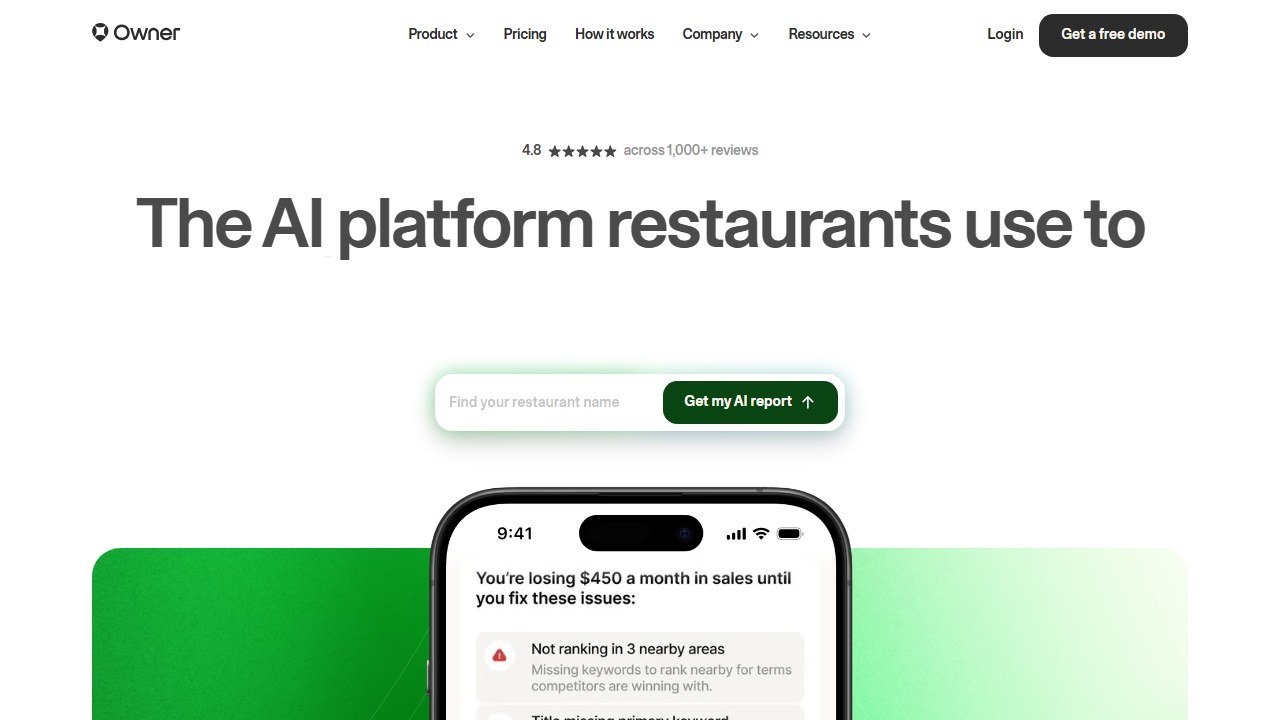
Best for: restaurants heavily dependent on marketplaces that want to grow direct orders.
Watch out for: it is a subscription commitment; weigh it against the commissions it saves.
What it costs: $249 a month plus a 5% restaurant fee per order, or $499 a month flat with no per-order fee. See the break-even section above for which one your volume argues for.
5. GloriaFood: Best Truly Free Option
GloriaFood offers genuinely free, commission-free, unlimited online ordering to start, with paid add-ons only if you want extras like a branded app or promotions. For a budget-conscious restaurant that wants to accept direct orders without any per-order cost, it is the lowest-risk entry in the category. You still keep the customer relationship, which is the point.
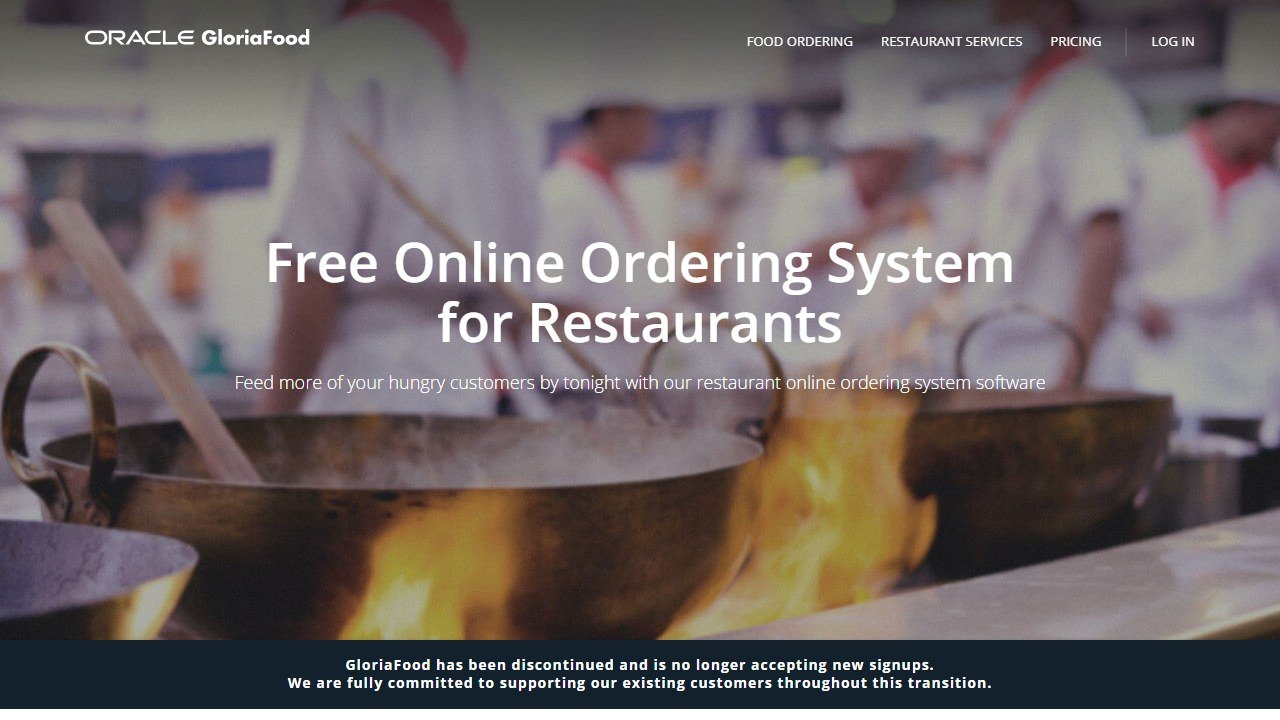
Best for: budget-conscious restaurants that want commission-free ordering at no base cost.
Watch out for: the free tier is basic; you pay for the polish and marketing extras.
What it costs: the core ordering system is genuinely free with no per-order commission. The paid pieces are add-ons you opt into: $49 a month per location on a two-year commitment, which includes a free POS starter kit, $29 a month for the online card payment service, $19 a month for advanced promo marketing, and $0.50 per accepted table reservation. GloriaFood states all prices exclusive of taxes. The two-year commitment on the $49 tier is the detail to read twice, because it is the only lock-in on this list.
How to Choose
Start from your POS and your problem. If you already run Toast or Square, their native ordering is usually the cleanest, cheapest path. If you are an independent building direct ordering as a channel, ChowNow’s flat, commission-free model with a branded app is the strongest all-round pick. If your orders are trapped on marketplaces and the commissions are killing margin, Owner is purpose-built to pull them back. And if budget is the hard constraint, GloriaFood lets you start commission-free at no base cost.
Whatever you choose, prioritize two things: keep guests ordering on your own domain (it protects your SEO and brand), and make sure you own the customer contact details so you can market to them for free. Those two decisions matter more over a year than any single checkout feature.
Online ordering is one layer of the restaurant stack. For how it connects to the till and the kitchen, see our best restaurant POS systems guide, and for answering the calls that still come in, our best AI phone answering services for restaurants roundup. The full picture is in our best AI tools for restaurants pillar.
Verdict
ChowNow is the best restaurant online ordering system in 2026 for independents, because its flat, commission-free model and branded app keep both your margin and your customer. If you already run Toast or Square, their native ordering is the cleanest path, Owner is the specialist for reclaiming orders from marketplaces, and GloriaFood is the best truly free start.
Choose for cost and data ownership before checkout polish. Keeping guests on your own domain and owning their contact details is worth more over a year than any single feature, and it is the real reason direct ordering beats renting your customers from a marketplace.
For the full stack, see our best AI tools for restaurants pillar.

Written by
FazFaz is the founder of AIToolsBakery. Some tools here are tested hands on. Others are assessed from vendor documentation and pricing verified on the live page, and every review says which one it is. Sponsors can buy a position in a guide. They cannot buy the score, the criticism, or silence about a better option.
How we test and how we make money →