An applicant tracking system is the operational spine of hiring. It is where every job, every candidate, every interview, and every decision lives, and it is the difference between a hiring process you can measure and one that leaks candidates through email threads and spreadsheets. The category is old, but 2026 is a genuine inflection point: AI has moved from a marketing badge to a working part of the pipeline, sourcing and screening candidates, summarizing interviews, and drafting the outreach that recruiters used to type by hand. The gap between a modern ATS and a legacy one has never been wider.
The problem is that “best ATS” has no single answer. A five-person startup filling its first ten roles and a global company hiring three thousand people a year need almost nothing in common. So this ranking is organized around the two questions that actually decide fit: how big is your team, and is your hiring bottleneck evaluation or sourcing. Every tool below is placed where it is genuinely the best answer, with honest notes on AI substance, pricing reality, and where each one falls short.
Top pick: Greenhouse is the best applicant tracking system overall in 2026, with the deepest structured-hiring tooling, 500-plus integrations, and the most defensible, auditable process for mid-market and enterprise teams. Ashby is the best choice for analytics and AI-native hiring, and Workable is the best fit for small businesses that need to launch fast.
Faz says: The single most useful way to shop for an ATS is to name your bottleneck out loud before you look at a demo. If your problem is that interviews are inconsistent and hiring managers argue from gut feel, you want structure, and Greenhouse or Ashby win. If your problem is that the best candidates never apply and you have to go find them, you want a CRM baked into the ATS, and Lever or Gem win. Almost every bad ATS purchase happens because someone bought for sourcing when their real problem was evaluation, or the reverse.
Saru says: This ranking draws on each vendor’s official product and pricing pages, published AI feature documentation, third-party review aggregates, and documented user reports, current to 2026. Almost no ATS publishes full pricing, and most quote per-employee or per-seat, so every figure here is a starting point. Get a written quote that includes implementation, migration, and add-on costs before you sign.
How We Ranked These
An ATS earns its place by making hiring faster, fairer, and measurable, not by having the longest feature list. We weighted six things:
1. Team-size fit. A solo founder and a 200-recruiter org need different tools. We placed each product where it is genuinely the best answer, not where it technically runs.
2. Hiring motion. Inbound, high-volume application review is a different job from proactive outbound sourcing. We noted which motion each ATS is built for.
3. AI substance. Every vendor advertises AI. We separated tools where AI does real work, sourcing, ranking, interview summaries, outreach drafting, from tools where “AI” summarizes an email and calls it innovation.
4. Structured hiring and compliance. Scorecards, interview kits, EEO and OFCCP support, and audit trails matter more the bigger and more regulated you are.
5. Integrations and ecosystem. An ATS lives inside a stack of job boards, assessments, background checks, scheduling, and HRIS. Integration depth decides how much manual work survives.
6. Total cost of ownership. Base subscription is rarely the real number. We flagged implementation, migration, add-on, and per-seat escalation costs where they bite.
The Best Applicant Tracking Systems at a Glance
| ATS | Best for | Hiring motion | AI depth | Starting price |
|---|---|---|---|---|
| Greenhouse | Mid-market and enterprise | Structured inbound | High | Quote-based, per employee |
| Ashby | Analytics and AI-native teams | Both | Very high | Quote-based, scales with size |
| Lever | Proactive sourcing teams | Outbound and CRM | Medium to high | Quote-based, per employee |
| Workable | SMBs launching fast | Inbound | Medium to high | From about $149/mo |
| Gem | AI-first startups to 5,000 | Both | Very high | Quote-based |
| BambooHR | Small business HR plus hiring | Inbound | Medium | Quote-based, per employee |
| Pinpoint | In-house talent teams | Inbound and light outbound | Medium | Quote-based |
| JazzHR | Budget-conscious small teams | Inbound | Low to medium | From about $75/mo |
1. Greenhouse: Best Overall
Greenhouse is the clearest example of structured hiring in the market, and after years as the mid-market and enterprise default, it is still the one to beat. The whole platform is built around a single idea: every role gets a defined interview plan, every interviewer knows exactly what they are evaluating, and every decision is captured on a consistent scorecard instead of scattered across email and Slack.
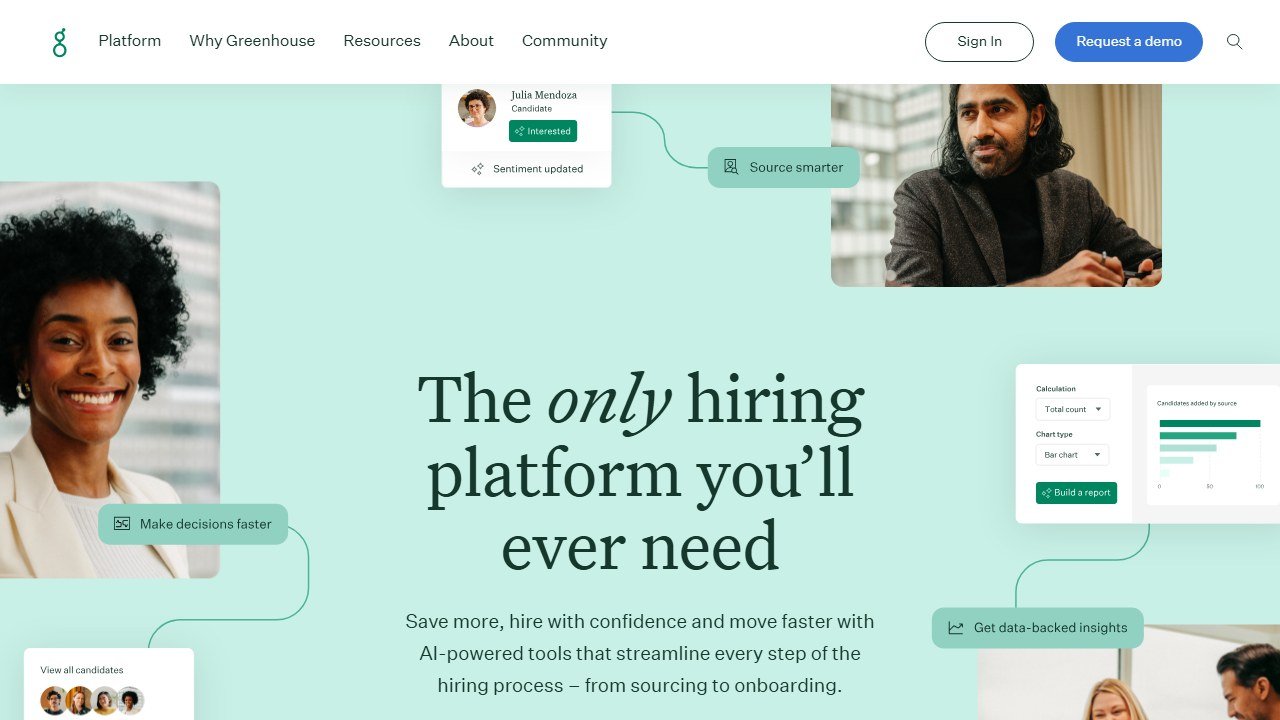
How it works. You build an interview plan per role, assign focus areas to each interviewer, and collect structured feedback on scorecards. Candidates move through defined stages, and the system enforces the process rather than hoping people follow it. That structure is what makes it possible to compare two candidates on the same evidence and to defend a hiring decision months later.
Standout strength. Two things. First, the structured-hiring discipline is genuinely best in class, which matters enormously for fairness, consistency, and audit defensibility. Second, the integration ecosystem: Greenhouse lists more than 500 pre-built integrations spanning HRIS, background checks, assessments, scheduling, and sourcing, so it slots into almost any stack. Its AI features now assist with sourcing, matching, and workflow automation, layered on top of that structure rather than bolted on in place of it.
Pricing. Quote-based and priced per employee, which means the cost scales with your headcount rather than your recruiting volume. Expect implementation and onboarding costs on top of the subscription, and model the per-employee escalation before you sign, because it grows whether or not you add recruiting capacity.
Best for. Mid-market and enterprise teams that hire at scale and need process discipline, compliance support, and defensible decisions. It is overkill for a five-person startup filling two roles.
Where it falls short. The structure that makes Greenhouse powerful is also friction for lean teams that want to move fast and configure little. Setup requires dedicated admin time, and a misconfigured pipeline creates more overhead than a simpler tool would. Smaller teams often find it heavier than they need.
2. Ashby: Best for Analytics and AI
Ashby is the modern challenger that has pulled ahead on the two dimensions the incumbents were weakest on: analytics and native AI. It is an all-in-one platform that folds ATS, CRM, scheduling, and reporting into a single system, which removes the integration seams that slow other stacks down.
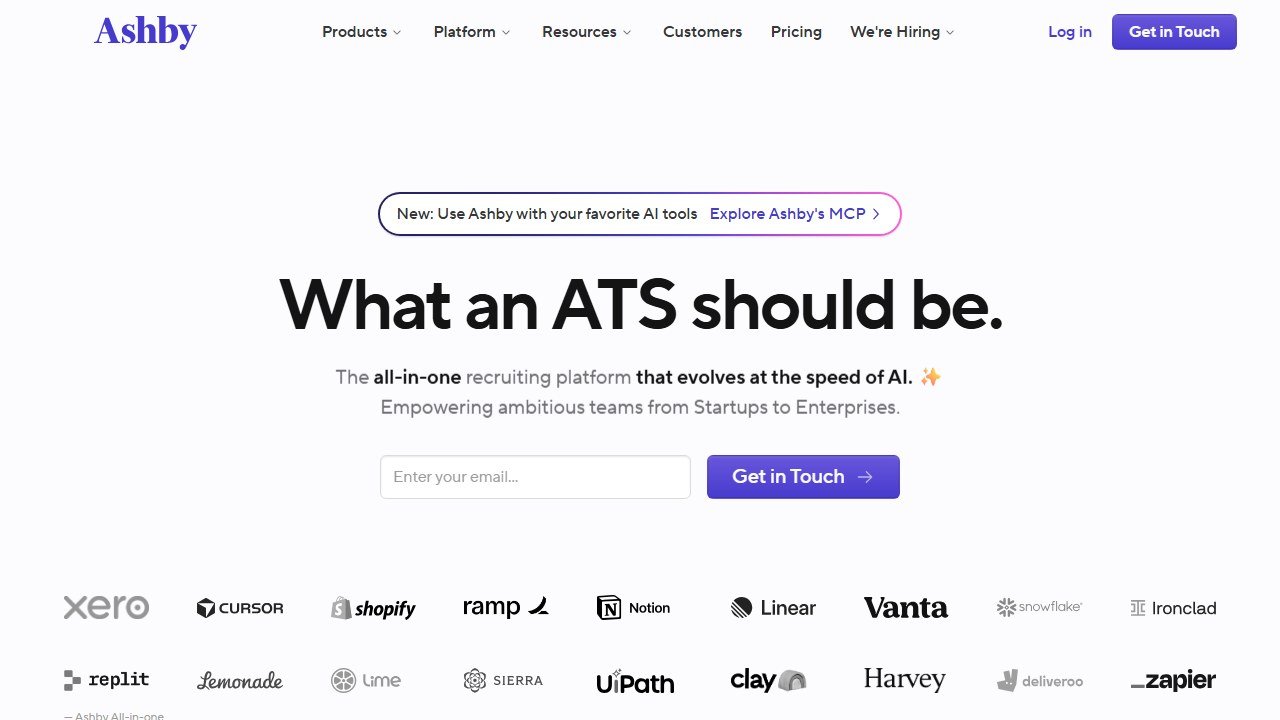
How it works. Rather than being a pure ATS with add-ons, Ashby unifies the recruiting workflow, sourcing and nurture (CRM), pipeline management (ATS), interview scheduling, and analytics, under one roof. Because the data lives in one place, its reporting is not an afterthought bolted onto a pipeline; it is a first-class product.
Standout strength. Analytics and AI. Ashby leads the category on native reporting, with the kind of pipeline, funnel, and efficiency dashboards that talent leaders usually have to export to a BI tool to build. Its AI tooling, candidate filtering, interview summaries, and predictive analytics, is among the most advanced in any ATS, and because it is native it actually gets used.
Pricing. Quote-based and scales with company size. Ashby positions itself for scaling startups through mid-market, and its all-in-one nature can consolidate the cost of a separate ATS, CRM, and scheduling tool into one line.
Best for. Data-driven and fast-scaling teams, especially in tech, that want serious analytics and genuine AI without stitching three products together. It is a particularly strong Greenhouse alternative for teams that found the incumbent’s reporting frustrating.
Where it falls short. It is newer and less universally recognized than Greenhouse, so the integration marketplace, while strong, is not quite as vast. Very large enterprises with deeply entrenched legacy processes may still lean to the incumbents for sheer ecosystem breadth.
3. Lever: Best for Proactive Sourcing
Lever, now branded LeverTRM, is built around a different bottleneck than Greenhouse. Where Greenhouse assumes candidates apply and your job is to evaluate them, Lever assumes the best candidates do not apply and your job is to find and nurture them.
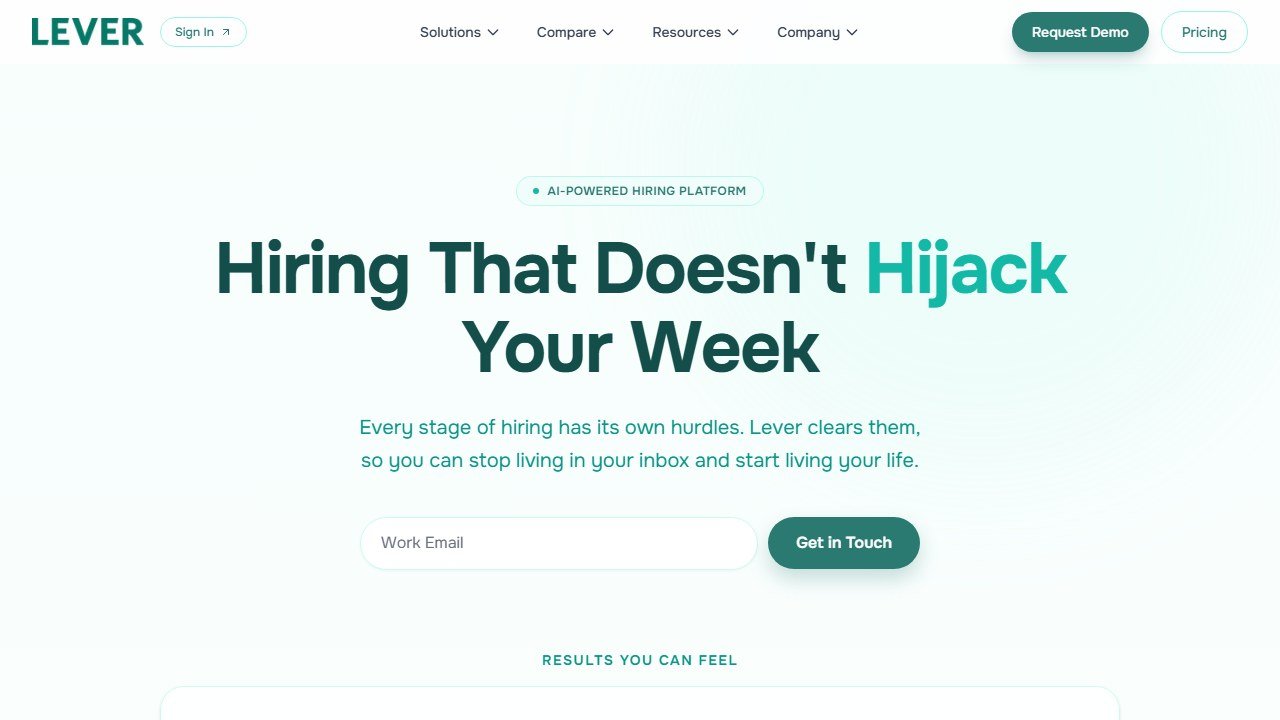
How it works. Lever’s defining feature is that the ATS and the CRM are one product, not two that sync. You build and maintain candidate relationships before a role exists, run nurture sequences, and convert a warm contact into an applicant without losing the relationship history. For teams that source proactively, that continuity is a real workflow advantage.
Standout strength. Relationship-based, outbound hiring. Lever manages both inbound applications and the passive pipeline you are cultivating for roles that may not exist yet. Recruiters consistently rate its usability highly: the interface is modern, the pipeline view is visual, and email integration cuts down manual data entry.
Pricing. Quote-based and per employee, with the same escalation pattern as Greenhouse. Model implementation, migration, and any CRM or analytics add-ons, which can push total cost meaningfully above the base figure.
Best for. Growth-stage companies, roughly 100 to 500 employees, whose hiring depends on sourcing passive talent, especially for senior engineering, executive, and hard-to-fill technical roles.
Where it falls short. Its structured-interviewing tooling is less mature than Greenhouse. Teams that need rigorous scorecard enforcement, granular stage-level compliance, or OFCCP audit trails will find the native tooling thinner and may need add-ons.
4. Workable: Best for SMBs That Need to Launch Fast
Workable is the small-business and lower-mid-market favorite, and its reputation is built on speed: fast setup, broad job-board reach, and time-to-first-posting measured in hours, not weeks.
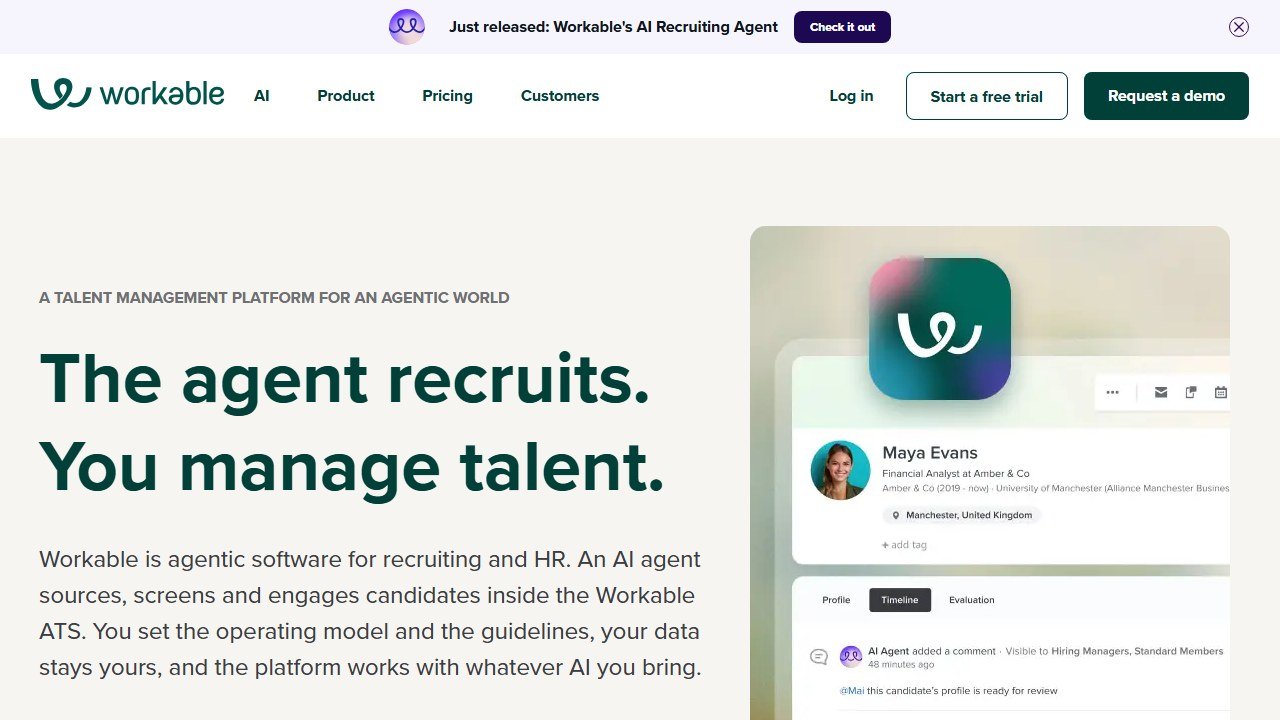
How it works. You post a role, Workable distributes it across a wide network of job boards with one click, and AI sourcing surfaces candidates to fill the top of the funnel. The workflow is deliberately approachable, so a company without a dedicated recruiting ops person can run it.
Standout strength. Fast time-to-launch and reach. For an SMB that needs to get a job in front of candidates today, Workable is one of the quickest paths. In 2025 and 2026 the company repositioned from an ATS toward a broader “future-ready HR platform,” adding HRIS, onboarding, time tracking, and payroll alongside the recruiting core, so it can grow into more of your stack.
Pricing. Among the more transparent in the category, with plans commonly starting around $149 per month for the entry tier and scaling by employee count and feature set. That visibility is itself a selling point in a market full of “contact sales.”
Best for. Small and mid-sized businesses that want to hire quickly with minimal setup and appreciate published pricing, and that may want to consolidate light HRIS and onboarding later.
Where it falls short. As it broadens into an HR suite, its recruiting depth is not as specialized as Greenhouse or as analytically rich as Ashby. High-volume enterprise recruiting teams will outgrow it.
5. Gem: Best AI-First Recruiting Platform
Gem started as a sourcing and CRM tool and has grown into a full AI-first recruiting platform, with AI agents built into the foundation rather than sprinkled on after the fact.
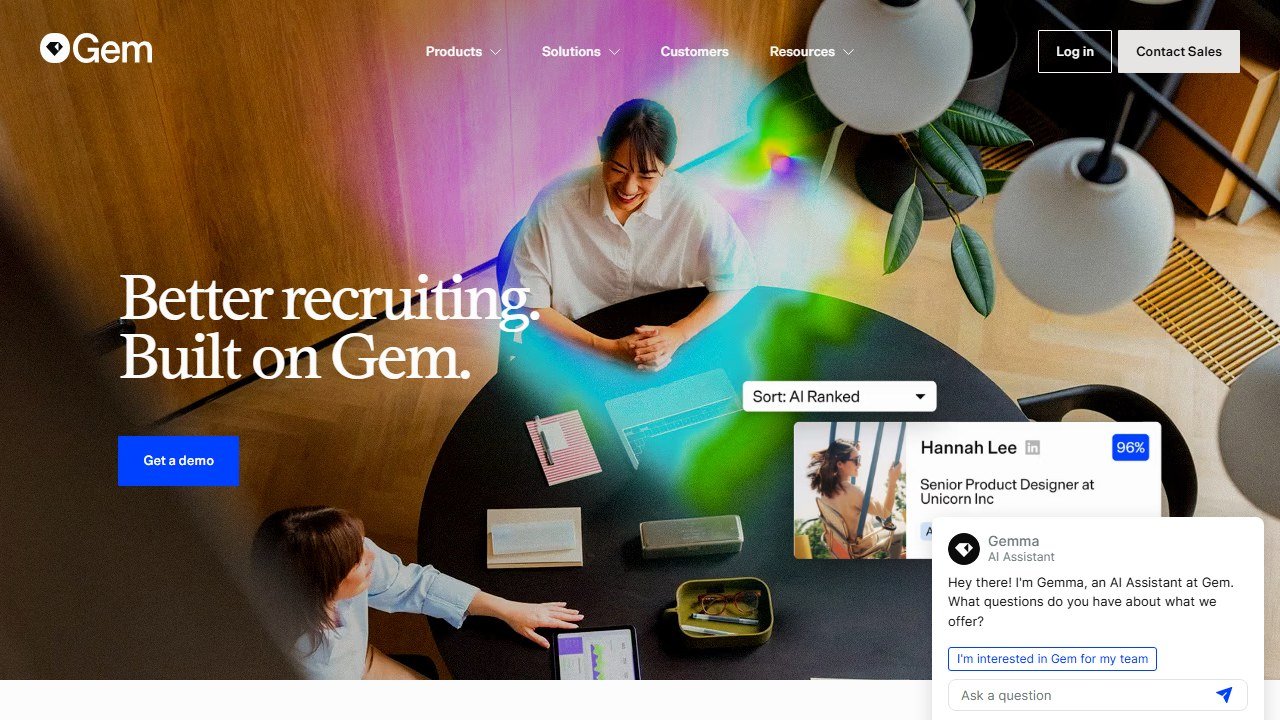
How it works. Gem combines a modern ATS with a mature CRM and analytics layer, and threads AI agents through sourcing, outreach, and pipeline management. Because it grew out of a sourcing pedigree, its outbound and nurture tooling is unusually strong for an all-in-one.
Standout strength. AI-native, all-in-one recruiting for companies that want sourcing, CRM, ATS, and analytics in one system with automation doing real work. It is a strong fit for startups and scaling companies up to roughly 5,000 employees that want a single platform rather than a stack.
Pricing. Quote-based. As an all-in-one, it can replace separate sourcing, CRM, and ATS subscriptions, which changes the cost comparison.
Best for. AI-forward startups and scale-ups that want proactive sourcing and modern automation in the same tool that runs their pipeline.
Where it falls short. Enterprises with heavy compliance requirements may still prefer Greenhouse’s structured-hiring depth, and Gem’s ATS side, while capable, is younger than its sourcing and CRM heritage.
6. BambooHR: Best for Small Business HR Plus Hiring
BambooHR is not a standalone ATS; it is an HR platform with a built-in applicant tracking system, and that is exactly why it belongs on this list for a specific buyer.
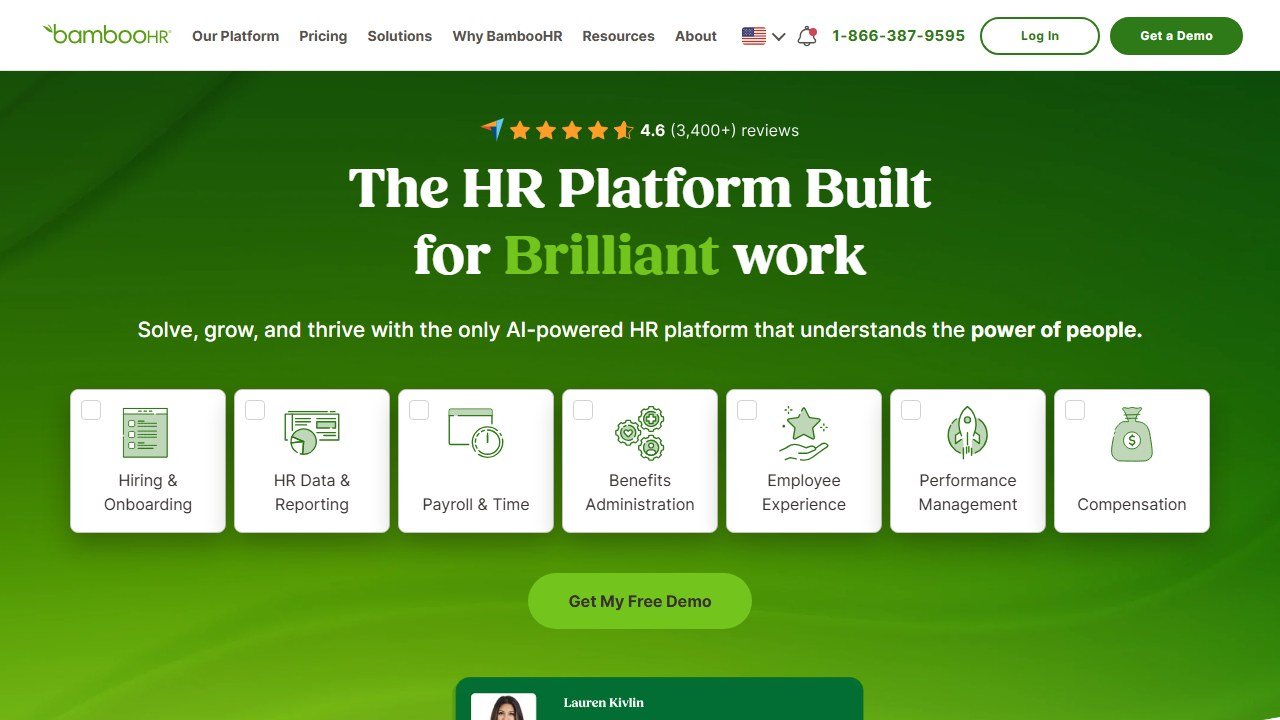
How it works. BambooHR runs employee records, onboarding, PTO, and reporting, and its ATS lets small and midsize teams post jobs, manage candidates, and collaborate between recruiters and hiring managers, all in the same system that will later onboard the person you hire.
Standout strength. One system for hiring and HR. For a small business that does not want to buy and integrate a separate recruiting tool, the seamless handoff from candidate to employee, no data re-entry, no second login, is the whole point. It is a people-first platform with hiring built in from the start.
Pricing. Quote-based and per employee, consistent with its HRIS positioning.
Best for. Small to midsize businesses that want a clean, easy-to-adopt HR platform with enough hiring tooling to run a modest, mostly inbound recruiting process.
Where it falls short. As a recruiting tool it is intentionally lighter than the dedicated ATS platforms. Teams that hire in volume, source heavily, or need deep interview structure and analytics will find it too thin and should pair it with, or move to, a specialist.
7. Pinpoint: Best for In-House Talent Teams
Pinpoint has earned a loyal following among in-house talent teams by pairing a polished product with unusually strong customer support, and by focusing on the internal-recruiting motion rather than trying to be everything.
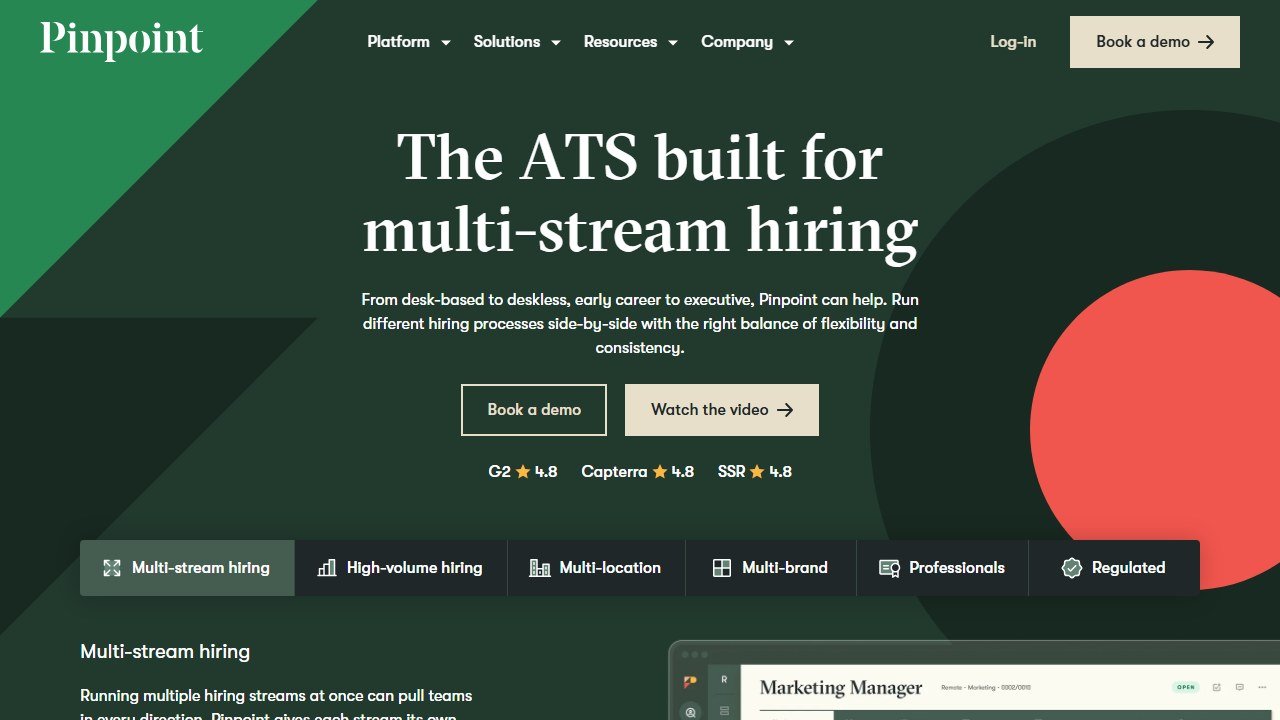
How it works. Pinpoint runs the full in-house hiring workflow, careers-site building, application management, structured interviews, and automation, with a clean interface and templates that let a small internal team punch above its weight.
Standout strength. Careers-site tooling and hands-on support. Pinpoint’s employer-branding and careers-page capabilities are a highlight, and its support reputation is a genuine differentiator for lean teams that do not have a recruiting-ops function to lean on.
Pricing. Quote-based, generally positioned for in-house teams rather than high-volume agencies.
Best for. Internal talent-acquisition teams at small and mid-sized companies that want a well-supported, well-designed ATS with strong employer-branding tools.
Where it falls short. It is less suited to staffing agencies (which need CRM-heavy, client-facing tooling) and to the very largest enterprises that need the deepest integration ecosystems.
8. JazzHR: Best Budget Pick for Small Teams
JazzHR makes structured hiring affordable for small businesses by doing something rare in this market: pricing on a flat rate rather than per seat.
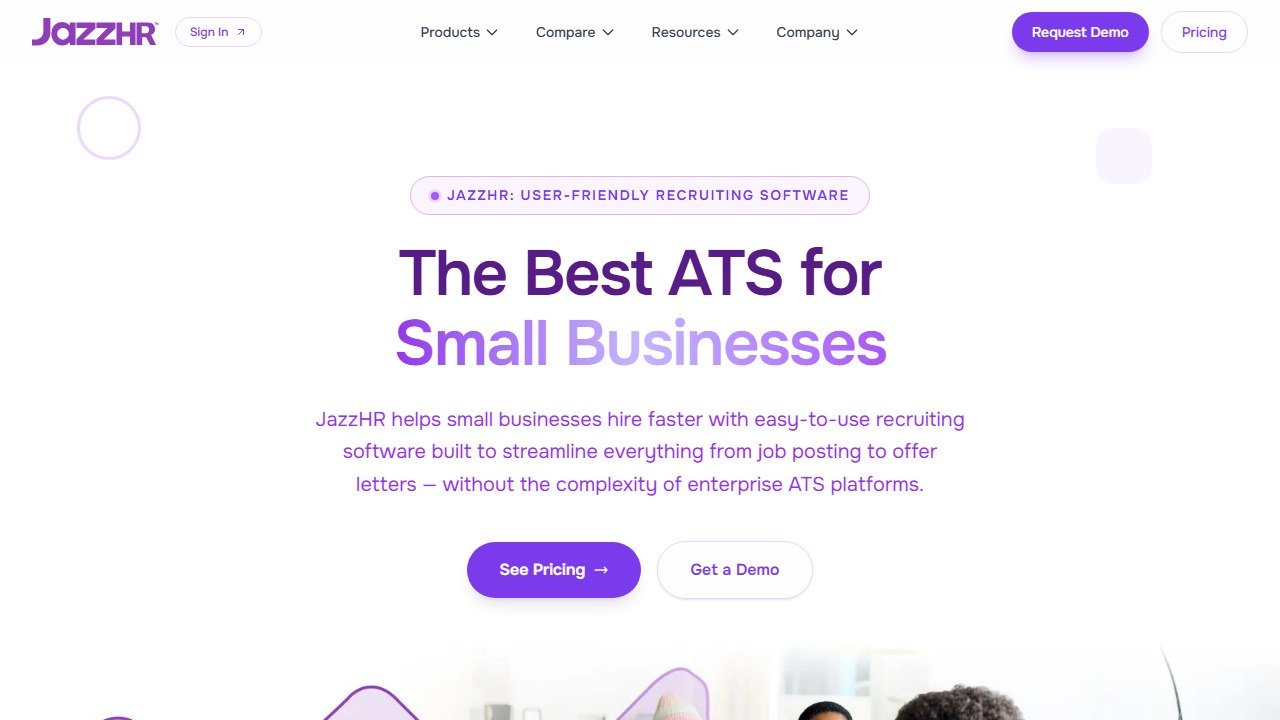
How it works. JazzHR covers the core ATS workflow, posting jobs, syndicating to boards, collecting applications, and moving candidates through customizable stages with scorecards, at a price point built for small teams filling a handful of roles at a time.
Standout strength. Value. The flat-rate model, with plans commonly starting around $75 per month, means adding recruiters or hiring managers does not increase the bill, which is a meaningful advantage for growing small teams where lots of people touch hiring.
Pricing. Transparent and tiered, with no per-user charges on its plans, a deliberate contrast to the per-employee escalation of the enterprise tools.
Best for. Budget-conscious small businesses that want real structured-hiring features, scorecards, syndication, collaboration, without enterprise pricing.
Where it falls short. Its AI and analytics are lighter than the modern leaders, and high-volume or enterprise teams will outgrow it. It is a value pick, not a depth pick.
How to Choose the Right ATS
Ignore the feature checklists for a minute and answer four questions. They will narrow eight options to two.
How big is your team, and how much do you hire? Small business filling a few roles a year: JazzHR, Workable, or BambooHR if you also need HR. Growth-stage: Lever, Ashby, or Gem. Mid-market to enterprise: Greenhouse or Ashby.
Is your bottleneck evaluation or sourcing? If interviews are inconsistent and decisions are gut-driven, you need structure, Greenhouse or Ashby. If the best candidates never apply, you need CRM-driven sourcing, Lever or Gem.
Do you need HR in the same tool? If you want hiring and employee management in one system and your recruiting needs are modest, BambooHR (or Workable’s expanding suite) makes sense. If recruiting is a serious, high-volume function, buy a dedicated ATS.
How much does real AI and analytics matter? If you want native, working AI and best-in-class reporting, Ashby and Gem lead. If you want proven structure with AI layered on, Greenhouse. If you just need the basics affordably, JazzHR.
One more thing that applies to every option: get a written quote that includes implementation, data migration, add-on modules, and per-seat or per-employee escalation. In this category the base subscription frequently understates total cost of ownership by 40 to 60 percent, so the sticker price is the beginning of the negotiation, not the end.
The AI in an ATS is now a regulated feature, and the obligation is yours
Every tool above advertises AI, and the ranking already separates the ones where it does real work from the ones where it summarises an email. There is a second question that no ATS roundup seems to ask, including ours until now: once you switch AI screening on, what are you legally responsible for?
The answer matters because of where the duty sits. In the two regimes that are furthest along, the obligations attach to the employer using the tool, not to the vendor selling it. A vendor can be entirely compliant and you can still be in breach.
New York City: live, enforced, and an employer duty
If you hire in New York City and use an automated employment decision tool, Local Law 144 already applies. It requires that the tool has been subject to a bias audit within one year of its use, that the audit results are made publicly available, and that candidates are given notice 10 business days before the tool is used on them. The Department of Consumer and Worker Protection began enforcing on 5 July 2023, so this is settled law rather than something arriving.
Read that list again as a buyer. Publishing an audit summary and serving candidate notices are things your organisation does, on your website, in your process. An ATS can make them easier and some will supply audit documentation, but none of it discharges the duty for you.
The EU date most people are quoting is the wrong one
The EU AI Act names recruitment explicitly. Annex III point 4 covers AI systems “intended to be used for the recruitment or selection of natural persons, in particular to place targeted job advertisements, to analyse and filter job applications, and to evaluate candidates”. If your ATS ranks or filters applicants, that is the description.
The date is where this gets muddled, and it is worth being careful because a lot of what is written about it is wrong. Several sources state that the hiring obligations apply from 2 August 2026, which has already passed. The Act’s own implementation timeline does not say that. For Annex III high-risk systems, the core obligations in Chapter III apply from 2 December 2027. August 2026 is the general application milestone for the Act, not the date hiring AI becomes high risk.
That is not a reason to relax. It is a reason to know which date you are planning against, because a vendor quoting the earlier one is either selling urgency or has not read the timeline, and both tell you something.
Elsewhere in the United States the picture is moving too fast to plan around. Colorado’s AI law has had its effective date changed more than once and its requirements scaled back, which is exactly why we are not printing a date for it here. Check your own state directly rather than any roundup, including this one.
Five questions before you switch AI screening on
| Ask the vendor | Why it decides something |
|---|---|
| Can you supply a bias audit for this feature, and how recent is it? | New York requires one within a year of use, and you publish the summary |
| Which specific features constitute automated decision making? | Ranking and filtering usually count. Interview scheduling usually does not |
| Can AI scoring be turned off per role or per region? | The cheapest compliance strategy is often not using it where the rules bite |
| What is logged, and can we export the decision trail? | You need to reconstruct why a candidate was rejected, possibly years later |
| Who is the data controller for candidate data, and where is it processed? | Separate from the AI question, and separate from where your ATS is hosted |
If a vendor cannot answer the first two in writing, that is the answer. None of this makes AI screening a bad idea. It makes it a decision with a paper trail attached, which is a different thing from the one the category markets.
Faz says: The compliance question is not “is this tool legal”. It is “what do I have to do once I turn this on”. Those have different answers and only the second one is yours. Ask it before the contract, because afterwards you are negotiating from inside a renewal.
Verdict
The best applicant tracking system in 2026 is the one that matches your team size and fixes your actual bottleneck. Greenhouse remains the overall standard for mid-market and enterprise teams that need structured, defensible, auditable hiring at scale. Ashby is the sharpest modern choice for teams that want native analytics and genuine AI, and it is the Greenhouse alternative to shortlist first. Lever and Gem win when sourcing passive candidates is the job, and Workable, BambooHR, Pinpoint, and JazzHR each own a clear slice of the small-business and in-house market on speed, HR consolidation, support, or price.
Name your bottleneck, size your team, and get a full written quote before you commit. For where an ATS fits in the wider hiring stack, see our best AI recruiting software guide and our best AI tools for HR pillar. If you are choosing between the two structured-hiring leaders, our Greenhouse vs Lever comparison breaks down the decision in detail.

Written by
FazFaz is the founder of AIToolsBakery. Some tools here are tested hands on. Others are assessed from vendor documentation and pricing verified on the live page, and every review says which one it is. Sponsors can buy a position in a guide. They cannot buy the score, the criticism, or silence about a better option.
How we test and how we make money →