An HRIS is the system of record for your entire workforce. It is where employee records, payroll, benefits, time off, onboarding, and performance all live, and it is the difference between an HR function that runs on one source of truth and one that runs on spreadsheets and three tools that never quite agree on how many people you employ. As companies go global and distributed, the HRIS has become one of the most important pieces of software a business buys, because every other people process depends on the data inside it being correct.
Start with what an HRIS actually is. It manages the whole employee lifecycle, from the day a hire signs an offer to the day they leave, as one continuous record. That is different from an applicant tracking system, which manages candidates before they are employees and hands off at the offer stage. A good HRIS is where that handoff lands. This ranking is organized around the question that decides fit more than any feature list: how big is your company, and how global is your workforce. Every tool below is placed where it is genuinely the best answer, with honest notes on payroll depth, AI substance, pricing, and where each one falls short.
Top pick: Rippling is the best HRIS software overall in 2026, unifying HR, IT, and payroll on a single employee record with the deepest automation in the category. Deel is the best choice for global teams that hire across borders, and BambooHR is the best fit for small businesses that want clean, easy-to-adopt core HR.
Faz says: The fastest way to shortlist an HRIS is to answer two questions before you sit through a single demo. First, where do your people work? If you employ or want to employ people in multiple countries without opening local entities, that need alone reshapes the list, and Deel or Rippling jump to the top. Second, is payroll the center of gravity or a feature? Some buyers are really shopping for payroll with HR attached, and others want an HR system of record that happens to run payroll. Name which one you are, because a tool built payroll-first and a tool built record-first feel completely different to use even when the feature grids look identical.
Saru says: This ranking draws on each vendor’s official product and pricing pages, published feature documentation, and aggregated user feedback, current to 2026. HRIS pricing is unusually messy: most vendors quote per employee per month, bundle payroll and benefits differently, and charge setup and add-on fees that never appear on the pricing page. Treat every figure here as a starting point as of 2026, and confirm the current per-employee price, including implementation and payroll add-ons, with the vendor before you buy.
If your HRIS evaluation is really about headcount forecasts and org modeling rather than records and payroll, start with our guide to the best AI workforce planning and forecasting tools, then come back for the system of record.
How We Ranked These
An HRIS earns its place by being the reliable system of record for your whole workforce, not by having the longest module list. We weighted six things:
1. Company-size fit. A 15-person startup and a 15,000-person enterprise need almost nothing in common, so we placed each product where it is genuinely the best answer, not where it technically runs.
2. Global and payroll reach. Native payroll, employer-of-record coverage, and multi-country compliance separate a domestic tool from a global one.
3. Core HR depth. Records, onboarding, time off, benefits administration, documents, and reporting are the job, so we looked at how complete and how usable each core is.
4. Automation and AI substance. The best modern HRIS automates the busywork, provisioning, approvals, offboarding, and uses AI for real tasks rather than a chatbot bolted onto a help center.
5. Integrations and ecosystem. An HRIS sits at the center of a stack of payroll, benefits, ATS, IT, and finance tools, and integration depth decides how much manual re-entry survives.
6. Total cost of ownership. The per-employee base rate is rarely the real number. We flagged where implementation, payroll add-ons, and per-module pricing push the true cost well above the sticker.
The Best HRIS Software at a Glance
| HRIS | Best for | Global reach | AI/automation | Starting price (as of 2026) |
|---|---|---|---|---|
| Rippling | All-in-one HR, IT, payroll | High, global payroll and EOR | Very high | Quote-based, per employee |
| Deel | Global teams and contractors | Very high, 150-plus countries | High | Contractors from about $49/mo |
| HiBob | Mid-market, culture-forward | High, global core HR | High | Quote-based, per employee |
| BambooHR | Small business core HR | US-focused, add-on payroll | Medium | Quote-based, per employee |
| Gusto | US small business payroll | US only | Medium | From about $49/mo plus per person |
| Paycor | Mid-market payroll-led HR | US-focused | Medium | Quote-based, per employee |
| Workday | Large enterprise | Very high, global HCM | High | Quote-based, enterprise |
| Factorial | AI-native SMB all-in-one | Growing, multi-country | High | From about $6/user/mo |
Prices vary by employee count, billing frequency, and payroll add-ons, and change over time. Confirm current pricing with each vendor.
1. Rippling: Best Overall
Rippling is the clearest example of what a modern HRIS can be when it is built as one system instead of a suite of acquired parts. Its founding idea is that HR, IT, and finance all run off the same employee record, so hiring, provisioning a laptop and software accounts, enrolling someone in benefits, and running their first payroll are steps in one automated flow rather than four disconnected tools passing data around.
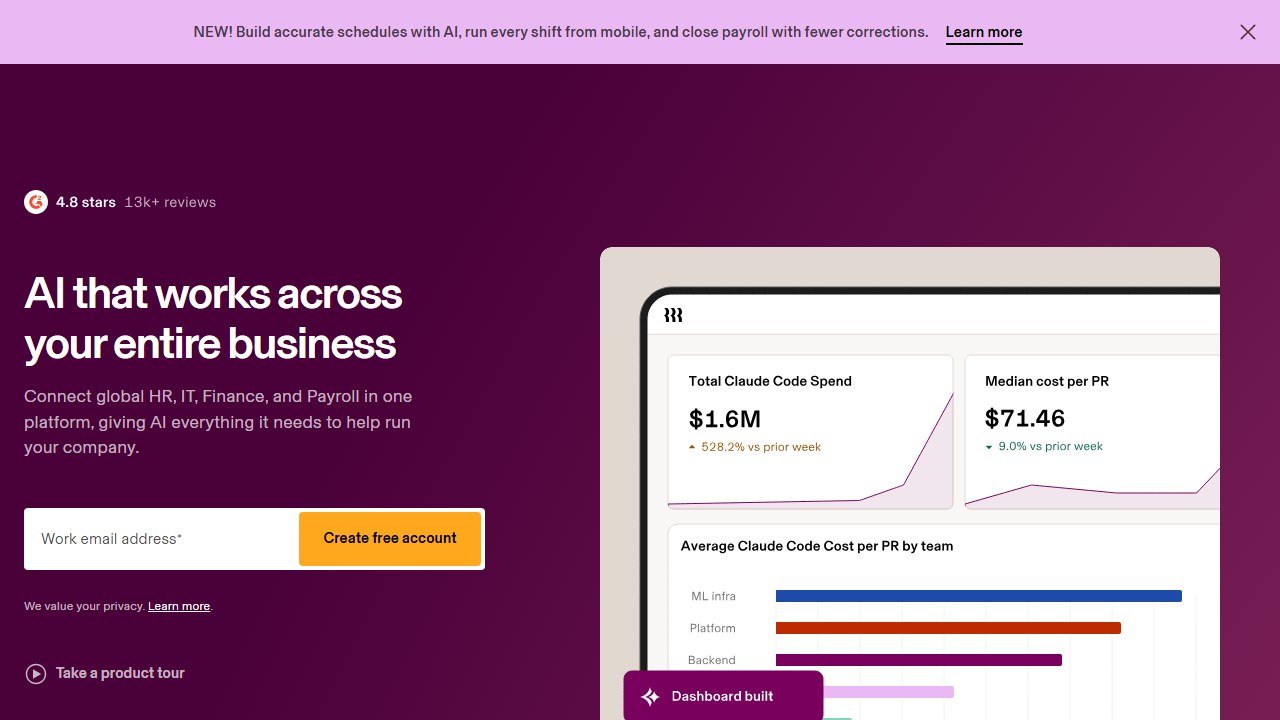
How it works. Everything hangs off a single employee record. When you hire someone, Rippling can trigger payroll setup, benefits enrollment, device shipping, and app access from one action, and offboarding reverses all of it in one click. Its workflow automation engine lets you build custom rules across HR and IT, where it pulls ahead of tools that only manage HR data.
Standout strength. Unification and automation depth. Rippling is the strongest choice if your goal is to collapse a stack of HR, payroll, and IT tools into one platform where changes propagate automatically. The automation is genuinely powerful, not cosmetic, and it scales from a small company into the mid-market without you outgrowing it.
Pricing. Quote-based and priced per employee per month, with a modular structure: you start with a base platform and add the HR, payroll, IT, and spend modules you need. That modularity means the real number depends heavily on which pieces you turn on, so model the full bundle before you sign rather than anchoring on the entry rate. As of 2026, confirm current pricing directly with Rippling.
Best for. Companies that want a single system of record spanning HR, payroll, and IT, especially those tired of stitching together point tools. It suits startups through the mid-market and increasingly larger companies. For the full breakdown, see our Rippling review.
Where it falls short. The breadth is also the catch: because Rippling sells many modules, the price can climb as you add them. Buyers who only want simple core HR may find it heavier and pricier than a focused tool like BambooHR.
2. Deel: Best for Global Teams
Deel is the pick when your workforce crosses borders. It began as a contractor-payments and compliance tool and grew into a full global HR platform, and it remains the strongest answer for companies that want to hire employees and contractors around the world without opening a legal entity in every country.
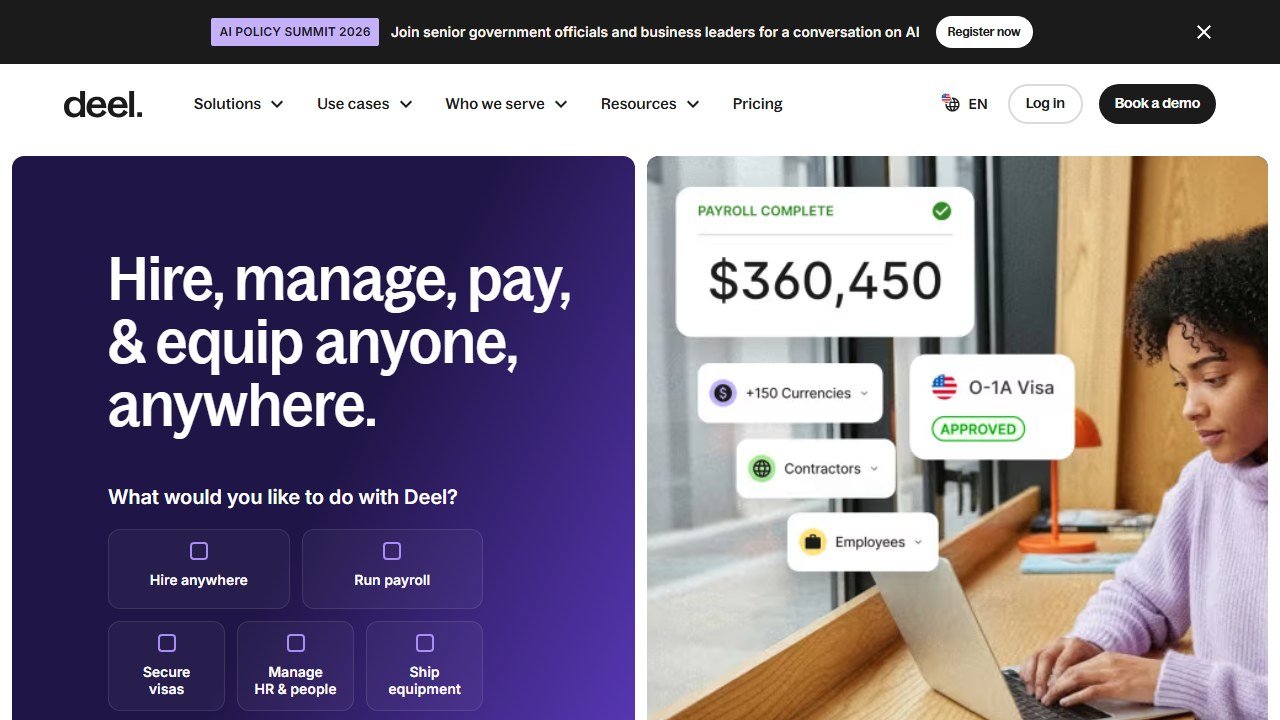
How it works. Deel’s core is its employer-of-record (EOR) service, which lets you employ someone in a country where you have no entity by having Deel act as the legal employer, handling local contracts, payroll, taxes, and compliance. Alongside that it runs global contractor management, global payroll, and a growing HRIS layer, so a distributed company can manage everyone in one place.
Standout strength. Global coverage and compliance. Deel supports hiring in 150-plus countries, which is category-leading, and it handles the local legal and tax complexity that makes international hiring painful. For a company going global, that reach removes the single biggest barrier to hiring the best person regardless of where they live.
Pricing. More transparent than most of its peers, which is a real advantage in this category. As of 2026, contractor management commonly starts around $49 per contractor per month, and EOR employment is priced as a flat per-employee-per-month fee that varies by country. Always confirm the current per-country EOR rate, since it moves with local costs. See our Deel review for the detail.
Best for. Companies with distributed, international teams, from a startup hiring its first few people abroad to a scale-up employing across dozens of countries, that need compliant global employment and payroll.
Where it falls short. As a domestic HRIS for a single-country workforce, Deel is less of an obvious pick, and its core HR feature set for a purely local team is thinner than its world-class global employment engine. If you hire only in one country, weigh it against the domestic specialists. We put the two leaders head to head in Rippling vs Deel.
3. HiBob: Best for Mid-Market and Global Culture-Forward Companies
HiBob, whose platform is called Bob, is the modern mid-market favorite, built around a belief that an HRIS should support culture and engagement, not just store records. It has become a default choice for fast-growing, global, distributed companies that find legacy suites clunky and small-business tools too thin.
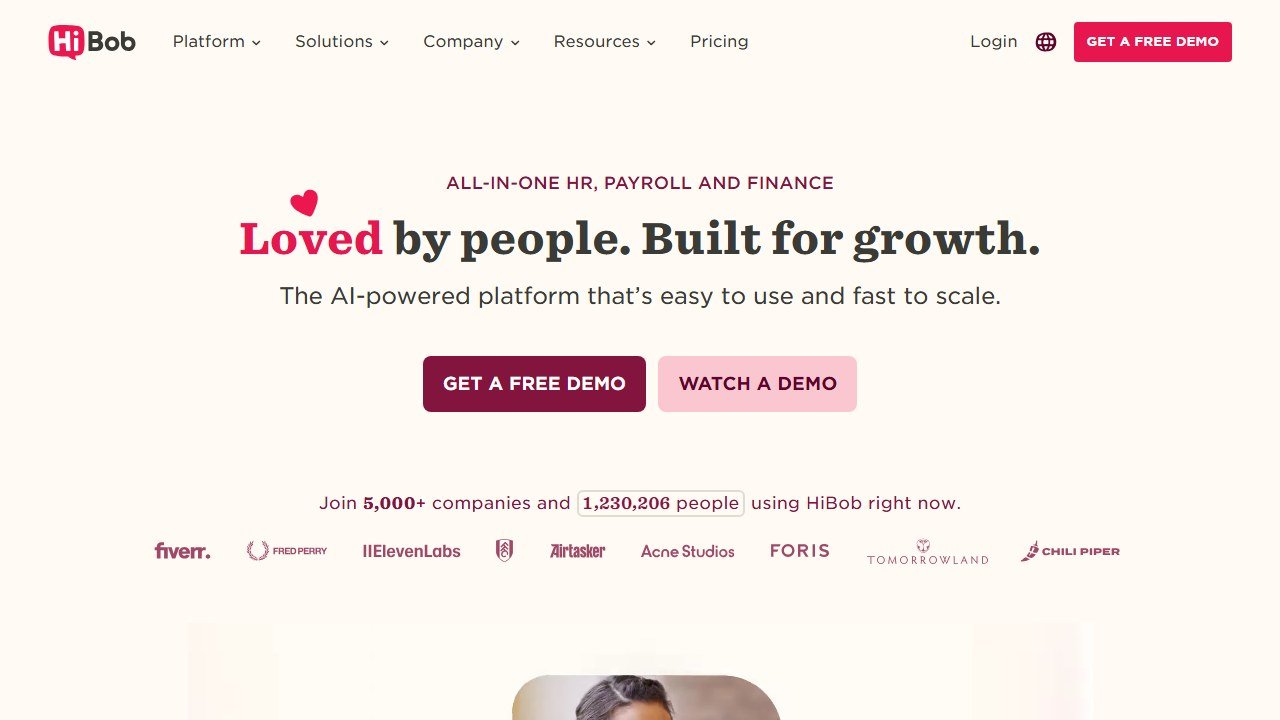
How it works. Bob runs core HR, onboarding, time and attendance, compensation, and workforce data with a modern, social interface that employees actually engage with, including homepages, shoutouts, and club groupings that surface culture inside the tool. It layers people analytics on top so HR leaders can track headcount, attrition, and engagement trends without exporting to a separate system.
Standout strength. The blend of a genuine HR system of record with engagement and analytics, wrapped in a UI designed for distributed, culture-forward companies. Bob is especially strong for global mid-market teams that want configurability and modern people analytics without the weight of an enterprise HCM.
Pricing. Quote-based and per employee per month, positioned for the mid-market. As of 2026, confirm current pricing and included modules with HiBob directly, since compensation, payroll connectors, and analytics tiers affect the total.
Best for. Mid-market companies, roughly 100 to 1,000-plus employees, particularly global and distributed ones, that want a modern, engagement-oriented HRIS with strong analytics.
Where it falls short. Bob is not primarily a payroll engine; it partners and integrates for payroll rather than running full native payroll everywhere, so payroll-first buyers should check coverage in their countries. It is also built for the mid-market, so a five-person startup will find it more than it needs.
4. BambooHR: Best for Small Business
BambooHR is the small-business standard for core HR, and its reputation rests on something underrated: people actually adopt it. It is clean, approachable, and quick to set up, exactly what a growing company without a large HR team needs from its first real system of record.
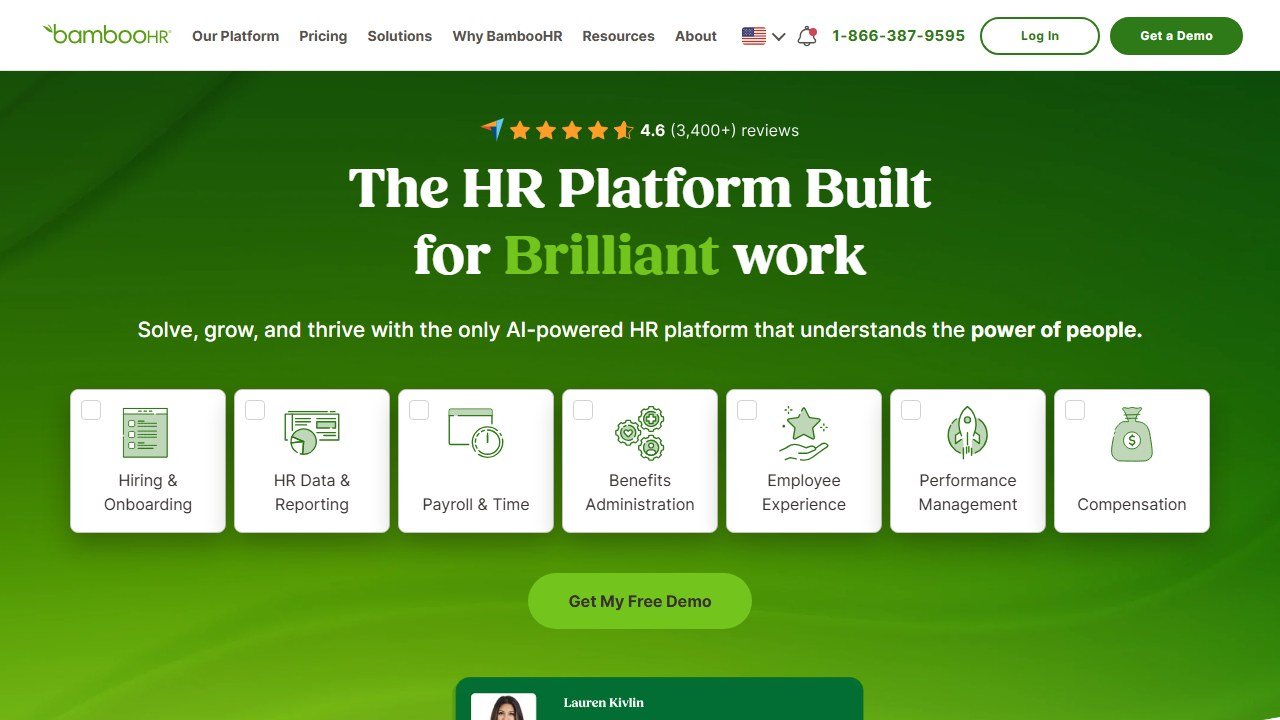
How it works. BambooHR centralizes employee records, onboarding, time off, documents, and reporting in a friendly interface, and includes a built-in applicant tracking system so a small company can run hiring and HR in one tool. Payroll and benefits administration are available as add-ons in the US.
Standout strength. Ease of adoption. BambooHR nails the core HR experience for small and midsize teams, with a design that non-specialists can run confidently on day one. For a company moving off spreadsheets to its first HRIS, it is one of the lowest-friction paths to a real system of record.
Pricing. Quote-based and per employee per month, with payroll and benefits as paid add-ons. As of 2026, confirm the current per-employee rate and whether you need the payroll module, which changes the total meaningfully.
Best for. Small and midsize businesses, especially US-based, that want a clean, easy core HRIS with onboarding and a built-in ATS, and the option to add payroll later.
Where it falls short. It is deliberately lighter than the all-in-one platforms. Companies that need deep workflow automation, global payroll and EOR, or heavy IT provisioning will outgrow it, and its strength is domestic rather than global employment.
5. Gusto: Best for US Small Business Payroll
Gusto approaches the category from the payroll side and does it better than almost anyone for small US companies. If your real need is full-service payroll with HR and benefits wrapped around it, and everyone you employ is in the United States, Gusto is one of the friendliest and most complete options.
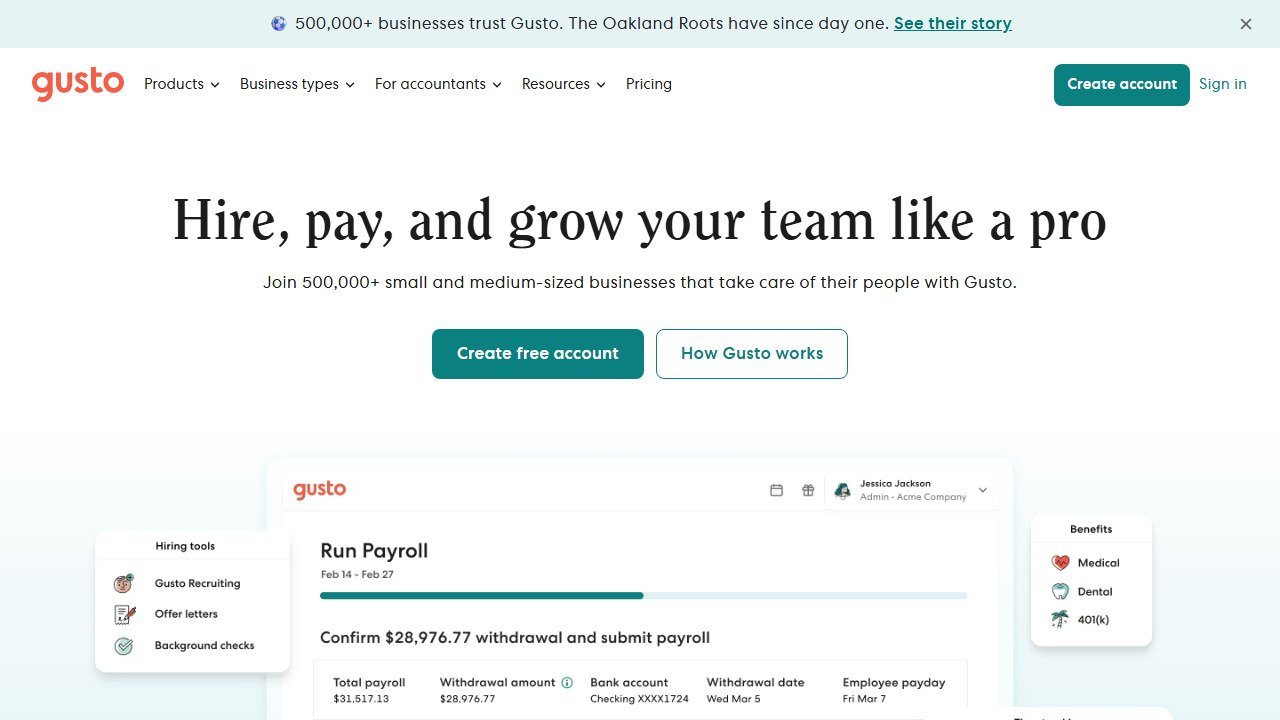
How it works. Gusto runs full-service payroll, filing federal, state, and local taxes automatically, and pairs it with benefits administration, onboarding, time tracking, and core HR records. It is built so a founder or office manager without a payroll background can run payroll confidently.
Standout strength. Payroll done well for small businesses. Gusto’s automatic tax filing, health-insurance and 401(k) administration, and clean employee self-service make it a standout for US small companies that want payroll and HR handled together without complexity.
Pricing. Among the more transparent in the category. As of 2026, plans commonly start around a base monthly fee (roughly $49) plus a per-person monthly charge, scaling with headcount and plan tier. Confirm the current base-plus-per-person rate with Gusto, since tiers and promotions shift.
Best for. US-based small businesses that want excellent full-service payroll with solid HR and benefits attached, run by non-specialists.
Where it falls short. Gusto is US-only, so it is not an option for companies employing internationally, and its HR depth and automation are lighter than the all-in-one platforms. As you scale into the mid-market or go global, you will likely outgrow it.
6. Paycor: Best for Mid-Market Payroll-Led HRIS
Paycor is the pick for growing US companies that want a payroll-led HRIS with real workforce-management and compliance depth. It sits a tier up from small-business payroll tools, built for mid-market organizations that need more structure around scheduling, labor compliance, and reporting.
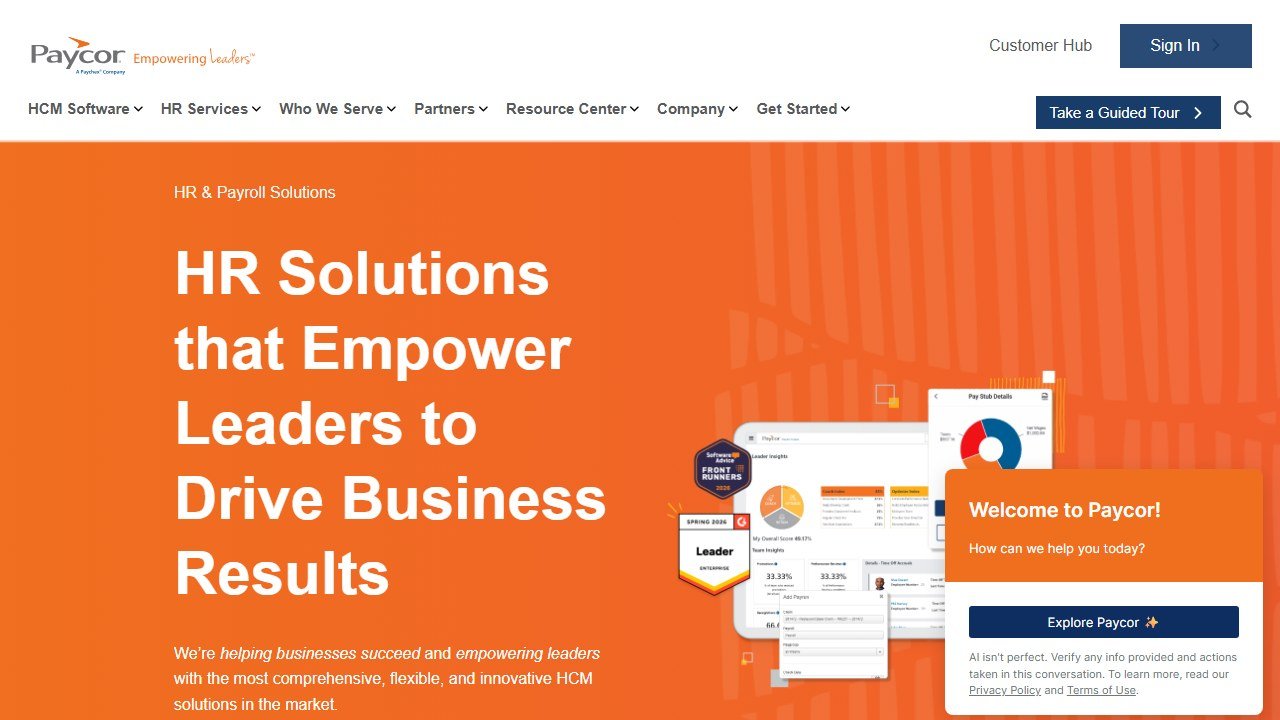
How it works. Paycor runs payroll as its backbone and builds core HR, benefits administration, time and attendance, scheduling, and talent tools around it, aimed at industries like healthcare, manufacturing, and hospitality where workforce management and compliance are demanding.
Standout strength. Payroll and workforce management for the mid-market. Paycor is strong where hourly workforces, complex scheduling, and labor compliance matter, and it gives growing companies more depth than a small-business tool without jumping to a full enterprise suite.
Pricing. Quote-based and per employee per month, structured in tiers. As of 2026, confirm current pricing and which modules are bundled with Paycor, since talent and workforce-management add-ons affect the total.
Best for. US mid-market companies, particularly those with hourly and shift-based workforces, that want a payroll-first HRIS with strong compliance and workforce management.
Where it falls short. It is US-focused, so it is not a global-employment solution, and buyers who want a records-first, culture-forward experience may find it more operational and payroll-centric than tools like HiBob. Implementation is a bigger project than plug-and-play small-business tools.
7. Workday: Best for Large Enterprise
Workday is the enterprise HCM standard, and for large, global organizations it is often the answer by default. Where the small and mid-market tools focus on ease and speed, Workday focuses on depth, governance, and the ability to run HR and finance for tens of thousands of people across the world on one platform.
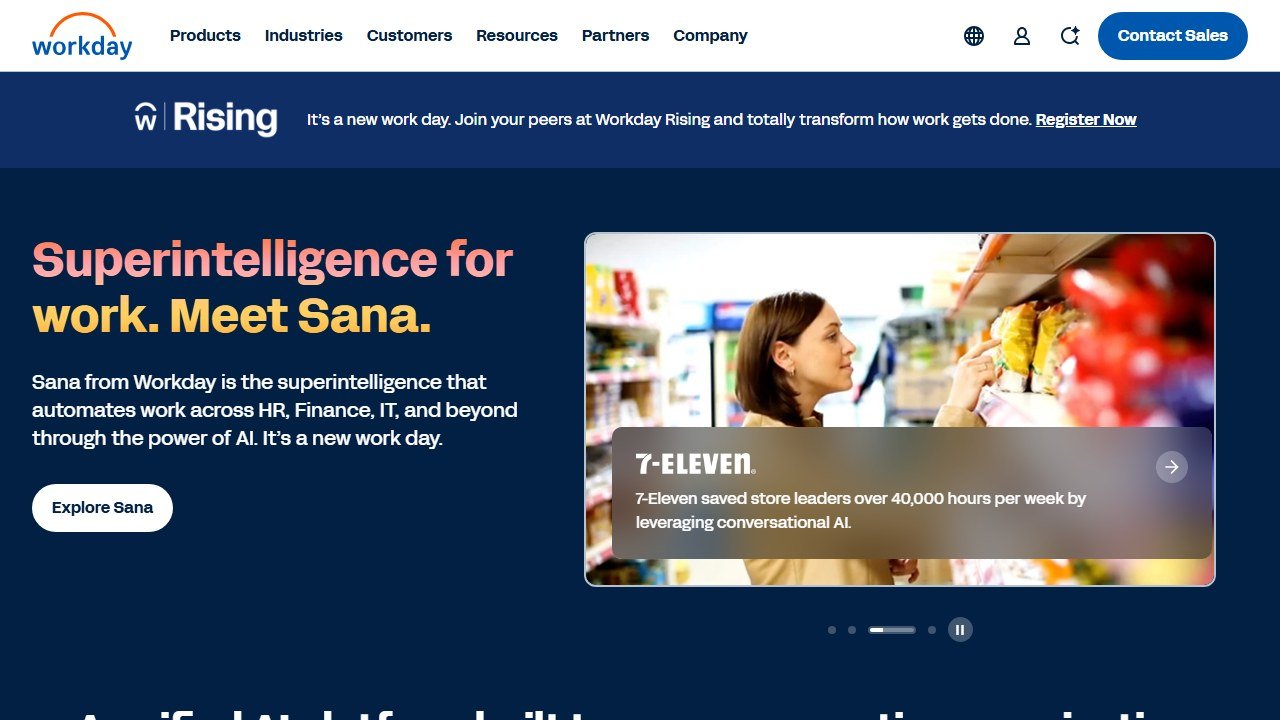
How it works. Workday unifies human capital management with financials, planning, and analytics in a single cloud system, covering the full employee lifecycle, global payroll and compliance, talent and performance, workforce planning, and deep reporting. Its analytics tools are built for organizations that treat workforce data as a strategic asset.
Standout strength. Enterprise scale and depth. Workday handles global complexity, multi-entity structures, sophisticated security and governance, and heavy reporting requirements that overwhelm lighter tools. For a large multinational, its combination of HCM and financials on one platform is a genuine strategic advantage.
Pricing. Quote-based and enterprise-level, with significant implementation projects typically run through partners. As of 2026, expect pricing and deployment costs well above the mid-market tools, and confirm the full picture, including implementation, directly with Workday.
Best for. Large enterprises and global organizations, typically thousands of employees, that need deep, governed HCM with financials, planning, and analytics on one platform.
Where it falls short. It is overkill and over-budget for small and midsize companies, and implementation is a long, resource-intensive project. Smaller teams will find it heavier, slower to deploy, and more expensive than they need.
8. Factorial: Best AI-Native All-in-One for SMBs
Factorial is the modern, AI-forward challenger built for small and midsize businesses that want an all-in-one HR platform without enterprise weight or cost. It has grown quickly by folding core HR, time management, documents, and increasingly payroll and AI features into one approachable system.
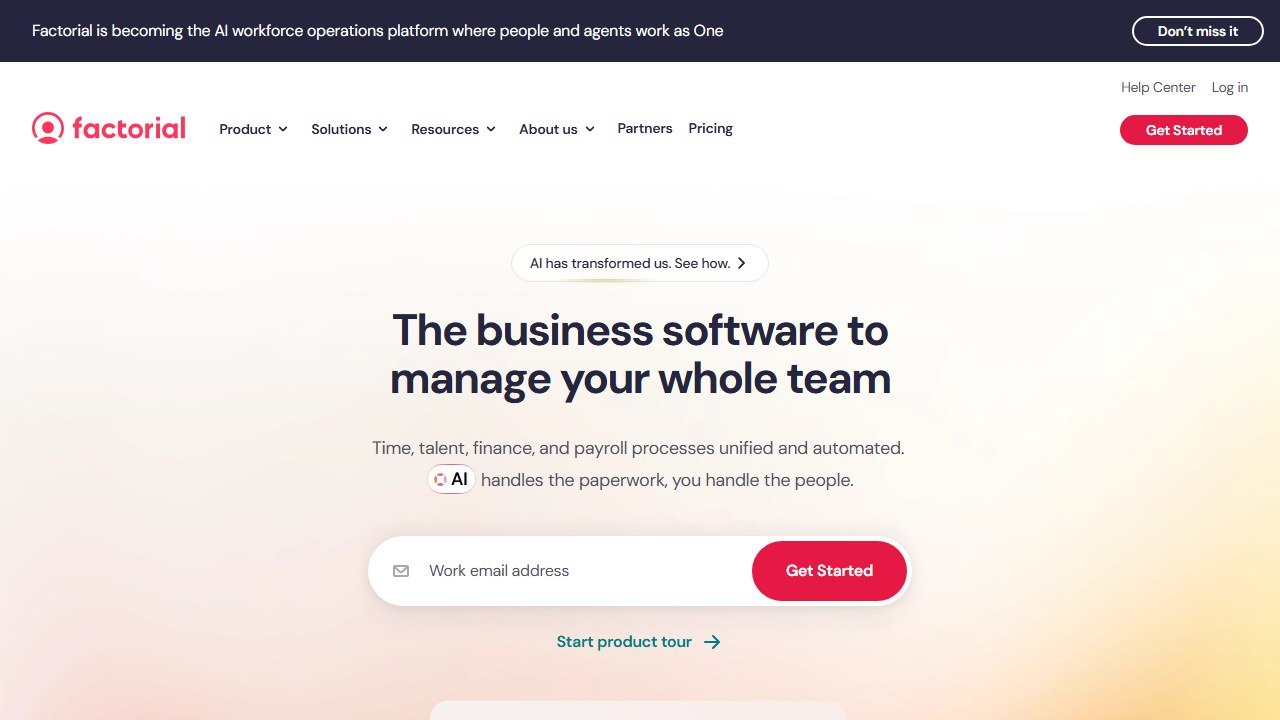
How it works. Factorial centralizes employee records, time off and attendance, document management, expenses, and onboarding, and layers AI features across the platform to automate routine HR tasks and surface insights. It is designed to be an affordable single system for an SMB that wants more than a spreadsheet but less than a Rippling.
Standout strength. AI-native, all-in-one HR at an SMB-friendly price. Factorial is a strong fit for smaller companies that want a modern, automation-forward platform covering the core lifecycle in one tool, with multi-country support as they grow.
Pricing. Among the more accessible in the category. As of 2026, plans commonly start around $6 per user per month for core features, scaling by module and headcount. Confirm the current per-user rate and which modules are included with Factorial, since payroll and advanced features affect the total.
Best for. Small and midsize businesses that want an affordable, AI-forward, all-in-one HRIS covering core HR, time, and documents, with room to add modules.
Where it falls short. As a younger, SMB-focused platform, its payroll and global-employment depth are not on the level of Rippling, Deel, or the enterprise tools, and large or heavily regulated organizations will need more. It is a value-and-modernity pick, not an enterprise-depth pick.
How to Choose the Right HRIS
Ignore the module grids for a minute and answer four questions. They will narrow eight options to two.
How big is your company, and how fast are you growing? Small business: BambooHR for clean core HR, Gusto if payroll is the priority, or Factorial for an affordable AI-forward all-in-one. Mid-market: HiBob for a culture-forward record, Paycor for payroll-led operations, or Rippling for unification. Large enterprise: Workday.
How global is your workforce? If you employ or want to employ people across borders without local entities, Deel leads on EOR reach and Rippling is the strongest unified alternative. If everyone is in one country, the domestic specialists become far more competitive on price and fit.
Is payroll the center of gravity or a feature? If you are really buying payroll with HR attached, Gusto (small US) and Paycor (mid-market US) are built that way. If you want a records-first system of record that runs payroll among many things, Rippling, HiBob, and Workday fit better.
Do you want one unified system or best-of-breed? If collapsing HR, payroll, and IT into one automated platform is the goal, Rippling is the pick. If you would rather have a focused HR core and integrate the rest, BambooHR, HiBob, or Factorial pair a clean system of record with the tools you already use.
One thing applies to every option: get a written quote that includes implementation, payroll and benefits add-ons, and per-employee escalation. The base per-employee rate frequently understates true cost once you add the modules you actually need, so the sticker price is the start of the conversation, not the end.
Remember that an HRIS is not an applicant tracking system: it manages people once they are employees, while an ATS manages candidates before they are hired, and the two connect at the offer stage. If hiring is your current bottleneck, start with our best applicant tracking systems guide and pair the winner with the HRIS you choose here.
Verdict
The best HRIS software in 2026 is the one that matches your company size and your workforce’s geography. Rippling is the overall standard for companies that want one system of record spanning HR, IT, and payroll, with automation deep enough that you stop stitching point tools together. Deel is the sharpest choice when your team is global, leading on employer-of-record reach and pricing transparency, and it is the first alternative to shortlist for cross-border hiring. HiBob owns the culture-forward mid-market, Workday owns the enterprise, and BambooHR, Gusto, Paycor, and Factorial each own a clear slice of the small-business and mid-market on ease, payroll, workforce management, or AI-native value.
Name your company size, map where your people work, and get a full written quote including implementation and payroll add-ons before you commit. For where an HRIS fits in the wider people stack, see our best AI tools for HR pillar, and pair your choice with the right hiring system in our best applicant tracking systems guide. If your team is global, our Rippling review, Deel review, and Rippling vs Deel comparison cover the two leaders in depth.

Written by
FazFaz is the founder of AIToolsBakery. Some tools here are tested hands on. Others are assessed from vendor documentation and pricing verified on the live page, and every review says which one it is. Sponsors can buy a position in a guide. They cannot buy the score, the criticism, or silence about a better option.
How we test and how we make money →