Rippling and Deel are two of the biggest names in modern workforce software, and they arrived at the same market from opposite directions. Deel was built international-first, designed from day one to hire, pay, and stay compliant with contractors and employees across borders. Rippling started as a US HR and payroll system, then expanded outward into a single platform that unifies HR, IT, and payroll. Both now pitch themselves as global workforce platforms, so the honest question is not which is better in the abstract, but which fits the shape of your team. This side-by-side breaks down where each genuinely pulls ahead.
Bottom line: pick Deel if hiring internationally is your core need, with owned entities in 150-plus countries, strong contractor and global payroll, and transparent published pricing. Pick Rippling if you want one system for HR, IT, and payroll with deep HRIS, benefits, and device management, mostly US-anchored and quote-based. Both keep growing fast.
Faz says: Decide on the center of gravity of your team first, because that settles most of this. If your headcount is spread across many countries and you are hiring contractors and employees abroad, Deel was purpose-built for exactly that, and its owned-entity network means fewer third-party middlemen between you and a compliant hire. If your team is mostly US-based and your real pain is stitching together HR, payroll, benefits, and laptop provisioning across a dozen disconnected tools, Rippling’s unified platform is the stronger buy. Trying to force the US-first tool to be your global engine, or the global tool to be your all-in-one IT system, is where teams end up unhappy.
Saru says: This comparison draws on both vendors’ official documentation, published pricing where available, their stated country coverage, and aggregated user feedback, current to 2026. Pricing in this category is often quote-based and changes frequently, and country coverage expands constantly. Confirm current per-employee and per-user pricing, and that your specific countries and entity model are supported, directly with each vendor before you buy.
The Short Answer
Choose Deel if global hiring is the job to be done. It was engineered international-first, owns legal entities in a very large number of countries, is strong on contractors and global payroll, and publishes clear starting prices. Choose Rippling if you want one platform to run HR, IT, and payroll together, with deeper HRIS, benefits administration, and device management, primarily for a US-anchored team. Many companies that scale globally end up using both.
Comparison Table
| Rippling | Deel | |
|---|---|---|
| Origin | US HR and payroll, expanded to unified HR plus IT | International-first, built for global hiring |
| Best for | US-anchored teams wanting one HR, IT, and payroll system | Companies hiring contractors and employees across borders |
| Global coverage | 80-plus countries, largely via partners | 150-plus countries, many via owned entities |
| EOR model | Partner-assisted in many markets | Own entities in most core markets |
| Pricing | Quote-based, starts around $8/user/mo, as of 2026 | Published: contractor from ~$49/mo, EOR flat per employee, as of 2026 |
| HRIS depth | Deep, a core strength | Solid and improving |
| IT / device management | Yes, native (app and device management) | Limited, newer add-on area |
| Contractor management | Yes | Yes, a core strength |
| Transparency | Less transparent, quote-driven | More transparent, prices published |
Origins Shape Everything
The clearest way to understand these two is to remember where each began. Deel launched to solve a single hard problem: paying and staying compliant with people in other countries. That international-first DNA runs through the whole product, from contractor agreements localized to each jurisdiction to an employer-of-record service backed by Deel’s own legal entities. When the core problem you are solving is cross-border, building on owned infrastructure rather than a patchwork of partners is a real structural advantage.
Rippling started differently. It began as a US-centric HR and payroll platform and became known for one big idea: connecting employee data to everything, so that hiring, payroll, benefits, and even IT provisioning flow from a single source of truth. Onboard someone in Rippling and it can run payroll, enroll benefits, create their accounts, and ship a configured laptop. Over time it added global payroll and an EOR offering, but its heart is the unified employee system of record for a company’s whole tech and HR stack.
That difference in origin predicts where each is deep and where each is thinner, which is what the rest of this comparison covers.
Global Coverage and the Entity Question
This is Deel’s headline advantage. Deel operates in 150-plus countries and, critically, owns legal entities in a large share of the core markets it serves. Owning the entity matters because in an employer-of-record arrangement, some company has to legally employ your worker in that country. When the platform owns that entity, you have fewer intermediaries, more direct control over compliance, and often a smoother, faster hire. For a company hiring across many jurisdictions, that owned-entity footprint is the single biggest reason to look at Deel.
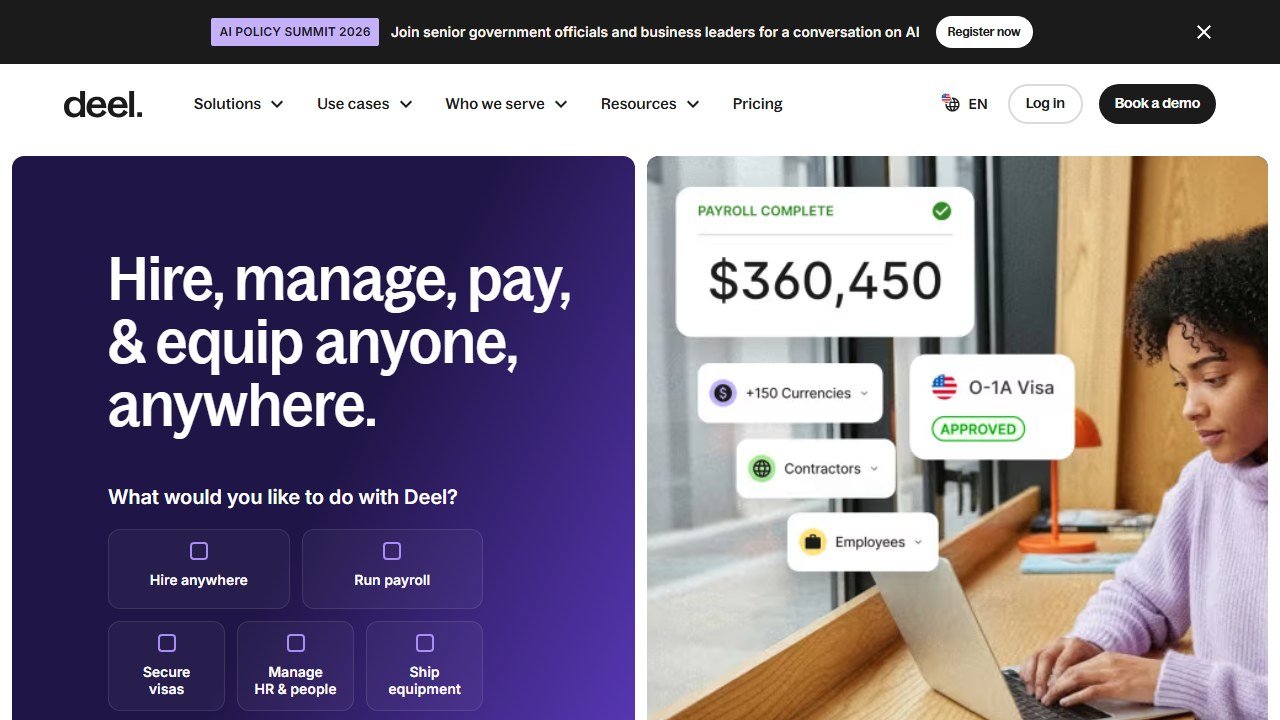
Rippling supports global payroll and EOR across 80-plus countries, but relies more on partner entities in many of those markets rather than an equally broad owned-entity network. That is a perfectly workable model, and Rippling’s global payroll is capable, but it is not the same as Deel’s international-first, entity-owning approach. If your hiring map is heavily international and spread across less common jurisdictions, check country-by-country coverage carefully, because this is where the two genuinely diverge.
The practical read: for breadth of global hiring and directness of the EOR relationship, Deel leads. Rippling covers the major markets well if your international hiring is concentrated rather than scattered.
Pricing and Transparency
The two also differ in how openly they price, and that reflects their audiences. Deel publishes clear starting points. As of 2026, contractor management starts around $49 per contractor per month, its HRIS is available at a low per-employee rate (roughly $5 to $8 per employee per month in the market), and its employer-of-record service is a flat per-employee monthly fee that varies by country. That transparency makes budgeting easier and is part of why Deel appeals to teams that want to know the cost before a sales call.
Rippling is more quote-driven. It publishes a low starting point (often cited around $8 per user per month as a base), but its real cost depends heavily on which modules you switch on, since Rippling is a suite of products (HR, payroll, benefits, IT, spend, and more) that you assemble. Getting an accurate all-in number usually means talking to sales. The upside is you pay for a genuinely integrated system; the downside is less up-front price clarity than Deel offers. Because pricing shifts often and Rippling’s total depends on your module mix, treat every figure here as a starting point and confirm current numbers with each vendor.
HRIS and IT Depth
Here Rippling pulls ahead, and it is the mirror image of Deel’s global edge. Rippling’s HRIS is deep and mature, with strong benefits administration, workflow automation, reporting, and a well-regarded core employee system of record. Its standout, though, is IT: Rippling natively manages apps and devices, so you can provision software access and ship or lock down laptops from the same platform that runs payroll. Very few HR platforms do device and app management natively, and for a company that wants HR and IT unified, this is a genuine differentiator with no real equivalent on Deel’s side.
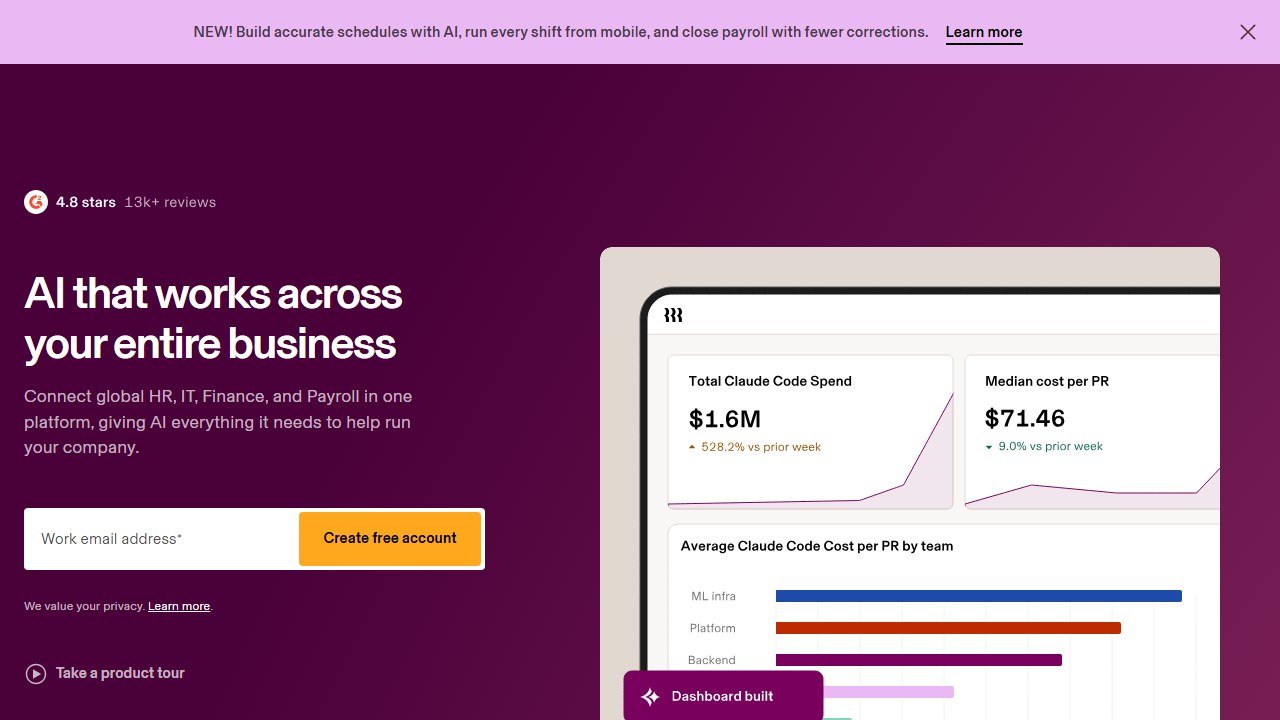
Deel’s HRIS is solid and has improved quickly, and Deel has been expanding beyond pure global payroll into broader HR. But device and app management is not its center of gravity, and its HRIS, while capable, is not the reason most companies choose it. So the depth question splits cleanly: if you want the richest all-in-one HR and IT system, Rippling; if you want the deepest global hiring and payroll engine, Deel.
The 2025 Legal Dispute
Any honest 2026 comparison has to acknowledge that the two companies were involved in a public legal dispute. In 2025, Rippling filed a lawsuit against Deel alleging corporate espionage, and a person acknowledged passing information. We are noting this factually and neutrally, and it is important to be precise about what it does and does not mean.
As of this writing, neither the broader allegations nor the matter as a whole has resulted in a legal finding against either company, and the claims should be understood as unproven. Both companies have continued to grow and serve large customer bases throughout. The sensible takeaway for a buyer is simple: a legal fight between two vendors is not, by itself, a reason to choose or reject either platform. Base your decision on fit, coverage, pricing, and reliability for your specific team, not on the dispute.
Which Should You Choose?
Choose Deel if …
- Hiring internationally is a core need, and you want the broadest country coverage.
- You value owned legal entities and a more direct employer-of-record relationship.
- Contractor management and global payroll are central to how you operate.
- You want transparent, published starting prices you can budget against before a sales call.
Choose Rippling if …
- Your team is mostly US-anchored and you want one system for HR, payroll, and benefits.
- You want native IT: app access and device management alongside HR.
- Deep HRIS, workflow automation, and a single employee system of record matter most.
- You are comfortable with quote-based pricing in exchange for a tightly integrated suite.
Verdict
There is no blanket winner here, and an honest comparison lands on fit. Deel wins for companies whose central challenge is hiring, paying, and staying compliant across borders. Its international-first design, owned entities in 150-plus countries, contractor and global payroll strength, and transparent pricing make it the natural pick when global reach is the point. If that is you, our Deel review goes deeper on the platform.
Rippling wins for teams, especially US-anchored ones, that want a single system to run HR, IT, and payroll together, with deep HRIS, benefits, and native device management that almost no competitor matches. If that describes your pain, our Rippling review has the full breakdown. Many fast-scaling companies end up running both: Rippling as the HR and IT backbone at home, Deel as the global hiring engine abroad. Match the tool to the shape of your team, and see the wider field in our best HRIS software roundup and best AI tools for HR pillar.

Written by
FazFaz is the founder of AIToolsBakery. Some tools here are tested hands on. Others are assessed from vendor documentation and pricing verified on the live page, and every review says which one it is. Sponsors can buy a position in a guide. They cannot buy the score, the criticism, or silence about a better option.
How we test and how we make money →