Fitbod and Strong are both popular workout tracking apps with loyal user bases. They share a focus on strength training and logging, but they take fundamentally different approaches to the actual workout experience. Fitbod generates AI-personalised workouts for you; Strong is a manual logging tool that you control entirely. Both are excellent at what they do.
This comparison breaks down every meaningful difference so you can decide which one fits how you actually train.
Fitbod uses AI to generate personalised strength workouts based on your recovery and history. Strong is a manual logging app with a superior exercise library and data interface. Fitbod is better for people who want programming guidance; Strong is better for self-programmed athletes who want precise data control. Our Strong app review covers its free limits, PRO prices and Android differences from Strong's own help centre.
Quick comparison: Fitbod vs Strong
| Feature | Fitbod | Strong |
|---|---|---|
| AI workout generation | Yes, full AI programme | No, manual only |
| Exercise library | ~1,000 exercises | ~3,000+ exercises |
| Logging interface | Good | Excellent |
| Progress analytics | Strong (muscle heatmap, volume) | Strong (charts, PRs, e1RM) |
| Apple Watch support | Yes | Yes |
| Price | ~$13/month or ~$80/year | ~$10/month or ~$50/year |
| Best for | People who want AI programming | Self-programmed athletes |
AI adaptation: Fitbod wins
This is Fitbod’s core feature and the main reason to choose it over Strong. The Fitbod AI analyses your logged workout history, identifies which muscle groups are recovered versus fatigued, and generates a workout that trains fresh muscles while letting tired ones recover. It also tracks your 1-rep max estimates for each exercise and progressively increases volume and intensity over time.
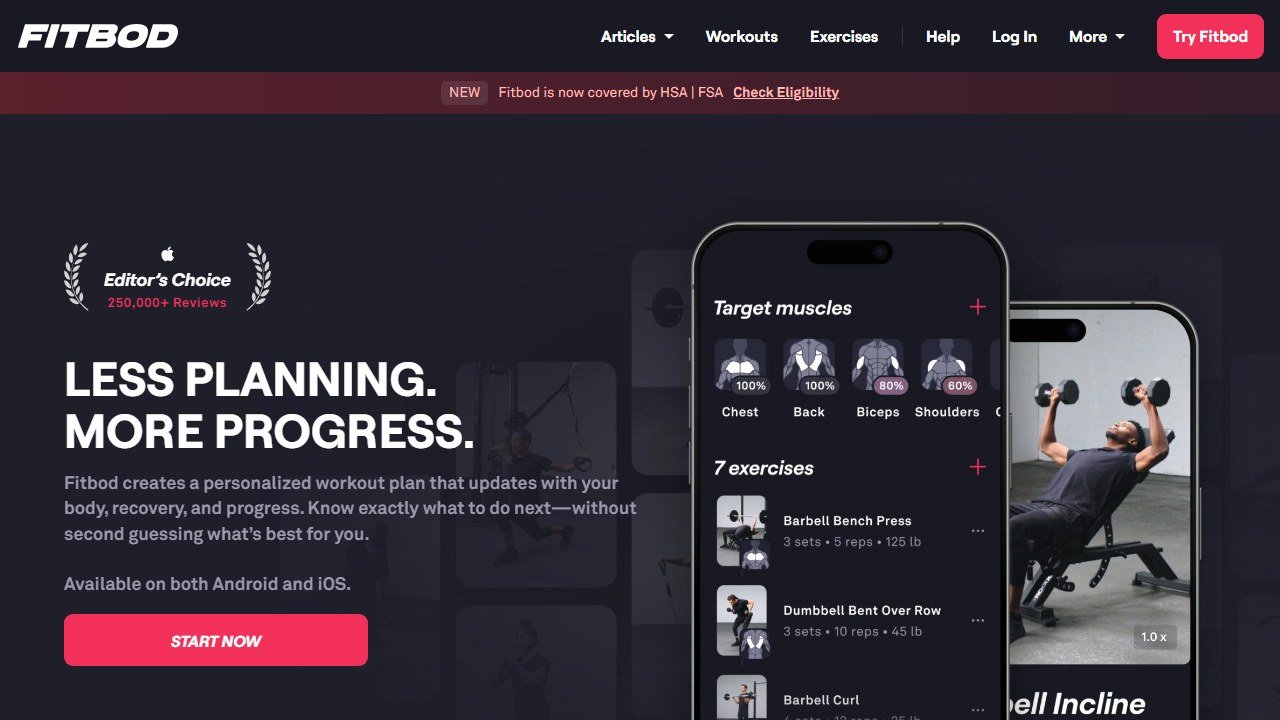
The result is a coherent, balanced strength programme that adapts to your actual training, not just a theoretical template. If you skipped leg day last week, Fitbod knows. If your bench press has stalled for three weeks, it will vary the stimulus. If you only have 30 minutes today instead of 60, it adjusts the session accordingly.
Strong has no AI adaptation whatsoever. You are the programmer. You decide what to do each day, build your templates, and track the results. If you know what you’re doing, this is fine, better even, because you’re in full control. But if you’re not confident programming your own training, you’re on your own with Strong.
Exercise library: Strong wins
Strong’s exercise library is dramatically larger than Fitbod’s. Strong has over 3,000 exercises with video demonstrations; Fitbod has around 1,000. For most people doing general strength training, 1,000 exercises is more than enough. But for specialists, whether powerlifters, Olympic weightlifters, CrossFitters, or athletes with very specific needs, the gap matters.
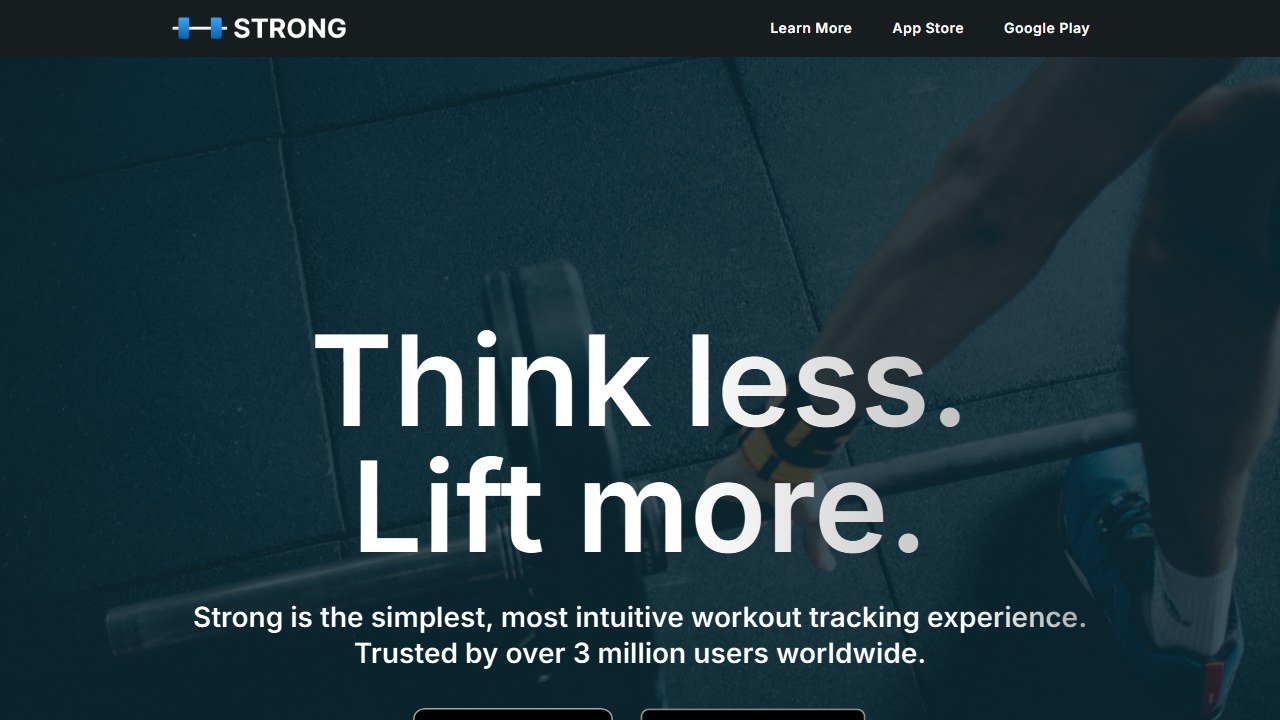
More importantly, Strong lets you create custom exercises easily and add your own video or image. Fitbod also allows custom exercises but the process is less seamless. If you train with unusual equipment, specialty bars, or non-standard movements, Strong’s customisation is more capable.
Both apps handle the standard barbell, dumbbell, cable, machine, and bodyweight exercises well. The gap really only matters if you’re doing specialised training.
Logging experience: Strong wins (slightly)
Strong’s logging interface has been refined over years of user feedback and it shows. Set entry is fast, the plate calculator (showing you exactly which plates to load on each side) is excellent, and the rest timer integration is smooth. The UI is clean, intuitive, and stays out of your way during a session.
Fitbod’s logging is good but slightly more cluttered. It’s trying to show you AI recommendations and muscle group data alongside the logging interface, which occasionally makes the screen busier than you want mid-session. The rest timer is also less sophisticated than Strong’s.
For people who track a lot of variables, such as tempo, RPE, and notes per set, Strong gives you more data fields without requiring navigation away from the set entry screen.
Progress analytics: roughly equal
Both apps offer strong progress tracking, but they visualise it differently.
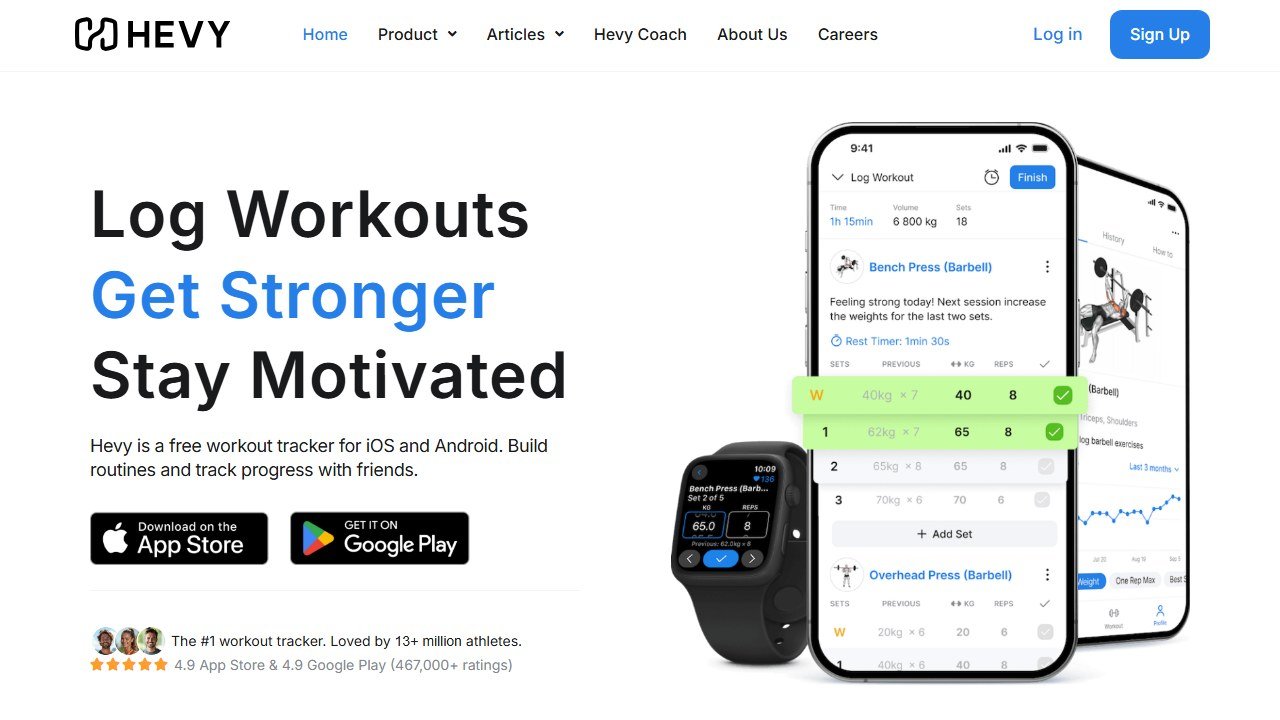
Fitbod’s signature feature is the muscle group heatmap: a body diagram that shows which muscles you’ve trained recently, with colour intensity indicating training volume and recency. It’s a genuinely useful tool for spotting imbalances and seeing at a glance whether your programme is hitting everything it should.
Strong’s analytics are more traditional: charts for each exercise showing weight and volume over time, personal record tracking, estimated 1-rep max progression, and workout frequency data. They’re clear, accurate, and directly actionable for self-programmed athletes who want to see whether their approach is working.
Both track PRs and e1RM well. Fitbod’s muscle heatmap is unique and useful; Strong’s exercise charts are more granular for people who want to analyse individual lift progression.
Device sync and ecosystem
Both apps have Apple Watch apps that let you log sets from your wrist. Both sync with Apple Health and Google Fit. Neither app currently offers a meaningful web-based logging interface; they’re both primarily mobile experiences.
Fitbod integrates with MyFitnessPal for nutrition data, which feeds into the AI’s recovery and volume recommendations. Strong doesn’t have nutrition integrations, which makes sense since it’s a pure logging tool rather than a holistic fitness platform.
If you use a Garmin or Fitbit for heart rate tracking, neither app integrates directly; you’d need to export data manually or rely on the platform-level Health integrations.
Pricing
Strong is cheaper: around $10/month or $50/year. Fitbod runs around $13/month or $80/year. Neither is expensive in absolute terms, less than a single personal training session for a year of either app.
Both offer free trials. Fitbod gives you 5 free workouts; Strong has a free tier with limited workout history. Try both before committing; your preference for logging UX will often be decisive.
For a broader comparison of workout tracking apps, including Hevy, see our Hevy vs Strong App comparison. And for a standalone deep dive, our Fitbod review covers the AI features in more detail.
For lifters who want a third option beyond these two, JuggernautAI is worth comparing for structured periodization programs.
Who should pick Fitbod?
- You don’t want to think about programming and trust an AI to build your workouts.
- You want to ensure balanced muscle group training and avoid common imbalances.
- You train at different gyms or with varying equipment and want the AI to adapt automatically.
- You’re an intermediate lifter who knows the basics but doesn’t want to write their own programme.
Who should pick Strong?
- You follow your own programme (powerlifting, 5/3/1, GZCLP, your coach’s template) and just need a logging tool.
- You train specialised movements and need a larger exercise library.
- You want the cleanest, fastest logging interface available.
- You prioritise granular per-exercise progress charts over holistic AI adaptation.
If you’re a trainer managing multiple clients’ programmes, the relevant comparison shifts entirely, so check our best Trainerize alternatives guide for the right tools in that context.
Progress Tracking and Analytics
Progress tracking is where these two apps diverge most clearly. Fitbod tracks muscle group fatigue and recovery automatically, adjusting your next session based on what you logged last time. It estimates your one-rep max trend over time and shows weekly muscle group balance in visual dashboards. The underlying model is Fitbod’s proprietary algorithm, which some advanced lifters find too opaque to audit or challenge.
Strong gives you full transparency. Every session is saved, every personal record is flagged, and you can filter your history by exercise, muscle group, or date range. The one-rep max estimator uses established Epley and Brzycki formulas rather than a black-box model. For lifters who want to review their own programming logic or share training data with a coach, Strong’s export tools and transparency are a significant advantage.
Platform Support and Integrations
Both apps run on iOS and Android. Both have watchOS companion apps for logging directly from your wrist during sets. Neither integrates natively with Garmin or Whoop. Fitbod connects to Apple Health and exports workout data in common formats. Strong exports session history as CSV, which coaches and data-minded lifters appreciate.
Fitbod launched a web app in recent years, allowing browser-based logging and history review. Strong remains mobile-first, with no full web dashboard. For lifters who prefer reviewing training history on a larger screen, Fitbod has the edge here.
Where the figures on this page come from
Every price here was read from the vendor’s own pricing page on 4 September 2026 and carries that date, because pricing in this category moves and a claim without a date is not checkable.
The pages we read
PT Distinction publishes $19.90, $59.90 and $89.90 a month with its marginal per client rates. Everfit publishes a rung for every client count from $19 to $290 monthly. TrueCoach publishes $26.34, $57.99 and $136.99 a month billed annually. My PT Hub publishes $25 and $59. FitBudd publishes $15, $79 and $149 with per client add-ons. Trainerize publishes a free tier and plans from $9. JuggernautAI publishes $34.99 a month or $349.99 a year.
The ones we could not read
Fitbod, Dr. Muscle, Hevy, Whoop and Oura did not yield a figure to the same method that read every vendor above, largely because consumer subscriptions are sold inside the app stores rather than on the web. That is not evidence they publish nothing, and we do not present it as such. Check the store listing on your own device, in your own country, before relying on any figure for those five.
One page worth reading twice
Wodify displayed $199 struck through and $99 a month per location, conditional on booking a demo by 31 August. We read it on 4 September 2026, after that deadline, and the discounted price was still shown. Ask which figure actually applies before budgeting on it.
How consumer fitness apps are priced, and why the figures are hard to pin down
Consumer training apps behave differently from coaching platforms, and it makes them genuinely harder to compare honestly.
Most of them price through the app stores
We attempted to read pricing pages for several of the best known consumer apps on 4 September 2026, including Fitbod, Dr. Muscle, Hevy, Whoop and Oura, and could not extract a rate from any of them with the same method that read every coaching platform above. That is largely because subscriptions are sold inside the app rather than on the web, so the price you see depends on your store, your region and sometimes your device. We will not quote a figure we could not source.
What that means for any price you read elsewhere
Treat every specific consumer app price on the internet, including in comparison articles, as unverified unless it names a date and a source. Store pricing also changes by country and moves with local currency, so a figure that was right in one market can be wrong in yours by a wide margin. The reliable move is to open the app store listing on your own device before deciding.
The one that does publish clearly
JuggernautAI publishes on the web: $34.99 a month or $349.99 a year, with a two week free trial, which works out at roughly two months free on the annual plan. That is at the premium end of consumer training apps and it is aimed at serious strength athletes rather than general fitness, which is the honest framing for whether it is expensive.
Free trials in this category are short and auto-renewing
Two week and one month trials are the norm and almost all of them convert automatically. If you are testing several apps, note the conversion dates somewhere other than the app itself. This is mundane advice and it is the single most common way people end up paying for three training apps they stopped opening in February.
Bottom Line
Fitbod and Strong serve different training philosophies. Fitbod works best for gym-goers who want AI-generated workouts without having to plan anything themselves. Strong works best for lifters who want to run their own programming, track every set precisely, and own their data. If you want guidance, pick Fitbod. If you want a logbook that gets out of the way, pick Strong. Both are worth the subscription for serious lifters.
Price Comparison
Fitbod charges $14.99 per month or $79.99 per year. Strong Pro costs $9.99 per month or $34.99 per year. Strong is the more affordable option, and its lifetime purchase (available periodically) makes it the clear budget pick for lifters who want to own their training data long-term. Fitbod’s higher price reflects the cost of its adaptive algorithm infrastructure and ongoing development. For lifters who value AI-generated programming over manual control, the Fitbod price premium is justified. For those who write their own programs, Strong delivers more value per dollar.
Both apps receive strong user reviews and are actively maintained with regular updates in 2026.
Both remain top-rated options in 2026.
Workflow comparison: a real session in each app
A typical Fitbod workout session: open the app, see today’s auto-generated workout (Fitbod chose the muscle groups based on your recent training history), tap through the warmup, log sets as you complete them, watch built-in form videos for any new exercise, finish with a quick session feedback (too easy / right / too hard) that informs the next workout. The whole flow takes 35 to 55 minutes including the workout itself. The app does the thinking; you do the lifting.
A typical Strong session: open the app, select your saved routine (which you wrote or imported), log each set with weight and reps, use the built-in plate calculator for barbell exercises, watch the rest timer count down, finish, and review the workout history later for progressive overload patterns. The whole flow takes 30 to 50 minutes. You do the thinking; the app handles the logging.
Which app wins by lifter type
Pure beginners benefit more from Fitbod. The AI removes the planning burden that scares new lifters away. The form videos compensate for inexperience. The auto-progression keeps the load appropriate. Most beginners who try both apps stick with Fitbod for the first six to twelve months.
Intermediate and advanced lifters benefit more from Strong. The clean logging UX is faster than Fitbod’s flow. The plate calculator and Apple Watch app are best-in-class. Lifters who already have a program (e.g., 5/3/1, nSuns, PPL) prefer Strong because they do not need AI to generate workouts they already trust. The crossover usually happens around month nine to twelve for most lifters: the AI’s value drops as the lifter learns to program themselves.
What 2026 lifters are saying about both apps
Recent App Store and Play Store reviews paint a consistent picture in 2026. Fitbod reviews praise the adaptive programming and the way the app feels like a real workout buddy who notices fatigue and adjusts accordingly. The most common complaint: exercise substitutions sometimes pick odd alternatives that a real coach would never recommend. Strong reviews praise the speed and reliability of logging, with Apple Watch users particularly happy with the wrist experience. The most common complaint: the iconography feels dated compared to newer competitors.
The 4.8 average for Strong on iOS and 4.5 average for Fitbod tell most of the story. Strong wins on UX polish and reliability; Fitbod wins on intelligent programming. The lifters who switch between them often end up using both: Strong for logging at the gym, Fitbod for planning at home.
Which app fits your training style
If you follow a structured program like 5/3/1, nSuns, Greyskull, or Stronglifts, Strong is the better fit because you already know what to do; you just need clean logging. If you train by feel or follow autoregulated programming, Fitbod is the better fit because the AI handles the daily exercise selection. Lifters in formal programming (powerlifting peaks, hypertrophy blocks) tend to choose Strong. Lifters in general fitness phases tend to choose Fitbod.

Written by
FazFaz is the founder of AIToolsBakery. Some tools here are tested hands on. Others are assessed from vendor documentation and pricing verified on the live page, and every review says which one it is. Sponsors can buy a position in a guide. They cannot buy the score, the criticism, or silence about a better option.
How we test and how we make money →