Medical school is a volume problem: too much to memorize, too little time, and exams that punish passive studying. AI tools help, but only if you map them to how med school actually works, from lecture to flashcard to question bank to the wards.
Faz says: The trap in med school is mistaking time spent for learning done. Re-reading lecture slides feels productive and barely works. The reason Anki has a cult following is that spaced repetition and active recall are what actually move exam scores, and AI now makes building that material fast instead of soul-destroying. Use AI to generate the cards, the quizzes, and the summaries; do not use it to skip the recall itself, because the recall is the part that sticks.
Saru says: Tools selected from official documentation, free-tier testing where available, and aggregated student feedback, current to 2026. Surveys indicate the vast majority of medical students already use two or more AI tools weekly. Always verify clinical facts against authoritative sources, and follow your school’s AI policy.
The medical student AI stack at a glance
| For… | Use | Why |
|---|---|---|
| Spaced repetition | Anki | The proven memorization gold standard |
| Fast flashcards from notes | Quizlet | Magic Notes turns notes into cards and tests |
| Study from your own materials | NotebookLM | Grounded in your lectures, not the web |
| All-in-one study platform | YouLearn / MedSchool Companion | Notes to quizzes, flashcards, podcasts |
| Lecture capture | Otter.ai / Mindgrasp | Transcripts and summaries from recordings |
| Clinical reasoning | Neural Consult | Structured help with disease mechanisms |
Short on time? Build the core three: Anki for spaced repetition, an all-in-one platform (YouLearn or MedSchool Companion) to generate study material from your lectures, and a question bank for practice. That trio covers the med-school workflow better than any single tool.
Why no single tool covers med school
The defining fact of medical AI study is that no one tool does the whole job, and pretending otherwise wastes money. Med school has distinct phases, memorization, application, and reasoning, and each rewards a different kind of tool. The students who do best assemble a small stack and learn each piece, rather than chasing one magic app. Here is how the pieces map to the work.
Stage 1: capture the lecture
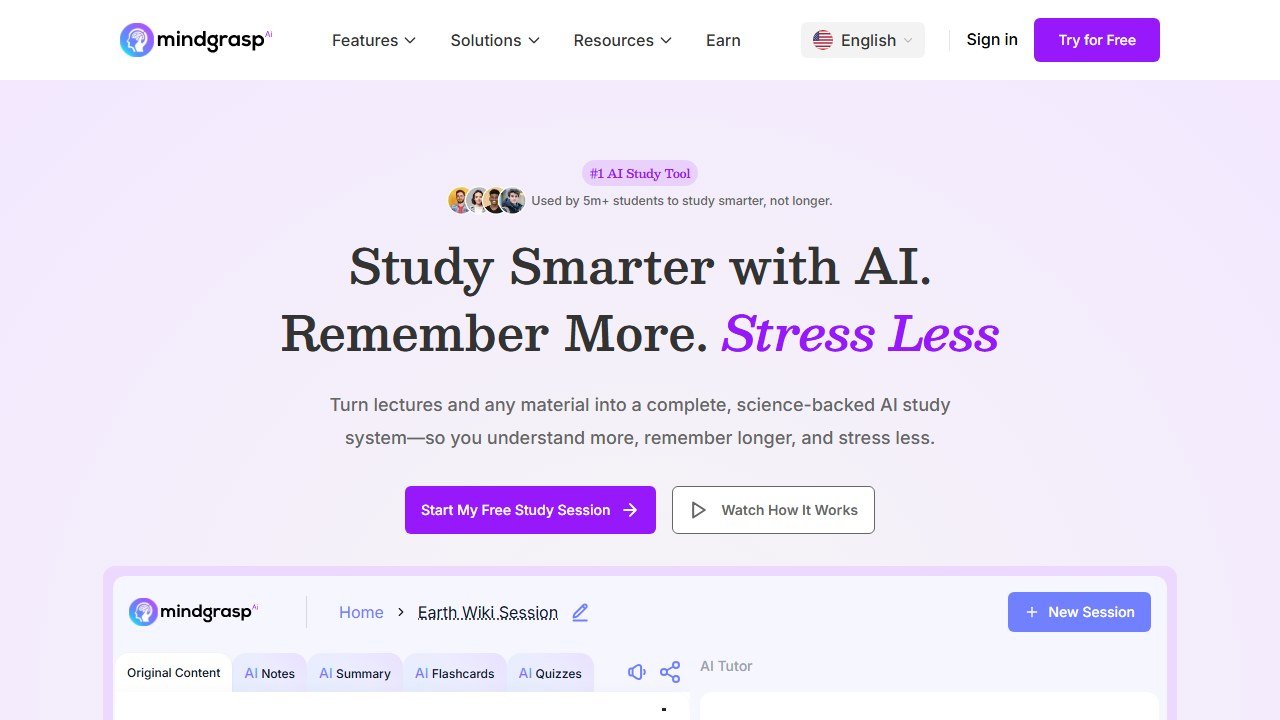
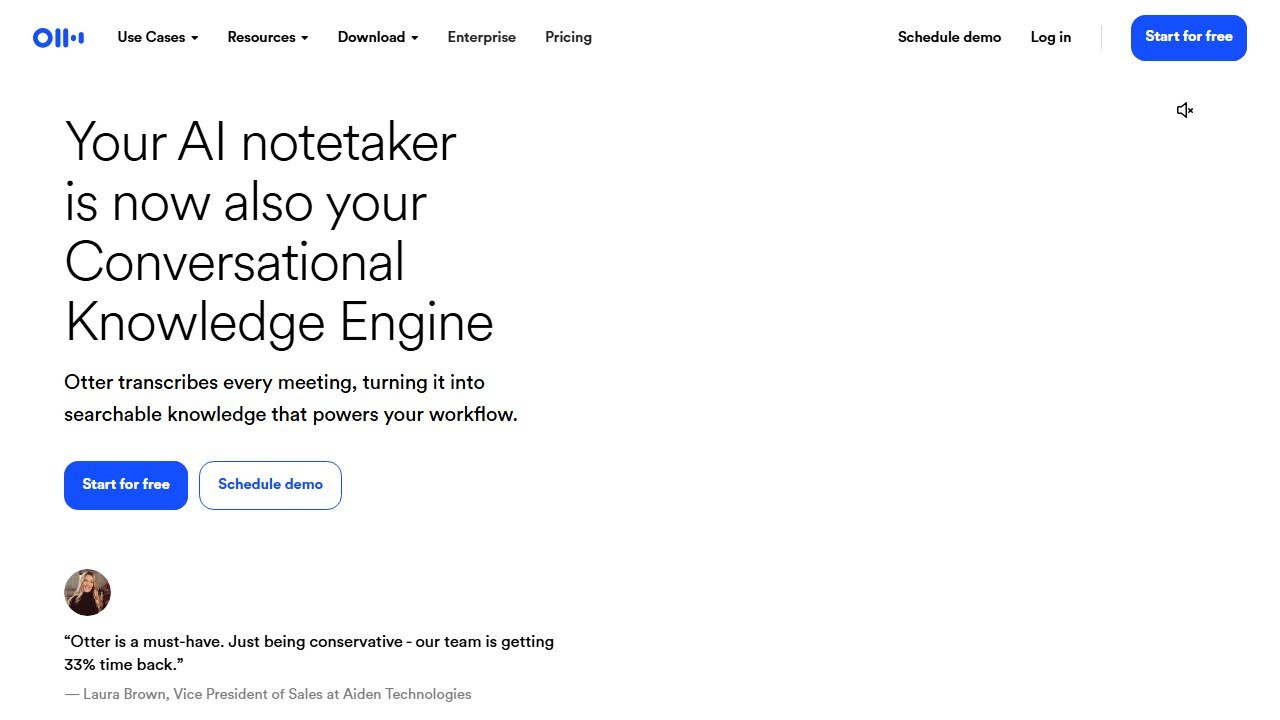
The day starts with more input than anyone can hold. Otter.ai records audio and produces real-time transcripts, turning a 60-minute lecture into a few-point summary, and Mindgrasp takes recordings, slides, or textbook scans and generates clear summaries and questions. The point is not to replace attention in the lecture, but to free you from frantic transcription so you can think.
Stage 2: turn material into active recall
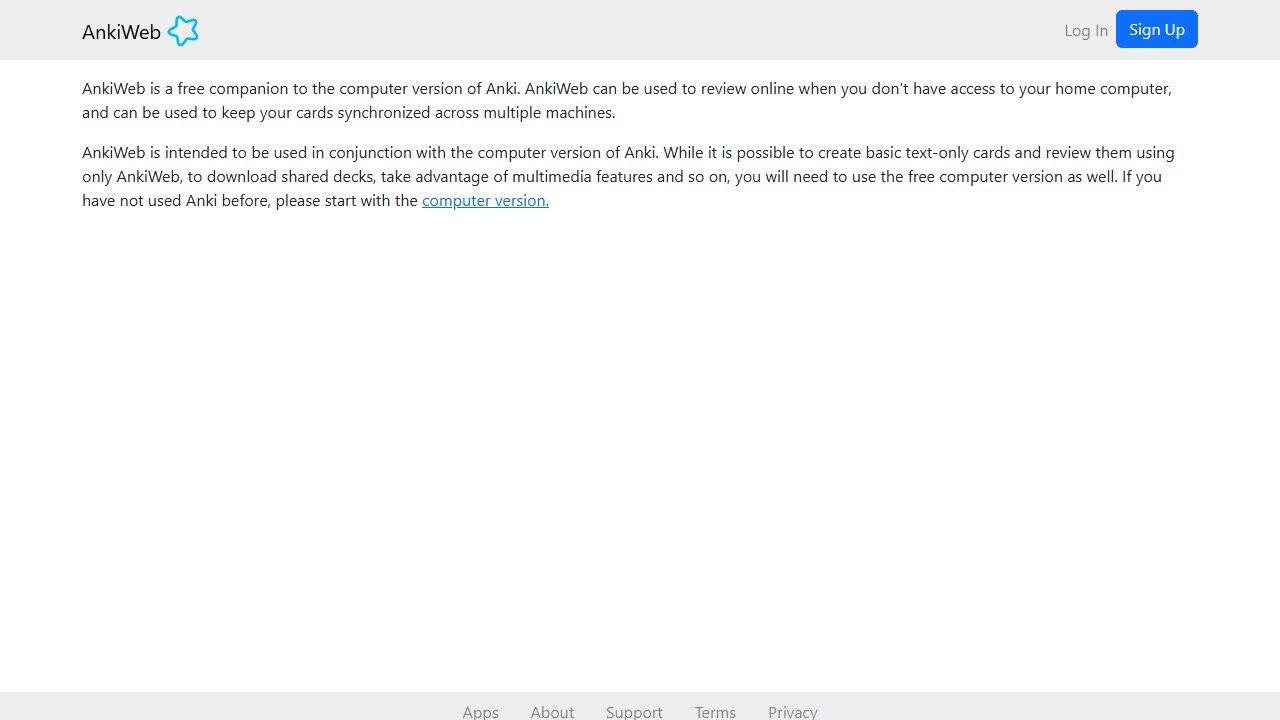
This is where exams are won. NotebookLM turns your uploaded lectures and readings into an interactive assistant that quizzes you on your own material. Quizlet’s Magic Notes converts notes into practice tests and flashcards instantly. And Anki remains the gold standard for spaced repetition, with research linking consistent use to higher standardized-exam scores. AI now generates the cards in minutes; the discipline of reviewing them daily is still on you.
Field note Generate cards with AI, but review and prune them yourself. AI-made flashcards are fast but imperfect, and a deck full of vague or wrong cards teaches vague or wrong things. Spend ten minutes curating what the AI produced before you trust it with your memory.
Stage 3: practice and apply with question banks
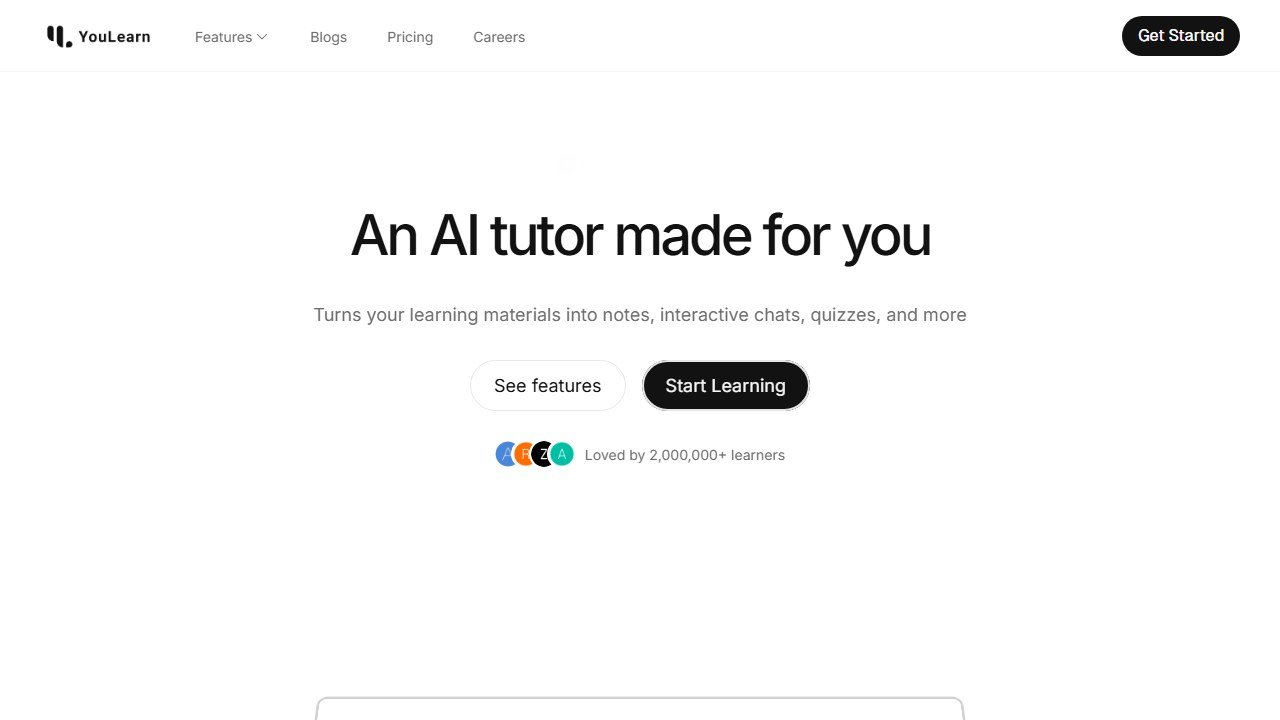
Memorization without application fails clinical exams. All-in-one platforms like YouLearn and MedSchool Companion turn your materials into quizzes, practice tests, and podcasts, helping you move from recall to application. Pair these with a dedicated question bank for your exams; the AI platform builds understanding, the question bank pressure-tests it under exam conditions.
Stage 4: clinical reasoning
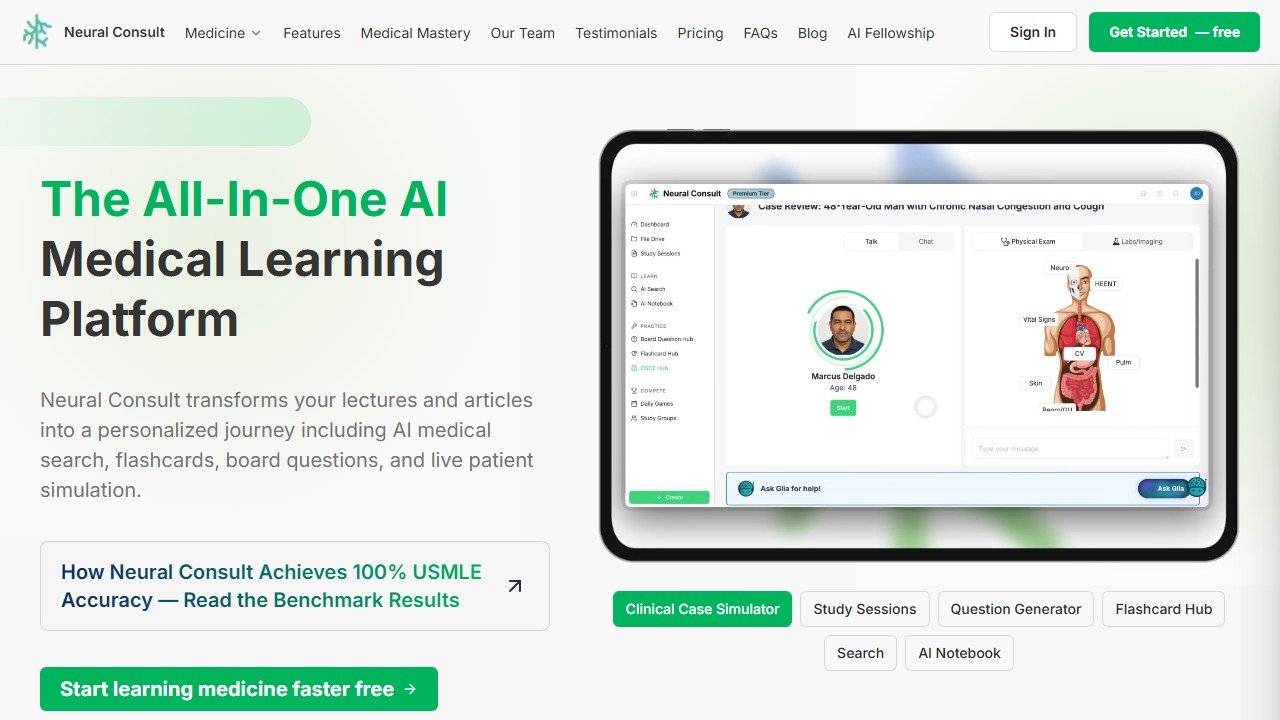
Beyond facts lies the harder skill of thinking like a clinician. Neural Consult is built for this, supporting medical learners in understanding disease mechanisms and diagnostic approaches with structured explanations. Used alongside cases, it helps bridge the gap between knowing facts and reasoning through a patient. General chatbots can help explain concepts too, but for clinical specifics, verify against authoritative medical sources every time.
The accuracy and integrity line
Medicine is the one field where a hallucinated fact can become a patient-safety issue, so the discipline matters more here than anywhere. General-purpose AI can state a dose, mechanism, or guideline confidently and be wrong. Treat AI output as a study aid to verify, never as a clinical source. Cross-check against your textbooks, primary literature, and trusted references. And as always, follow your school’s AI policy and disclose use where required. The goal is to learn medicine faster, not to outsource judgment you will one day need at a bedside.
What AI still cannot do for a med student
It cannot sit your boards, hold the knowledge in your head on the wards, or replace the reasoning that turns facts into safe clinical decisions. It can compress the brutal volume of memorization and free hours for the thinking that matters. The recall, the reasoning, and the responsibility remain yours. Used as a study engine, AI is a genuine advantage in med school. Used as a shortcut around understanding, it fails exactly when a patient is in front of you.
The honest medical student AI stack in 2026
Medical students get the most value from AI tools across four phases of training. Phase one: preclinical (M1 to M2). The strongest stack here is Anki for spaced repetition, Sketchy for visual mnemonics, and Claude or ChatGPT for concept explanation when textbooks fail. Phase two: USMLE preparation. UWorld remains the gold standard, with Khan Academy’s MCAT-style content and Sketchy for high-yield review. Phase three: clinical rotations (M3 to M4). UpToDate, AMBOSS, and Claude or ChatGPT for differential diagnosis support. Phase four: residency prep and matching. ResidencyCAS prep tools and Claude for personal statement editing.
The pattern across every phase: established medical education platforms for the core content, with AI assistants as a thinking layer on top. Replace your textbooks with an AI summary and you skip the cognitive work that builds clinical reasoning. Use AI to clarify what you already worked through, and the stack accelerates real learning.
Where AI helps medical students and where it does not
AI helps measurably on three medical school tasks: pre-clinical concept comprehension, differential generation practice, and writing tasks like personal statements and case write-ups. The reason it helps: concepts in medical school are dense and time-pressured, and AI explanations at the right level can save hours per chapter. Differential generation is fundamentally a pattern-matching exercise, and practicing it against an AI sparring partner builds real clinical reasoning faster than reading alone.
AI does not help (and can actively hurt) on three medical school tasks: memorization-heavy assessments like Step 1, hands-on clinical skills, and clinical judgment under uncertainty. Memorization still requires the active recall and spaced repetition that only Anki-style tools provide. Clinical skills require simulation labs and patient encounters. Clinical judgment requires preceptor feedback and real patient outcomes. Trying to substitute AI for these is the fastest way to graduate clinically weak.
The Step 1 and Step 2 question on AI
The honest answer on AI for boards prep in 2026: AI is a useful supplement, not a substitute for UWorld and Anki. The boards reward retrieval of specific factual knowledge under time pressure, and the only tool that builds that reliably is question-bank practice plus active recall flashcards. AI tools can explain the underlying physiology when a UWorld explanation is unclear, generate practice scenarios beyond the question bank, and quiz you on weak areas.
The students scoring highest in 2026 use AI as a tutor that fills the gaps UWorld leaves. They do not use AI as the primary study tool. The students using AI as primary often report deceptively high confidence that does not translate to question-bank performance. Trust the dedicated medical education tools for the core work; layer AI on top for the gaps.
Clinical rotation workflow with AI
On clinical rotations in 2026, the AI workflow that produces real learning is structured around the patient encounter. Before the encounter: pull a quick refresher on the chief complaint and likely differentials. During: take honest notes (AI cannot replace this). After: write up the case and have AI review your differential, your plan, and your reasoning. The AI catch on shaky reasoning is often what your attending was about to point out in rounds, except you caught it first.
Avoid the common shortcut of asking AI to write your SOAP notes. Some institutions have explicit policies against AI-generated clinical documentation. The educational value is in the writing reps. The compliance risk is real. The professional habit you build by writing your own notes from scratch carries into residency and practice.
Ethics, accuracy, and the AI hallucination problem
Medical students need to know two specific risks with AI in clinical settings. Risk one: AI hallucinates drug doses, drug interactions, and clinical guidelines. Every drug dose generated by AI must be verified against UpToDate, Lexicomp, or your hospital formulary before it enters a patient encounter. The hallucination rate on drug doses is low but non-zero in 2026, and “low non-zero” is unacceptable when a patient is on the receiving end.
Risk two: AI confidence does not equal AI correctness. The tools sound certain even when wrong. The clinical mindset that protects patients is the same mindset that should protect AI use: trust but verify, especially when the answer matters. The medical students who internalize this in school become safer doctors. The ones who treat AI as authoritative without verification become a liability the moment they have prescribing rights.
The honest USMLE prep stack for 2026
The strongest USMLE prep stacks in 2026 share three components. Component one: UWorld as the question-bank backbone. There is no credible substitute. The 2,300 to 2,500 questions across Steps 1, 2 CK, and 3 are still the single highest-yield resource available. Component two: Anki as the spaced repetition layer. Boards and Beyond, Sketchy, and First Aid all integrate with Anki decks built around their content. Component three: AI assistants (Claude, ChatGPT) for concept explanation when UWorld explanations are not clear enough.
The pattern: traditional medical education tools for the core work, AI for the gaps. The students scoring highest in 2026 use AI maybe 30 to 60 minutes a day during dedicated prep, not as the primary study tool. The students using AI as the primary tool tend to score lower because boards reward retrieval of specific factual knowledge, which only comes from active question-bank work and spaced repetition.
The honest verdict for 2026 medical students
The strongest AI stack for medical students in 2026 combines four tools and stays under $40 a month total. UWorld for question banks. Anki for spaced repetition. Sketchy for visual mnemonics. Claude Pro or ChatGPT Plus for concept explanation and writing tasks. Free tools like Quizlet, Khan Academy, and the AI features in Notion or Apple Notes fill the gaps. This stack covers preclinical, USMLE prep, clinical rotations, and the writing tasks that come up in residency applications.
Avoid the temptation to layer on more AI tools. Each additional subscription adds friction and rarely produces better outcomes. The medical students scoring highest in 2026 are not the ones with the most subscriptions; they are the ones who use the four core tools above consistently and avoid the procrastination trap of evaluating new tools instead of studying.
Final verdict for medical students in 2026
The strongest medical school AI stack remains UWorld + Anki + Sketchy + an AI assistant (Claude or ChatGPT Plus) for under $40 a month total. Avoid the temptation to layer more tools; consistency with the four core picks beats variety. The students scoring highest in 2026 are the ones who use AI for clarification and writing tasks while protecting traditional question-bank and spaced-repetition work as the foundation.
Student data, and the questions a school has to ask before anything is switched on
This is the part of education technology where getting it wrong has consequences beyond a wasted subscription, and it is mostly answerable in writing before adoption.
Know which law you are under before you evaluate
In the United States, student education records sit under FERPA, and services aimed at under-13s bring COPPA into scope, which requires verifiable parental consent for personal information collected from children. Schools outside the US will have their own regime. The practical effect is the same: the school, not the vendor, carries the obligation, so the vendor questions exist to let you meet it.
Ask whether student work trains the model
This is the single question to get in writing. Ask whether student inputs and outputs are used to train or improve any model, including in aggregated or anonymised form, and whether that binds subprocessors too. “We do not train on your data” and “we do not train foundation models on your data” are different sentences. Get it as a contract term, because a sales assurance does not survive a change of ownership.
Ask who else touches the data
Most tools here are built on a model provider they did not write, so student work reaches a third party. Ask for the current subprocessor list, where each processes data, and how you are notified when it changes. A vendor that cannot produce that list within a day does not have one, which tells you enough about the rest of their programme.
Ask what happens at the end of a school year
Retention and deletion, stated in days rather than described as a process. What is deleted when a student leaves, when a class is archived, when the contract ends. Ask whether deletion means removed from live systems, removed from backups, or flagged. A vendor that will commit to a number in the contract is a different proposition from one that describes an approach.
The one many schools miss: inferences about a child
If a tool generates a reading level, a predicted grade, a behaviour flag or an ability estimate, that is data about a student the student never supplied. Ask whether those inferences are covered by your export, your deletion request and your access request, because a parent asking what the school holds on their child is asking about those too.
What these tools actually cost, vendor by vendor
Education software prices unlike anything else, because the buyer is often a teacher paying personally while the vendor is really selling to a district. That produces a free tier that is genuinely usable and an enterprise tier with no published figure. Here is each alternative to ai tools, read at source on 4 September 2026.
Chalkie, the most completely published rate card here
Chalkie publishes a free plan at US$0.00 a month covering five full lessons or activity sheets every seven days, then US$6.65 a month at US$79.80 paid yearly, and US$12.99 a month at US$155.88 yearly. Its annual toggle is marked as three months free and the arithmetic holds. Publishing the free tier’s exact limit, five resources per week rather than a vague “limited”, is rarer than it should be and worth rewarding.
Khanmigo, the cheapest paid option in this guide
Khanmigo publishes $44 a year, saving $4 against monthly billing, which works out around $4 a month. That is an order of magnitude below most of this category and reflects its position as a non-profit-backed product tied to an existing content library rather than a general purpose teacher toolkit. Judge it on whether that library matches your curriculum, because the price is not the deciding factor at that level.
MagicSchool and Curipod, free tiers with paid steps
MagicSchool publishes a free plan and Plus at $12.99 a month billed monthly, with a lower per user rate billed annually and volume-based discounts on district Enterprise licences that are quoted rather than published. Curipod publishes free at $0 a month and paid from $24 a month, with a yearly toggle marked as saving 21% and stated as $60 off against monthly. Both make the teacher tier genuinely usable, which is the commercial model rather than generosity.
CoGrader, where the free tier has a hard number on it
CoGrader publishes a free plan covering 100 student submissions a month with rubric building and FERPA compliance, then $15 a month billed annually. A hundred submissions is roughly three or four class sets, which makes the free tier a real trial for one teacher and clearly insufficient for a department. That is an honest place to draw the line and it lets you test properly before spending anything.
The ones that publish nothing, and what that tells you
Brisk Teaching publishes a free teacher plan at $0 but we could not read figures for its paid tiers. SchoolAI publishes tier names, Free Trial, Pro and Scale, with no figures attached, which is district-quoted pricing by design. Gradescope now sits on a Turnitin domain and its page is headed “Gradescope for Your Institution” with no rates. We also could not read pricing for Diffit, Quizlet, Photomath or Gauth. We are not claiming those publish nothing; a failed read is not evidence of absence.
Tools mentioned in this guide
Studying nursing instead? See our guide to the best AI tools for nursing students, tested for NCLEX and clinicals.

Written by
FazFaz is the founder of AIToolsBakery. Some tools here are tested hands on. Others are assessed from vendor documentation and pricing verified on the live page, and every review says which one it is. Sponsors can buy a position in a guide. They cannot buy the score, the criticism, or silence about a better option.
How we test and how we make money →