Two apps dominate the “scan your homework, get the steps” category in 2026, and they belong to two of the biggest names in tech. Photomath is owned by Google and stays laser focused on math, from elementary arithmetic through college calculus. Gauth (formerly Gauthmath) was built inside ByteDance, the company behind TikTok, and has grown into a broad homework assistant covering far more than numbers.
On the surface they look almost identical. Point your camera at a problem, wait a second or two, and a worked solution appears. The differences only show up once you push past easy textbook questions into messy handwriting, multi step word problems, and subjects beyond algebra.
This comparison is built around that single question. We cover accuracy, depth of explanation, subject breadth, the free tier limits, pricing models, and whether each app is a safe fit for a younger student.
AIToolsBakery is an independent review site. We do not sell either app, we are not paid by Google or ByteDance, and we earn nothing if you download one over the other. When a post is sponsored we label it clearly at the top, and a sponsorship never changes a verdict or a score. This comparison is not sponsored. One honest caveat before we start: any of these apps can be misused to copy answers and skip the thinking. That is the worst way to use them. The genuine value is in the worked steps, so the right setup is a student who reads the reasoning, then re solves the problem unaided.
The 30-second answer: Pick Photomath if the subject is math and you want the deepest, clearest step by step teaching, especially for algebra and calculus. Pick Gauth if you need one app that also handles physics, chemistry, biology, and other subjects, plus an AI tutor chat and live human help. Both have a usable free tier and a paid upgrade.
Quick answer: Photomath wins if your student studies math and you care most about understanding the steps. Gauth wins for a full STEM and humanities load when you want one multi-subject tool. Choose by what they actually study; both teach better than they used to.
The quick context: what each app is
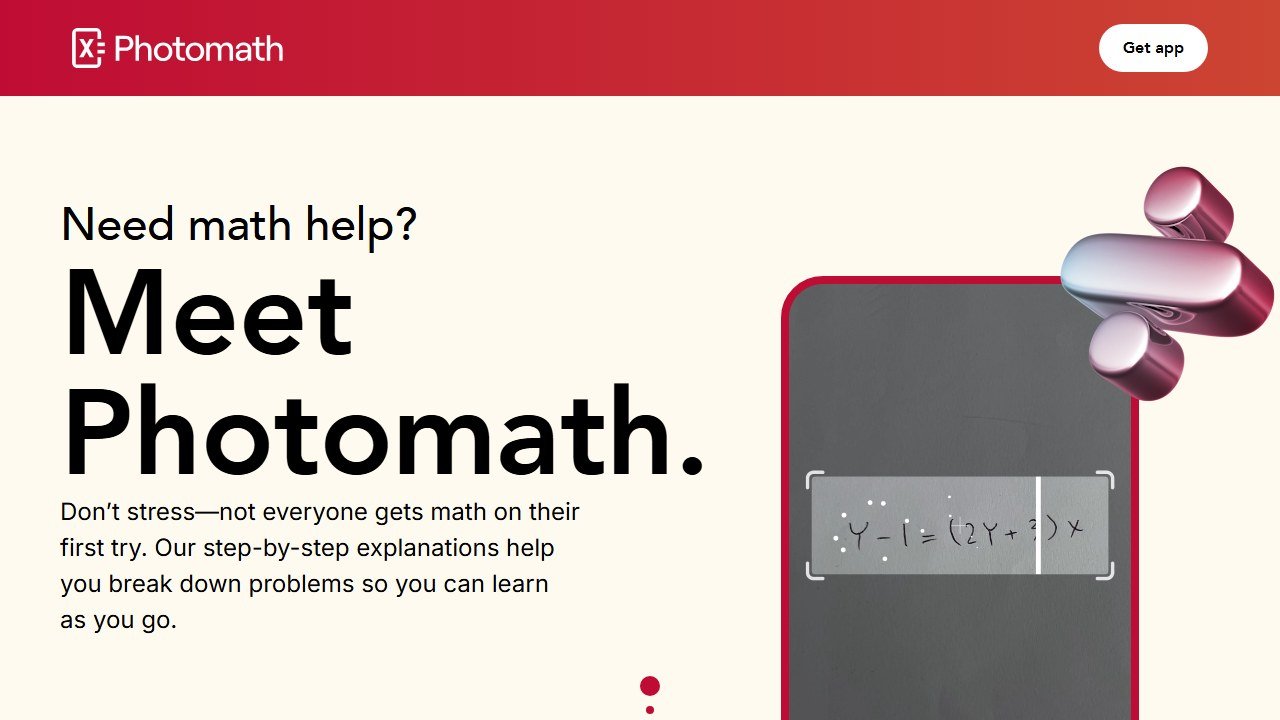
Photomath launched as an independent math scanning app and was acquired by Google in 2022. It has stayed deliberately narrow. It does math, and only math, but it does it across the full school range: arithmetic, fractions, algebra, geometry, trigonometry, statistics, and calculus. The pitch is depth over breadth. Scan a problem, see the answer, then drill into a multi step explanation, often with more than one solving method offered for the same question.
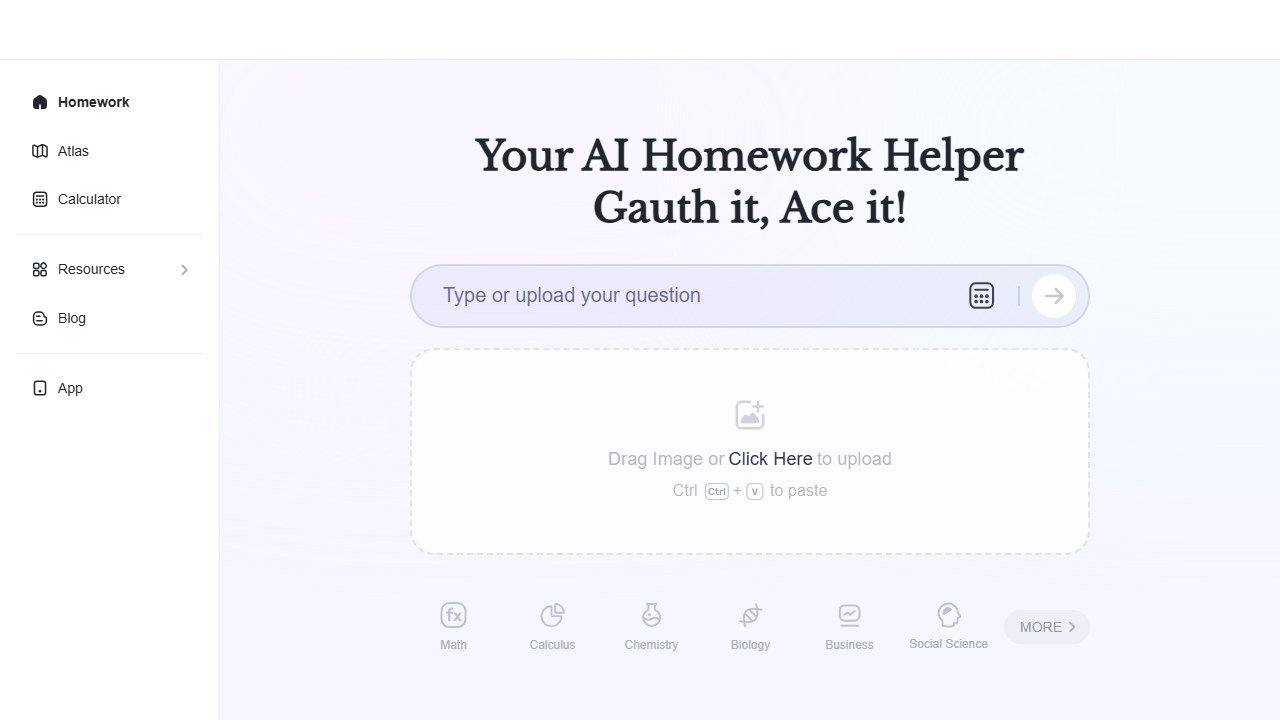
Gauth started life in 2020 as Gauthmath, a math focused homework helper inside ByteDance. In 2024 it rebranded to Gauth, launched its own AI engine, and widened its scope well beyond math. Today it positions itself as a general homework assistant: math, physics, chemistry, biology, and language subjects, all in one app, with an AI tutor chat and the option to escalate a hard problem to a live human tutor. It has been one of the most downloaded education apps in the United States, trailing only Duolingo in its category at points during 2024 and 2025.
So the framing is simple. Photomath is the math specialist. Gauth is the all rounder.
Accuracy and step-by-step quality
We fed both apps the same batch: clean printed algebra, a couple of calculus derivatives and integrals, two word problems, and several pages of handwritten work of varying neatness.
On clean, printed math, both apps were reliably correct. Neither stumbled on standard algebra or on textbook calculus. The gap opened on two fronts: messy handwriting and the quality of the explanation.
For handwriting recognition, Photomath was slightly more forgiving of cramped or slanted writing on pure math, which makes sense given that math notation is the only thing it has ever had to read. Gauth handled handwriting well too, and its broader recognition shines when a problem mixes text and symbols, like a physics question with a paragraph of setup.
On explanation quality for math specifically, Photomath was the stronger teacher. Its steps are granular, it names the rule being applied, and it frequently offers an alternate method so a student can see more than one valid path. Gauth’s math steps are correct and clear, but on the hardest problems they can compress several moves into one line, which is fine if you already understand the topic and less helpful if you are stuck.
| Test (0 to 5) | Photomath | Gauth |
|---|---|---|
| Clean printed math accuracy | 5 | 5 |
| Messy handwritten math | 4.5 | 4 |
| Depth of math step explanation | 5 | 4 |
| Word problem handling | 4 | 4.5 |
| Multi subject (physics, chem, bio) | n/a | 4.5 |
| Teaches vs just answers | 4.5 | 3.5 |
A note on word problems: Gauth’s AI tutor chat gave it a small edge here, because you can ask a follow up question in plain language (“why did you set up the equation that way?”) and get a conversational reply. Photomath explains the chosen method well but is less of a back and forth conversation.
Subject coverage: math-only vs multi-subject
This is the clearest dividing line between the two apps.
Photomath is math, full stop. If your student needs help with anything from long division to integration by parts, it is excellent. If they need help with a chemistry stoichiometry problem or a physics free body diagram, Photomath is the wrong tool.
Gauth covers math plus physics, chemistry, biology, and language and humanities subjects, and it advertises support across many languages. For a household with one teenager juggling several STEM classes, that single app convenience is real. You are not switching tools depending on the homework.
The trade off is focus. Photomath’s narrowness is also its strength: every ounce of its engineering goes into reading and explaining math. Gauth spreads its effort across a much wider surface, and on pure math teaching depth, that shows.
Does it teach, or just answer?
This is the question parents email us about most, so we scored it on its own.
Both apps will show you an answer instantly, and both can be abused to copy that answer onto a worksheet without a second thought. That risk is real and it sits with the user, not the app.
Where they differ is how hard each one nudges you toward understanding. Photomath’s design leans into teaching. The answer is there, but the experience pushes you into the worked steps, the named rules, and alternate methods. With the paid tier it adds animated walkthroughs and textbook specific explanations that genuinely function like a tutor talking you through the why.
Gauth gives you the answer plus steps, and its AI tutor chat can explain further if you ask. But the chat first, answer fast design makes it easier to grab the result and move on. The live human tutor option, when used, is the strongest teaching feature in either app, because a real person can adapt to a confused student in a way no auto generated steps can.
Our honest read: for self directed learning on math, Photomath teaches better out of the box. For a student who will actually ask the AI tutor follow up questions, Gauth can teach well too, but it depends more on the student’s good habits.
Free tier and pricing
We describe pricing by model rather than quoting exact figures, because both apps adjust their prices, run regional promotions, and change trial terms. Always confirm the current numbers on the official app listing before you subscribe.
Photomath offers a genuinely useful free tier. The core solver is free and unlimited: you can scan or type as many problems as you want and get the answer with basic step explanations. The paid Photomath Plus subscription, billed monthly or annually, unlocks animated tutorials, deeper textbook specific solutions, and extra visual aids. The annual plan is the better value if you commit.
Gauth also has a free tier with a daily allowance of solutions and AI tutor use. Gauth Plus, billed monthly or on a shorter recurring cycle, removes ads, lifts the limits, and adds priority and more detailed explanations. Live human tutoring is a separate, higher cost add on layered on top of Plus.
The practical takeaway: both are free to try meaningfully. Photomath’s free tier is unusually generous for the core use case (unlimited basic solving). Gauth’s free tier is capped per day but spans more subjects. Watch the renewal terms on either app, and check whether you are inside a trial that auto converts. Confirm everything on photomath.com and the Gauth site.
Safety and age fit
Both apps are rated for teen and up use and are widely used by middle and high school students. A few points for parents.
Photomath, as a Google owned and math only app, has a narrow data footprint and no social feed. There is no community of strangers, no chat with other users, just the solver. For a younger student, that simplicity is reassuring.
Gauth is a ByteDance product, the same parent company as TikTok, which some parents will weigh given ongoing scrutiny of ByteDance owned apps and data handling in some regions. Gauth also includes community and tutor interaction features, which add value but also mean more surface area than a pure solver. Review the privacy and community settings, and consider the live tutor feature only with supervision for younger students.
Neither app is a substitute for a teacher, and both should be framed at home as a study aid, not an answer machine.
Who each app is for
Choose Photomath if the student’s need is math, full stop, and you want the clearest, deepest step by step teaching. It is the better pick for a student grinding through algebra or calculus who genuinely wants to understand the method, and it is the simpler, narrower app for a younger child or a privacy minded household.
Choose Gauth if the student needs one app across several subjects, especially physics, chemistry, and biology alongside math, and would benefit from an AI tutor chat or occasional live human help. It is the better pick for a busy high schooler with a full STEM load who wants a single tool rather than a folder of them.
Many families will reasonably use both: Photomath as the math tutor, Gauth as the everything else helper. They are not mutually exclusive, and both have free tiers, so trying each costs nothing.
If you want to widen the search before deciding, see our roundup of the best AI math solver apps, our guide to AI tools for math teachers if you are on the classroom side, and our Khanmigo review for a tutor style alternative that is built around guided learning rather than instant answers.
Our verdict
There is no single winner here, and forcing one would be dishonest. These apps are built for different jobs.
For pure math teaching depth, Photomath wins. Its step by step explanations are the clearest in the category, it offers alternate solving methods, and its design pushes a student toward understanding rather than just collecting answers. Score: 4.7 out of 5 for math specifically.
For breadth and one app convenience, Gauth wins. It covers the subjects Photomath ignores, adds an AI tutor chat and live human help, and earns its place as the default homework assistant for a multi subject student. Score: 4.4 out of 5 across the wider use case.
The deciding question is what your student actually studies. If it is math and you care most about understanding the steps, install Photomath. If it is a full STEM and humanities load and you want one tool, install Gauth. Whichever you pick, set the rule that matters more than any feature: read the steps, then re solve the problem on your own. That is the line between a study aid and a shortcut, and it is the only thing that turns either app into real learning.
How we reached this verdict: this guide is research-based. We compare each tool against its published documentation, pricing pages and terms, and we do not claim hands-on testing we have not done.
What these tools actually cost, vendor by vendor
Education software prices unlike anything else, because the buyer is often a teacher paying personally while the vendor is really selling to a district. That produces a free tier that is genuinely usable and an enterprise tier with no published figure. Here is each alternative to photomath vs, read at source on 4 September 2026.
Chalkie, the most completely published rate card here
Chalkie publishes a free plan at US$0.00 a month covering five full lessons or activity sheets every seven days, then US$6.65 a month at US$79.80 paid yearly, and US$12.99 a month at US$155.88 yearly. Its annual toggle is marked as three months free and the arithmetic holds. Publishing the free tier’s exact limit, five resources per week rather than a vague “limited”, is rarer than it should be and worth rewarding.
Khanmigo, the cheapest paid option in this guide
Khanmigo publishes $44 a year, saving $4 against monthly billing, which works out around $4 a month. That is an order of magnitude below most of this category and reflects its position as a non-profit-backed product tied to an existing content library rather than a general purpose teacher toolkit. Judge it on whether that library matches your curriculum, because the price is not the deciding factor at that level.
MagicSchool and Curipod, free tiers with paid steps
MagicSchool publishes a free plan and Plus at $12.99 a month billed monthly, with a lower per user rate billed annually and volume-based discounts on district Enterprise licences that are quoted rather than published. Curipod publishes free at $0 a month and paid from $24 a month, with a yearly toggle marked as saving 21% and stated as $60 off against monthly. Both make the teacher tier genuinely usable, which is the commercial model rather than generosity.
CoGrader, where the free tier has a hard number on it
CoGrader publishes a free plan covering 100 student submissions a month with rubric building and FERPA compliance, then $15 a month billed annually. A hundred submissions is roughly three or four class sets, which makes the free tier a real trial for one teacher and clearly insufficient for a department. That is an honest place to draw the line and it lets you test properly before spending anything.
The ones that publish nothing, and what that tells you
Brisk Teaching publishes a free teacher plan at $0 but we could not read figures for its paid tiers. SchoolAI publishes tier names, Free Trial, Pro and Scale, with no figures attached, which is district-quoted pricing by design. Gradescope now sits on a Turnitin domain and its page is headed “Gradescope for Your Institution” with no rates. We also could not read pricing for Diffit, Quizlet, Photomath or Gauth. We are not claiming those publish nothing; a failed read is not evidence of absence.

Written by
FazFaz is the founder of AIToolsBakery. Some tools here are tested hands on. Others are assessed from vendor documentation and pricing verified on the live page, and every review says which one it is. Sponsors can buy a position in a guide. They cannot buy the score, the criticism, or silence about a better option.
How we test and how we make money →Frequently Asked Questions