It is 5:40pm. The last appointment ran long, there are eleven SOAP notes still unwritten, the front desk has three voicemails about refills, and someone needs to call the family whose dog’s bloodwork came back wrong. Every vet, vet tech, and practice manager knows this hour. The work the public sees is the exam. The work that breaks people is everything around it.
AI is now genuinely good at some of that surrounding work. It is also wildly oversold. Most of the “best AI tools for veterinary practices” lists you will find are written by a company that sells one of the tools, and the list is shaped to make their product win. We are AIToolsBakery. We are independent, we sell none of these tools, and we make no commission on any of them.
So this guide is organized differently. We go job by job through the actual day of a clinic, name the real tools, give honest pricing and honest limitations, and we are blunt about the one rule that matters most: AI does admin and decision-support. It does not diagnose, it does not treat, and it does not decide. A licensed veterinarian does that. Always.
The 30-second answer: Start with one AI scribe (Talkatoo, Scribenote, ScribbleVet, or CoVet) to kill after-hours note writing. Add online booking and reminders (Vetstoria, PetDesk) to cut phone load. Treat imaging AI like SignalPET as a second set of eyes only. AI never diagnoses or treats. A vet decides.
Clinical notes: the AI scribe is the real win
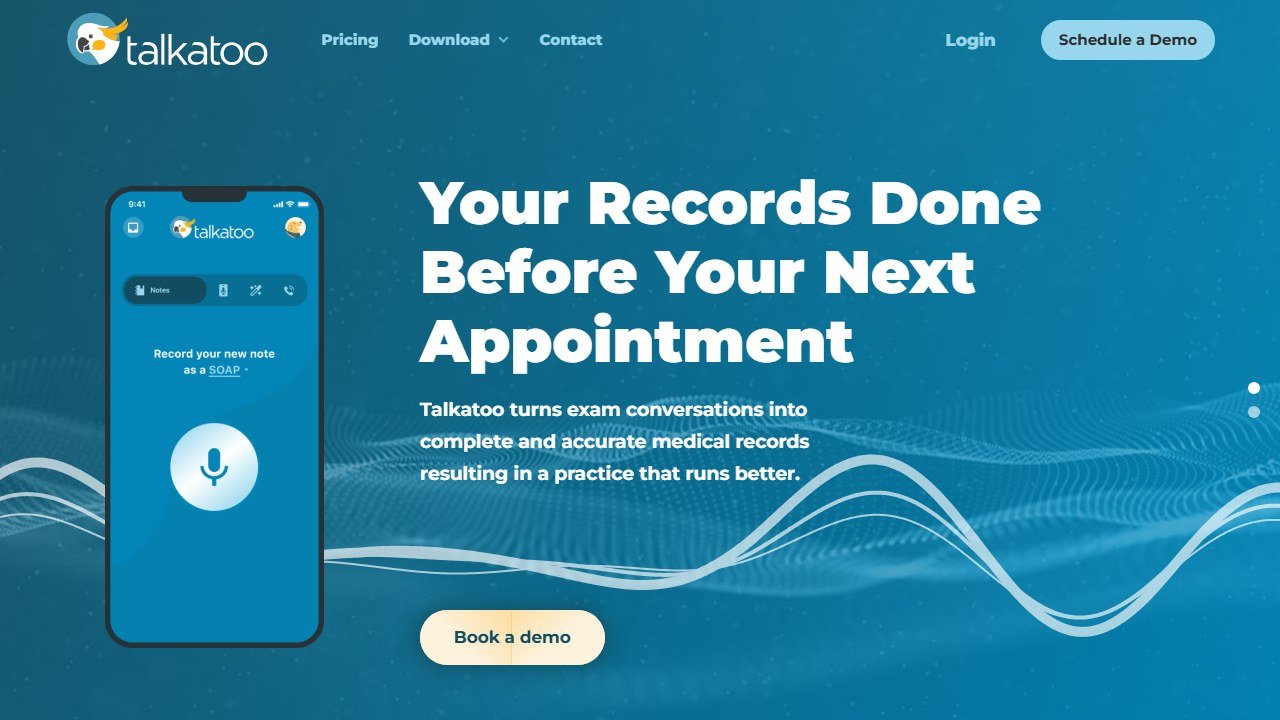
If you adopt one thing this year, make it an AI scribe. This is the category where the hype is mostly true. An ambient scribe listens to the consult (with consent), then drafts a structured SOAP note, discharge instructions, and a client summary. The vet reviews and signs. Practices routinely report getting an hour or more of their evening back.
The honest catch is that the draft is a draft. You still read every line, and early on you will over-edit until you trust it, which usually takes two to four weeks. It also captures whatever was said in the room, so a vague verbal exam produces a vague note. The vets who get the most out of a scribe are the ones who keep narrating findings out loud the way they always should have, because the AI can only structure what it actually hears.
There is also a real difference between ambient scribes, which listen to the whole consult and structure it afterward, and dictation-first tools, where the vet narrates observations explicitly. Ambient feels more natural and changes nothing about how you run the room. Dictation gives you tighter control over exactly what lands in the note. Neither is wrong; it is a workflow preference, and it is worth trying both styles during the trial period rather than assuming.
Talkatoo is a strong value pick. Its full AI scribe (Ultimate) runs around $116 per vet per month billed annually, and it has a cheaper dictation-first tier near $40 if you only want fast voice-to-text. Scribenote and CoVet are both clean, vet-specific ambient scribes with species-aware exam templates. ScribbleVet sits at the premium end, roughly $150 per vet per month billed annually (support staff included), and was acquired by Instinct Science in early 2026, with a stated plan to weave drug-reference and clinical decision support into the note workflow.
The trade-off across all of them is similar: you pay per veterinarian, accuracy on heavy accents and noisy rooms is good but not perfect, and you must check what the vendor does with the audio (more on that below). Pick two, run the free trials (most are 14 days), and let the vets vote.
Practice management (PIMS): the system everything else plugs into
Your PIMS is the spine. In 2026 the meaningful split is cloud-native platforms with AI baked in versus older systems where AI is bolted on or absent.
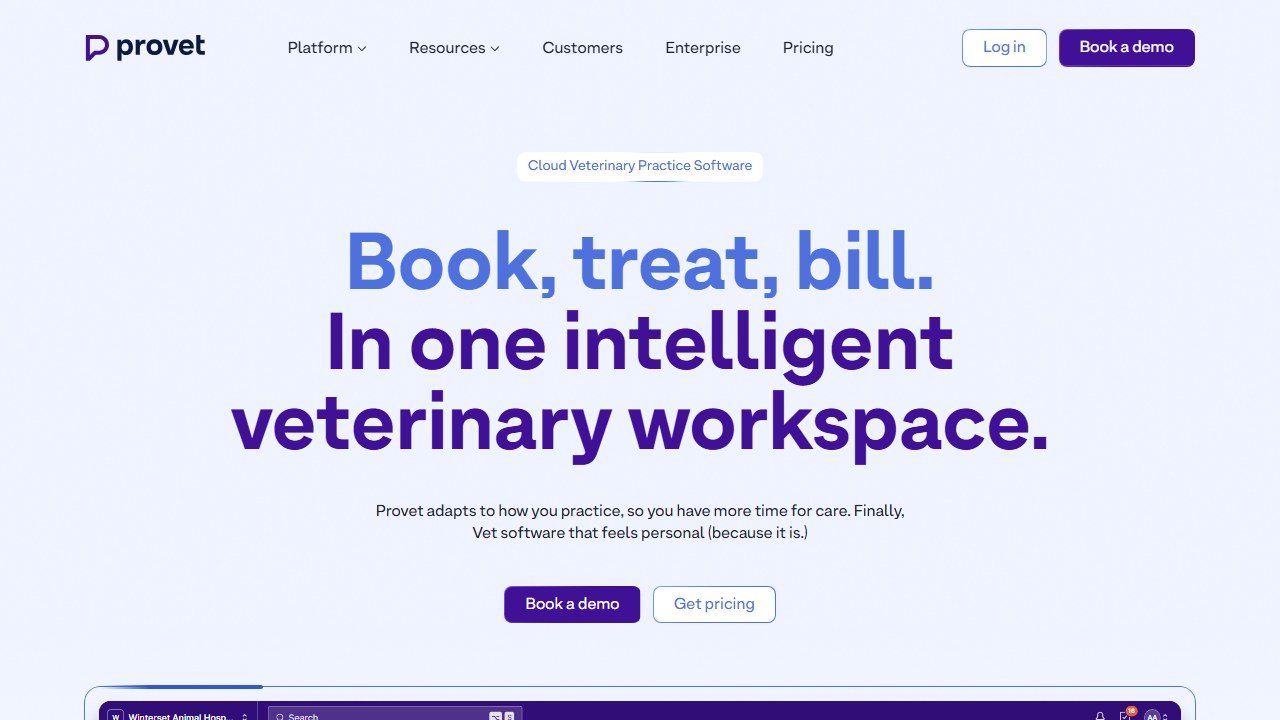
Provet Cloud now ships AI-assisted clinical summaries, auto-drafted discharge notes, and SOAP generation inside the record. Digitail markets itself as an all-in-one that folds scheduling, records, communication, and inventory into one system, which reduces the number of subscriptions you juggle. ezyVet, an IDEXX product, is powerful and integrates natively with IDEXX diagnostics, but reviewers consistently note its native AI and voice features lag the cloud-native crowd as of 2026.
Honest take: do not switch PIMS just to get AI. A PIMS migration is one of the most painful projects a clinic can run, and data conversion is rarely clean. If your current system works, add a standalone scribe and a communication layer on top before you consider ripping out the spine. Switch the PIMS only when the platform itself is holding you back.
Scheduling, reminders, and client communication
Phones are where the front desk drowns. Online booking and automated reminders are the highest-return, lowest-risk AI-adjacent tools you can add.
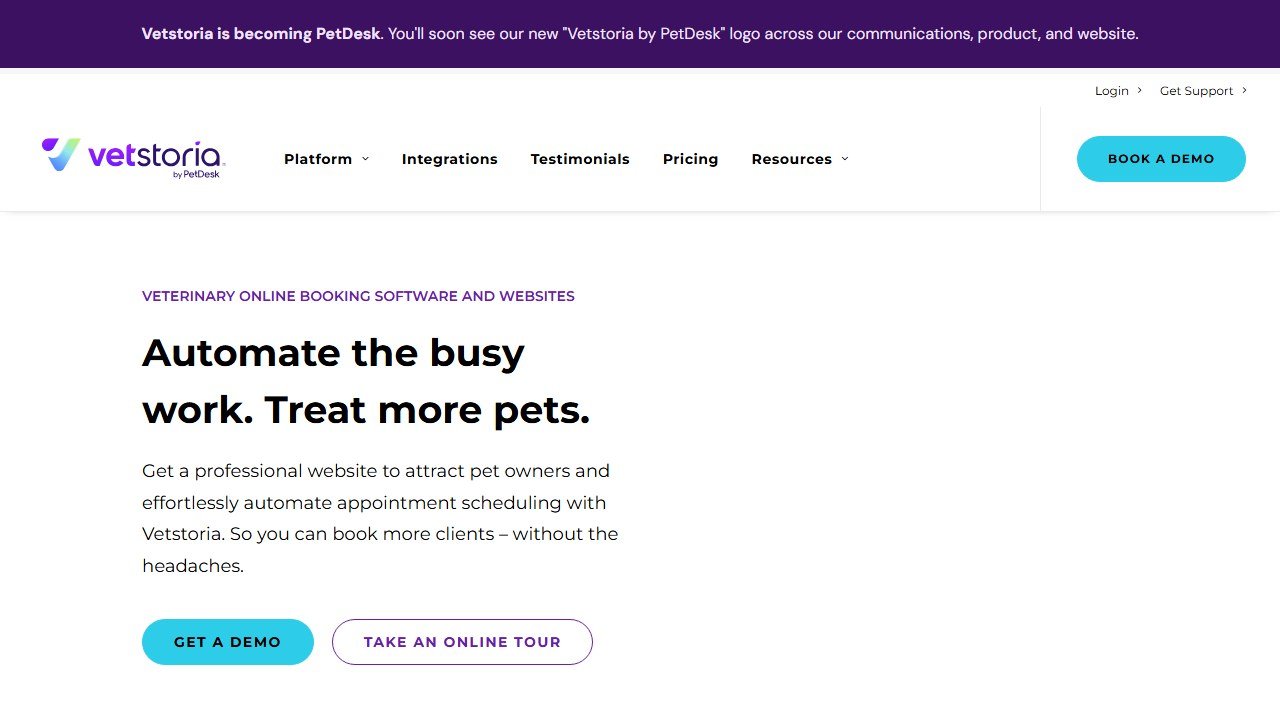
Vetstoria is the dedicated real-time online booking layer: clients book 24/7, no app or login, and it syncs availability back into major PIMS. PetDesk is the broad client-engagement platform, used by thousands of clinics, with two-way messaging, appointment reminders, refill requests, and educational follow-ups through its pet-owner app. The two now sit in the same family, and many practices run them together.
The win here is concrete and measurable: fewer inbound calls, fewer no-shows because reminders actually go out, and clients who self-serve the routine stuff. The limitation is that automated messaging is only as good as your protocols. If your reminder logic is sloppy, you will automate sending the wrong thing faster. Set the rules carefully, then let it run.
This same playbook of booking, reminders, and follow-up is exactly what the rest of the pet-services world leans on too. We have walked through it for dog trainers and pet groomers, and the mechanics translate almost directly to a clinic front desk.
The AI receptionist and phone handling
A newer category answers the phone itself. An AI receptionist (FrontDesk and similar agents integrate with Vetstoria, for example) can pick up calls outside hours, answer routine questions, route emergencies to a human, and book appointments straight into the schedule.
This is promising for after-hours coverage and overflow, but handle it with care. The single most important configuration is triage routing: a real emergency call must reach a human immediately, every time, with no AI improvising medical advice. Test the emergency path obsessively before you trust it with live calls. Used as a safety net rather than a replacement for the front desk, it can genuinely take pressure off a short-staffed team.
Billing and revenue capture
Missed charges are quiet money leaks. A forgotten injection, an unbilled bag of fluids, a recheck that never made it onto the invoice. Several PIMS now layer AI over the record to flag likely missed or under-captured charges in real time before the client checks out. Covetrus Pulse, ezyVet, and others surface this kind of revenue-protection prompt.
This is low-risk because a human still confirms every charge. Treat it as a checklist that reads your own notes back to you. The limitation is obvious: it can only flag what was documented, so it rewards good note discipline (which the scribe above helps with) and stays silent on anything that never got recorded.
Imaging and radiology AI: decision-support only, full stop
This is the category that demands the most caution. Tools like SignalPET and Vetology analyze companion-animal radiographs and return findings in minutes. SignalPET reports on a wide range of radiographic findings and offers a hybrid service pairing AI with human radiologist review and a guaranteed turnaround. Vetology blends AI interpretation with established teleradiology.
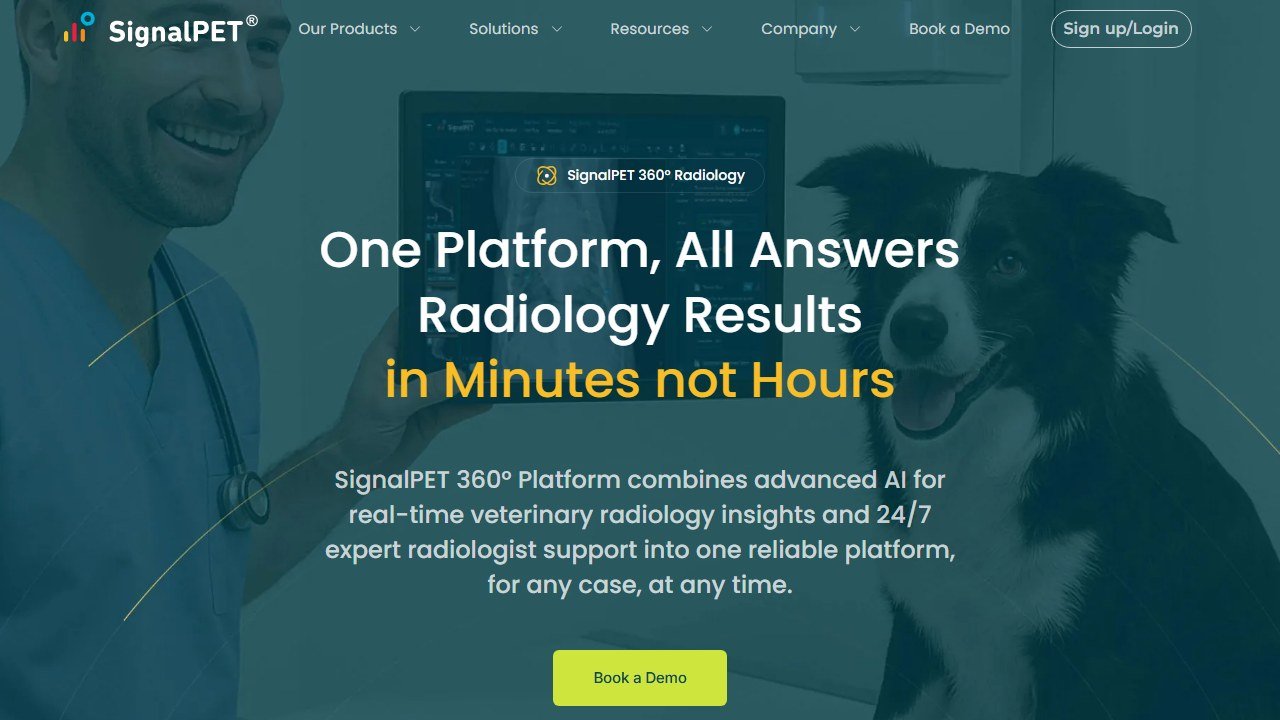
Used correctly, this is a fast second opinion, a confidence check, and a triage aid, especially for a solo vet at 11pm with no radiologist on call. That is real value.
Used incorrectly, it is dangerous. AI radiology output is decision-support, not a diagnosis. It flags patterns; it does not understand the patient. The veterinarian interprets the image in the context of the animal in front of them, and the veterinarian is responsible for the call. When the case is anything beyond routine, that is what board-certified teleradiologists are for. Let the AI speed you up. Never let it make the decision.
Inventory and operations
Stockouts and expired drugs both cost money. Most modern PIMS now include inventory analytics that track usage, flag low stock, and suggest reorder points based on real consumption rather than guesswork. Provet Cloud, Digitail, and the other cloud-native platforms all do versions of this.
The value is steady rather than dramatic: less cash tied up in shelves, fewer “we are out of it” moments mid-consult. The limitation is that predictive ordering trusts your historical data, so a clinic with messy stock records gets messy predictions. Clean the data first, then let the forecasting earn its keep.
Marketing and client education
For the marketing side, you do not need a vet-specific tool. General AI writing assistants draft newsletters, social posts, and seasonal client reminders (flea season, dental month, holiday hazards), which a human on your team then edits for accuracy and your clinic’s voice. This is the same approach independent pet professionals use, and we have covered the practical setup for pet sitters and dog walkers in detail.
The one hard rule: never let AI publish medical claims or treatment advice to clients unreviewed. A breezy AI-written post that gives wrong dosing or symptom advice is a liability, not a time-saver. Draft with AI, approve with a human.
Veterinary AI tools compared
| Tool | What it does | Best for | Entry pricing / free tier |
|---|---|---|---|
| Talkatoo | AI scribe + dictation | Value-focused practices | ~$116/vet/mo annual (Ultimate); ~$40 dictation tier; free trial |
| Scribenote | Ambient AI scribe | Clean SOAP automation | Per-vet subscription; free trial |
| CoVet | AI scribe + exam templates | Species-aware notes | Per-vet subscription; 14-day trial |
| ScribbleVet | Premium AI scribe | Practices wanting drug-reference integration | ~$150/vet/mo annual, support staff included; 14-day trial |
| Vetstoria | Real-time online booking | Cutting phone volume | Paid; demo-based pricing |
| PetDesk | Client communication + reminders | Reducing no-shows | Paid; demo-based pricing |
| Provet Cloud | Cloud PIMS with AI | All-in-one with AI summaries | Paid; demo-based |
| SignalPET | AI radiology decision-support | Fast imaging second opinion | Paid; per-clinic |
A lean starter stack (what we would actually buy)
You do not need all of this. Start small, prove the value, then expand.
- One AI scribe. This is the non-negotiable first buy. Run free trials of two (say Talkatoo and Scribenote or CoVet) and let the vets pick. Biggest quality-of-life gain per dollar.
- Online booking plus reminders. Vetstoria for booking, or PetDesk if you want booking and client messaging in one. This is what unclogs the phones.
- Whatever AI your current PIMS already includes. Turn on the billing-capture and inventory features you are already paying for before buying anything new.
- Imaging AI only if you do meaningful radiology volume. Add SignalPET or Vetology as a second opinion, never as the decision-maker, and keep teleradiologist access for real cases.
- A general AI writing assistant for marketing. Cheap, optional, always human-reviewed.
That is a sane, affordable stack that removes the worst of the after-hours grind without betting patient safety on software.
A word on patient and client data privacy
Every tool here touches sensitive data: patient records, client contact details, payment information, and in the case of scribes, audio of real conversations. Before you sign anything, ask the vendor four plain questions. Where is the data stored? Is consult audio retained or deleted after the note is made? Is your data used to train their models, and can you opt out? And do you have a signed data-processing agreement?
Tell clients when AI is involved, especially when a conversation is being recorded for a scribe, and get consent. Most clients are fine with it once you explain that it lets the vet spend more time looking at their pet and less time typing. A clinic that is casual with client data will eventually pay for it in trust. Treat privacy as a clinical responsibility, not an IT footnote.
What AI still cannot do for a veterinary practice
AI cannot diagnose your patient. It cannot decide a treatment plan. It cannot read the room when a family is deciding whether to euthanize, and it cannot deliver that news with the care a frightened owner needs. It cannot feel an abdomen, watch a gait, or notice the off thing about a dog that the chart does not capture. It cannot take legal or ethical responsibility for a medical decision, and it never will. Those things sit with a licensed veterinarian, and they always must.
What AI can do is clear the administrative weight off your team so the humans have the time and the energy left to do the part only humans can do. Use it for the notes, the phones, the reminders, the billing, and the first-pass second opinion. Keep the medicine, the judgment, and the hard conversations exactly where they belong: with the people who trained their whole lives for them. That line does not move.

Written by
FazFaz is the founder of AIToolsBakery. Some tools here are tested hands on. Others are assessed from vendor documentation and pricing verified on the live page, and every review says which one it is. Sponsors can buy a position in a guide. They cannot buy the score, the criticism, or silence about a better option.
How we test and how we make money →