It is 9:40 on a Tuesday night. You crushed an interval session this morning, your legs are still buzzing, and tomorrow is a heavy lifting day. The question that actually decides your next workout is not “how hard can I train,” it is “did I recover enough to earn the right.” Sleep is where most of that recovery happens, and a good sleep coach app is supposed to turn last night into a clear instruction for today. The problem is that almost everything you find when you search “best AI sleep coach app” is written by the companies selling rings and straps, or by affiliate sites earning a cut on every signup.
We are neither. AIToolsBakery is independent. We sell none of these apps, take no commission on a WHOOP membership or an Oura ring, and have no reason to push you toward the priciest hardware. What we care about is whether an app helps an athlete sleep better and train smarter, and whether it is honest about what it cannot measure. The wearable industry has a habit of presenting estimates as facts, so part of our job here is telling you where the confidence is real and where it is marketing.
One note before we start. These apps track biometrics and offer guidance, but none of them is a doctor. If you have a real sleep problem (loud snoring, gasping, chronic insomnia, or daytime collapse), see a sleep physician. None of this is medical advice.
The 30-second answer: For athletes who want recovery, HRV, and strain in one loop, WHOOP leads. Oura matches it on sleep depth with a less obtrusive ring. Garmin folds sleep into a watch you already train with. Rise and Sleep Cycle are strong phone-only picks when you do not want a wearable.
Quick answer: WHOOP is the best AI sleep and recovery coach for serious athletes, Oura for sleep accuracy in a ring, Garmin for athletes already on its watches, and Rise for circadian energy scheduling. Pair it with a training app, since recovery only matters next to the work it supports.
How we judged these apps

Four jobs separate a real sleep coach from a glorified alarm clock, and we weighed each app against all four.
Sleep staging accuracy. Light, deep, and REM stage estimates are the headline feature on every box. Be skeptical. Independent research has repeatedly shown that consumer wearables are good at telling asleep from awake, and far less reliable at splitting sleep into stages. Treat stage breakdowns as a rough trend, not gospel.
HRV and recovery insight. Heart rate variability, measured overnight, is the most useful single number most of these apps produce. A morning readiness or recovery score built on HRV, resting heart rate, and respiratory rate is genuinely actionable, provided you read the trend rather than obsess over one bad night.
Strain and readiness guidance. The athlete-specific payoff: does the app connect last night’s sleep to today’s training load, and tell you to push or pull back? This is where WHOOP and Garmin pull ahead of the phone-only apps.
Wearable versus phone-only. A ring or strap measures your body directly. A phone-only app infers sleep from microphone sound and movement, which is cheaper and less precise. Neither is wrong; they answer different budgets.
WHOOP
WHOOP is a screenless strap worn on the wrist or upper arm, paired with a membership app, and it is the most athlete-focused option here. It samples HRV at high frequency overnight and rolls sleep performance, HRV, resting heart rate, respiratory rate, and skin temperature into a single morning Recovery score from 0 to 100. The same engine tracks daily Strain, so you get a closed loop: how recovered you are, then how hard you actually pushed, then whether the two matched. For an athlete that loop is the whole point.
Sleep tracking is a real strength. WHOOP reports time in each stage, sleep efficiency, sleep debt against your need, and a Sleep Coach that nudges bedtimes. The strap has no screen to distract you and the battery can charge on your arm without removing the device, which matters for continuous overnight data.
The honest limitation is the model. WHOOP has no upfront hardware purchase in the traditional sense; you pay an ongoing membership, and when you stop paying, the strap stops working. Over a few years that recurring cost adds up well past a one-time wearable. Confirm current pricing on the vendor page, because WHOOP changes its plans often.
Official site: whoop.com.
Oura
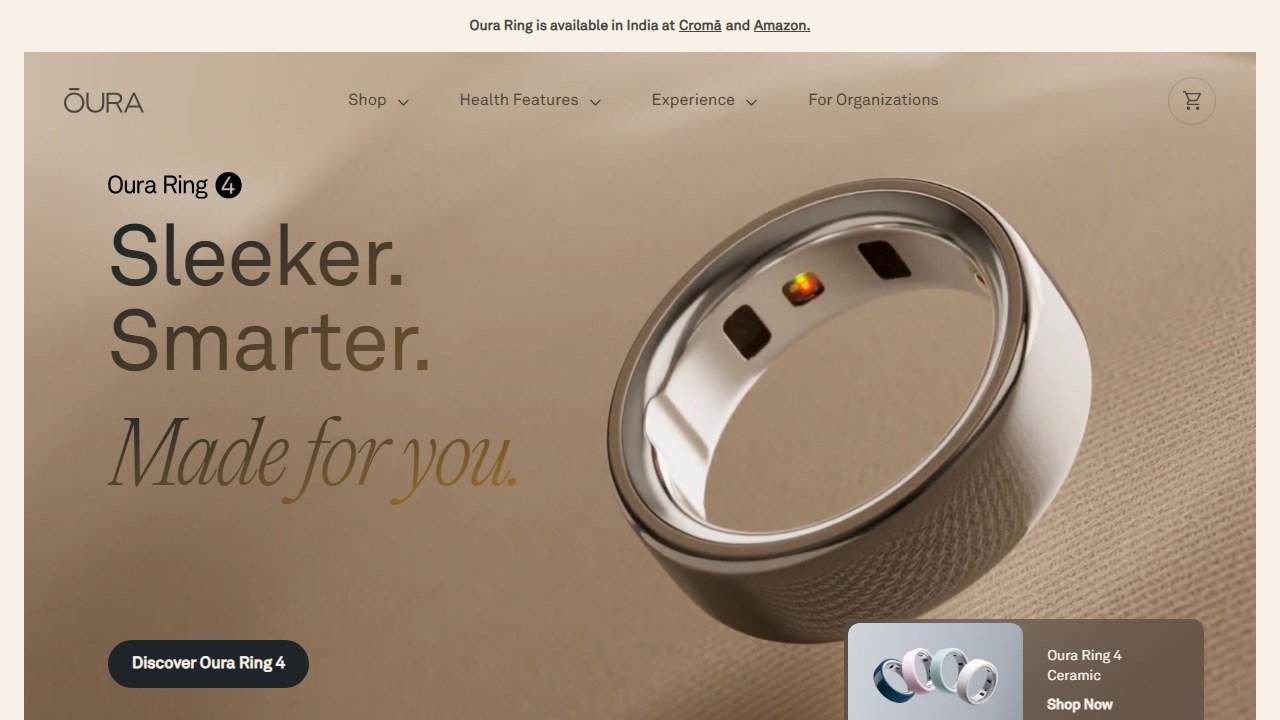
Oura is a smart ring, and for athletes who hate wearing something on their wrist all night it is the most comfortable serious tracker. It produces a nightly Sleep score and a morning Readiness score built on HRV, resting heart rate, body temperature trend, sleep regularity, and movement. Oura has been at this longer than most, and its overnight HRV and temperature data are well regarded, including for spotting the early signs of illness or accumulated fatigue before you feel them.
For recovery-minded training, Readiness is a clean daily signal, and the temperature baseline is genuinely useful for catching when you are run down. The form factor is the selling point: a ring is easy to forget you are wearing, which means more consistent overnight data than a strap some people abandon.
The limitations are two. First, like every wearable here, its sleep stage accuracy is an estimate, not lab-grade. Second, Oura splits cost between a one-time ring purchase and an ongoing membership for the full insights, so budget for both and confirm the current ring price and subscription on the vendor page. A ring is also harder to use for live workout strain than a wrist device.
Official site: ouraring.com.
If you are weighing the strap-versus-ring-versus-watch question in detail, our WHOOP vs Oura vs Garmin comparison breaks down hardware, accuracy, and value head to head.
Garmin (Sleep Coach)
If you already train with a Garmin watch, you may not need a second device at all. Garmin’s Sleep Coach feature, available on many of its newer watches, estimates your personal sleep need using your age, recent activity load, sleep history, naps, and HRV, then tells you how much sleep to aim for. It sits alongside Garmin’s Body Battery and training readiness features, so the same watch that logs your run also reports whether you slept enough to do it again.
For athletes the appeal is integration. The watch already knows your training load, your VO2 trend, and your HRV status, so its sleep guidance arrives in context rather than as an isolated number. There is no separate subscription on most Garmin features either, which is a refreshing change in this category.
The limitation is comfort and accuracy at night. A watch is bulkier on the wrist than a ring or strap, some people find it uncomfortable for sleep, and Garmin’s sleep staging, like everyone’s, is an estimate. Feature availability also varies a lot by watch model, so check whether your specific device supports Sleep Coach before assuming it does.
Official site: garmin.com.
Rise (Rise Science)
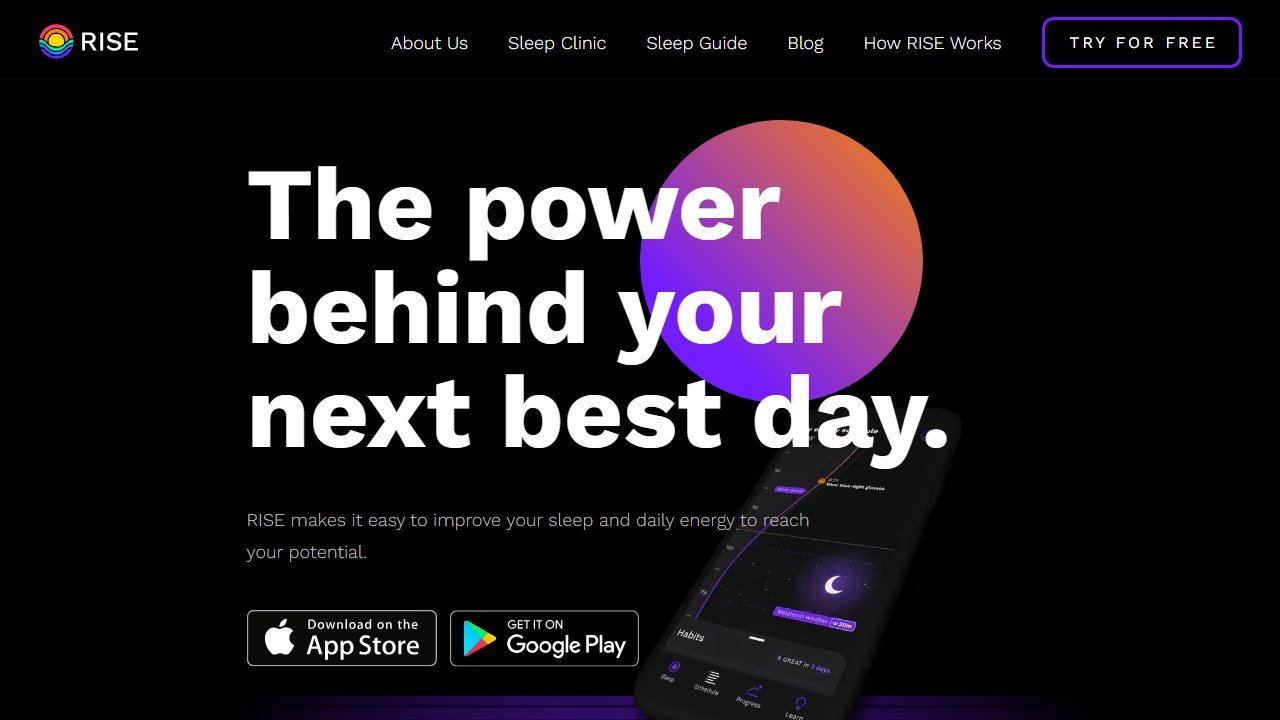
Rise is the strongest phone-only pick for athletes who care about energy timing more than stage charts. Instead of obsessing over light versus deep sleep, Rise tracks two things: your sleep debt (how much sleep you owe your body over recent nights) and your circadian energy schedule (when your body naturally wants to be alert or wind down). It then maps your day so you train, eat, and sleep in rhythm with your biology.
For an athlete this framing is quietly smart. Sleep debt is more strongly linked to how you feel and perform than the stage percentages most apps lead with, and Rise leans on that. The app works from your phone and can pull from a wearable if you have one, so you are not forced to buy hardware.
The limitation is that Rise does not measure HRV or give a recovery score in the WHOOP or Oura sense, and on phone-only data it does not report detailed sleep stages. If your goal is daily HRV-driven readiness, Rise is not built for that. If your goal is to stop being chronically underslept, it is excellent. Confirm current subscription pricing on the vendor page.
Official site: risescience.com.
Sleep Cycle
Sleep Cycle is the friendliest entry point, a phone-only app that uses your phone’s microphone and movement to estimate sleep and wake you inside a smart window when you are in lighter sleep. It is inexpensive, requires no hardware, and gives athletes a low-commitment way to start paying attention to sleep before spending on a ring or strap.
The strengths are the smart alarm, simple trend graphs over weeks, snore detection, and a frictionless setup. For someone who just wants to know roughly whether their sleep is improving across a training block, it does the job without a learning curve.
The honest limitation is precision. Sound-and-movement tracking is the least accurate method here, with no direct HRV or recovery score, so it cannot drive readiness-based training decisions the way a wearable can. Treat it as a habit-building tool, not a recovery engine.
Official site: sleepcycle.com.
Pillow
Pillow is a phone and Apple Watch sleep tracker for people inside the Apple ecosystem. On its own it runs on the iPhone using motion and audio; paired with an Apple Watch it adds heart rate and a more complete stage estimate, plus audio recordings that can catch snoring or sleep talking. For an athlete who already owns an Apple Watch and does not want a dedicated sleep wearable, it is a sensible bridge.
The strength is flexibility. You can run it lightweight from the phone or richer from the watch, and it integrates cleanly with Apple Health so your sleep sits next to your workouts.
The limitations are platform and depth. It is Apple-only, and even with a watch it does not produce an athlete-grade recovery or strain model the way WHOOP does. Apple Watch battery life also makes all-night, every-night wear harder than a ring or a strap built for it. Confirm the current pricing tier on the vendor page.
Official site: pillow.app.
Eight Sleep
Eight Sleep is the outlier: not an app you wear but a smart mattress cover (the Pod) that actively heats and cools each side of the bed and tracks sleep through sensors in the fabric, all controlled from its companion app. For athletes, temperature is an underrated recovery lever, and automatically cooling the bed in deep sleep and warming it before wake is a genuinely different approach to sleep quality.
The strength is intervention, not just measurement. Most apps tell you how you slept; Eight Sleep tries to change it in real time through temperature, which can be a real win for hot sleepers and people training hard in warm months.
The limitations are cost and scope. The Pod is by far the most expensive option here, with a significant hardware price plus an ongoing subscription, and it only works in your own bed, so it does nothing when you travel to a race or a meet. Its tracking is contact-based through the mattress rather than a worn sensor, which is convenient but a different accuracy profile. Confirm current pricing on the vendor page before committing.
Official site: eightsleep.com.
Quick comparison
| App | What it does best | Best for | Price or model |
|---|---|---|---|
| WHOOP | Recovery, HRV, and strain in one loop | Serious athletes wanting daily readiness | Membership, no usable device without it |
| Oura | Comfortable ring with strong HRV and temperature | Athletes who hate wrist wear | Ring purchase plus membership |
| Garmin | Sleep folded into a training watch | Athletes already on Garmin | Mostly included with the watch |
| Rise | Sleep debt and energy scheduling | Chronically underslept athletes | Subscription, phone-first |
| Sleep Cycle | Smart alarm and simple trends | Beginners testing the waters | Low-cost subscription, no hardware |
| Pillow | Apple Watch and iPhone sleep tracking | Apple users with a watch | Subscription tiers, Apple-only |
| Eight Sleep | Active temperature control of the bed | Hot sleepers training hard | Premium hardware plus subscription |
A lean way to start
You do not need to buy the most expensive thing first. Here is the low-regret path.
- Spend two weeks with a free or cheap phone-only app like Sleep Cycle or Rise to see whether you will actually look at the data.
- If you find yourself checking it every morning, decide your form factor: ring if you hate wrist wear, watch if you already run Garmin, strap if you want the deepest athlete loop.
- Pick one wearable and wear it consistently for a month before judging it. One night means nothing; the trend is everything.
- Use HRV and recovery to adjust training, not to panic. A low score is a nudge to deload, not a verdict on your fitness.
If sleep is one piece of a bigger training picture, pair this with a coaching app. Our roundups of the best AI running coach apps and the best AI workout apps cover the training side that recovery is meant to support.
What these apps still cannot do
Be clear-eyed about the ceiling here. Every wearable in this list estimates sleep stages, and that estimate is not as accurate as a clinical sleep study; treat the light, deep, and REM splits as trends, not measurements. HRV and recovery scores are useful signals, but they are noisy night to night, so a single low number is rarely worth losing sleep over (which, ironically, lowers it further).
None of these apps is a coach who knows your goals, your injury history, or how your body felt on the start line. They produce numbers; you and a real coach turn those numbers into decisions. And none of them is a medical device. If you suspect a genuine sleep disorder, no app readiness score replaces a sleep physician. Used with that perspective, the right sleep coach app is a quietly powerful edge. Used as an oracle, it just gives you one more thing to worry about at 9:40 on a Tuesday night.
Where the figures on this page come from
Every price here was read from the vendor’s own pricing page on 4 September 2026 and carries that date, because pricing in this category moves and a claim without a date is not checkable.
The pages we read
PT Distinction publishes $19.90, $59.90 and $89.90 a month with its marginal per client rates. Everfit publishes a rung for every client count from $19 to $290 monthly. TrueCoach publishes $26.34, $57.99 and $136.99 a month billed annually. My PT Hub publishes $25 and $59. FitBudd publishes $15, $79 and $149 with per client add-ons. Trainerize publishes a free tier and plans from $9. JuggernautAI publishes $34.99 a month or $349.99 a year.
The ones we could not read
Fitbod, Dr. Muscle, Hevy, Whoop and Oura did not yield a figure to the same method that read every vendor above, largely because consumer subscriptions are sold inside the app stores rather than on the web. That is not evidence they publish nothing, and we do not present it as such. Check the store listing on your own device, in your own country, before relying on any figure for those five.
One page worth reading twice
Wodify displayed $199 struck through and $99 a month per location, conditional on booking a demo by 31 August. We read it on 4 September 2026, after that deadline, and the discounted price was still shown. Ask which figure actually applies before budgeting on it.

Written by
FazFaz is the founder of AIToolsBakery. Some tools here are tested hands on. Others are assessed from vendor documentation and pricing verified on the live page, and every review says which one it is. Sponsors can buy a position in a guide. They cannot buy the score, the criticism, or silence about a better option.
How we test and how we make money →Frequently Asked Questions