It is week seven. Your provider has just cleared you to “start moving again,” which is a wonderfully vague instruction when you are running on fragmented sleep, your core feels like a stranger, and a sneeze still does something alarming. You do not want a bootcamp. You want a plan that knows your body went through something, that starts where you actually are, and that will not quietly make a pelvic floor problem worse.
That is the gap these apps try to fill. The trouble is figuring out which ones do it honestly. Search “best postpartum fitness app” and the first page is almost entirely the vendors themselves, plus affiliate roundups that earn a commission on every sign up. We are neither. AIToolsBakery sells none of these apps, takes no cut, and we went looking specifically at how each one handles the parts that matter after birth: phased programming, core and pelvic floor safety, clearance guidance, and whether there is a human community behind the screen.
We graded every app on four jobs, because those are the four things a postpartum app is really being hired to do. First, phased programming: does it start gentle and progress only when you are ready, instead of dropping you into a generic strength plan. Second, core and pelvic floor safety: does it treat the deep abdominal wall and pelvic floor as the foundation, or as an afterthought. Third, clearance guidance: does it actively tell you to confirm with your provider, and does it understand that “cleared” comes in stages. Fourth, support and community: is there a coach, a PT, or a group of other parents behind the content, or is it just a video library you are left alone with. The apps that score well on all four are rare, and most are strong on two or three.
A note before anything else, because it is the most important thing on this page. None of these apps is a medical professional. If you had a cesarean, a difficult delivery, a known diastasis recti gap, prolapse symptoms, leaking, or pelvic pain, get assessed by your provider or a pelvic floor physical therapist before you follow any program. An app cannot examine you. It can only guide you once you know what you are working with.
The 30-second answer: Every Mother is our top pick for core and pelvic floor rehab. Expecting and Empowered is best for guided strength with clear C-section and vaginal tracks. Juna suits a gentle, education-first return. The Bloom Method goes deepest on breath and core mechanics. Sweat and Peloton fit those who want postpartum inside a bigger fitness library.
Quick answer: Every Mother is the best app for core and pelvic-floor rehab, Expecting and Empowered for guided strength with delivery-specific tracks, Juna for a gentle education-first return, and The Bloom Method for breath and core mechanics. Used within their limits, they give real structure to a foggy stretch of life.
What “AI” actually means in a postpartum app
Set expectations. The “AI” in this category is mostly smart personalization, not a robot coach watching your form. The apps ask about your delivery type, weeks postpartum, symptoms, and goals, then assemble and re-sequence a plan from a large library of pre-recorded movements. That is genuinely useful: it means the app nudges you forward only when you log readiness, and it can flag movements to avoid based on what you reported.
What it is not: a camera that corrects your technique in real time, or a system that can diagnose your abdominal separation. A couple of apps experiment with form cues, but for postpartum recovery the bigger value is in the sequencing and the symptom-aware substitutions, not computer vision. We judged each app on that basis.
Every Mother: best for core and pelvic floor rehab
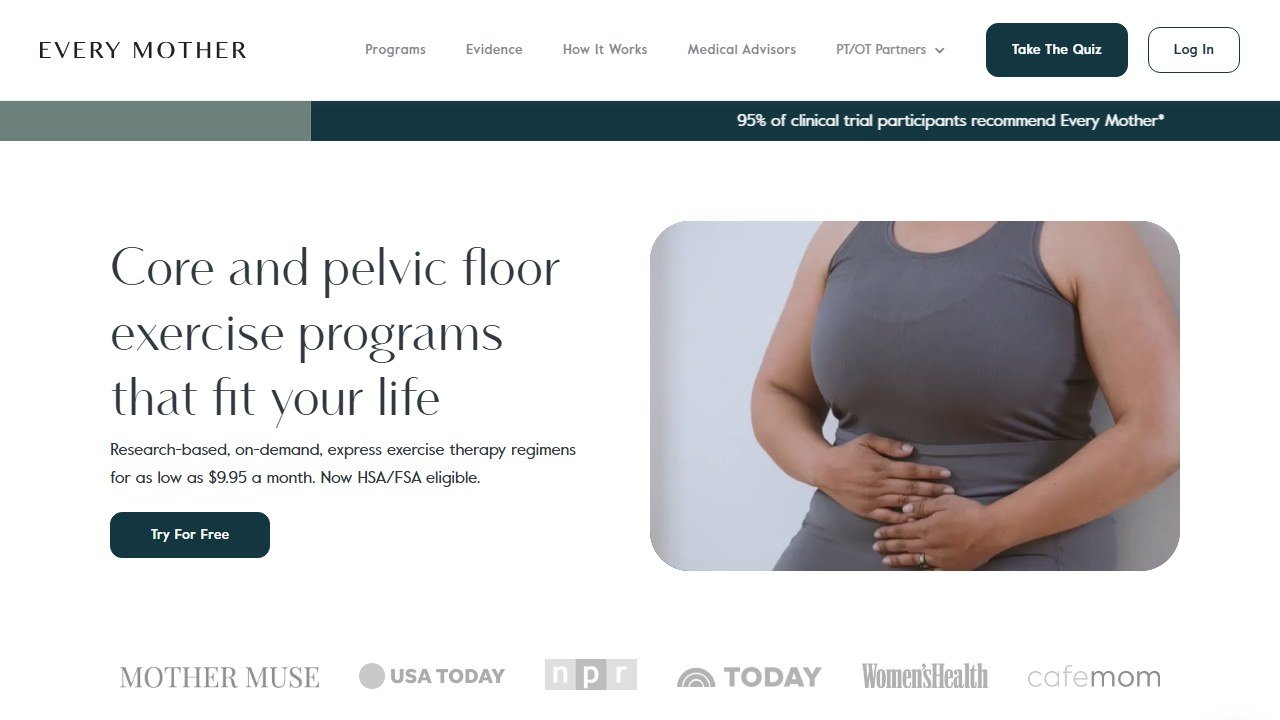
Every Mother (the in-app program is branded EMbody) is the one we point friends to first when the concern is the core itself: diastasis recti, the deep abdominal wall, and pelvic floor coordination. The daily plan is short, often 10 to 15 minutes, and it is built with pelvic floor physical therapists rather than bolted on as an afterthought. The company cites a Weill Cornell study on diastasis resolution, and while we always treat single vendor-cited studies with caution, the clinical involvement here is more visible than in most consumer apps.
What we like: it treats core function as the foundation before it loads you up with harder work. The express sessions are realistic for a day with a newborn attached to you.
There is also a quiet symptom-awareness here that we rate highly. The intake asks about leaking, heaviness, and abdominal coning, and the plan adjusts rather than ignoring what you reported. That is the difference between a personalized plan and a generic one with your name on it.
The honest limit: this is rehab and foundation, not a full strength program. If your goal is to deadlift again or run a 10K, you will outgrow it and want to pair it with something heavier later. The community element is lighter than the big-library apps, so if you want a crowd cheering you on, this is not that. Pricing is subscription based and changes, so confirm the current rate on the vendor page.
Expecting and Empowered: best for guided strength with delivery-specific tracks
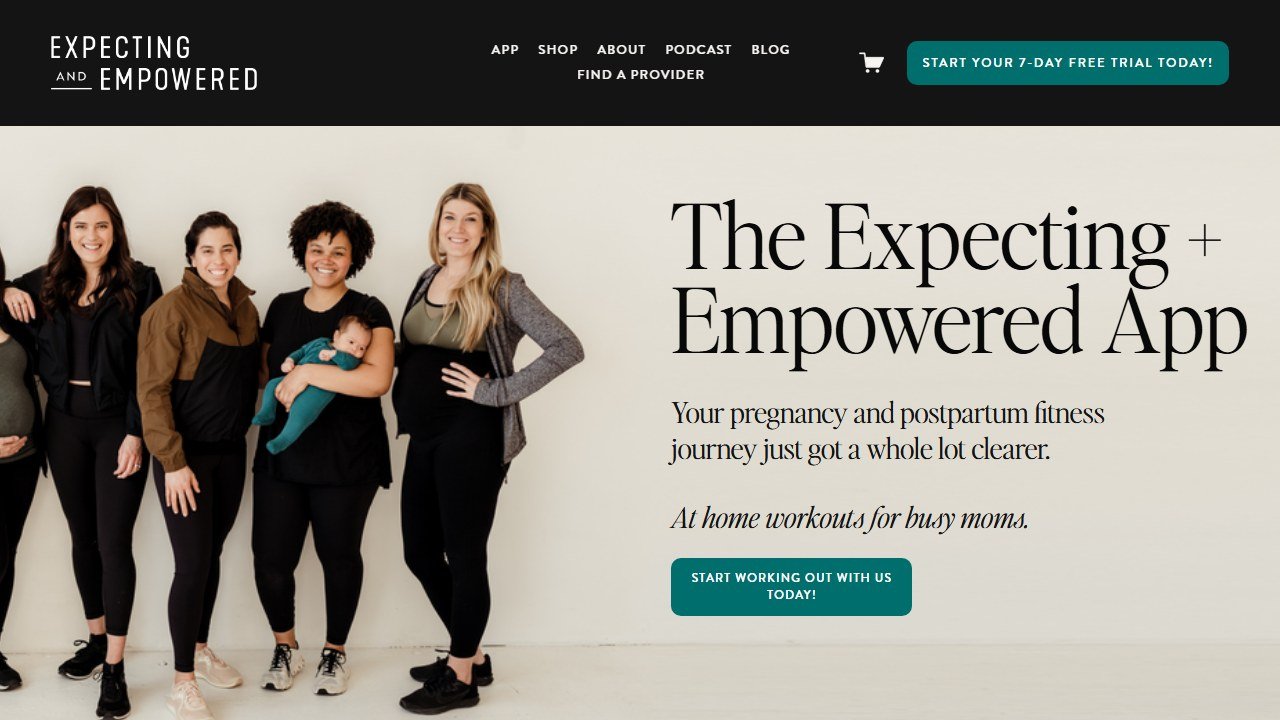
Expecting and Empowered was built by a registered nurse and a physical therapist, and it shows in the structure. The postpartum side gives you separate paths for vaginal and cesarean recovery, a core strengthening series, and a dedicated return-to-running evaluation before it lets you pound pavement. Workouts run around 30 minutes with minimal equipment, which fits a home setup.
What we like: the C-section track is a real track, not the vaginal plan with a longer rest note. The return-to-running screen is the kind of gatekeeping a good app should do.
It also has a support layer that goes beyond the videos. There is a community of other parents working the same programs, and the founders are visible and active, which makes the whole thing feel less like a faceless app and more like a coached cohort.
The honest limit: it leans toward people who want to follow a confident, structured program. If you want to deeply understand the why behind every movement, the education is lighter than Juna’s, and the personalization is built around your delivery type more than around live symptom tracking. Pricing has historically included a free trial and an annual plan in the rough range of mid-three figures per year, but confirm current numbers before you buy.
Juna: best for an education-first, gentle return
Juna frames itself around understanding your body, not just sweating. It carries a six-week core restore program built with a pelvic floor PT, daily pelvic floor work, and two postpartum programs that progress gradually once you are cleared. Postpartum 1 is pitched for roughly weeks six to fifteen, starting only after provider clearance, which is exactly the framing we want to see.
What we like: it reads like the calmest app in the category. Lots of context, mobility, barre and Pilates influenced sessions, and a clear “do not start until cleared” stance.
The honest limit: it is iOS only at the time of writing, so Android users are out. And if you want heavy progressive strength fast, the gentle pacing may feel slow. Subscription based with a trial; confirm on the vendor page.
The Bloom Method: best for breath and core mechanics
The Bloom Method (delivered through Studio Bloom) goes deepest on the mechanics most apps skim: diaphragmatic breathing, intra-abdominal pressure management, and a “lift and wrap” core engagement cue used throughout the movements. The approach is corrective-exercise led, focused on rebuilding function rather than chasing a flat stomach or a closed gap number.
What we like: if you have done a couple of generic postpartum programs and still feel disconnected from your core, this is the one that explains the wiring. The pressure-management emphasis is genuinely protective for a healing linea alba.
The honest limit: the breath-and-mechanics depth is a feature for some and a slog for others. If you just want to be told what to do, this can feel like homework. Pricing is subscription based through the studio; check current rates.
Sweat: best if you want postpartum inside a bigger library
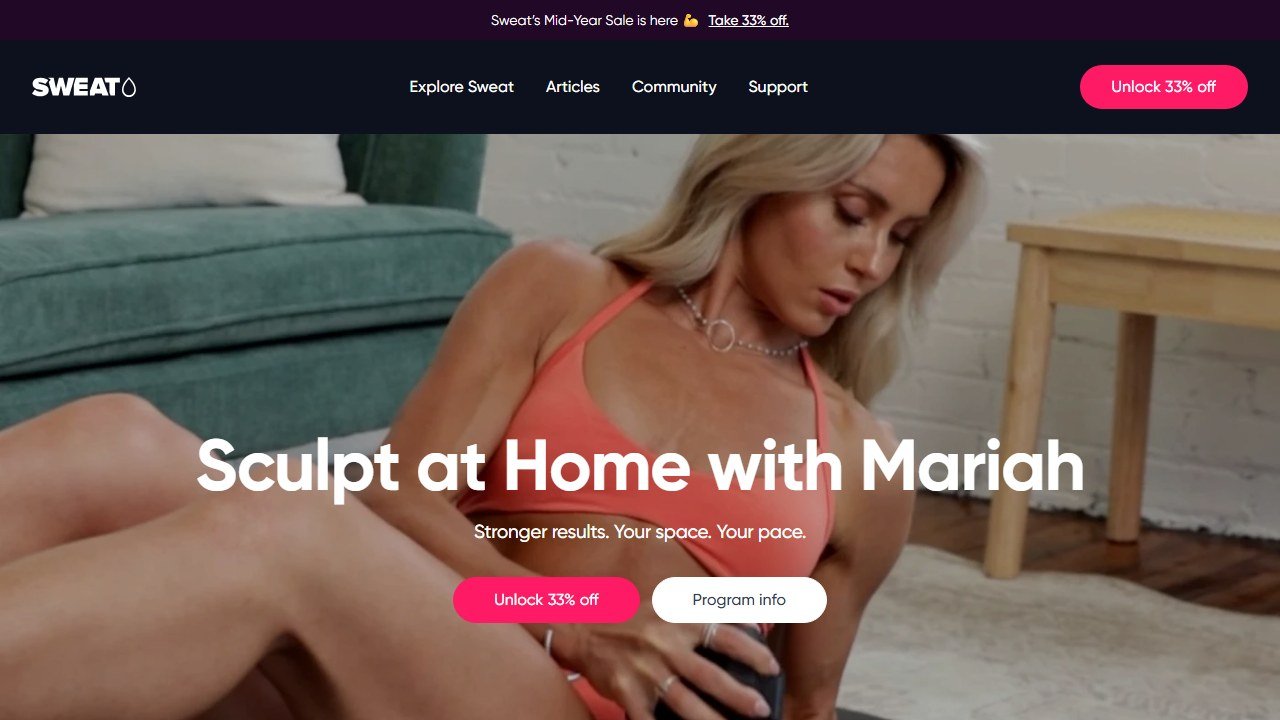
Sweat includes PWR Post-Pregnancy with Kelsey Wells, a multi-week, low-intensity program that reintroduces training with a focus on posture, pelvic floor stability, and abdominal strength, including optional beginner weeks up front. Other Sweat trainers offer their own postpartum paths too.
What we like: once you graduate from the postpartum block, you are already inside a full women’s strength library, so there is somewhere to go next without changing apps. The optional beginner weeks are a thoughtful on-ramp.
The honest limit: this is a general fitness app with a strong postpartum program, not a clinically-built core and pelvic floor specialist. It does not personalize around your specific delivery and symptoms the way Every Mother or Expecting and Empowered do. The community here is large and active, which some people love and others find noisy. Subscription based; confirm pricing.
On the support job specifically, Sweat and Peloton sit at opposite ends from the rehab-focused apps. They give you a coach’s energy and a crowd of other members, which is real motivation when you are isolated at home with a newborn. What they do not give you is a PT looking at your intake. If accountability is the thing that gets you moving, that trade can be worth it, as long as you are honest about reading your own symptoms.
Peloton: best if you already live in the ecosystem
Peloton offers prenatal and postnatal classes through the app, including phased postnatal core strength series led by Robin Arzon and pre/postnatal strength from several coaches. You do not need the bike or tread; the app subscription covers it.
What we like: the phased core series is a sane progression, and if your household already pays for Peloton, the marginal cost of the postpartum content is zero. The class format is motivating for people who like a coach in their ear.
The honest limit: it is class-based content, not a symptom-aware personalized plan. There is no intake that adapts to your diastasis or pelvic floor status, so you are responsible for picking the right phase and not skipping ahead. Confirm current app pricing on the vendor page.
The postpartum recovery apps compared
One table, the parts that actually decide it.
| App | What it does best | Best for | Price or trial |
|---|---|---|---|
| Every Mother (EMbody) | Core and pelvic floor rehab, PT-built | Diastasis and deep core recovery | Subscription, confirm on site |
| Expecting and Empowered | Delivery-specific strength tracks | C-section vs vaginal recovery, return to running | Free trial, then annual plan |
| Juna | Education-first, gentle progression | Calm, well-explained return (iOS only) | Subscription with trial |
| The Bloom Method | Breath and core mechanics | Reconnecting with a disconnected core | Subscription via studio |
| Sweat (PWR Post-Pregnancy) | Postpartum inside a full library | Wanting one app for now and later | Subscription |
| Peloton (postnatal) | Phased classes in a big ecosystem | Existing Peloton members | App subscription |
A lean way to start
You do not need to subscribe to anything this week. Here is the cheapest sane path.
- Get your clearance specifics first. Ask your provider exactly what you are cleared for: walking, core breathing, light strength, or full training. Write it down.
- If you have any symptom (leaking, heaviness, a visible doming or gap, pain), book a pelvic floor PT assessment before you pick an app. This single step prevents the most common postpartum setbacks.
- Start free. Most of these offer a trial. Begin with one core-and-pelvic-floor focused app (Every Mother or Juna) for two weeks and see whether you actually open it.
- Only then choose. Pick the app whose pacing and voice you came back to, and that matches the clearance you wrote down in step one.
If you are weighing postpartum recovery against a more general routine, our roundup of the best AI workout apps covers the wider field, and our guide to the best AI personal trainer apps for beginners is a gentle on-ramp if you are new to structured training. Women looking for ongoing programming beyond the postpartum window may also like our AI workout generator for women overview.
What these apps still cannot do
This is the honest closing, because the category oversells itself.
They cannot examine you. No app can tell you the true state of your abdominal separation, your pelvic floor, or your healing incision. Only a clinician can. If you are leaking, feeling heaviness or bulging, seeing your belly dome under effort, or feeling pain, that is a signal to get assessed, not to push through. None of this is medical advice; it is a nudge toward someone qualified to give you some.
They cannot replace clearance, and they cannot rush it. A six-week date on a calendar is not the same as a green light for everything. C-section recovery, in particular, is internal surgery healing, and the timeline is yours, not the app’s default.
They cannot read your day. The smart sequencing helps, but the app does not know you got two hours of sleep and your back is on fire. You still have to be the adult who scales the session down or skips it. The best outcome is not a perfect streak; it is a slow, durable return with no flare-ups.
Used inside those limits, these apps are genuinely good tools. They give structure to a foggy, depleted stretch of life, they keep the core and pelvic floor at the center where they belong, and they meet you at week seven without judgment. If your recovery includes lingering aches or you want a more rehab-minded next step, our roundup of the best AI physical therapy apps is a sensible companion to anything here. Just remember the order: clearance first, assessment if anything feels off, then the app. Never the other way around.
Where a fitness app should stop and a professional should start
This category sits close to health advice without being health care, and the distinction matters for the reader rather than for the vendor.
Nutrition tools estimate, they do not measure
Calorie and macro figures from photo recognition or database lookup carry meaningful error, both in portion estimation and in the underlying food data. That is fine for tracking a trend over weeks, which is what most people need. It is not fine as a basis for aggressive restriction, and anyone with a history of disordered eating should be pointed away from precise daily tracking rather than towards a better tracker.
Wearable recovery scores are directional, not diagnostic
Sleep staging, readiness and recovery metrics from consumer wearables are useful for spotting your own patterns over time and unreliable as absolute measurements on any given night. Use them to notice a fortnight of poor sleep. Do not use them to decide whether a symptom needs attention, and be wary of any app that encourages that reading.
Anything involving pain, pregnancy, injury or a medical condition needs a human
Postpartum training, rehabilitation, cardiac conditions, hypermobility, pregnancy and any current injury all need individual clinical assessment. An app can support a programme a professional has designed, and it cannot design one safely from a questionnaire. The good tools in these areas say so plainly on their own marketing; treat the ones that do not as a warning.
What a coach should check before recommending anything
Whether the app claims to diagnose or treat, what it does with health data, and whether it has any mechanism for escalating a red flag. If a client tells the app about chest pain during exercise, what happens? Most consumer tools have no answer to that, which is exactly why the coach relationship is the safety layer rather than the software.

Written by
FazFaz is the founder of AIToolsBakery. Some tools here are tested hands on. Others are assessed from vendor documentation and pricing verified on the live page, and every review says which one it is. Sponsors can buy a position in a guide. They cannot buy the score, the criticism, or silence about a better option.
How we test and how we make money →Frequently Asked Questions