“Restaurant management software” is a slippery phrase, because two very different products both claim it. One is the all-in-one platform built around your point of sale that runs the floor: orders, payments, online ordering, staff. The other is the back-office system that runs the money: invoices, food cost, accounting, multi-location reporting. Most guides blur the two and leave you comparing a POS to an accounting tool as if they were rivals. They are not. They often sit in the same restaurant at the same time.
So this guide ranks by the job you are trying to fill. If you need one system to take orders and run the front of house, the POS-led platforms lead. If your orders already work and your problem is that you cannot see food cost until the month closes, the back-office layer is where the money is. Below, each tool is placed in the lane it actually wins, with honest notes on cost, because the sticker price and the real monthly bill are rarely the same number in this category.
Top pick: Toast is the best all-in-one restaurant management platform in 2026 for most full-service restaurants, thanks to the broadest ecosystem in one stack. SpotOn is the better value and adds AI cost analysis, Lightspeed wins on multi-location reporting depth, and for pure back-office money control, Restaurant365 and MarginEdge lead.
Faz says: The single most useful thing I can tell you is to separate the two questions before you shop. “What runs my floor” and “what controls my costs” are different purchases, and the biggest wasted money I see is a restaurant paying for an expensive all-in-one to solve a back-office problem it was never built for, or bolting a costly accounting layer onto a shop that just needed a decent POS. Decide which problem is actually bleeding first, buy for that, and integrate the other later.
How We Ranked These
Restaurant management software lives or dies on whether it removes work, not whether it has the longest feature list. We weighted four things:
1. Does it fit the job, not just the category? A platform built for a 12-location group is wrong for a single cafe, and the reverse. We placed each tool where it genuinely wins rather than forcing one overall ranking across incompatible needs.
2. What is the real monthly cost? Sticker prices in this space hide processing fees, per-employee charges, and add-on modules. We flag the all-in number where we can, because a “free” platform can still cost thousands a month once payments are counted.
3. Where does AI actually help? Several tools now use AI for demand forecasting, labor scheduling, and cost analysis. We reward AI that changes a decision, like flagging margin leaks, over AI that just relabels a report.
4. How well does it play with the rest of your stack? No single tool does everything well. Clean integrations between your POS and your back-office layer matter more than any one feature.
Comparison Table
| Tool | Type | Where it wins | Starting price (software) |
|---|---|---|---|
| Toast | POS-led all-in-one | Broadest ecosystem, full-service | $0 Starter, paid from ~$69/mo |
| SpotOn | POS-led all-in-one | AI cost control, value | ~$99/mo + $3/employee |
| Lightspeed Restaurant | POS-led all-in-one | Multi-location reporting depth | $69/mo, scales to $399/mo |
| TouchBistro | iPad POS | Front-of-house speed, independents | Quote-based |
| Nory | AI-native all-in-one | Forecasting + labor + inventory | Quote-based |
| Restaurant365 | Back-office / accounting | Multi-unit finance and reporting | ~$469/location/mo |
| MarginEdge | Invoice / food-cost layer | Real-time food cost on any POS | ~$300/mo |
1. Toast: Best All-in-One for Full-Service Restaurants
Toast is the default answer for most full-service restaurants for a simple reason: almost everything you need to run the operation lives inside one platform. POS, kitchen display, online ordering, payroll, team management, loyalty, and reporting are all Toast modules that talk to each other, so you are not stitching five vendors together and praying the integrations hold.
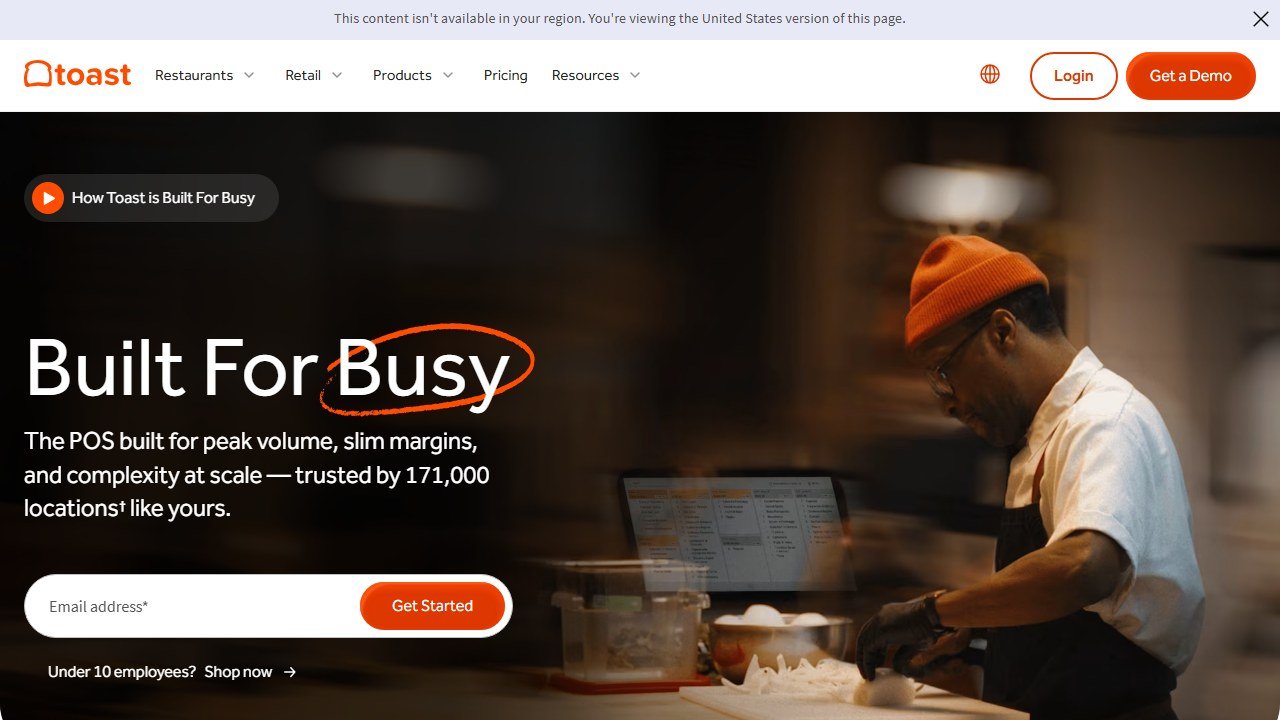
The catch is cost, and it is worth being blunt about what can and cannot be known. Toast advertises a $0 per month Starter Kit with hardware at no upfront cost, scoped to one location and up to two terminals, and Point of Sale at $69 a month. What it does not advertise anywhere is a payment processing rate. We checked pos.toasttab.com/pricing on 5 August 2026: the only description is “Simple, flat rate”, with no number on any tier. The published add-on we can confirm is the payroll bundle at $69 a month plus $9 per employee. Because processing usually dwarfs the subscription for a restaurant, an all-in Toast figure is not something anyone can honestly quote from public sources, including us. Get the rates in writing. That is not a knock, it is the real number, and Toast earns it for many operators by replacing several tools at once.
Best for: full-service and multi-location restaurants that want one vendor for the whole floor.
Watch out for: the gap between the $0 headline and the real all-in monthly bill.
2. SpotOn: Best for AI-Assisted Cost Control
SpotOn does most of what Toast does (POS, online ordering, labor, QR order and pay, reservations, loyalty) at a lower base, with Counter Service around $99 per month plus $3 per employee. G2 named it the number one restaurant POS for Winter 2026, and the reason it stands out in a management-software list is Profit Assist, an AI-powered profit-and-loss analysis tool. It reads your cost data and surfaces where margin is leaking, and SpotOn reports an average 4.3 percent saving on overall costs for restaurants using it.
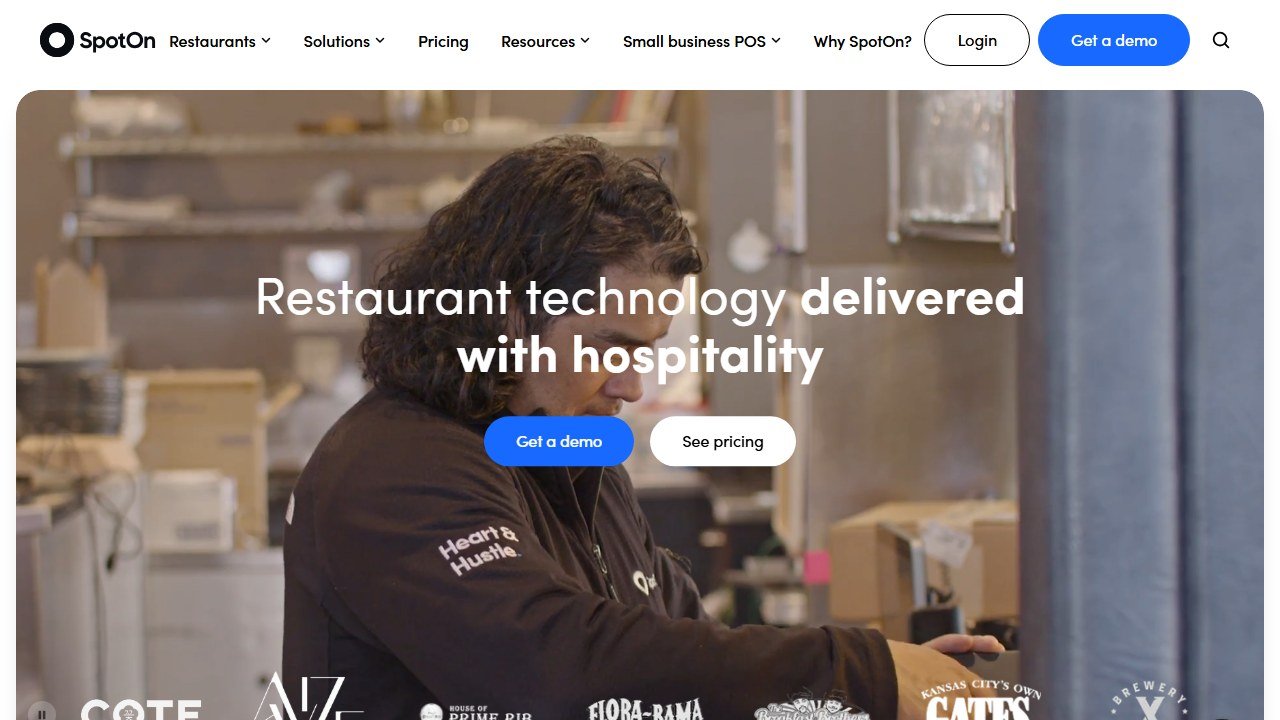
That is AI doing something a report does not: turning numbers into a specific place to look. For an operator without a full back-office system, it is the closest thing to a finance analyst built into the POS.
Best for: independents and small groups that want strong POS plus genuine cost insight without a separate accounting platform.
Watch out for: it runs on proprietary Windows hardware, an added cost versus iPad-based systems.
3. Lightspeed Restaurant: Best for Multi-Location Reporting Depth
Lightspeed Restaurant starts at $69 per month for Basic, with Essential at $189 and Premium at $399. Where it pulls ahead is reporting: menu-item profitability, server performance, and real-time dashboards that go deeper than most POS-led platforms. If you run several locations and need to compare them like a portfolio, Lightspeed gives you the numbers to do it.
Its ingredient-level inventory tools are also a real strength for controlling food cost without jumping fully to a back-office system.
Best for: growing multi-location operators who live in the reports.
Watch out for: the depth means a steeper setup than a plug-and-play single-location POS.
4. TouchBistro: Best iPad System for Independents
TouchBistro runs on iPad and iOS, which many operators consider the gold standard for front-of-house speed and reliability. The hybrid cloud design includes a built-in offline mode, so service keeps running through an internet outage, a genuinely important feature that cloud-only systems fumble. For independents under roughly $500K in annual revenue, TouchBistro (or a SkyTab-style flat plan) often beats Toast on value.
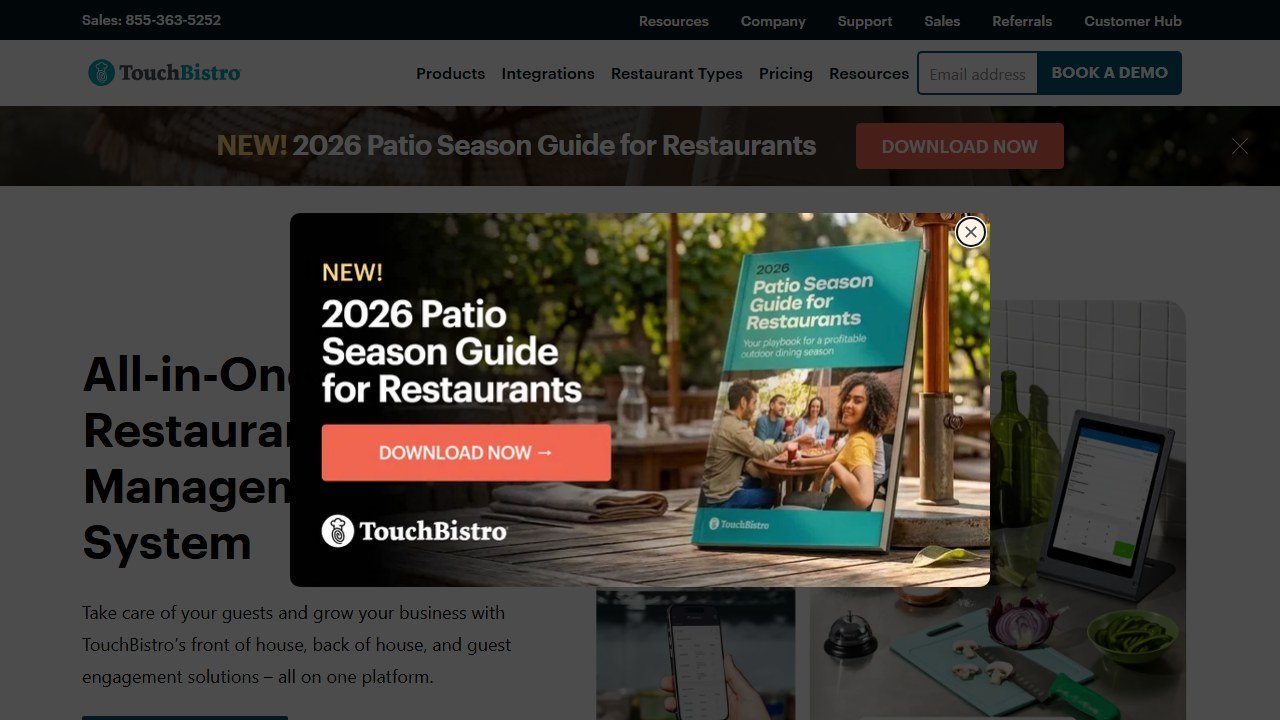
Best for: single-location, tableside-heavy restaurants that want fast, dependable front-of-house.
Watch out for: it is more front-of-house-focused than a full back-office suite.
5. Nory: Best AI-Native All-in-One
Nory is the platform built AI-first rather than AI-added. Instead of bolting a forecast onto a POS, Nory runs demand forecasting, labor scheduling, and inventory from one model, and the company reports outcomes like up to 50 percent less food waste, 25 percent lower labor cost, and 100-plus admin hours saved a month. If your pain is planning (over-ordering, over-staffing, guessing next week), an AI-native system attacks it more directly than a traditional platform with a forecasting tab.
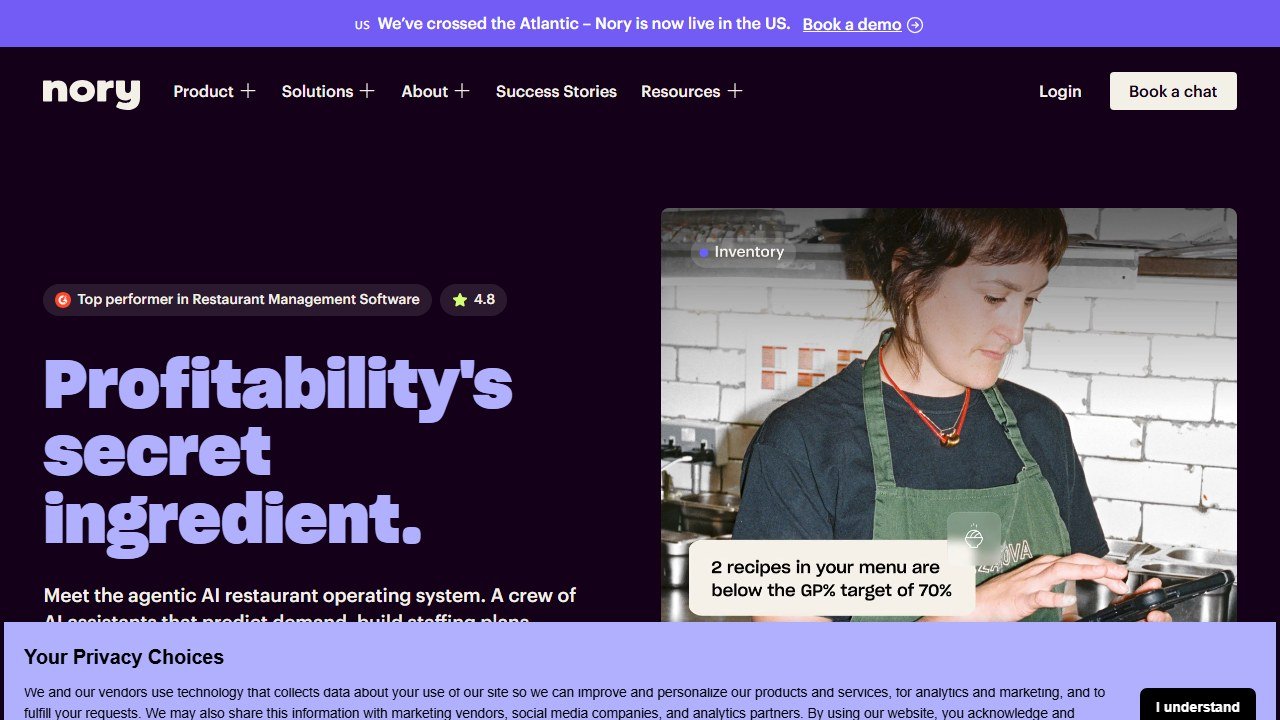
Best for: operators whose core problem is forecasting labor and inventory, not taking orders.
Watch out for: it is a newer platform, so weigh it against your must-have POS integrations.
6. Restaurant365: Best Back-Office System for Groups
Restaurant365 is where the guide crosses from floor to money. It is a true all-in-one back office: accounting, inventory, scheduling, and reporting in one system, pulling from your POS. Pricing is Essential around $469 to $499 per location per month, Professional $689 to $749, quote-based at the top. That is a serious spend, and it is aimed at multi-unit groups that have outgrown spreadsheets and need real-time financial visibility across locations.
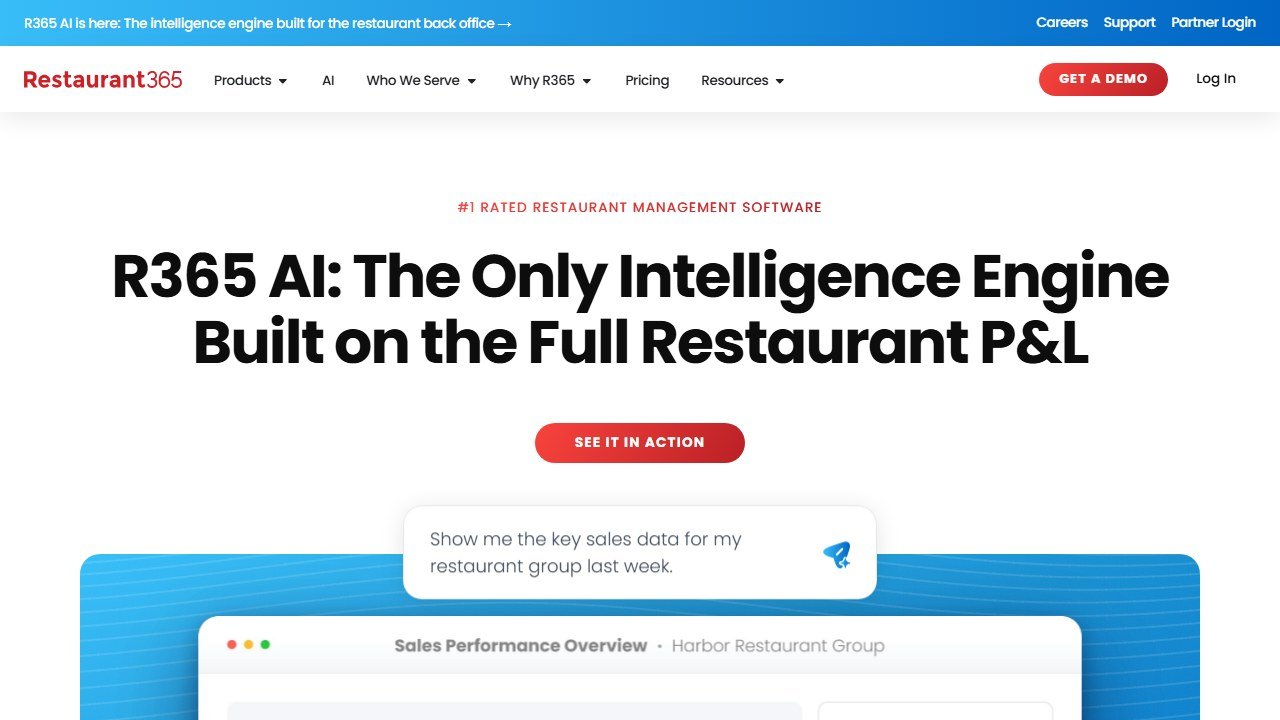
Best for: growing restaurant groups that need genuine accounting and multi-location control.
Watch out for: overkill for a single location; the value shows up across units.
7. MarginEdge: Best Invoice and Food-Cost Layer
MarginEdge is the focused answer to one expensive question: what is my food cost right now? At around $300 per month, it uses POS integration and digitized supplier invoices to show food and labor cost in real time, and it streamlines invoice entry and vendor bill payment. It is not trying to be your accounting system or your POS; it is the layer that makes cost visible daily instead of monthly, on top of whatever you already run.
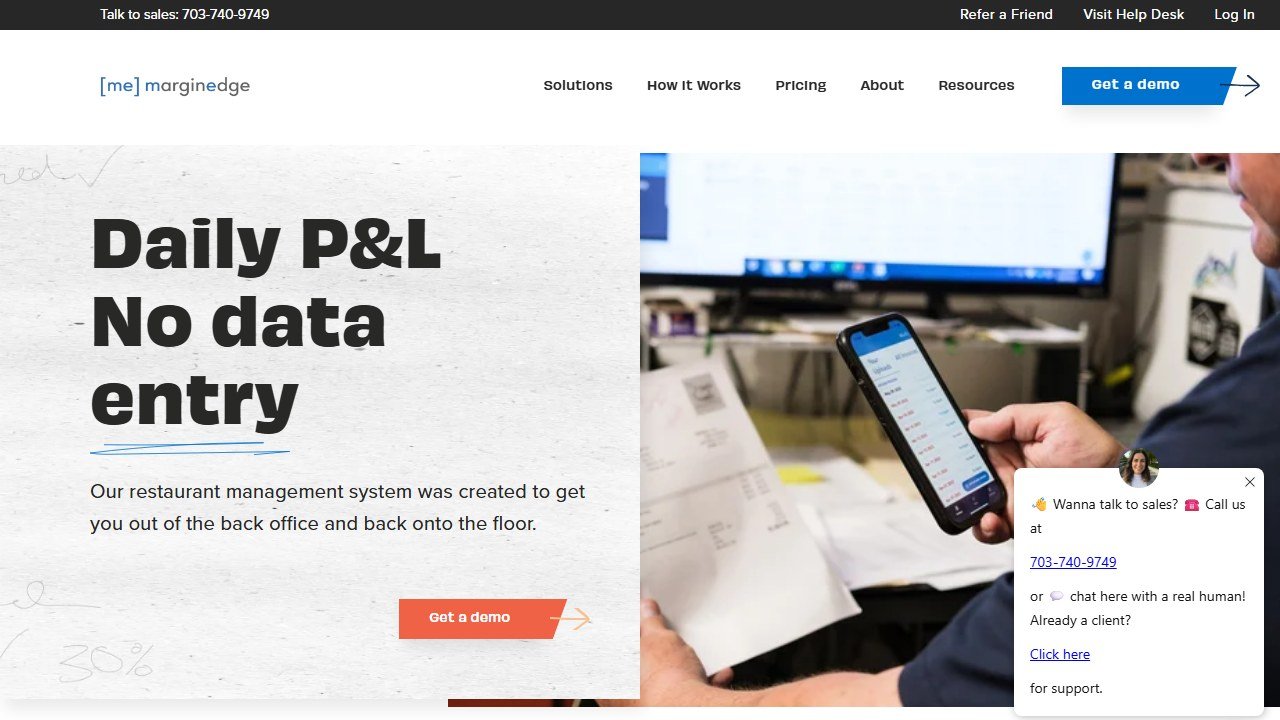
Best for: operators who have a POS they like but cannot see food cost until the month closes.
Watch out for: it is a cost-control layer, not a full back office; pair it with accounting.
How to Choose Without Overbuying
Start by naming the bleeding problem. If you cannot reliably take orders and run the floor, buy a POS-led platform first: Toast for the broadest full-service ecosystem, SpotOn for value plus AI cost insight, Lightspeed for multi-location reporting, or TouchBistro for a fast single-location iPad setup. Get that solid before anything else, because everything downstream reads from it.
If the floor already works and the pain is money (you find out food cost too late, labor creeps, locations drift), that is a back-office job. Add MarginEdge for real-time food cost on top of your current POS, or step up to Restaurant365 when you are running enough locations that you need true multi-unit accounting. And if your real problem is planning rather than either, an AI-native platform like Nory attacks forecasting head-on.
The mistake to avoid is buying the most expensive all-in-one to fix a problem it was never designed for. Match the tool to the job, integrate cleanly, and add layers only when a specific pain justifies them.
For the wider view of where these fit alongside marketing, phone, and guest tools, see our best AI tools for restaurants pillar. If your first priority is the point of sale specifically, our best restaurant POS systems guide goes deeper on that layer, and for the two costs that move margin most, see best restaurant scheduling software and best AI restaurant inventory management software.
Verdict
For most full-service restaurants, Toast is the best all-in-one restaurant management software in 2026, because it puts the widest set of floor-running tools in one ecosystem. Just go in knowing the real monthly bill, not the $0 headline.
But the honest answer depends on the job. SpotOn is the value pick and the one to beat for AI cost control, Lightspeed wins if you live in multi-location reports, and TouchBistro is the fast, dependable choice for a single iPad-based floor. When the problem is money rather than orders, Restaurant365 and MarginEdge own the back office, and Nory is the AI-native bet for operators whose real fight is forecasting. Name the bleeding problem, buy for that, and layer the rest in later.
For the full stack around these platforms, see our best AI tools for restaurants pillar.

Written by
FazFaz is the founder of AIToolsBakery. Some tools here are tested hands on. Others are assessed from vendor documentation and pricing verified on the live page, and every review says which one it is. Sponsors can buy a position in a guide. They cannot buy the score, the criticism, or silence about a better option.
How we test and how we make money →