You are standing in the garden centre, or in your own backyard, phone in hand, staring at a leaf you cannot name. Maybe it is a weed you want gone, maybe it is a volunteer you want to keep, maybe it is a houseplant slowly dying and you have no idea why. Three apps come up again and again when people search for help: PictureThis, PlantNet, and Planta. They look like competitors, but they are really built for three different jobs.
We are AIToolsBakery, an independent review site. We sell none of these apps and take no cut from their subscriptions. We mention that up front because the search results for “best plant ID app” are dominated by the vendors’ own marketing pages and by affiliate roundups that earn a commission on every sign-up. We earn nothing either way, so we can tell you the unflattering parts, including which of these apps will quietly bill your card if you are not careful.
Here is the short version before we get into the detail: these three are not really fighting over the same customer. One is the accuracy leader with an aggressive paywall, one is free and built for science, and one barely cares about identification at all.
The 30-second answer: Want the most accurate ID and do not mind a pushy subscription? PictureThis. Want a genuinely free identifier and you are happy to skip care advice? PlantNet. Already know your plants and just need watering reminders and a care routine? Planta. Casual one-off IDs? Skip all three and read on.
Quick answer: PictureThis is the most polished and accurate all-rounder, though paywall-aggressive, PlantNet is the free science-first ID, and Planta is best for care reminders after you name the plant. For pure free accuracy use PlantNet; for ongoing care, Planta.
ID accuracy: who actually names the plant right
This is the dimension most people search for, so we will be specific.
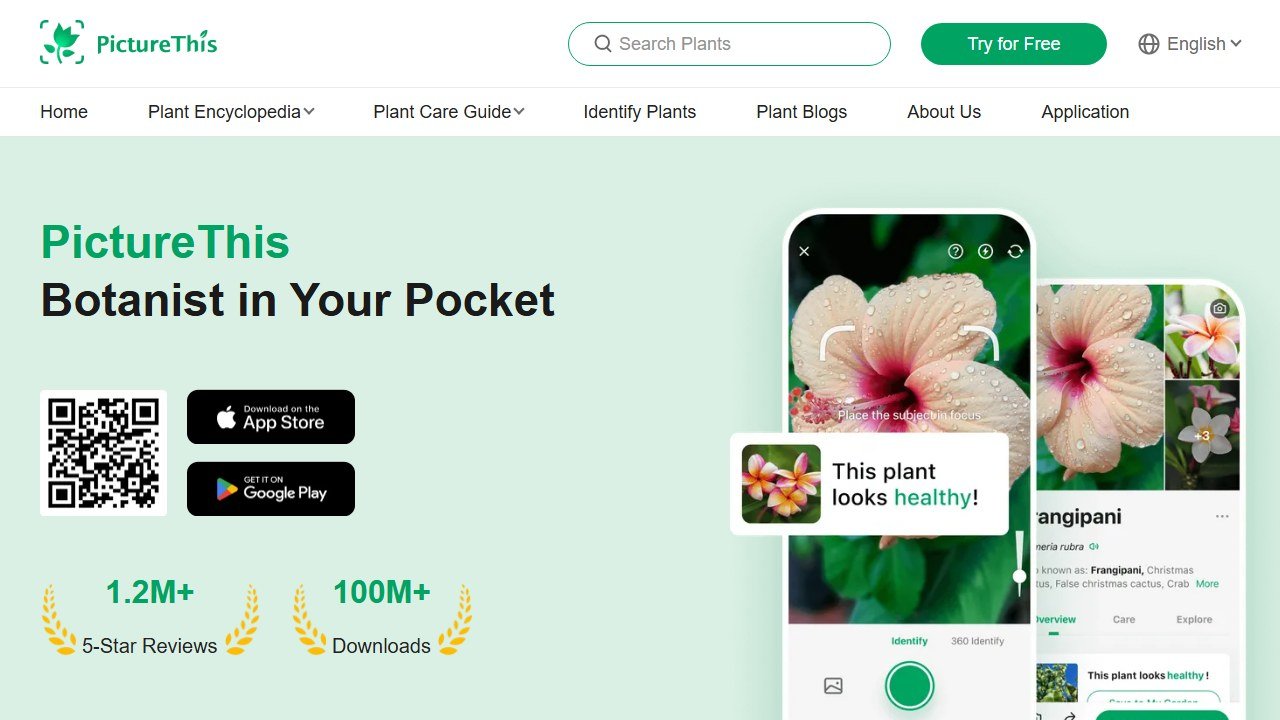
PictureThis is the accuracy leader of this trio for everyday garden and houseplant use. In independent testing by gardening sites and in published academic comparisons, it consistently lands at or near the top for correctly naming ornamentals, cultivars, and common houseplants, and it is strong across North American flora. It is fast, the result screen is clean, and it usually gives you a confident single answer rather than a list of maybes. For someone choosing plants for a landscape project or trying to match a cultivar they already own, that confidence is worth a lot.
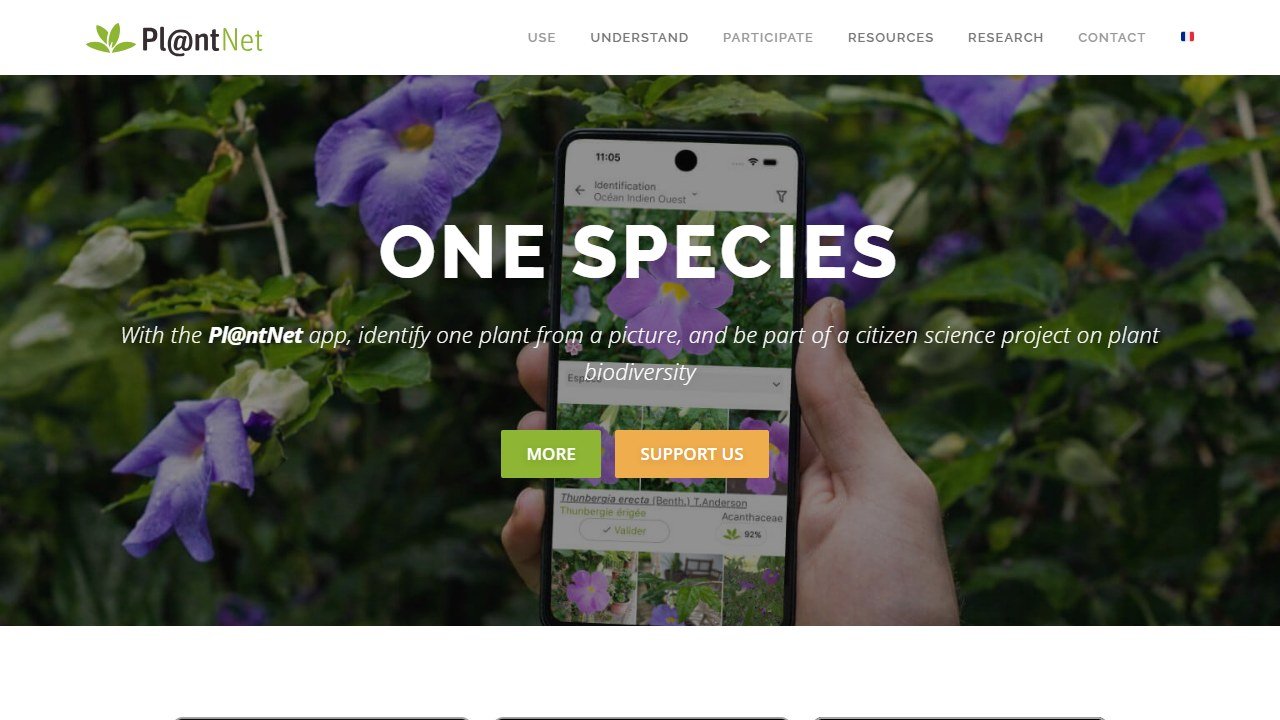
PlantNet is the surprise here. It is free, it is built by a consortium of French research institutions, and on certain plant groups it matches or beats PictureThis. It is particularly strong on European flora and on wild, non-cultivated species, because its database is fed by a global citizen-science community of botanists and enthusiasts rather than by a commercial team chasing the most-photographed houseplants. The trade-off: PlantNet often returns a ranked list of candidate species with confidence percentages rather than one tidy answer, and it is weaker on heavily bred ornamental cultivars. You do a little more interpreting yourself.
Planta is the laggard on pure identification, and that is by design. Its ID feature exists mostly to get a plant into your collection so the care engine can take over. It is fine for common houseplants, but if a precise species name is your goal, it is not the tool you reach for. We would not trust any of these three for foraging or anything you intend to eat. Misidentification of look-alike species is a real risk across the whole category.
A few practical notes that hold across all three. Accuracy depends heavily on the photo. A sharp, well-lit shot of a single flower, leaf, or fruit against a plain background beats a busy photo of a whole shrub every time. PlantNet lets you tag which organ you are photographing, leaf, flower, fruit, or bark, and using that tag noticeably improves its results. PictureThis and Planta read this more automatically but still reward a clean close-up. Bark-only and root-only shots are where every app in this category struggles most, so if you can find a leaf or a flower, use it. None of these tools is a substitute for a field guide or a local expert when the stakes are high, and if a plant might be toxic to a child or a pet, confirm with a second source before you act on the app’s answer.
Care and reminders: keeping the plant alive after you name it
Naming a plant is step one. Keeping it alive is the longer game, and this is where the order flips completely.
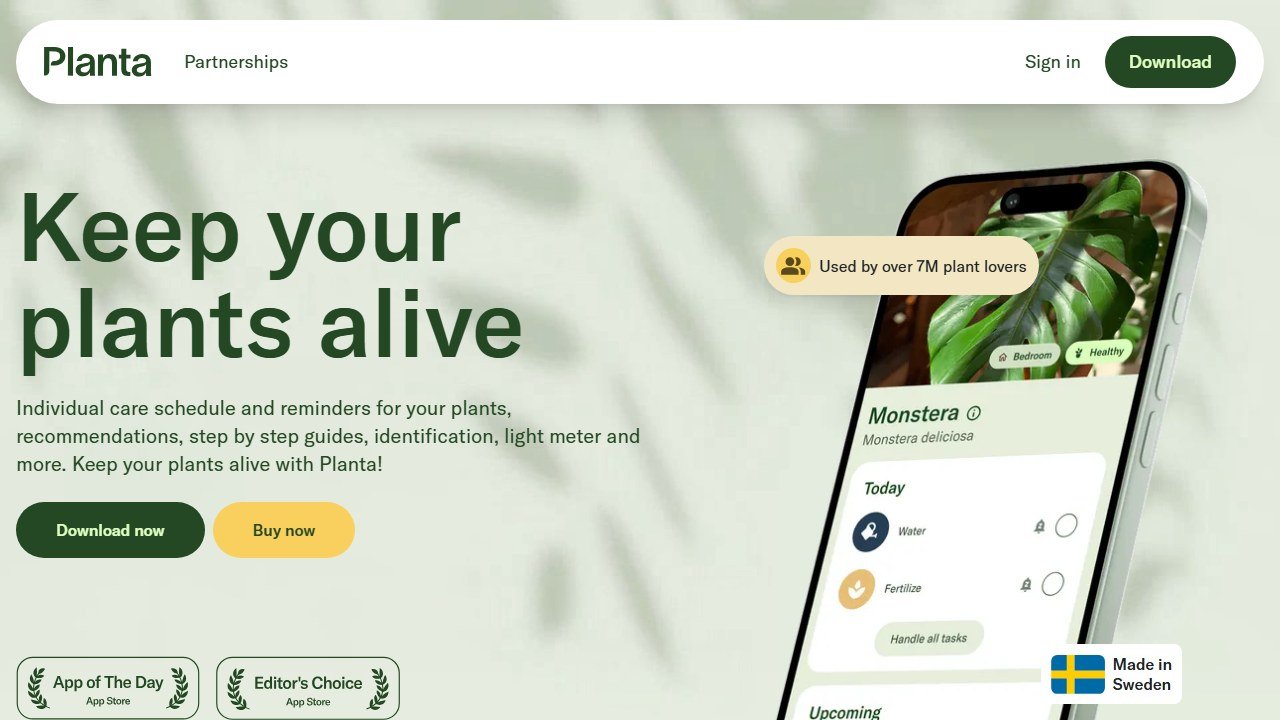
Planta is the clear leader here. It builds a custom care schedule for each plant based on the species, the room, the light level, and even your location and the season. It nags you to water, fertilise, mist, repot, and rotate, and it adjusts as conditions change. For someone managing a growing collection of houseplants who keeps killing things through neglect or overwatering, this is the actual product, and it is good at it. The identification feature is just the on-ramp.
PictureThis has care features too, including watering reminders, light meters, and a disease-diagnosis tool that reads symptoms from a photo. They are competent and broader than people expect, but they sit on top of an ID-first app and feel like a secondary layer rather than the core. If you want both decent ID and decent care in one subscription, PictureThis is the closest single-app answer.
PlantNet offers nothing here. Zero care advice, zero reminders, zero disease diagnosis. You get a species name and that is the entire promise. That is not a flaw so much as a scope decision, but you should know it before you install it expecting hand-holding.
The honest way to think about care features is to ask how many plants you are actually managing. If you have three plants on a windowsill, you do not need a scheduling engine, and any reminder app on your phone will do. The moment you cross into a dozen or more plants with different light, water, and humidity needs, manual tracking falls apart, and that is exactly the gap Planta fills. PictureThis sits in between: good enough to keep a handful of plants on track without a second app, but not the tool a serious collector would lean on day to day. The disease-diagnosis tools in both PictureThis and Planta are genuinely useful for catching common problems like overwatering, pests, or nutrient deficiency early, though they tend toward generic advice. Treat them as a first read, not a final diagnosis.
Free tier and honesty about paywalls
We will be blunt, because the vendor pages will not be.
PlantNet is the genuinely free option. No subscription, no paywall on the core identification feature, and it is ad-free because it is a research-funded public project rather than a business. If “free plant identifier with no catch” is what you typed into the search bar, PlantNet is the honest answer, and almost every affiliate roundup buries it because it pays them nothing.
PictureThis has a free tier, but it is a doorway to a subscription, not a destination. It typically offers a short free trial and a limited number of free identifications, then pushes hard toward an annual plan. The bigger issue is the volume of complaints, easy to find in app-store reviews and support forums, about people who signed up for a trial, forgot, and got billed for a full year. Cancellation is not always obvious, and deleting the app does not stop the billing because the subscription lives in your Apple or Google account, not in the app. If you try PictureThis, set a calendar reminder to cancel before the trial ends, and cancel through your phone’s subscription settings, not by deleting the app.
Planta also runs on a subscription. Its free tier is thin, often little more than basic watering reminders, with the genuinely useful care scheduling and diagnostics behind the paywall. It is less notorious than PictureThis for surprise billing, but the same rule applies: the value lives in the paid tier, so treat the free version as a demo.
A small but real distinction worth flagging: a paid subscription is not automatically a worse deal than a free app. PlantNet is free because it is funded as a research project, not because someone is being generous, and free apps in this space often monetise in less visible ways, through ads, data, or upsells. The fairer comparison is value for the job. If you will genuinely use Planta’s scheduling every week, its subscription can be money well spent. If you only ever want to name a plant twice a year, paying anything is a waste, and that is the case where PlantNet, or one of the free fourth options below, is the only sensible answer.
Data and privacy: where your photos go
These apps ask you to point a camera at things, sometimes at your home and garden, so it is worth a moment.
PlantNet is the most transparent and also the most public. By design, the observations you submit can be shared with the scientific community and added to open biodiversity datasets. That is the point of a citizen-science project, and it is a genuine public good. But it means your uploads are not private by default. If you would be uncomfortable contributing a photo to a public research database, adjust the sharing settings or do not upload it.
PictureThis and Planta are commercial apps. Your photos and the metadata attached to them, which can include location, feed their accounts, their models, and in some cases their marketing. Neither is unusual for a consumer app, but neither is a public-good project either. If location precision matters to you, check the permissions you grant on install and turn off what you do not need. As a general rule with any photo-upload app, avoid capturing faces, house numbers, or anything identifying in the background of a plant shot.
Who each is for
PictureThis is for the gardener or new plant owner who wants the single most accurate identifier, will use the disease diagnosis and care reminders, and is disciplined enough to manage the subscription. It is the best all-rounder if you only want one paid app, with the asterisk that you must watch the billing.
PlantNet is for the naturalist, hiker, student, ecologist, or budget-conscious gardener who wants a free, trustworthy identifier and does not need care advice. It is also the right pick if you want to contribute to real science. It is our default recommendation for anyone who just wants to name plants without paying.
Planta is for the houseplant collector whose plants keep dying. If you already know what you own, or you can name them with one of the others, and your real problem is remembering to water and repot, Planta is the most useful of the three and worth its subscription.
How the three compare
| Dimension | PictureThis | PlantNet | Planta |
|---|---|---|---|
| Primary job | Accurate ID plus light care | Pure identification | Plant care and reminders |
| ID accuracy | Strongest overall, great on cultivars | Strong on wild and European flora | Basic, ID is secondary |
| Care and reminders | Solid, secondary layer | None | Best in class |
| Disease diagnosis | Yes, photo-based | No | Yes, in paid tier |
| Free tier | Trial plus limited IDs, then paywall | Fully free, ad-free | Thin, mostly reminders |
| Subscription pressure | High, billing complaints common | None | Moderate |
| Data model | Commercial | Citizen science, public by default | Commercial |
| Best for | One paid all-rounder | Free, scientific, budget | Keeping plants alive |
Our verdict
There is no single winner, because these apps answer three different questions. If the question is “what is this plant and I want to be sure,” PictureThis wins on accuracy, with a hard warning to manage the subscription before it manages your bank account. If the question is “what is this plant and I do not want to pay,” PlantNet wins outright, and the affiliate roundups that ignore it are doing you a disservice. If the question is “how do I stop killing my houseplants,” Planta wins, and identification is almost beside the point.
A reasonable real-world setup is to keep PlantNet on your phone for free, fast IDs, and add Planta only if you have a collection worth managing. PictureThis earns its place when you want one app to both identify and care, and you trust yourself with the trial.
When a fourth app wins
Sometimes the honest answer is none of these three. If you want a free identifier with zero account, zero subscription, and zero learning curve for the occasional “what is this,” Apple’s Seek by iNaturalist or Google Lens will name common plants instantly with nothing to install or cancel. Seek also ties into the iNaturalist community for the science-minded. They are less precise on tricky cultivars than PictureThis, but for a quick one-off they save you a sign-up and a billing headache. For a broader field, see our roundup of the best AI plant identification apps.
If you landed here because you are planning a planting scheme rather than just naming what is already there, plant ID is only half the job. Our guides to the best AI garden design tools and the best AI landscape design apps cover the apps that help you decide what to plant and where, and the wider best AI landscaping tools pillar ties the whole workflow together from design to plant selection.

Written by
FazFaz is the founder of AIToolsBakery. Some tools here are tested hands on. Others are assessed from vendor documentation and pricing verified on the live page, and every review says which one it is. Sponsors can buy a position in a guide. They cannot buy the score, the criticism, or silence about a better option.
How we test and how we make money →Frequently Asked Questions