It is 6am, dark, and the trainer is the only honest place to ride. You have 45 minutes before work, a vague sense that your FTP has slipped, and a phone full of apps that all promise to “coach” you. The question is not which app has the prettiest graph. It is which one will actually decide what you should ride this morning, and adjust when you nail it or blow up halfway through.
We are AI Tools Bakery, and we are independent. We do not sell any of these apps, we take no cut when you subscribe, and we are not one of the affiliate roundups that fill the first page of Google. Search “ai cycling coach app” and you mostly get the vendors describing themselves, or list posts steering you toward whichever subscription pays best. We are neither. What follows is how these seven tools behave when a real rider with a real schedule uses them, including where each one falls short.
A note before we start: an app can model your power and fatigue, but it cannot see your sleep, your stress, or the cold you are about to catch. Treat every plan as a strong suggestion, not a medical instruction. If something hurts in a way that is not normal training fatigue, stop and talk to a professional.
The 30-second answer: TrainerRoad is the most complete AI coach for structured indoor training. JOIN adapts best around a messy real life. Xert gives the deepest analytics for the lowest price. AI Endurance suits triathletes. Wahoo SYSTM, Zwift, and TrainingPeaks each win a narrower slice.
Quick answer: TrainerRoad is the best structured AI cycling coach for time-crunched training, JOIN is best for adaptive plans that fit around your life, and Xert is best for data-driven athletes who want fitness modeling. Ride one honestly for a block and let your own data decide.
The jobs you are actually hiring an app to do
Before the names, get clear on what “AI coaching” means for cycling, because the apps differ wildly on each front.
Adaptive training plans. The core promise. You give the app a goal and a calendar, it gives back a week of workouts, and crucially it rewrites that week when you over-perform, under-perform, or miss a day. A static PDF plan is not this. Real adaptation is the difference.
FTP, power, and fatigue modeling. Good apps estimate your Functional Threshold Power without forcing a brutal test every month, and they model accumulating fatigue so you peak for the right event instead of arriving cooked.
Indoor versus outdoor. Some apps live on the smart trainer in your pain cave. Others are built to read your outdoor GPS and power files and coach you regardless of where you ride. Pick for how you actually train.
Data integration. Your power meter, your head unit, Strava, Garmin Connect, and your trainer all need to talk. An app that does not sync cleanly with your gear creates more admin than it removes, and friction in syncing is the single most common reason riders quietly abandon an app two weeks in. The best tools pull your rides automatically and push tomorrow’s workout to your head unit without you thinking about it.
Keep these four jobs in mind as you read. No single app tops all of them, and the right choice is usually the one that nails the two you care about most while being merely adequate at the rest.
TrainerRoad
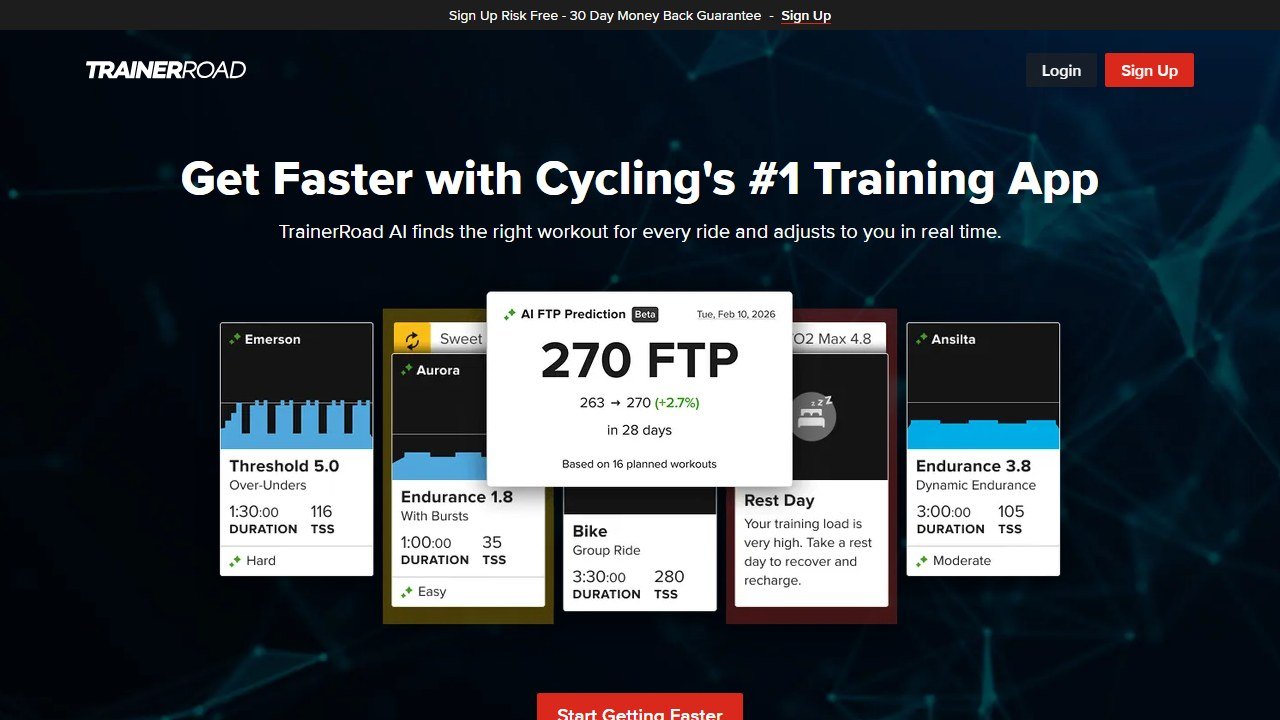
TrainerRoad is the app most riders mean when they say “structured training.” You pick a plan around a goal, it serves interval workouts built on your FTP, and its AI features lean on a very large pool of completed activities to adapt what comes next. Adaptive Training rewrites upcoming sessions based on how you rated and completed recent ones, and the newer TrainerRoad AI runs simulations across many possible workouts to pick ones that should move your fitness most. AI FTP detection means you can skip the dreaded ramp test for long stretches.
It integrates cleanly with Zwift, Garmin, and Wahoo, and it is genuinely strong for the indoor rider who wants clear, science-backed intervals and does not care about a game world.
Pricing: subscription only, billed monthly or annually, with the annual plan meaningfully cheaper per month. Confirm current rates on their site, as endurance apps change pricing often.
One honest limit: the workouts are effective but visually plain. If you need scenery or a social pack to get through a sweet spot block, TrainerRoad alone can feel like staring at a progress bar. Many riders run it alongside Zwift for that reason.
JOIN
JOIN was built around a problem the others often ignore: real life is chaotic. Its AI generates a plan from your goal and, more importantly, your actual weekly availability, then reshuffles continuously as your schedule and form change. Tell it you only have 40 minutes today instead of 90 and it adapts the session rather than guilt-tripping you with a workout you cannot do. It calculates FTP from your ride history so you are not constantly testing, and it pulls personalized versions from a library of several hundred workouts.
It syncs with Strava, Zwift, and the usual platforms, and works for both indoor and outdoor riders, which is rarer than it sounds.
Pricing: free to try and generate a plan, then a paid subscription to unlock the full adaptive experience. Check the current tier on their site.
One honest limit: the analytics are lighter than Xert or TrainingPeaks. If you love dissecting every interval and power curve, JOIN can feel like it hides the math from you. That is the point for many riders, and a frustration for a few.
Xert
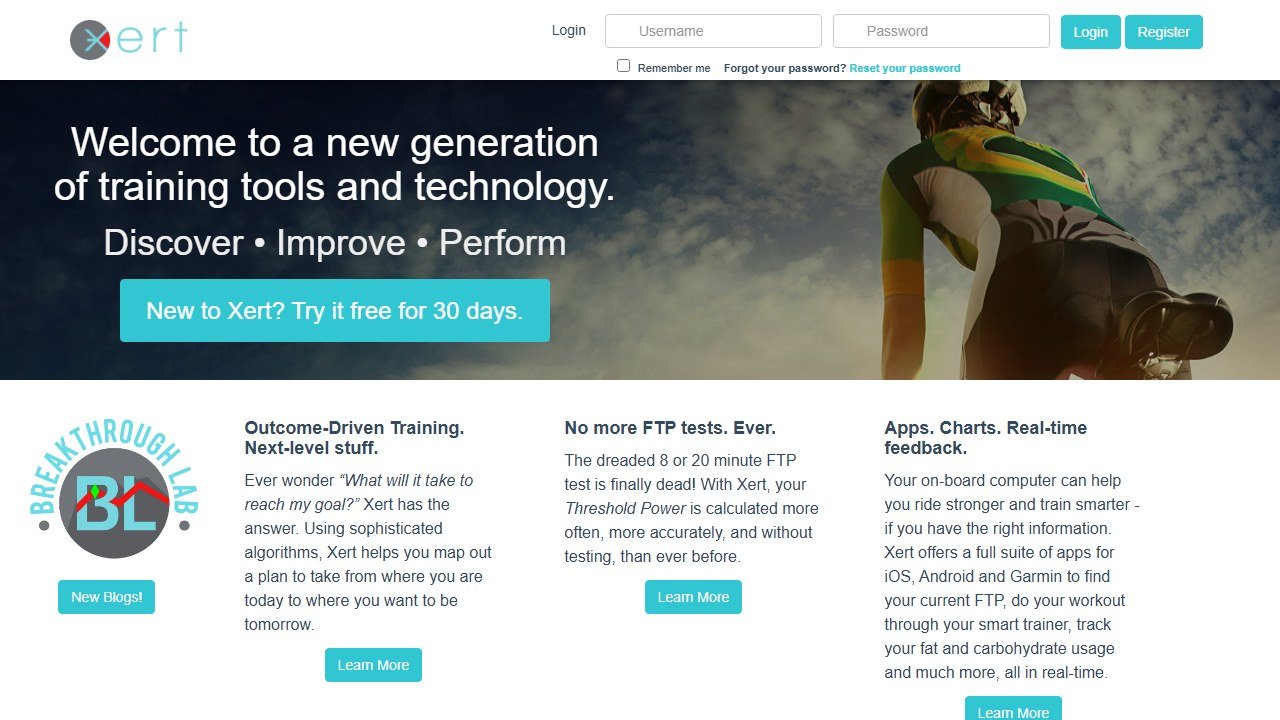
Xert is the data nerd’s choice, and the best value if you read graphs for fun. Instead of locking you to one FTP number, it maintains a dynamic Fitness Signature with three values that update from every ride, so your training targets shift in real time based on what you have actually been doing. Its Adaptive Training Advisor recommends sessions based on your current freshness and the demands of your goal. There is real depth here that the friendlier apps simply do not expose.
It reads outdoor and indoor data well and integrates with the standard ecosystem of meters and head units.
Pricing: among the cheapest in this list for the analytics on offer, with a free tier and a low-cost subscription. Confirm details on their site.
One honest limit: the learning curve is steep and the interface is dense. New riders can drown in concepts before they ever benefit from them. Xert rewards patience and punishes the casual.
AI Endurance
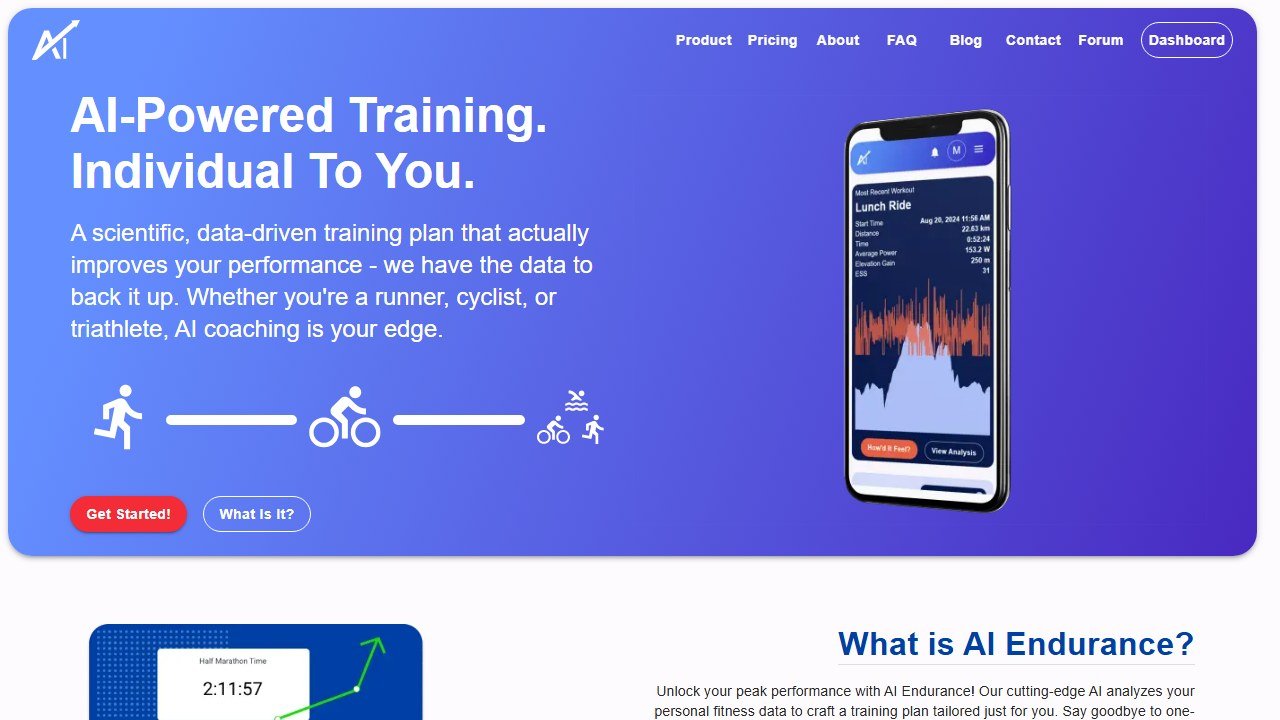
AI Endurance uses machine learning to build plans for running, cycling, and triathlon, which makes it the natural pick if you train across more than one sport. It analyzes your GPS, power, and heart rate data, detects your aerobic and anaerobic thresholds automatically using heart rate variability and workout history, and adapts the plan when you miss sessions or your recovery shifts. Plans push out to Garmin Connect, TrainingPeaks, Zwift, Coros, and Wahoo, so it slots into whatever device family you already own.
If you are a multisport athlete juggling a bike block inside a wider triathlon build, this is worth a look. We cover the broader category in our best AI triathlon training apps roundup, and the running side in best AI running coach apps.
Pricing: subscription based with a trial. Verify the current rate on their site.
One honest limit: as a smaller, science-forward product, it does not have the polish or community of the big names. You are buying the model, not the ecosystem.
Wahoo SYSTM
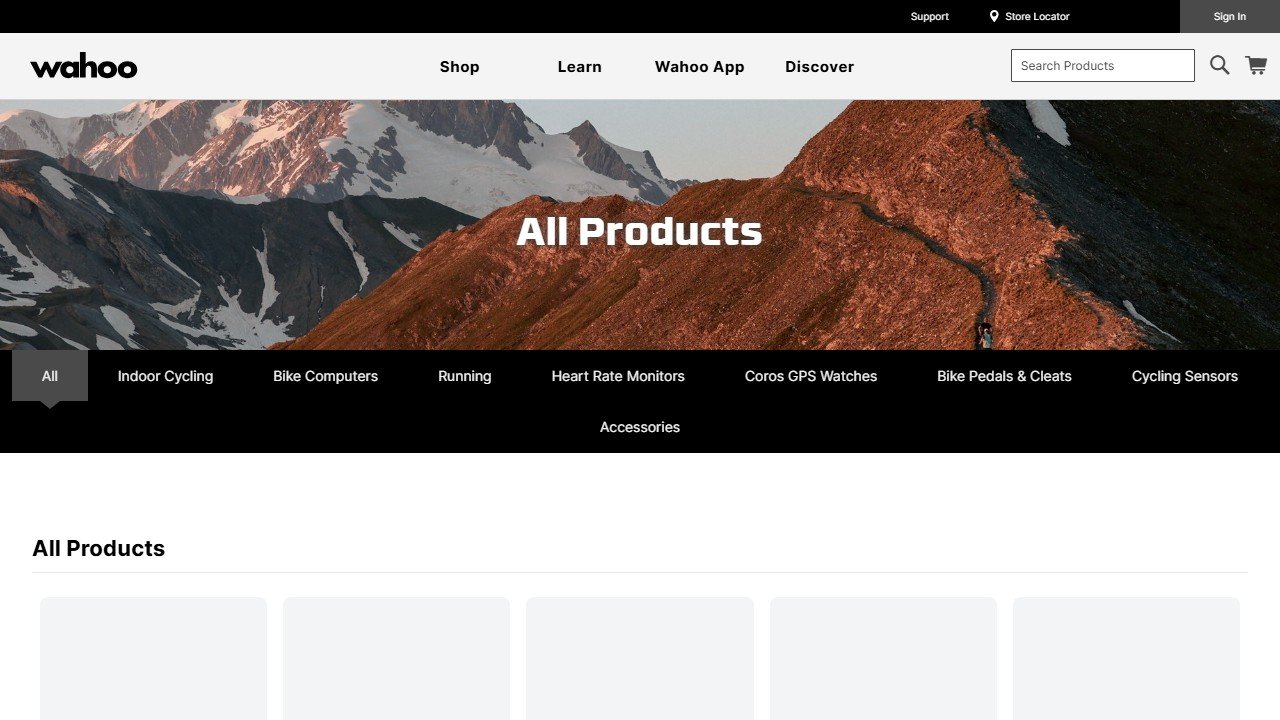
Wahoo SYSTM, part of the Wahoo X membership, takes a different angle on personalization with its Four Dimensional Power profile. Rather than a single FTP, a 4DP test measures neuromuscular power, maximal aerobic power, threshold, and anaerobic capacity, then tailors interval intensities to your specific strengths and weaknesses. Beyond the bike workouts you also get yoga for cyclists, a mental training program, and strength resources, which makes it more of a whole-athlete library than a pure interval engine.
Pricing: a free trial period, then a monthly or annual Wahoo X membership. Confirm current figures on their site, as they shift.
One honest limit: its plan adaptation is less dynamic than TrainerRoad or JOIN. The 4DP tailoring is clever up front, but day-to-day the app is closer to a very good structured library than a coach that constantly rewrites your week.
Zwift
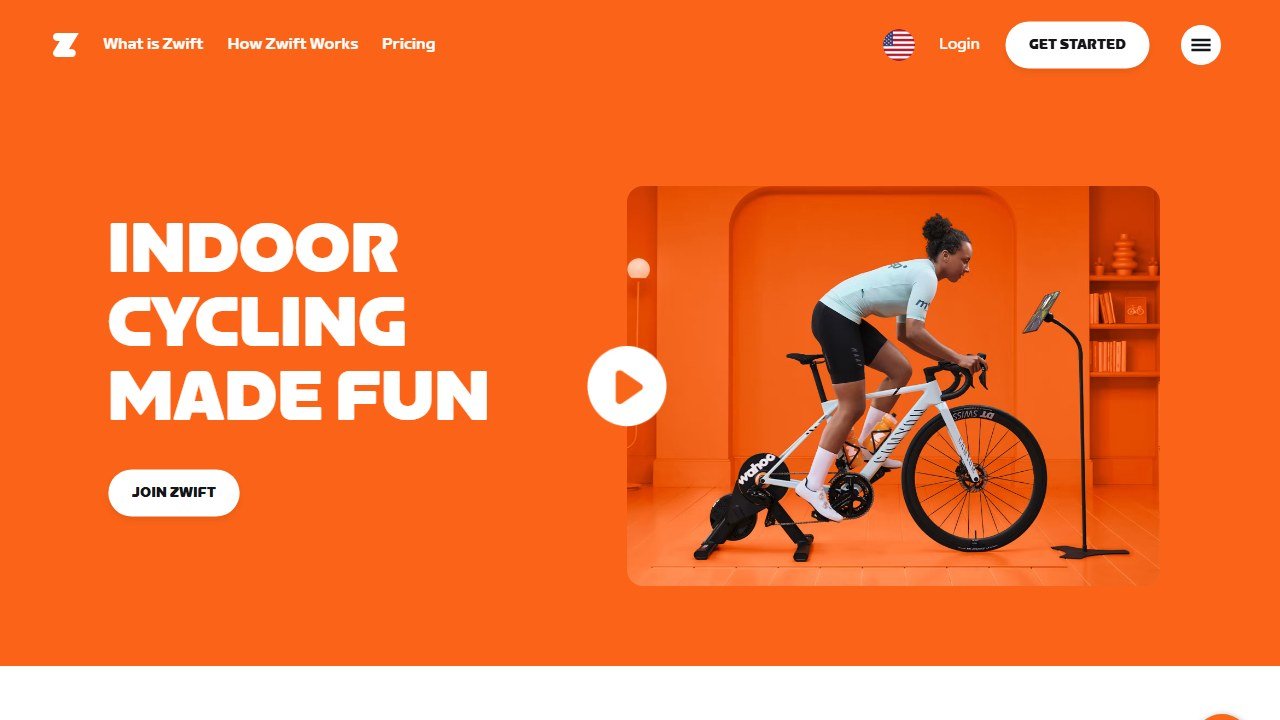
Zwift is the social, gamified indoor world, and in 2026 its AI is more about smart recommendations than full coaching. It suggests your next activity when you open the app, factors planned events so it will not put a hard workout the day before a race, and its companion planner lets you schedule workouts and routes well in advance. It runs structured training plans too, but the reason most people pay for Zwift is motivation: riding in a virtual world with thousands of others makes the suffering bearable.
Pricing: a single membership, billed monthly. Check the current rate on their site.
One honest limit: Zwift is not primarily an adaptive coach. Its plans do not rewrite themselves around your fatigue the way a dedicated training app does. Many riders pair Zwift for the fun with TrainerRoad or JOIN for the actual coaching brain.
TrainingPeaks
TrainingPeaks is the industry-standard analytics platform, the place serious athletes and coaches live. Its Performance Management Chart plots fitness, fatigue, and form over time so you can plan a peak for race day, and the Annual Training Plan models your whole season from weekly load targets. It is less an AI that hands you today’s workout and more the dashboard where every other tool’s data comes home to be understood.
It integrates with essentially everything, which is exactly why it sits at the center of so many athletes’ setups. If you also wear a recovery band, our WHOOP vs Oura vs Garmin comparison pairs naturally with a TrainingPeaks workflow.
Pricing: a free tier with a more capable premium subscription. Confirm the current premium price on their site.
One honest limit: out of the box it is analysis, not coaching. Without a human coach or a structured plan feeding it, TrainingPeaks tells you what happened beautifully but does not decide what you should do next.
How the seven compare
| App | What it does best | Best for | Price or free tier |
|---|---|---|---|
| TrainerRoad | Adaptive structured intervals | Indoor riders chasing FTP | Subscription, no free tier |
| JOIN | Adapts to a chaotic schedule | Time-crunched real-world riders | Free to try, then subscription |
| Xert | Deep analytics, dynamic FTP | Data-literate riders on a budget | Free tier, low-cost subscription |
| AI Endurance | Multisport ML plans | Triathletes and crossover athletes | Trial, then subscription |
| Wahoo SYSTM | 4DP profiling, whole-athlete library | Wahoo owners wanting variety | Free trial, then membership |
| Zwift | Motivation and social riding | Anyone who hates the pain cave | Single membership |
| TrainingPeaks | Fitness and fatigue analytics | Athletes with a coach or plan | Free tier plus premium |
A lean way to start
You do not need a stack of subscriptions to train well. Here is a sane on-ramp.
- Decide where you mostly ride. Indoor and structured points you toward TrainerRoad or Wahoo SYSTM. Mixed or outdoor with a messy calendar points toward JOIN.
- Take the free trial seriously. Do a full week of real workouts, not a tour of the menus, so you feel how the adaptation behaves when you actually miss or smash a session.
- Resist the analytics rabbit hole at first. Xert and TrainingPeaks are powerful, but adding them on day one is how people end up admiring graphs instead of riding.
- Set one clear goal with a date. Every adaptive engine here works better when it knows what it is building you toward.
- Reassess after one full training block, roughly six to eight weeks, using your numbers and how you feel, not the app’s marketing.
If you are new to training apps generally, our best AI workout apps guide covers the wider landscape beyond cycling.
What these apps still cannot do
An AI cycling coach is a remarkable thing, and it is still not a human coach. Be clear-eyed about the gaps.
It cannot see most of your life. The model knows your power files and maybe your heart rate. It does not know you slept four hours, that work is on fire, or that you are fighting something off. When the plan says intervals and your body says rest, your body is the better data source.
It cannot diagnose pain. Normal training fatigue is one thing. A sharp knee, a numb hand, or chest tightness is not a software problem. None of these apps is medical advice. If something is wrong, see a doctor or a physiotherapist before you ride through it.
It cannot guarantee its own numbers. Adaptive FTP and threshold detection are convenient and usually close, but they are estimates. Treat a wildly off number as a prompt to test, not a verdict on your fitness.
It cannot supply motivation you do not have. The best app for you is the one you will open at 6am in the dark. That is why Zwift exists alongside the smarter coaches, and why the honest answer to “which is best” is “the one you will actually use.”
Pick one, ride it honestly for a block, and let your own data tell you whether it earned the subscription.
Where the figures on this page come from
Every price here was read from the vendor’s own pricing page on 4 September 2026 and carries that date, because pricing in this category moves and a claim without a date is not checkable.
The pages we read
PT Distinction publishes $19.90, $59.90 and $89.90 a month with its marginal per client rates. Everfit publishes a rung for every client count from $19 to $290 monthly. TrueCoach publishes $26.34, $57.99 and $136.99 a month billed annually. My PT Hub publishes $25 and $59. FitBudd publishes $15, $79 and $149 with per client add-ons. Trainerize publishes a free tier and plans from $9. JuggernautAI publishes $34.99 a month or $349.99 a year.
The ones we could not read
Fitbod, Dr. Muscle, Hevy, Whoop and Oura did not yield a figure to the same method that read every vendor above, largely because consumer subscriptions are sold inside the app stores rather than on the web. That is not evidence they publish nothing, and we do not present it as such. Check the store listing on your own device, in your own country, before relying on any figure for those five.
One page worth reading twice
Wodify displayed $199 struck through and $99 a month per location, conditional on booking a demo by 31 August. We read it on 4 September 2026, after that deadline, and the discounted price was still shown. Ask which figure actually applies before budgeting on it.

Written by
FazFaz is the founder of AIToolsBakery. Some tools here are tested hands on. Others are assessed from vendor documentation and pricing verified on the live page, and every review says which one it is. Sponsors can buy a position in a guide. They cannot buy the score, the criticism, or silence about a better option.
How we test and how we make money →Frequently Asked Questions