Greenhouse and Lever are two of the most respected applicant tracking systems for mid-market and growth-stage companies, and both run the core hiring job well: jobs, pipelines, interviews, feedback, and reporting in one place. The honest short answer is that neither wins outright, because they were built to solve different problems. Greenhouse is a process-control platform that assumes your bottleneck is evaluation. Lever, now sold as LeverTRM, is a talent relationship platform that assumes your bottleneck is sourcing. This side-by-side breaks down where each one pulls ahead so you can match the tool to your actual hiring motion rather than to a headline.
The distinction sounds subtle, but it decides the purchase. If your best candidates apply and your problem is running them through a fair, consistent, defensible process, one of these tools is clearly better for you. If your best candidates never apply and your problem is finding and nurturing them before a role even opens, the other one is. Get that one question right and most of the feature debate resolves itself.
Bottom line: pick Greenhouse for structured hiring, deep scorecards, 500-plus integrations, and stronger compliance and OFCCP support. Pick Lever (LeverTRM) when proactive sourcing is the bottleneck and you want ATS and CRM fused into one product for nurturing passive candidates. The tiebreaker is whether your constraint is process discipline or sourcing.
Faz says: Name your bottleneck out loud before you book a single demo. If hiring managers argue from gut feel and interviews are inconsistent, your problem is evaluation, and Greenhouse is built for exactly that. If the roles you care about are senior, technical, or executive, and the best people never hit your careers page, your problem is sourcing, and Lever’s fused CRM is the point. Almost every regretted ATS purchase in this bracket comes from buying Greenhouse’s structure when the real pain was sourcing, or buying Lever’s CRM when the real pain was a messy, undefended process.
Saru says: This comparison draws on both vendors’ official product and pricing pages, published AI and integration documentation, and aggregated user feedback, current to 2026. Neither company publishes full pricing, both quote per employee, and add-ons move the number a lot. Every figure here is a starting point, so get a written quote that includes implementation, migration, and add-on modules, and confirm your specific integrations directly with each vendor before you buy.
The Short Answer
Choose Greenhouse if your hiring lives or dies on process quality: structured interview plans, consistent scorecards, audit trails, compliance support, and the biggest integration ecosystem in the category. Choose Lever if your hiring lives or dies on sourcing: a fused ATS and CRM that lets you build and nurture relationships with passive candidates long before a role opens, with a modern, well-liked interface. Growth-stage and mid-market teams are well served by either, so the tiebreaker is almost always whether your constraint is evaluation or sourcing.
Comparison Table
| Greenhouse | Lever (LeverTRM) | |
|---|---|---|
| Core philosophy | Structured hiring and process control | Talent relationship management and sourcing |
| Best for | Teams whose bottleneck is evaluation | Teams whose bottleneck is proactive sourcing |
| ATS vs CRM | ATS-first, CRM via sourcing add-ons | ATS and CRM fused into one product |
| Structured interviewing | Best in class: interview kits, scorecards | Capable, less rigorous than Greenhouse |
| Integrations | 500-plus, the category’s largest ecosystem | Solid marketplace, smaller than Greenhouse |
| Compliance / OFCCP | Stronger: EEO, OFCCP, audit-ready | Adequate, thinner native tooling |
| Usability | Powerful, heavier to configure | Modern, clean, often rated easier |
| AI features | Sourcing, matching, workflow automation | Sourcing, nurture, automation in the CRM |
| Pricing model | Quote-based, per employee, as of 2026 | Quote-based, per employee, as of 2026 |
Philosophy: Two Different Bottlenecks
The clearest way to understand these tools is to see what each one assumes is broken.
Greenhouse assumes candidates arrive and your job is to evaluate them well. Every design decision follows from that: defined interview plans per role, focus areas assigned to each interviewer, structured feedback captured on consistent scorecards, and stages the system enforces rather than hopes people follow. The whole platform is engineered so two candidates get compared on the same evidence and a decision can be defended months later. Greenhouse’s own framing, structured hiring, is not marketing garnish, it is the organizing principle of the product.
Lever assumes the best candidates do not apply and your job is to find and nurture them. Its defining feature is that the ATS and the CRM are a single product, not two systems that sync overnight. You build relationships with passive talent before a role exists, run nurture sequences, and convert a warm contact into an applicant without losing the relationship history. For a team that sources proactively, that continuity is a genuine workflow advantage that a bolt-on CRM cannot match.
That is the fork in the road. Greenhouse is process discipline first. Lever is relationship continuity first. Everything below is downstream of it.
Structured Hiring vs CRM Sourcing
On structured interviewing, Greenhouse is the stronger tool, and it is not especially close. Interview kits, scorecards tied to role-specific attributes, interviewer training prompts, and enforced stage gates make it the reference standard for teams that need rigor. If your goal is to kill gut-feel hiring and produce evidence you can stand behind, Greenhouse gives you the most mature toolkit in the category.
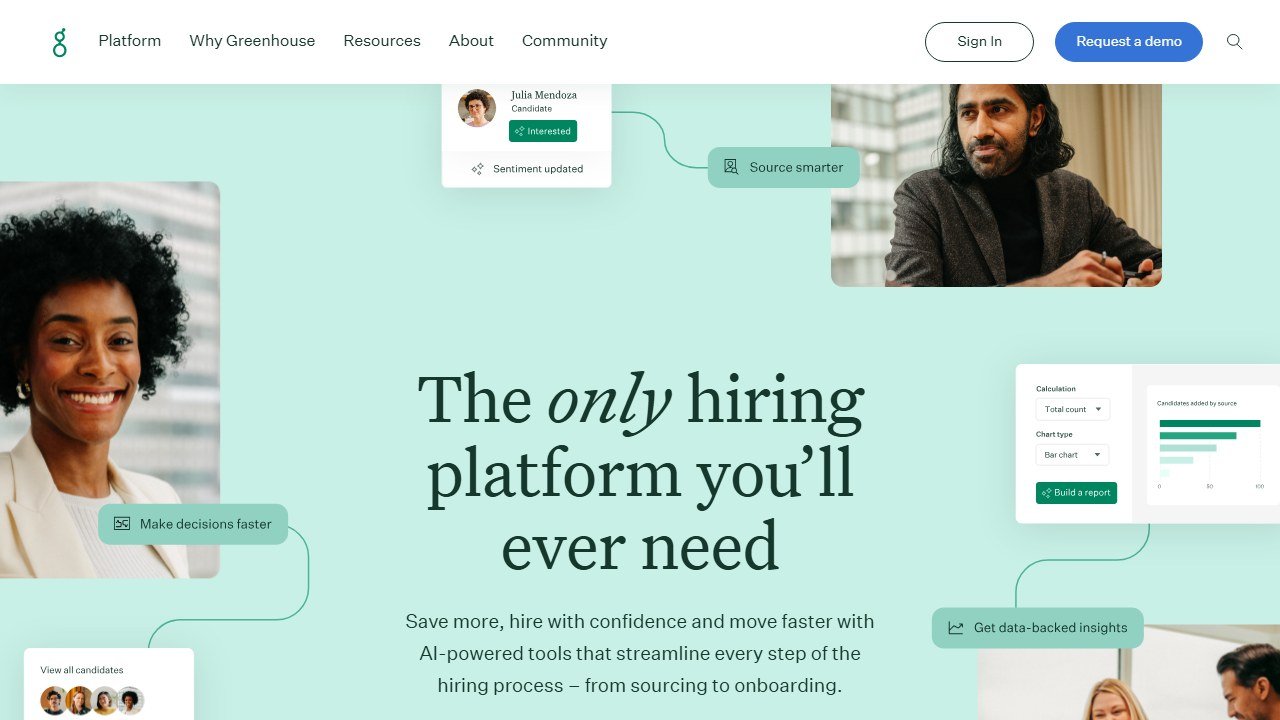
On sourcing and relationship management, Lever is the stronger tool. Because the CRM is native rather than attached, Lever handles the passive pipeline as a first-class workflow: nurture campaigns, relationship history, and a smooth path from cultivated contact to active applicant. Recruiters consistently praise its usability here, the pipeline view is visual, email integration cuts manual data entry, and the interface feels modern.
Both tools now do the other job, but each does its non-core job less deeply. Greenhouse can source and nurture, often through add-ons or integrations, but the CRM experience is not as seamless as Lever’s fused model. Lever can run structured interviews and scorecards, but the native tooling is thinner than Greenhouse’s, and teams that need granular, enforced, auditable process often find they want more. Know which job is your job.
Usability and Setup
Usability is where Lever tends to win day-to-day sentiment. Its interface is clean and modern, the visual pipeline is easy to read, and recruiters often describe it as pleasant to live in. For a growth-stage team without a dedicated recruiting-ops function, that lower friction is a real advantage, and it shortens the ramp for new users.
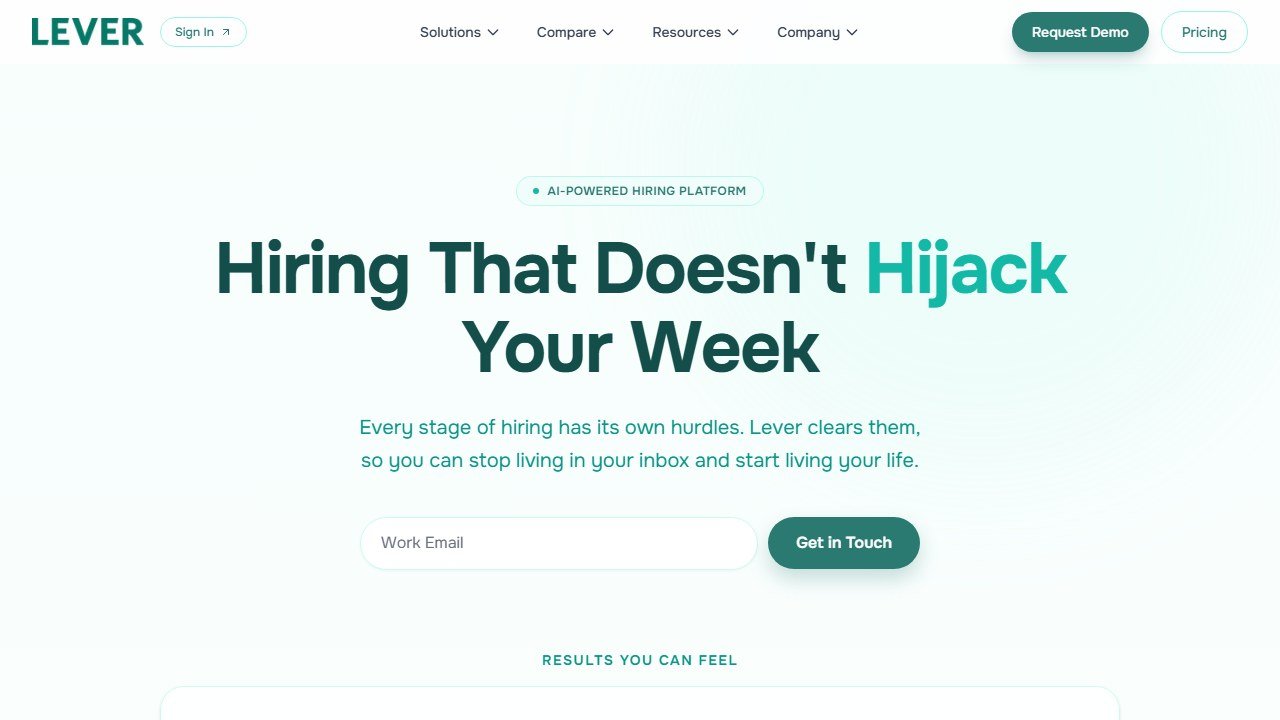
Greenhouse is more powerful and, as a direct result, heavier. The structure that makes it defensible also makes it something you configure deliberately: interview plans, scorecard attributes, stage logic, and permissions all reward setup time. Done well, it runs like clockwork. Done carelessly, a misconfigured pipeline creates more overhead than a simpler tool would. It generally wants dedicated admin ownership, which large teams have and lean teams sometimes do not.
The honest summary: Lever optimizes for out-of-the-box ease, Greenhouse optimizes for depth and control. Neither is a bad experience, but they ask for different amounts of your time.
Integrations and Compliance
This is Greenhouse’s clearest structural advantage. Greenhouse lists more than 500 pre-built integrations spanning HRIS, background checks, assessments, scheduling, sourcing, and analytics, the largest ecosystem in the category. If your stack already exists and you want the ATS most likely to plug into all of it, Greenhouse is the safer bet, and that breadth compounds as your tooling grows.
Lever has a solid, well-maintained marketplace, but it is smaller. For most growth-stage stacks it covers the essentials comfortably. The risk is the specific niche tool: if you depend on an integration Lever does not offer natively, you may hit a wall Greenhouse would have cleared.
Compliance is the other place Greenhouse pulls ahead. Its EEO reporting, OFCCP support, and audit-ready trails are more mature, which matters a great deal if you are a federal contractor, operate in a regulated industry, or simply hire at a scale where defensibility is non-negotiable. Lever’s compliance tooling is adequate for many teams, but companies with heavy OFCCP or audit requirements will find Greenhouse’s native support stronger and will lean on fewer add-ons to get there.
Pricing Compared
Both platforms are quote-based and priced per employee, which means cost scales with your headcount rather than your recruiting volume. As of 2026, neither publishes full pricing, and both route you to sales, so treat any number you see online as a rough anchor, not a quote.
The pattern to plan for is the same on both sides. The base subscription is the beginning of the cost, not the end. Expect a one-time implementation and onboarding fee, which in this bracket commonly lands somewhere in the roughly $5,000 to $25,000 range depending on company size and configuration complexity. Expect data migration costs if you are moving off an existing system. And expect add-on modules, advanced analytics, CRM or sourcing extensions, and premium support, to move the total. Across this category, the all-in cost frequently runs 40 to 60 percent above the base subscription once implementation, migration, and add-ons are counted.
Because both price per employee, model the escalation before you sign. Per-employee pricing grows with your company whether or not you add recruiting capacity, so a number that looks fine at today’s headcount can look different two years out. The practical move is identical for both vendors: get a written quote that itemizes implementation, migration, add-ons, and the per-employee rate, then compare total cost of ownership, not sticker price.
Which Should You Choose?
Choose Greenhouse if …
- Your bottleneck is evaluation: interviews are inconsistent and decisions are gut-driven, and you need enforced structure.
- You need strong compliance, EEO and OFCCP support, and audit-ready hiring at scale.
- You depend on a wide stack and want the largest integration ecosystem, 500-plus apps, to connect it.
- You are mid-market or enterprise, hire in volume, and have (or will assign) admin ownership to configure it well.
Choose Lever if …
- Your bottleneck is sourcing: the best candidates never apply and you have to go find and nurture them.
- You hire for senior, technical, or executive roles where relationships are built over long cycles.
- You want ATS and CRM fused into one product, not a pipeline tool with a bolt-on CRM.
- You value a modern, easy-to-use interface and want a faster ramp without heavy configuration.
Verdict
There is no blanket winner here, and any honest comparison lands on that. Greenhouse wins for teams whose bottleneck is evaluation: it offers the deepest structured-hiring tooling, the strongest compliance and OFCCP support, and the largest integration ecosystem in the category, and it is worth its configuration overhead for mid-market and enterprise teams that will use that depth. If that is you, our Greenhouse review goes deeper on the platform.
Lever wins for teams whose bottleneck is sourcing: LeverTRM fuses ATS and CRM into one product built for nurturing passive candidates over long hiring cycles, wrapped in a modern interface recruiters genuinely like. If sourcing is your constraint, our Lever review covers it in detail. Name your bottleneck, size your team, and get a full written quote before you commit, and you will not go far wrong with either. For the wider field, see our best applicant tracking systems roundup and our best AI recruiting software guide.

Written by
FazFaz is the founder of AIToolsBakery. Some tools here are tested hands on. Others are assessed from vendor documentation and pricing verified on the live page, and every review says which one it is. Sponsors can buy a position in a guide. They cannot buy the score, the criticism, or silence about a better option.
How we test and how we make money →