
AI has reached LSAT prep, but unevenly. 7Sage has Sage AI, LSATMax has a dedicated AI tutor called Solomon, and Blueprint builds AI practice sets. Several well-known test prep brands, including Kaplan, The Princeton Review and PowerScore, showed no AI on their LSAT course pages when we checked on 24 October 2026.
What the “best AI LSAT” pages we read skip is where the questions come from. Every tool in this lineup is built around official LSAT questions written by the Law School Admission Council (LSAC), and LSAC sells access to them through LawHub Advantage for $124 a year. Prep companies say that fee is required on top of their own price. LawHub is also the real test interface, and it changed with the August 2026 test. The AI tools sit on top of all that. This guide compares three AI LSAT prep tools, measured against LSAC’s free LawHub, on what that AI actually does, what they cost on 24 October 2026 including the LSAC fee, and what LSAC itself says about AI.
How we put this together. We have not used these tools ourselves; this is a research-based comparison. Every price, rating and feature below comes from the vendor’s own website, LSAC’s website, or the app’s US App Store and Google Play listing, read on 24 October 2026, and each source is linked. Some sites blocked automated reading, so we read them in a normal browser. All prices we saw were in US dollars. Score claims are the vendors’ own, and we quote the fine print where there is any. None of these companies paid to appear on this page.
Why LawHub is the benchmark, not the AI
LSAC writes the LSAT, runs it, and owns the official questions every prep company licenses. That makes its own platform, LawHub, the reference point for everything else on this page. If you are weighing business or graduate school too, our guides to AI GMAT prep tools and AI GRE prep tools use GMAC’s and ETS’s own prep as the same kind of benchmark.
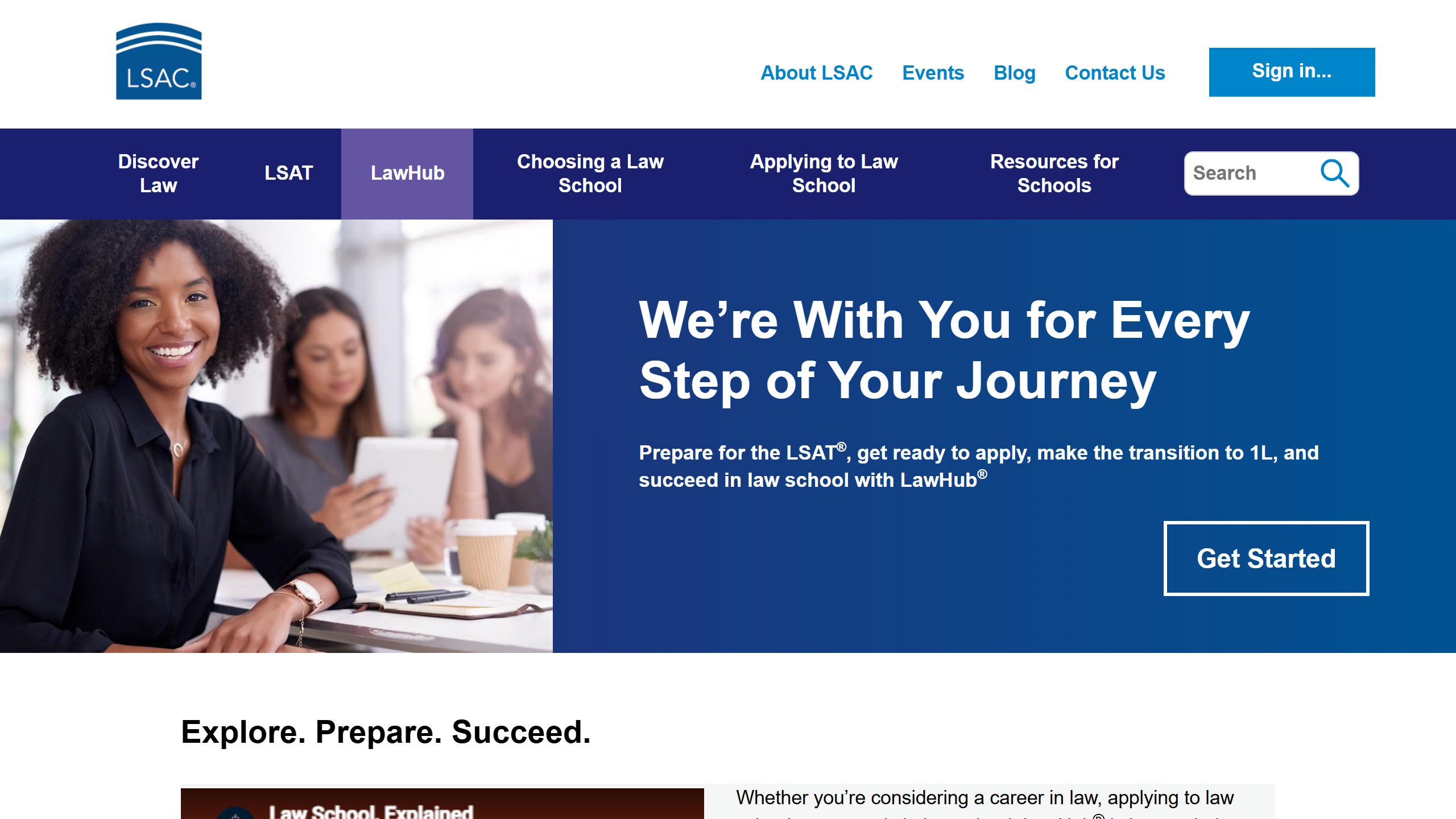
What the free LawHub account gives you
According to LSAC’s official practice tests page, “Four full four-section LSAT PrepTests are available for free through LawHub.” Its prep options page lists unlimited practice “with the authentic test interface”, self-paced and simulated exam modes, practice test history and instant scoring feedback. None of LSAC’s prep pages mentions AI. Before spending anything, a free LawHub PrepTest gives you a baseline in the same interface you will see on test day.
The $124 that sits on top of every price
The LawHub page says: “A LawHub account is free, but with LawHub Advantage ($124/year)”. LSAC’s practice test page says Advantage “provides one year of access to an extensive library of full Official LSAT PrepTests”, and its prep page says you can “Take it with you to any of LSAC’s Official LSAT Content Licensees.” Every visible LSAC price we found was $124.
Prep companies treat the fee as compulsory. 7Sage’s pricing page says “LSAC requires every student who enrolls in a prep course to purchase a LawHub Advantage subscription for $124/year. The fee goes to LSAC, not 7Sage.” Magoosh lists its plans as “+ one-time $124 LawHub Advantage fee”, Kaplan’s LSAT page says “$124 subscription required”, and PowerScore’s course page says its subscriptions “require an LSAC LawHub Advantage subscription for access” without giving a price. Two vendors in our lineup print a different figure: LSATMax’s Solomon launch page calls LawHub Advantage “Required by LSAC” with “Standard pricing: $120 for 12 months”, and Blueprint’s Self-Paced page says “Plus $120 LSAC LawHub Advantage fee”. Plan for LSAC’s $124. You buy it once and can use it with any licensed prep company.
The test changed in 2024 and the delivery changed in 2026
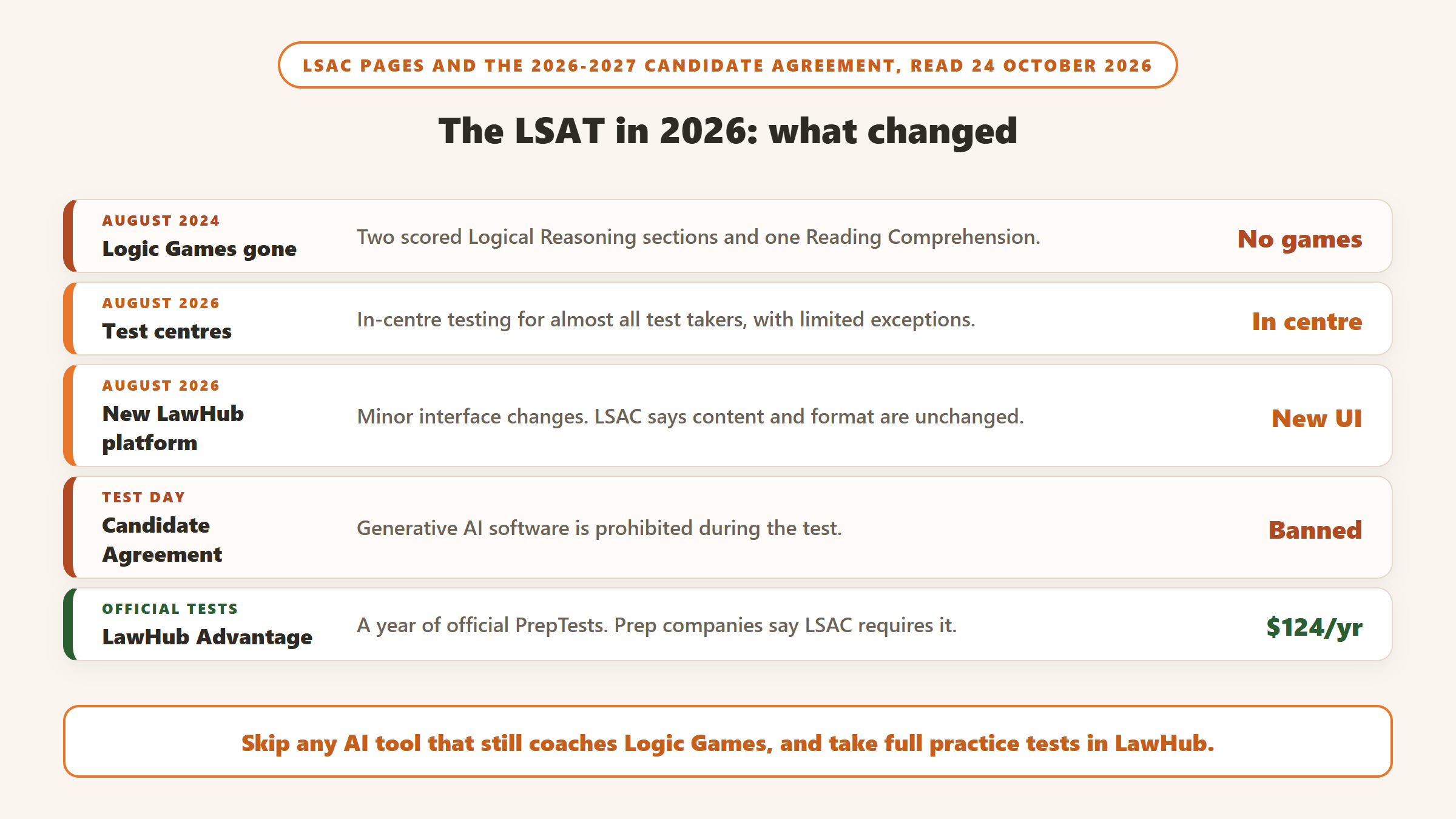
LSAC’s test specifications page describes the current LSAT as “four 35-minute multiple-choice sections (one Reading Comprehension, two Logical Reasoning, and one unscored variable section)”. There is no Analytical Reasoning, the section students called Logic Games. LSAC announced the change on 18 October 2023: “Starting with the August 2024 test, the LSAT will consist of two scored Logical Reasoning (LR) sections, one scored Reading Comprehension (RC) section, plus one unscored section of either LR or RC”, with logic games “sunsetting after the June 2024 test.” LSAT Argumentative Writing is unscored and, in LSAC’s words, “delivered exclusively online using secure remote-proctoring software”.
Then, in a February 2026 post, LSAC announced two changes starting with the August 2026 LSAT. It is “moving toward in-center testing for almost all U.S. and international test takers, with limited exceptions for certain medical accommodations or extreme hardship”. It said remote test takers were “only about 40% of all test takers” but “the majority of score holds”. And it added “a new test delivery platform in LawHub”, with “certain minor User Interface (UI) changes for test takers starting with the August 2026 test”, promising versions of its practice tests in the new interface through LawHub. LSAC stressed it was “not making any changes to the content, structure, or format of the test.”
Two practical points follow. Any AI tool that still coaches Logic Games is spending your time on a section that no longer exists. And whichever tool you use for drilling, take your full practice tests in LawHub so the interface on test day is familiar.
What LSAC says about AI
LSAC’s prep pages are silent on AI study tools, and LSAC says plainly that “We do not review or audit the performance of individual test prep companies.” Its rules for test day are not silent. The LSAC Candidate Agreement for 2026-2027 lists as prohibited conduct “Using any third-party software not specifically authorized by LSAC during the Test, including, but not limited to, the use of any generative artificial intelligence software during the Test”. It also says you agree you “will not seek out, solicit, read, study, or use confidential and secure information about the Test”. So AI is fine for practice on released questions. Never use it during the test, and never feed it questions you remember from a real administration.
AI LSAT prep tools compared
| Product | What the AI does | Entry price (24 October 2026) | 3 months plus LawHub Advantage | Platforms | Store rating |
|---|---|---|---|---|---|
| LSAC LawHub (benchmark) | No AI; official PrepTests in the real test interface | Free account with 4 PrepTests; Advantage $124 a year | $124 | Web | No app |
| 7Sage | Sage AI chat tutor that knows your performance data; adaptive study scheduler | Core $69 a month | $331 | Web, iPhone, Android | 4.9 iOS (3,388); 4.4 Android (227) |
| LSATMax Solomon AI | Dedicated AI tutor for strategy, missed-question post-mortems and study plans | Core $99 a month, or $249 for 3 months | $373 | Web (LSATMax apps on iPhone and Android) | LSATMax 4.7 iOS (4,705); 4.7 Android (918) |
| Blueprint LSAT | AI-driven practice sets and AI topic recommendations | Starter $99 a month; Pro $149 a month | $421 (Starter) | Web, iPhone | 4.5 iOS (52) |
Prices and ratings read on 24 October 2026. The 3-month column adds three months of the entry plan (or LSATMax’s 3-month Solomon Core price) to one year of LawHub Advantage at $124. Ratings are rounded to one decimal, with the number of ratings in brackets where the store shows it. LSATMax ratings are for its main course app, whose store description does not mention Solomon.
How we chose and ordered these
Every product had to describe a real AI feature for LSAT prep in its own words and be updated within the last 12 months on at least one platform. Adaptive drilling that the vendor itself calls an algorithm rather than AI did not count. We ordered them by how much direct AI help you get for the money, how clearly the vendor explains what the AI is built on, whether it uses official LSAC questions, and total cost including the LawHub fee. Large prep brands with no AI on their LSAT pages, apps not updated in over a year, and very new AI startups are listed further down with the reason they were left out.
1. 7Sage: Sage AI inside a $69 a month course
7Sage describes its AI plainly: “Built on our explanation library, trained by our instructors, and familiar with all your performance data, Sage AI is your 24/7 virtual tutor.” Its homepage shows a sample exchange in which the “7S AI Coach” reads a student’s last five sections and points to timing strategy and Parallel Reasoning questions as the main problems. On the pricing page, every paid plan includes Sage AI to “Analyze your practice performance, get personalized recommendations on what to study next, and ask Sage AI about tricky LSAT questions.”
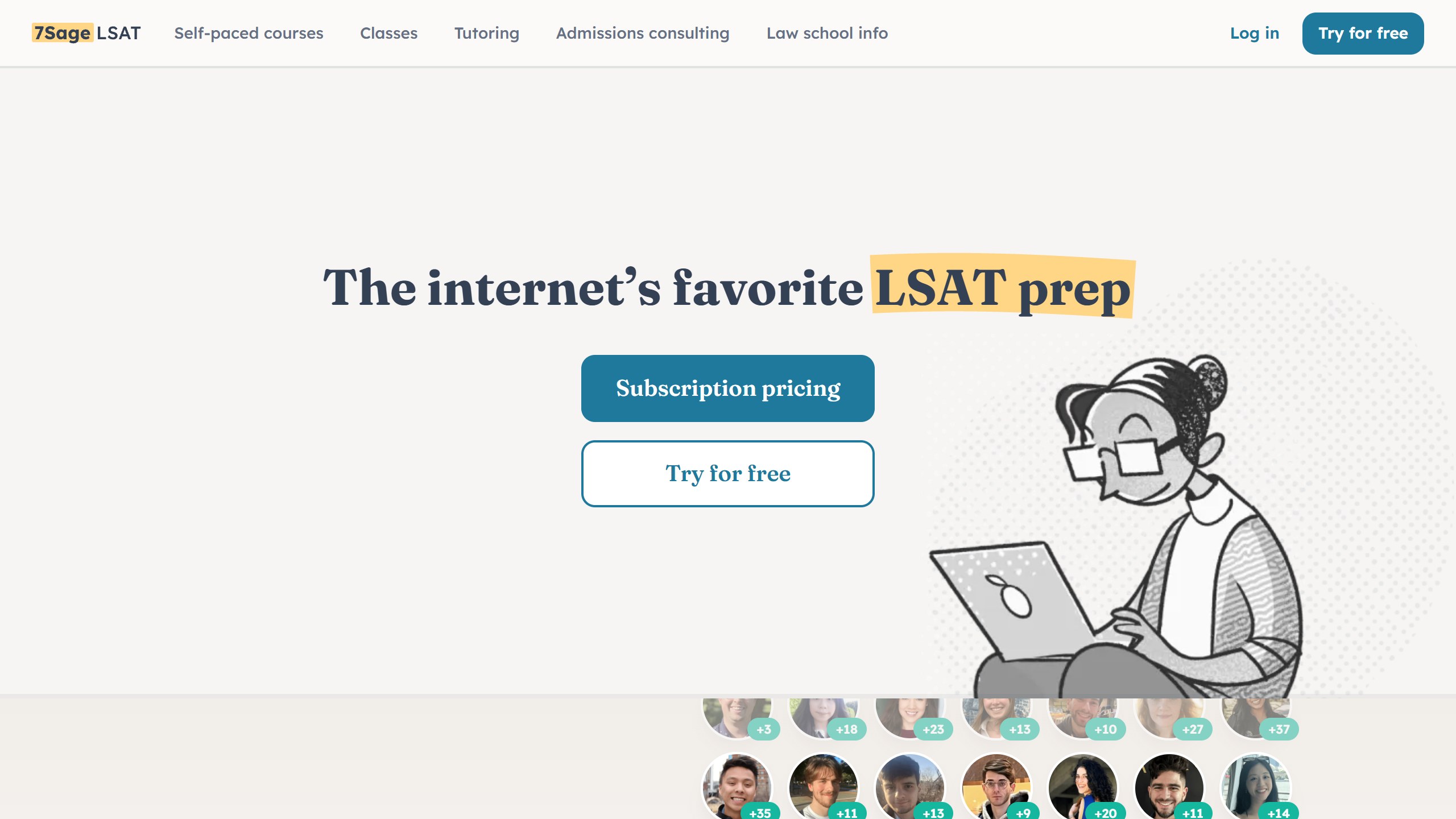
The difference between plans is how much AI you get. Core, at $69 a month, includes Sage AI along with an adaptive study scheduler, more than 900 video lessons, smart drills, written and video explanations, and “All 80+ released LSATs available for practice.” Live was offered at $79 for the first month, renewing at $129 a month, and comes with “twice as much Sage AI as Core” plus what 7Sage lists as “12+ sessions per weekday” of live Zoom classes. Coach, at $299 a month, has “10 times as much Sage AI as Core” and two half-hour sessions a month with a coach. The comparison table calls these Included, Higher limits and Highest limits, and the page does not publish the actual numbers.
Read the refund line before you subscribe: “You can cancel your subscription anytime, but we don’t offer refunds.” When you cancel, your account moves to the free plan and you keep your analytics, notes and chats. LawHub Advantage, which 7Sage says is required, “is refundable only if you haven’t activated it.” For students with an LSAC fee waiver, 7Sage offers plans from “as little as $1/month”.
The 7Sage iPhone app had a 4.9 rating from 3,388 US ratings and was updated on 3 October 2026; the Android app had 4.4 from 227 reviews and 10K+ installs, updated the same day. Neither store description mentions Sage AI, so check the app before relying on it for AI help on your phone.
Choose it if you want an AI tutor that knows your own practice history, at the lowest monthly price in this lineup. Skip it if you want a refund option after you start.
2. LSATMax Solomon AI: a dedicated AI tutor from $99 a month
LSATMax, from TestMax, sells its AI tutor as a product of its own. The Solomon plans page says “Solomon is an AI LSAT tutor trained by 99th-percentile and 180-scorers with over 100 combined years of teaching experience”, and that it “diagnoses why you missed, where your reasoning broke, and how to fix it before the next question.” It lists three main uses: strategies for every Logical Reasoning and Reading Comprehension question type, post-mortems on a specific missed question (you name it, for example “PT 119 S1 Q05”), and study plans built from your timeline, target score and baseline.
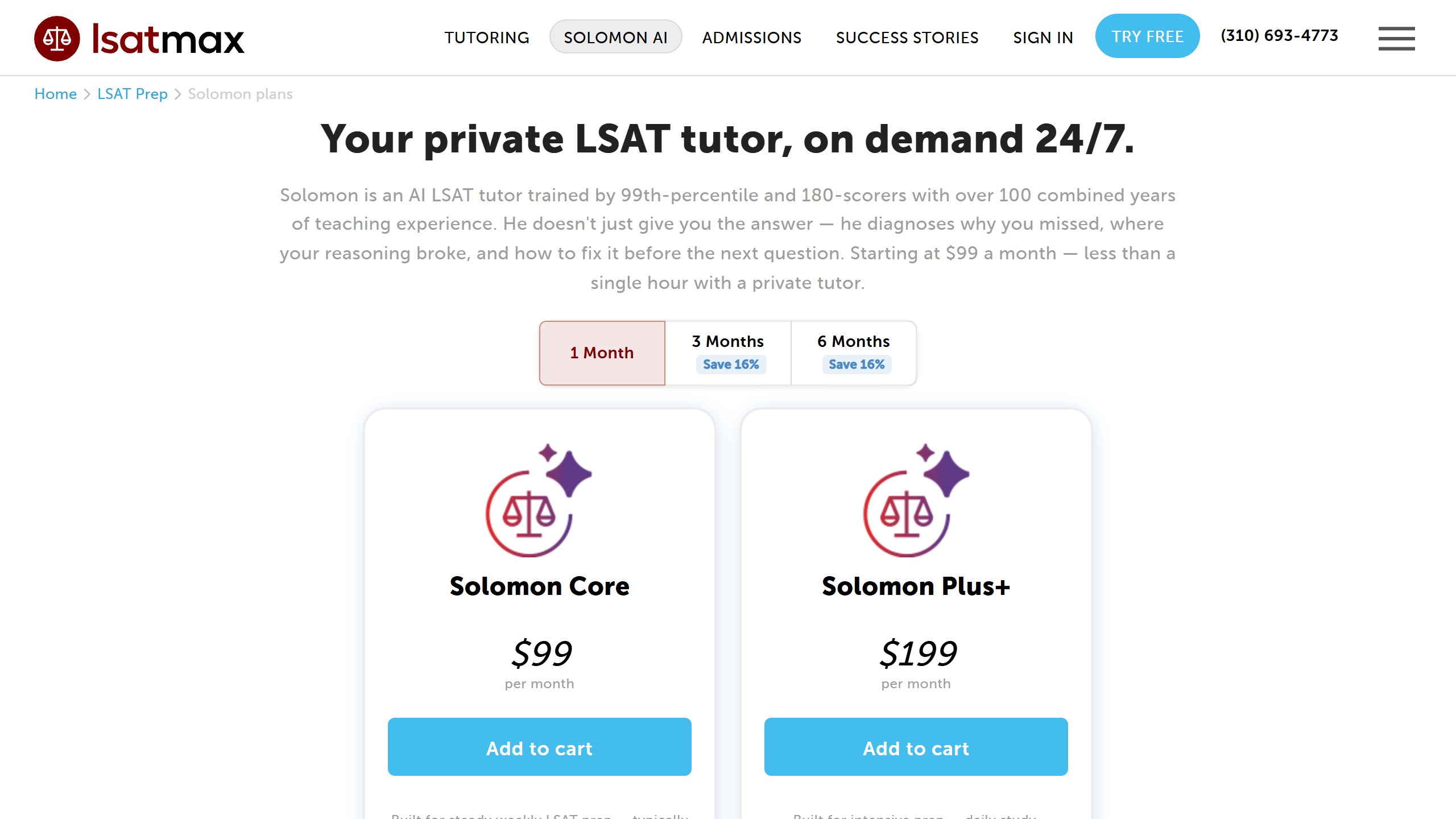
Read the coverage line closely. For missed-question post-mortems, the page says “Logical Reasoning available now; Reading Comp rolling out in coming weeks.” Law school admissions help is listed as “coming soon”. If Reading Comprehension is your weak section, check what is live before you pay.
Solomon Core cost $99 a month, $249 for three months or $499 for six, and is described as built for 4 to 10 hours of study a week. Solomon Plus+, for daily study and retakers, cost $199 a month, $499 for three months or $999 for six. The launch page, which still refers to students with April and June test dates, says every new LSATMax account gets free Solomon “starter tokens”, so check the checkout for what applies now. The same page claims Solomon has access to the LSATMax course “that produced an 18-point average score increase”. Its fine print says that is “the average score increase among LSATMax students who completed the full course curriculum”, so it describes course finishers, not Solomon users. The page also says you need to buy LawHub Advantage separately, which it calls “Required by LSAC” but prices at $120 rather than LSAC’s current $124.
To its credit, the plans page is candid about general chatbots, warning that a generic AI tool “Can sound confident while getting the answer, or the reasoning, flat wrong.” That risk applies to any AI tutor, Solomon included, so check its explanations against the official answer.
The LSATMax iPhone app had 4.7 from 4,705 US ratings, updated on 23 July 2026, and says course packages start at $599 for 60 days. The Android app had 4.7 from 918 reviews and 100K+ installs, but was last updated on 11 April 2025. Neither description mentions Solomon.
Choose it if you want a chat tutor that focuses on why you got a question wrong, without buying a full course. Skip it if you need AI help on Reading Comprehension today.
3. Blueprint LSAT: AI practice sets in a self-paced course
Blueprint uses AI to pick your practice rather than to chat with you. Its Self-Paced course page describes “A Qbank that gets smarter as you do” and says you can “Choose your own practice sets, or let us do the work with AI-driven sets tailored to your performance.” The Blueprint LSAT iPhone app lists “AI-Recommended Practice” and “AI-powered section and topic recommendations”. We found no LSAT chat tutor on Blueprint’s pages; its AI tools page presents its AI tutor Blue as a tutor for the MCAT’s CARS section, which we cover in our guide to AI MCAT prep tools.
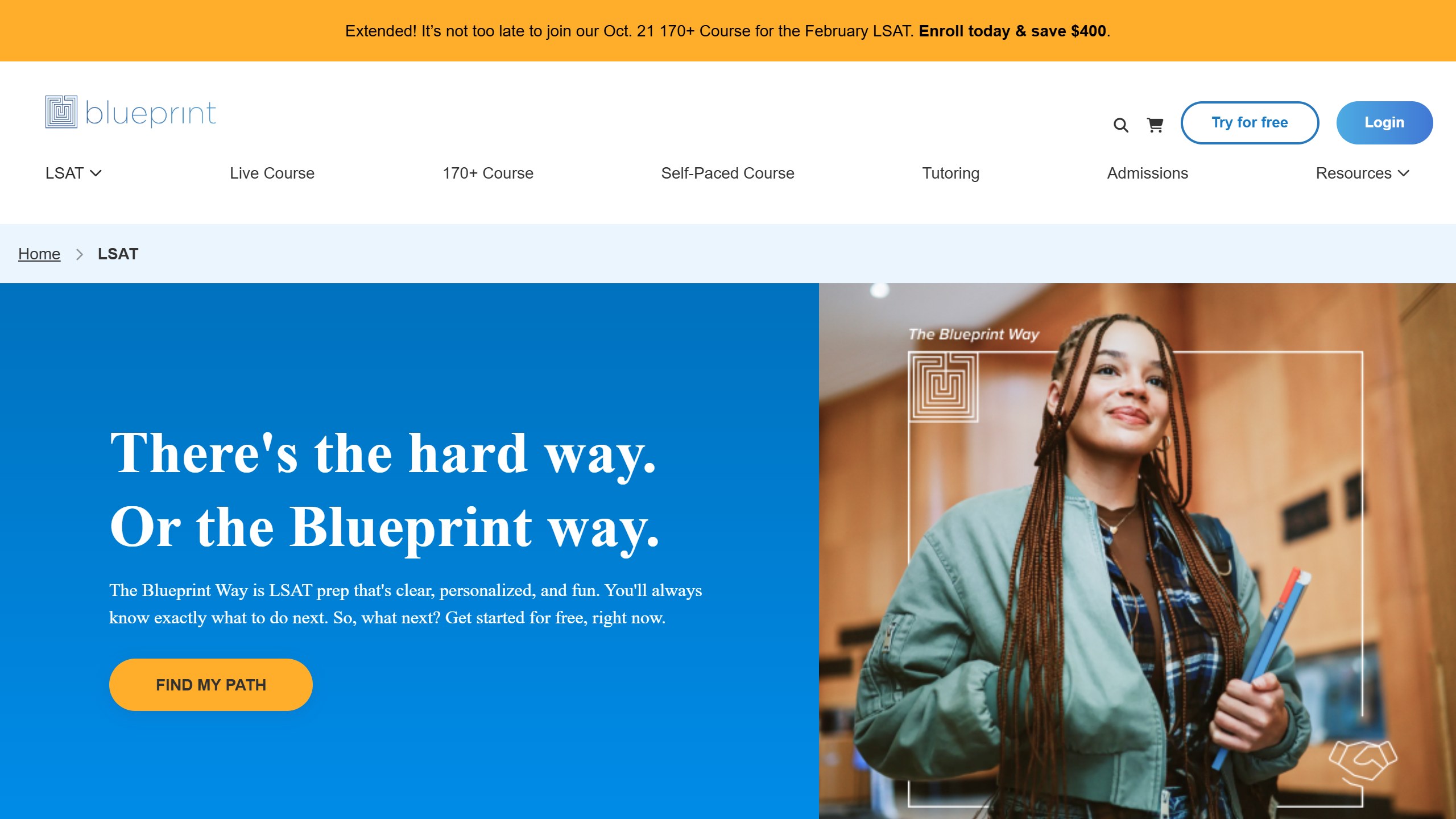
On 24 October 2026 the Starter plan cost $99 a month, with 61 interactive learning modules, a study plan, a Qbank “with 3,900+ real LSAT exam questions” and access to “all 59 official LawHub exams, including 16 full-length exams with Blueprint analytics and explanations”. Elsewhere the same page mentions “more than 7,000” real LSAT questions, so the size of the Qbank appears to depend on the plan. Pro cost $149 a month and adds live review sessions six times a week, a community and a “Score increase guarantee after 6 months”. A longer Pro option was listed “From $649 Regular Price $894”.
The guarantee reads: “Pro subscribers are guaranteed to increase their LSAT score. Don’t hit your target the first time around? Extend your subscription for free, or get your money back.” Blueprint’s guarantee fine print narrows it further. It covers “LSAT Self-Paced Pro (6+ Month Subscription Duration Only)”, while Self-Paced Starter and Self-Paced subscriptions shorter than six months are listed as having no guarantee. To qualify you must complete all learning modules, Blueprint’s Practice Exam 1 and at least four more Blueprint practice exams, and an extra 500 Qbank questions, and the LawHub Advantage fee is excluded from guarantee refunds. Blueprint says both plans let you “cancel anytime.”
The iPhone app had 4.5 from 52 US ratings and was updated on 26 September 2026. We found no Blueprint LSAT app in Google Play.
Choose it if you want a structured course where AI decides what you practise next. Skip it if you want to ask an AI questions in your own words.
The big names with no LSAT AI
Some well-known LSAT courses are missing because their own pages describe no AI feature for the LSAT on 24 October 2026. Kaplan lists On Demand from $899 and Live Online from $1,105 with an October promo code (listed at $1,299), with “advanced analytics” and “personalized study recommendations” but no AI. The page’s “Editor’s Choice” badge comes from Test Prep Insight, which Kaplan’s own page calls “a Kaplan affiliate”. The Princeton Review listed LSAT courses from $699 on sale (listed at $799) with no AI mention. The PowerScore On-Demand LSAT Course, sold on a BARBRI page, cost $99 a month, renews every 30 days until cancelled, requires LawHub Advantage, and makes no AI claim. These may be good courses, but they are not AI tools by their own description.
What we left out, and why
Magoosh sells LSAT plans at $199 and $499 plus the $124 LawHub fee, but its plans page makes no AI claim and its iPhone LSAT app was last updated in April 2024. A Khan Academy blog post advertises Khanmigo AI tutoring for the LSAT at $4 a month, but it still lists Analytical Reasoning, a section removed in August 2024, and Khan Academy’s LSAT pages would not load for us; its free Official LSAT Prep moved to LawHub in 2024, according to LSAC’s announcement. Premier LSAT Prep sells an AI tutor called Lex for $29 a month, but its platform was in early access with two full-length tests and no official LSAC content stated. Test Ninjas uses its own original questions and makes no AI claim. LSAT Demon has a free plan and a 30-day refund, but its pages call its adaptive Smart Drilling an algorithm, not AI. The LSAT AI Scan and Solve app had two ratings and no update since April 2024. Several “LSAT GPT” chatbots appear in AI directories, but there was too little public information to verify them.
How to choose an AI LSAT prep tool
Start free, in the real interface
Take a free LawHub PrepTest first. It costs nothing, gives you a scaled baseline, and shows you the interface LSAC uses on test day, which changed from the August 2026 test. 7Sage’s free plan and LSATMax’s free Solomon starter tokens are other low-risk ways to look around before paying.
Add $124 to every price
Compare total cost, not the headline. Three months of 7Sage Core comes to $331 once LawHub Advantage is added, LSATMax’s 3-month Solomon Core to $373, and three months of Blueprint Starter to $421. You only need one LawHub Advantage subscription, and you can take it with you if you switch tools, so do not buy it twice.
Decide what you want the AI to do
The three tools use AI in different ways. If you want to ask questions in your own words, Sage AI and Solomon are chat tutors. If you would rather the software choose your practice, Blueprint’s AI sets do that. If you also want people teaching you, 7Sage’s Live and Coach plans add live classes and coaching, and Blueprint Pro adds live review sessions.
Check what the AI covers
Solomon’s missed-question post-mortems covered Logical Reasoning first, with Reading Comprehension still rolling out. The 7Sage plans limit how much Sage AI you get without saying how much. Make sure the tool helps with the section that is actually costing you points, and skip any material that still drills Logic Games.
Read the cancellation and guarantee terms
Monthly plans renew until you cancel. 7Sage does not refund, and Blueprint’s guarantee covers only Pro subscriptions of six months or more. Put your test date in your calendar and cancel the month after.
Keep AI out of test day
LSAC’s candidate agreement bans generative AI software during the test, and you agree not to seek out or use confidential test content. Use AI on released PrepTests only.
Heading to law school after the LSAT? Our guide to AI tools for law students covers what comes next. For other exams, see our comparisons of AI MCAT prep tools and AI SAT prep apps.
Sources
- LSAC: LSAT prep options, LawHub and LawHub Advantage, Official LSAT practice tests, LSAT specifications, What to expect starting with the August 2024 LSAT (18 October 2023), Evolving how we deliver the LSAT (11 February 2026), Candidate Agreement 2026-2027, Khan Academy resources coming to LawHub (1 November 2023).
- 7Sage: homepage, pricing, US App Store listing, Google Play listing.
- LSATMax: Solomon plans, Solomon launch page, US App Store listing, Google Play listing.
- Blueprint: LSAT home, Self-Paced course, guarantee terms, AI tools, US App Store listing.
- No LSAT AI found: Kaplan LSAT, The Princeton Review LSAT, PowerScore On-Demand LSAT Course.
- Left out: Magoosh LSAT plans, Magoosh LSAT app, Khanmigo LSAT post, Premier LSAT Prep Lex, Test Ninjas, LSAT AI Scan and Solve.
- All store listings and web pages read 24 October 2026.

Written by
FazFaz is the founder of AIToolsBakery. Some tools here are tested hands on. Others are assessed from vendor documentation and pricing verified on the live page, and every review says which one it is. Sponsors can buy a position in a guide. They cannot buy the score, the criticism, or silence about a better option.
How we test and how we make money →