Type “AI reading app for kids” into a search engine and you get a mix of three quite different products, often on the same list. Some apps listen to your child read a book out loud and step in when they stumble on a word. Some are phonics games that adapt to your child’s answers but never hear them read. And some are libraries that read stories to your child. All three get called AI reading apps, and they do very different jobs.
The difference matters for two reasons the usual roundups skip. An app that listens has to record your child’s voice, so it is worth knowing where those recordings go and how long they stay there. And because “proven” and “research-based” appear in nearly every app description, it is worth knowing which apps can point to a real study and which can point to a percentage on their own website.
How we put this together. We have not used these apps ourselves; this is a research-based comparison. Every price, rating and claim below comes from the vendor’s own website, privacy policy or its US App Store and Google Play listing, read on 18 October 2026, plus the evidence databases and studies we link to. Prices are US App Store in-app purchase prices in US dollars unless we say otherwise. Apple often lists several prices for the same plan, so we give the range it showed. Nothing here is a test result, and none of these vendors paid to appear on this page.
Three kinds of “AI reading app”
Before comparing apps, it helps to sort them by what they do with your child’s reading.
Apps that listen to your child read
These use speech recognition built or tuned for children’s voices. Your child reads a page aloud, the app follows along word by word, and it gives a hint, a correction or a cheer. Ello, Readability, Read Along by Google and Microsoft Reading Coach work this way at home, and Amira does the same in schools. This is the category closest to sitting next to a child with a book, and it is the one that needs a microphone and your child’s voice data.
Phonics games that adapt
Khan Academy Kids, Reading Eggs and HOMER teach letter sounds, blending and sight words through games, then adjust the next activity to how your child answered. They are useful for children who are not yet reading sentences. None of them describes listening to your child read aloud in its store listing, so they cannot catch a misread word in a real book.
Apps that read to your child
Libraries such as Epic offer audiobooks and read-to-me books with voice actors. They build vocabulary and a love of stories, but your child is listening rather than reading, so they are not a substitute for practice.
If your child is learning to read, the listening apps do the job the other two cannot. Our list puts them first, then covers the phonics apps that suit younger children.
AI reading apps for kids compared
| App | Type | Ages or grades (vendor) | Price | Platforms | US App Store rating |
|---|---|---|---|---|---|
| Ello 2.0 | Listens to your child read | Ages 5 to 9 | Free tier; Ello Unlimited $19.99/mo or $199.99/yr (website FAQ) | iPhone, iPad, Android | 4.0 (36) |
| Readability | Listens to your child read | K to grade 6 | $19.99/mo for up to 3 readers; annual $139.99 | iPhone, iPad, Android, Kindle Fire, Chromebook, Mac | 4.6 (24,893) |
| Read Along by Google | Listens to your child read | Children who know the alphabet | Free, no ads | Android, web | No iPhone app; no US Play rating shown |
| Microsoft Reading Coach | Listens to your child read | Ages 6 to 11 suggested | Free | Web, Windows | No store app |
| Amira | Listens to your child read | K to grade 4 (Evidence for ESSA) | Bought by school districts | School devices only | No family app |
| Khan Academy Kids | Phonics games and storybooks | Ages 2 to 8 | Free, no ads | iPhone, iPad, Android | 4.8 (131,987) |
| Reading Eggs | Phonics games and e-books | Early readers | $9.99/mo or $69.99/yr | iPhone, iPad, Android, web | 4.7 (7,439) |
| HOMER | Phonics games | Toddler to early learner | Monthly listed from $7.99 to $12.99; annual $59.99 | iPhone, iPad, Android, web | 4.4 (25,448) |
Prices and ratings read on 18 October 2026. Ratings are rounded to one decimal, with the number of US ratings in brackets. Apple’s in-app purchase lists can show several prices for the same plan, so check the store before you subscribe.
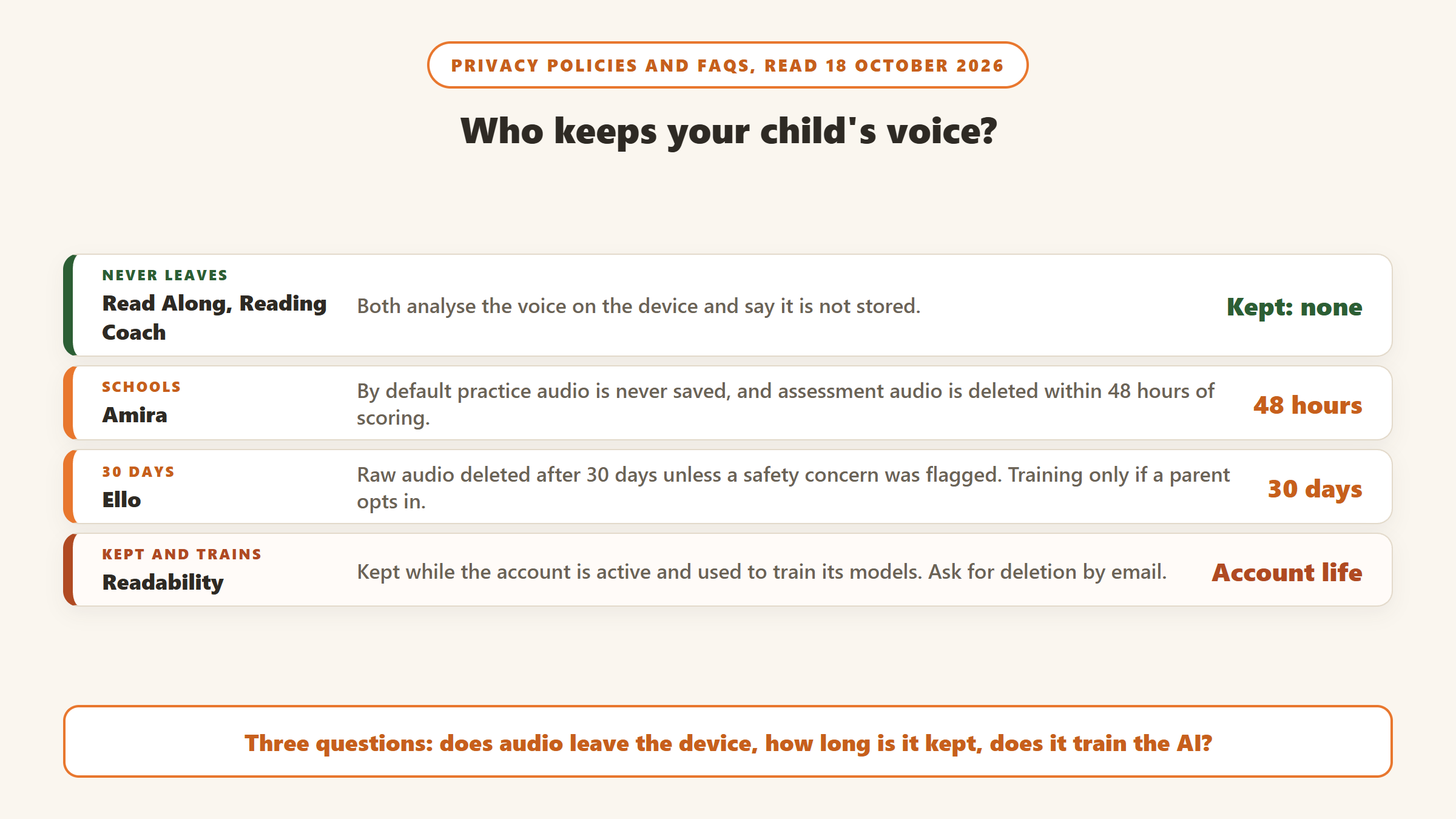
Who keeps your child’s voice?
Any app that listens to a child read has to capture audio. Under the US Children’s Online Privacy Protection Act (COPPA), apps need a parent’s consent before collecting personal information from children under 13, and a recording of a child’s voice counts. What each company does with that audio after the session is set out in its privacy policy, and the five listening apps here take noticeably different approaches.
| App | Where the voice is processed | How long raw audio is kept | Used to train AI models? |
|---|---|---|---|
| Read Along by Google | On the device | Not stored or sent to Google | Not applicable (not stored) |
| Microsoft Reading Coach | On the device | Not stored or shared with Microsoft | No, per Microsoft’s FAQ |
| Amira (schools) | Amira’s servers | Default: practice audio never saved, assessment audio deleted within 48 hours of scoring | Not directly; only de-identified data, and a district setting |
| Ello | Ello’s servers | 30 days, unless a safety concern was flagged | Only if a parent opts in; then kept until 5 years after the subscription goes inactive |
| Readability | Readability’s servers | While the account is active, and deleted or de-identified within 90 days of account deletion | Yes; consent is part of creating the child account |
Read Along’s Google Play listing says “voice data is analyzed in real time on the device, but not stored or sent to Google servers”, and the app needs no name, age or email address. Microsoft’s Reading Coach FAQ says the voice data “is not stored or shared with Microsoft afterwards” and that student data is never used to train the underlying models. Ello’s AI safety page says recordings “are deleted after 30 days, unless a safety concern was flagged”, and that families may opt in to let Ello use them to train its child speech models. Readability’s privacy policy lists training and improving its AI and machine learning models as one of four purposes for a child’s voice data, and says that by creating a child account the parent consents to those purposes. Parents can ask Readability to delete voice data at any time by email.
None of this makes any of these apps unsafe. Readability states that it does not sell voice data or use it for advertising, Amira says it has committed not to sell or release student data, and Read Along and Reading Coach do not keep them at all. But if keeping your child’s recordings off a company’s servers matters to you, Read Along and Reading Coach are the two that say they never leave the device.
Which apps have evidence, and which have a percentage
Nearly every app in this category calls itself research-based. That usually means the lessons follow the science of reading, the body of research on how children learn to decode words. It does not mean the app itself has been shown to improve reading. Education Week’s November 2025 look at AI reading tutors quoted University of Florida professor Matt Burns: “There are a few studies, but none of the rigorous studies that we would need to be confident in the use of AI.” Here is what each company can point to.
- Amira: the strongest public evidence on this list. Evidence for ESSA, a database that rates programs against the federal ESSA evidence standards, showed a “moderate” rating for grades K to 4 on 18 October 2026, based on a randomized study of 178 struggling readers in grades 1 to 4 (effect size +0.64) and a matched study of 15,424 kindergarten and first grade students in Texas.
- Read Along: an impact assessment by Sattva Consulting in India, published in 2020 with Google’s support, compared users with a control group, but the groups were not randomly assigned. Google’s own impact page says 64% of participants in its India pilot with access to the app improved in reading proficiency.
- Microsoft Reading Coach: a randomized trial in Colombian secondary schools, with about 845 students, was registered in July 2026 and runs to the end of 2026. There are no results yet.
- Readability: its research page offers company white papers, including data from 598 students in 2023 showing 74% improved in reading fluency, and a one-class case study. No comparison group is described.
- Ello: its homepage says 88% of children read more after 4 weeks of Ello, without naming a study or a comparison.
- Reading Eggs: its App Store listing claims a 91% success rate. The study on its research page is a 2017 action research project with 31 second graders over six weeks, one class using Reading Eggs and one comparison class.
- HOMER: its listing says 15 minutes a day “is proven to increase early reading scores by 74%”. Its website repeats the figure without linking a study.
- Khan Academy Kids: makes no outcome percentage claim; it says the app was created with the Stanford Graduate School of Education.
Small company studies are not worthless, but they are a different kind of evidence from a randomized trial reviewed by an outside database. When an app quotes a percentage, look for the word “control” or “comparison” near it.
How we chose and ordered these
We started from the apps that appear across the top search results and the candidates parents ask about, then read each one’s store listings, website, pricing and privacy policy. Apps that listen to a child read rank above phonics games because they can check a child’s actual reading, which a game cannot. Within each group we weighed how clearly the vendor describes what its AI does, the public evidence, the privacy policy, how open the pricing is and whether the app is maintained. We dropped apps that had not been updated in more than a year on a platform or that teach something other than reading, and list them at the end.
1. Ello 2.0: a reading tutor built for children’s speech
Ello is built to work like a human reading tutor. In the first session your child reads a short story aloud while Ello works out their level. After that, a daily Quest can include a book to read aloud, a phonics lesson and a math puzzle, chosen from what your child mastered the day before and what still needs practice. Ello’s how it works page says the company “built and patented speech recognition specifically for children”, and its AI safety page says that model was trained on thousands of hours of reading recorded by volunteer families. When a child gets stuck, Ello may break a word into sounds, ask a quick comprehension question or set extra practice on the pattern they missed.
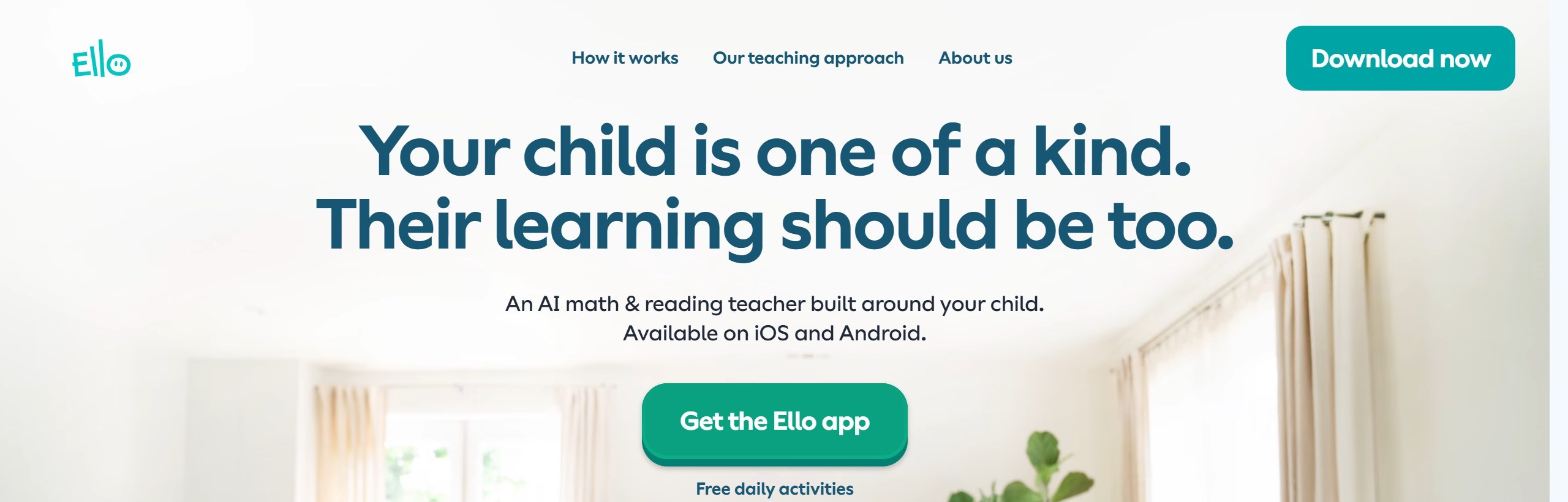
The important change for 2026 is that this is a new app. Ello relaunched as Ello 2.0, with math added, and the iPhone app was first released on 1 May 2026. On 18 October it had a 4.0 average from just 36 US ratings, and the Android app had a 3.2 average from 149 reviews with more than 10,000 installs. The older Ello listing that many reviews still describe is no longer in the US App Store, which is why pages that quote a high rating from thousands of reviews, or mention reading paper books with the app, are describing the previous version.
What Ello costs
Ello says daily reading and math activities are free and that “an optional paid upgrade with premium features is available”. Its Google Play listing puts it more plainly: you can explore the games and Daily Quests free, then “upgrade when you’re ready for the full AI tutoring experience.” The price sits in the FAQ on Ello’s homepage: daily reading and math activities are free with no credit card, and Ello Unlimited, with unlimited daily lessons and parent reports, is $19.99 a month or $199.99 a year. The store listings do not show it, and the App Store description says there are no in-app purchases.
On privacy, Ello keeps raw audio for 30 days for safety review, asks before using recordings to train its models, and says it complies with COPPA through verifiable parental consent at sign-up. Its supported devices page lists iPhone 11 or newer and a long list of Android phones and tablets; Kindle Fire support is marked coming soon. Ello is a public benefit corporation.
Choose it if your child is 5 to 9, is learning to decode and will read aloud to a tablet for 15 minutes a day. Skip it if you want a long track record of app store reviews.
2. Readability: for struggling readers up to grade 6
Readability has the longer history: its iPhone app was released in 2019 and had a 4.6 average from 24,893 US ratings, last updated on 7 October 2026. Its App Store listing says its voice technology “LISTENS while your child READS, highlighting, and correcting any problem words.” After a story, a feature it calls Interactive Voice-based Questions and Answers asks your child spoken questions about what they read, which takes it beyond decoding into comprehension. A parent dashboard reports accuracy, comprehension and words correct per minute.
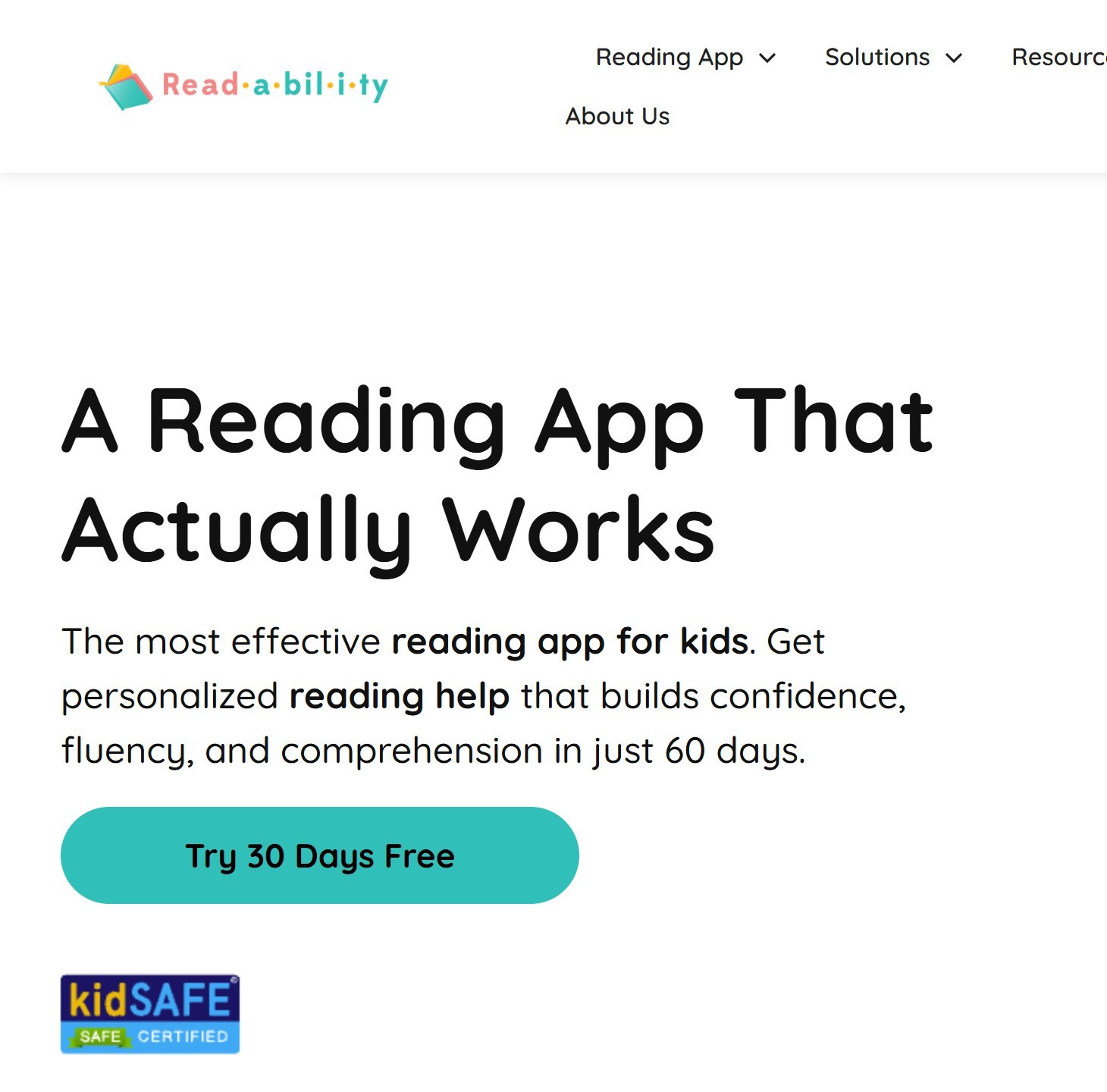
Readability aims at an older and wider range than Ello. Its App Store listing and FAQ say it covers kindergarten to grade 6 (another FAQ answer says up to grade 8), and it has pages for children with dyslexia, ADHD, speech and language delays and English learners. Its FAQ lists a wide range of devices: Android 8.1 or newer, iPhone and iPad, Amazon Fire tablets, Chromebooks from 2021 and Apple silicon MacBooks. It does not run on Windows laptops.
What Readability costs, and the trial terms
After a 30-day free trial, Readability’s FAQ puts the monthly price at $19.99 for up to three readers. The US App Store also listed an annual plan at $139.99. Read the payment policy before the trial ends: you must cancel at least 24 hours before the trial finishes to avoid a charge, and payments are non-refundable, with no credit for a partly used month or year.
The privacy trade-off is the one in the table above. Readability stores your child’s voice recordings on its servers while the account is open and uses them to train its reading assessment models, as its privacy policy states. You can ask for the recordings to be deleted at any time.
Choose it if your child is past the first stage of reading but still slow or inaccurate, or has a learning difference. Skip it if you do not want your child’s recordings used to train an AI model.
3. Read Along by Google: free, offline and private
Read Along is Google’s free reading app, built around an in-app reading buddy that, in Google’s words, “listens to your young learner read aloud, offers assistance when they struggle and rewards them with stars when they do well.” Stories are available in nine languages, including English, Spanish, Hindi and Portuguese, which makes it useful for bilingual families. Google says it works best for children who already know the alphabet.
Its strengths are price and privacy. The Android app is free with no ads or in-app purchases, works offline after the first download, needs no name, age or email address, and analyses voice data on the device without storing it. It had more than 10 million installs on Google Play, which showed no star rating for it in the US, and was last updated on 25 August 2026. There is also a web version. We found no iPhone app in the US App Store.
On evidence, Read Along is ahead of the paid home apps: an impact assessment by Sattva Consulting in India, supported by Google, compared users with non-users, although the groups were not randomly assigned, and Google publishes pilot results on its impact page.
Choose it if you have an Android phone or tablet and want free daily read-aloud practice with nothing stored. Skip it if your family is iPhone and iPad only and the web version does not suit your child.
4. Microsoft Reading Coach: free practice on a computer
Microsoft Reading Coach is a free reading fluency tool that runs in any web browser on a device with a microphone, or as a Windows app. Families can sign in with a personal Microsoft account; schools turn it on through Microsoft 365. Your child reads a passage aloud and Reading Coach identifies pronunciation errors, then offers practice on the words they found hard. It can also produce AI-generated stories, which Microsoft’s FAQ says use beta software for text generation.
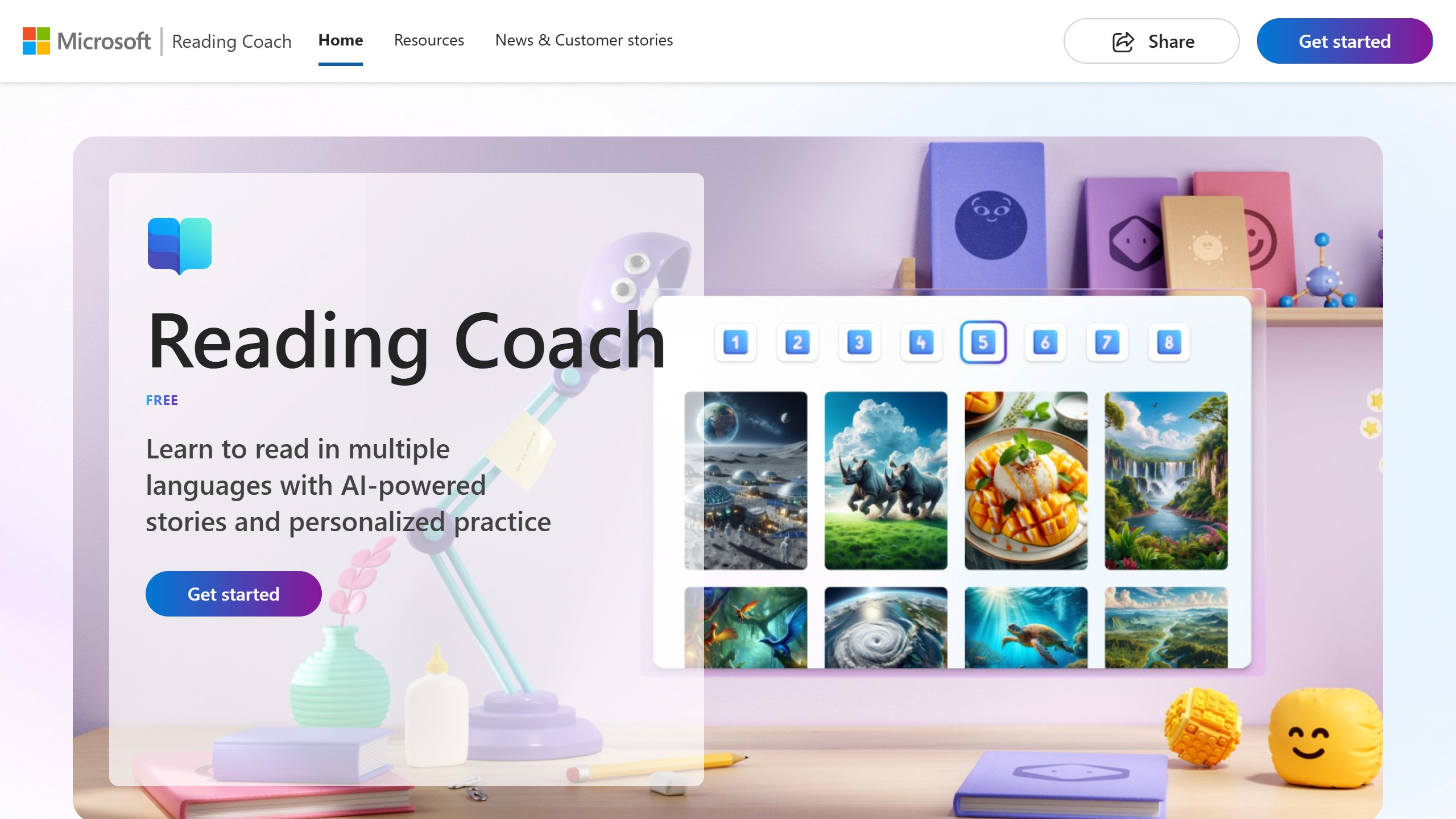
Microsoft says Reading Coach is most useful for ages 6 to 11 and suitable for ages 5 to 18, and its IT documentation says it is available in more than 80 languages. Like Read Along, it processes voice on the device and does not keep it. A randomized trial is under way in Colombia but has not reported. Because it runs in a browser, there are no app store ratings to compare.
Choose it if your child reads on a laptop, Chromebook or Windows PC, or their school already uses Microsoft 365. Skip it if you want a game-like app with a story world to keep a young child coming back.
5. Amira: the best evidence, but only through school
Amira grew out of Project LISTEN, a reading tutor research program at Carnegie Mellon University, and it listens as students read aloud and identifies skills to work on. It has the strongest public evidence of any app on this page, with the Evidence for ESSA rating and studies described above.
You cannot buy it. Amira’s website says it “is adopted through school districts rather than by families”, and its page for parents explains that children read with Amira on a school device during the school day, with no homework. If your child’s school uses it, Amira’s privacy page says its default is not to keep practice audio at all and to delete assessment audio within 48 hours of scoring, with parents making deletion requests through their district.
Choose it if your school offers it: ask your child’s teacher whether the district has a license. Skip it as a home option, because there is not one.
6. Khan Academy Kids: the free phonics pick
Khan Academy Kids is a free app from the nonprofit Khan Academy for ages 2 to 8, with more than 5,000 games and activities across reading, phonics, writing and math, plus a library of storybooks. Its App Store listing says it was created in partnership with the Stanford Graduate School of Education, is COPPA-compliant and is free with no ads or subscriptions.
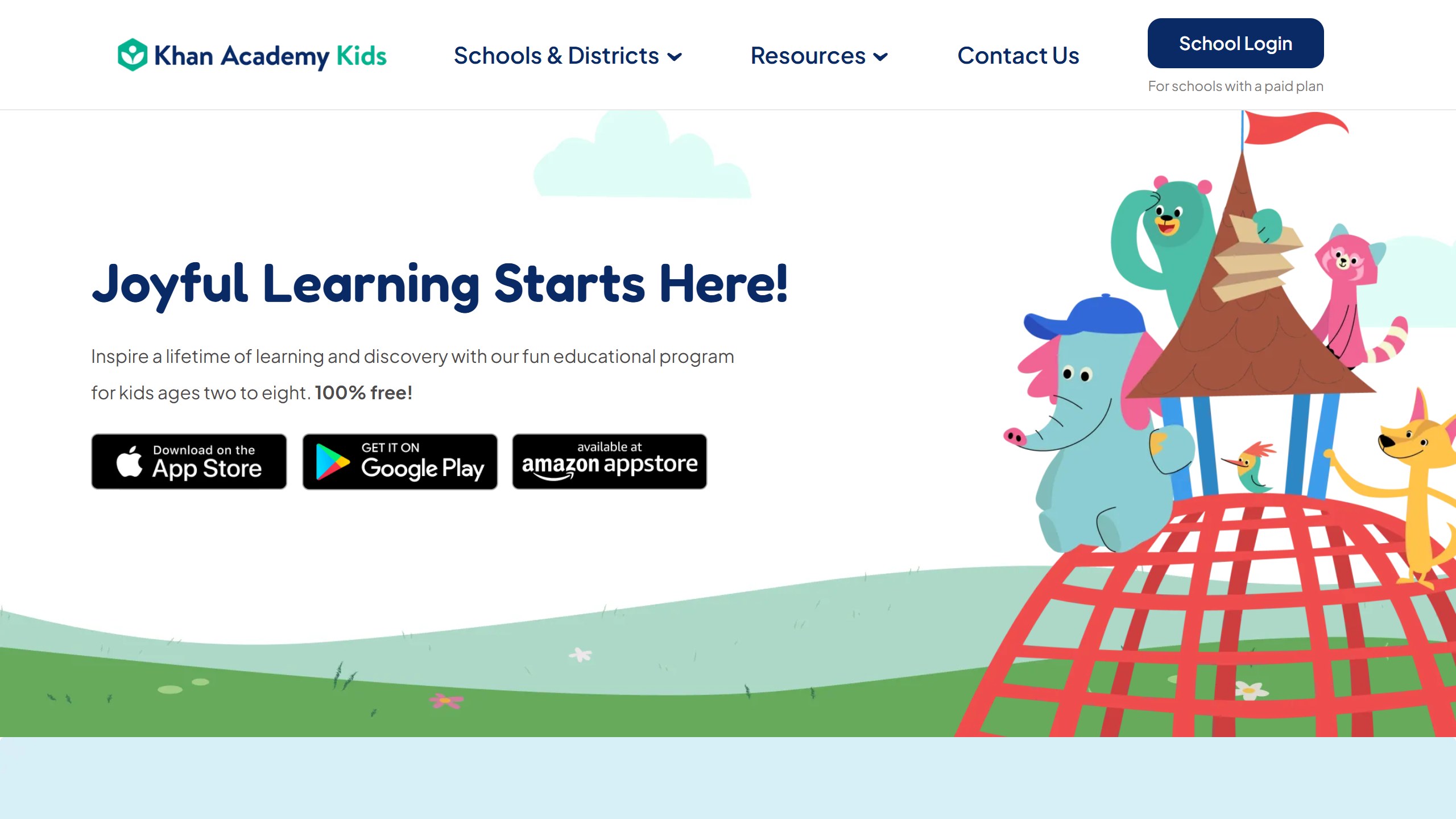
It had a 4.8 average from 131,987 US ratings on the iPhone app, updated on 30 September 2026, and a 4.6 average with more than 10 million installs on Android. It does not describe listening to your child read aloud, so it teaches the building blocks rather than checking reading. For a preschooler or kindergartener, that is often exactly what is needed.
Choose it if your child is 2 to 6 and learning letters and sounds. Skip it if your child already reads sentences and needs feedback on reading aloud.
7. Reading Eggs: structured phonics lessons
Reading Eggs from Blake eLearning is a structured phonics program of lessons, games and more than 4,000 e-books. Its iPhone app had a 4.7 average from 7,439 US ratings and was updated on 11 October 2026; the Android app had a 4.1 average from 12,000 reviews and more than 5 million installs.
In the US App Store, Reading Eggs was $9.99 a month or $69.99 a year, and a bundle with its Mathseeds math program was $13.99 a month or $99.99 a year. The listing mentions a money-back guarantee. Like Khan Academy Kids, it does not describe listening to your child read aloud. Its App Store privacy label also includes a “Data Used to Track You” section, which the other phonics apps here do not show.
Choose it if you want a step-by-step phonics course with reports. Skip it if you want a free option, which Khan Academy Kids covers.
8. HOMER: phonics with a price to check
HOMER offers reading, math and social skills games personalised to a child’s age, level and interests, with up to four child profiles on one membership. Its iPhone app had a 4.4 average from 25,448 US ratings and was updated on 7 October 2026; the Android app had a 4.1 average and more than 1 million installs.
HOMER’s price is the one to check carefully. The US App Store listed monthly memberships at $7.99, $9.99 and $12.99, a 3-month plan at $20.99 and an annual plan at $59.99. Which monthly price you see depends on the offer shown in the app. HOMER also offers a 30-day free trial on its website. It does not describe listening to your child read.
Choose it if you want a broad early learning app with reading at its core and several children to cover. Skip it if you need reading feedback rather than games.
What about apps that read to your child?
Epic is a read-to library: more than 40,000 books, audiobooks and videos, with read-to-me titles voiced by actors. Its iPhone app had a 4.7 average from 519,235 US ratings, and the US App Store listed subscription prices from $4.99 to $13.99 and an annual plan at $84.99. Epic is free for teachers during the school day. Listening to books builds vocabulary and enjoyment, but it is a different job from reading practice, which is why it is not ranked here.
What we left out, and why
Duolingo ABC teaches phonics through tracing and drag-and-drop lessons; its iPhone app had not been updated since August 2023, although the Android version was updated in August 2026. Lalilo, a classroom tool from Renaissance, is sold to schools and its main website now serves French-language schools. Brighterly appears in the search results, but it is a live tutoring service with human tutors and we could not verify an AI reading feature. Buddy.ai is a popular voice AI tutor for ages 3 to 8, but its listing describes first words, basic English vocabulary, numbers and shapes rather than reading practice. Hooked on Phonics and Reading.com’s Learn to Read are well-rated phonics programs that do not describe listening to a child read; Reading Eggs and HOMER cover the same ground above.
What AI reading apps cannot do yet
Children’s speech is hard for computers. Young children mispronounce, pause, repeat and speak quietly, and a classroom or kitchen adds background noise. That is why Ello makes a point of a speech model trained on children reading, and why Education Week’s report stresses that classroom speech recognition has to be trained on children’s voices. Even so, any reading app will sometimes mark a correct word as wrong or let a mistake through, especially with a strong regional accent or a speech difference. If your child gets frustrated by corrections that seem wrong, sit with them for a session and see what the app is hearing.
An app also cannot replace reading together. It can give daily practice with feedback, which is the part that is hardest to fit into a busy family’s day, but a parent or teacher still notices whether a child understands the story, enjoys it and wants to read the next one.
How to choose an AI reading app for your child
Match the app to the reading stage
If your child is still learning letter sounds, a phonics app like Khan Academy Kids or Reading Eggs fits. Once they can read simple sentences, move to an app that listens: Ello for ages 5 to 9, Readability for older or struggling readers, Read Along or Reading Coach for free practice.
Read the voice data section of the privacy policy
Check whether recordings leave the device, how long they are kept and whether they train the company’s AI. Read Along and Reading Coach keep nothing; Ello keeps raw audio 30 days with opt-in training; Readability keeps it while the account is active and uses it for training.
Treat percentages with care
A claim like “74% improved” means little without a comparison group. Look for an independent study or an Evidence for ESSA listing. Among the apps here, Amira has one, Read Along has a Google-supported evaluation with a non-random comparison group, and Reading Eggs cites a small six-week study with a comparison class; the rest rely on company figures.
Check the price and the trial terms inside the app
Ello lists its Unlimited price only in its website FAQ, not in the app stores. HOMER lists three different monthly prices. Readability charges at the end of a 30-day trial unless you cancel at least 24 hours before, and does not refund partly used periods. Set a reminder when you start any trial.
Ask your school first
Schools may already license Amira, Reading Coach or another reading tool your child can use. Using the same tool at home and at school can keep practice consistent.
If your child needs help beyond reading, our guide to AI tutoring apps covers tutors across subjects, including some of the apps above. Teaching at home? See our list of AI tools for homeschooling. Teachers of the youngest readers will find classroom options in our roundup of AI tools for kindergarten teachers, and support for children with learning differences in our guide to AI tools for special education teachers.
Sources
- Ello: website, how it works, AI safety page (updated 29 April 2026), privacy policy (updated 28 September 2026), supported devices, US App Store listing and Google Play listing.
- Readability: website, FAQ, payment policy, research page, privacy policy (updated 3 June 2026), US App Store listing and Google Play listing.
- Read Along by Google: website, web app, Google Play listing, impact page and Sattva Consulting impact assessment (2020).
- Microsoft Reading Coach: web app, Reading Coach FAQ, IT documentation and AEA RCT Registry entry for the Colombia trial.
- Amira: website, parents page, privacy and security page and Evidence for ESSA program page.
- Khan Academy Kids: website, US App Store listing and Google Play listing.
- Reading Eggs: website, research page, US App Store listing and Google Play listing. HOMER: website, US App Store listing and Google Play listing.
- Epic: website, US App Store listing and Google Play listing. Duolingo ABC: US App Store listing. Buddy.ai: US App Store listing.
- Education Week: AI Tutors Are Now Common in Early Reading Instruction. Do They Actually Work? (20 November 2025).
- All store listings, vendor pages and policies read 18 October 2026.

Written by
FazFaz is the founder of AIToolsBakery. Some tools here are tested hands on. Others are assessed from vendor documentation and pricing verified on the live page, and every review says which one it is. Sponsors can buy a position in a guide. They cannot buy the score, the criticism, or silence about a better option.
How we test and how we make money →