In rent collection, fake AI is embarrassing. In tenant screening, it is federally actionable. That single difference reshapes how you should read every “AI-powered screening” pitch on the market, and it is why this roundup looks nothing like the vendor listicles ranking above it.
Here is the pattern our research kept surfacing. The AI in tenant screening splits into two buckets that could not be more different. Bucket one is AI that verifies documents: machine learning that catches forged paystubs and doctored bank statements. That is fraud detection, it checks facts, and it is legally defensible. Bucket two is AI that scores humans: models that ingest an applicant’s data and emit a number or a recommendation. That bucket has already produced a roughly $2.3 million federal settlement (SafeRent, final approval November 2024), a HUD guidance document saying landlords stay liable for their vendor’s algorithm (May 2, 2024), and a state law that makes landlords using AI screening on Colorado applicants regulated “deployers” (effective June 30, 2026).
No page on this SERP merges the buyer’s guide with the liability map. Vendor posts from RentSpree, Hemlane, and Avail rank themselves and skip the law entirely. Advocacy coverage at civilrights.org explains the law and recommends nothing. So we built both halves: nine ranked tools with a who-pays fee matrix, a dated legal timeline, and a simple test for every AI claim you will meet. Does it verify documents, or does it score people? Buy the first. Walk away from the second.
One scope note: this guide owns the screening job. For moving the rent itself, see our best AI rent collection tools roundup; several platforms appear in both, doing different work.
The who-pays matrix (all 9 tools)
Screening fees hide behind three different payer models, and state law can override all of them. Every figure below is from official pricing pages checked July 24, 2026, unless marked REPORTED.
| Tool | Price | Who pays | Real AI? | Legal flag |
|---|---|---|---|---|
| TransUnion SmartMove | $25 / $40 / $48 + tax per report | Landlord or applicant, landlord chooses | No (ResidentScore is a statistical score) | Proprietary scores fall under HUD’s May 2024 guidance; use as input, not verdict |
| RentPrep | $29 / $29 / $49 per report | Landlord only | No (FCRA-certified human review, by design) | Lowest algorithmic exposure in the roundup |
| Snappt | Quote-only, annual contract | Operator (landlord side) | Yes, document-fraud ML | Document bucket: verifies facts, not people |
| TurboTenant | $45-55 (REPORTED 2026-07-23) | Tenant/applicant | No AI in screening | Standard TransUnion reports |
| Innago | $30 / $35 | Applicant | No | Standard reports |
| RentRedi | $39.99 / $49.99 | Tenant/applicant | No AI in screening (its AI is accounting-side) | Standard TransUnion reports |
| Avail | $30-55 by state (REPORTED) | Landlord or applicant, landlord chooses | No | Some states cap applicant fees; payer flexibility helps |
| Docuverus | No direct operator cost, applicant-fee funded (REPORTED, vendor-sourced) | Applicant | Yes, document ML + SOCR income calculation | Document bucket; applicant-funded model needs fee-cap review by state |
| TheGuarantors | Free for landlords; renter pays the policy | Renter | AI underwriting (vendor-claimed) | Guarantor requirements can raise fair-housing questions for voucher holders |
The fee-cap row that matters most: New York caps rental application fees at $20, which is below every applicant-paid price in this table. Platforms handle it differently; Azibo (now part of TurboTenant) ran a New York carve-out on its screening arrangement as live proof that the cap bites. If you operate in a fee-cap state, the tools that let the landlord pay (SmartMove, Avail, RentPrep) are your compliance-friendly path.
Read the Real AI column against the Price column. The only two entries doing genuine machine learning in screening, Snappt and Docuverus, publish no self-serve price. Every price you can click and pay today belongs to a product that runs standard credit, criminal, and eviction reports with no AI at all. That is the honest state of AI tenant screening in 2026.
The two-bucket test: does it verify documents or score people?
Before the rankings, the framework that sorts every AI claim in this category.
Bucket one: AI that verifies documents. Snappt, Docuverus, and Verifast run machine learning against the paperwork applicants submit: paystub metadata, bank-statement formatting, income patterns. The model answers a factual question, is this document genuine, and a human still makes the leasing decision on verified facts. Fraud detection of this kind has no known fair-housing enforcement history, because verifying that a paystub is real treats every applicant identically.
Bucket two: AI that scores humans. SafeRent’s SRS score, RealPage AI Screening, and the newer wave of “decision engines” ingest an applicant’s records and output a score or an accept-and-deny recommendation. The model answers a judgment question, should you rent to this person, and that is where disparate-impact liability attaches. HUD’s position, in plain terms: the AI denied them is not a defense. You own your vendor’s algorithm.
The legal timeline every landlord should know
This is consumer-protection reporting, not legal advice. Every claim below carries its date and source, because in this category the dates are the story.
- February 2023: the FTC and CFPB issue a joint Request for Information on background screening practices in rental housing, the opening signal that both agencies were circling the category.
- January 11, 2024: the CFPB publishes advisory opinions on tenant screening accuracy, tightening what screening companies must do about false matches and stale records under FCRA.
- May 2, 2024: HUD issues guidance stating that the Fair Housing Act applies to algorithmic tenant screening and advertising targeting, that housing providers can be liable for a third-party vendor’s AI, and calling out the opacity of proprietary scores directly.
- November 2024: Judge Angel Kelley of the District of Massachusetts grants final approval in Louis v. SafeRent Solutions. The settlement is widely reported as roughly $2.3 million; Cohen Milstein, class counsel, puts the precise figure at $2.28 million. The remedy is bigger than the money: a 5-year nationwide stop on SafeRent using AI-derived scores or accept-and-deny recommendations for applicants using housing vouchers. Plaintiffs alleged the score disparately harmed Black and Hispanic voucher holders.
- April 2025: TechEquity publishes its “Screened Out” report documenting how automated screening errors and scores lock renters out of housing, the context document for where enforcement attention goes next.
- June 30, 2026: the Colorado AI Act, SB 24-205, takes effect after its delay from February in the 2025 special session. Housing is an enumerated consequential decision, which means a landlord deploying AI screening on a Colorado applicant is a regulated deployer with impact-assessment and notice duties. This is the first state law to regulate landlords, not just vendors, for using AI in screening.
And the FCRA enforcement ladder shows the screening industry’s accuracy problem predates the AI branding: RealPage paid $3 million to the FTC in 2018 over inaccurate criminal-record matching, AppFolio paid $4.25 million in 2020, and TransUnion Rental Screening Solutions paid $15 million to the CFPB and FTC in 2023. The fines are getting bigger and the tools are getting more automated.
Two vendors belong in this section rather than the rankings. SafeRent Solutions and RealPage AI Screening are the named products in the human-scoring bucket; given the settlement terms and HUD’s posture, we do not recommend either, full stop. Findigs, which raised a $32 million Series C in June 2026, markets a “decision engine,” a posture closer to SafeRent’s than to Snappt’s. It may navigate the rules carefully, but a decision engine is by definition bucket two, so we cover it here and do not rank it.
If any of this applies to your portfolio, especially if you take vouchers or operate in Colorado, spend an hour with a housing attorney licensed in your state before you switch anything on. It is the cheapest line item in this entire article.
1. TransUnion SmartMove: the default standalone, no AI and better for it
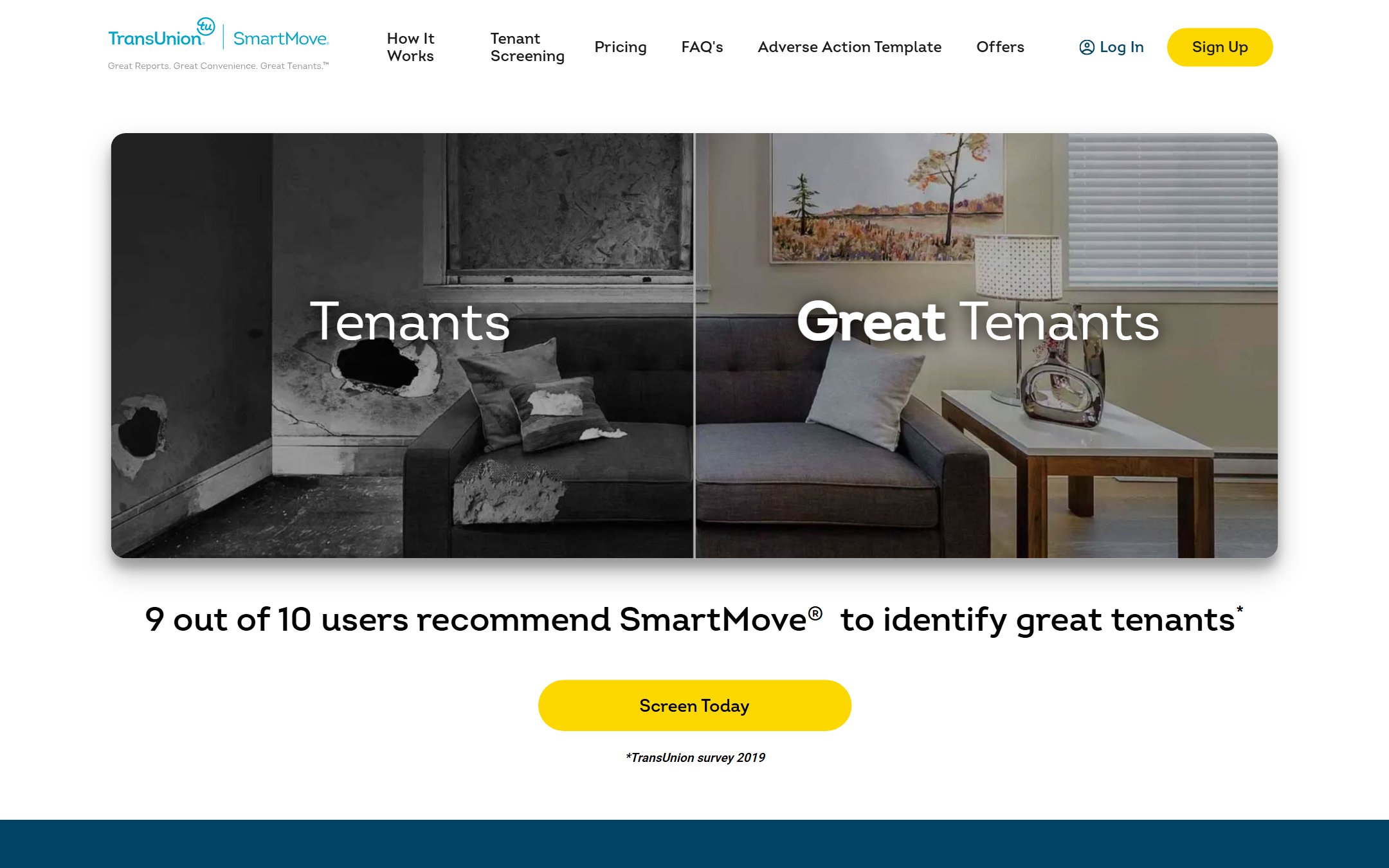
What it does. TransUnion SmartMove is the direct-from-the-bureau screening product for independent landlords: credit report, criminal background, eviction records, and Income Insights, delivered in minutes with the applicant authorizing the pull themselves. It is the tool most platform screeners quietly resell.
Research-based observations. SmartMove makes no AI claims, and the one score it does produce deserves a careful label. ResidentScore is a statistical scoring model built on rental outcomes, not machine learning marketed as AI, but a proprietary applicant score is exactly the category HUD’s May 2024 guidance addresses. Use it as one input alongside the underlying reports, never as an automatic cutoff. Pricing note for anyone comparing against older articles: the affiliate grids still printing $25/$35/$40 are stale. The live SmartCheck lineup is $25 Basic, $40 Plus, $48 Premium, plus tax.
Pricing. OFFICIAL (mysmartmove.com 2026-07-24): SmartCheck Basic $25, Plus $40, Premium $48, plus tax where applicable. Landlord or applicant pays; the landlord chooses at setup.
Who it’s for. Any self-managing landlord who wants bureau-grade reports without adopting a platform, and anyone in a fee-cap state who needs the landlord-pays option.
One honest limitation. It is screening only. No listings, no lease, no rent collection, and the per-report cost stacks up faster than platform bundles if you screen high volumes.
2. RentPrep: the human-review counter-pick
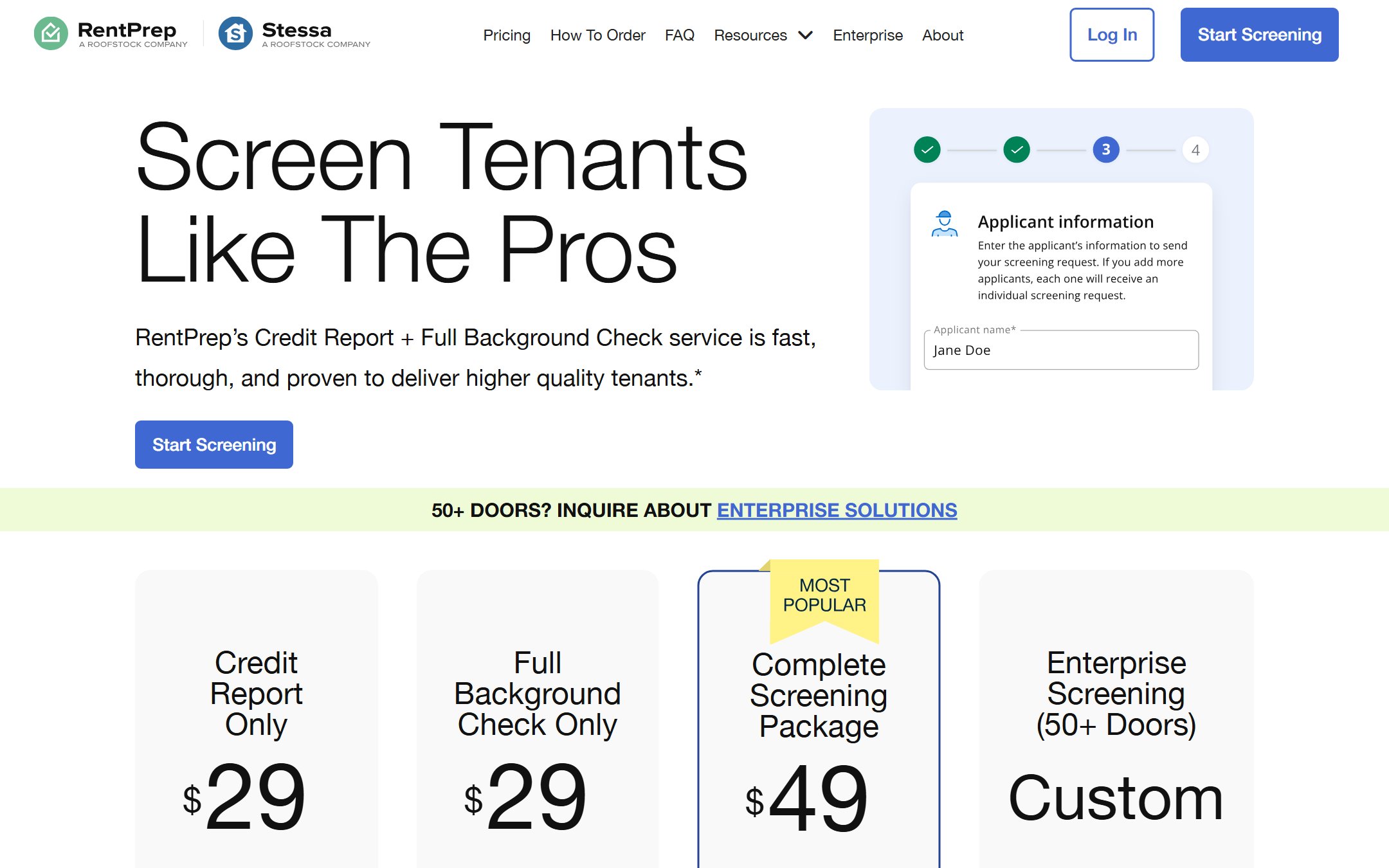
What it does. RentPrep is the deliberate opposite of this article’s premise, and that is why it ranks second. Its core products are background checks reviewed by FCRA-certified human screeners before they reach you, on the theory that a trained person catches false matches and mismatched records that automated pipelines wave through. Ownership note: RentPrep is a Roofstock company, the same parent that owns Stessa, and its site brands the two together (confirmed on the live rentprep.com header, July 2026).
Research-based observations. Read the FCRA enforcement ladder above again: $3 million, $4.25 million, $15 million, all for automated matching errors. RentPrep’s human-review pitch is a direct answer to that record, and in a category where the CFPB’s January 2024 advisory opinions specifically target accuracy, paying $29 for a human-verified report is a defensible choice, not a Luddite one. It is landlord-paid only, which also sidesteps every state application-fee cap by design.
Pricing. OFFICIAL (rentprep.com 2026-07-24): Credit Report package $29, Background Check $29, Complete package $49, landlord-paid only. Add-ons: income verification $10, income plus employment verification $15.
Who it’s for. Landlords who want a human between the database and the denial letter, and anyone screening in states where passing fees to applicants is capped or barred.
One honest limitation. Human review takes longer than instant reports, and there is no applicant-paid option if you prefer the cost to travel with the application.
3. Snappt: the best real AI in screening, if you are big enough
What it does. Snappt is document-fraud detection for multifamily operators: applicants upload paystubs and bank statements, and Snappt’s machine learning inspects PDF metadata and formatting against patterns from checks spanning over 2,000 financial institutions to flag forgeries before they reach your leasing desk. In June 2026 it launched VerifyMyWay, extending the verification flow. Snappt claims 99.8 percent accuracy on fraud detection; that figure is vendor-claimed and we could not independently benchmark it.
Research-based observations. Methodology note: Snappt is quote-only, so this is research-based coverage. We verified its product claims, accuracy figure, and June 2026 launch on snappt.com and in press coverage as of July 24, 2026; we have not run a hands-on trial. What makes Snappt the right kind of AI is what it refuses to do: it does not score the applicant, recommend accept or deny, or touch protected-class-correlated data. It answers one factual question, is this document real, and hands verified facts back to a human. That is the defensible half of the two-bucket framework in commercial form.
Pricing. Quote-only annual contracts, paid by the operator. No published figures, and we will not invent one.
Who it’s for. Multifamily and portfolio operators with enough application volume that paystub fraud is a measurable line item, which industry coverage suggests it increasingly is.
One honest limitation. There is no self-serve tier and no published price, so a 10-door independent landlord cannot buy the best fraud AI in the category at any price it discloses.
4. TurboTenant: the best free-platform screening route
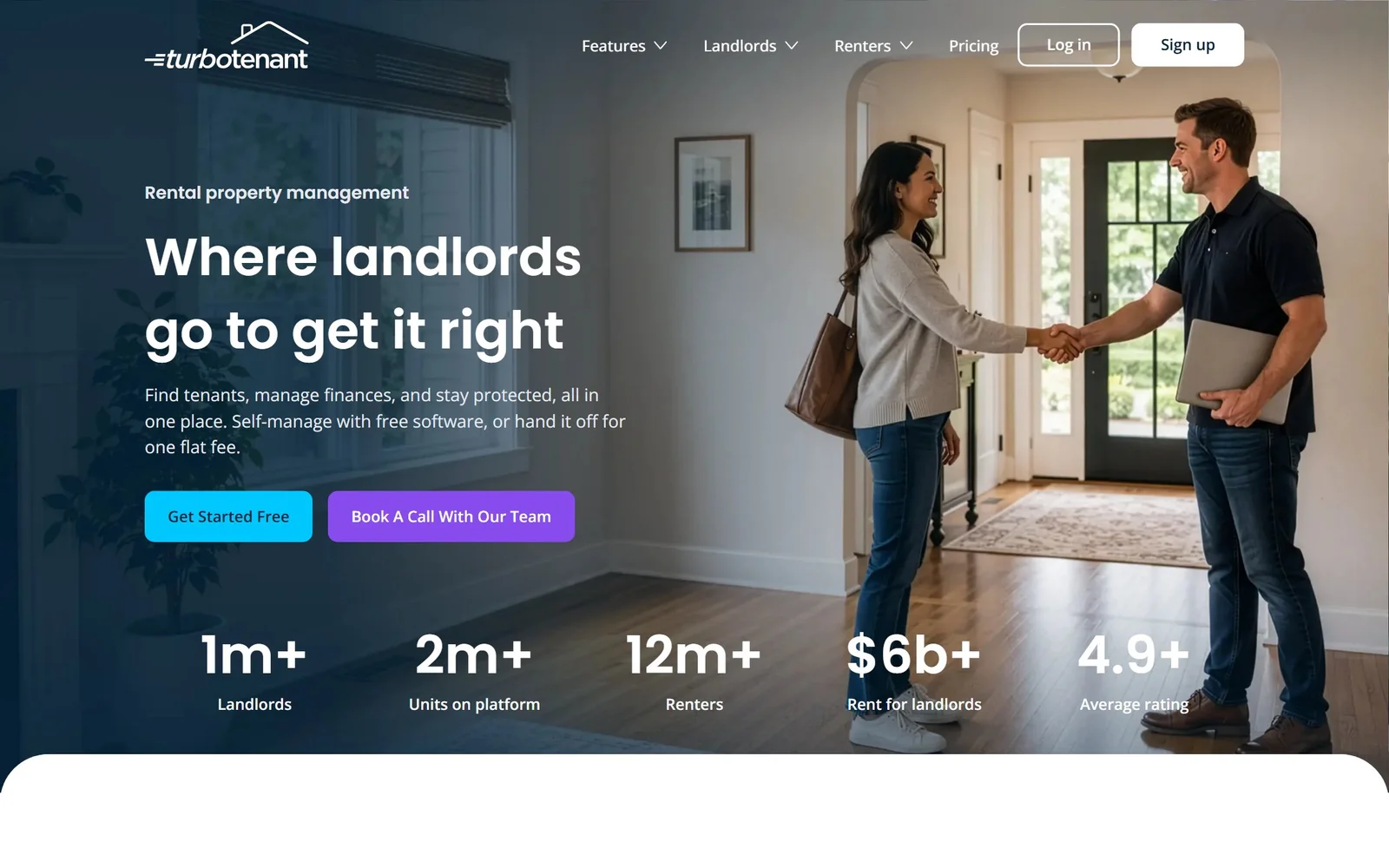
What it does. TurboTenant bundles TransUnion-powered screening into its free landlord platform: credit, criminal, and eviction reports requested in a click from inside the application flow, with the fee billed to the applicant.
Research-based observations. TurboTenant markets AI features, but they live on the listing-copy and lease side, not in screening; the reports are standard TransUnion products with no AI layer, and that is fine. The draw is workflow: application, screening, lease, and rent collection in one place at zero landlord cost. The screening fee itself, reported at $45 to $55 tenant-paid as of July 23, 2026 (TurboTenant’s site blocks scrapers, so this is our prior browser verification), is at the high end of this table, and in a $20-cap state like New York the applicant-paid default needs attention. Our full TurboTenant review covers the platform economics in depth.
Pricing. REPORTED (our browser verification 2026-07-23): screening $45-55, tenant-paid, TransUnion reports. Platform free for landlords; paid plans exist for other features.
Who it’s for. Landlords already on TurboTenant or wanting the largest free platform, who accept that the applicant carries the screening cost.
One honest limitation. The priciest applicant-paid screening in this roundup, and the payer is not the landlord’s choice.
5. Innago: the cheapest applicant-paid platform route

What it does. Innago is a free landlord platform whose screening runs $30 to $35 applicant-paid, the lowest applicant-paid figure among the platforms here, covering credit, criminal, and eviction.
Research-based observations. Innago makes no AI claims in screening, and its pricing is the quiet winner for landlords who want platform-integrated screening without pushing a $50 fee onto applicants. A $30 fee is also the closest any applicant-paid platform gets to surviving fee-cap scrutiny, though New York’s $20 cap still undercuts it. We scored the wider platform 4.1 in our Innago review, where its strengths and its payout-friction complaint pattern both get full treatment.
Pricing. OFFICIAL (2026-07-24): screening $30 or $35 depending on package, applicant-paid. Platform free for landlords.
Who it’s for. Cost-conscious landlords who want integrated screening with the smallest possible burden on applicants.
One honest limitation. Screening depth is standard-report only; there is no document-fraud layer, so a polished fake paystub sails through.
6. RentRedi: platform screening at a flat-fee platform
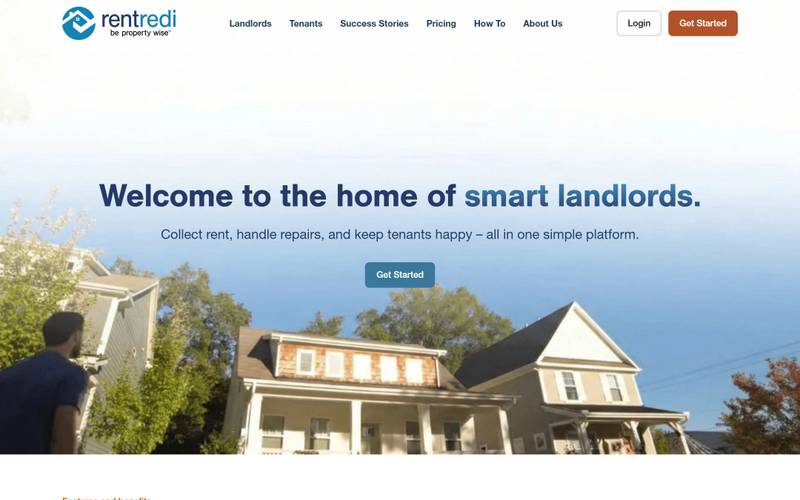
What it does. RentRedi offers TransUnion screening inside its flat-price landlord platform: $39.99 for credit, criminal, and eviction, or $49.99 with Plaid-powered income verification, both tenant-paid.
Research-based observations. One correction to the record, because the SERP has RentRedi’s AI status wrong in both directions. RentRedi does now have real AI: an AI accounting suite launched in December 2025 and expanded in January 2026 that extracts receipts into Schedule E categories. But that AI is entirely accounting-side. Its screening has no AI layer at all; it is standard TransUnion reporting, with the $49.99 tier adding Plaid income verification, which is bank-data matching rather than machine learning. Do not choose or avoid RentRedi’s screening based on AI marketing in either direction. Our new RentRedi review covers the full platform, the AI accounting suite, and the fee math.
Pricing. OFFICIAL (rentredi.com 2026-07-24): screening $39.99, or $49.99 with Plaid income verification, tenant-paid, TransUnion. Platform from $12 per month on annual billing.
Who it’s for. RentRedi platform users, and landlords who want an income-verification step without a quote-only fraud tool.
One honest limitation. Plaid income verification confirms bank deposits; it does not detect forged documents, and screening remains tenant-paid with no landlord-absorb option at draft time.
7. Avail: the payer-flexibility pick
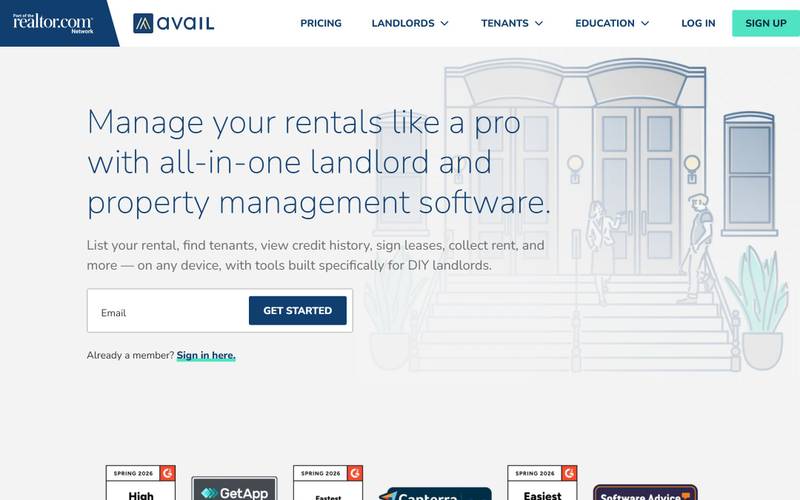
What it does. Avail, part of Realtor.com, runs TransUnion screening inside its landlord platform with one structural feature the bigger platforms skip: the landlord chooses who pays, and pricing varies by state, reported at $30 to $55.
Research-based observations. That payer toggle is worth more than it looks. Some states cap what you can charge applicants, and Avail’s own materials acknowledge state-by-state variation in both price and permissible payer, which is more regulatory honesty than most platform screening pages manage. No AI claims in screening, standard reports. We scored the platform 4.1 in our Avail review.
Pricing. REPORTED (2026-07-24): $30-55 depending on state and package, TransUnion, landlord or applicant pays at the landlord’s choice.
Who it’s for. Landlords in fee-cap or fee-restricted states, and anyone who wants the option to absorb screening costs as a tenant-goodwill move.
One honest limitation. The state-varying price means you cannot budget a single number across a multi-state portfolio, and the platform beneath it is thinner on maintenance workflows than full PM suites.
8. Docuverus: the Snappt alternative for mid-size portfolios
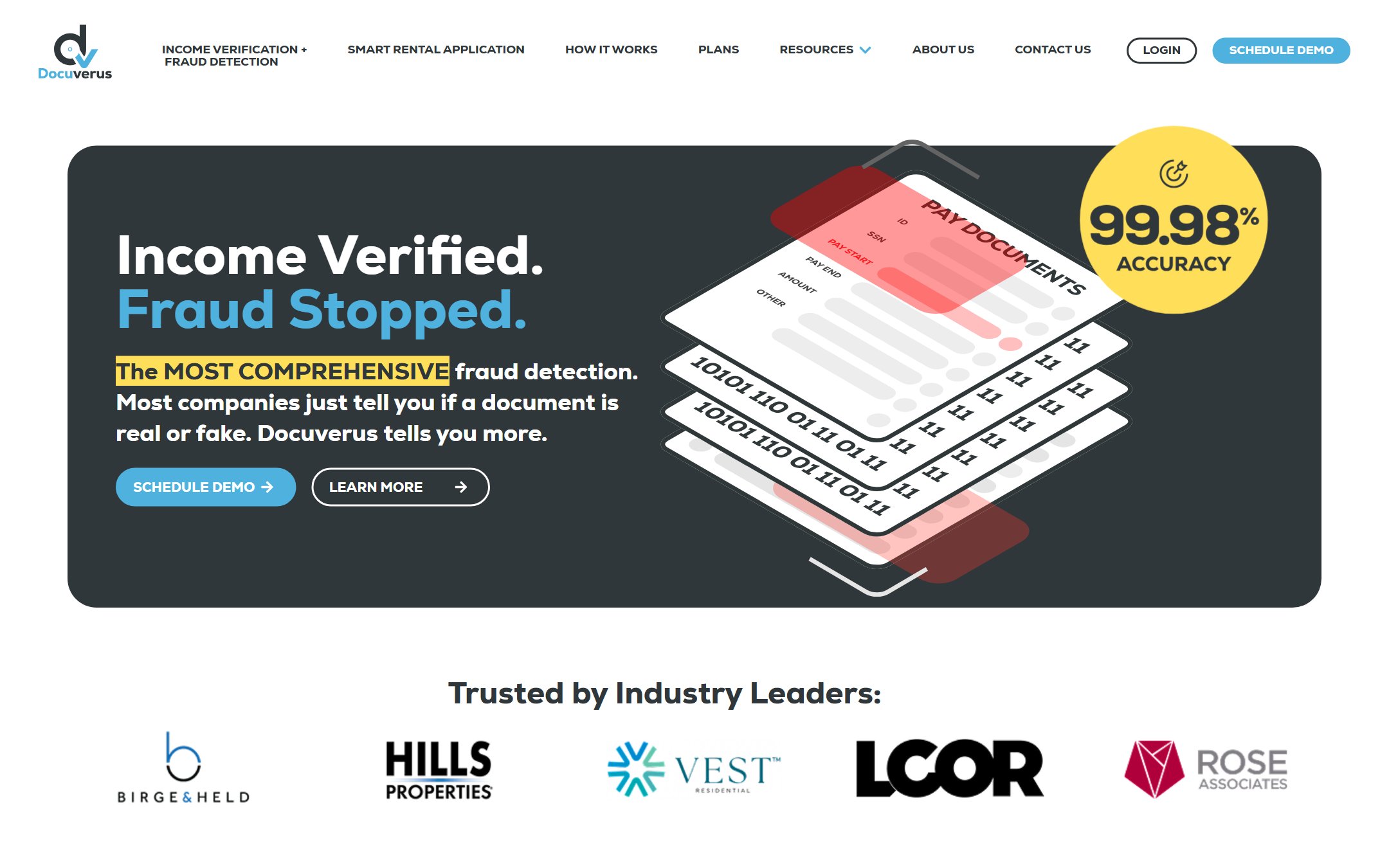
What it does. Docuverus is document-verification AI in the same bucket as Snappt: machine learning that authenticates uploaded documents, plus a SOCR-based automated income calculation that reads and totals income from the verified documents themselves.
Research-based observations. Methodology note: Docuverus does not publish self-serve pricing, so this is research-based coverage built from its site and vendor materials as of July 24, 2026, not a hands-on trial. Docuverus claims 99.98 percent accuracy on document authentication; like Snappt’s 99.8 percent, that is a vendor-claimed figure we could not independently benchmark, and we would treat the fourth decimal place with appropriate skepticism. Its commercial model is the interesting differentiator: vendor materials describe an applicant-fee-funded structure with no direct cost to the operator (REPORTED, vendor-sourced). That lowers the adoption barrier below Snappt’s annual contract, but an applicant-funded model deserves a fee-cap review in states like New York before rollout.
Pricing. No direct operator cost per vendor materials; funded through applicant fees (REPORTED, vendor-sourced, 2026-07-24). No standalone price list published.
Who it’s for. Mid-size multifamily operators who want document-fraud AI without an enterprise annual contract.
One honest limitation. Smaller footprint and thinner third-party coverage than Snappt, so more of the diligence burden lands on you, and the applicant-funded model shifts cost to the people applying.
9. TheGuarantors: the risk-transfer wildcard

What it does. TheGuarantors is not a screening tool, and it earns its slot precisely because of that. Instead of predicting whether an applicant will default, it insures the outcome: lease guarantee and security-deposit-replacement products where the renter pays a policy premium and the landlord gets protected rent. TheGuarantors says its underwriting draws on more than 500 million data points; that figure is vendor-attributed and, since the underwriting model is proprietary, unverifiable from outside.
Research-based observations. Methodology note: quote-driven product, research-based coverage from its site and press materials as of July 24, 2026, no hands-on trial. The strategic logic is clean: if screening is fundamentally a default-risk prediction, an insurance policy makes some of that prediction unnecessary, and it lets you say yes to thin-credit-file applicants a score would reject. But carry the fair-housing lens here too: if guarantor or policy requirements are applied selectively, or fall hardest on voucher holders, you have rebuilt bucket-two risk in insurance clothing. Apply any guarantee requirement uniformly, and check how it interacts with voucher rules in your state.
Pricing. Free for landlords; the renter pays the policy premium, priced per applicant and market. No flat rate published.
Who it’s for. Landlords and operators in high-rent markets who would rather transfer default risk than sharpen rejection accuracy, and applicants with income but thin credit.
One honest limitation. It answers a different question than screening does. You still need identity, eviction, and criminal checks from a real screening product; this is a complement, not a substitute.
Tools we looked at and left out
Verifast (VERO): document and income verification AI in the defensible bucket, but quote-only with coverage too thin for us to rank responsibly this year. E-Renter: landlord-paid reports at $21.95 to $31.95 with a dated interface; cheap, functional, no AI, outclassed by SmartMove and RentPrep at similar money. First Advantage: enterprise background screening with no self-serve pricing and a corporate-HR center of gravity; wrong shape for landlords in this guide’s audience. Findigs is covered in the legal section above; its decision-engine posture puts it in the bucket we do not rank.
The engine behind half this list now has its own deep dive: our TransUnion SmartMove review decodes ResidentScore, prices the direct-vs-reseller gap, and covers the $15 million FTC and CFPB settlement nobody else mentions.
Screening is a long-term-lease problem. If you also run short-term inventory, the equivalent buying decision is the platform stack: see our Airbnb host tool roundup.
Per unit, flat rate or free: what each actually costs you at scale
The pricing model matters more than the price, because the same portfolio produces wildly different bills under each. Here is the same arithmetic run three ways using figures published on 4 September 2026.
| Portfolio | Rentec Direct flat | DoorLoop per unit | Buildium tier | TurboTenant free |
|---|---|---|---|---|
| 5 units | $300/yr | $828/yr, Starter | From $744/yr | $0 plus tenant fees |
| 10 units | $300/yr | $828/yr, Starter cap | From $744/yr | $0 plus tenant fees |
| 25 units | Pro, from $600/yr | Pro, $1,788/yr | Growth, from $2,304/yr | Paid tier from $149/yr |
| 60 units | Pro or PM, scales | Premium, $2,508/yr | Growth or Premium | Outgrown |
The ten unit cliff is the one that catches people
Several vendors cap an entry tier at ten units, best ai among the products where this pattern appears. Buying the eleventh door can cost more than the previous ten did, and the step is not proportional. Before committing, ask what the next tier costs, whether the change applies immediately or at renewal, and whether any discount you negotiated survives the crossing.
Vacancies are the difference between the models
Per unit pricing usually charges for a unit whether or not it is occupied, which means a vacancy costs you twice: no rent, and a bill for the privilege. Flat rate pricing does not care. If your portfolio has meaningful seasonal vacancy or you are mid-renovation on several doors, that single distinction can outweigh the headline difference between two platforms.
Free is a transfer, not a saving
The free tiers in this market are funded by tenant-paid fees: application and screening charges, card payment fees, and optional extras like rent reporting. That may be entirely reasonable and many residents prefer the convenience. It is still worth knowing that choosing the free platform is a decision about what your tenants pay, not only about what you pay, and it is worth looking at your own application flow as an applicant would before deciding.
Verdict: buy document AI, rent human judgment, never outsource the decision
Tenant screening in 2026 is the rare software category where the buying advice and the legal advice are the same sentence: use AI to verify facts, never to make the decision.
Our picks by situation:
- Multifamily operator with fraud losses: Snappt, with Docuverus as the lower-barrier alternative.
- Independent landlord, best standalone reports: TransUnion SmartMove at $25 to $48, landlord-pays option included.
- Maximum accuracy defensibility: RentPrep’s human-reviewed reports at $29 to $49, landlord-paid.
- Platform-integrated, cheapest for applicants: Innago at $30 to $35.
- Fee-cap states: SmartMove, Avail, or RentPrep, because the landlord can carry the fee.
- Thin-credit applicants you want to say yes to: TheGuarantors, applied uniformly.
And the two-bucket test travels with you to every demo from here on. If the pitch is “our AI catches fake paystubs,” you are in the defensible bucket; ask about accuracy claims and who pays. If the pitch is “our AI scores applicants so you do not have to think about it,” you are looking at the exact product design that ended in a $2.28 million settlement and a five-year federal injunction. HUD has already told you whose algorithm it is: yours.
Screening is one job in the landlord stack. For the rest of it, start with our guide to the best AI tools for landlords.

Written by
FazFaz is the founder of AIToolsBakery. Some tools here are tested hands on. Others are assessed from vendor documentation and pricing verified on the live page, and every review says which one it is. Sponsors can buy a position in a guide. They cannot buy the score, the criticism, or silence about a better option.
How we test and how we make money →Frequently Asked Questions