Search for AI tools for landlords and you get two kinds of lists: property management software that wants $280 a month minimum from a landlord with four units, and “AI-powered” roundups where half the tools have never shipped a single AI feature. We went through the most-marketed platforms, read their pricing and product pages, and checked which AI features they actually name. This guide is for self-managing landlords with 1 to 20 units. If you run a property management company for other owners, this is not your list, and we say so below.
Two findings shaped everything here. First, only six of the ten tools here name real AI features on their own pages. Second, almost every “free” tier in this category is tenant-funded: your tenants pay the screening fees, the card processing fees, and effectively subsidize your free account. Neither of those things is a scandal. But nobody else puts them in the comparison table, so we did.
The master table: prices, real AI, and who actually pays
Two columns you will not find anywhere else. “What’s actually AI” reports only features named on the vendor’s own site as of November 2026, not marketing adjacency. “Who pays” tells you whether the business model is funded by you, your tenants, or both.
| Tool | Landlord price | What’s actually AI | Who pays | Best for |
|---|---|---|---|---|
| TurboTenant | Free / at 1-10 units, Essentials $149 per yr, Pro $199 per yr (rising with units, up to $349 and $999) | Maintenance AI, AI listing descriptions (real, shipping) | Mostly tenants (screening, fees); landlord on paid tiers | Best overall for 1-20 units |
| Hemlane | Free Starter / $2 per unit + $28 base / up to $58 per unit + $28 | None named on its own site | Landlord | Remote landlords who want human help |
| Baselane | Free Core / Smart $20 per mo billed annually | AI transaction auto-tagging (real) | Landlord on Smart; payment fees otherwise | Banking and bookkeeping in one |
| Landlord Studio | GO free (3 units) / PRO $12 / PRO PLUS $28 per mo billed annually, + $1 per extra unit | AI assisted bookkeeping on paid plans (real) | Landlord | Tax-time accounting |
| RentRedi | One plan: $12 per mo billed annually / $20 on six months / $29.95 monthly | AI receipt categorization (real) | Mixed: landlord subscription + tenant screening $39.99-49.99 | One flat price for any number of units |
| Stessa | Free / $12 / $28 per mo billed annually | None claimed on its own site | Mostly tenants and payment float | Portfolio finance tracking |
| Avail | Free / Unlimited Plus $9 per unit per mo | None claimed on its own site | Mostly tenants on free tier | DIY leases, state-specific |
| Innago | 100% free for landlords | None, and Innago does not pretend otherwise | Tenants (screening, card fees) | Best truly free option |
| DoorLoop | One $2.50 per unit, $199 min / Connect $4, $299 min / Multiply $5, $399 min, per mo billed annually | AI Assistant, plus AI agents on Connect and Multiply (real) | Landlord | Graduation pick past ~20 units |
| Winston Ops | $3 per unit, $200 per mo minimum ($5 per unit from Nov 15) | AI voice answers calls, opens repair jobs (real) | Landlord | Every tenant and prospect call, day or night, in 12 languages |
Every price here was read on the vendor’s own pricing page on November 3, 2026. Several are the annual rate, so check the billing line before you compare them.
Who really pays for “free” landlord software
Before the tool-by-tool breakdown, the business model deserves two paragraphs, because it explains almost every pricing decision on this list.
Free landlord platforms make money three ways: tenant screening fees ($35 to $55 per application, paid by the applicant on most platforms), payment processing (card convenience fees around 3 percent, plus margin or float on ACH rent transfers), and upsells to the landlord (premium tiers, lease packages, landlord insurance referrals). TurboTenant, Innago, Avail, and Stessa all lean on some mix of these. That is why they can afford to charge you nothing.
This is not a reason to avoid free tools. It is a reason to check what your tenants will be charged before you pick one, because a $55 screening fee or a mandatory card fee lands on the same people whose goodwill you depend on every month. We flag the tenant-side costs in each section below where the vendor publishes them.
1. TurboTenant: best overall for self-managing landlords
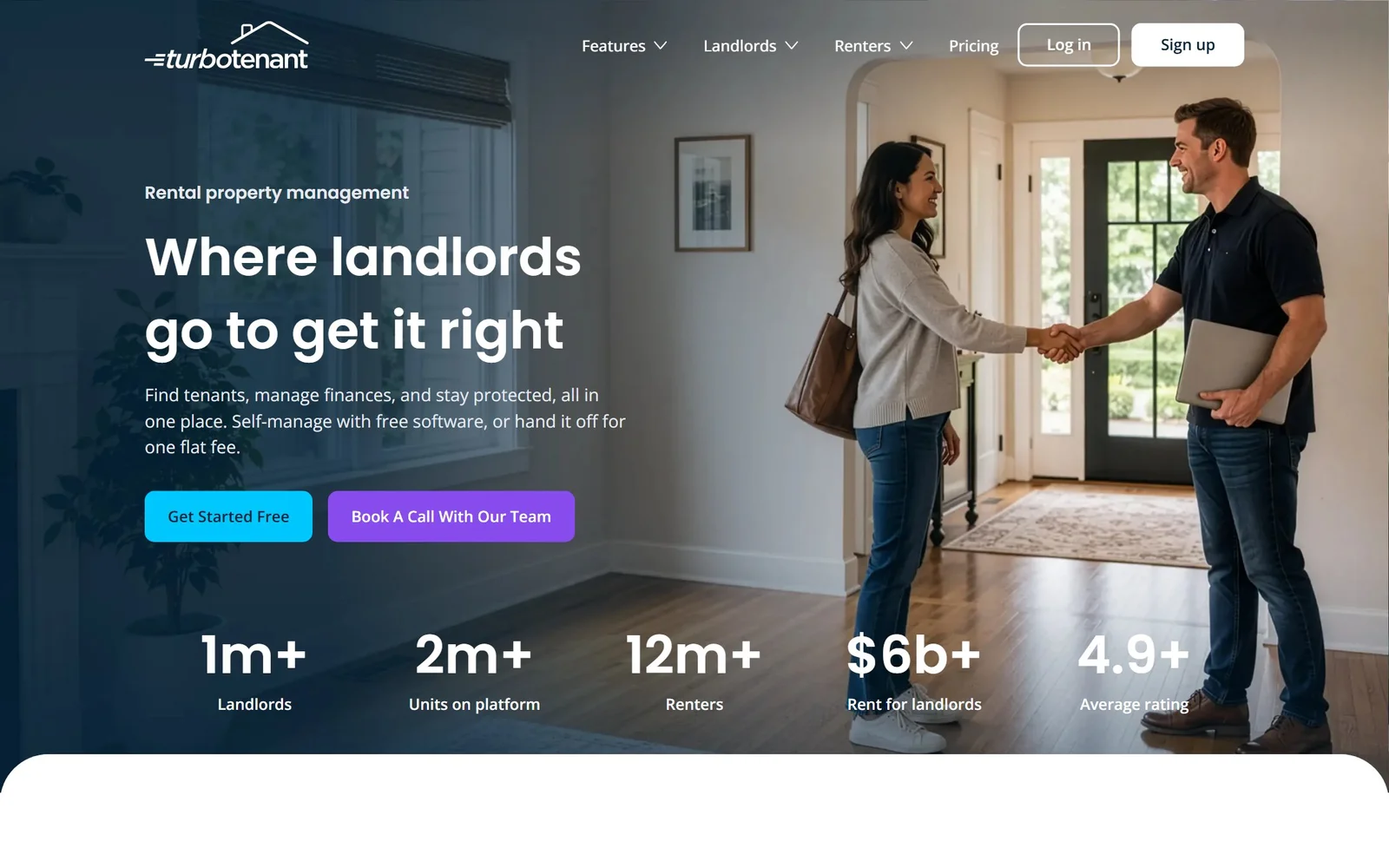
TurboTenant is our top pick because it covers the whole self-managing loop (listing syndication, screening, leases, rent collection, maintenance) and its AI is real. Maintenance AI is a shipping feature that triages tenant maintenance requests, asks the follow-up questions you would ask (“is the breaker tripped, is water actively leaking”), and packages the ticket so you or your handyman arrive knowing what the problem is. It also names an AI listing description generator.
Its pricing page and help center now tie paid plans to your unit count, billed once a year. At 1 to 10 units, Essentials is $149 and Pro is $199. At 11 to 30 units they are $199 and $399, at 31 to 60 they are $299 and $699, and at 61 or more they are $349 and $999. The monthly figures on the pricing page are those yearly prices divided by 12. There is also a full-service Autopilot option, priced by phone. The free tier is the classic tenant-funded model: landlords pay nothing, applicants pay the screening fee, and tenants paying rent by card cover the processing.
Who it’s for: landlords with 1 to 20 units who want one tool for the full cycle and actually get value from AI maintenance intake.
Honest limitation: the accounting layer is thinner than Baselane or Landlord Studio. If you live in your P&L, you will end up pairing TurboTenant with one of the finance tools below, which is a very common two-tool stack.
2. Hemlane: the human-hybrid option for remote landlords
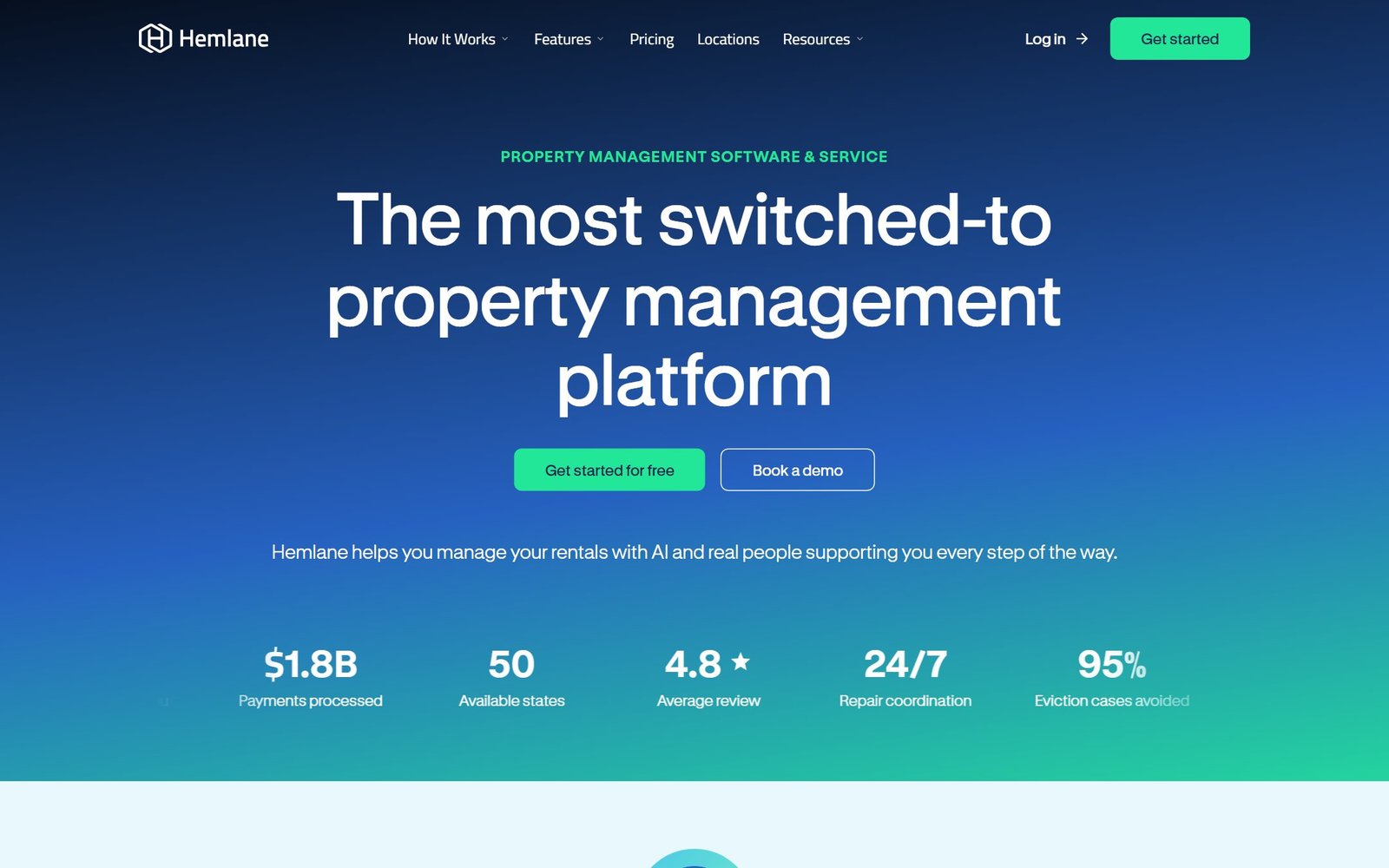
Hemlane is on this list for a different reason than the others: it is the bridge between pure software and hiring a property manager. The platform handles listings, screening, and rent, and the higher tiers add real humans, including 24/7 maintenance coordination and local leasing agent support. Verified official pricing: a free Starter tier, then paid tiers at $2 per unit plus a $28 base, $20 per unit plus $28, and $58 per unit plus $28 per month, with tenant placement from $695.
We want to be straight about the AI column: Hemlane does not name AI features on its own site as of July 2026. What it sells is coordination, some automated and some human. For a landlord managing a duplex three states away, that combination beats a chatbot.
Who it’s for: remote and accidental landlords who want software prices but occasionally need a human to answer a 2 a.m. maintenance call.
Honest limitation: the per-unit math climbs fast on the higher tiers. Ten units on the top tier is $608 per month, which is property-manager money. At that point compare it honestly against a local PM or against the professional-grade platforms.
3. Baselane: best for banking and bookkeeping
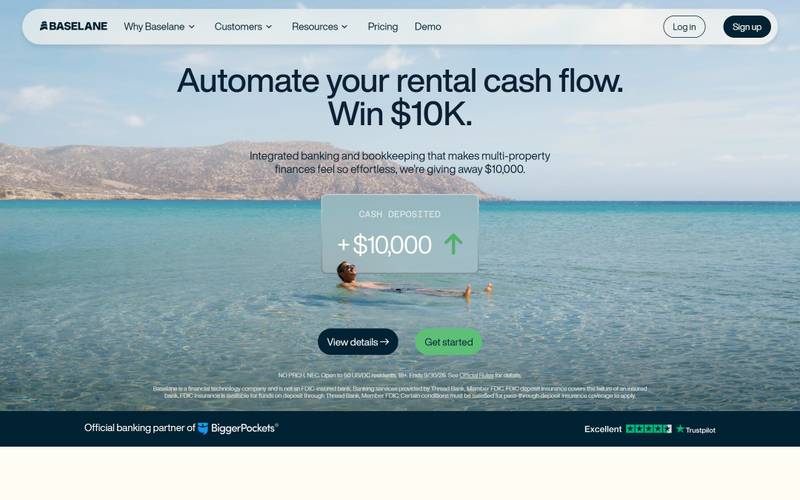
Baselane starts from the opposite end: it is a landlord banking platform that grew property tools, rather than a property tool that bolted on finances. You get landlord bank accounts with per-property virtual accounts, rent collection that lands directly in them, and bookkeeping built around Schedule E categories. The AI is real: Baselane’s transaction auto-tagging on the Smart tier ($20 per month on an annual plan) categorizes rent, repairs, insurance, and utilities as they hit the account.
The Core tier is free, funded the usual way: tenant ACH fees of $2 to $5 and 3.49 percent card fees on the payments side. Those are published numbers, and worth doing the math on. A tenant paying $1,800 rent by card generates about $63 in processing fees, so steer tenants to ACH.
Who it’s for: landlords whose main pain is money hygiene: separating properties, tagging expenses, and not reconstructing a year of transactions every March.
Honest limitation: it is not a full management suite. Listings, syndication, and maintenance workflows are thinner than TurboTenant’s. Baselane is the finance half of a stack, and it is fine with that.
4. Landlord Studio: best for tax-time accounting
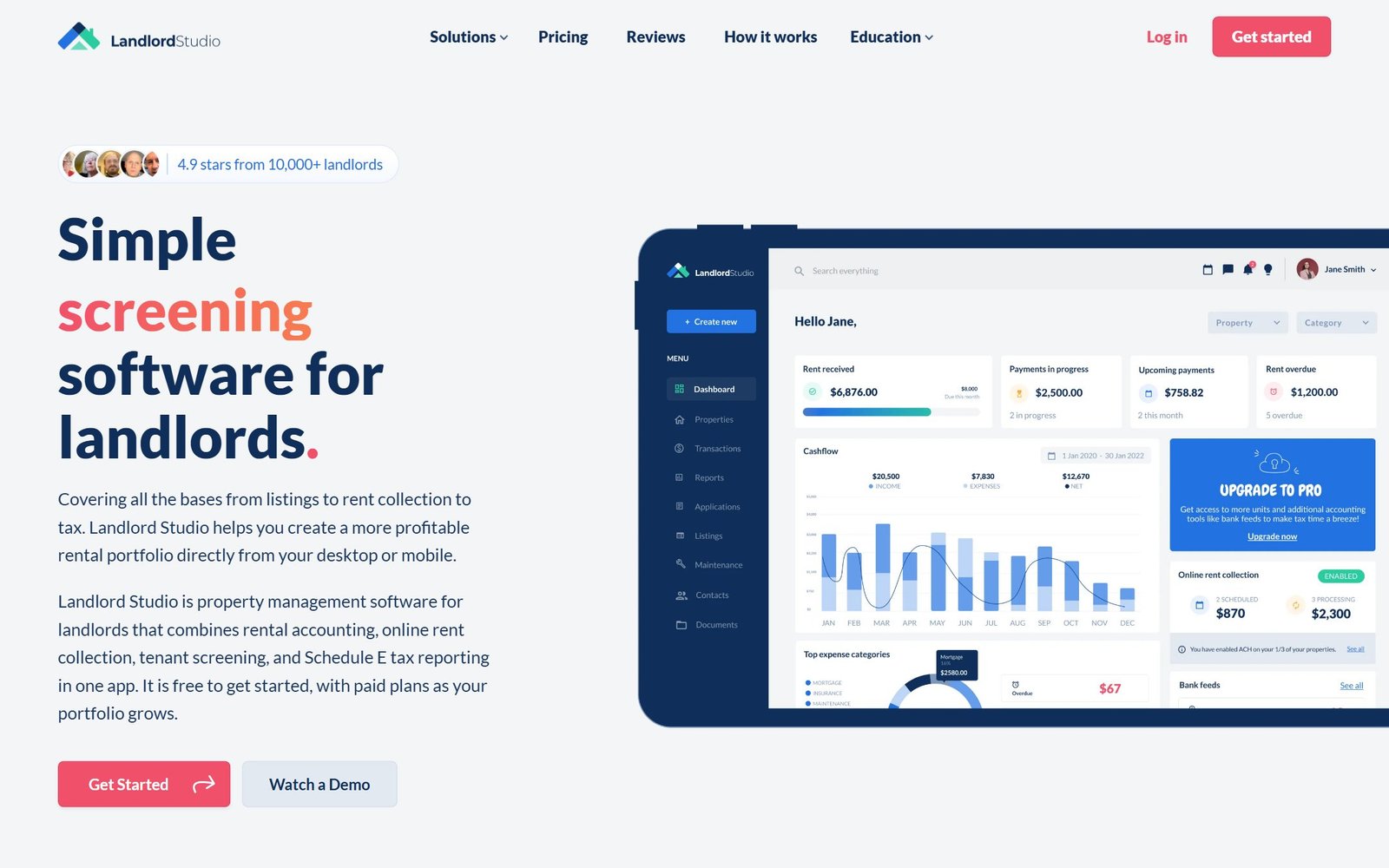
Landlord Studio is the accountant’s pick. The core is income and expense tracking built for rentals, and its pricing page names AI assisted bookkeeping on the paid plans. Its Smart Receipt Scanner photographs a receipt, reads the details and files it against the right property, which saves a lot of end-of-year sorting.
GO is free for up to 3 units. PRO is $12 per month and PRO PLUS is $28 per month billed annually, or $15 and $35 billed monthly, plus an extra charge per unit above the 3 included. That free 3-unit tier makes it the obvious starting point for the single-property landlord who wants clean books without paying anything.
Who it’s for: landlords who think of their rentals as a tax problem first and a tenant problem second.
Honest limitation: the tenant-facing side (applications, screening, portals) is functional but not the reason you buy it. Pair it with TurboTenant or Innago if leasing is where your time goes.
5. RentRedi: one flat price for any number of units
RentRedi gets you the widest feature set per dollar: mobile-first rent collection, screening, listings, maintenance requests with video, and an AI receipt categorization feature on the accounting side. Its pricing page now shows one plan with every feature and unlimited properties, tenants and teammates. The only choice is how you pay: $12 per month billed annually, $20 per month on six months, or $29.95 month to month.
The funding model is mixed. You pay the subscription, and tenants pay screening at a published $39.99 to $49.99 per application, which is at the higher end of this list. Factor that into how applicants experience your listing.
Who it’s for: budget-conscious landlords who want one app that does a bit of everything and live on their phone.
Honest limitation: breadth over depth. The accounting is lighter than Landlord Studio, the banking is lighter than Baselane, and support quality is the most common complaint in user reviews we read. At $12 per month billed annually you are getting a lot for the price, and because it does not charge by the unit, it gets better value as you add doors.
6. Stessa: portfolio finance tracking, no AI claims
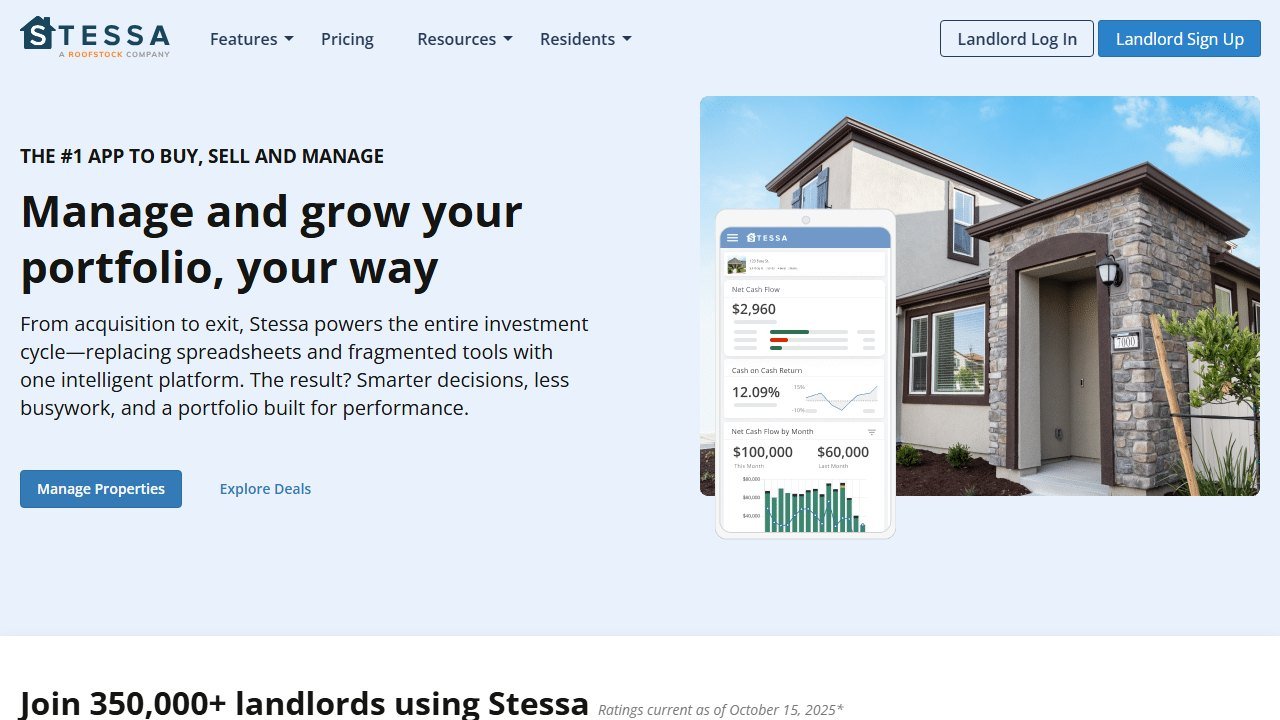
Stessa is the tool most often mislabeled as AI landlord software, so let us be precise: as of July 2026, Stessa’s own site does not claim AI features. What it does have is excellent automated finance tracking for rental portfolios: linked bank and mortgage accounts, automatic income and expense categorization by rules, per-property dashboards, and clean tax packages. The free tier is generous, with paid tiers at $12 and $28 per month, paid annually, adding faster rent payouts and deeper reporting.
The economics are the tenant-funded pattern again: free for the landlord, with revenue from the payments side, screening, and the float and fees around rent collection.
Who it’s for: buy-and-hold investors tracking a growing portfolio’s performance. If you came here from our AI tools for real estate investors guide, Stessa is the bookkeeping layer of that stack.
Honest limitation: the automation is rules-based categorization, not the learning auto-tagging Baselane ships, and there is no maintenance or leasing depth. It tracks your rentals; it does not run them.
7. Avail: DIY leases with state-specific paperwork
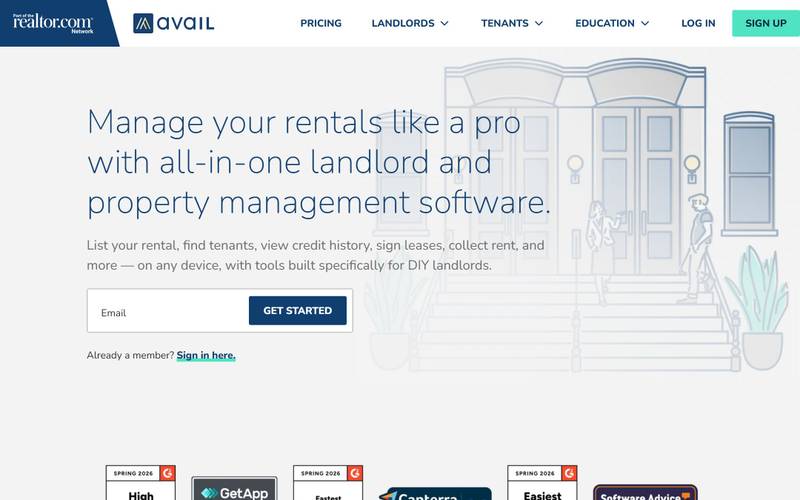
Avail, owned by Realtor.com, earns its slot on paperwork. Its lawyer-reviewed, state-specific lease templates and clause library are the best in the free tier of this category, and the listing syndication benefits from the Realtor.com relationship. Screening, rent collection, and maintenance tracking round out a genuinely complete free offering, funded by tenant-paid screening and payment fees.
Its pricing page lists the free Unlimited plan and Unlimited Plus at $9 per unit per month. On the free plan, tenants pay $2.50 per bank transfer. On the AI column, same honesty as Stessa: the Avail pages we read make no AI claims.
Who it’s for: landlords in states with picky lease requirements who want the legal paperwork handled without an attorney visit.
Honest limitation: per-unit pricing on the paid tier means it scales worse than flat-fee rivals. At 10 units, $9 per unit is $90 per month, so in under three months you have spent more than a year of TurboTenant Pro at that size.
8. Innago: the best truly free option

Innago charges landlords exactly nothing: no tiers, no unit caps, no premium gate. Listings, applications, screening, digital leases, rent collection, maintenance tracking, all free. The model is fully tenant-funded: applicants pay screening fees and tenants can pay card convenience fees, and Innago earns on payments.
The AI column is refreshingly simple: Innago ships no AI features and does not claim any. In a category where the AI label gets stapled onto everything, we count that restraint as a small point in its favor. You are choosing solid, free fundamentals over automation, and for a landlord with two or three units, that is often the right trade.
Who it’s for: cost-zero landlords who want the full leasing loop and will trade away AI conveniences to keep it free.
Honest limitation: no AI means the manual work stays manual: maintenance triage, expense categorization, and listing copy are all on you. And as with every tenant-funded platform, check what your applicants will be charged before you send them the application link.
9. DoorLoop: the graduation pick past ~20 units
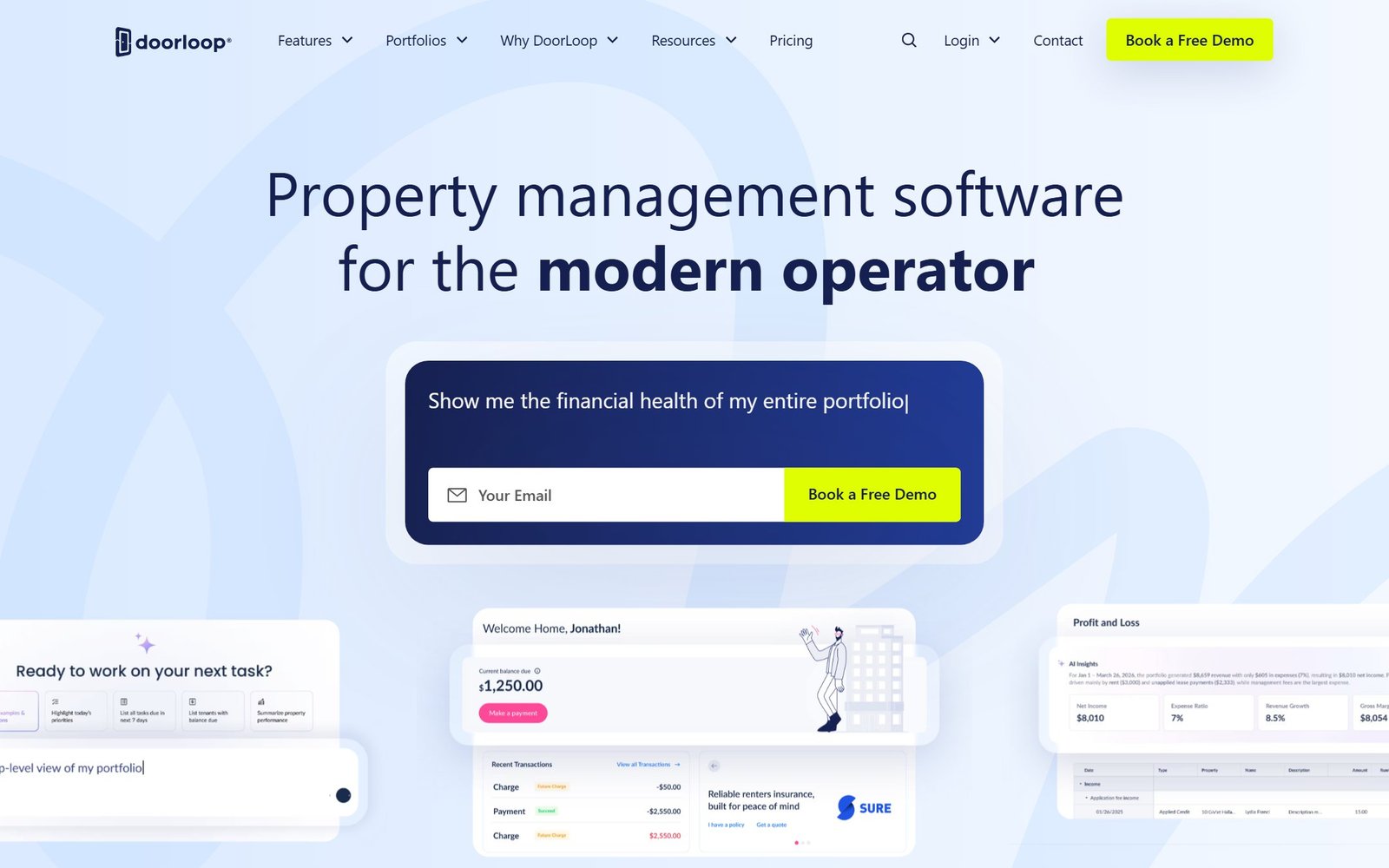
DoorLoop is here for the day this guide stops applying to you. Somewhere around 20 units, or the first time you take on another owner’s property, landlord tools run out of road: you need real accounting, owner statements, and staff workflows. DoorLoop is one way into that world, and it has moved hard toward AI: every plan lists an AI Assistant, and the higher plans add agents that act on tenant requests and maintenance.
DoorLoop replaced Starter, Pro and Premium with three new plans, shown here at the yearly rate. One is $2.50 per unit with a $199 monthly minimum. Connect is $4 per unit with a $299 minimum and adds a Receptionist Agent that answers tenant calls and texts. Multiply is $5 per unit with a $399 minimum and adds agents for maintenance and lease renewals. Monthly billing costs more, and existing customers can keep their current plans. One thing to check: the plan cards list the AI Assistant on One, while the comparison table lists DoorLoop AI as not available on One and an add-on above it. Our DoorLoop review goes deeper, and our Buildium vs DoorLoop comparison covers the step after that.
Who it’s for: landlords crossing 20 units, adding staff, or starting to manage for others.
Honest limitation: the $199 minimum works out to about $40 per unit at 5 units and $10 per unit at 20, and most of what it buys at 5 units you do not need yet. Graduate when the units force you to, not before. And if you are shopping the professional tier because a bigger platform priced you out, our AppFolio alternatives guide maps that territory.
10. Winston Ops: an AI phone line for tenant calls
Winston Ops is a different kind of tool from the others here. It does not replace your rent or accounting software. It answers the phone. An AI voice takes tenant and prospect calls at any hour, in 12 languages, logs each call against the tenant and unit, and sends repairs to the people you name. It also says it follows up late rent by text and email, books showings and emails available units to callers. If you have no software, it can hold your buildings and tenants itself, loaded from a spreadsheet, and setup is free.
This entry is based on Winston Ops’ public pages, its answers to our questions and a 27-second demo recording it supplied. It holds real tenants’ data, so it does not give outside accounts. Its demo line is 424 484 4455 if you want to hear it as a tenant would.
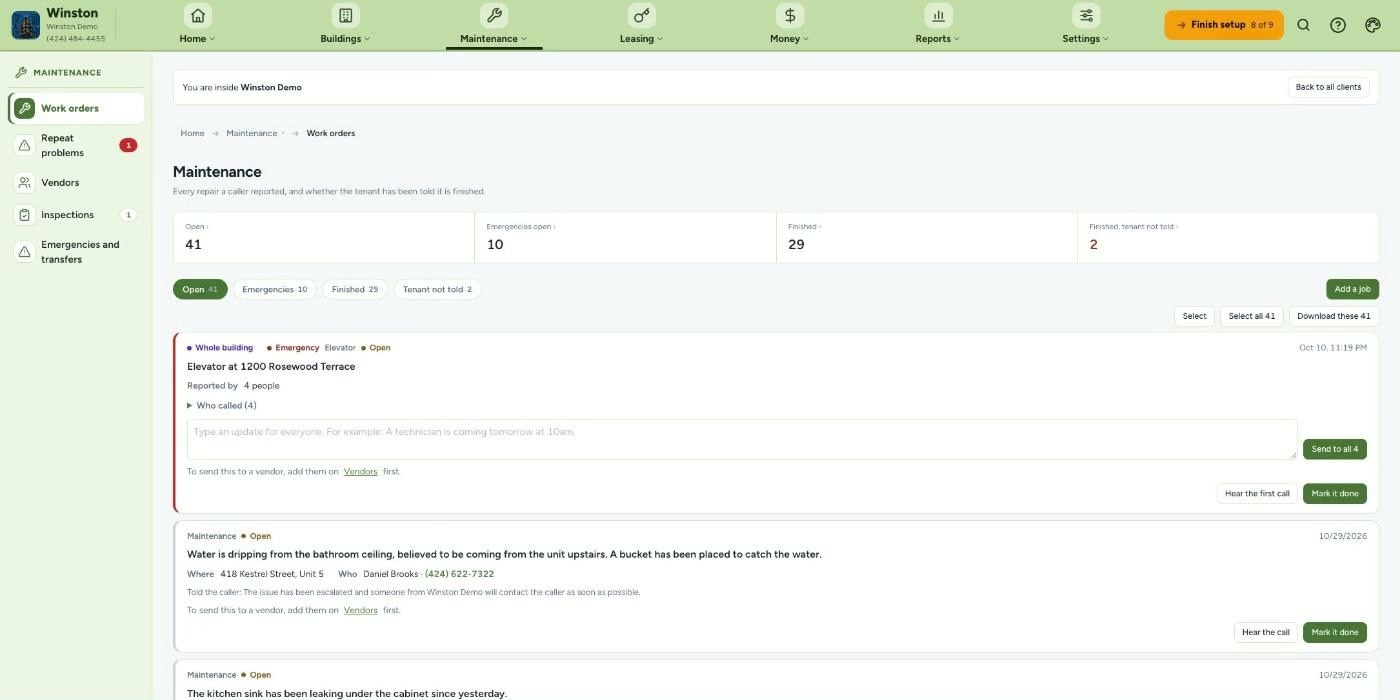
What the recording shows. A maintenance call appears in the log with the caller, address, callback number and who got the job, along with a recording and a word-for-word transcript. The call opens a repair job on its own, and the maintenance person gets a link with no login and an “It is done” button. The recording does not cover late rent, showings or leasing, so those remain Winston’s own description.
Pricing. Read on 3 November 2026: $3 a unit a month for the first year with a $200 monthly minimum, billed quarterly with no long-term contract, and every call is included. The page says the price goes to $5 a unit on 15 November. The minimum is what matters for this guide, because $200 is $10 a unit at 20 units and $40 a unit at 5. You pay the minimum up to about 66 units at the current price.
Call data. Winston’s security page says records sit on Amazon Web Services in the US, and that calls and texts run through established phone and voice providers. Winston keeps recordings for 14 days, and it says its transcription and AI models are on paid terms that do not train on calls. It told us it has not bought the phone platform’s paid option that stops that platform using call data, and that this applies to every landlord on Winston. It will not name its AI models. Tenants describe problems in their homes on these calls, so it is worth reading those terms before you switch it on.
Who it’s for. Landlords with enough units or enough missed calls to justify $200 a month, who want every tenant and prospect call answered, day or night, in 12 languages. Its own pages lean toward property management companies. Winston says over 1,400 joined, so it is very new. DoorLoop’s Connect plan, above, also includes an AI receptionist, from $299 a month billed annually.
Honest limitation. Below about 20 units, this is likely to cost more than the rest of your software combined. It also replaces your answering, not your books or leases, so you would still need a tool from earlier in this list unless you run everything in Winston.
More on these tools
- Single-tool reviews: TurboTenant, Hemlane, Baselane, RentRedi, Stessa and Innago.
- Alternatives: TenantCloud, Rentec Direct and Yardi Breeze.
- TurboTenant in detail: the pricing breakdown and TurboTenant vs Avail.
- By job: rent collection, tenant screening and landlord accounting.
- Before any tool suggests a rent number: our AI rent pricing legality guide covers the states and cities that restrict algorithmic pricing.
- Short-term rentals: the stack and prices are different, so see best AI tools for Airbnb hosts.
How we picked and ranked
We limited the field to tools a self-managing landlord with 1 to 20 units can buy without a sales call (DoorLoop, the graduation pick, is a deliberate exception, and so is Winston Ops, which starts with a demo and does a different job). We first read every official pricing page on July 20, 2026, reread them all on November 3, 2026, and cut one tool from the original shortlist (Azibo) during validation. The AI column only credits features named on the vendor’s own site, because that is the only claim a vendor is accountable for. Rankings weight real AI usefulness, total cost including tenant-side fees, and how much of the landlord loop each tool covers.
Per unit, flat rate or free: what each actually costs you at scale
The pricing model matters more than the price, because the same portfolio produces wildly different bills under each. Here is the same arithmetic run on the published rates.
| Portfolio | Rentec Direct flat | DoorLoop per unit | Buildium tier | TurboTenant free |
|---|---|---|---|---|
| 5 units | $300/yr | $2,388/yr, One minimum | From $780/yr | $0 plus tenant fees |
| 10 units | $300/yr | $2,388/yr, One minimum | From $780/yr | $0 plus tenant fees |
| 25 units | Pro, from $600/yr | $2,388/yr, One minimum | Growth, from $2,424/yr | $0, or paid at $199 or $399/yr |
| 60 units | Pro or PM, scales | $2,388/yr, One minimum | Growth or Premium | $0, or paid at $299 or $699/yr |
The ten unit cliff is the one that catches people
Several vendors change price at around ten units. Rentec Direct’s flat $25 a month covers up to 10 properties, and TurboTenant’s paid plans step up at 11 units. Buying the eleventh door can cost more than the previous ten did, and the step is not proportional. Before committing, ask what the next tier costs, whether the change applies immediately or at renewal, and whether any discount you negotiated survives the crossing.
Vacancies are the difference between the models
Per unit pricing usually charges for a unit whether or not it is occupied, which means a vacancy costs you twice: no rent, and a bill for the privilege. Flat rate pricing does not care. If your portfolio has meaningful seasonal vacancy or you are mid-renovation on several doors, that single distinction can outweigh the headline difference between two platforms.
Free is a transfer, not a saving
The free tiers in this market are funded by tenant-paid fees: application and screening charges, card payment fees, and optional extras like rent reporting. That may be entirely reasonable and many residents prefer the convenience. It is still worth knowing that choosing the free platform is a decision about what your tenants pay, not only about what you pay, and it is worth looking at your own application flow as an applicant would before deciding.
Verdict: the three-way decision
For most self-managing landlords, the choice collapses to three questions. If you want one tool for the whole loop and real AI where it matters (maintenance intake), take TurboTenant. If your pain is financial, books, banking, and March panic, take Baselane for auto-tagged banking or Landlord Studio for tax-grade accounting. If the answer to every pricing question needs to be zero, take Innago and accept that the manual work stays yours. If missed calls are your real problem and your portfolio can carry $200 a month, look at Winston Ops.
And keep one eye on the exit. The honest arc of a growing landlord is TurboTenant or Innago at 3 units, a finance tool bolted on at 8, and a real property management platform like DoorLoop at 20. When you hit that last mile, switch guides: our best AI tools for property managers covers the professional tier this post deliberately stays out of.

Written by
FazFaz is the founder of AIToolsBakery. Some tools here are tested hands on. Others are assessed from vendor documentation and pricing verified on the live page, and every review says which one it is. Sponsors can buy a position in a guide. They cannot buy the score, the criticism, or silence about a better option.
How we test and how we make money →