Quick answer: Sales coaching software scores real conversations, which is different from training software that runs rehearsals. We compared eight platforms on licensing model and published pricing. Of twelve vendors checked on 12 August 2026, only Yoodli publishes a price. Mindtickle and Balto have no pricing page at all.
Coaching or training? They are not the same purchase
Worth settling first, because these two categories get merged constantly and they solve different problems.
Coaching software works on conversations that actually happened, or are happening. Call recording and transcription, conversation intelligence, methodology scoring against frameworks like MEDDIC or BANT, real time prompts during a live call, and manager review workflows.
Training software works on conversations that have not happened yet. AI roleplay, certification, readiness scoring, onboarding paths.
Most serious platforms now do some of both, but they are built from one end or the other, and the end they started from is still the one they are good at. Gong started with call recording and grew coaching on top. Hyperbound started with roleplay and grew call scoring on top. Both will sell you the whole thing. Only one of them will be excellent at the half you actually came for.
If you want rehearsal rather than review, our best AI sales training software guide is the right list, and our AI sales roleplay tools guide is narrower still.
This page is about the review end.
A third category that gets folded in wrongly
There is also enablement, which is really content management: decks, one pagers, case studies, digital sales rooms, and the analytics that tell you which asset moved a deal. Highspot and Allego both come from here. They have added coaching, and the coaching is real, but the centre of gravity is content.
This matters because the three categories have different buyers. Coaching tools are usually bought by a VP of Sales who wants call visibility. Training tools are bought by enablement or L and D who own ramp time. Content enablement is bought by product marketing. If you are shortlisting across all three, you are probably running someone else’s evaluation as well as your own.
How we researched this
We did not run these platforms. This is a buyer’s comparison built from vendor documentation and pricing pages read in a browser on 12 August 2026. Where a vendor publishes a price we quote it and say where it came from. Where a vendor does not, we say that plainly rather than repeating estimates we cannot verify. We do not score any product on this page, because we have not tested them.
Reading pricing pages in a browser rather than fetching them matters more than it sounds. Several vendors in adjacent categories hide half their prices behind a billing toggle, and anything that reads the page once reports only the visible state. Yoodli is an example: its individual plans are not on the pricing page as it first loads, and the annual figures are what you see by default. We flipped every control we found.
The finding: one vendor in twelve publishes a price
We checked every pricing page in this category on the same day. This is what we found.
| Vendor | Publishes a price? | Licensing model |
|---|---|---|
| Yoodli | Yes | $0 / $8 / $20 a month billed annually, $11 and $28 monthly. Teams quote only |
| Gong | No | Per user, plus a platform fee based on user count. Integrations free |
| Allego | No | Per user per month, billed annually upfront. Lower list price for channel and partner users, further discount for non-revenue roles |
| Hyperbound | No | Two separate per user licences, Practice and Perform. Free tier of 45 roleplays |
| Highspot | No | Quote, form gated by go to market headcount |
| Quantified.ai | No | Two packages, BASE and STANDARD |
| Revenue.io | No | Custom quote scoped to seat count, built on Salesforce |
| Chorus | No | Custom plans via ZoomInfo |
| SmartWinnr | No | Pricing page redirects to a demo request |
| Zenarate | No | No pricing page. /pricing returns 404 |
| Mindtickle | No pricing page exists | /pricing, /plans and /request-demo all 404 |
| Balto | No pricing page exists | /pricing, /plans and /request-demo all 404 |
What the opacity actually costs you
It is tempting to treat a missing price as a minor annoyance. In this category it has three concrete effects on your evaluation.
You cannot build a shortlist before the calls. In most software categories you can eliminate half the market on budget in an afternoon. Here you cannot, so you either take six discovery calls or you shortlist on brand recognition, which is how everyone ends up evaluating Gong regardless of fit.
You lose the anchor. Negotiating without a list price means the first number you hear is one the vendor chose after profiling your company size. That number is an opening position, not a rate card, and there is nothing public to check it against.
Your budget approval happens after your emotional commitment. By the time you have a figure you have sat through a demo, run a pilot and told your team it is coming. That sequence is not an accident.
None of this makes quote only pricing dishonest. Enterprise deals genuinely are scoped per customer. It does mean the burden of getting comparable numbers falls entirely on you, and the only way to carry it is to ask every vendor the same questions in the same order.
What you will actually be quoted on
Since the prices are hidden, the useful comparison is the shape of the deal. These models are genuinely different from each other, and none of them are documented anywhere else.
Per user, and nothing else. Hyperbound and Allego both price purely per seat, though Hyperbound splits it across two licences you buy separately.
Per user plus a platform fee. Gong is the one to watch here. Licences are per user, and there is a separate platform fee based on the number of users supported. Integrations with your existing stack are free. That platform fee is the line item that surprises people, and it does not appear in any comparison we found.
Per user, but the rate depends on who the user is. Allego is alone in this. Channel and partner sales users get a lower list price, and non-revenue roles get a further discount. If a chunk of your seats are enablement staff rather than quota carriers, that changes the maths materially.
Billed annually upfront. Allego states this explicitly. Others may work the same way without saying so. Ask.
Two products, bought separately. Hyperbound splits Practice from Perform, and Quantified.ai splits BASE from STANDARD. In both cases you can start with one, which sounds flexible and is, but it also means the headline quote may not include the half you assumed was in it.
The seat definition question nobody asks early enough
Every one of these platforms prices per user, and every one of them defines a user slightly differently. The distinctions that move a bill:
- Does a manager who only reviews calls need a full licence? On some platforms a reviewer seat is cheaper or free. On others it is a full seat.
- Do inactive reps still count? Sales teams churn. If you buy 80 seats and 12 turn over mid year, are you paying for 92 or 80?
- Can seats be reassigned, and how often? Monthly reassignment is normal. Some contracts allow it only at renewal.
- Are admins and enablement staff billable? Allego says these are discounted. Most vendors do not address it on their site at all.
Get those four answers in writing before you compare two quotes, because a per seat rate is meaningless until you know what counts as a seat.
The eight platforms
1. Gong: best for conversation intelligence at scale
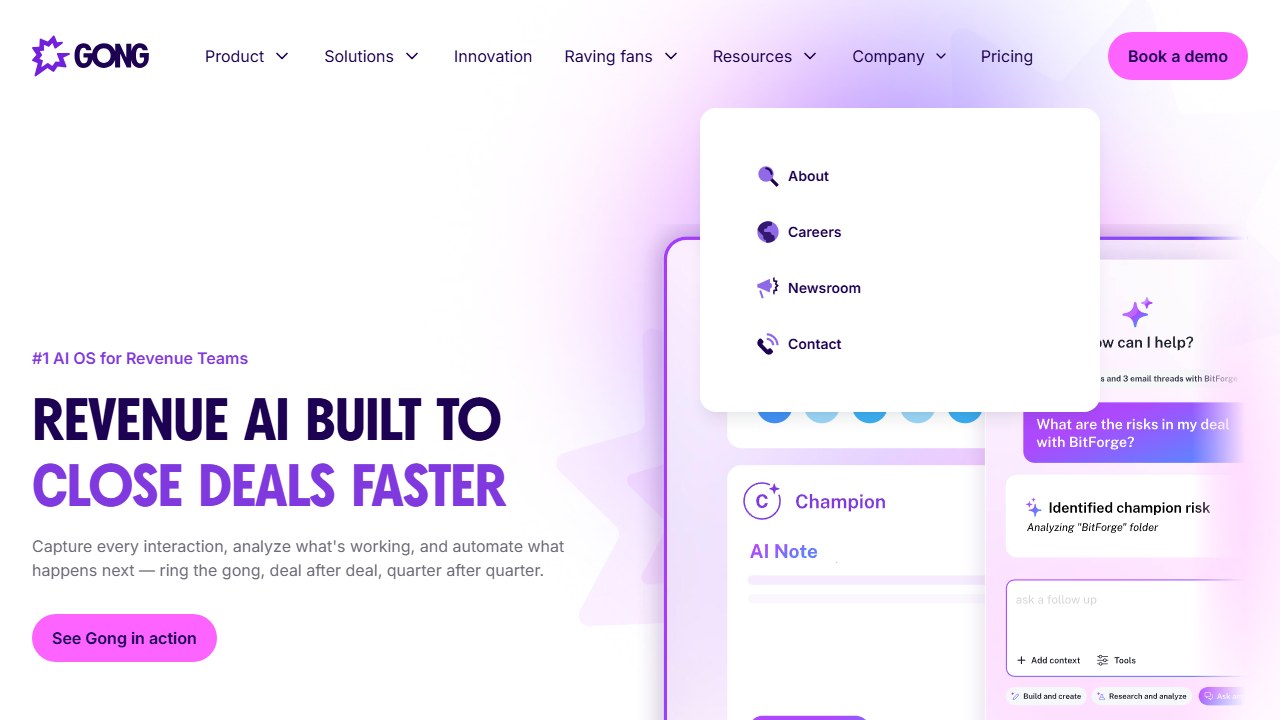
The default for large B2B teams and the most cited name in this category. Call recording, transcription, deal intelligence and coaching built on top. Pricing is per user plus a platform fee tied to user count, and integrations are free.
The form is gated by team size in bands: 1 to 50, 51 to 1,000, 1,001 to 9,999 and 10,000 plus. Those bands are worth noticing, because they tell you where Gong’s own commercial breaks sit even though the figures behind them are not published. A team of 55 is being quoted from a different sheet than a team of 45.
Buy it if deal visibility across a large pipeline is the problem you are solving, and you have enough call volume that the analytics have something to chew on. Skip it if you have fifteen reps and what you actually want is rehearsal before calls rather than analysis after them.
See our Gong review.
2. Yoodli: best for published pricing and communication coaching
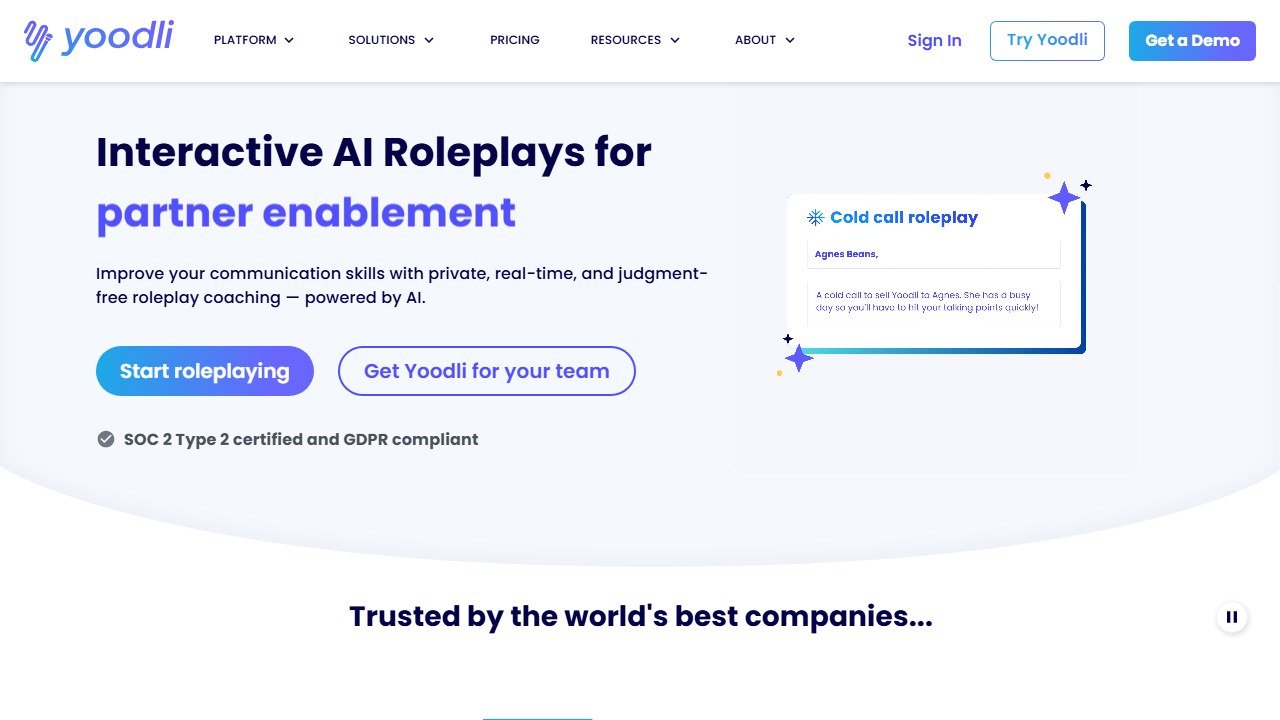
Strongest on delivery, pacing and communication rather than deal mechanics, which makes it a better fit for individuals and for teams coaching presentation skills than for revenue operations.
Its tiers separate on volume rather than capability, which is unusual and useful: Starter caps at five roleplays in total, Pro at ten a week with no rollover, Advanced is unlimited. Advanced also carries the one privacy difference in the range, in that your data is excluded from AI training. Team plans go back to being quote only like everyone else.
Buy it if you want a number today, or the coaching problem is how people speak rather than how they qualify. Skip it if you need conversation intelligence over a live pipeline.
Full breakdown in our Yoodli pricing guide and our Yoodli review.
3. Mindtickle: best all in one readiness platform
Training, certification, content and coaching in one, deployed widely at enterprise scale. It is the most complete answer on this list if your problem is ramp time across a large distributed team rather than any single conversation.
Note the pricing situation, which is the most extreme in the category: Mindtickle has no pricing page. Not a form, not a quote request, nothing at those URLs. Budgeting requires a conversation from the very first step.
Buy it if onboarding and certification at scale is the job. Skip it if you want one narrow capability and do not want to run a platform.
See our Mindtickle review.
4. Chorus by ZoomInfo: best if you already run ZoomInfo
Worth knowing before you evaluate it: chorus.ai now redirects to ZoomInfo, and you are buying a ZoomInfo module rather than a standalone platform. Most of the Chorus versus Gong content online predates this and compares two things that no longer exist in that form.
The feature set is conventional and solid: unlimited call recording and transcription, contextual trackers, proactive coaching recommendations, deal and relationship intelligence, and more than twenty out of the box reports. The unlimited recording is worth flagging, because several competitors meter it.
Buy it if you already pay for ZoomInfo and want conversation intelligence sitting on the same data. Skip it if you do not, because the integration is the entire case.
See our Chorus review.
5. Allego: best for mixed teams and anyone stuck in a contract
Allego is the most transparent of the quote only vendors about how it builds a number, even though it never shows one. Per user per month, billed annually upfront, with the rate depending on seats and contract length, and a lower list price for channel and partner users plus a further discount for non-revenue roles.
It is also the only one running a competitor buyout programme, offering to cover the cost of exiting an incumbent contract. That is a commercial tactic rather than a feature, and it tells you Allego is hunting displacement deals and has margin to move.
The product claims to consolidate seven tools: LMS and LXP, coaching, reinforcement, conversation intelligence, content management, digital sales rooms and video selling, with up to 50% savings on technology spend. Whether that saving is real depends entirely on how many of those seven you pay for today.
Buy it if you are collapsing a stack, or a large share of your seats are non-quota. Skip it if roleplay realism is the only thing you are buying for.
See our Allego review.
6. Highspot: best for content plus coaching in one platform
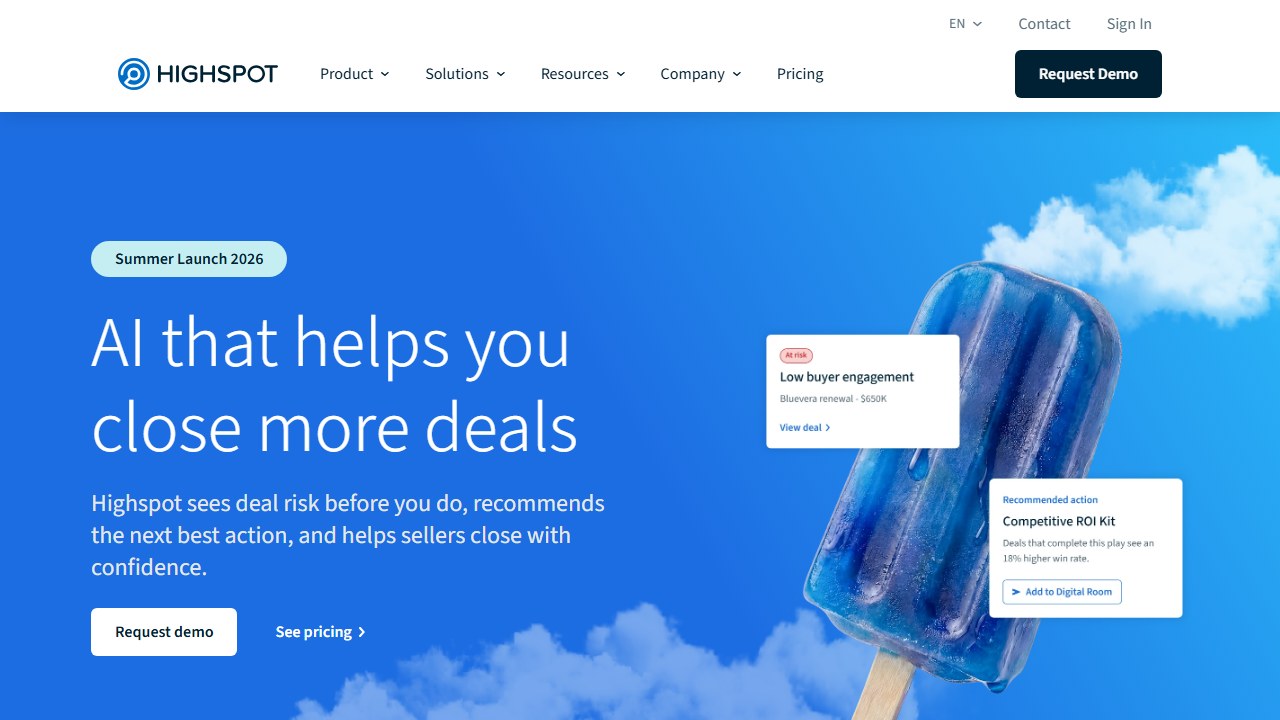
Enablement first, coaching layered on. If the recurring complaint in your org is that reps cannot find the right deck and nobody knows which content influences deals, Highspot is aimed squarely at that and the coaching comes along with it.
Pricing is form gated by go to market headcount across six bands, and the tiers are named rather than numbered, with the entry tier called Good. Named tiers are worth watching in a negotiation, because they make it harder to tell what you are giving up by moving down one.
Buy it if content findability and attribution is the pain. Skip it if your content is fine and your calls are not.
7. Revenue.io: best for Salesforce native teams
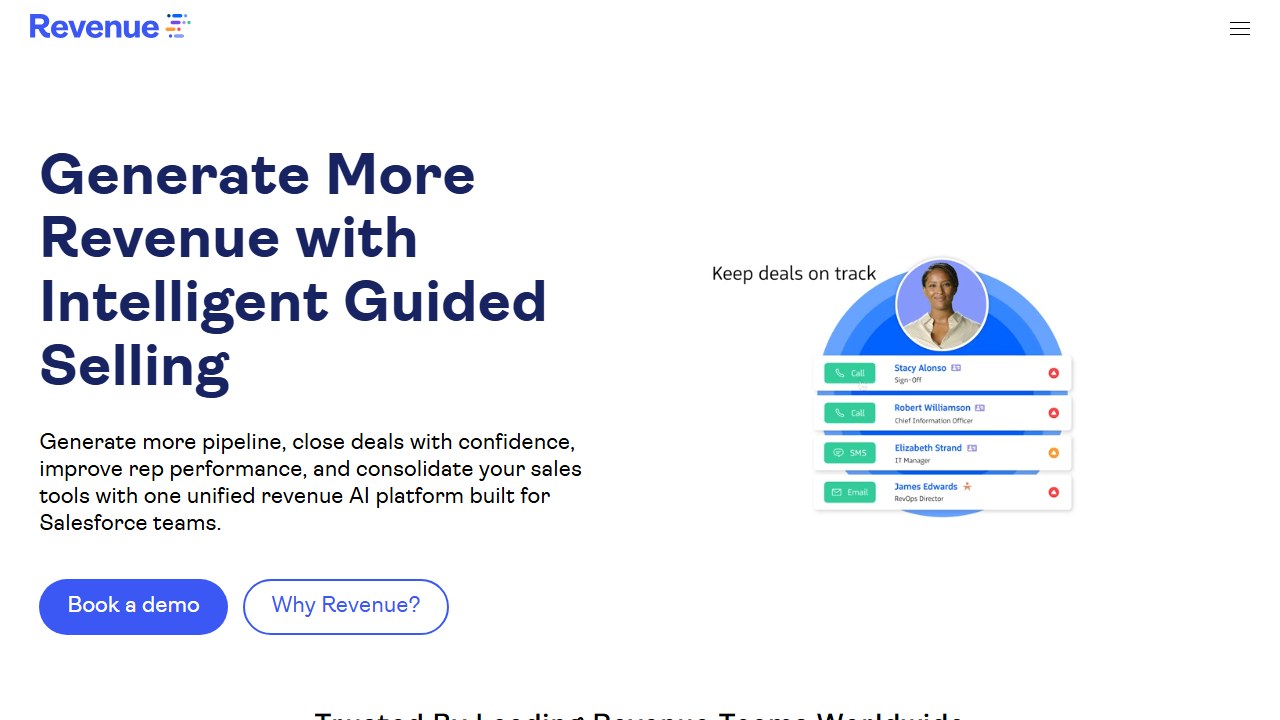
Dialing, coaching, engagement and AI in one platform built directly on Salesforce, with real time in call guidance rather than after the fact review. Pricing is a custom quote scoped to seat count.
The Salesforce native architecture is the whole proposition and it cuts both ways. If Salesforce is your system of record and you want no synchronisation layer, that is a genuine advantage. If you are on HubSpot or thinking about moving, it is a lock in you are choosing deliberately.
Buy it if Salesforce is permanent and you want live guidance during calls. Skip it if your CRM situation is unsettled.
8. Quantified.ai: best for regulated industries
Two packages: BASE for roleplay practice and certification, STANDARD for the full coaching platform. SOC 2 compliant, 40 plus languages, and positioned at compliance heavy selling where what a rep is allowed to say is as important as whether they close.
The two package split matters commercially. You can start on BASE, which sounds like flexibility and is, but it also means a headline quote may not include the coaching platform you assumed was in it.
Buy it if certification is a compliance requirement rather than a nice to have, or you sell in many languages. Skip it if neither applies, because you are paying for governance you do not need.
How to run this evaluation without losing a quarter to it
The pricing opacity makes this category slow to evaluate. A structure that keeps it to about three weeks:
Week one, decide what you are buying. Write down the single sentence version of the problem. “Managers have no visibility into what happens on calls” points at Gong or Chorus. “New reps take five months to ramp” points at Mindtickle or Quantified.ai. “Reps freeze on the pricing objection” points at rehearsal, which is a different guide. If you cannot write one sentence, you are not ready to take demos, and the demos will write it for you in the vendor’s words.
Week one, also send the same email to everyone. Before any call, email each vendor the same five questions: platform fee yes or no, billing cadence, seat definition, what a reviewer seat costs, and what happens to seats when a rep leaves. Written answers are comparable. Answers given live on a call are not, and you will not remember which vendor said what.
Week two, demos with your own scenario. Bring one real recorded call or one real deal, and make every vendor work on it. A canned demo shows you the product at its best on data chosen to flatter it. Your messy call shows you the product.
Week three, negotiate on the shape rather than the number. By now you know which vendors charge a platform fee and which bill annually upfront. Those are the levers. A 10% discount on a per seat rate is worth less than getting the platform fee waived or moving to quarterly billing, and vendors will often concede the structure before they concede the rate.
Why these deployments fail, which is rarely the software
Worth saying plainly, because it changes what you should be evaluating. The common failure modes in this category are organisational, not technical.
Nobody owns the review workflow. The platform records and scores everything, and then no manager is accountable for acting on it. Six months later you have a large archive and no behaviour change. Before you buy, name the person whose job it is to review scores weekly.
The rubric is copied from the vendor. Every one of these tools scores against a framework. If you take the default MEDDIC template and never adapt it, you are measuring your team against a generic definition of good rather than yours. The platforms that let you write your own rubric are worth more than the ones that do not, and that capability is worth testing in the demo.
Reps treat it as surveillance. Call recording lands very differently depending on whether the first use is coaching or performance management. If the first thing that happens after rollout is somebody gets a talking to about their scores, adoption is finished.
It never reaches the CRM. Scores that live only in the coaching tool do not influence forecasting or pipeline reviews, so leadership stops looking. Check what the integration actually writes back, and whether it is included in your licence. On Hyperbound, for example, CRM integration sits behind the more expensive of two licences.
Which to shortlist
- Large B2B revenue team, deal visibility matters most: Gong, then Chorus if you already run ZoomInfo
- Mixed team with a lot of non-quota seats: Allego, because of how it prices by user type
- You need a number today without a sales call: Yoodli, the only option
- Regulated selling, certification required: Quantified.ai
- Already committed to Salesforce: Revenue.io
- Ramp time across a large distributed team: Mindtickle
- Content findability is the real complaint: Highspot
- You want rehearsal rather than review: you are on the wrong page, see our AI sales roleplay tools guide
What we could not verify, and what we are not claiming
We have not run any of these platforms, so nothing on this page is a performance finding and nothing carries a score. Transcription accuracy, scoring quality, roleplay realism and the reliability of the integrations are all untested by us, and every feature description is the vendor’s own.
What we can stand behind is the pricing and licensing picture, because we read every one of those pages on the same day and recorded what was and was not there. That is the part of this decision the rest of the internet gets wrong, usually by repeating a figure nobody can source.
Revenue.io and Balto both appear in AI answers for this query and neither has a dedicated page on this site yet. Balto is worth watching for high volume contact centre work with live compliance prompts. Both are on our list.
All pricing and page states checked on 12 August 2026. Vendors change pricing quietly, so confirm on the vendor’s own site before you commit.
Where the figures on this page come from
Every price here was read from the vendor’s own pricing page on 4 September 2026 and carries that date. Where a page served us regional pricing we say so rather than converting it, because regional rates are set deliberately and are not a currency conversion.
The pages we read
Yoodli publishes $8 and $20 a month billed annually plus a free tier. Colossyan publishes a free plan and Professional at $59 a month annually with $30 per additional member. HeyGen publishes $0, $29, $49 and $149 a month with team seats at $20. iSpring publishes $970, $1,290 and $720 USD per author per year. Deputy publishes $5, $6.50 and $9 per user per month excluding tax. Synthesia served us rupee pricing, reported as such above.
The ones that publish no figure
Second Nature, Hyperbound, Mindtickle, Highspot and Visier all declined to show us a price, and Allego publishes a pricing page with no currency figure on it at all. Articulate publishes only a limited-time offer, currently $1,198 per user per year against a struck-through $1,749. Treat any other figure for those seven as unverified.
What we do not do
We do not convert currencies, and we do not carry a figure we cannot source to the vendor. Where a number circulates and cannot be traced, we say so and withdraw it rather than repeating it with a hedge.

Written by
FazFaz is the founder of AIToolsBakery. Some tools here are tested hands on. Others are assessed from vendor documentation and pricing verified on the live page, and every review says which one it is. Sponsors can buy a position in a guide. They cannot buy the score, the criticism, or silence about a better option.
How we test and how we make money →