The best AI tools for retail employee training in 2026 are Axonify (daily frontline microlearning), Mitti (mobile course creation), YOOBIC (store ops plus training), Disprz (enterprise skilling), Second Nature (customer conversation roleplay), Synthesia (multilingual product video), EducateMe (small teams), and iSpring Suite AI (turning SOPs into courses). Start with Axonify or Mitti.
Retail training has always fought the same three enemies: high turnover, deskless staff, and a sales floor that never stops moving. A new associate might get an hour of onboarding, a stack of PDFs, and then get thrown onto the floor during a holiday rush. Product knowledge fades, service standards drift store to store, and the safety module gets clicked through on a break.
AI changes the math for this specific workforce. Instead of pulling associates into a back room for an hour, AI platforms deliver three minute microlearning bursts on a phone, generate product knowledge videos in a dozen languages, and let staff rehearse a difficult return or an upsell against a realistic AI customer before they ever face a live one. We looked at the tools built for frontline retail, not repackaged office LMS software, and ranked the eight that actually fit a store environment.
| Tool | Best for | Pricing model |
|---|---|---|
| Axonify | Daily microlearning for frontline and deskless staff | Quote based, by headcount |
| Mitti | Mobile first course creation on a budget | Free tier plus paid plans |
| YOOBIC | Combining store operations with training | Quote based, by store count |
| Disprz | Enterprise skilling for distributed workforces | Quote based, by headcount |
| Second Nature | Customer conversation and sales roleplay | Enterprise, contact sales |
| Synthesia | Multilingual product knowledge video | Per seat, free tier available |
| EducateMe | Small and mid retailers with no L&D team | Per active user, quote based |
| iSpring Suite AI | Turning SOPs and decks into courses | Per author, annual |
For most retailers, the real stack is two tools: one frontline delivery platform to reach every associate every day, and one practice or content tool for the skills that need rehearsal or video. This guide is organized so you can pick one from each column. For the broader picture across every industry, see our best AI corporate training tools pillar.
Axonify: Best for Daily Frontline Microlearning
Axonify was built for exactly this workforce: deskless, shift based, and hard to pull off the floor. Associates clock in, open Axonify, spend three to five minutes answering adaptive questions and learning one concept, then get back to the sales floor. The platform uses spaced repetition and adaptive algorithms to figure out what each person actually knows, then serves content to close the gaps instead of forcing everyone through the same module.
Microlearning is sold by two quite different kinds of product, priced per creator and per learner, and at frontline headcounts the gap between them is large. We work the arithmetic through in AI microlearning for retail and frontline teams.
For retail specifically, the format solves the attendance problem. There is no scheduling a classroom, no covering the register while someone trains. Learning happens in the natural gaps of a shift on a phone, tablet, or shared kiosk. Gamification with points, leaderboards, and prizes keeps engagement high, which matters when your audience is part time and turns over fast.
The track record is the reason it ranks first. Axonify reports strong daily engagement across a customer base that includes major retailers like Lowe’s, Kroger, Bloomingdale’s, and Levi’s, and its microlearning approach is grounded in decades of behavioral science on retention. AI tools now speed up content creation and surface knowledge gaps automatically.
Standout feature: adaptive daily microlearning that fits into shift transitions without pulling staff off the floor.
Limitation: enterprise only with quote based pricing and volume commitments, so it is overkill for a single store or a small chain.
Pricing: custom, priced by headcount, typically multi year. Best suited to 500 plus employee retailers.
Mitti: Best Mobile First Platform on a Budget
Name change, and it is not only a name. SC Training is now Mitti. The vendor confirmed the rebrand on its own site in September 2026, and training is now one of five modules inside a wider workplace operations platform rather than a standalone mobile LMS. Pricing at the time of writing is free for teams up to 10, then $24 per seat per month billed annually or $29 monthly, excluding taxes.
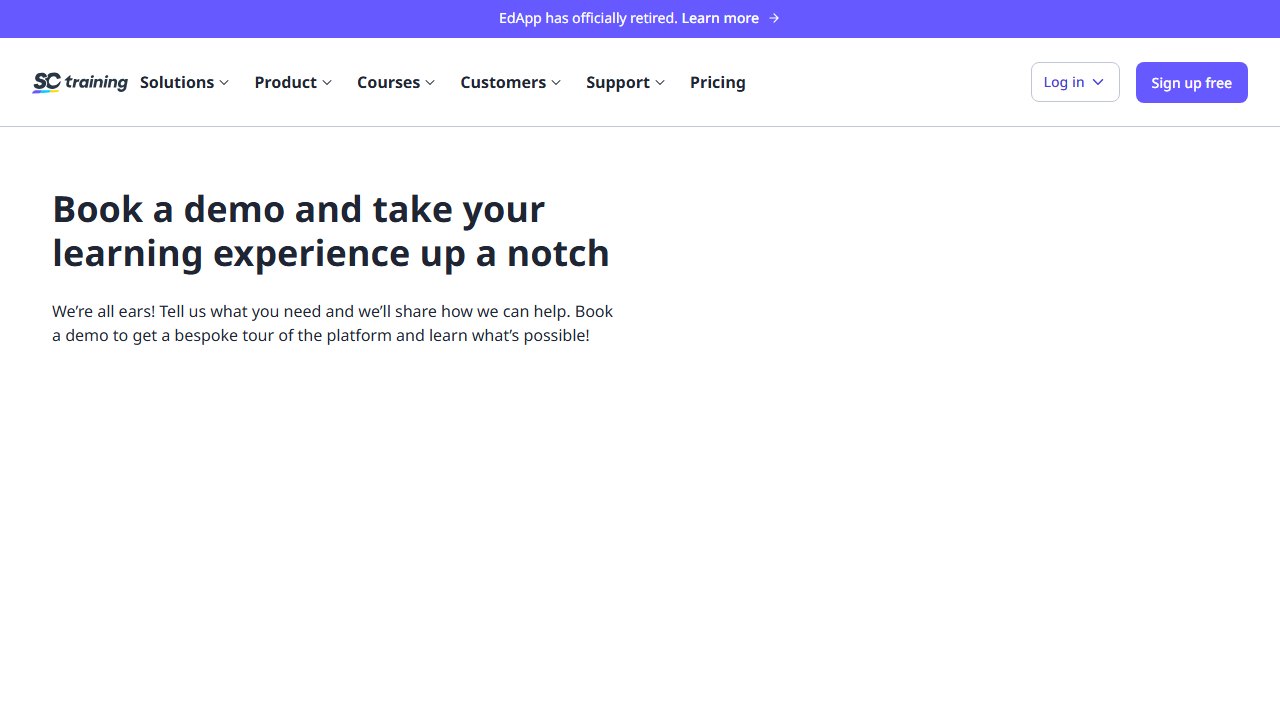
Mitti, formerly EdApp, is the pick when you want serious mobile microlearning without an enterprise contract. It is built for distributed and frontline teams in retail, hospitality, and field service, and it leans hard into short, phone native lessons that associates can finish between customers.
The AI course creator is the differentiator at this price point. Point it at an existing document, a product spec, or a policy, and it drafts a structured microlesson with quiz questions, which a store manager can review and publish in minutes. Add spaced repetition to lock in retention, gamification to drive completion, and AI translation to reach a multilingual floor team, and a small retailer gets most of what the enterprise platforms offer.
Mitti consistently rates as one of the most affordable options in its category and holds strong share among organizations in the 51 to 1,000 employee range, which is exactly the underserved middle of retail. The free tier is genuinely usable for evaluation, and paid DIY, Managed, and Enterprise plans scale up as you grow.
Standout feature: AI course creation from your own documents, fast enough for a store manager to build training the same day.
Limitation: lighter on deep analytics and store operations features than the enterprise frontline platforms.
Pricing: free tier plus paid plans; among the most affordable in the category. Good fit for small and mid chains. Pair it with our guide to AI onboarding tools for new hire flows.
YOOBIC: Best for Combining Store Operations With Training
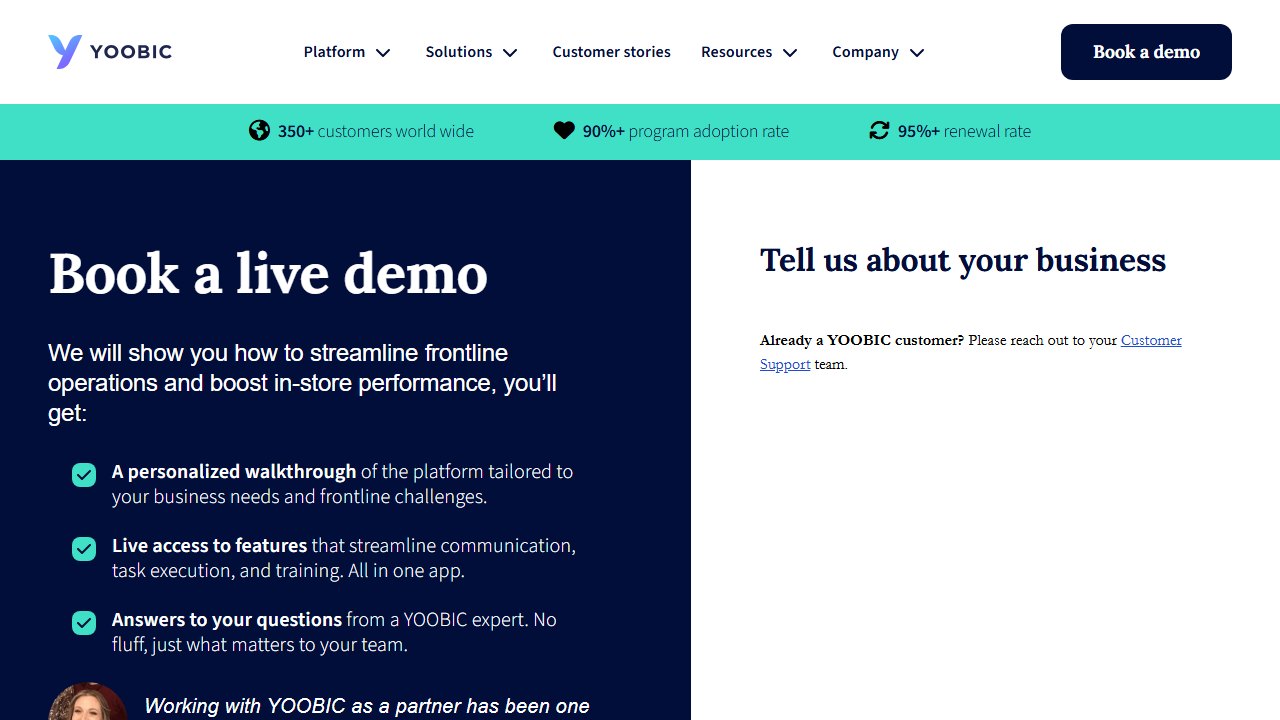
YOOBIC is different from a pure LMS because it started as a retail store operations platform and added learning on top. That matters in practice: the same app that pushes a new visual merchandising task or a promo checklist to a store also delivers the training for it. Associates learn the product and execute the task in one place, which is closer to how a real store day works.
The learning side covers new hire onboarding, product knowledge, selling techniques, and customer service, delivered as interactive microlearning with gamification and rewards. AI powered course creation lets head office build and launch courses in minutes, and personalized paths adapt content based on how each associate performs. Dashboards track completion, scores, and skill gaps across every location, so a regional manager can see which stores are lagging.
For multi location retailers that struggle with consistency store to store, YOOBIC’s combination of communication, task management, and training in a single mobile app is the strongest argument. It is designed to scale training across hundreds or thousands of stores without losing the thread between what head office wants and what the floor actually does.
Standout feature: unifies store operations, communication, and training so learning connects directly to daily tasks.
Limitation: the broad operations platform is more than pure training buyers need, and pricing reflects the full suite.
Pricing: quote based, priced by store count. Best for mid market and enterprise multi location retail.
Disprz: Best for Enterprise Skilling at Scale
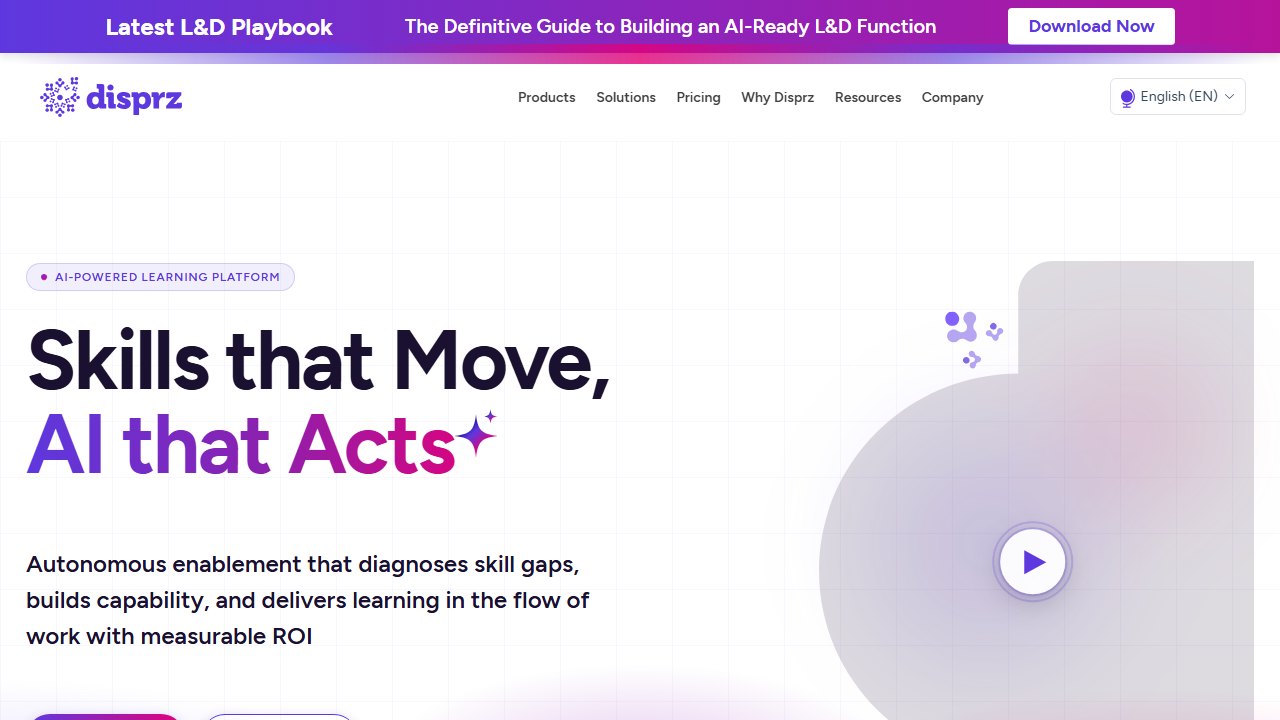
Disprz targets large enterprises with distributed, frontline, and deskless workforces, and it goes wider than microlearning. It combines an LMS, an LXP, skills intelligence, performance support, and employee development into one platform, which suits retailers thinking beyond compliance toward genuine career pathing for store staff.
The frontline enablement side is mobile first and built to reduce attrition by keeping associates engaged with blended learning tied to actual KPIs. Gamification with leaderboards, contests, and badges drives adoption, while the skills intelligence layer maps what each associate can do and where they need to grow. For a retailer trying to turn seasonal hires into long term assistant managers, that skills view is more useful than a simple completion report.
Disprz is the enterprise choice when your training strategy is about workforce capability, not just knowledge checks. It links learning experiences to KPI scores so L&D can show business impact, which is increasingly what retail leadership expects from a training investment.
Standout feature: skills intelligence and career pathing on top of frontline microlearning, not just course delivery.
Limitation: the full platform is enterprise scale, so implementation and cost only make sense for larger retailers.
Pricing: quote based, priced by headcount. Aimed at large distributed workforces.
Second Nature: Best for Customer Conversation Roleplay
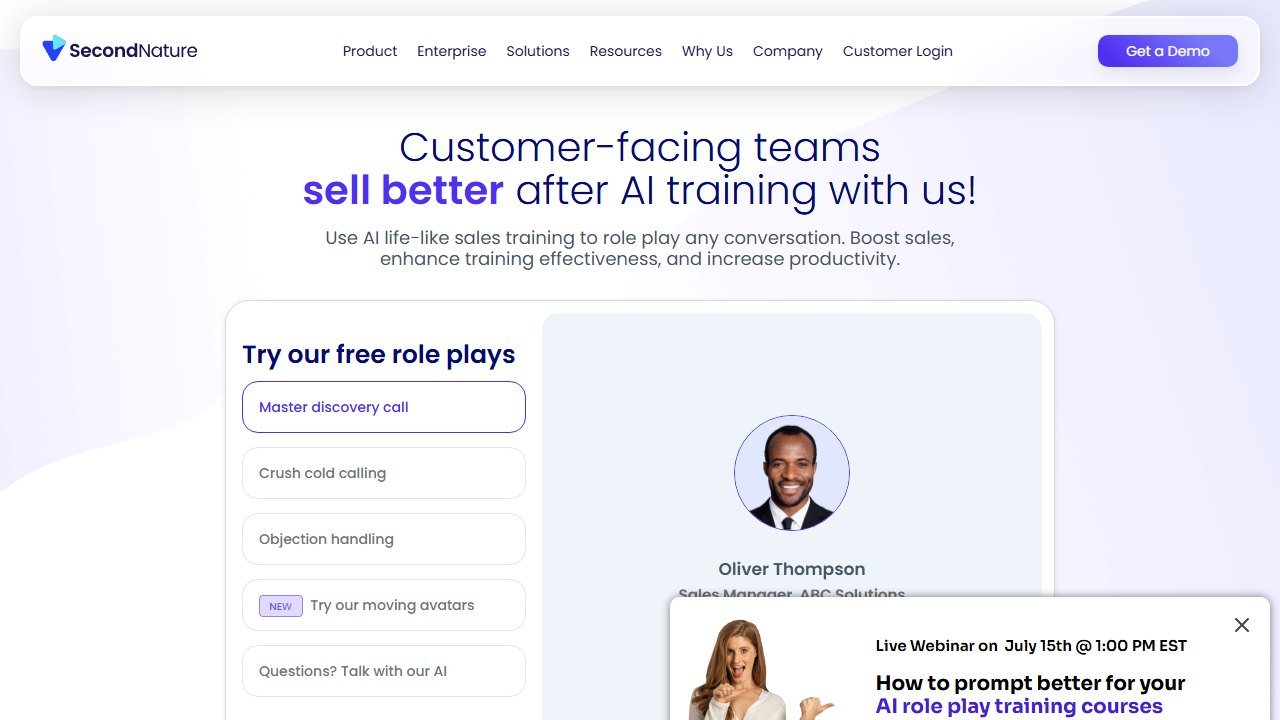
Product knowledge is only half of retail. The other half is the conversation: handling a price objection, turning a return into an exchange, upselling without being pushy. Second Nature lets associates practice those conversations against a realistic AI persona that responds dynamically to what they actually say, then scores the exchange and gives specific feedback.
Second Nature is best known for sales enablement, but the same engine fits retail customer conversations well. An associate can run ten practice sessions in a day without consuming a manager’s time, which is exactly the coaching bottleneck that stops most stores from doing roleplay at all. Support for 24 plus languages makes it practical for diverse floor teams, and manager dashboards surface team wide patterns so you can see which scenarios trip people up.
It is enterprise grade and ranks at the top of the AI roleplay category, with published results showing large gains in practice volume and sales outcomes for its customers. For retailers where conversation quality drives revenue, jewelry, electronics, apparel with a consultative sell, this is the practice layer to add on top of a delivery platform.
Standout feature: dynamic AI roleplay that adapts to the associate’s actual words and scores each attempt.
Limitation: enterprise only with no published pricing or free trial, so evaluation requires a sales conversation.
Pricing: enterprise, contact sales. See our Second Nature review and the wider roleplay tools for training roundup. For service specific practice, our AI customer service training tools guide goes deeper.
Synthesia: Best for Multilingual Product Knowledge Video
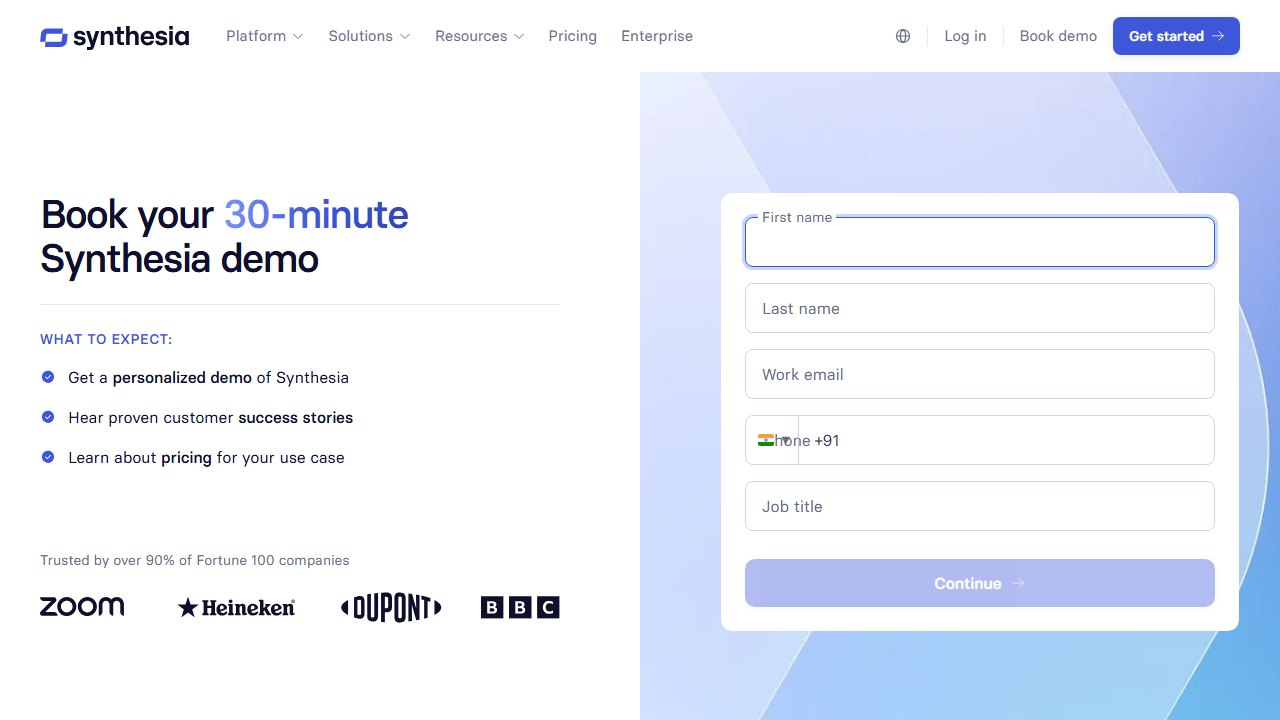
Retail runs on product knowledge, and product lines change constantly. Synthesia turns a text script into a polished training video with an AI presenter, no camera, studio, or voice talent required. When a new collection drops or a promo launches, head office can script the key points, generate a two minute video, and push it to every store the same day.
The multilingual support is the retail unlock. Synthesia handles 140 plus languages with automatic lip sync, so the same product briefing reaches a Spanish speaking associate in one store and a Mandarin speaking associate in another without re recording. That solves a real problem for retailers with linguistically diverse floor teams who currently get English only materials they half understand.
Synthesia is used across a huge share of large enterprises and carries strong compliance credentials, including SOC 2 and ISO certifications, plus SCORM export so videos plug into an existing LMS for tracking. It is a content creation tool, not a delivery platform, so pair it with Axonify, Mitti, or YOOBIC to actually reach staff.
Standout feature: same day product videos in 140 plus languages with automatic lip sync.
Limitation: it creates content but does not deliver or track it, so you still need a frontline platform underneath.
Pricing: per seat with a usable free tier; paid plans start affordably. See our instructional design tools guide for building the content around it.
EducateMe: Best for Small and Mid Retailers Without an L&D Team
EducateMe is aimed squarely at the retailer that has no dedicated learning team and cannot justify an enterprise contract. Its AI generates quizzes, assessments, and structured personalized training programs in minutes, which makes updating product knowledge or spinning up a seasonal campaign course something a single manager can handle.
The retail relevant feature is the built in AI roleplay coach. Associates practice real scenarios like handling objections, upselling, or resolving a complaint, and get instant feedback on their responses, all inside the same platform that hosts the courses. That combination of authoring plus roleplay in one affordable tool is rare at this end of the market, and it means a small chain does not have to buy a separate practice tool.
Automated role based enrollment keeps the admin light: new hires land in the right training path without a manager assigning modules by hand. For a growing retailer that wants structured training without the overhead of an enterprise LMS, EducateMe covers the essentials in one place.
Standout feature: AI course creation and an AI roleplay coach bundled in one low overhead platform.
Limitation: less proven at massive frontline scale than Axonify or Disprz, and lighter on store operations features.
Pricing: per active user, quote based, so you pay for people who actually train. Good fit for small and mid retail.
iSpring Suite AI: Best for Turning SOPs Into Courses
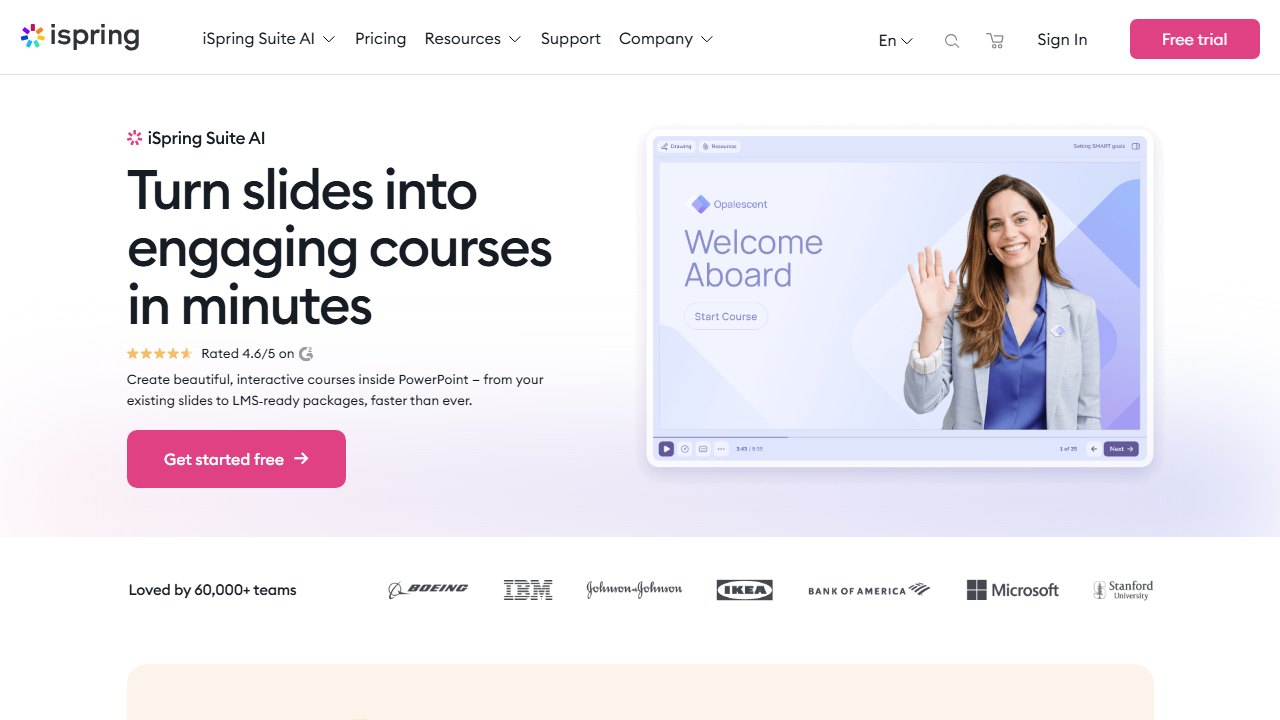
Most retailers already have a mountain of content: PowerPoint product decks, SOP documents, and brand guidelines sitting on a shared drive. iSpring Suite AI turns that existing material into interactive, trackable courses. It works as a tab inside PowerPoint, so a merchandiser who already builds decks does not have to learn a new tool.
The AI assistant drafts course outlines, writes content from prompts, generates quiz questions, and produces voiceover narration in 50 plus languages, then translates entire courses. For retail, the dialogue simulation feature is the standout: build a branching customer conversation with scored outcomes, so an associate practices a return or an objection with tracked results rather than just reading a policy.
Output publishes as SCORM or xAPI, so courses upload into any compliant LMS for completion tracking, which matters for anything compliance adjacent like age restricted sales or safety. iSpring is authoring software rather than a delivery platform, so like Synthesia it sits alongside a frontline tool. It is the right pick when your bottleneck is converting a backlog of documents into real courses fast.
Standout feature: turns existing PowerPoint and SOP content into SCORM courses with branching practice scenarios.
Limitation: per author annual pricing and a desktop app make it a content team tool, not a frontline delivery platform.
Pricing: per author, annual license, from roughly $970 per author per year.
Where the figures on this page come from
Every price here was read from the vendor’s own pricing page on 4 September 2026 and carries that date. Where a page served us regional pricing we say so rather than converting it, because regional rates are set deliberately and are not a currency conversion.
The pages we read
Yoodli publishes $8 and $20 a month billed annually plus a free tier. Colossyan publishes a free plan and Professional at $59 a month annually with $30 per additional member. HeyGen publishes $0, $29, $49 and $149 a month with team seats at $20. iSpring publishes $970, $1,290 and $720 USD per author per year. Deputy publishes $5, $6.50 and $9 per user per month excluding tax. Synthesia served us rupee pricing, reported as such above.
The ones that publish no figure
Second Nature, Hyperbound, Mindtickle, Highspot and Visier all declined to show us a price, and Allego publishes a pricing page with no currency figure on it at all. Articulate publishes only a limited-time offer, currently $1,198 per user per year against a struck-through $1,749. Treat any other figure for those seven as unverified.
What we do not do
We do not convert currencies, and we do not carry a figure we cannot source to the vendor. Where a number circulates and cannot be traced, we say so and withdraw it rather than repeating it with a hedge.
How to Choose the Right Retail Training Stack
The tools above split into two jobs, and most retailers need one from each.
Delivery to every associate every day. This is your foundation. For large chains with deskless staff, Axonify is the default for daily microlearning, or Disprz if you want skills intelligence and career pathing on top. For mid market retailers who want store operations and training in one app, YOOBIC wins. For small and mid chains on a budget, Mitti delivers most of the value at a fraction of the cost.
Practice and content for the skills that need it. Layer this on top of delivery. For customer conversation and sales roleplay, Second Nature is the strongest practice tool. For multilingual product knowledge video, Synthesia is the fastest path from script to every store. For converting a backlog of SOPs and decks into courses, iSpring Suite AI is purpose built. And if you have no L&D team at all, EducateMe bundles authoring and roleplay into one affordable platform so you can skip the two tool stack entirely.
Start with the problem that hurts most. If associates cannot answer product questions, fix delivery first. If they freeze on returns and objections, add roleplay. Do not try to buy one platform that does everything, because the tools that promise that usually do each job poorly. If you run food service or a cafe counter alongside retail, our AI tools for restaurant staff training guide covers that adjacent workforce.
The retailers getting real results in 2026 are the ones matching the tool to the workforce reality: deskless, high turnover, multilingual, and always mid shift. Pick tools built for that, not office software wearing a retail badge.

Written by
FazFaz is the founder of AIToolsBakery. Some tools here are tested hands on. Others are assessed from vendor documentation and pricing verified on the live page, and every review says which one it is. Sponsors can buy a position in a guide. They cannot buy the score, the criticism, or silence about a better option.
How we test and how we make money →