
Most software comparisons have a referee problem. This one has no referee at all. Search “RentRedi vs TurboTenant” and page 1 is RentRedi comparing itself to TurboTenant twice, with two pages that contradict each other. TurboTenant has a counter-page of its own, and the “neutral” third parties in the results are Stessa, RentSpree, and Baselane, every one of them a competitor selling against at least one of the two products.
So we did what nobody in that SERP has done: we loaded both vendors’ pricing surfaces and comparison pages on July 26, 2026, dated every number, labeled what is official versus what is merely reported, and ran the fee math on both sides of the lease. The result is not a knockout. It is a lane split, and knowing which lane you live in is worth more than any winner-takes-all headline.
| What it costs | RentRedi | TurboTenant | Source, dated |
|---|---|---|---|
| Landlord subscription | $29.95/mo, $20/mo on 6-month, $12/mo on annual ($144/yr), one plan, unlimited units | Free tier; Essentials $149/yr; Pro $199/yr, listed as “starting at” | RR: rentredi.com/pricing, OFFICIAL, Jul 26, 2026. TT: AITB browser verification, Jul 2026 (site blocks scrapers) |
| Tenant ACH fee | $1.00 per payment, tenant-paid by default, landlord can absorb | $2.00 per payment, tenant-paid, waived only on Pro ($199/yr) | RR: OFFICIAL, Jul 26, 2026. TT: AITB browser verification, Jul 2026 |
| Tenant card fee | 3.1% + $0.30, tenant-paid by default | 3.49%, REPORTED from user reviews, not confirmed on the pricing page | RR: OFFICIAL, Jul 26, 2026. TT: REPORTED, Jul 2026 |
| Screening, and who pays | $39.99, or $49.99 with Plaid income verification, tenant-paid | $45 to $55 by plan, tenant-paid | RR: OFFICIAL, Jul 26, 2026. TT: AITB browser verification, Jul 2026 |
| Accounting | Accounting Suite included: receipt capture, Schedule E, P&L, bank feeds, mileage | Paid add-on via REI Hub, $3.75/mo two-month intro, then REI Hub’s ladder | RR: OFFICIAL, launched Dec 2025 and Jan 2026. TT: AITB browser verification, Jul 2026 |
| Payout speed | 2 to 3 business days | 5 to 7 business days on the free tier, REPORTED (RentRedi’s claim, unconfirmed) | RR: OFFICIAL, Jul 26, 2026. TT: REPORTED via rentredi.com vs-page, Jul 2, 2026 |
The exhibit: RentRedi argues with itself
Before we compare the products, look at the comparison pages, because they are the strongest argument for reading an independent one.
RentRedi runs two live vs-TurboTenant pages at the same time. The old one, stamped “Published May 6, 2021” while carrying 2026-era content, says TurboTenant screening costs the applicant $45, refers to TurboTenant’s long-dead “Premium” plan name, and claims RentRedi screening covers criminal records in 30 states versus TurboTenant’s 24. The new one, stamped “Published July 2, 2026”, says TurboTenant screening costs the applicant $55, and claims TurboTenant’s “Pro climbs to as much as $999 a year as your unit count grows.” Same vendor, same website, same month, two different answers to the same question. We confirmed both pages live on July 26, 2026.
That $999 figure deserves its own asterisk. It appears on RentRedi’s page, attributed to nothing. TurboTenant’s own pricing page lists Pro as “starting at” $199 a year, which leaves room for scaling, but we could not find a $999 figure anywhere we could verify. Until TurboTenant prints it, treat $999 as RentRedi’s claim, not a fact.
TurboTenant has a counter-page of its own at turbotenant.com/reviews/turbotenant-vs-rentredi. We could not retrieve its contents at draft time because TurboTenant’s site blocks automated readers, so we will not put numbers in its mouth. We simply note it exists, it is a vendor page, and it deserves the same skepticism as RentRedi’s two.
And the rest of page 1? Stessa’s comparison referees two of its rivals. RentSpree’s version pitches “Why 4M Users Choose RentSpree” halfway through. Baselane runs one too. When every referee owns a team, the score sheet is marketing.
How we checked the numbers
Our method here is fact-checking, not field trials. We loaded rentredi.com/pricing and both of RentRedi’s comparison pages on July 26, 2026 and recorded exactly what they print. TurboTenant’s site blocks automated readers, so its figures come from our July 2026 browser-verified chain, and anything we could not confirm on a live page carries a REPORTED label with its source and date. Where the only source for a claim is the rival vendor, we say so in the same sentence. If a number in this post has no date next to it, that is a bug, not a style choice.
Two figures we deliberately refused to print as fact: RentRedi’s claim that TurboTenant Pro reaches $999 a year, which we could not verify anywhere on TurboTenant’s own pages, and the contents of TurboTenant’s vs-RentRedi page, which we could not retrieve at all. Both stay labeled as what they are.
What RentRedi actually costs
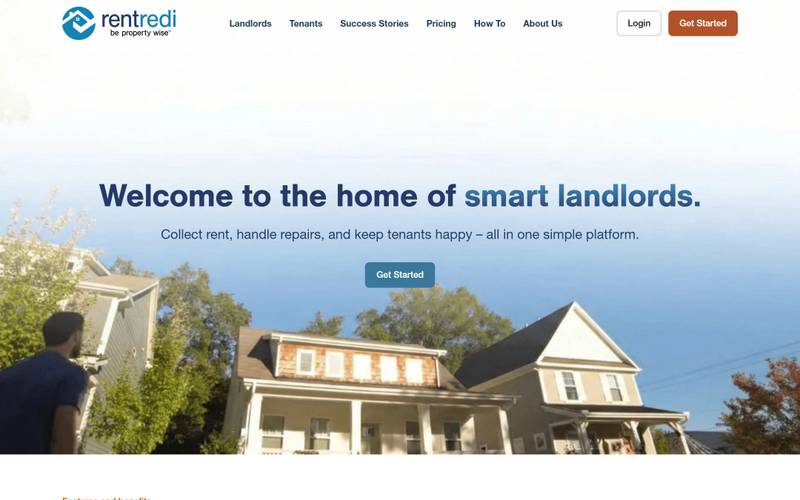
RentRedi’s pricing page, loaded July 26, 2026, shows one plan on three billing cycles: $29.95 month to month, $20 a month on the 6-month cycle, and $12 a month on the annual cycle, which is $144 a year. All figures OFFICIAL. Every cycle carries the same features: unlimited properties, unlimited tenants, unlimited teammates, no per-unit fees, a 30-day money-back guarantee, and no contract.
The fees around the subscription, all OFFICIAL as of July 26, 2026: screening is $39.99 for credit, criminal, and eviction reports, or $49.99 with Plaid-certified income verification, paid by the applicant. Rent payments cost the tenant $1.00 per ACH transaction or 3.1% plus $0.30 by card, and the landlord can choose to absorb either. Optional credit reporting for tenants runs $5.99 a month. Payouts land in 2 to 3 business days. Tenants without bank accounts can pay cash through Chime at 90,000 plus retail locations for a $1 fee (REPORTED, per RentRedi’s help center).
One wrinkle worth knowing before you buy: RentRedi appears to be mid-migration on its plan structure as of July 2026. The pricing page shows the single-plan model above, but RentRedi’s own help center and its freshly updated Capterra listing describe a newer Start $5 a month, Grow $12 to $29.95, and Pro call-us lineup that the pricing page does not show. The help center lists the Accounting Suite under Grow and Pro, so if the $5 Start tier reaches the pricing page, expect it to be a rent-collection teaser rather than the full product. The full fee teardown, the plan-migration story, and the aggregators still printing RentRedi’s 2021 prices under fresh stamps all live in our RentRedi pricing breakdown.
What TurboTenant actually costs
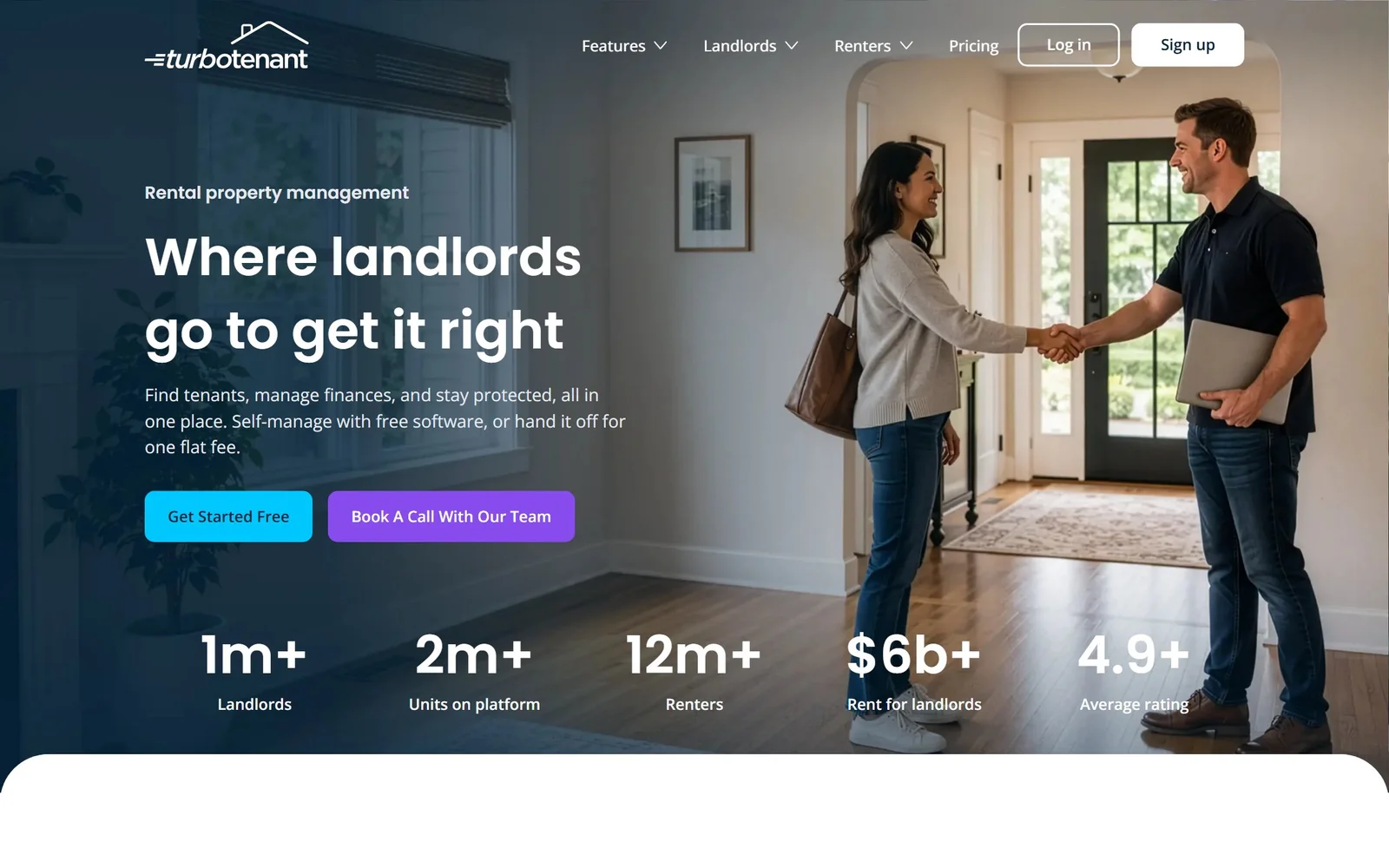
TurboTenant’s numbers come with a disclosure: turbotenant.com blocks automated readers, so the figures here are from our July 2026 browser-verified chain rather than a same-day scrape, and we flag them for re-verification at publish.
The structure: a free tier, then Essentials at $149 a year (about $12.42 a month equivalent) and Pro at $199 a year (about $16.58 a month equivalent), both listed as “starting at” with no monthly billing option. Screening runs $45 to $55, tenant-paid, depending on plan. The tenant ACH fee is $2 per payment, waived only on Pro. Card processing is REPORTED at 3.49% from user reviews; we have not seen it printed on the pricing page. Payout speed on the free tier is REPORTED at 5 to 7 business days, and that figure comes from RentRedi’s July 2, 2026 comparison page, so treat it as a rival’s claim until TurboTenant confirms it.
What the money buys is where TurboTenant pulls ahead. Listings syndicate to 50 plus rental sites, lease agreements cover all 50 states, and the marketing and application funnel is the most polished in this price class. TurboTenant also acquired Azibo in May 2025, a signal that it is building toward a broader financial stack. Accounting, though, is not included: it runs through REI Hub as a paid add-on, at $3.75 a month for a two-month intro through TurboTenant and then REI Hub’s own ladder. For the complete fee anatomy, see our TurboTenant pricing teardown.
The tenant pays the difference
Almost every comparison in this SERP, including both vendors’ own, runs the math from the landlord’s chair only. That misses half the invoice, because both platforms default most fees to the tenant.
On the landlord side the gap is small: RentRedi annual at $144 a year versus TurboTenant at $149 to $199 a year. Call it a $5 to $55 difference. On the tenant side, the gap is real and recurring, all figures as dated above:
An applicant to a TurboTenant listing pays $45 to $55 to be screened. The same applicant to a RentRedi listing pays $39.99, or $49.99 with income verification. That is up to $15 more per TurboTenant application, and rejected applicants eat that fee too. If your market makes applicants apply to five places to land one lease, the platform choice quietly moves real money out of renters’ pockets.
Then rent day arrives. A RentRedi tenant pays $1 per ACH payment; a TurboTenant tenant pays $2 unless the landlord bought Pro. And that waiver math is worth saying out loud: Pro costs $199 a year, which means a landlord is spending $199 to erase a $2 per-payment fee. A tenant paying monthly saves $24 a year from the waiver. Unless you have many units of tenants benefiting at once, the waiver is a rounding error dressed as a feature.
There are two smaller tenant-side items worth a line each. RentRedi tenants who want their on-time payments to build credit can opt into reporting at $5.99 a month, payable by either side (OFFICIAL, July 26, 2026). And tenants without bank accounts can pay rent in cash through Chime at more than 90,000 retail locations for a $1 fee (REPORTED, per RentRedi’s help center), which matters more in cash-heavy markets than any comparison page admits.
None of this makes TurboTenant wrong for you. It does mean “TurboTenant is free” is only true from one chair. If you fill units in a competitive market where applicants compare fees, or you simply care what your tenants pay, RentRedi’s fee schedule is the friendlier one.
The accounting flip
The cleanest product difference between these two is not marketing polish or fee schedules. It is where the books live.
RentRedi ships its Accounting Suite inside the subscription at no extra cost: receipt capture, Schedule E categorization, and P&L reports launched in December 2025, with bank feeds, bulk uploads, itemization, and mileage tracking added in January 2026. The machine learning here is real but narrow: it powers the accounting-side categorization, and that is the only place we will call it AI, because that is the only place it earns the label. One caveat carried over from the migration note above: RentRedi’s help center lists the suite under the Grow and Pro tiers of the new structure, so if you land on a future $5 Start plan, do not assume the books come with it.
TurboTenant took the opposite route. Its accounting is REI Hub, a genuinely capable double-entry system, bolted on as a paid add-on: $3.75 a month for the first two months through TurboTenant, then REI Hub’s regular ladder. REI Hub is good software, and serious bookkeepers may prefer it to RentRedi’s built-in suite. But it is a second bill, and the comparison pages on both sides tend to mumble past that.
At the $12 a month price point, “included” versus “add-on” is the difference between a complete tool and a starter kit. It is a big part of why RentRedi tops our landlord accounting tools ranking; we will not re-argue that ranking here.
Where TurboTenant runs away with it
Being the cheaper, more complete bundle does not make RentRedi the better tool for every job, and an honest comparison has to give TurboTenant its lanes.
Vacancy filling is TurboTenant’s home turf. Listings push to 50 plus syndication sites, the listing pages themselves are cleaner, and the applicant funnel from ad to application to screening is the smoothest we have seen at this price. RentRedi syndicates too, but TurboTenant’s marketing engine and larger tenant marketplace mean more eyeballs per listing, and for a landlord whose main pain is empty units, that is the whole ballgame.
Leases are the second lane. TurboTenant offers state-specific lease agreements for all 50 states, a real advantage for landlords in states with picky disclosure rules or for anyone self-managing across state lines.
Polish is the third, softer lane. TurboTenant’s interface is more modern, onboarding is gentler, and the free tier lets you try the core workflow before spending anything, which RentRedi, with no free tier, cannot match. Our full TurboTenant review scores it 4.2 partly on that finish quality.
RentRedi’s counterpunches are structural rather than cosmetic: one flat price covering unlimited units and unlimited teammates (TurboTenant’s Pro is “starting at” $199, and its scaling behavior above that is exactly the thing RentRedi’s vs-page speculates about), faster payouts at 2 to 3 business days official versus the reported 5 to 7 on TurboTenant’s free tier, and the included accounting covered above. Our RentRedi review has the full 4.1 verdict.
How these purchases go wrong, and the early warning signs
Four patterns cover most of what we hear a year after a real estate software purchase, and all four are visible in the first month.
The migration that never finishes
The new system goes live, the old one stays open “for historical records”, and eighteen months later half the team still works in both. This is the most common and most expensive failure in property management software. Before signing, agree a cutover date, a named owner, and what specifically will not be migrated. Running two systems is worse than either.
Tenant-facing features nobody told the tenants about
Online payments, maintenance portals and application flows only save time when residents actually use them, and adoption depends entirely on how the change is communicated. A portal with 20% adoption creates more work than paper did, because you now run two processes. Plan the resident communication before go-live and measure adoption at thirty days.
The tool one person runs
One capable person builds the workflows and produces every report. They leave and it stops the same week. The warning sign is that nobody else has ever done a full month-end in the system. Have a second person do it once a quarter from written steps.
The fees that arrive after the subscription
Payment processing, screening, e-signatures, bank account setup and inspections are all charged separately by most vendors in this category and all of them are published. A business case built on the subscription alone will be wrong in year one, usually by a four figure sum. Build the model from the fee schedule, not the plan cards.
Verdict: pick your lane, not a winner
We came into this expecting to crown someone, and the honest answer is a tie with a map.
Choose TurboTenant if your bottleneck is vacancy. Its syndication reach, listing polish, 50-state leases, and applicant funnel are the best in this weight class, and the free tier means you can start without spending a dollar of your own, as long as you are comfortable that your applicants pay $45 to $55 to be screened and your tenants pay $2 per ACH rent payment unless you buy the $199 Pro plan.
Choose RentRedi if your bottleneck is cost structure and books. $144 a year flat, official as of July 26, 2026, covers unlimited units, unlimited teammates, included accounting with Schedule E output, 2 to 3 day payouts, and the cheapest tenant-side fees in this matchup: $39.99 screening and $1 ACH. For a scaling portfolio, the flat line beats the “starting at” line.
If you are weighing TurboTenant against a third option, our Innago vs TurboTenant head-to-head covers the other pairing this SERP keeps asking about.
And whichever way you go, take the meta-lesson this comparison forced on us: both vendors published their own scorecards, the two RentRedi scorecards disagree with each other, and the third parties in the SERP are competitors in referee shirts. Date the numbers, check who pays each fee, and trust the pricing page over the comparison page, including ours: every figure above carries its source and its date so you can re-run the check yourself.
Also in this guide series: Stessa vs Baselane (2026): Same Bank Underneath, and Both Vs Pages Are Wrong, Is AI Rent Pricing Legal in 2026? The One Line That Decides It, State by State and RentRedi Pricing in 2026: $12 a Month Flat, Two Price Hikes the Aggregators Missed, and a Plan Its Own Site Does Not Show.

Written by
FazFaz is the founder of AIToolsBakery. Some tools here are tested hands on. Others are assessed from vendor documentation and pricing verified on the live page, and every review says which one it is. Sponsors can buy a position in a guide. They cannot buy the score, the criticism, or silence about a better option.
How we test and how we make money →Frequently Asked Questions