It is mile 18 of a long run in July, your shirt is crusted white with salt, and you have no idea whether you are dehydrated or just hot. You drank “a couple of bottles,” which tells you nothing. The next day your legs feel dead and you blame training, when the real culprit might have been losing two liters of sweat and replacing one. This is the problem hydration apps promise to solve: turning a vague feeling of thirst into a number you can act on, ideally one that accounts for how much you personally sweat and how much sodium you lose.
We are AIToolsBakery, and we are independent. We sell none of these apps, none of these bottles, and none of these sweat patches. We make nothing if you buy any of them. That matters here, because when you search for the best hydration tracker, almost everything on page one is either the vendor selling you its own bottle or an affiliate roundup paid by the click. We are neither. We went looking for the apps that actually personalize your hydration to your body, and we are honest about which ones lean on real sweat data versus a slightly smarter reminder.
One thing to set straight early: very few of these are truly “AI” in any meaningful sense. Most run a formula on your weight, activity, and weather. A small number use real sweat-rate or sweat-sodium measurement, which is the part that actually changes your race-day plan. We will tell you which is which.
The 30-second answer: For real personalization, a sweat sensor (Nix) or sweat patch (Gatorade Gx) beats any pure software guess. For a smart software estimate, Hydra adjusts goals from sweat loss. For a free, sticky daily reminder, Waterllama wins. Confirm all pricing on the vendor page, it changes often.
Quick answer: Nix Biosensor is the closest thing to real-time hydration truth, the Gatorade Gx patch builds a personalized sweat profile, and Hydra is the smartest pure-software estimate. Match the spend to how much your sport actually depends on precise fueling.
The jobs an athlete actually needs done
Before naming apps, it helps to be clear on what you are buying. A hydration tool can do four jobs, and almost none do all four well.
The first is personalized sweat-rate and electrolyte guidance: telling you how much fluid and sodium you lose, not an average person. The second is reminders: nudging you to drink across a normal day so you start your session topped up. The third is integration with wearables and health platforms, so your hydration sits next to your training load instead of in a silo. The fourth is race-day or session planning: telling you what to carry and drink for a specific effort in specific conditions.
Pure reminder apps nail job two and ignore the rest. Sweat sensors nail jobs one and four and skip the casual reminders. Knowing which job you care about saves you from paying for the wrong tool.
There is also a hierarchy of trust worth naming. A measured number from a sweat sensor is the most reliable input, because it reflects your body in your conditions. A software estimate from your weight, effort, and the weather is a reasonable second, useful as long as you remember it is a model. A flat daily goal of “drink eight glasses” is the weakest, because it ignores that a desk day and a long hot ride are not remotely the same hydration day. The apps below sit at different points on that ladder, and the price usually rises as the data gets more real. Match the tool to how much your performance actually depends on getting hydration right.
Nix Biosensor: the closest thing to real-time truth
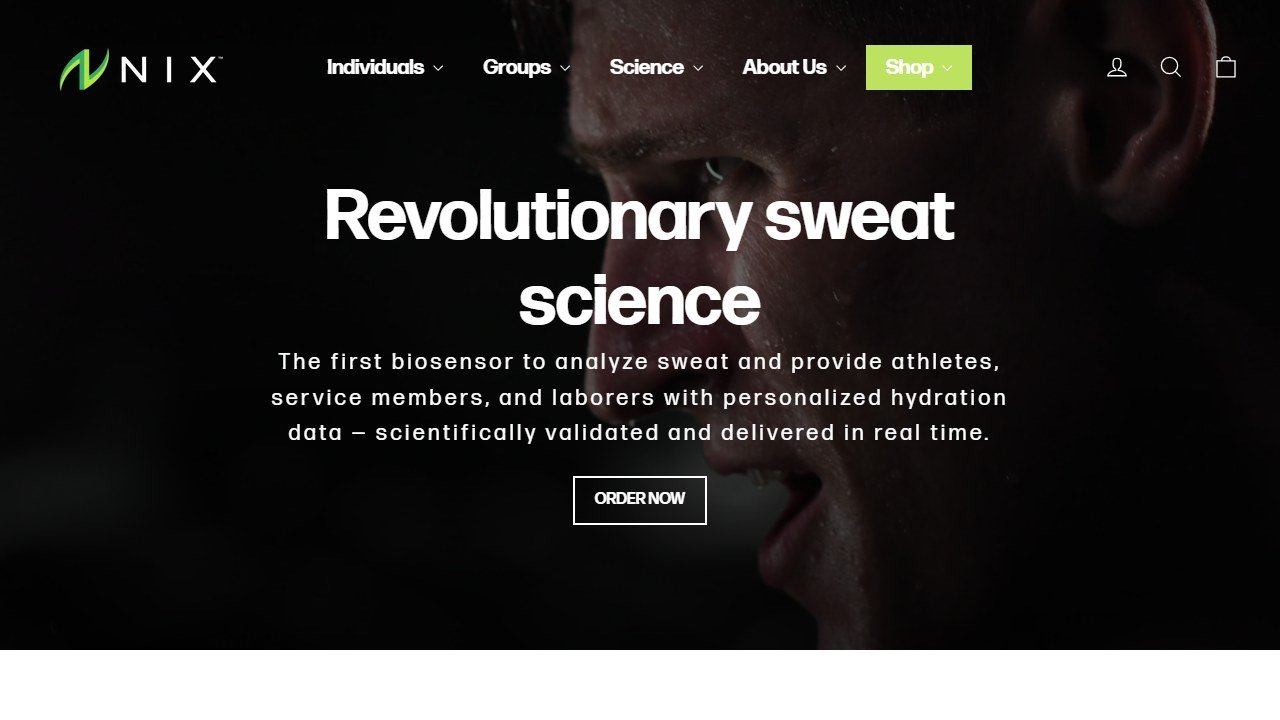
The Nix Hydration Biosensor is a small reusable pod that clips onto a single-use patch on your arm and reads your sweat in real time during a session. It sends fluid loss and sweat rate to the Nix app and tells you when to drink, roughly how much, and how your electrolyte loss is tracking, all live rather than after the fact. It is used across pro leagues and by Ironman athletes, and that pedigree shows in how seriously it treats the data.
This is the one product on our list where the personalization is measured rather than estimated. It is reading your actual sweat, in your actual conditions, which is exactly what a formula cannot do.
The honest limitation is cost and the consumable model. You buy a starter kit and then keep buying single-use patches, so the running cost adds up if you train daily. Pricing changes, so check the current kit and patch prices on the vendor page before committing. For a casual gym-goer this is overkill. For an endurance athlete chasing a goal race, it is the only tool here that genuinely closes the guesswork.
One more thing worth saying plainly: the value of real-time data is that it lets you correct mid-session, not just learn a lesson afterward. If you are bonking and your sweat loss is already deep in the red, knowing that at the aid station instead of at the finish line is the difference between a salvaged race and a ruined one. That is what you are paying for, and it is only worth it if your events are long and hard enough to need it.
External link: see the device on the official site at nixbiosensors.com.
Gatorade Gx: a sweat patch that builds your profile
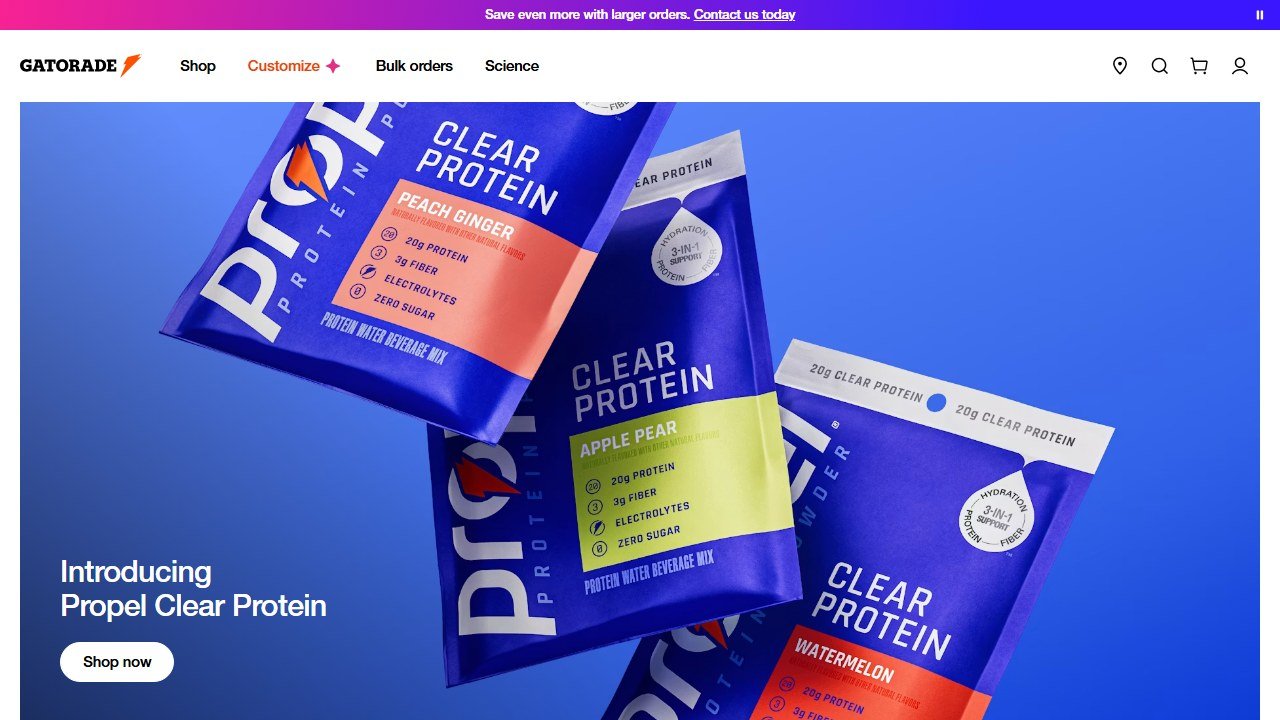
The Gatorade Gx Sweat Patch is a single-use microfluidic patch you wear during one workout. Afterward you scan it with the Gx app, which reads your sweat rate and sodium concentration off the patch and builds a personalized “sweat profile.” From there the app recommends how much fluid and sodium to take for future sessions of similar intensity and conditions.
What we like is that it gives you a real measurement of your sweat sodium, which is the variable most athletes get badly wrong. A salty sweater and a light sweater can need very different electrolyte plans, and guessing rarely lands.
The honest limitation is that it is post-workout, not live. You learn your profile after the session, then apply it next time, so it is a planning tool rather than a real-time coach. It is also a Gatorade product, so its guidance naturally points toward Gatorade-style intake. Pricing for the patches is qualitative here and shifts with promotions, so confirm on the vendor page.
External link: gatorade.com/gx-app.
Hydra: the smartest pure-software estimate
If you want personalization without buying hardware, Hydra is the most athlete-aware app we found. Instead of a flat daily goal, it estimates your sweat loss from the duration, intensity, and type of each activity, then adjusts how much you need to replace. It tracks water, caffeine, and electrolytes in one place, which is more honest than apps that count only plain water.
The appeal is that it treats hydration as variable. A two-hour ride in the heat and a desk day are not the same hydration day, and Hydra models that difference instead of nagging you toward a fixed eight glasses.
The honest limitation is that it is still an estimate. Without a sensor it is inferring your sweat loss from inputs, not measuring it, so a heavy or salty sweater can still be off. Treat it as a smart starting point you refine with experience, not gospel. Pricing for premium tiers changes, so check the current App Store listing.
External link: see the Hydra hydration tracker on the App Store.
HidrateSpark: the smart bottle that closes the loop
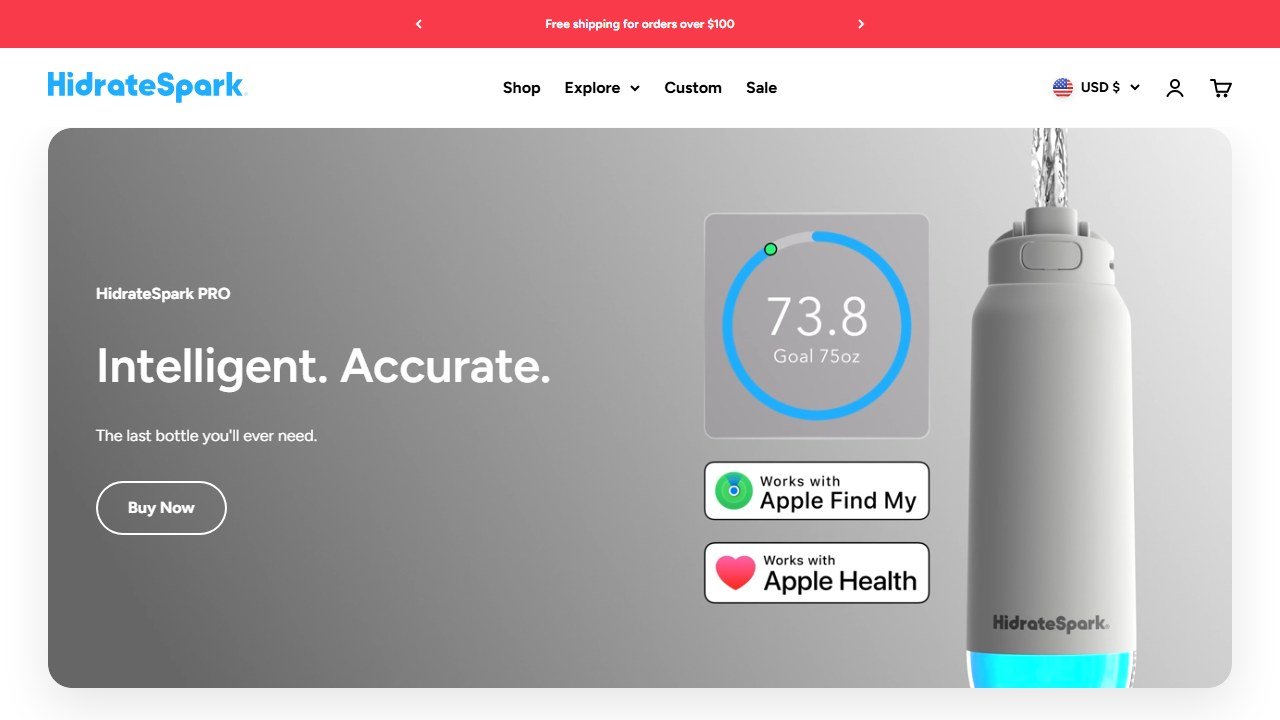
HidrateSpark is best known for its Bluetooth smart bottles, but the value sits in the app plus bottle working together. The app calculates a personalized daily goal from your weight, age, height, sex, activity level, and local weather, then the bottle tracks each sip automatically and glows to remind you. Because logging is automatic, your data is far more accurate than apps that depend on you remembering to tap a button.
For athletes, the weather-aware goal is the genuinely useful bit. Training on a hot, dry day raises your target without you doing the math.
The honest limitation is that the magic depends on owning the bottle, which is a real purchase, and the app does not measure sweat or sodium. It is excellent at making sure you hit a sensible daily volume, but it will not build a sweat profile or plan a race. Premium app features sit behind a subscription, so confirm current pricing on the vendor page.
External link: hidratespark.com.
Waterllama: the best free daily reminder
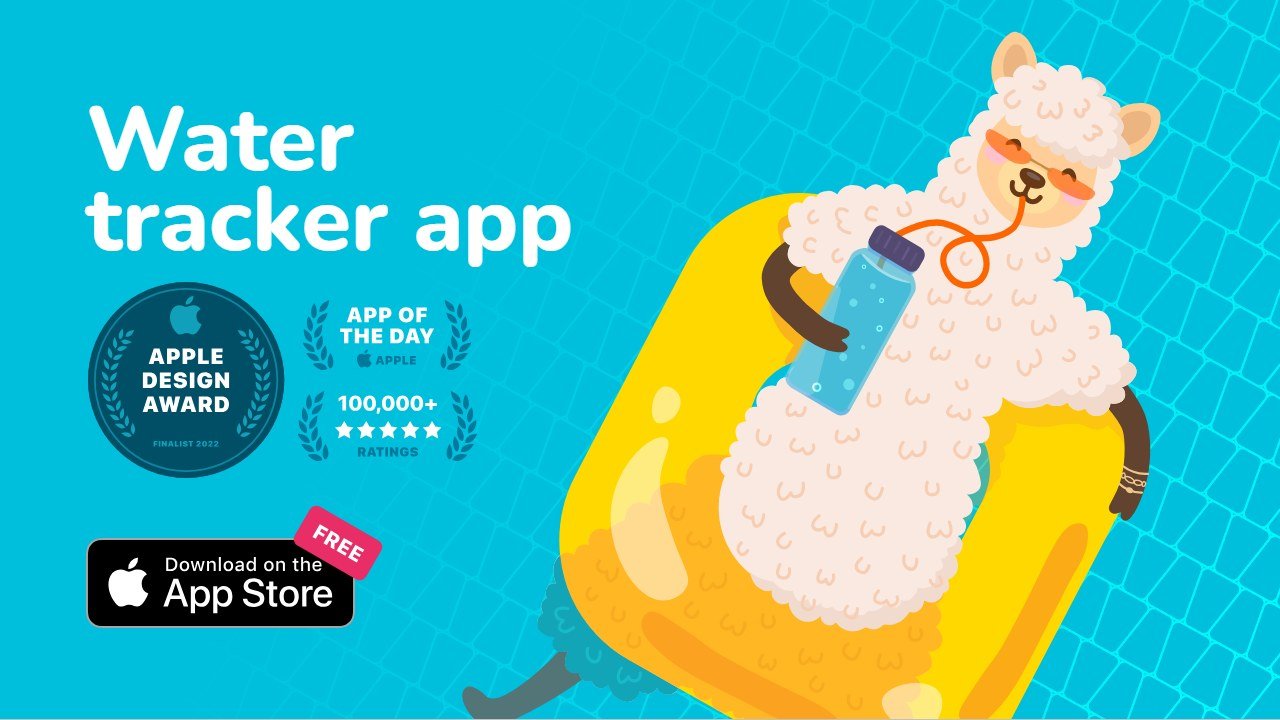
Waterllama is the app we would hand a friend who just wants to drink more water without spending anything. It calculates a daily goal, sends smart reminders, logs different beverages, runs streaks, and works nicely from an Apple Watch and lock-screen widgets. It won an App Store award and a design award nod, and you can feel the polish.
The reason it works is behavioral, not biometric. The cute llama, the streaks, and the friction-free logging make people actually keep using it, which beats a smarter app you abandon in a week.
The honest limitation is that it is a reminder and tracker, not a performance tool. There is no sweat measurement, no electrolyte science, and no race-day planning. It assumes a fairly standard daily need. For an athlete on a hard training block it is a supporting habit, not the core of a hydration strategy. A premium tier exists; the core experience is free.
External link: waterllama.com.
Plant Nanny: gamified consistency for the chronically forgetful
Plant Nanny turns drinking water into keeping a virtual plant alive. Every glass you log waters a cute plant that grows over time, and neglect lets it wilt. It builds a customized drinking plan with reminders and charts. Under the cartoon, it is a straightforward water tracker with a strong consistency hook.
We include it because motivation is the real problem for most people, athlete or not. If guilt over a dying cartoon plant gets you to drink, that is a legitimate result.
The honest limitation is that there is zero sport science here. No sweat rate, no electrolytes, no conditions modeling, no wearable depth. It is a habit game. For a competitive athlete it is a fun secondary nudge, not a tool you plan a marathon around. It is free with optional purchases.
External link: see Plant Nanny on the App Store.
The honest comparison
One table, no fluff. Read the limitation column as carefully as the strengths.
| App or device | What it does best | Best for | Price or free tier |
|---|---|---|---|
| Nix Biosensor | Real-time measured sweat rate and fluid loss | Endurance athletes chasing a goal race | Hardware kit plus consumable patches, confirm vendor |
| Gatorade Gx | Measured sweat sodium and a personal sweat profile | Athletes who suspect they are salty sweaters | Single-use patches, confirm vendor |
| Hydra | Smart software sweat-loss estimate per activity | Athletes wanting personalization, no hardware | Free core, paid premium |
| HidrateSpark | Automatic logging plus weather-aware daily goal | People who forget to log and want accuracy | Needs bottle, app premium tier |
| Waterllama | Sticky free reminders and clean tracking | Anyone building a daily water habit | Generous free tier |
| Plant Nanny | Gamified consistency through a virtual plant | The chronically forgetful who need motivation | Free with optional purchases |
A lean way to start
You do not need to buy hardware on day one. Here is the cheap, sensible path.
- Install one free reminder app, Waterllama or Plant Nanny, and just hit a basic daily goal for two weeks so the habit exists.
- Do the old-school sweat test: weigh yourself naked before and after a hard hour of training, with no drinking in between, and note the difference. Each kilogram lost is roughly a liter of sweat. This costs nothing and teaches you more than most apps.
- If you sweat heavily or cramp, add a measurement tool. Try the Gatorade Gx patch once or twice to learn your sodium, or step up to Nix for real-time data on key sessions.
- Only then consider a smart bottle or a paid app tier, once you know what your body actually does.
What these apps still cannot do
A hydration app is a measurement and reminder tool. It is not your coach, and it is not a doctor. Even the sensors measure a snapshot and infer the rest, so treat every number as a strong estimate rather than a lab result. They will not catch a medical condition that affects your fluid balance, and overdrinking plain water during long efforts carries its own real risk of low blood sodium, which no consumer app reliably protects against.
So use these tools to get specific about your own sweat and to stop guessing, then build judgment on top. If you have a heart, kidney, or blood-pressure condition, are pregnant, or are planning extreme heat or endurance events, talk to a doctor or a qualified sports dietitian before changing your hydration strategy. This article is information, not medical advice.
For where hydration sits in the bigger picture, our best AI running coach apps and best AI triathlon training apps guides cover the training side, and if you are pairing fueling with hydration, see our AI meal plan generator for fitness goals and AI macro tracker apps roundups. For recovery, our WHOOP vs Oura vs Garmin comparison shows how the wearables that read your body stack up.
What AI form checking can and cannot actually see
Pose estimation from a phone camera is genuinely useful and routinely oversold. Knowing where the line sits protects you from both the hype and the injury risk.
It works well on large, planar, well-lit movement
A squat filmed from the side in good light, with the whole body in frame and reasonably fitted clothing, is close to the ideal case. Knee position, hip depth, bar path and tempo are all measurable from that, and feedback on them is real. If your use case looks like that, these tools do what they claim.
It degrades sharply outside those conditions
Accuracy falls away with loose clothing, poor lighting, an angled or moving camera, occlusion where one limb hides another, and any movement that happens largely in the depth axis away from the lens. Rotational movement, anything on the floor, and lifts where the critical detail is spinal position rather than joint angle are all much harder. A tool that is confident in those conditions is not more capable, it is less honest.
It cannot see the things that most often cause injury
A camera does not know your training history, whether that shoulder has been irritable for three weeks, how heavy the bar is relative to your capacity, or that you slept four hours. Most training injuries come from load management rather than from a visibly wrong joint angle in a single rep. Treat form feedback as one input among several rather than as a safety system.
The honest way to use it
Film the same lift from the same angle every few weeks and compare. Consistency of setup matters more than the sophistication of the model, and a fixed camera position turns these tools from a novelty into a genuine progress record. Use the feedback to prompt questions rather than to make decisions, and take anything about pain or persistent discomfort to a physiotherapist rather than to an app.

Written by
FazFaz is the founder of AIToolsBakery. Some tools here are tested hands on. Others are assessed from vendor documentation and pricing verified on the live page, and every review says which one it is. Sponsors can buy a position in a guide. They cannot buy the score, the criticism, or silence about a better option.
How we test and how we make money →Frequently Asked Questions