Nursing school is a different kind of hard. You are memorizing pharmacology, learning to read a deteriorating patient, and training your brain for the clinical judgment questions that now dominate the Next Generation NCLEX (NGN). AI tools promise to compress that workload: generate practice questions from your own lecture notes, drill SATA and bowtie items, explain why the third option is the safest action, and turn a 90 minute recorded lecture into a tight study sheet. Some of these tools were built by nurses for exactly this. Others are general chatbots that nursing students have bent to the task with mixed results.
This guide cuts through the marketing. We reviewed nine tools against the things that actually matter for nursing students in 2026: how well they handle real NGN question types (Select All That Apply, clinical judgment, prioritization, bowtie, trend), the quality of their rationales, and whether they help on the clinical floor as much as in the QBank. Each tool gets a 0 to 5 score, a one line “best for,” a plain account of strengths and weaknesses, and its free tier plus pricing model with a link to the official site.
A word on how we work. AIToolsBakery is independent. We are not owned by any tool vendor, we buy or trial the products we review like anyone else, and we earn nothing when you sign up for any tool on this page. When a post is sponsored, we label it clearly at the top, and a sponsorship never changes a score or a ranking. This post is not sponsored. The order below reflects our testing, not anyone’s ad budget.
One more framing note before the rankings. The differentiation that matters most for nursing students is purpose-built versus general-purpose. A tool built specifically for nursing is trained and curated on nursing content, formats its practice in authentic NGN item types, and writes rationales in the clinical reasoning language faculty actually use. A general chatbot can do impressive things, but it was not designed around the NCLEX test plan, it does not natively produce calibrated SATA or bowtie items, and it is more prone to confident clinical errors. Our scores reward NCLEX relevance and rationale quality first, which is why the purpose-built tools cluster at the top and the general tools, useful as they are, sit lower.
The short answer: For NCLEX prep, UWorld has the best questions and rationales, and GoodNurse is the strongest AI tutor built specifically for nursing. Pair a purpose-built QBank with one general AI tool for notes. Never trust AI output for patient care without verifying it.
Quick answer: UWorld remains the gold-standard QBank for serious NCLEX prep, GoodNurse is the best AI tutor built specifically for nursing, and NCLEX Bootcamp is the best-value course for the new test plan. Start with UWorld for question realism and rationales.
Comparison table
| Tool | Score (X/5) | Best for | NCLEX fit | Pricing model |
|---|---|---|---|---|
| UWorld | 5/5 | Gold standard QBank and rationales | Excellent (full NGN item types, CAT) | Paid only, time based subscription |
| GoodNurse | 4.5/5 | AI nursing tutor that explains as you go | Excellent (NGN formats, rationales) | Low cost monthly subscription |
| NCLEX Bootcamp | 4.5/5 | Best value NGN course with video walkthroughs | Excellent (built for the new test plan) | Free trial, then short term subscription |
| Archer Review | 4/5 | Affordable CAT practice and readiness exams | Very good (NGN aligned, unlimited CAT) | Modular paid packages |
| Picmonic | 4/5 | Visual mnemonics for memorizing hard content | Good (recall focused, NCLEX aligned) | Freemium, subscription for full library |
| NurseLearn AI | 3.5/5 | Turning your own lectures into NCLEX questions | Good (NGN style stems from your notes) | Freemium, paid upgrade |
| NotebookLM | 3.5/5 | Grounded study sheets from your own sources | Moderate (no native NCLEX bank) | Generous free tier, optional paid |
| ChatGPT | 3/5 | Concept explanations and study coaching | Moderate (capable but can hallucinate) | Free tier, paid plan for best model |
| Mindgrasp | 3/5 | Fast lecture and PDF summaries plus quizzes | Moderate (generic quizzes, not NGN tuned) | Short free trial, then subscription |
1. UWorld: the gold standard QBank for serious NCLEX prep
Score: 5/5
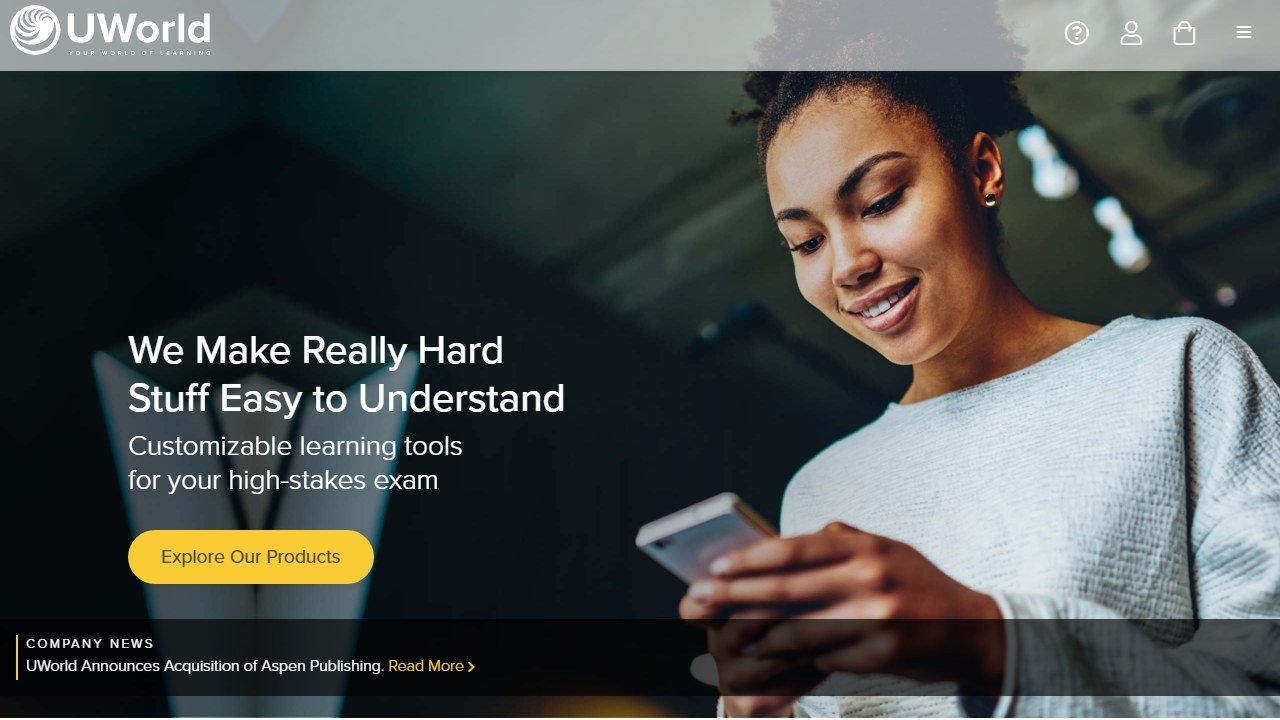
If you ask working nurses and educators which single resource moved the needle on their NCLEX, the most common answer is still UWorld. It is not an AI tutor in the chatbot sense, but it uses adaptive testing and analytics, and its question quality is the bar everyone else is measured against. For a guide about preparing for the exam, it earns the top spot because nothing else matches the realism of its items or the depth of its rationales.
UWorld’s NCLEX-RN bank carries over 3,000 questions, including hundreds of Next Generation NCLEX items spanning the new clinical judgment formats. Every question comes with a detailed rationale for both correct and incorrect answers, often with illustrations, lab value tables, and short concept explanations that read like a focused lecture. Subscriptions include adaptive (CAT) practice that mirrors the real exam algorithm, self assessment exams that predict readiness, and a study planner on longer plans. The rationales are the product. You learn more from reviewing a missed UWorld question than from many full chapters.
Strengths: question realism and predictive accuracy are unmatched, rationales teach the underlying concept rather than just naming the right letter, and the CAT format trains you for the pacing and adaptivity of the actual test. Weaknesses: it is the most expensive option here, it is entirely self directed with no live tutor or AI chat, and the rationale density can feel heavy when you are starting out and have not built a content base yet.
How to get the most from it: do not just answer questions, study the rationale on every item you get wrong and every item you guessed on, even if you guessed right. Build a habit of reading the incorrect-answer explanations too, because the NCLEX tests why the safer or higher-priority action wins, not just which one it is. Run the self assessment exams as honest readiness checks rather than score-chasing, and use the analytics to drive your next study block toward your weakest content areas.
Pricing model: paid only, sold as time based subscriptions (the shorter the access window, the lower the price, scaling up for longer windows). There is no permanent free tier, though UWorld runs periodic free trials and sample questions. See UWorld NCLEX for current plans.
2. GoodNurse: the AI tutor built by nurses for nursing
Score: 4.5/5
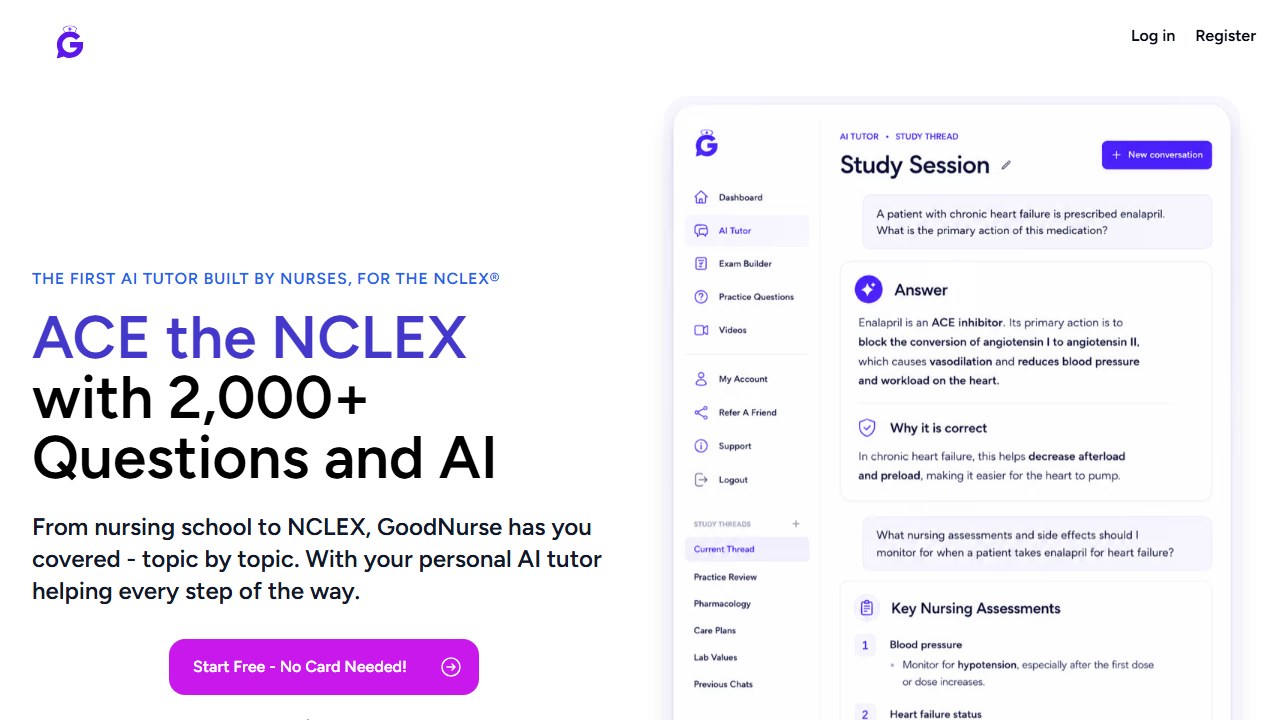
GoodNurse is the clearest example of why purpose-built beats general-purpose for this audience. It is an AI tutor designed around nursing content and the NGN, not a generic chatbot with a nursing prompt taped on. That distinction shows up everywhere, from how it formats SATA items to how it explains a missed prioritization question in the language an instructor would use.
The app delivers custom quizzes by topic, more than 2,500 NCLEX-style questions with detailed rationales including Next Gen formats, and an AI tutor that explains every wrong answer during the quiz rather than only at the end. It also helps with the day to day grind of nursing school: mnemonic guides, case study help, dosage calculation practice, and care plan or essay support. It runs on phone, tablet, and laptop, and it supports study in more than 50 languages, which matters for the large share of nursing students who are multilingual or ESL. The vendor reports a high reported pass rate and a user base in the tens of thousands, and in practice the rationales were consistently nursing accurate rather than vaguely medical.
Strengths: nursing-specific tuning produces rationales and question framing that match how the NCLEX and nursing faculty actually think, the in-quiz explanations turn each miss into a teaching moment, and the multilingual support is genuinely useful. Weaknesses: the question bank, while solid, is smaller than the big dedicated QBanks like UWorld, and as with any AI tutor you should still cross check unfamiliar clinical claims against a verified reference.
Pricing model: low cost monthly subscription with a money back guarantee window and cancel anytime, which makes it easy to trial for a single tough rotation or exam push. See GoodNurse for current pricing.
3. NCLEX Bootcamp: the best value course built for the new test plan
Score: 4.5/5
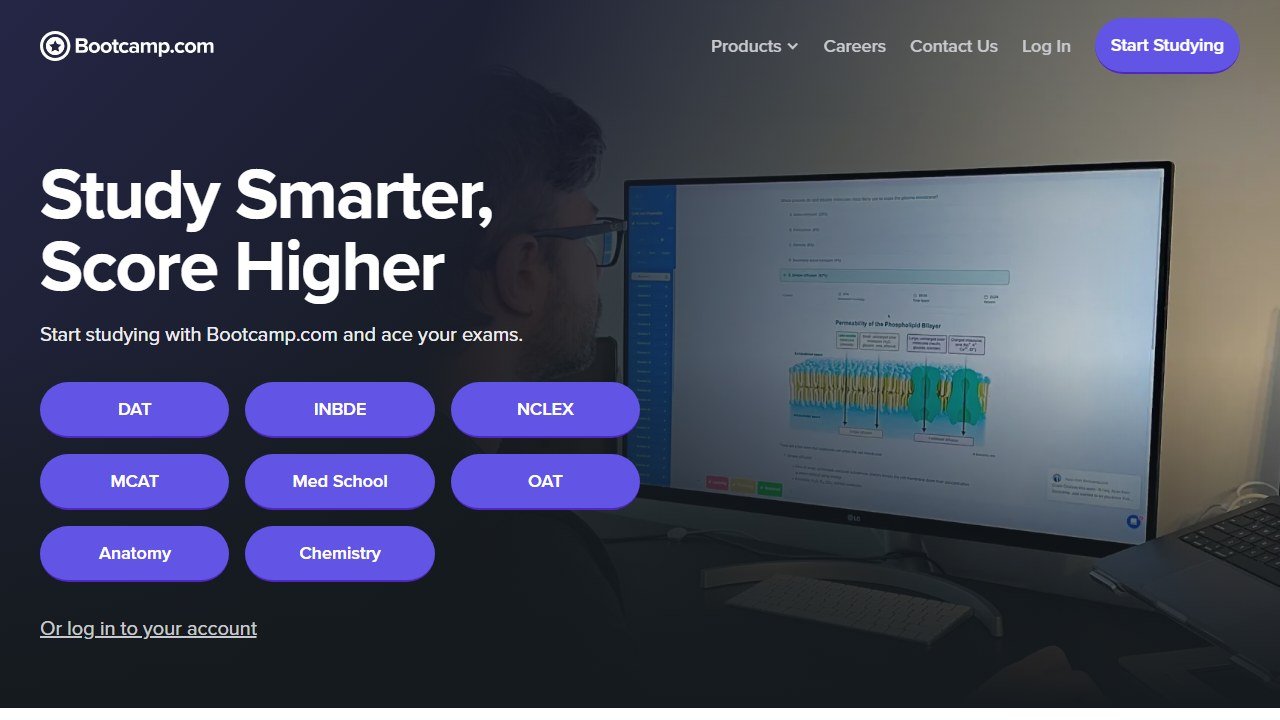
NCLEX Bootcamp earns a near top score because it was built from the ground up for the Next Generation NCLEX and it is updated for the 2026 NCLEX-RN test plan changes. It blends a QBank with a structured study schedule and, crucially, video walkthroughs that show you how an expert reasons through each item. For students who want guidance and not just a pile of questions, this is the strongest value on the list.
The course includes more than 2,600 high yield questions updated regularly, a proven study schedule, and 50 unfolding case studies across Adult Health, Child Health, Maternal and Newborn, Mental Health, and Critical Care, each with a video walkthrough of all six case questions. There is also a dedicated Next Gen strategy course with video lessons that teach the new item types (bowtie, trend, matrix, SATA, clinical judgment) and how to attack each one. Reviewers consistently rate it as one of the most realistic and high yield prep tools for the price, and it carries a pass guarantee.
Strengths: purpose-built for NGN with explicit instruction on the new item types, the case study video walkthroughs model clinical judgment far better than text alone, and the value per dollar is excellent. Weaknesses: the question bank is smaller than UWorld’s, the interface is more course-like than a pure adaptive QBank, and the heavy video format suits some learners more than others.
Pricing model: free trial access, then short term subscriptions (monthly tiers, frequently discounted with promo codes). See NCLEX Bootcamp for current pricing.
4. Archer Review: affordable adaptive practice and readiness exams
Score: 4/5
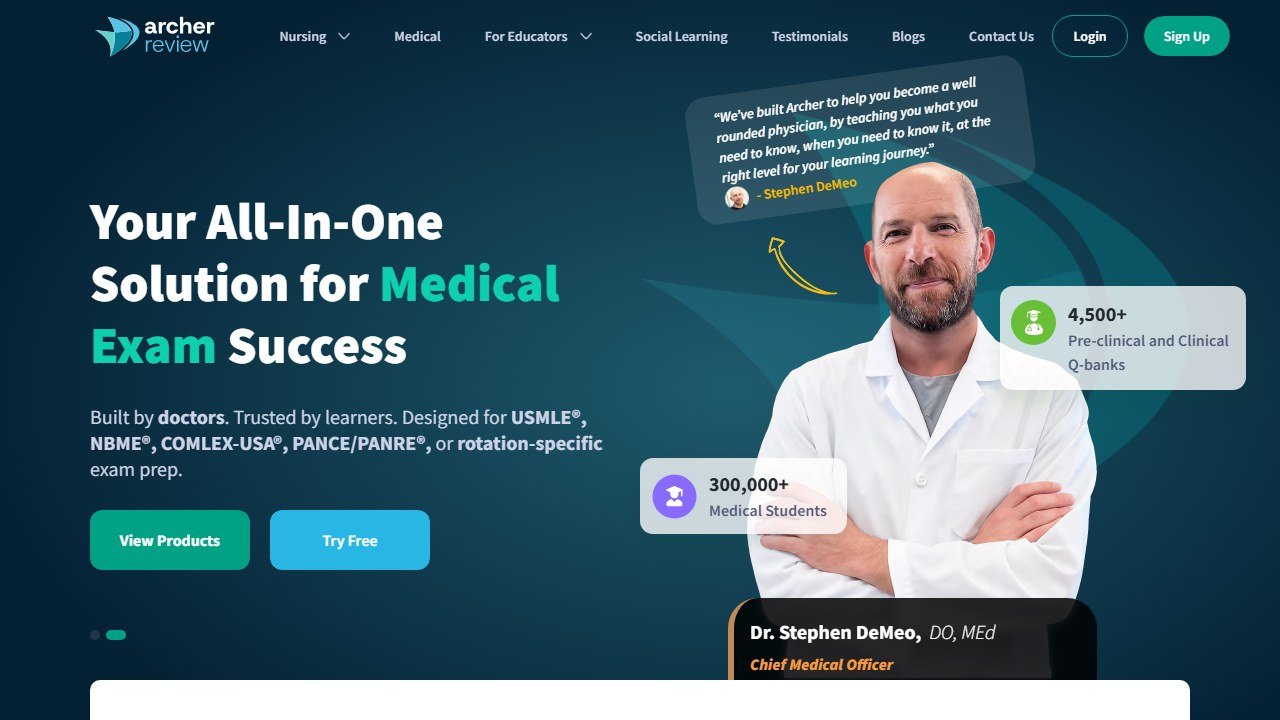
Archer Review is the budget-friendly QBank that punches above its price, and it is fully aligned with Next Generation NCLEX standards. Its standout feature is unlimited computer adaptive tests, which lets you simulate the real NCLEX algorithm and pacing as many times as you want. For students who learn by taking full length practice exams under realistic conditions, that is a meaningful edge.
The Q-Bank carries more than 3,100 questions with unlimited CAT, and each question is paired with a concise video tutorial that walks through the concept. Archer offers modular packages, so you can buy just the QBank or step up to combos that add on-demand or live video lectures, unlimited readiness assessments, and a live review weekend. Its readiness assessments are widely used as a confidence check in the final weeks before test day, and many students pair Archer with another resource rather than relying on it alone.
Strengths: unlimited CAT practice for realistic exam simulation, strong NGN alignment, and modular pricing that lets you pay only for what you need. Weaknesses: rationales are competent but generally less rich than UWorld’s, question wording occasionally feels a notch easier than the real exam, and the modular catalog can be confusing to navigate when you first sign up.
Pricing model: modular paid packages, from a basic QBank tier up to premium combos with live review, sold across 60 to 365 day access windows. See Archer Review for current packages.
5. Picmonic: visual mnemonics that make hard content stick
Score: 4/5
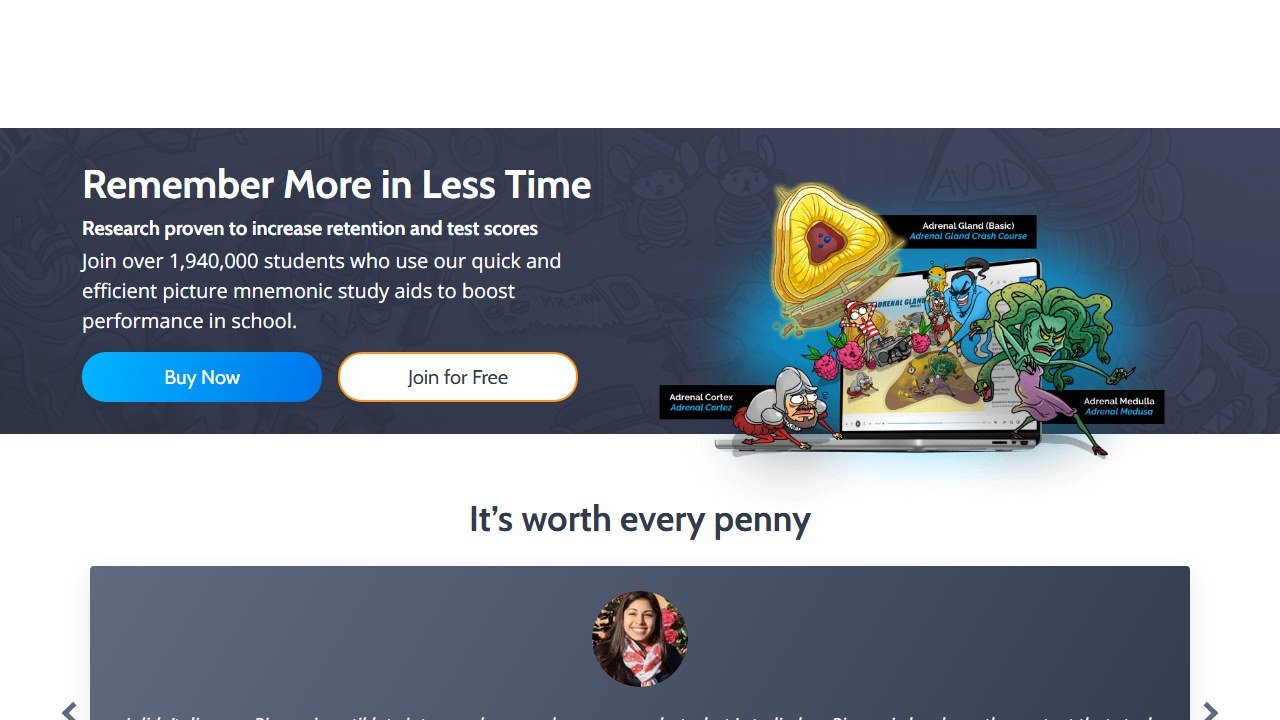
Picmonic solves a different problem than the QBanks. Nursing school buries you in content that has to be memorized cold: lab values, drug suffixes, side effects, disease processes. Picmonic turns that material into illustrated mnemonic stories with recurring characters, which research on memory and our own testing both suggest sticks far better than rereading notes. It is not your primary NCLEX simulator, but it is one of the best retention tools a nursing student can own.
The library covers more than 1,400 visual mnemonics mapped to roughly 17,000 need to know NCLEX, HESI, and ATI facts, delivered as 2 to 3 minute videos. It pairs the mnemonics with unlimited quizzing across pharmacology, med-surg, anatomy, and more, plus spaced repetition so you review at the right interval. The mobile apps make it easy to drill on the bus or between clinical shifts, and the content is mapped to NCLEX so your memorization effort points at the exam.
Strengths: visual mnemonics dramatically improve retention of high volume memorization content, the NCLEX and HESI/ATI mapping keeps it relevant, and the quizzing reinforces the mnemonics. Weaknesses: it is a recall and retention tool, not a clinical judgment or NGN case practice engine, so it cannot be your only NCLEX resource, and the cartoon mnemonic style does not click with every learner.
Pricing model: freemium, with a limited free set and monthly, semester, or annual subscriptions for the full library (longer commitments cut the effective monthly rate significantly). See Picmonic for current pricing.
6. NurseLearn AI: turn your own lectures into NCLEX practice
Score: 3.5/5
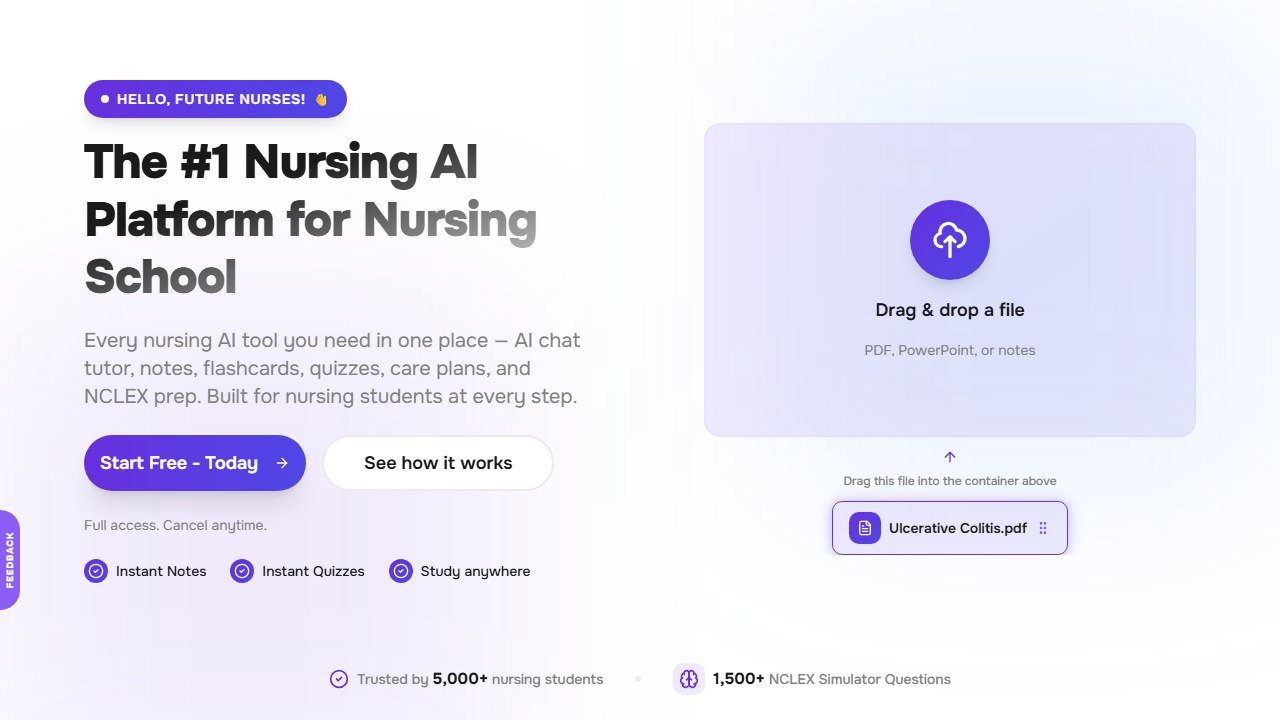
NurseLearn AI sits between the purpose-built QBanks and the general study tools. It is nursing focused, and its core trick is converting your own materials (a recorded lecture, a YouTube video, a PowerPoint, or your notes) into study notes, flashcards, and NCLEX-style questions in seconds. For students who want practice that mirrors exactly what their professor emphasized, that personalization is the draw.
It generates NCLEX-style stems with a focus on SATA and safety and prioritization, and it is updated for the 2026 NCLEX-RN and PN test plans. Beyond question generation it offers roleplay, Feynman style explanation prompts, and rationales, plus mastery tracking that flags weak topics for your next session. It works across BSN, ADN, ABSN, LPN, and MSN program content. The value is that it builds practice from your actual coursework rather than a generic bank, which keeps your studying aligned with your exams.
Strengths: generates NGN style questions from your own lecture material so practice matches your program, updated for the 2026 test plans, and the mastery tracking helps you target weak areas. Weaknesses: AI-generated questions can vary in quality and occasionally produce a flawed item or rationale, the bank it builds is only as good as the source you feed it, and it lacks the polished, expert-reviewed depth of an established QBank. Verify any rationale that surprises you.
Pricing model: freemium, start free and upgrade to a paid plan for higher limits and advanced features. See NurseLearn AI for current pricing.
7. NotebookLM: grounded study sheets from your own sources
Score: 3.5/5
Google’s NotebookLM is a general study tool, but it earns a spot because of one feature nursing students should care about deeply: it is grounded in the sources you upload, and it cites them. You load your lecture slides, a textbook chapter, or your notes, and it answers questions, builds study guides, and generates an audio overview using only that material. For a field where hallucination can be dangerous, source grounding is a real safety advantage over an open-ended chatbot.
In 2026 NotebookLM offers a large context window, deep research features, and audio and video overviews that turn dense material into a digestible briefing. For nursing it shines at consolidating a messy semester of slides into a coherent study sheet, and the inline citations let you jump back to the source to verify a claim. What it does not do is replace an NCLEX QBank: it has no native bank of expert-written NGN items, so its practice questions are generated from your sources and are not exam-calibrated.
Strengths: answers are grounded in and cited to your own uploaded sources, which sharply reduces hallucination risk, the audio overview is excellent for passive review during a commute, and the free tier is generous. Weaknesses: no native NCLEX question bank or NGN item types, quality depends entirely on the sources you give it, and it is a study aid rather than a test simulator.
Pricing model: generous free tier for any Google account with no time limit, plus optional paid plans (with a student discount) for higher limits and advanced features. See NotebookLM for details.
8. ChatGPT: a capable tutor that needs supervision
Score: 3/5
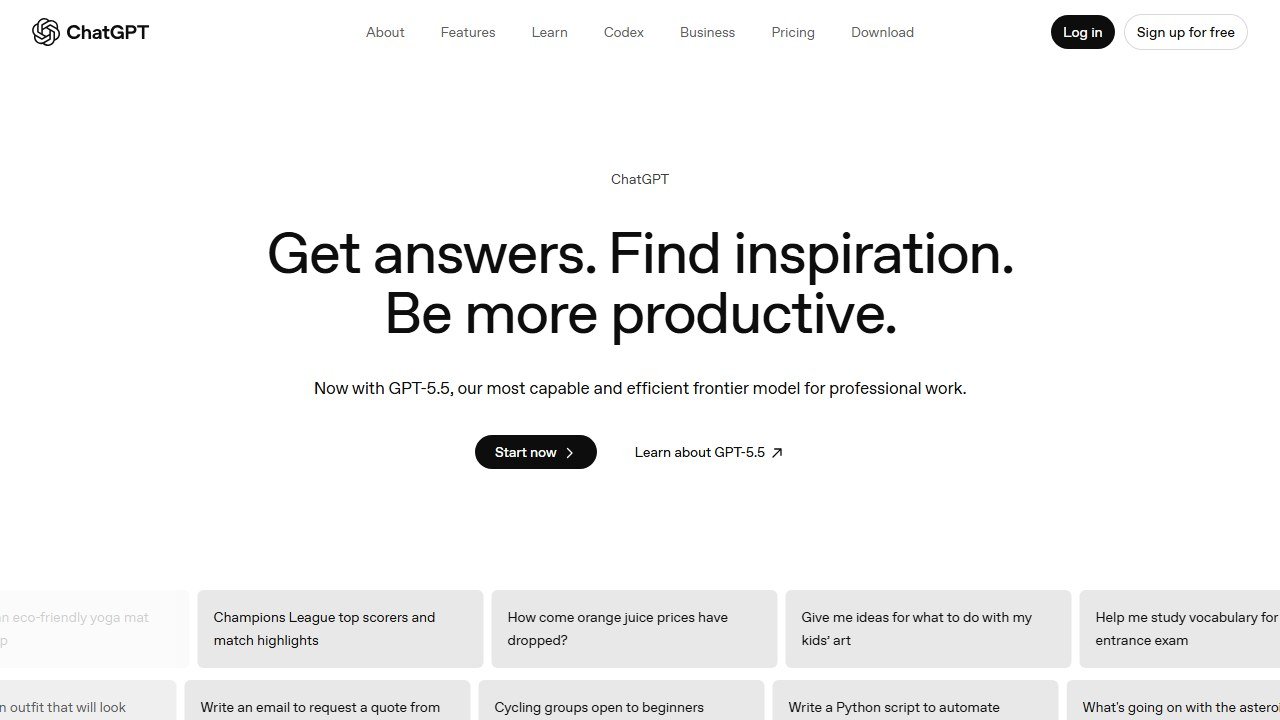
ChatGPT is the tool nursing students reach for first, and it is genuinely useful for explaining a confusing concept, building a mnemonic on demand, drafting a study schedule, or talking through why one nursing action is prioritized over another. Modern versions perform well on nursing licensure style questions in published studies, with the strongest models scoring high on NCLEX-RN style items. As a patient, flexible study coach available at any hour, it is hard to beat.
But the same studies that praise its accuracy also document its limits, and this is where nursing differs from most subjects. ChatGPT can hallucinate, producing plausible but wrong explanations, and researchers have specifically cautioned that students should not use it independently without verifying its output. One analysis found its self-generated NCLEX-style questions overweighted prioritization while underrepresenting other clinical judgment steps like recognizing cues and evaluating outcomes. It is not calibrated to the NGN the way a purpose-built bank is, and it does not know your specific test plan unless you tell it.
Strengths: outstanding at on-demand concept explanation, mnemonics, and study coaching, available instantly and conversationally, and the top models score well on nursing question formats. Weaknesses: it can hallucinate clinically, its self-generated questions are not NGN-calibrated, and it must be supervised and verified, which is non-negotiable when the subject is patient care.
Pricing model: free tier with access to capable models, plus a paid plan that unlocks the most advanced models and higher usage limits. See ChatGPT for current plans.
9. Mindgrasp: fast summaries and quizzes from any material
Score: 3/5
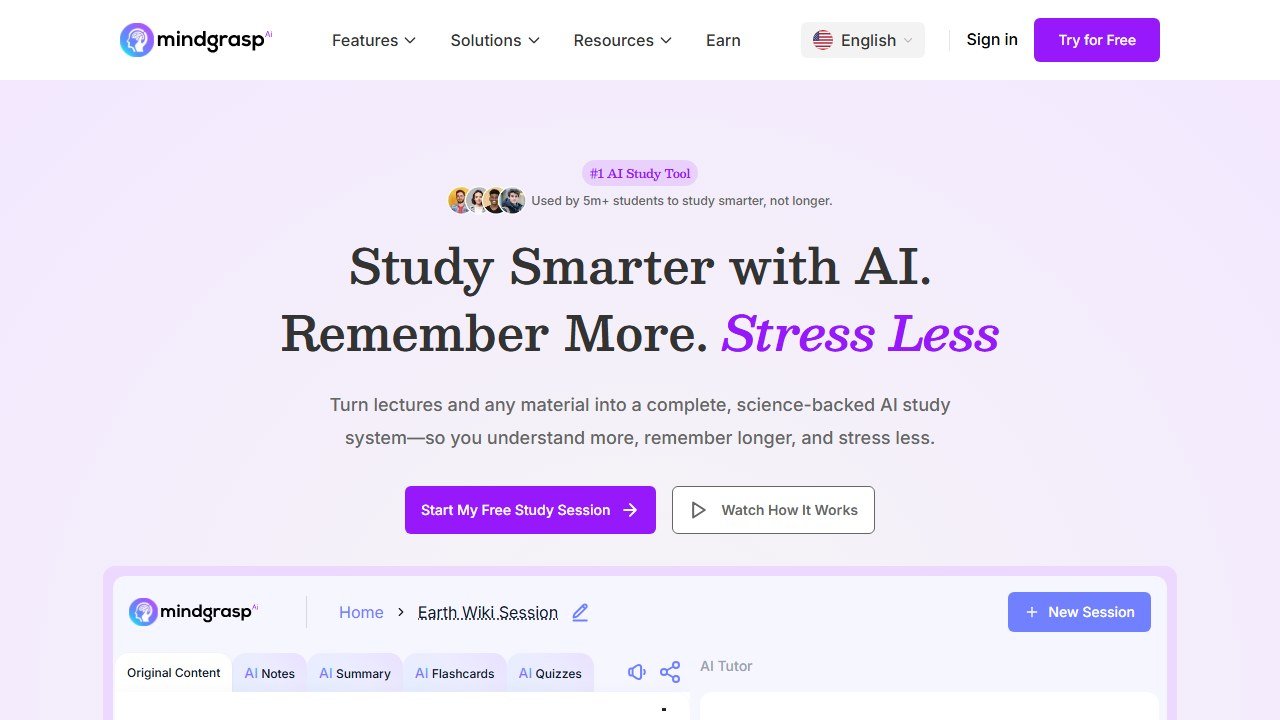
Mindgrasp is a polished general study tool that turns any lecture, PDF, video, audio file, or web link into notes, summaries, flashcards, and quizzes, with a built-in AI tutor for follow up questions. It is fast and genuinely time saving for the part of nursing school that is just processing a mountain of recorded lectures and dense readings. As a productivity layer over your coursework, it works well.
The reason it lands at the bottom of this list is fit, not quality. Its quizzes and flashcards are generic across subjects rather than tuned for the Next Generation NCLEX, so it will not give you authentic SATA, bowtie, or clinical judgment practice the way a nursing-specific tool will. It is excellent for compressing a lecture into a study sheet before an exam, but it is a supplement to a real NCLEX resource, not a substitute. Like any general AI tool, its summaries and quiz answers should be verified against your course materials.
Strengths: fast, accurate summarization of lectures and PDFs, broad input support including audio and video, and a useful built-in tutor for quick clarifications. Weaknesses: quizzes are generic and not NGN-calibrated, there is no permanent free tier so it costs money to keep using past the trial, and as a general tool it requires the usual verification for clinical content.
Pricing model: short free trial, then a monthly subscription (no permanent free tier). See Mindgrasp for current pricing.
Student data, and the questions a school has to ask before anything is switched on
This is the part of education technology where getting it wrong has consequences beyond a wasted subscription, and it is mostly answerable in writing before adoption.
Know which law you are under before you evaluate
In the United States, student education records sit under FERPA, and services aimed at under-13s bring COPPA into scope, which requires verifiable parental consent for personal information collected from children. Schools outside the US will have their own regime. The practical effect is the same: the school, not the vendor, carries the obligation, so the vendor questions exist to let you meet it.
Ask whether student work trains the model
This is the single question to get in writing. Ask whether student inputs and outputs are used to train or improve any model, including in aggregated or anonymised form, and whether that binds subprocessors too. “We do not train on your data” and “we do not train foundation models on your data” are different sentences. Get it as a contract term, because a sales assurance does not survive a change of ownership.
Ask who else touches the data
Most tools here are built on a model provider they did not write, so student work reaches a third party. Ask for the current subprocessor list, where each processes data, and how you are notified when it changes. A vendor that cannot produce that list within a day does not have one, which tells you enough about the rest of their programme.
Ask what happens at the end of a school year
Retention and deletion, stated in days rather than described as a process. What is deleted when a student leaves, when a class is archived, when the contract ends. Ask whether deletion means removed from live systems, removed from backups, or flagged. A vendor that will commit to a number in the contract is a different proposition from one that describes an approach.
The one many schools miss: inferences about a child
If a tool generates a reading level, a predicted grade, a behaviour flag or an ability estimate, that is data about a student the student never supplied. Ask whether those inferences are covered by your export, your deletion request and your access request, because a parent asking what the school holds on their child is asking about those too.
How to choose
Match the tool to the job instead of buying everything. A sensible stack for most nursing students is one purpose-built QBank plus one general AI tool for processing your own materials.
Start with the exam timeline. If you are months out and want to learn content while you practice, a structured option like NCLEX Bootcamp or an AI tutor like GoodNurse gives you guidance and explanation as you go. If you are in the final weeks and want maximum realism and predictive accuracy, UWorld plus an adaptive readiness check from Archer is the proven combination. UWorld is the splurge that most reviewers say is worth it for its rationales and exam realism.
Match the tool to your weakness. Drowning in memorization (labs, drugs, side effects)? Picmonic. Want practice built from your professor’s exact slides? NurseLearn AI or NotebookLM. Need a concept explained five different ways at midnight? ChatGPT or GoodNurse. Need to compress a 90 minute lecture before tomorrow’s exam? Mindgrasp or NotebookLM.
Watch the pricing models. The dedicated QBanks (UWorld, Archer) are sold in access windows, so buy the window that covers your study period and no longer. AI tutors and study tools (GoodNurse, Mindgrasp, ChatGPT) are monthly subscriptions you can start and cancel around a single hard stretch. The freemium tools (Picmonic, NurseLearn AI, NotebookLM, ChatGPT) let you test fit before paying. For more on cross-subject study tools, see our guides to the best AI tools for students and the best AI flashcard apps. If you are in a health science track more broadly, our roundup of AI tools for medical students covers adjacent options.
A note on safety
This matters more in nursing than in almost any other field, so it gets its own section. Every AI tool on this list can produce confident, plausible, and wrong information. Large language models hallucinate. Published research on ChatGPT and nursing exams explicitly warns that students should not use these tools independently without verifying the output, and that their self-generated questions can skew toward some clinical judgment skills while underrepresenting others.
Treat AI as a study accelerator, never as a clinical authority. Do not use a chatbot’s answer to make a decision about a real patient, a real medication, or a real dose. Cross check anything that surprises you against a verified nursing reference, a current drug guide, your textbook, or your instructor. The purpose-built tools (UWorld, GoodNurse, Bootcamp, Archer, Picmonic) are built on expert-reviewed content and are safer for study, but even they are preparation aids, not substitutes for verified references and clinical supervision. The stakes in nursing are human, so the verification habit you build now is part of becoming a safe nurse.
Our verdict
For pure NCLEX firepower, UWorld remains the gold standard, and it is the resource most likely to be worth its higher price thanks to rationales and exam realism nothing else matches. If you want an AI tutor that was actually built for nursing and explains every miss as you go, GoodNurse is the standout and the best representative of why purpose-built tools beat repurposed chatbots for this audience. NCLEX Bootcamp is the best value for a guided, NGN-ready course, and Archer is the affordable way to log unlimited realistic adaptive practice.
Round out your stack with the tool that fixes your specific weakness: Picmonic for memorization, NurseLearn AI for practice built from your own lectures, NotebookLM for grounded and cited study sheets, and ChatGPT or Mindgrasp for fast explanations and summaries with the verification habit firmly in place. Buy one strong QBank, add one note tool, drill hard, and verify everything clinical. Do that, and these tools will earn their keep on the way to your license.

Written by
FazFaz is the founder of AIToolsBakery. Some tools here are tested hands on. Others are assessed from vendor documentation and pricing verified on the live page, and every review says which one it is. Sponsors can buy a position in a guide. They cannot buy the score, the criticism, or silence about a better option.
How we test and how we make money →Frequently Asked Questions