Employee engagement software is how a company hears its people at scale and does something about what it hears. At its core the category combines four jobs: surveys that measure how people feel (pulse checks and eNPS), recognition that reinforces the behavior you want, real-time analytics that turn thousands of responses into a clear signal, and action-planning that helps managers actually close the loop. Done well, it moves the numbers that matter to the business: retention, productivity, and whether your best people stay. Done as a checkbox, it produces a dashboard nobody opens and a survey nobody trusts.
The category is crowded, and “best engagement platform” has no single answer, because the buyers are so different. A 60-person company that mostly needs peers to recognize each other has almost nothing in common with a 5,000-person enterprise that needs benchmarked survey science and an action plan for every manager. The 2026 shift worth naming is that AI has moved from admin automation to strategic insight: the leading tools no longer just tabulate results, they read open-text comments, surface the themes driving a score, and suggest what a manager should do next. Deep Slack and Microsoft Teams integration is now a genuine differentiator too, because recognition and surveys that live where people already work get used, and the ones that require a separate login do not. Every tool below is ranked on genuine fit, with honest notes on where each one falls short.
Top pick: Culture Amp is the best employee engagement software overall in 2026, combining rigorous engagement surveys, deep people analytics, and AI that turns comments into an action plan. Lattice is best for pairing engagement with performance, and Bonusly is best for recognition and rewards.
Faz says: Decide what your real problem is before you look at a single demo. If your problem is that you do not actually know how your people feel, or leadership argues about it from anecdotes, you want a survey and analytics platform, and Culture Amp or Lattice win. If your problem is that good work goes unnoticed and people feel invisible, you want recognition, and Bonusly, Nectar, or Motivosity win. Most disappointing engagement purchases happen because someone bought a recognition tool expecting survey science, or bought a survey tool expecting daily culture change. They are different jobs.
Saru says: This ranking draws on each vendor’s official product and pricing pages, published AI feature documentation, and aggregated user feedback, current to 2026. Pricing in this category shifts often and usually depends on headcount, billing frequency, and whether rewards budget is included, so treat every figure here as a starting point as of 2026. Get a written quote for your exact team size before you buy.
How We Ranked These
Engagement software earns its place by changing behavior and outcomes, not by producing the prettiest dashboard. We weighted six things:
1. What it is actually built for. Surveys, recognition, and performance are related but distinct jobs. We placed each tool where it is genuinely the best answer, not where it technically overlaps.
2. Survey and analytics depth. Pulse and eNPS surveys are easy to send and hard to interpret. We rewarded real benchmarking, driver analysis, and reporting that a leadership team can act on.
3. Recognition and rewards. For the recognition-first tools, we looked at how naturally peer appreciation happens, how flexible the rewards catalog is, and whether it ties to company values.
4. AI substance. Every vendor advertises AI. We separated tools where AI does real strategic work, reading open text, surfacing themes, drafting action plans, from tools where “AI” summarizes a comment and calls it insight.
5. Integrations. Slack and Microsoft Teams integration decides adoption. A tool people use inside their existing workflow beats a better tool they have to remember to open.
6. Fit and total cost. We flag team-size fit and the pricing model as of 2026, including whether rewards budget sits on top of the per-user fee, because that changes the real number.
The Best Employee Engagement Software at a Glance
| Tool | Best for | Core strength | AI depth | Starting price (as of 2026) |
|---|---|---|---|---|
| Culture Amp | Overall, survey-led teams | Surveys plus people analytics | Very high | Quote-based, per employee |
| Lattice | Engagement plus performance | Unified HR performance suite | High | From about $11/user/mo |
| Bonusly | Recognition and rewards | Peer recognition plus rewards | Medium | From about $3 to $5/user/mo |
| Nectar | Value recognition | Affordable peer recognition | Medium | From about $3/user/mo |
| Motivosity | Recognition culture | Daily appreciation habit | Medium | From about $4/user/mo |
| Workleap Officevibe | Manager-level insights | Lightweight pulse surveys | Medium | Free tier, paid from about $3.50/user/mo |
| WorkTango | Enterprise recognition plus surveys | Recognition and surveys combined | High | Quote-based |
Prices depend on headcount, billing frequency, and rewards budget, and change over time. Confirm current pricing with each vendor.
1. Culture Amp: Best Overall
Culture Amp is the category’s clearest leader for organizations that treat engagement as a measurement-and-action discipline, not a feel-good exercise. It began as an employee-survey platform built on organizational-psychology science, and it has grown into a full employee-experience system spanning engagement, performance, and development, with analytics deep enough that people teams and executives actually plan from it.
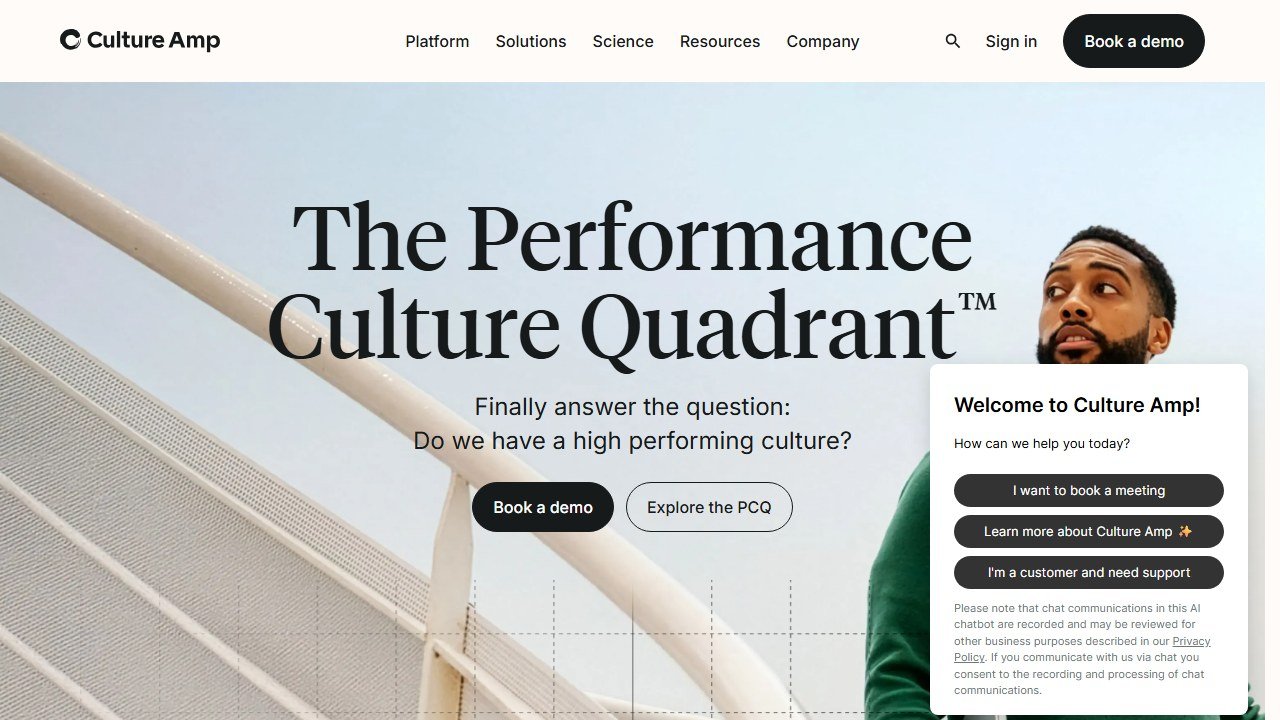
How it works. You run engagement surveys, pulse checks, and lifecycle surveys (onboarding, exit, and more), and Culture Amp scores the results against a large set of industry benchmarks so you know whether a 72 is good or a problem. Its driver analysis shows which factors are actually moving your engagement score, and its action-planning tools push recommended focus areas down to individual managers so the insight does not die at the top.
Standout strength. Analytics and benchmarking, now sharpened by AI. Culture Amp’s benchmark data set is one of the largest in the category, and its AI reads open-text comments at scale, clusters them into themes, and summarizes what people are really saying, which is the exact work that used to eat a people-analytics team for a week. This is the clearest example of the 2026 shift from AI as admin automation to AI as strategic insight.
Pricing. Quote-based and priced per employee, scaling with headcount and the modules you turn on (engagement, performance, development). Expect it to sit at the premium end of the category, which is consistent with its analytics depth.
Best for. Mid-market and enterprise organizations that want rigorous, benchmarked survey science and genuine action-planning, and that have someone who will own the insights. For the wider set of tools that plug into a people team’s stack, see our best AI tools for HR pillar.
Where it falls short. It is more platform than a small company needs, and the price reflects that. A 40-person team that mainly wants peers to recognize each other will find Culture Amp heavy and expensive for the job. Its recognition tooling is also lighter than the recognition specialists lower on this list.
2. Lattice: Best for Pairing Engagement With Performance
Lattice earns its spot by refusing to treat engagement as a standalone silo. It combines engagement surveys with performance reviews, goals and OKRs, 1:1s, and development in one connected platform, so how people feel is linked to how they are actually managed, reviewed, and grown. For a lot of companies, that connection is the whole point: a low engagement score means more when you can see it next to the manager, the goals, and the review cycle it belongs to.
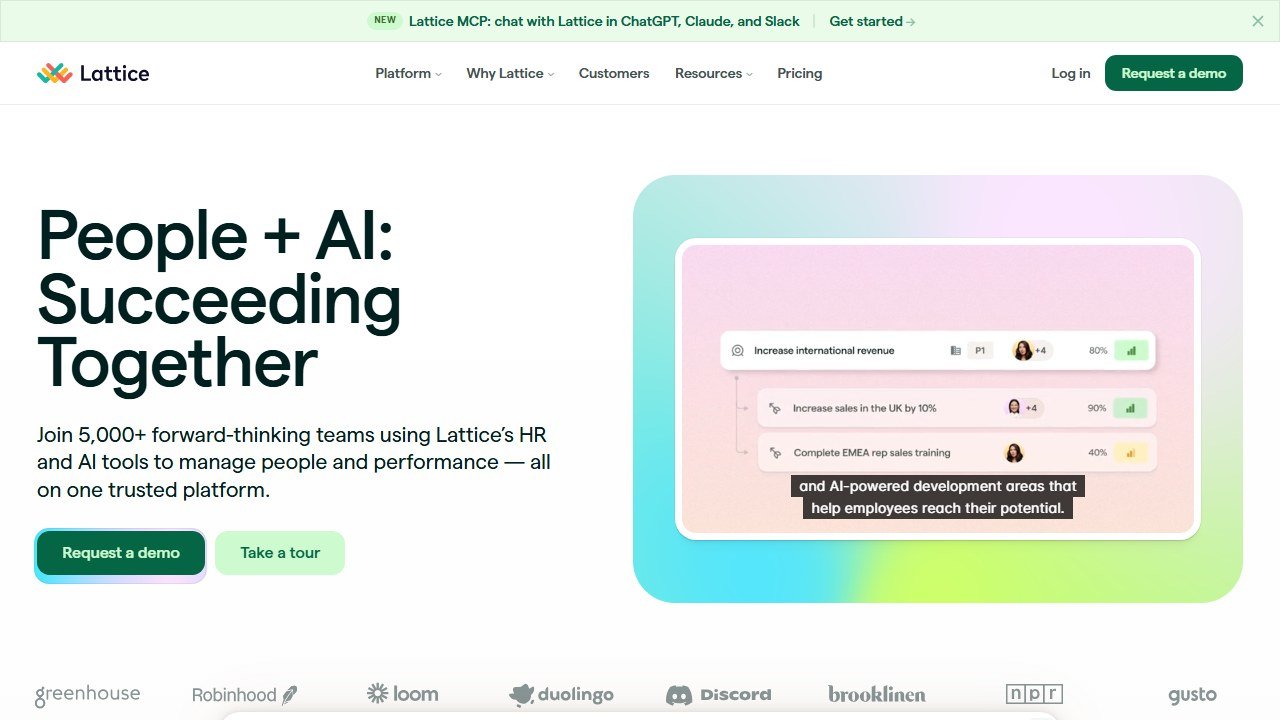
How it works. You run engagement and pulse surveys inside the same system that hosts performance reviews, goal tracking, and manager 1:1s. Sentiment data sits alongside performance data, so a manager preparing for a review or a 1:1 sees engagement signals in context, and HR can spot where disengagement and performance problems overlap.
Standout strength. The unified model. Because engagement, performance, and goals share one platform and one data layer, Lattice connects sentiment to action in a way standalone survey tools cannot. Its AI features assist with summarizing feedback and drafting, and the integrated design means managers act on engagement inside their normal performance workflow rather than in a separate app. For the performance side specifically, see our best AI performance management software guide.
Pricing. More transparent than most of the category. Engagement is offered as a module, with published per-user pricing that commonly starts around $11 per user per month for a core plan and rises as you add performance, goals, and other modules, as of 2026. Confirm the current bundle, because the value is strongest when you buy engagement and performance together.
Best for. Growth-stage and mid-market companies that want engagement and performance management in one system rather than stitching two tools together.
Where it falls short. If you only want engagement surveys, you are buying into a broader suite you may not fully use, and Culture Amp’s pure survey analytics and benchmarking run deeper. Its recognition features are also lighter than the recognition-first tools.
3. Bonusly: Best for Recognition and Rewards
Bonusly is the best-known name in peer-to-peer recognition, and it is built around a simple, sticky mechanic: everyone gets a monthly allowance of points to give to colleagues, tied to company values, and those points convert into real rewards. That small habit, public appreciation that costs the giver nothing and means something to the receiver, is what makes recognition actually happen instead of being a manager’s afterthought.
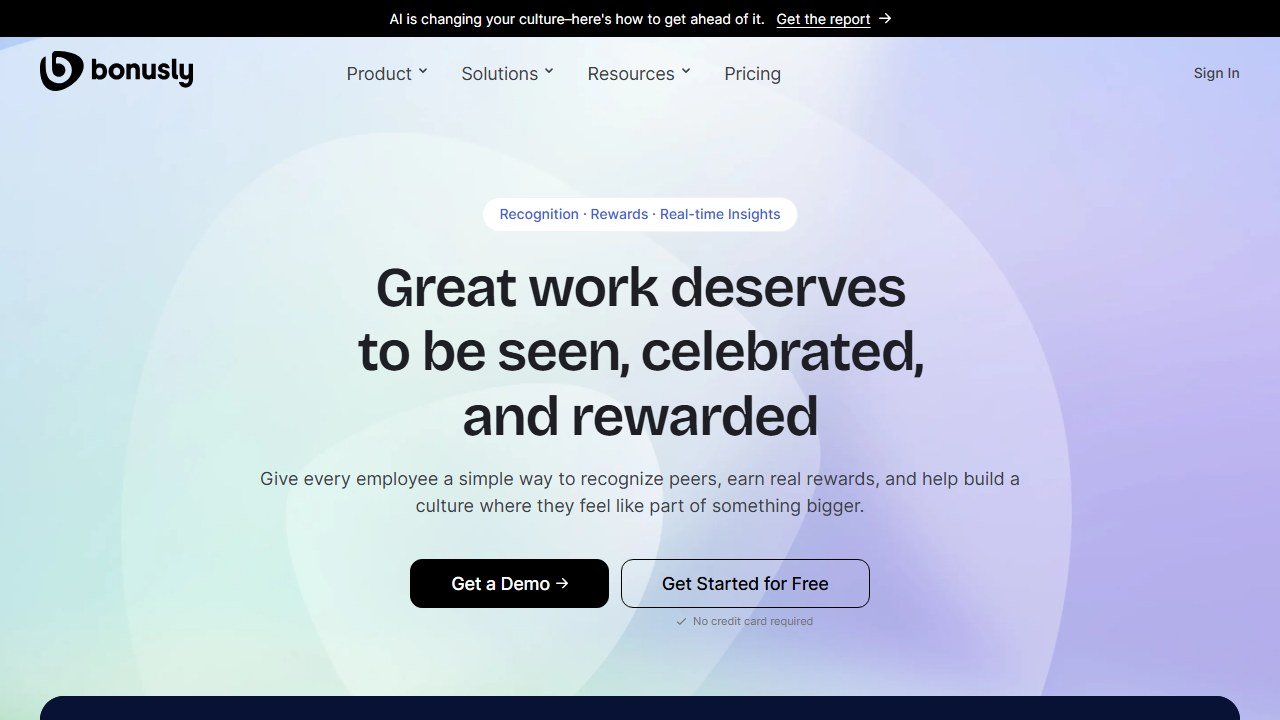
How it works. Employees give small point-based bonuses to peers, each tagged to a company value and posted to a public feed, so recognition is visible and reinforces the culture you are trying to build. Points accumulate into a flexible rewards catalog spanning gift cards, charitable donations, and custom rewards. Bonusly layers lightweight engagement signals and analytics on top, so leaders can see participation and sentiment trends.
Standout strength. Frictionless, values-linked recognition with deep Slack and Microsoft Teams integration, so appreciation happens inside the tools people already live in. The rewards catalog is broad and genuinely motivating, and the public feed turns recognition into a visible cultural norm rather than a private note.
Pricing. Per user per month, commonly starting around $3 to $5 per user for the recognition plans as of 2026, plus the rewards budget you fund on top, which is the part first-time buyers often forget to model. That rewards budget, not the software fee, is usually the larger line item.
Best for. Companies of almost any size whose primary goal is a strong, consistent recognition habit tied to values, especially distributed teams that live in Slack or Teams.
Where it falls short. Bonusly is a recognition tool first. Its survey and analytics depth is modest next to Culture Amp or Lattice, so if you need serious engagement measurement and action-planning, it is a complement rather than a replacement. Remember to budget for rewards on top of the subscription.
4. Nectar: Best Value Peer-to-Peer Recognition
Nectar delivers the core of what makes Bonusly work, peer recognition, rewards, and a values-linked feed, at a price built for cost-conscious small and mid-size teams. It is the value pick in the recognition space: you get the recognition mechanic, a rewards catalog, and swag options without a premium platform fee, which is why smaller teams adopt it quickly.
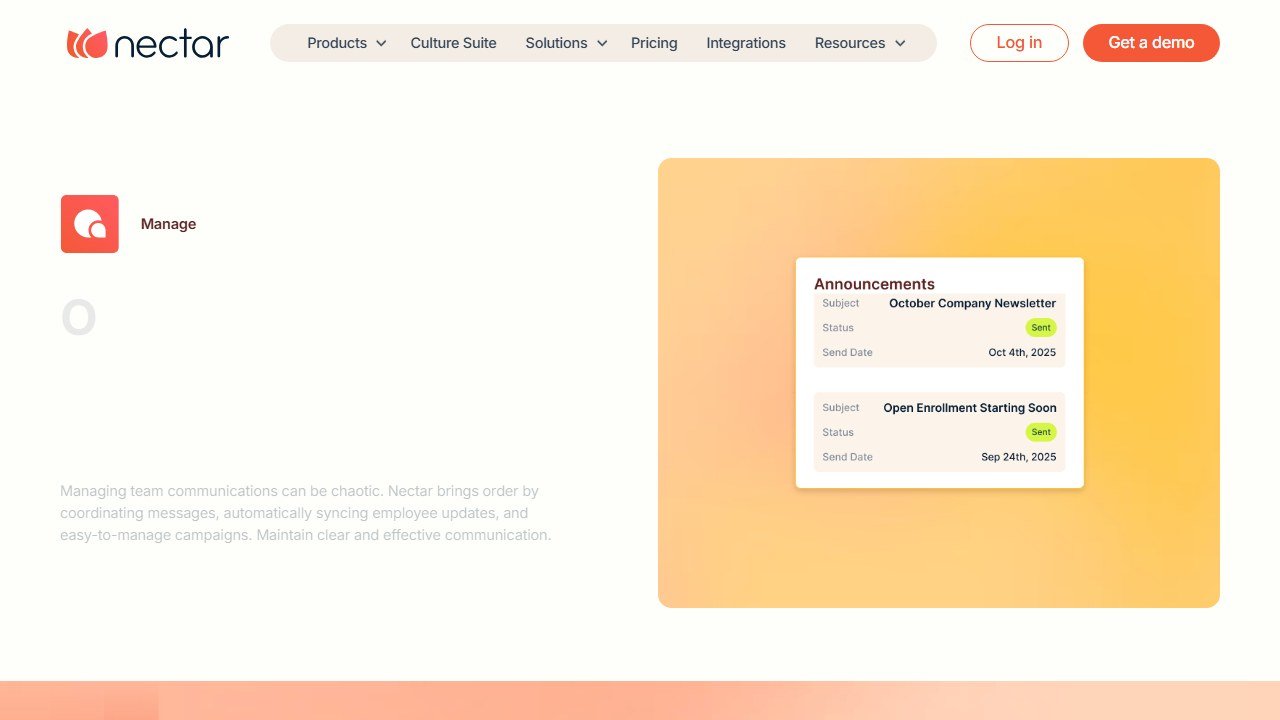
How it works. Employees send recognition tied to company values, colleagues can add points or “boosts,” and recognition posts to a shared feed. Points redeem in a rewards catalog that includes gift cards, company swag, and charitable options, and Nectar adds features like rewards for wellness and challenges. It integrates with Slack and Microsoft Teams so recognition flows through existing channels.
Standout strength. Value. Nectar offers a genuinely affordable per-user model, often starting around $3 per user per month as of 2026, that keeps recognition accessible for teams that could not justify a pricier platform. The integrated swag and rewards store is a practical touch for companies that want branded merchandise in the mix.
Pricing. Per user per month, typically starting around $3 with a rewards budget funded separately, as of 2026. Its low entry point is the whole appeal for small teams.
Best for. Small and mid-size businesses that want effective peer-to-peer recognition and rewards without paying for an enterprise engagement suite.
Where it falls short. Like other recognition-first tools, its survey and analytics capabilities are lighter than the measurement leaders. Larger enterprises that need deep engagement science, benchmarking, and manager action-planning will need to pair it with, or move to, a survey-led platform.
5. Motivosity: Best for Building a Recognition Culture
Motivosity is designed to make appreciation a daily habit rather than a quarterly program. Where some tools treat recognition as a points economy, Motivosity leans into gratitude and connection, a “ThanksMatters” feed, peer appreciation, and manager tools built to nudge leaders into recognizing their people consistently. The goal is cultural: turn appreciation into something that happens every day, from everyone, not just top-down at review time.
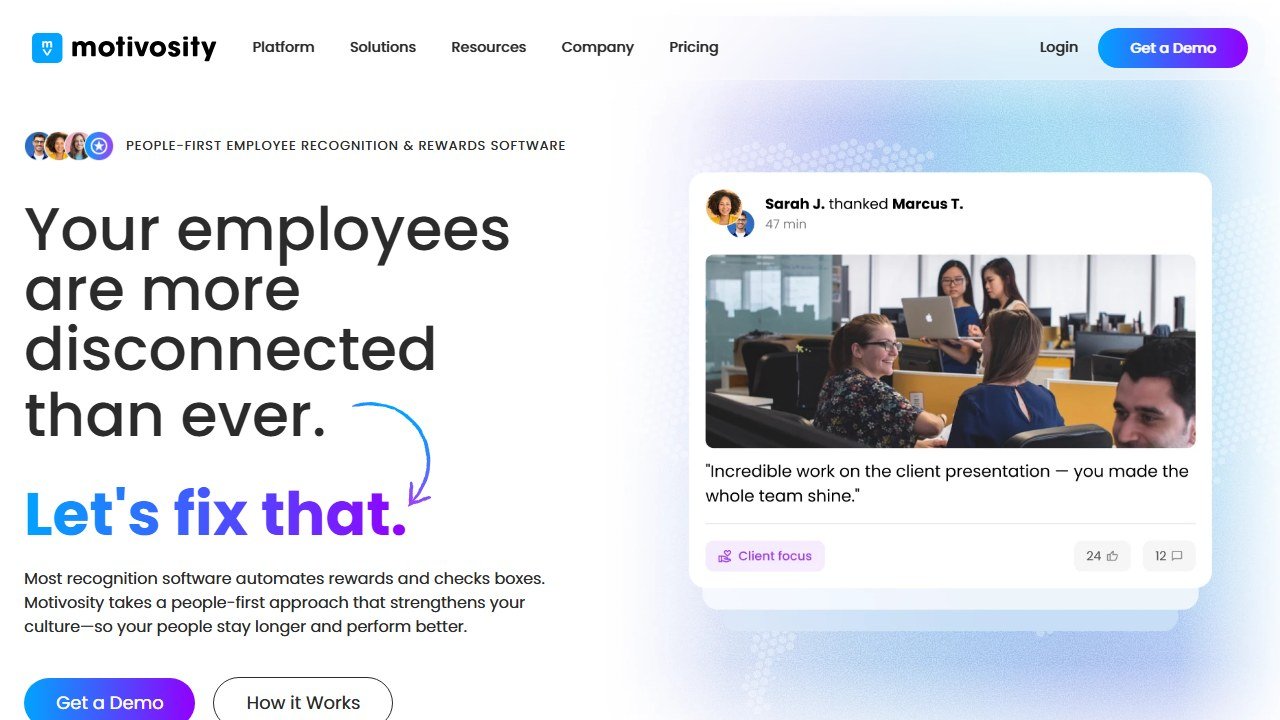
How it works. Employees post public appreciation to a company-wide feed, can attach small monetary amounts, and recognition is tied to values and connection. Motivosity adds manager-focused modules that prompt one-on-ones, milestones, and consistent recognition habits, plus lightweight engagement measurement so leaders can see how connected and appreciated the team feels.
Standout strength. Culture-building. Motivosity’s emphasis on gratitude, visibility, and manager habits makes it strong for companies whose explicit goal is to shift the culture toward everyday appreciation, not just to run a rewards program. The manager tooling helps leaders who are not naturally recognizers build the habit.
Pricing. Per user per month, commonly starting around $4 per user as of 2026 for the recognition module, with additional modules (manager development, engagement) priced on top. Confirm the current bundle for the modules you want.
Best for. Companies that want to intentionally build a culture of appreciation and connection, and that value manager-enablement tooling alongside peer recognition.
Where it falls short. As a measurement platform it is lighter than Culture Amp or Lattice, and its module-based pricing means the full experience costs more than the headline recognition price. Enterprises needing deep survey analytics will treat it as a culture layer, not their primary engagement-measurement system.
6. Workleap Officevibe: Best for Manager-Level Engagement Insights
Workleap Officevibe (formerly Officevibe, now part of the Workleap suite) is built for the frontline manager rather than the head of HR. Its whole design goal is to give a team lead a simple, continuous read on how their people are doing, through lightweight pulse surveys and anonymous feedback, without the weight of an enterprise analytics platform.
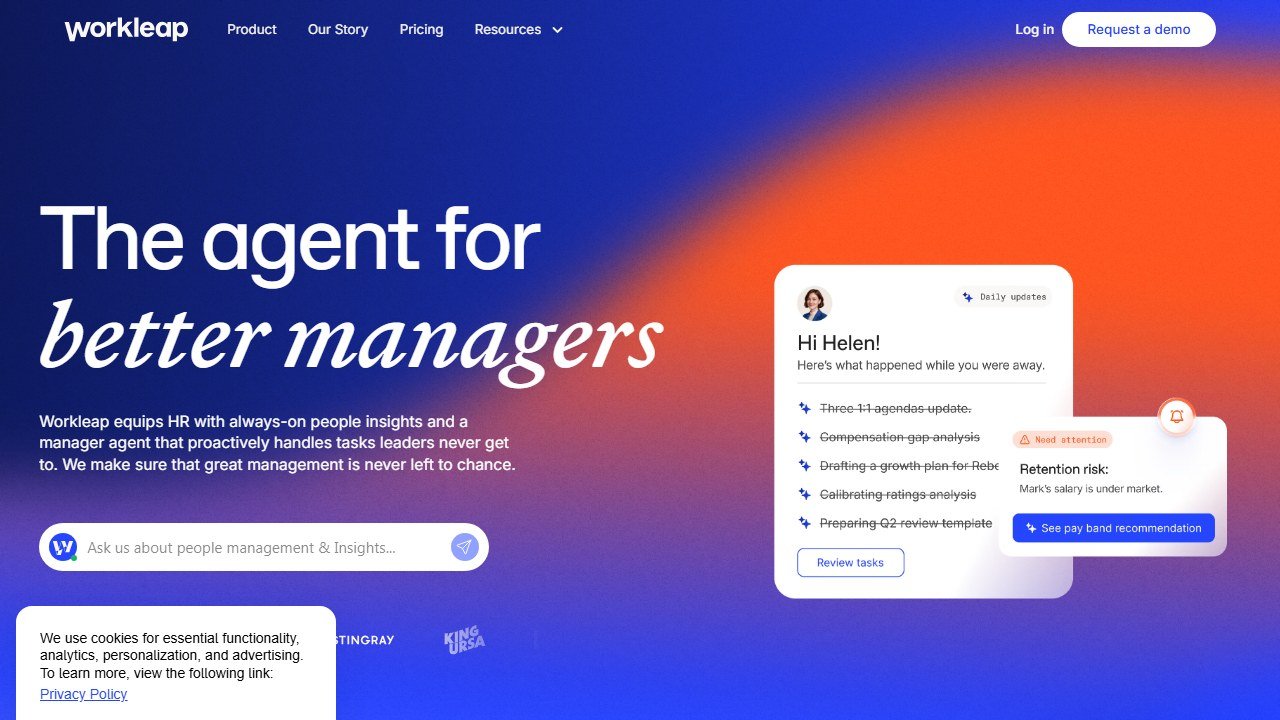
How it works. Officevibe sends short, regular pulse surveys covering the drivers of engagement, collects anonymous employee feedback, and presents each manager a clear, digestible view of their team’s sentiment over time. Anonymous two-way feedback lets employees raise issues candidly, and managers respond without breaking anonymity, which builds the kind of trust that makes future surveys honest.
Standout strength. Simplicity and manager focus. Officevibe turns engagement measurement into something a busy manager can actually use week to week, with a low-friction survey cadence and an interface built around a single team rather than the whole org. It integrates with Slack and Microsoft Teams to keep the pulse in the flow of work.
Pricing. Accessible, with a free tier for small teams and paid plans commonly starting around $3.50 per user per month as of 2026. That low entry point makes it easy for a single team or a small company to start measuring engagement without a big commitment.
Best for. Managers and small-to-mid-size teams that want a straightforward, continuous pulse on engagement and a feedback loop they will actually maintain.
Where it falls short. Its analytics and benchmarking are lighter than Culture Amp’s, and it is more a manager pulse tool than a full enterprise engagement-and-action platform. Large organizations that need deep driver analysis, extensive benchmarking, and org-wide action-planning will outgrow it.
7. WorkTango: Best for Enterprise Recognition Plus Surveys Combined
WorkTango (which brought together recognition heritage from Kudos-style peer appreciation with a robust survey platform) is the pick when an enterprise wants both recognition and engagement surveys in one system rather than buying two tools. It pairs a full recognition-and-rewards program with genuine engagement-survey capability, which is a combination most competitors only do well on one side of.
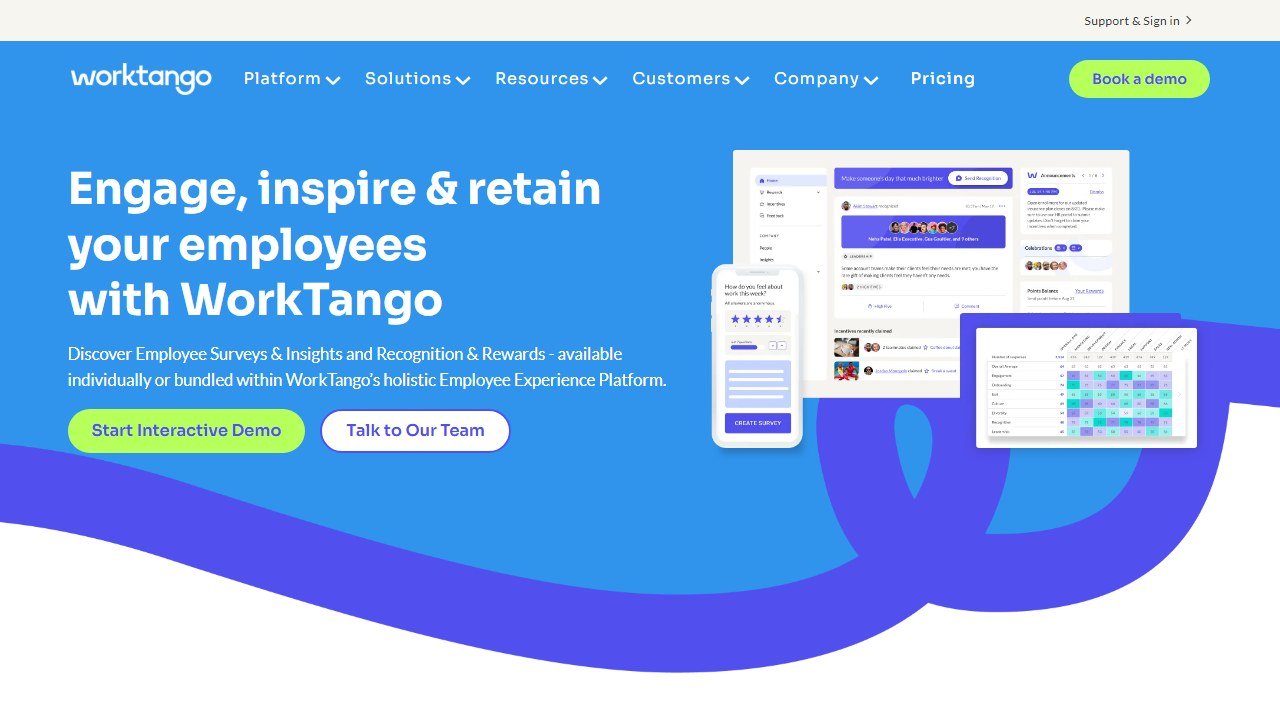
How it works. On the recognition side, employees give values-based recognition and redeem points in a global rewards catalog, with the public appreciation feed that drives a visible culture. On the survey side, WorkTango runs engagement, pulse, and lifecycle surveys with analytics and reporting, so the same platform that celebrates people also measures how they feel, and leaders can look at recognition activity and engagement data together.
Standout strength. The combined model at enterprise scale. Getting serious recognition and serious surveys from one vendor reduces integration overhead and lets you correlate the two, which teams that run them separately cannot easily do. The rewards program is built for large, global workforces, and the survey side is more capable than what the recognition-first tools offer.
Pricing. Quote-based, positioned for mid-market and enterprise, with the rewards budget funded on top of the platform fee. As a two-in-one, it can consolidate the cost of a separate recognition tool and survey tool into a single contract.
Best for. Mid-market and enterprise organizations that want recognition and engagement surveys unified in one platform, with rewards built for a large or distributed workforce.
Where it falls short. For pure survey science and benchmarking, Culture Amp still runs deeper, and for the lowest-cost recognition, Nectar undercuts it. WorkTango’s strength is the combination, so a team that only needs one of the two jobs may find a specialist a better fit.
How to Choose the Right Engagement Software
Ignore the feature grids for a minute and answer four questions. They will cut seven options to two.
What is your actual problem, measurement or recognition? If you do not truly know how your people feel and leadership argues from anecdotes, you need surveys and analytics: Culture Amp or Lattice. If good work goes unnoticed and people feel invisible, you need recognition: Bonusly, Nectar, or Motivosity. Buying the wrong category is the most common mistake in this market.
Do you need engagement tied to performance? If you want sentiment connected to reviews, goals, and 1:1s in one system, Lattice is built for exactly that. If you want the deepest standalone survey science and benchmarking, Culture Amp leads. For the performance-first angle, our best AI performance management software guide goes deeper.
How big is your team, and what is your budget? Small teams that mainly want recognition are well served by Nectar or Officevibe’s free and low-cost tiers. Mid-market and enterprise buyers who need benchmarked surveys or a combined recognition-plus-survey platform should look at Culture Amp or WorkTango. Always model the rewards budget separately from the software fee for any recognition tool.
Where does your team already work? Deep Slack and Microsoft Teams integration is a real differentiator, because recognition and surveys that live in the tools people already use get adopted, and the ones that require a separate login quietly die. Confirm the integration is native and two-way, not a link that dumps people into another app.
One more thing that applies to every option: engagement software only works if you close the loop. The best analytics in the world do nothing if managers never act on them, so weigh how well each tool pushes insight and action down to the frontline manager, and demo the AI reading real open-text comments before you commit. For where engagement fits in the broader people stack, see our best HRIS software guide.
Verdict
The best employee engagement software in 2026 is the one that matches your actual problem and your team size. Culture Amp is the overall standard for organizations that want rigorous, benchmarked survey science and AI that turns comments into an action plan. Lattice is the sharpest choice when you want engagement connected to performance, goals, and 1:1s in one system. Bonusly, Nectar, and Motivosity each own a clear slice of the recognition market on reach, value, and culture-building, and Workleap Officevibe and WorkTango win for manager-level pulse insights and combined enterprise recognition-plus-surveys respectively.
Name your bottleneck, size your team, model the rewards budget separately, and demo the AI on real open-text comments before you commit. For where engagement fits in the wider people stack, see our best AI tools for HR pillar, our best AI performance management software guide, and our best HRIS software roundup.

Written by
FazFaz is the founder of AIToolsBakery. Some tools here are tested hands on. Others are assessed from vendor documentation and pricing verified on the live page, and every review says which one it is. Sponsors can buy a position in a guide. They cannot buy the score, the criticism, or silence about a better option.
How we test and how we make money →