Sourcing is the part of recruiting that AI changed most. The job used to be Boolean-string craft and patient LinkedIn spelunking. Now a sourcer can type a sentence into a search engine sitting on hundreds of millions of profiles and get a ranked, contactable list in seconds, sometimes with the outreach already drafted. The category has effectively become a set of candidate search engines, and the best ones are very good. The gap between them, though, comes down to two unglamorous things: how big and how accurate the underlying profile data is, and whether the contact details they hand you actually reach a human.
This guide ranks the AI sourcing tools we would shortlist in 2026, scored on database depth, search quality, contact-data accuracy, outreach and workflow, and value. We are an independent review site. We do not sell any of these tools, we are not a reseller, and nobody paid for placement or a better score. Where a product has a real weakness (shaky contact data, opaque pricing, a recent leadership shake-up) we say so.
A naming note up front, because two vendors here rebranded and the old names still float around. hireEZ is the company formerly known as Hiretual. Juicebox is the product formerly known as PeopleGPT. Same tools, new labels.
Quick answer: SeekOut is the top AI sourcing tool for deep, enriched candidate search, with hireEZ the best all-rounder for outreach and Gem strong for CRM-driven pipelines. Test the contact data before you commit, keep outreach GDPR-defensible, and keep a human deciding who advances.
What AI sourcing tools actually do
An AI sourcing tool aggregates candidate profiles from many sources (LinkedIn-adjacent public data, GitHub, research databases, company sites, social platforms) into one searchable index, then lets you query it in natural language instead of Boolean. Ask for “senior backend engineers in Berlin who have shipped payments infrastructure” and the engine interprets intent, ranks matches, and returns profiles with enrichment: skills, work history, and often contact details.
The better tools go further. They run agentic workflows that draft personalized outreach, sequence follow-ups across email and other channels, and sync the whole thing into your ATS or CRM so sourced candidates do not vanish into a spreadsheet. The differentiators that matter in real use are profile coverage (a bigger, fresher index surfaces people smaller tools miss), search precision (good ranking versus a wall of loose matches), and contact-data accuracy, which is consistently the loudest complaint across the whole category.
A brief compliance note, since it is our differentiator. Sourcing tools enrich profiles with personal data, and that triggers obligations. Under GDPR, you generally need a lawful basis to process EU candidates’ data and you may need to notify them, so confirm your vendor’s data sourcing and your own outreach practices are defensible. If you use AI to rank or shortlist sourced candidates, the same fairness lens that governs screening applies: the EEOC’s adverse-impact analysis and, in New York City, Local Law 144’s bias-audit requirement can reach sourcing when the tool materially drives selection. Sourcing surfaces people; keep a human deciding who advances.
How we chose
We weighted five factors:
- Database depth and freshness (30%): how large, current, and varied is the profile index?
- Search quality (25%): does natural-language search return precise, well-ranked matches?
- Contact-data accuracy (20%): do the emails and numbers actually reach candidates?
- Outreach and workflow (15%): agentic outreach, sequencing, and ATS/CRM sync.
- Pricing transparency and value (10%): published pricing and fair value over black-box quotes.
The ranked list
1. SeekOut
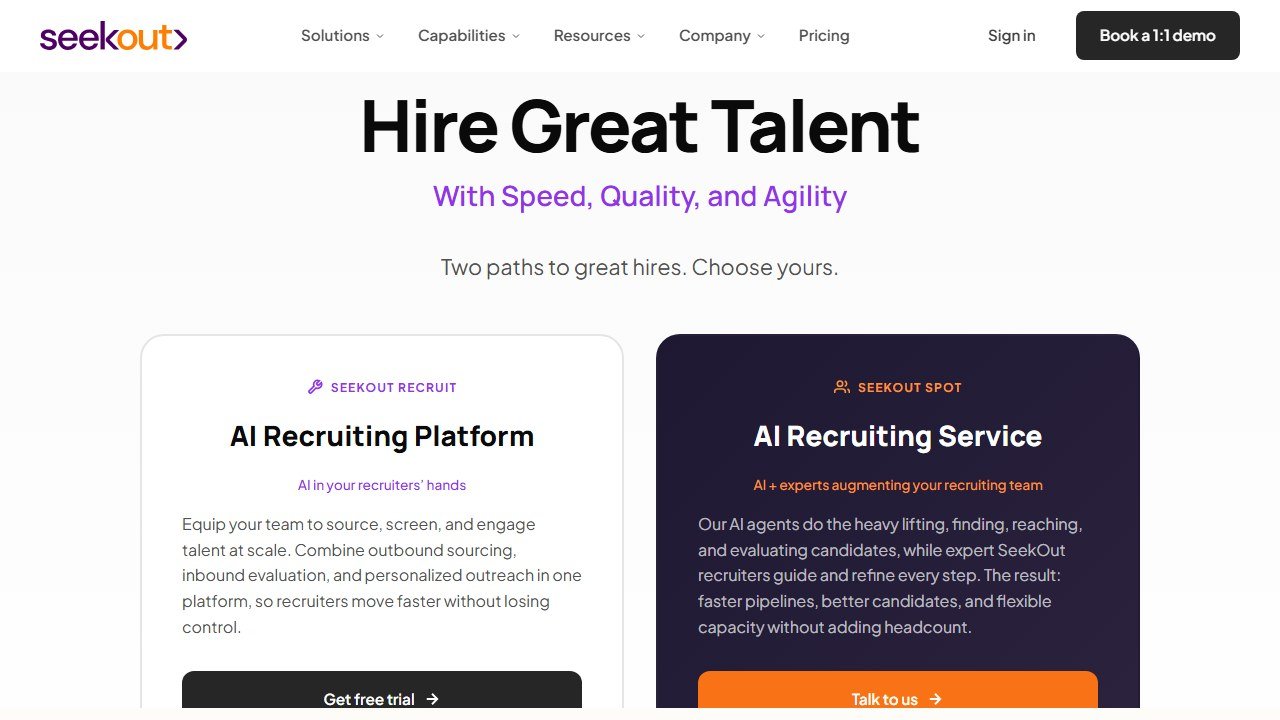
SeekOut leads our list on the strength and breadth of its data. With more than a billion profiles plus tens of millions of research papers and patents, it reaches technical and specialized talent that mainstream tools simply do not index, and its diversity-sourcing filters are among the most thoughtfully built in the category. For sourcing engineers, scientists, and hard-to-find specialists, the depth is genuinely differentiated.
Two caveats. SeekOut brought in a new CEO in May 2026, so watch for product-direction shifts. And pricing is quote-only for the main tiers, though a self-serve Lite plan around $2,150 per year gives smaller teams a way in. Median enterprise spend lands near $20,000 a year, so this is a serious commitment.
- Standout strength: deepest technical and research-backed profile data plus strong diversity sourcing.
- Pricing: quote-only; self-serve Lite around $2,150/year (estimate); median enterprise near $20K/year.
- Best for: technical, research, and diversity-focused sourcing.
- Verdict: the depth leader, watch the leadership change. Score 4.5.
2. hireEZ
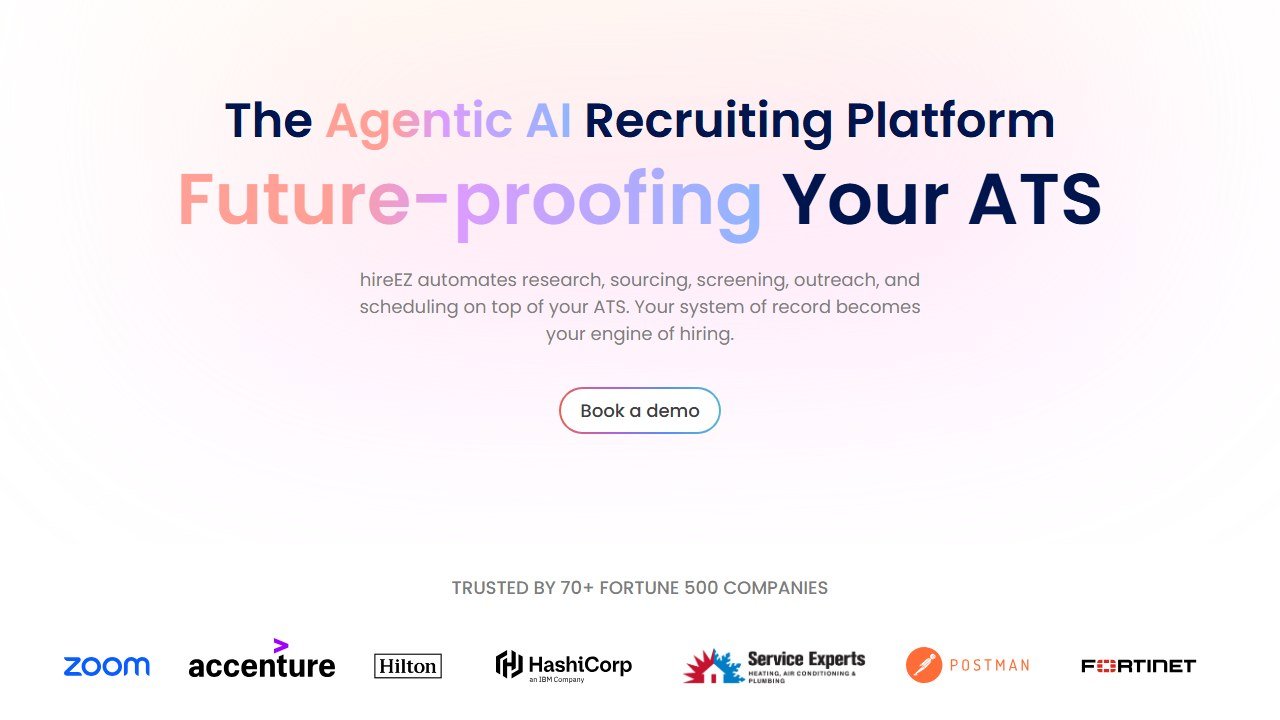
hireEZ, formerly Hiretual, pairs a massive index (800 million-plus profiles across 45-plus sources) with multichannel outreach and a growing set of agentic features that automate the search-to-contact loop. As an end-to-end sourcing engine it is one of the most complete here, and the breadth of sources means you are rarely starved for candidates.
The persistent knock, and we have heard it consistently, is contact-data accuracy: the emails and numbers it surfaces miss more often than buyers would like. Pricing is quote-only, estimated at roughly $169 to $250 per user per month with median annual spend around $13,000. It is powerful, but budget time to verify contact details before you trust them.
- Standout strength: huge multi-source index with strong multichannel and agentic outreach.
- Pricing: quote-only, estimated ~$169 to $250 per user per month; median ~$13K/year.
- Best for: teams wanting end-to-end sourcing and outreach at scale.
- Verdict: complete and powerful, verify the contact data. Score 4.3.
3. Gem
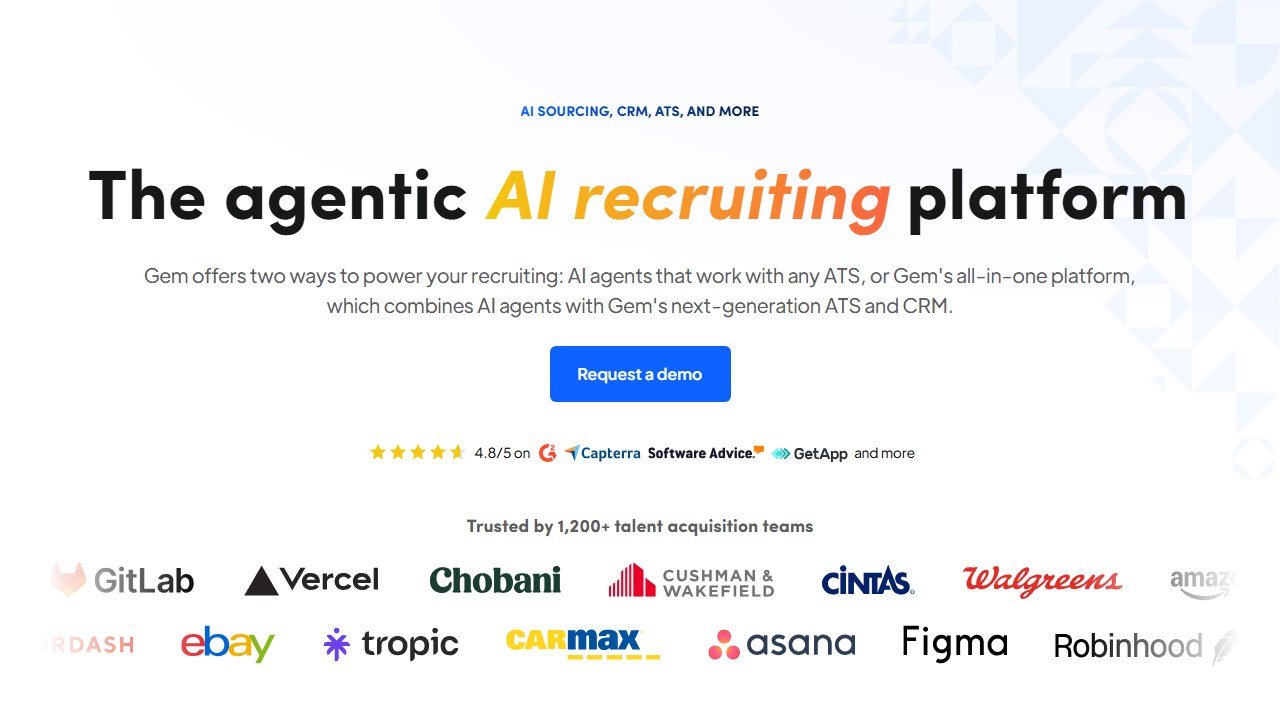
Gem approaches sourcing from the CRM side. It combines a recruiting CRM with an AI sourcing agent over an 800 million-plus profile base and natural-language search, so the candidates you find live inside the relationship system you already use to nurture them. For teams that think in pipelines and long-term talent relationships rather than one-off searches, that integration is the whole point.
The sourcing engine is strong without being the absolute deepest here, and pricing is custom, so expect a sales conversation. But if you want sourcing and candidate-relationship management unified, Gem is the most coherent option.
- Standout strength: AI sourcing fused with a genuine recruiting CRM.
- Pricing: quote-only (custom).
- Best for: teams that nurture pipelines and want CRM plus sourcing in one.
- Verdict: the CRM-first sourcing choice. Score 4.2.
4. Juicebox
Juicebox, formerly PeopleGPT, is the natural-language sourcing tool that gets the search experience right. You describe who you want in plain English across an 800 million-plus profile base and it returns ranked matches fast, with an AI agent add-on that automates outreach. Crucially, it is the most accessible name here: a free tier lets you try it for real, with paid plans from around $199 per month and the AI agent for another $199.
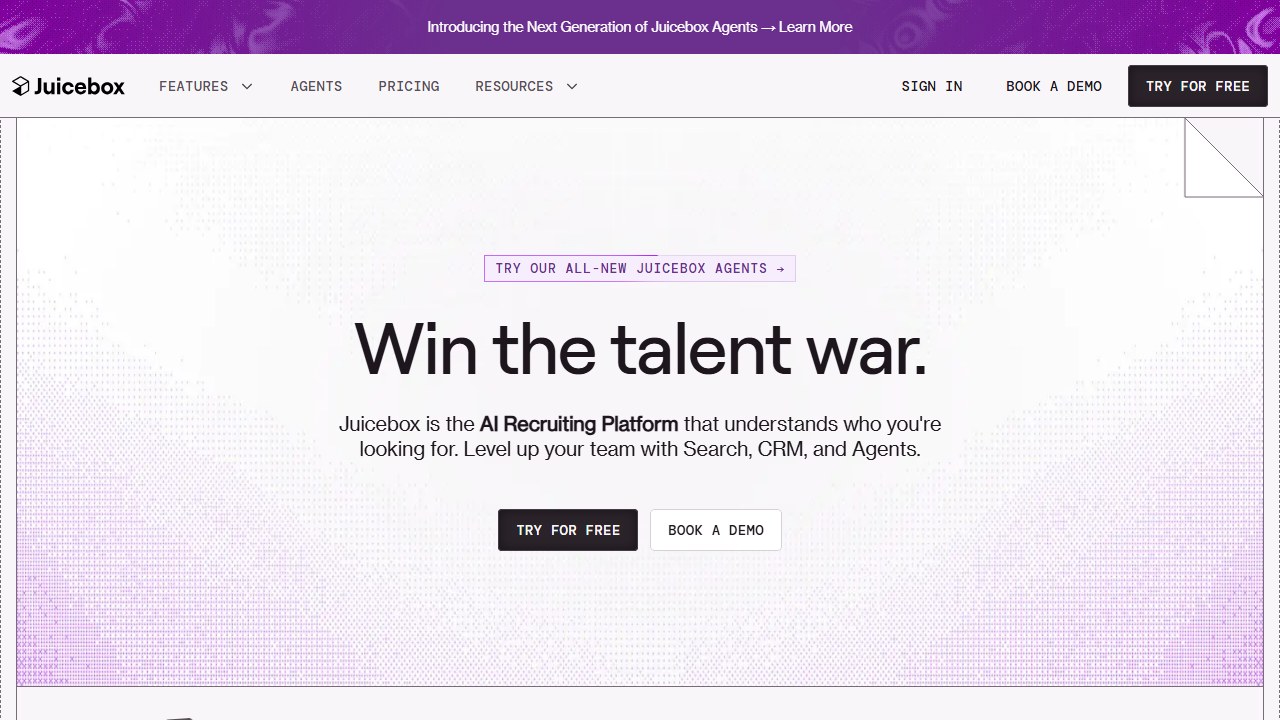
It is lighter on enterprise governance and deep CRM features than the leaders, so very large teams may outgrow it. But for the price-to-power ratio and the genuinely pleasant search, it is our value standout.
- Standout strength: excellent natural-language search with a real free tier.
- Pricing: free tier; paid from ~$199/month; AI agent +$199/month (estimate).
- Best for: individual sourcers and small teams wanting transparent pricing.
- Verdict: best value and best search experience. Score 4.2.
5. Findem
Findem is built around what it calls 3D attribute search: instead of matching keywords, it constructs candidates from enriched attributes (what someone has done, where, and how their career has moved) so you can search on patterns competitors cannot express. For nuanced searches (“people who scaled a team from 10 to 100 at a Series B”) the attribute model surfaces matches other engines miss.

The power comes with complexity, and the learning curve is real. Pricing is custom, aimed at enterprise. But for sophisticated talent teams chasing precise, attribute-driven searches, Findem is distinctive.
- Standout strength: attribute-based 3D search for precise, pattern-driven sourcing.
- Pricing: quote-only (custom).
- Best for: enterprise teams running sophisticated attribute searches.
- Verdict: powerful and precise, expect a learning curve. Score 4.0.
6. Fetcher
Fetcher automates the top of the funnel. Rather than handing you a search box, it delivers curated batches of candidates matched to your role on a schedule, then runs personalized outreach automatically. For lean teams that want sourcing to mostly run itself, the hands-off model saves real hours.
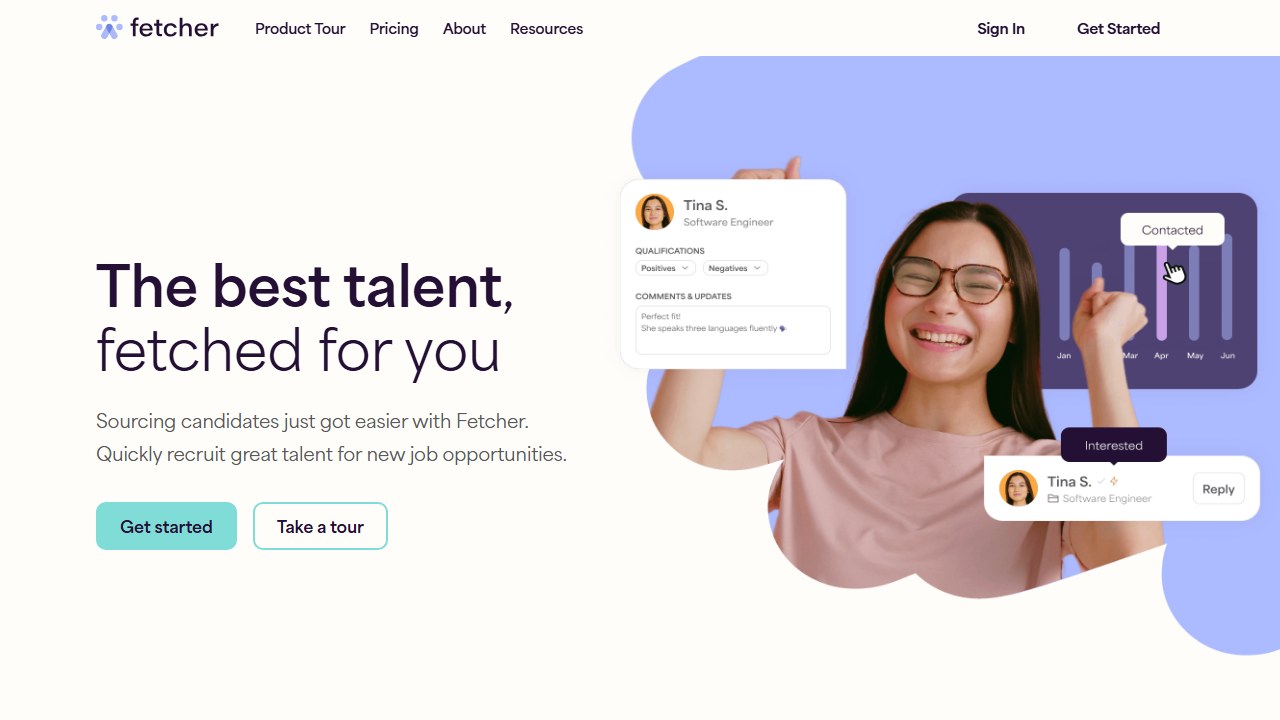
The trade-off is control: you tune the brief rather than craft each search, so power sourcers may find it constraining. Pricing runs roughly $379 to $849 per month depending on volume. As a set-and-forget sourcing engine, though, it is one of the better automated options.
- Standout strength: automated curated candidate batches plus hands-off outreach.
- Pricing: estimated ~$379 to $849/month.
- Best for: lean teams wanting sourcing on autopilot.
- Verdict: strong automation, less hands-on control. Score 3.9.
7. Recruiterflow
Recruiterflow is an AI-native CRM and ATS built for recruiting agencies, with sourcing woven into an end-to-end agency workflow. For staffing and search firms, the value is that sourcing, candidate management, client tracking, and placements live in one system designed around how agencies actually bill and operate.
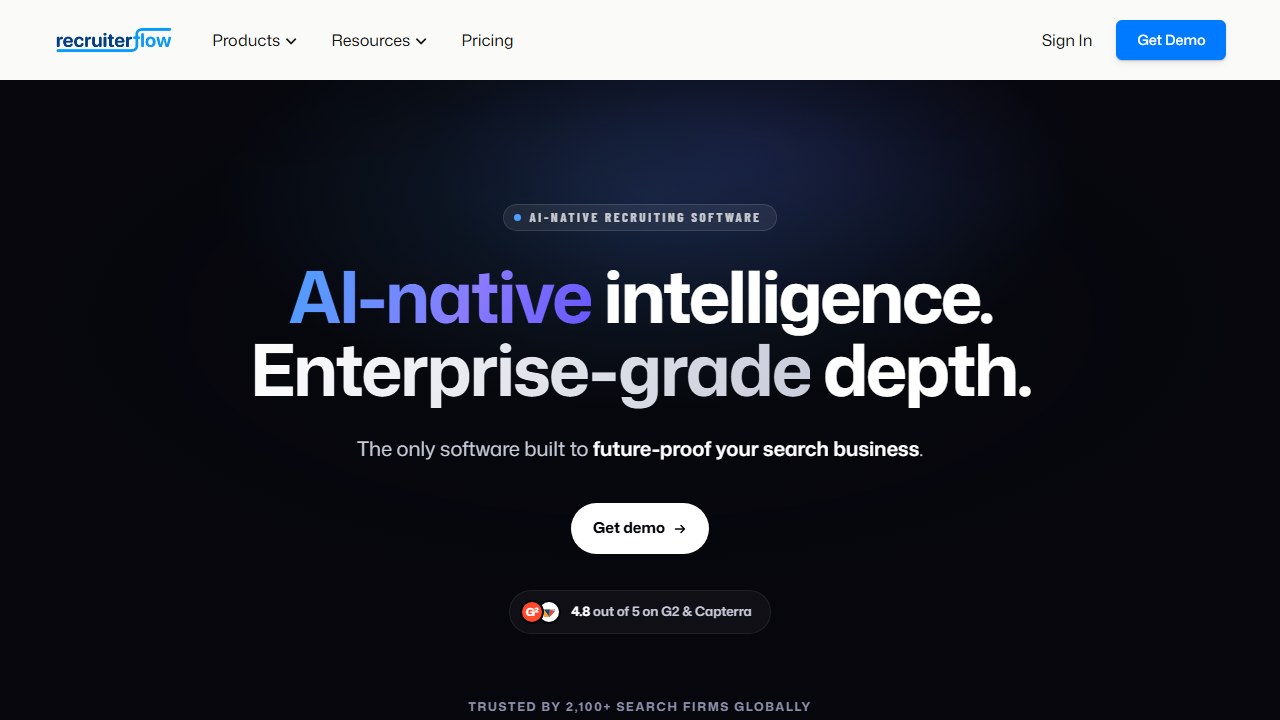
It is less of a standalone candidate search engine than a full agency platform, so in-house teams sourcing for one employer may find it more than they need. Pricing is published from around $99 per user per month, which is refreshingly transparent for this category.
- Standout strength: sourcing inside a purpose-built agency CRM and ATS.
- Pricing: published, from ~$99 per user per month (estimate).
- Best for: recruiting and staffing agencies.
- Verdict: the agency operating system. Score 3.8.
8. Manatal
Manatal brings AI sourcing recommendations together with an affordable ATS, all at a low per-user price. For small teams that want a sourcing nudge without standing up a dedicated search engine, it bundles enough capability into one inexpensive tool to be genuinely useful.
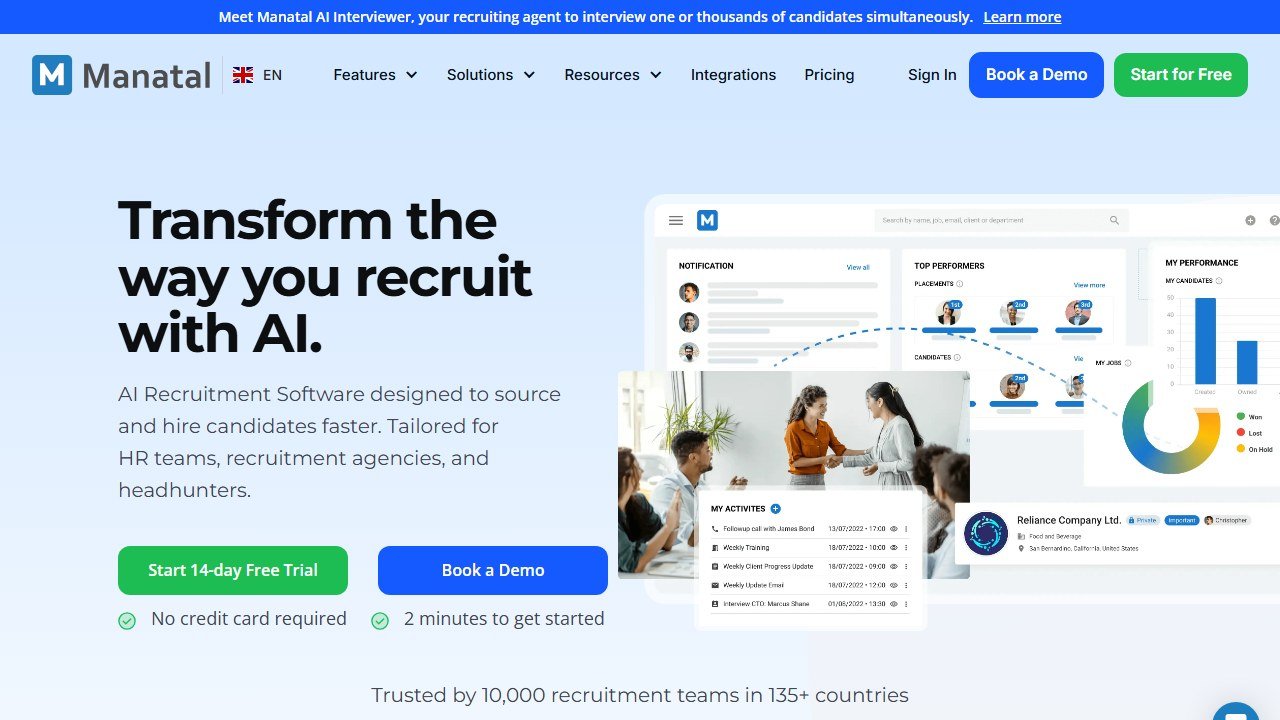
The sourcing depth is modest next to the specialists, and you should treat its recommendations as a helpful starting point rather than an exhaustive search. But at this price, it is the easiest on-ramp to AI sourcing for cost-sensitive teams.
- Standout strength: AI sourcing plus ATS at the lowest entry price here.
- Pricing: published, from ~$15 per user per month (estimate).
- Best for: small teams and budget-conscious agencies.
- Verdict: the affordable all-in-one entry point. Score 3.6.
9. LinkedIn Recruiter
LinkedIn Recruiter is the incumbent baseline every other tool is measured against. It sits on the largest active professional network in the world with first-party, self-reported data, and that freshness is its real edge: the profiles are maintained by the candidates themselves. For many recruiters it remains the default starting point.
But its AI search lags the dedicated engines, it locks you inside one network rather than aggregating sources, and enterprise seat pricing is high. We rank it here not because it is the smartest sourcing engine but because ignoring the data incumbent would be dishonest. Most teams end up pairing it with one of the tools above.
- Standout strength: largest, freshest first-party professional data set.
- Pricing: enterprise seat-based, high (quote-only).
- Best for: teams that want the incumbent network as a baseline.
- Verdict: essential data, dated AI. Score 3.6.
Master comparison
| Tool | Approach | Pricing (estimate) | Best for | Score |
|---|---|---|---|---|
| SeekOut | Deep profiles plus research data | Quote-only; Lite ~$2,150/yr; median ~$20K | Technical and diversity sourcing | 4.5 |
| hireEZ | Multi-source engine plus outreach | Quote-only, ~$169 to $250/user/mo | End-to-end sourcing at scale | 4.3 |
| Gem | Sourcing plus recruiting CRM | Quote-only | Pipeline nurture plus sourcing | 4.2 |
| Juicebox | Natural-language search | Free; from ~$199/mo; agent +$199 | Individuals and small teams | 4.2 |
| Findem | Attribute 3D search | Quote-only | Sophisticated enterprise searches | 4.0 |
| Fetcher | Automated candidate batches | ~$379 to $849/mo | Lean teams wanting autopilot | 3.9 |
| Recruiterflow | Agency CRM and ATS | From ~$99/user/mo | Recruiting agencies | 3.8 |
| Manatal | Sourcing plus budget ATS | From ~$15/user/mo | Small, budget-conscious teams | 3.6 |
| LinkedIn Recruiter | Incumbent network | Enterprise seat-based, high | Baseline first-party data | 3.6 |
How to choose by buyer segment
Individual sourcers and small teams should start with Juicebox for its free tier, transparent pricing, and excellent natural-language search. Manatal is the cheaper bundle if you also want a light ATS.
Technical and diversity sourcing points squarely at SeekOut, whose research-backed data and diversity filters reach talent the mainstream tools miss.
Teams that nurture long-term pipelines want Gem, where sourcing and CRM are one system. Sophisticated enterprise teams chasing precise, pattern-based searches should look at Findem.
Recruiting agencies are best served by Recruiterflow, built around how agencies operate and bill. Teams wanting sourcing to run itself should trial Fetcher.
Everyone should treat LinkedIn Recruiter as a baseline data source to pair with a smarter engine, not as a complete sourcing solution on its own.
For more, see our pillar on the best AI recruiting software, our companion lists of best AI resume screening tools and best AI interview tools, and our head-to-head SeekOut vs hireEZ. The deep dives on SeekOut and hireEZ go further. Teams on a budget should also browse our best AI tools for HR and free AI recruiting tools roundups.
Agency-side recruiters should also see our best AI tools for staffing agencies guide.
The bottom line
Sourcing in 2026 is a contest between data depth and search intelligence, and the winner depends on what you hire for. SeekOut takes our top spot on the strength of its specialized data, with the leadership-change caveat noted. hireEZ is the most complete end-to-end engine if you accept the contact-data verification overhead. Juicebox is the value pick that gets natural-language search genuinely right, and it is the only top contender you can try free.
Whatever you choose, test the contact data before you commit, confirm your data and outreach practices are GDPR-defensible, and keep a human deciding who advances. The tools find people at remarkable speed. The judgment about who to pursue, and how to do it lawfully and fairly, stays yours.

Written by
FazFaz is the founder of AIToolsBakery. Some tools here are tested hands on. Others are assessed from vendor documentation and pricing verified on the live page, and every review says which one it is. Sponsors can buy a position in a guide. They cannot buy the score, the criticism, or silence about a better option.
How we test and how we make money →