The restaurant reservation market just went through the biggest shake-up in its history, and it changes how you should choose. American Express now owns both Resy and Tock, having bought them for $400 million in 2024, and DoorDash acquired SevenRooms for $1.2 billion in 2025. OpenTable, long the default, saw its US market share slide from 51 percent to 46 percent between 2022 and 2024, though it still leads in 13 of the 15 top US cities. In other words, the three systems are no longer just booking tools. They are front doors into three very different ecosystems, and picking one is partly picking whose world you want to live in.
Underneath the ownership drama, the products still solve the same core job differently. OpenTable is about reach. Resy is about the right kind of demand. SevenRooms is about owning the guest relationship. Here is how they actually compare, and how to choose based on your restaurant rather than the headlines.
Faz says: Decide what you actually want the system to do before you weigh the ownership news. If your seats are not full, reach wins, and that is OpenTable’s whole pitch. If your seats fill themselves and your real problem is turning first-timers into regulars, then a booking network is the wrong lens entirely, and SevenRooms’ guest-data approach is a different and better tool. The Amex and DoorDash acquisitions matter at the margins, whether your diners live in those ecosystems, but they should not override the basic question of reach versus retention.
The Three Philosophies
OpenTable is a discovery network. Its value is the millions of diners already searching it, so it sends you bookings you would not otherwise get. You pay for that reach twice: a subscription from $149 to $499 a month, plus $1.00 to $1.50 for every cover the network sends you. The top tier alone is $5,988 a year before a single cover fee.
Resy is a curated demand engine. It became the name among high-end and trendy restaurants, with a sleek interface, real-time availability, and strong data. It dominates in specific markets (it holds around 53 percent share in Brooklyn) and now sits inside American Express, which connects it to a premium cardholder base.
SevenRooms is a guest-experience CRM. It is built less around the booking and more around the relationship: acquiring, engaging, and retaining guests on and off premise. Now owned by DoorDash, it offers restaurants already in that ecosystem a seamless path to add reservations alongside delivery.
Comparison Table
| Factor | OpenTable | Resy | SevenRooms |
|---|---|---|---|
| Core strength | Diner reach and discovery | Curated, high-demand markets | Guest data and retention |
| Owner | OpenTable (Booking Holdings) | American Express | DoorDash |
| Best for | Filling seats broadly | Trendy, reputation-led spots | Owning the guest relationship |
| Network effect | Largest, leads most top cities | Strong in major metros | CRM-first, less discovery |
| Cost model | $149 to $499/mo plus $1.00 to $1.50 per network cover | $249 to $399/mo flat, no per-cover fee | Quote-based, no public pricing |
| Ecosystem hook | Broad consumer network | Amex cardholders | DoorDash delivery |
What each one actually costs, verified
All figures below were read from the vendors’ own pricing pages on 5 August 2026. This is the part most comparisons of these three get wrong or skip, usually because only two of the three publish anything.
OpenTable: subscription plus a fee on every cover
| Plan | Monthly | Per network cover | Reservations from your own site |
|---|---|---|---|
| Basic | $149 | Free for 30 days, then $1.50 | $0.25/cover or $49/mo flat |
| Core | $299 | $1.00 | Included |
| Pro | $499 | $1.00 | Included |
Prepaid experiences carry a 2% service fee on all three plans, and prepaid ticketing carries 2% on Core and Pro. The plans page also states OpenTable is “Only available in the US”, which rules it out entirely for anyone reading this from elsewhere.
Note what the Basic plan does: it charges you $0.25 a cover for bookings that came from your own website, guests you brought yourself. Core removes that. It is the clearest reason to skip Basic if you have any direct booking volume.
Resy: flat monthly, and it now includes Tock
This is the part our earlier version of this comparison missed. Resy’s pricing page opens with “For the first time, Resy and Tock come together to offer four distinct plans.” American Express did not just buy both, it has merged them into a single lineup, and two of the four plans run on Tock rather than Resy.
| Plan | Monthly | Powered by | Prepayment fee |
|---|---|---|---|
| Platform | $249 | Resy | Standard processing |
| Essential | $269 | Tock | 3% |
| Platform 360 | $399 | Resy | Standard processing |
| Premium | $399 | Tock | 2% |
No plan charges a per-cover fee. If you run prepaid tastings or ticketed events, the Tock-powered plans are the relevant ones and the prepayment percentage is the number to compare, because 1% on prepaid revenue can outweigh the $130 monthly gap between Essential and Premium quickly.
SevenRooms: nothing published
SevenRooms publishes no pricing. There is no plan table and no starting figure, only a demo request. That is normal for a CRM-first enterprise product, but it means you cannot put it in a cost comparison without a quote, and you should treat any SevenRooms price you read elsewhere as unverified.
The crossover: when flat beats per-cover
Because OpenTable charges per network cover and Resy does not, there is a volume above which the flat fee wins. The arithmetic uses only the published figures above.
OpenTable Basic at $149 plus $1.50 a cover against Resy Platform at $249 flat:
- $149 + $1.50N = $249 gives N = about 67 network covers a month
- Below roughly 67 network covers, OpenTable Basic is cheaper
- Above it, Resy Platform is cheaper, and the gap widens every month you get busier
Against OpenTable Core at $299 plus $1.00 a cover, Resy Platform at $249 is cheaper at any volume on subscription alone, so the choice there is about the diner network rather than the bill.
The strategic point matters more than the arithmetic. OpenTable’s model charges you more as it succeeds, which is defensible when the covers are genuinely incremental and painful when the network is simply intermediating guests who already knew you. Resy’s flat fee is predictable, which means it is worse value at low volume and better value at high. Work out your own network-cover count before you compare anything else.
Reach: OpenTable Still Leads
If the job is to put strangers in empty seats, OpenTable is still the strongest tool. It leads in 13 of the 15 largest US cities and carries the biggest diner network, so it generates discovery bookings the others cannot match. Its perception had slipped as marquee groups defected and operators balked at the cover-fee model, which is the part that scales with your success rather than your needs, but it has been investing in the product and its reach advantage is real. For a restaurant that needs covers more than it needs a CRM, OpenTable is the default for a reason.
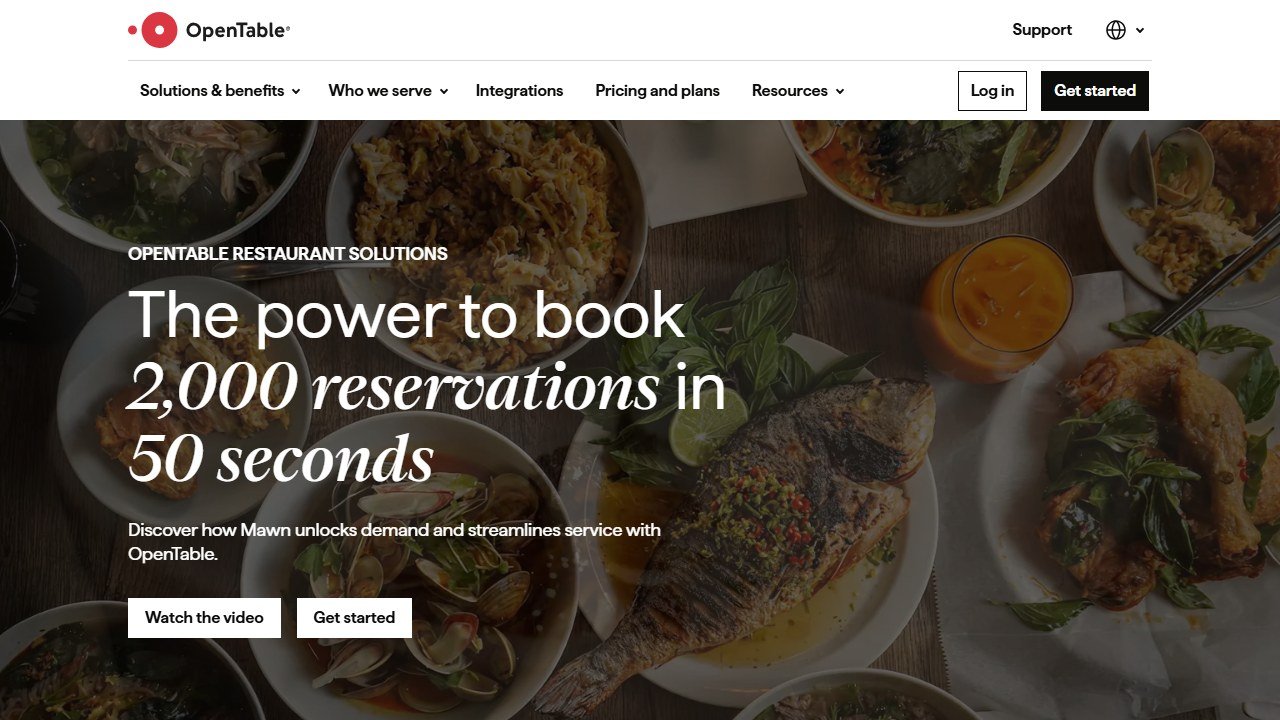
Best for: restaurants that need to fill seats and value the largest discovery network.
Demand and Reputation: Resy’s Lane
Resy won the trendy, high-demand end of the market with a sleek, modern experience that both diners and operators like, plus real-time availability and strong analytics. It is especially strong in major metros, and its place inside American Express connects it to a premium, high-frequency dining audience. If your restaurant runs on reputation and demand rather than discovery, and your guests skew toward the Amex world, Resy fits the brand as much as the operation.
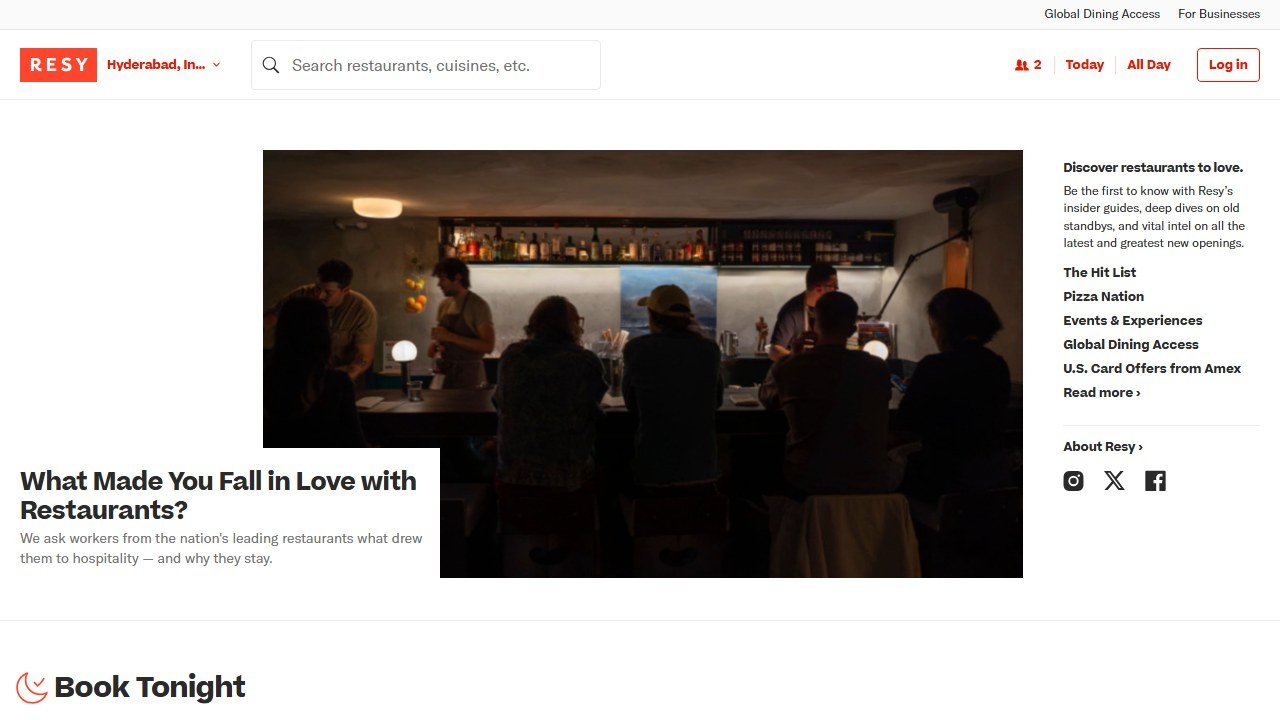
Best for: high-demand, reputation-led restaurants in major metropolitan markets.
Guest Data and Retention: SevenRooms
SevenRooms plays a different game. It is a guest-experience and retention platform first, built to help operators acquire, engage, and retain guests across both on-premise and off-premise touchpoints. That makes it less about discovery and more about owning the relationship: knowing your regulars, their preferences, and their history, then using that to drive repeat visits. Now that DoorDash owns it, restaurants already using DoorDash for delivery have a natural path to unify reservations and delivery in one ecosystem.
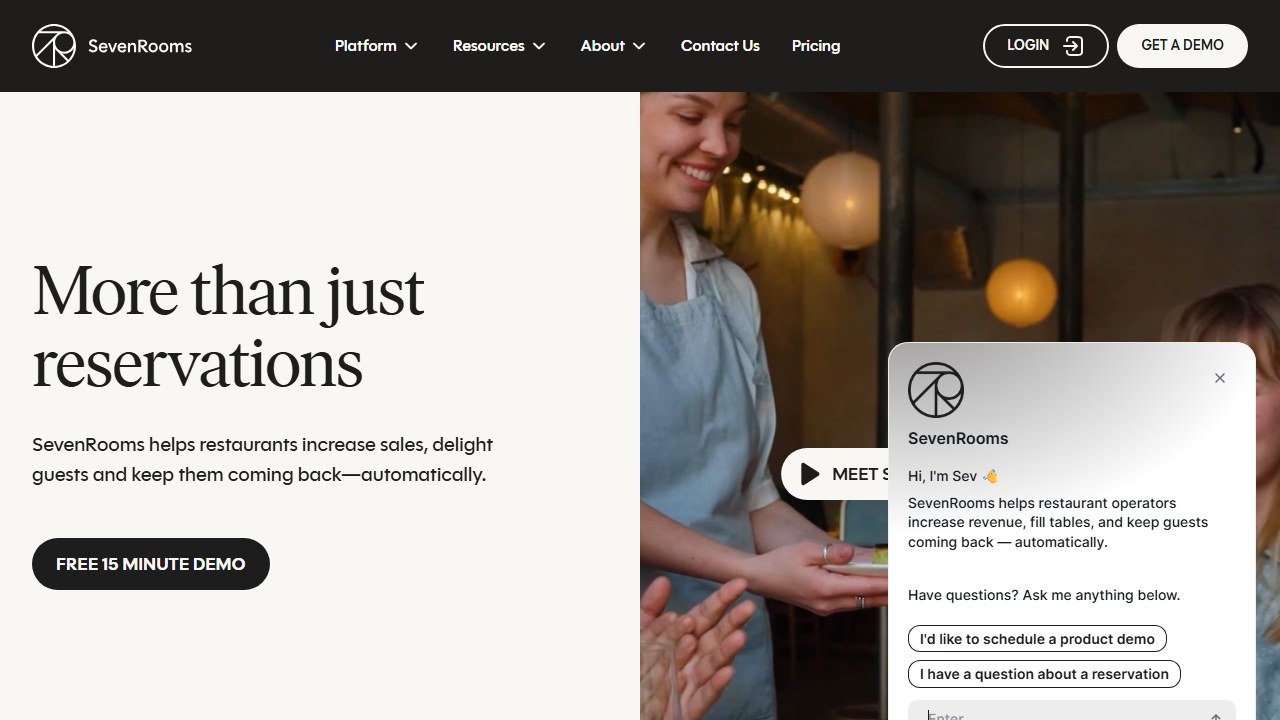
Best for: restaurants whose priority is guest data, personalization, and repeat business.
How the Acquisitions Should Factor In
The ownership changes are real, but weigh them as tiebreakers, not headlines. If your clientele is heavily American Express, Resy’s place in that ecosystem is a genuine plus. If you already run DoorDash for delivery, SevenRooms lets you add reservations inside a system you use, which reduces vendor sprawl. OpenTable’s independence keeps it neutral across those worlds, which some operators prefer. None of this should override the core reach-versus-retention decision; it should break the tie once you have made it.
Which Should You Choose?
Choose OpenTable if filling seats is your priority, you operate in a major market where its network is strongest, and you want the largest pool of discovery diners. It is the safe default when reach matters most.
Choose Resy if you run a trendy, high-demand, reputation-led restaurant in a major metro, your guests skew premium and Amex-heavy, and you want a sleek, modern system that fits your brand.
Choose SevenRooms if your seats already fill and your real goal is owning guest data, personalizing the experience, and driving repeat visits, especially if you are already in the DoorDash ecosystem.
Reservations are one layer of the restaurant stack. For how they sit alongside phone, ordering, and cost tools, see our best AI tools for restaurants pillar, and for the systems that answer the phone and take the booking when no one picks up, our best AI phone answering services for restaurants guide.
Verdict
There is no single winner, because these three solve different problems. OpenTable wins for reach and is the safe default when seats need filling. Resy wins for trendy, high-demand restaurants in major markets and Amex-heavy rooms. SevenRooms wins for guest data and retention, now with a direct line into DoorDash. Decide whether your problem is reach or retention first, then let the Amex and DoorDash ecosystems break the tie.
For where reservations fit in the wider stack, see our best AI tools for restaurants pillar.
Managing labor costs too? See our 7shifts review of the restaurant scheduling platform.

Written by
FazFaz is the founder of AIToolsBakery. Some tools here are tested hands on. Others are assessed from vendor documentation and pricing verified on the live page, and every review says which one it is. Sponsors can buy a position in a guide. They cannot buy the score, the criticism, or silence about a better option.
How we test and how we make money →