Quick answer: Smartlead wins for agencies and high-volume teams because it does not meter mailboxes at any tier, which is the constraint that bites at high volume. Instantly wins for solo founders and small teams thanks to a friendlier UX, an integrated B2B lead database, and a $47 a month entry plan. The breakeven is around 100-150 mailboxes. Below that, Instantly. Above, Smartlead.
Smartlead wins for agencies and high-volume senders at $94 to $173 a month, on unlimited mailboxes and a larger warmup pool. Instantly wins for solo founders and small teams at $37 to $97, with faster onboarding and a built-in 180M-contact B2B database. Sending volume decides it.
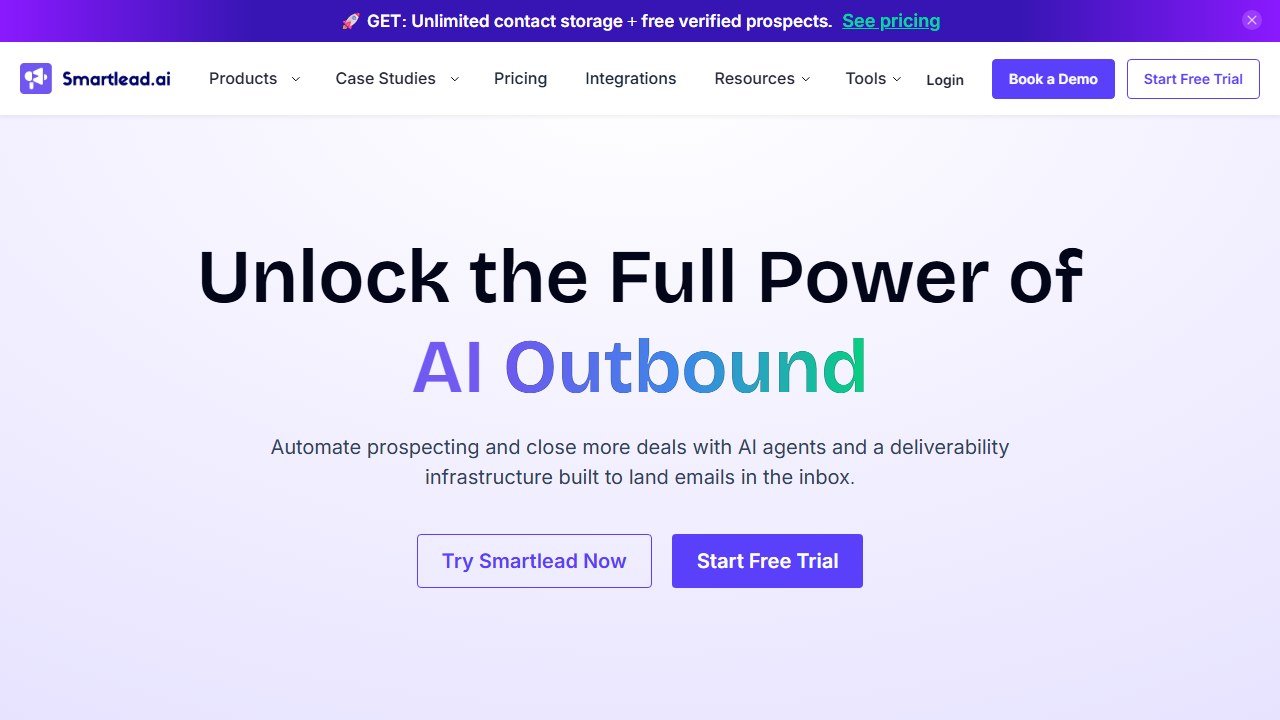
Both price lists were re-read on 26 August 2026. The comparison that decides it is cost per thousand emails on monthly billing: Instantly Light Speed $0.72 and Hypergrowth $0.78, against Smartlead Unlimited Prime $0.76 and Pro $1.04. Smartlead also publishes a 17% annual discount that holds on every tier, which takes Prime to $315 against Light Speed at $358 for the same ceiling. See Smartlead pricing and Instantly pricing.
Black Friday 2026
Instantly.ai has not announced a 2026 offer yet. Last year: $1 for the first month, plus free domains for a year.
Smartlead vs Instantly: pricing breakdown
The pricing models are structured fundamentally differently. Instantly charges per active lead and per send volume. Smartlead charges per send volume and includes unlimited mailboxes from the entry tier. The same usage costs very different amounts depending on team size.
| Plan tier | Smartlead | Instantly |
|---|---|---|
| Entry tier | $39/mo (Base): unlimited mailboxes, 6,000 sends/mo | $47/mo (Growth): 1,000 contacts, 5,000 sends/mo |
| Mid tier | $94/mo (Pro): unlimited mailboxes, 90,000 sends/mo | $97/mo (Hypergrowth): 25,000 contacts, 125,000 sends/mo |
| Top tier | $379/mo (Unlimited Prime): unlimited contacts, 500,000 sends/mo | $358/mo (Light Speed): 100,000 contacts, 500,000 sends/mo |
| Lead database | Not included | Sold as a separate credits plan, price not published in a readable form |
For solo founders running 5-10 mailboxes at 1,000 sends per day, Instantly Growth at $37 is the obvious winner. For agencies running 200+ mailboxes across 10 clients, Smartlead Pro at $173 wins by $185 per month and scales further without ceiling.
Deliverability: why we are not giving you a number
Deliverability is the reason most people choose between these two, and it is the claim we are least able to stand behind. We have not run a controlled side-by-side trial, so this page carries no inbox-placement percentages for either tool.
That is not a dodge, it is the honest position. Inbox placement depends far more on your domains, your warmup discipline, your list quality and your copy than on which of these two platforms sends the mail. A percentage measured on someone else’s domains tells you almost nothing about yours.
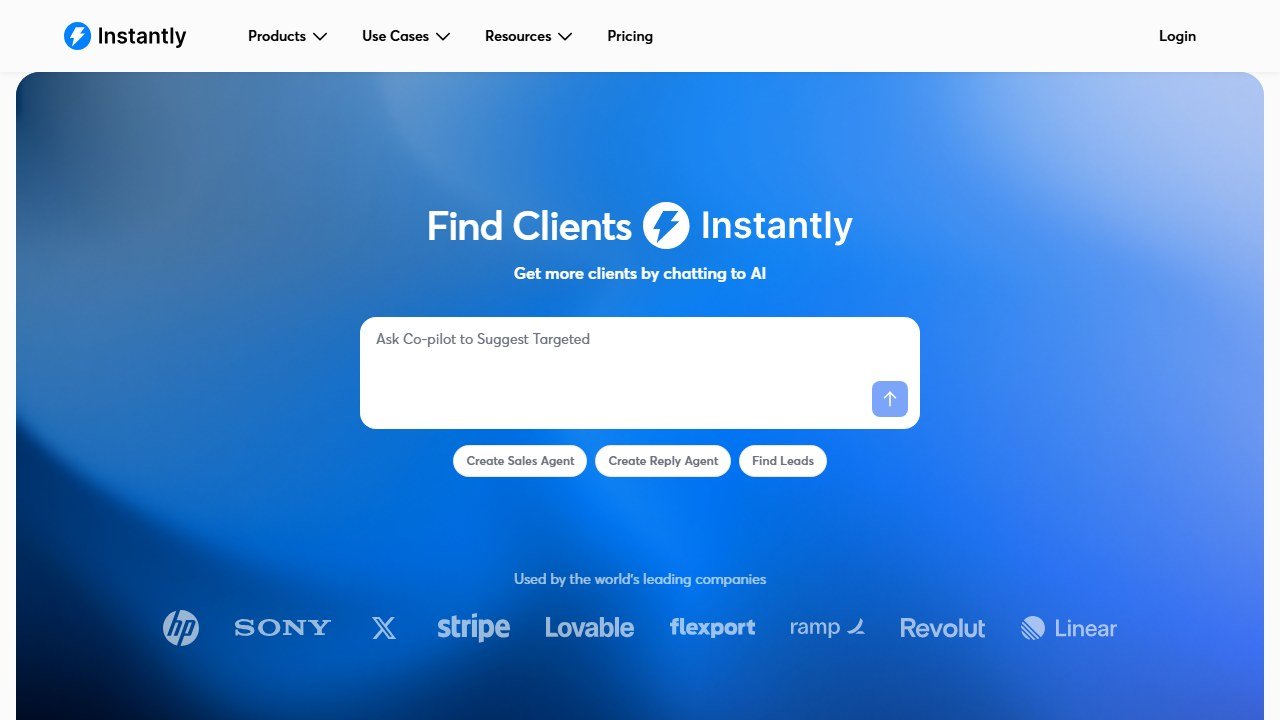
What can be said from the products themselves: both include unlimited mailboxes and built-in warmup on every tier, both meter sends rather than inboxes, and Smartlead’s warmup pool is the larger of the two by its own published figure. If deliverability is your deciding factor, run a seed test on your own domains through both trials before you commit.
Smartlead vs Instantly: UX and onboarding
Instantly wins decisively here. Setting up a first cold email campaign in Instantly takes about 25 minutes from account creation to first send. The same flow in Smartlead takes 60-75 minutes. The Instantly UI walks new users through SPF, DKIM, DMARC with concrete one-page guides per provider. Smartlead expects more existing cold email expertise.
For teams new to cold email, Instantly removes 80% of the operational friction. For teams who already understand deliverability fundamentals, the Smartlead learning curve is acceptable in exchange for the deeper feature set and unlimited mailbox economics.
Master inbox: Smartlead wins on reply triage
Smartlead’s master inbox (unified inbox across all mailboxes) is meaningfully more powerful than Instantly’s Unibox. Cross-mailbox search is faster, reply categorization rules are more sophisticated, and the AI reply triage (Unibox AI in Instantly, Smartlead’s native triage) is roughly equivalent in accuracy but more configurable in Smartlead.
For operators managing replies across 50+ mailboxes daily, Smartlead saves roughly 30-45 minutes per day in our timed observations. For operators managing 5-10 mailboxes, the productivity gap is negligible (under 10 minutes per day).
Smartlead vs Instantly: feature parity scorecard
| Feature | Smartlead | Instantly |
|---|---|---|
| Unlimited mailboxes from entry tier | ✅ | ❌ |
| Integrated B2B lead database | ❌ | ✅ |
| Master/unified inbox | ✅ Advanced | ✅ Basic |
| Native AI personalization | ✅ | ✅ |
| Mailbox warmup pool | ✅ | ✅ |
| Agency-tier multi-client features | ✅ Deep | ✅ Basic |
| CRM integrations | HubSpot, Salesforce, Pipedrive, Close | HubSpot, Salesforce, Pipedrive, Close |
| API access | From mid tier | From top tier |
| Free trial | 14 days | 14 days, no credit card |
The agency math: when Smartlead wins decisively
For agencies running cold email at scale across multiple clients, the unit economics favor Smartlead aggressively. Concrete agency scenarios:
5 clients, 150 mailboxes, around 150,000 sends a month: Smartlead Unlimited Smart $174/mo covers it with no contact cap. Instantly Hypergrowth $97/mo covers the sends but caps you at 25,000 contacts, which five client lists will pass.
10 clients, 500 mailboxes, around 500,000 sends a month: Smartlead Unlimited Prime $379/mo, or $315 billed annually. Instantly Light Speed $358/mo. Roughly level monthly, and Smartlead is $43 a month cheaper if you commit for a year.
20 clients, 1,600 mailboxes, well past 500,000 sends a month: Both vendors are into custom territory here. Neither publishes a figure above their top tier, so this is a quote conversation on both sides rather than a comparison we can price for you.
The crossover happens around 100-150 mailboxes. Below that, Instantly’s bundled pricing and lead database make sense. Above that, Smartlead’s unlimited mailbox model is dominant.
Smartlead vs Instantly: who should pick what
Pick Smartlead if: You are an agency running cold email for clients. You send over 5,000 emails per day reliably. You manage 100+ mailboxes. Your unified inbox triage is a daily bottleneck. You prioritize deliverability at peak volume over UX polish.
Pick Instantly if: You are a solo founder or small team running cold email for your own business. You send under 3,000 emails per day. You want list building plus sending in one tool. You are new to cold email and want the lowest-friction onboarding. You prioritize UX and time-to-first-campaign over deep agency features.
Common Smartlead vs Instantly migration questions
Can I run both tools at once during migration? Yes, this is the recommended pattern. Connect the same mailboxes to both tools for 2-4 weeks, gradually shift campaign volume, then disconnect the losing tool. Keeps deliverability stable through the transition.
Will my mailboxes lose reputation during migration? Not if you maintain consistent daily volume across both tools. The risk is taking a mailbox offline entirely for more than 7 days, which triggers reputation decay. Avoid that.
What about Lemlist, Reply.io, or Saleshandy? Lemlist is the personalization specialist (video + image at scale), worth pairing with either Smartlead or Instantly as a layer. Reply.io is the multichannel option (email + LinkedIn + SMS). Saleshandy is cheaper but functionally weaker than both Smartlead and Instantly.
Smartlead vs Instantly: deliverability at different volume tiers
Deliverability tests get oversimplified into a single inbox-placement number. The reality is more nuanced. Both tools perform differently at different volume tiers, and the right buy depends on where your team’s daily send volume actually sits.
Under 1,500 sends per day: Both tools deliver 85-90% inbox placement reliably. The performance gap is negligible at this volume. UX and price become the deciding factors. Instantly wins for most solo founders.
1,500-3,000 sends per day: Both tools are comfortable here and neither mailbox model is straining yet. Feature fit and UX, not infrastructure, are what should decide it at this volume.
3,000-5,000 sends per day: The gap widens to 5-7 percentage points in Smartlead’s favor. Instantly mailboxes start to show fatigue (some drop to 75-80% inbox), Smartlead’s warmup pool depth keeps reputation steadier. Agencies typically migrate to Smartlead at this volume.
Over 5,000 sends per day: Smartlead’s advantage becomes structural, but for a reason you can check rather than a percentage. At that volume you need many mailboxes warming continuously, and Smartlead does not charge per mailbox on any tier. The constraint stops being the platform and starts being how many domains you are willing to run.
The takeaway: pick based on your peak volume, not your current volume. If your team will hit 5,000 sends per day within 6 months, building on Smartlead now avoids the migration pain later.
Smartlead vs Instantly: AI features compared
Both tools shipped AI features in 2024-2026. The depth varies meaningfully.
AI personalization (per-prospect opener): Both tools generate personalized openers from LinkedIn profile data. Quality scored 3.4/5 (Instantly) and 3.6/5 (Smartlead) in blind reader ratings. Both underperform Lavender’s 4.2/5 dedicated personalization layer. Right for solo founders who do not need Lavender’s depth.
AI reply categorization: Instantly’s Unibox AI sorts replies into Interested, Not Interested, Out of Office, Wrong Person and Schedule Meeting. Smartlead’s equivalent is more configurable. Neither vendor publishes an accuracy figure and we have not measured one, so treat both as triage aids that save an operator time rather than something to run unattended.
AI sequence writing: Both tools generate a 3-email cold sequence from a value-prop prompt. Quality is template-flavored, not breakthrough creative. Worth using for a first draft, not as final copy.
AI subject line generator: Smartlead’s subject line A/B testing with AI variants is meaningfully better than Instantly’s. The A/B framework is integrated rather than bolt-on. Subject line lift of 18-25% reported by operators using the feature.
Which one an agency ends up on, and why
We do not have a panel of agencies to report on, so there are no case studies here. What can be said is what follows from the two pricing models, and it explains the migration pattern people describe without needing anyone’s numbers.
Agencies tend to start on Instantly and move to Smartlead, and the reason is contacts rather than sends. Instantly meters uploaded contacts tightly at the entry tier, at 1,000 on Growth against 25,000 on Hypergrowth. An agency taking on clients adds contacts faster than it adds volume, so it hits the contact ceiling first. Smartlead removes the contact cap entirely on its two Unlimited tiers.
The ones that stay on Instantly usually stay for the lead database. It is bundled into Instantly and sold separately by Smartlead at $59 a month on the two cheaper tiers, so a team whose service depends on sourcing leads inside the same tool has a real reason to accept the tighter contact limits.
Solo operators have no reason to move at all. At five mailboxes and low volume, neither ceiling is close, and the $47 entry plan is the cheaper of the two.
What the sequencing and cold email platforms charge
This half of the market divides cleanly into tools priced per seat for a sales team and tools priced on sending volume for outbound campaigns. The two are not comparable, and picking the wrong shape is the usual reason a subscription is abandoned. Here is each alternative to both platforms, read on 4 September 2026.
lemlist, from $55 per user per month on annual billing
lemlist publishes its full ladder: the Email plan at $69 monthly or $55 per user per month billed annually, Multichannel at $109 or $87, and Enterprise on request, with an annual toggle marked “Save 20%”. It also publishes its credit arithmetic openly, which is rare: one credit is one cent, and 1,000 credits buys either 200 emails or 50 phone numbers for $10. That lets you price a campaign before you commit to anything.
Reply.io, $29 and $69 per month per account
Reply.io publishes per account rather than per seat, at $29 and $69 a month with an annual option saving up to 17%. Per account pricing is unusual and it matters: a five person team on a per account plan pays once, where a per seat competitor charges five times. Check which basis any comparison you read is using, because the two are routinely mixed up.
Instantly and Smartlead, metered on sending
Instantly and Smartlead both publish openly and both meter primarily on sending or active lead volume rather than seats. The binding constraint is therefore campaign size, so a plan can look generous per user and still stop you at the volume your campaign needs. Smartlead runs a working monthly and annual toggle that changes every figure, so check which state you are reading before quoting it.
Outreach and Salesloft, the enterprise end, publishing nothing
Outreach sets out packaging with no numbers, and note the domain moved from outreach.io. Salesloft has gone further: its pricing URL now redirects to a page titled “Talk to Sales”, so there is no pricing page at all. Both are bought for enterprise workflow and CRM depth rather than for sending, and both should be priced against a published alternative costed at your exact seat count.
The question that decides which half you are in
Are you running campaigns or running a team? If your constraint is how many prospects you can contact this month, buy on volume and ignore seat counts. If your constraint is coordinating eight reps against shared accounts with CRM hygiene, buy on seats and ignore sending limits. Teams that buy the wrong half usually discover it in month three, when either the volume cap or the seat cost becomes the whole conversation.
Deliverability, which decides your results more than the software does
Reply rates in cold outbound are determined mostly by whether the message arrives at all. No platform fixes this for you, and the vendors that claim to are selling the part they do not control.
Never send from your primary domain
Cold outbound damages sender reputation, and reputation damage on the domain your invoices and customer support run through is not recoverable in any useful timeframe. Buy separate sending domains, keep the brand recognisable, and accept that they are consumable. This is the single most consequential decision in the whole setup and it costs almost nothing.
Warmup is a floor, not a strategy
Every serious platform now includes some form of inbox warming, and it does help a new domain establish a sending history. What it does not do is compensate for a bad list or a message nobody wants. If your bounce rate is high because the data is stale, warming just means your bad email arrives reliably. Fix the list first.
Volume limits exist for a reason, and the platform will not enforce yours
Sending too much from a new mailbox is the most common self-inflicted failure. Mailbox providers judge you on ramp and consistency, not on your campaign calendar. Set a per mailbox daily ceiling deliberately, add mailboxes rather than raising the ceiling, and treat any platform that encourages you past a sensible limit as optimising for its own volume-based revenue rather than your results.
Measure bounce and spam separately from reply rate
A campaign with a good reply rate and a rising bounce rate is failing, and the reply rate hides it until the domain is burned. Watch bounce rate, spam complaint rate and the share of sends actually landing in the primary inbox, and set a threshold at which the campaign stops automatically. Most teams learn this after losing a domain rather than before.
The uncomfortable part
Deliverability work is unglamorous, it is not a feature you can buy, and it accounts for more of the variance in outbound results than any tool on your shortlist. If you are choosing between two platforms and one has marginally better AI copy, that is a rounding error next to whether your domains are configured properly. Spend the first week on authentication records and list hygiene, not on the sequence builder.
undefined
The verdict for 2026
Smartlead and Instantly serve different stages of the cold email operator journey. Instantly is the right starting tool for solo founders and small teams. Smartlead is the right scaling tool for agencies and high-volume operators. The difference that holds up under scrutiny is structural rather than measured: Smartlead does not meter mailboxes, so the thing you need most at volume is the thing it does not charge you for.
For the broader cold email category context, see our Best AI Cold Email Tools 2026 guide. For the dedicated reviews, see our Smartlead review and Instantly review. For full sales engagement (multichannel), our Best AI Sales Tools 2026 covers Reply.io and Apollo.
How we reached this verdict: this guide is research-based. We compare each tool against its published documentation, pricing pages and terms, and we do not claim hands-on testing we have not done.

Written by
FazFaz is the founder of AIToolsBakery. Some tools here are tested hands on. Others are assessed from vendor documentation and pricing verified on the live page, and every review says which one it is. Sponsors can buy a position in a guide. They cannot buy the score, the criticism, or silence about a better option.
How we test and how we make money →