If your organic traffic numbers look fine but you have a nagging sense that something is slipping, you might be right. ChatGPT, Perplexity, Google AI Mode, and Claude are answering millions of buying-intent queries every day, and the brands they cite are not always the ones ranking in traditional search. The gap between who Google ranks and who AI models recommend is widening fast.
That gap is measurable. AI search visibility gap analysis is the process of finding the specific questions and topics where AI models cite your competitors but leave you out entirely. It is the GEO equivalent of a keyword gap report, and right now most SEO teams are not running one at all. This guide explains what the gap is, how to identify it, and which tools make the process systematic rather than a manual guessing game.
AI search visibility gap analysis tools track which prompts cause AI models to cite competitors instead of you. The best options in 2026 are Profound (enterprise), Peec AI (agencies), Rankscale (budget), Otterly.ai (mid-market), and Nightwatch (SEO teams that already track rankings). Each surfaces competitor citation data you can turn into content and PR actions.
Quick Comparison: AI Search Gap Analysis Tools
| Tool | Starting Price | AI Engines Tracked | Gap Analysis Feature | Free Trial | Best For |
|---|---|---|---|---|---|
| Profound | $499/month | 10+ (ChatGPT, Claude, Perplexity, Gemini, AI Mode, Copilot, DeepSeek, Grok, more) | Citation Share by competitor and prompt cluster | No | Enterprise brands |
| Peec AI | $95/month (Brand) / $245/month (Agency) | 7 LLMs | Gap Score per source, Actions roadmap | 7 days | Agencies, mid-size teams |
| Rankscale | $20/month | 17+ | Citation source tracking per prompt | No (affordable entry) | Solos, startups |
| Otterly.ai | $29/month | 6 (ChatGPT, Gemini, Perplexity, AI Overviews, AI Mode, Copilot) | GEO Audit with SWOT, Share of Voice over time | Yes | Mid-market marketing managers |
| Nightwatch | $131/month (SEO + AI module) | 4 (ChatGPT, Claude, Perplexity, Google AI Overviews) | Share of AI Voice vs. competitors, alongside traditional rankings | 14 days | SEO teams already using Nightwatch |
What Is an AI Search Visibility Gap?
In traditional SEO, a keyword gap is any search term where a competitor ranks on page one and you do not. The fix is usually to create or improve content targeting that term. The logic is straightforward because the ranking signal is transparent: Google shows you a list of URLs.
AI search works differently. When someone asks ChatGPT “what is the best project management tool for remote teams,” the model generates a prose answer and selects sources to cite. Those sources were not chosen because they rank number one in Google. They were chosen because the AI model has assigned them authority and relevance within its training data and retrieval layer.
An AI search visibility gap is any prompt or topic cluster where AI models routinely cite competitors but not you. Gaps fall into a few categories: topic gaps (whole subject areas competitors have covered that you have not), source gaps (third-party sites that frequently appear in AI citations for your category but do not mention your brand), and sentiment gaps (where you are cited but the AI consistently frames competitors more positively).
How to Run an AI Search Gap Analysis
You can run a basic gap analysis manually before committing to any paid tool. It takes more time, but it builds intuition for what the tools are automating.
This page is about the tools that find the gap. For the manual version, including how to name the rival holding the share you are missing using a free data source, see how to monitor competitors in AI search results.
Step 1: Build a prompt list. Start with 20 to 30 prompts that represent how your target customers ask for help. Think in terms of use cases, not just product names.
Step 2: Run the prompts and log citations. Open ChatGPT, Perplexity, and Google AI Mode in separate tabs. Run each prompt and record every brand and source URL cited in the response.
Step 3: Map competitor appearances. Tally how often each competitor appears across your full prompt list. If a competitor shows up in 18 of your 30 prompts and you show up in 4, you have a significant gap.
Step 4: Audit the cited sources. For each prompt where a competitor appears and you do not, look at which third-party sources the AI cited to support that competitor. If TechRadar, PCMag, and G2 keep appearing, those are your source gap targets.
Step 5: Prioritize and act. Sort gaps by prompt frequency (search volume is a rough proxy) and by how achievable the fix is.
Manual analysis stops scaling somewhere around 50 prompts and 3 AI engines. That is where the tools below take over.
The 5 Best AI Search Visibility Gap Analysis Tools
Profound
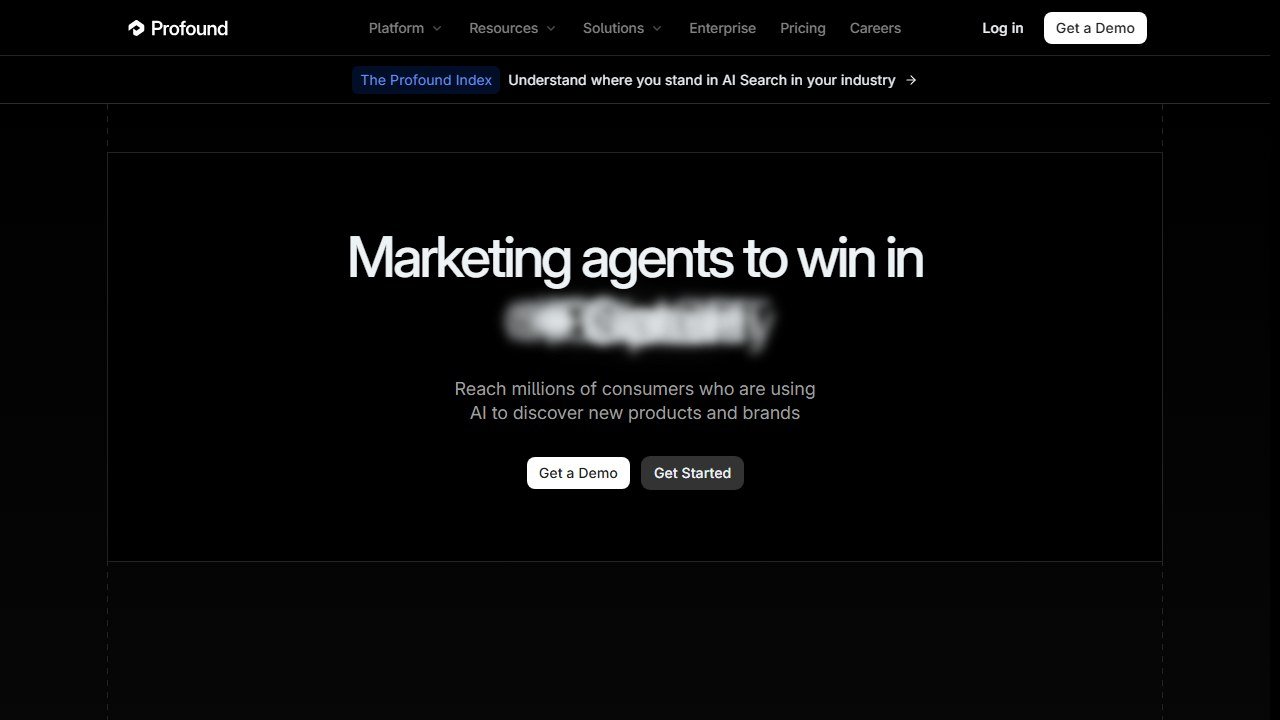
Profound is the enterprise benchmark in this space. It tracks your brand and competitors across 10+ AI engines simultaneously, including ChatGPT, Perplexity, Claude, Gemini, Google AI Mode, Copilot, DeepSeek, and Grok. The gap analysis workflow is built into its Citation Share reports, which show what percentage of relevant AI responses cite you versus each named competitor, broken down by prompt cluster. The platform also integrates with GA4 so you can correlate AI citation share with actual traffic and conversion data. Profound closed a $96M Series C at a $1B valuation in early 2026. The Lite plan starts at $499/month covering only ChatGPT with 50 prompts and one seat. Full multi-engine coverage is enterprise-only at $2,000 to $5,000 per month. There is no free trial. Best for Fortune 500 teams and mid-market brands with a dedicated GEO budget. Visit tryprofound.com.
Peec AI
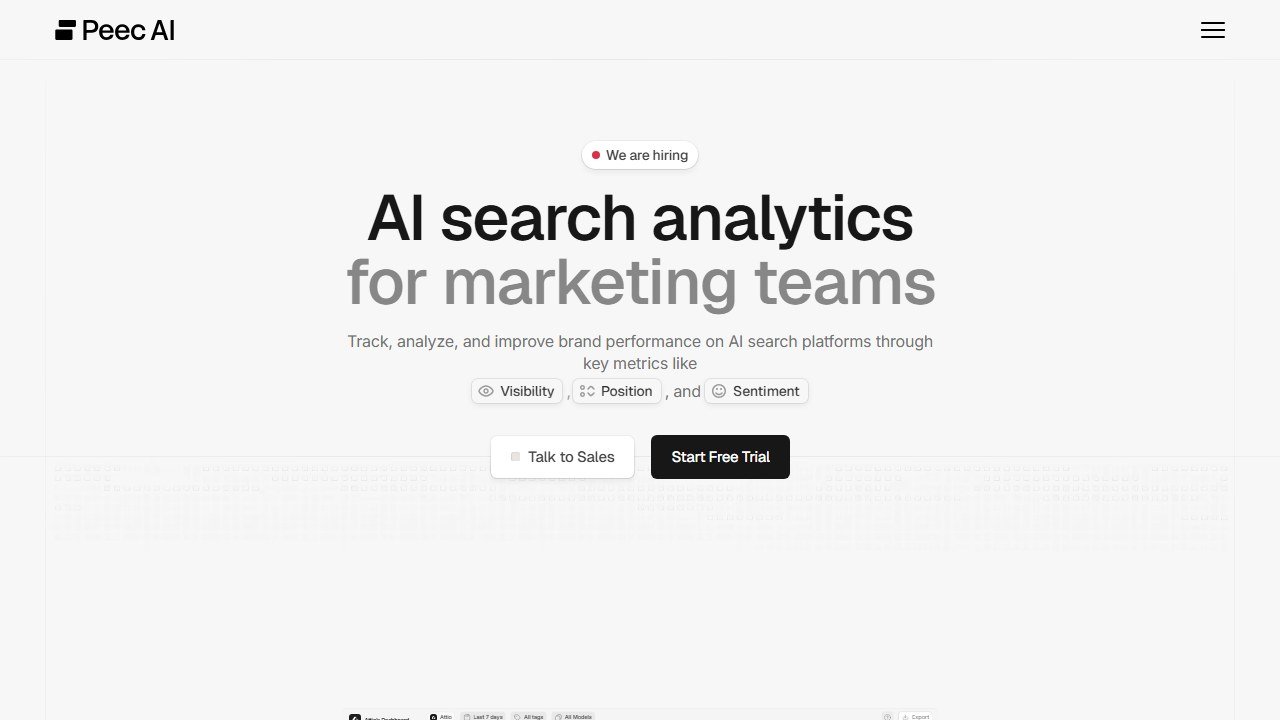
Peec AI is built specifically for marketing teams and SEO agencies who need competitive gap data without enterprise pricing. Its standout gap analysis feature assigns a Gap Score to third-party sources, flagging sites that frequently cite competitors but have never mentioned your brand. Peec AI also splits visibility into two signals: “used” (your content informed the AI answer) and “cited” (your URL was explicitly linked). The Actions feature turns this data into a prioritized GEO roadmap. Pricing runs from $95/month (Starter, 50 prompts) through $495/month (Advanced, 350 prompts with Looker, GA, and GSC integrations). Agency plans start at $245/month. All plans include a 7-day free trial. Best for SEO agencies managing multiple clients. Visit peec.ai.
Rankscale
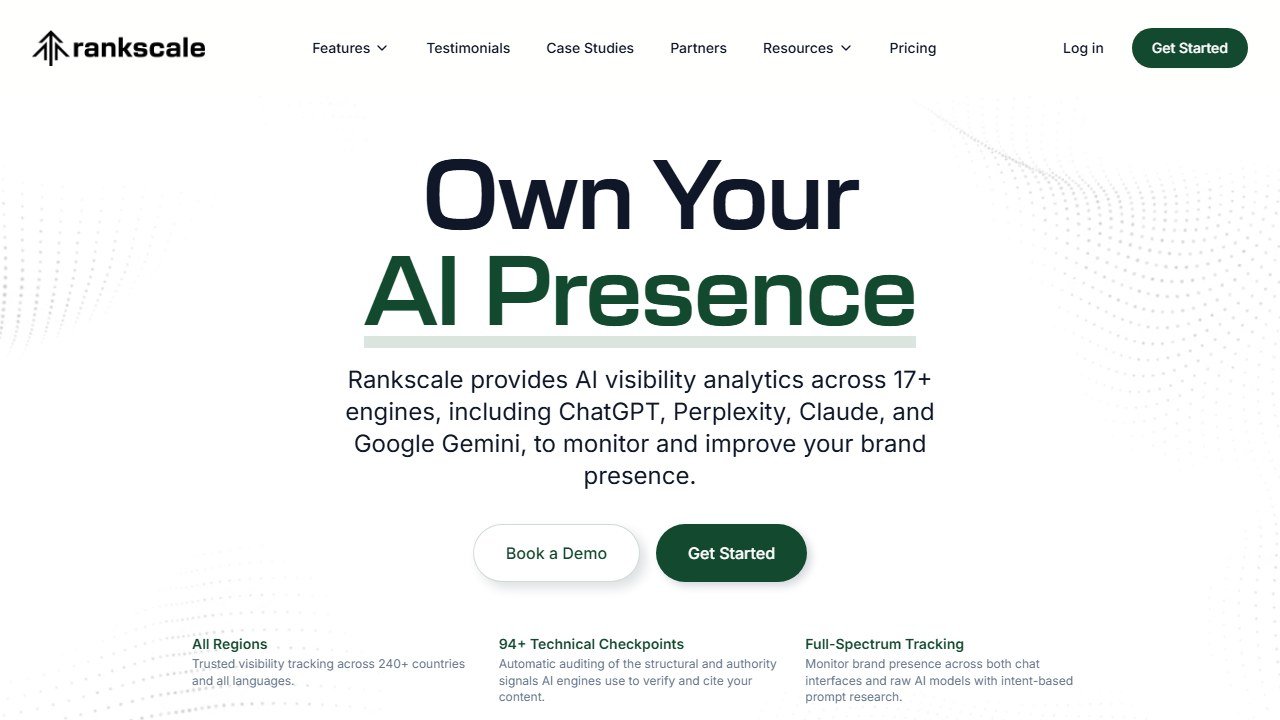
Rankscale is the most affordable purpose-built option in this list. The platform rebuilds the prompts users type into AI search engines and logs which specific domains get cited in the responses, so you can see at a granular level whether TechRadar, G2, or Capterra is driving competitor citations in your category. It tracks 17+ AI platforms from its $20/month entry plan. The $99/month Pro plan adds 1,200 credits, 25 brand dashboards, raw export, and unlimited team seats. The gap analysis workflow is more manual than Peec AI or Profound. Rankscale surfaces citation data but leaves the prioritization work to you. Best for solo SEO consultants, startups, and small teams doing their first structured GEO analysis. Visit rankscale.ai.
Otterly.ai
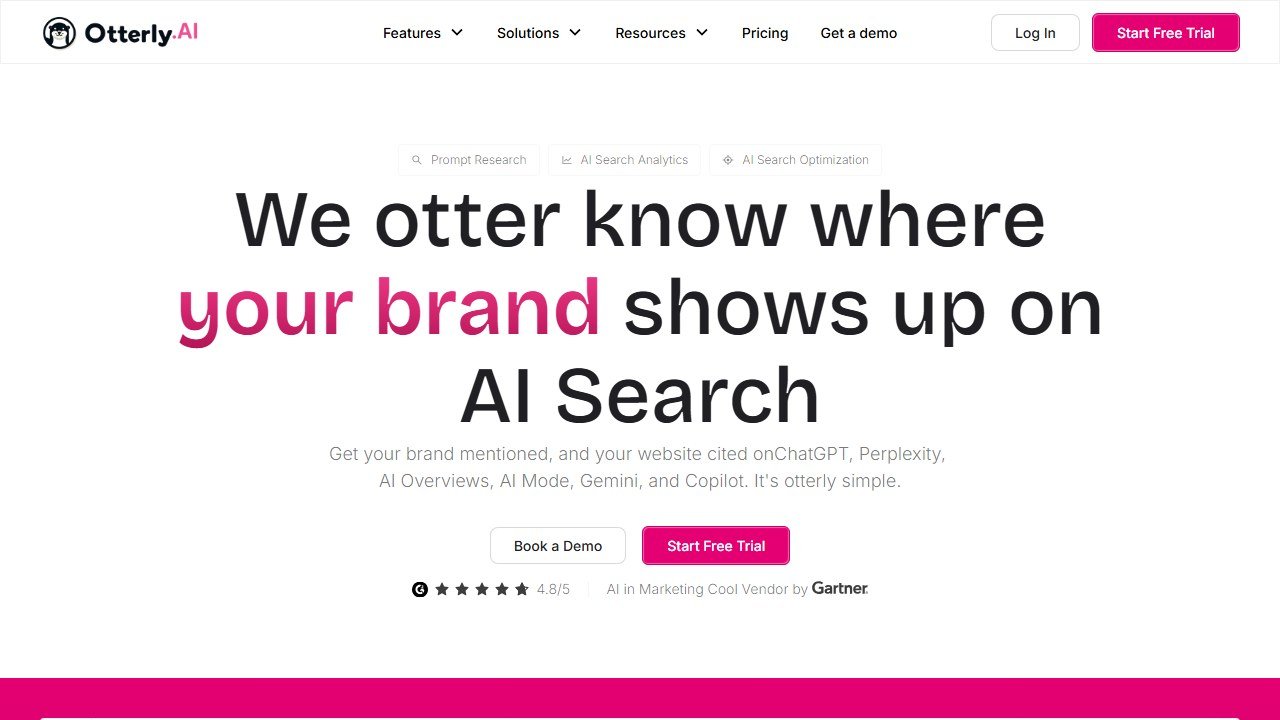
Otterly.ai positions itself as an accessible mid-market tool for brands wanting structured AI search monitoring with built-in competitive benchmarking. Its GEO Audit feature runs a SWOT-style analysis on your AI search presence, surfacing competitor citation advantages and content gaps in a single structured report. The platform monitors six AI engines (ChatGPT, Google AI Overviews, Google AI Mode, Gemini, Perplexity, and Microsoft Copilot) and includes prompt research tools that help you find the questions driving AI answers in your category. With 20,000+ users and recognition from G2 and Gartner, Otterly has a track record in this space. Pricing starts at $29/month (Lite, 15 prompts) and scales to $489/month (Pro, 400 prompts). A free trial is available. Best for marketing managers at mid-sized brands. Visit otterly.ai.
Nightwatch (AI Tracking Module)
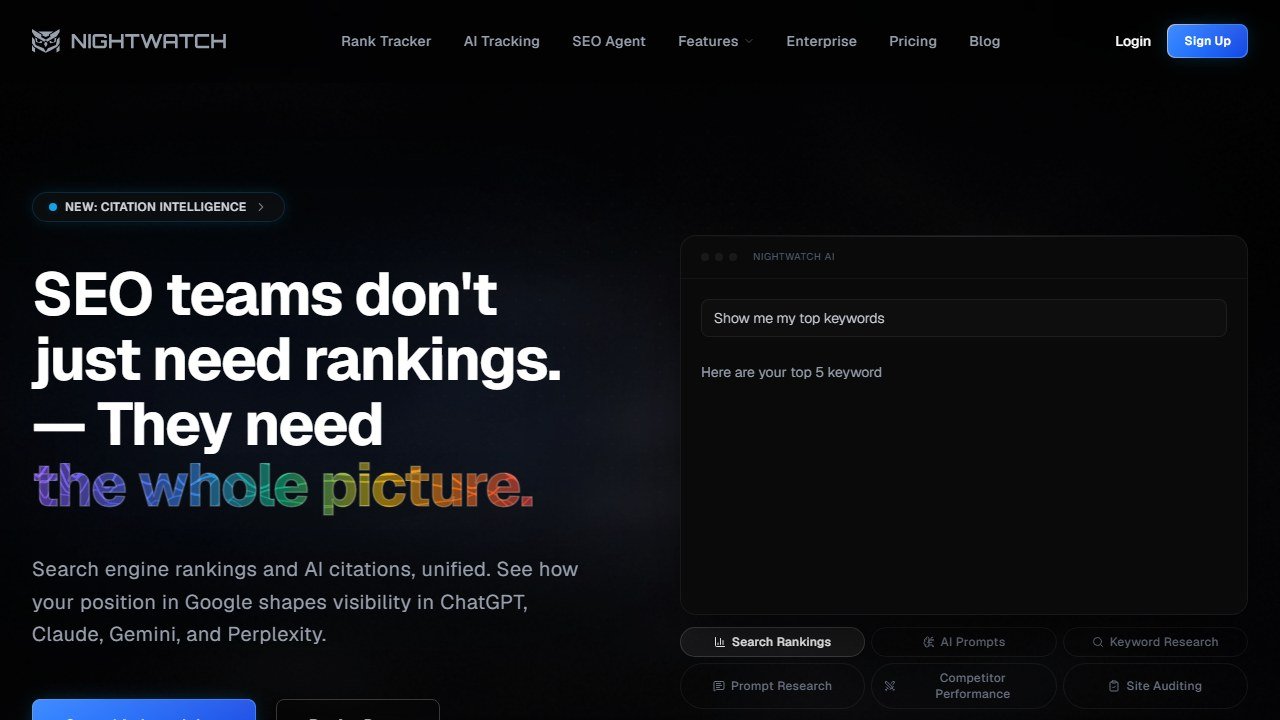
Nightwatch started as a traditional rank tracker and has layered an AI visibility module on top of its existing infrastructure. The AI module tracks ChatGPT, Claude, Perplexity, and Google AI Overviews, monitors citation share (Share of AI Voice), and handles sentiment analysis on citations. Competitor tracking runs in parallel with traditional keyword monitoring, so you can see traditional rank versus AI citation share side by side for the same topic. The base SEO plan starts at $32/month (250 keywords). The AI tracking module is a $99/month add-on covering 100 prompts, so the entry cost for both combined is around $131/month. A 14-day free trial is available. Best for SEO teams who already use Nightwatch. Visit nightwatch.io.
Turning Gap Data Into Content Action
Topic gaps (you have no content on the subject). Create a dedicated page or post targeting that topic. Structure it to directly answer the prompt in a clear, quotable format. AI models favor content that answers a specific question in the first two paragraphs, uses structured headers, and includes factual claims with supporting context.
Source gaps (you are not on the sites AI cites). This is a PR and digital authority problem, not a content creation problem. Build a list of the domains that get cited repeatedly in your category’s AI answers. For sites like G2 and Capterra, claiming and optimizing your profile is table stakes. For editorial sites like TechRadar or PCMag, you need genuine coverage through outreach, product reviews, or guest contributions.
Existing content that should be cited but is not. Check whether your pages are technically accessible to AI crawlers. Review whether your content answers the specific prompt directly. Add a structured summary at the top of the page and mark up key claims with clear attribution.
Track closes, not just gaps. Set up a baseline in your gap analysis tool the day you start, then rerun the same prompt set monthly. If a gap does not close after three months of targeted work, the root cause is usually source-based, not content-based.
Verdict
If you have an enterprise budget and need audit-grade data across every major AI engine, Profound is the clear choice. For agencies managing multiple clients, Peec AI’s Gap Score and source-level prioritization saves hours of manual work. Rankscale is the right call if you are testing the waters on a tight budget and need broad engine coverage fast. Otterly.ai sits in a useful middle ground for marketing managers who want a structured audit framework without a steep learning curve. And if your team already lives in Nightwatch for traditional SEO, the AI module is the lowest-friction way to add GEO gap tracking to your existing workflow. Start with the tool that fits your current process. The worst outcome is buying enterprise software before you have a repeatable process for acting on what it finds.
For a broader look at the category, see our full roundup of the best AI visibility tools for GEO optimization.
Tools mentioned in this guide
Going enterprise? Read our Scrunch AI review. New to the topic? Start with the generative engine optimization guide.

Written by
FazFaz is the founder of AIToolsBakery. Some tools here are tested hands on. Others are assessed from vendor documentation and pricing verified on the live page, and every review says which one it is. Sponsors can buy a position in a guide. They cannot buy the score, the criticism, or silence about a better option.
How we test and how we make money →