If you run learning and development for a team, you have probably shortlisted the same two names everyone else has: HeyGen and Synthesia. Both turn a script into a polished talking-avatar video in minutes, both export to your LMS, and both now ship the interactive features (quizzes, branching, clickable paths) that real training actually needs. The marketing pages look almost identical. The decision is not.
The honest answer is that these two tools have been converging for two years, and in 2026 the gap that remains is not about who makes a video. It is about who you are buying for. A solo instructional designer pumping out compliance refreshers wants something very different from a Fortune 500 procurement team that needs an AI-governance audit trail before legal will sign anything. That is the lens we use throughout this comparison: the corporate-training and L&D buyer, deciding where a 25-seat budget should land.
This guide stays comparative on purpose. We already publish a full standalone Synthesia review, so we will not re-litigate every Synthesia feature here.
One note on where we stand. AIToolsBakery is independent. We sell neither HeyGen nor Synthesia, we are not paid by either company, and we earn nothing if you sign up for one over the other. When a post on this site is sponsored we label it clearly at the top, and a sponsorship never changes a verdict. This article is not sponsored, and neither vendor reviewed it before publication.
Quick answer: HeyGen wins for small teams, solo instructional designers, and anyone also making customer-facing video, with more realistic avatars and faster iteration. Synthesia wins for enterprise L&D that needs governance, templates, and scale. Pick HeyGen for realism and speed, Synthesia for enterprise control.
The quick context: what each tool actually is
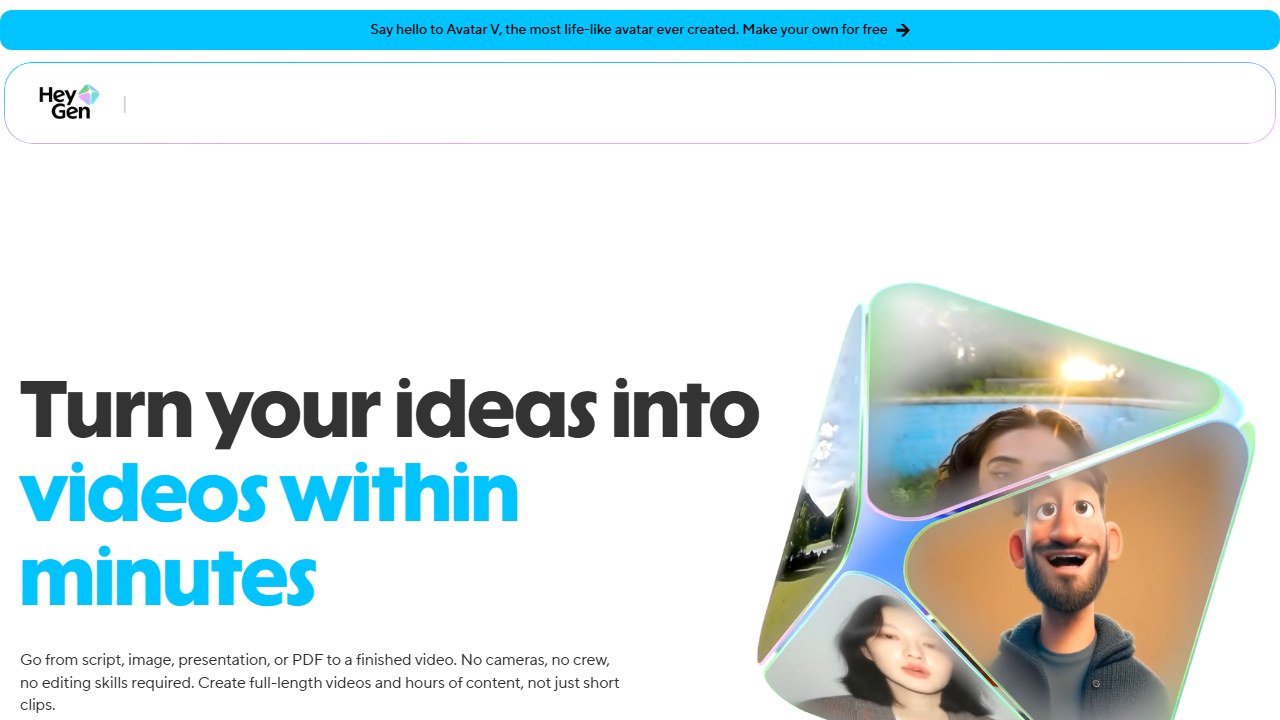
HeyGen started as a creator-first avatar and translation platform and grew into training. Its strengths show that lineage: stunning avatar realism, voice cloning, and one-click localization that content marketers love. Over the last 18 months HeyGen has built out a serious learning and development product, adding SCORM export, quizzes, branching, and clickable links, so it is no longer just a “marketing video” tool wearing an L&D hat.
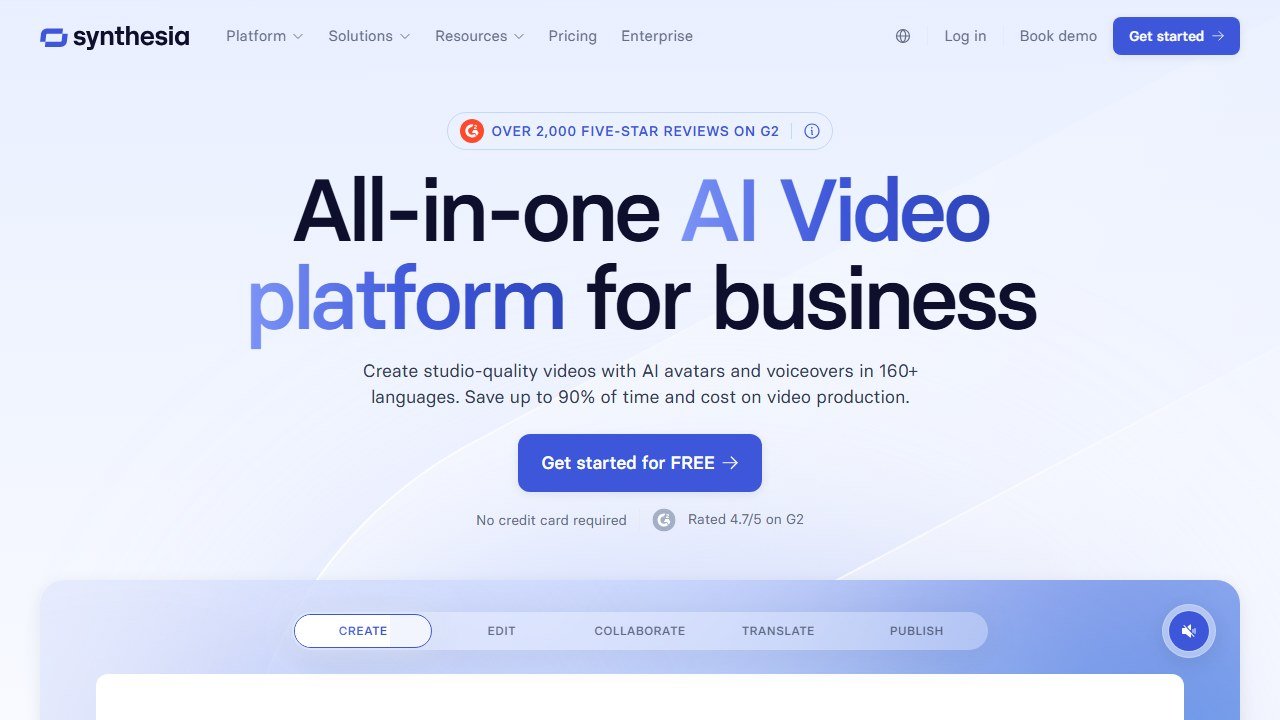
Synthesia went the other direction. It was built enterprise-first from the start, and roughly 90 percent of the Fortune 100 now use it. Its avatars are deliberately polished for corporate trust rather than jaw-dropping realism, and its differentiation lives in governance, security, and structured workflow. Synthesia was the first AI video company to earn ISO 42001 certification, the world’s first AI-management-system standard, and that single fact tells you who it is designed to sell to.
So the framing is not “good versus bad.” It is “creator DNA that grew into L&D” versus “enterprise DNA that happens to make training easy.”
Head-to-head comparison
| Dimension | HeyGen | Synthesia |
|---|---|---|
| AI avatars | Large library plus photo avatars and personal digital twins | 240+ stock avatars plus custom avatar builder |
| Avatar realism | Edge on lifelike micro-expressions and lip-sync (G2 rates avatar quality higher) | Polished, authoritative, optimized for corporate trust |
| Languages | 175+ languages and dialects | 160+ languages |
| SCORM export | Yes (SCORM 1.2 and 2004), on Business and Enterprise plans | Yes, on business and enterprise tiers |
| Interactivity | Quizzes, branching, clickable links, auto-update SCORM | Branching, CTAs, interactive video (newer) |
| PowerPoint import | Limited | Yes, native PPT-to-video |
| Compliance | SOC 2 Type II, GDPR, CCPA, EU AI Act, DPF | SOC 2 Type II, ISO 27001, ISO 27701, ISO 42001, GDPR |
| Pricing posture | Free tier plus friendlier mid-tiers for small teams | Free starter plus business and enterprise, custom for scale |
| G2 score (0 to 5) | ~4.8 (around 1,200 to 1,500 reviews) | ~4.7 (around 2,376 reviews) |
| Best fit | Lean teams, creators, customer-facing video | Regulated, large, enterprise L&D programs |
Avatars and realism
This is HeyGen’s clearest win. Its current avatar engine produces presenters with micro-expressions, natural eye movement, subtle head tilts, and lip-sync that holds up in close-up shots. G2 reviewers score HeyGen’s avatar quality noticeably higher than Synthesia’s (roughly 4.6 versus 4.1 on a 0 to 5 scale, normalized from G2’s ten-point category), and in published side-by-side comparisons the difference is visible to a non-expert viewer.
Synthesia’s avatars are not bad. They are deliberately tuned for a different goal: a calm, credible corporate presenter who will not distract from the message. For a compliance module or a policy walkthrough, that restraint is arguably a feature, not a flaw. But if your training is customer-facing, or you want avatars that feel like a real person rather than a competent narrator, HeyGen looks better today.
Verdict on realism: HeyGen, clearly. Whether that matters depends on whether your audience is staff (Synthesia is plenty) or customers and prospects (HeyGen pulls ahead).
Languages and voices
Both tools clear the bar that any global training program needs. HeyGen advertises 175+ languages and dialects with voice cloning and culturally aware translation. Synthesia covers 160+ languages with one-click translation and a multilingual player that keeps every language version of a video synced under a single link.
The raw count favors HeyGen slightly, but the practical difference is small. Where Synthesia adds value for L&D is the multilingual player and version control: update the master video and every localized variant stays in sync, which matters when you maintain a library of 200 modules across a dozen markets. HeyGen has closed much of this gap and now supports SCORM export on its multilingual player too.
Call it a tie on reach, with a slight Synthesia edge on managing many languages at scale.
SCORM, interactivity and LMS fit: the L&D core
This is where the buying decision gets serious, and it is also where the two tools have converged hardest.
HeyGen exports SCORM 1.2 and 2004 packages as ZIP files that drop straight into any SCORM-supported LMS, available on Business and Enterprise plans. Inside HeyGen AI Studio you can add quizzes, branching logic, clickable links, and decision points, and all of those interactive elements travel inside the SCORM package. The 2026 release also added an auto-update SCORM option, so when you edit a draft, the deployed package re-syncs without you rebuilding and re-uploading it. For a team that updates compliance content quarterly, that auto-sync is a genuine time-saver.
Synthesia matches the core: SCORM export, native PowerPoint import (handy for converting existing decks into video modules), and interactive video with branching and CTAs that arrived more recently. Synthesia’s interactivity is newer than HeyGen’s and slightly less mature in the editor, but it is backed by stronger version control and team workflow.
The takeaway for L&D: on the raw SCORM-plus-interactivity feature set, HeyGen is at least at parity and arguably ahead on editor polish and auto-update. Synthesia counters with cleaner PowerPoint import and better large-library version control. If your differentiator is “build interactive branching scenarios fast,” lean HeyGen. If it is “maintain a governed library of hundreds of modules,” lean Synthesia.
Compliance and security: Synthesia’s edge
If you sell into regulated industries or large enterprises, this section may decide everything else.
Synthesia carries SOC 2 Type II, ISO 27001, ISO 27701 (privacy), GDPR alignment, and ISO 42001, the AI-management-system standard it was the first AI video company to earn. That ISO 42001 certification is not a vanity badge. With the EU AI Act’s high-risk obligations taking full effect in August 2026, an AI-governance certification gives a procurement and legal team a documented, auditable answer to “how do you govern this AI system.” That is exactly the question that stalls enterprise deals.
HeyGen is not unprotected. It displays SOC 2 Type II, GDPR, CCPA, EU AI Act alignment, and Data Privacy Framework participation. For most mid-market buyers, that is sufficient. What HeyGen does not yet publish is the ISO 27001 or ISO 42001 certification that Synthesia leads with, and in a heavily regulated procurement process that absence can be the difference between a signature and a six-week security-review delay.
Verdict on compliance: Synthesia, decisively, and this is its real moat. The trade-off is that Synthesia’s strict content moderation, which is part of how it earns that trust, can occasionally reject scripts that HeyGen would pass.
Pricing and team cost
We will describe the pricing models rather than quote figures that go stale, so check the HeyGen and Synthesia pricing pages for current numbers.
HeyGen runs a creator-friendly ladder: a free tier with watermarked, limited-length output, then mid-tier plans that are generally gentler on a small team’s budget, scaling up to Business (which unlocks SCORM and interactivity) and Enterprise. Because the free and lower tiers are usable, a lean L&D team or a solo instructional designer can validate the tool before committing budget. Watch the credit model, though: HeyGen meters generation, and heavy long-form use can push real costs above the headline plan price.
Synthesia offers a free starter plan, then a business tier and an enterprise tier with custom pricing for larger seat counts. It is built around per-seat enterprise economics, so it tends to make the most sense once you are buying for a department rather than an individual. Custom avatars are an additional and notably pricey line item on both platforms, but especially on Synthesia.
For a 25-seat team, model it honestly: HeyGen often looks cheaper at the sticker level, but confirm that SCORM and interactivity sit in the tier you are pricing (they are Business-and-up on HeyGen) and account for generation credits. Synthesia’s enterprise pricing is higher but bundles the governance and workflow that a 25-seat regulated program will actually use. Cheaper is not the same as lower total cost once compliance review time is priced in.
Ease of use and speed
Both editors are approachable; neither requires video-editing skills. HeyGen feels faster and more iterative, which suits creators and small teams who want to ship and tweak quickly, and its redesigned timeline makes inserting branching paths and quizzes visual and intuitive.
Synthesia feels more structured and template-driven, which slows the first draft slightly but pays off when multiple people maintain a shared library. One consistent finding across reviews: Synthesia can be slower to generate very long videos, and HeyGen’s consistency can wobble on very long single renders too. For typical training modules (3 to 10 minutes) both are fast enough that speed should not be the deciding factor.
Who each is for
Pick HeyGen if you are a lean L&D team, a solo instructional designer, or a department that also produces customer-facing or marketing video. You get the most lifelike avatars, the friendlier on-ramp, strong interactivity with auto-update SCORM, and the widest language reach. The compromise is a lighter published compliance story.
Pick Synthesia if you are a large or regulated organization where legal and security sign off before tools get adopted. You get ISO 42001 and ISO 27001 certification, mature governance and version control, native PowerPoint import, and the enterprise workflow that keeps a big content library sane. The compromise is slightly stiffer avatars, stricter moderation, and higher pricing.
If you want a third data point, our Synthesia vs Colossyan comparison and our Colossyan review cover another L&D-focused alternative worth shortlisting, and our roundup of the best AI instructional design tools puts both of these in wider context.
Our verdict
There is no single winner here, and any review that declares one is selling you something. The tools have converged on features. They diverge on identity.
For the corporate-training and L&D buyer specifically, our segmented call is this. If your program is large, regulated, or has a procurement process that asks about AI governance, choose Synthesia. The ISO 42001 and ISO 27001 certifications, the EU AI Act readiness, and the enterprise version control are worth more to you than HeyGen’s better-looking avatars, and they will clear your security review faster. That is the majority of serious enterprise L&D programs, which is why Synthesia gets the default nod for that segment.
If you are a small team, a solo instructional designer, or you also produce customer-facing video, choose HeyGen. You get more realistic avatars, faster iteration, a friendlier price on-ramp, and interactivity that now matches Synthesia feature for feature, with auto-update SCORM as a real maintenance win. Just confirm SCORM lives in the tier you are pricing, and model the generation credits before you commit.
Test both on your own script before you sign anything. The free tiers are good enough to make the decision for you, and 30 minutes of hands-on use will tell you more than any comparison table, ours included.
How we reached this verdict: this guide is research-based. We compare each tool against its published documentation, pricing pages and terms, and we do not claim hands-on testing we have not done.
Authoring tools and the per author licence model
Course authoring is priced per author per year, not per learner, which makes it one of the easier budgets to calculate and one of the more expensive to get wrong. Here is where heygen vs sits, read 4 September 2026.
iSpring publishes the clearest per author rates
iSpring publishes iSpring Suite at $970 USD per author per year, iSpring Suite AI at $1,290 and iSpring Cloud AI at $720. Because the meter is authors rather than learners, the arithmetic is simple: two instructional designers on Suite AI is $2,580 a year regardless of whether you train fifty people or five thousand. That is the friendliest structure in this category for an organisation with a large workforce and a small L&D team.
Articulate is currently showing a limited-time offer, not a standard price
This one needs care. Articulate‘s canonical pricing URL redirected us to a special offer page on 4 September 2026, showing $1,198 USD per user per year against a struck-through $1,749, described as 31% off and a limited time offer, with an FAQ headed “Who is eligible for this special pricing offer?”. So the published figure is promotional. Ask what the price is outside the offer and what it renews at, because a 31% discount in year one against an undiscounted year two is a materially different deal from a $1,198 rate card.
The add-ons are priced separately and are not small
Articulate publishes Localization starting at $5,000 a year and Reach Pro starting at $3,600 for 1,200 active learners a year. Localization is the one that surprises people: if you train a multilingual workforce, translation management can cost more than the authoring seats. Price the combination you would actually deploy rather than the headline seat.
Per author is only cheap if authoring is centralised
The model rewards a small team of dedicated designers and punishes a federated approach where every department wants to build its own content. Decide which you are before buying. If fifteen people across the business each need to publish occasionally, a per author licence is the wrong shape and you should be looking at a tool priced differently, or accepting a bottleneck by design.

Written by
FazFaz is the founder of AIToolsBakery. Some tools here are tested hands on. Others are assessed from vendor documentation and pricing verified on the live page, and every review says which one it is. Sponsors can buy a position in a guide. They cannot buy the score, the criticism, or silence about a better option.
How we test and how we make money →Frequently Asked Questions